Hear from Our Customers
The frustrating part about ant problems in Murray Hill isn’t the ants you can see it’s the colony you can’t. In a pre-war co-op on 37th Street or a high-rise off Second Avenue, ants aren’t just living in your unit. They’re traveling through utility chases, behind original plaster walls, and along pipe runs that connect your floor to three others above and below you. A spray that kills the trail doesn’t touch any of that.
What changes after a proper treatment is that the forager ants you see actually become part of the solution. The materials they carry back into the nest work through the colony queens, reproductives, and all. That’s what ends the cycle instead of just resetting it.
Murray Hill’s older building stock is a real factor here. Structures that date back to the 1850s and 1890s many of them part of the Murray Hill Historic District have decades of accumulated moisture in their original wood framing. That’s exactly what carpenter ants are drawn to. If you’ve been hearing faint rustling inside your walls or noticing winged ants near windows in late spring, that’s not a minor issue. It’s an established colony, and it won’t resolve on its own.
We’re a family-owned business that has been treating pest problems across all five boroughs since the 1980s. That’s not a marketing line it’s what separates a company that actually knows how Manhattan buildings work from one that treats every job like a suburban ranch house with a yard.
The buildings in Murray Hill from the landmarked brownstones near Sniffen Court to the post-war towers along the avenues each come with their own structural quirks, and ant infestations in these buildings behave differently than they do anywhere else. Our technicians are licensed by the New York State Department of Environmental Conservation, fully insured, and carry an A+ rating with the Better Business Bureau of New York State. Those aren’t checkboxes. They’re what your co-op board or property manager is going to ask for before anyone sets foot in your building.
Free estimates, 24/7 phone answering, and a 10% senior discount are part of how we operate straightforward, no pressure, no surprises.
When you call, someone actually picks up any time of day. You’ll get a free estimate and a scheduled visit without having to chase anyone down. For Murray Hill residents coordinating with building management or a co-op board, we’re already set up for that conversation. Licensed, insured, and NYS DEC-compliant documentation is available if your building requires it before work begins.
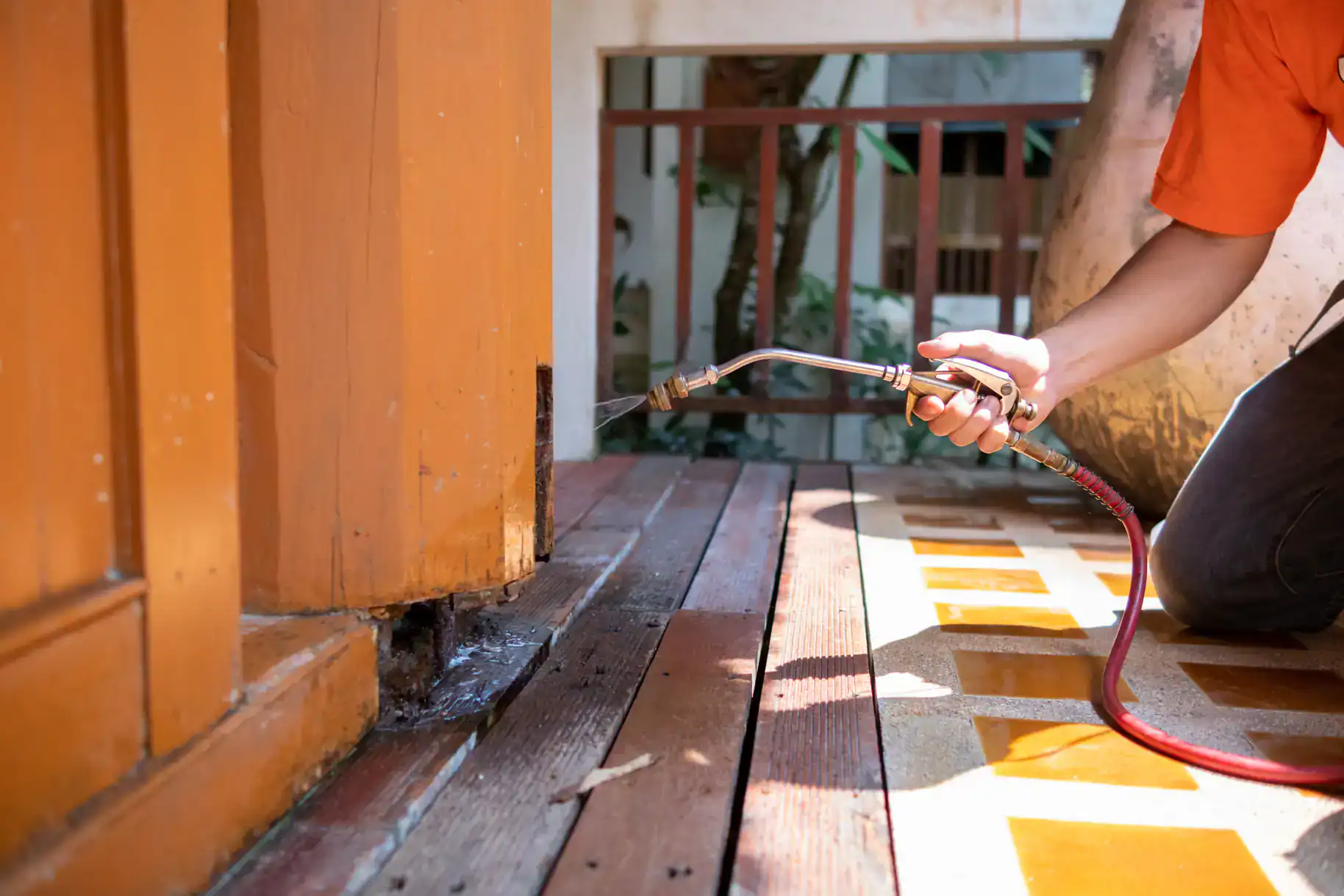
The first visit is a cleanout. Materials go down both inside your unit and along the exterior perimeter of the building, targeting the routes ants are actively using to get in. This matters especially in buildings near the Curry Hill corridor on Lexington Avenue, where food service density in the surrounding blocks keeps forager pressure elevated year-round. Treating only the interior of one apartment in that environment is like patching one hole in a screen.
After the initial treatment, follow-up visits are scheduled based on what the infestation looks like weekly, every other week, or monthly. This isn’t filler. Ant colonies in multi-unit buildings often have satellite nests on multiple floors, and those don’t always respond to a single treatment at the same rate. The follow-up visits are where the work gets finished. Spring and early summer are the highest-risk window in Murray Hill, when carpenter ant swarm season peaks and riverside green spaces near St. Vartan Park push forager activity into adjacent residential buildings. If you’re calling in May or June, don’t wait that timing matters.
Ready to get started?
Ant control in Murray Hill isn’t one-size-fits-all, and we don’t treat it that way. Our service covers both residential and commercial properties individual apartments, multi-unit co-ops, condo buildings, and commercial spaces including food service establishments. If you’re a property manager overseeing a building with multiple complaints, or a tenant dealing with a problem your landlord hasn’t addressed, we handle both sides of that situation.
Under New York State Environmental Conservation Law, pesticide applications in occupied dwelling units can only be performed by a certified commercial pesticide applicator. That’s not a technicality it means your landlord or building super cannot legally handle this themselves. Our technicians are fully certified under NYS DEC requirements, which protects you, your neighbors, and the building owner from liability. For Murray Hill’s co-op boards and property management companies, that compliance isn’t optional, and we meet it completely.
The materials we use are NYS DEC-registered and applied in controlled quantities by licensed technicians. In a building where dozens of families share walls, floors, and ventilation systems, that level of precision matters. Carpenter ant treatment, pavement ant control, pharaoh ant elimination the approach is matched to what’s actually in your building, not a generic protocol. And if the infestation is tied to a structural moisture issue in older construction, that gets flagged so you know what you’re dealing with beyond the ants themselves.
The most common reason is that whatever you used whether a store-bought spray or a one-time service only addressed the ants you could see. In Murray Hill’s multi-unit buildings, ant colonies rarely live entirely inside one apartment. They establish satellite nests in wall voids, behind radiator pipes, and along the utility chases that run between floors. Killing the trail you see in your kitchen doesn’t reach any of that.
The other factor is building density. If a neighboring unit or the building’s ground-level infrastructure still has an active colony, foragers will keep entering your space through shared walls and pipe penetrations regardless of what you’ve applied inside your own unit. A treatment that covers only your apartment’s interior is going to produce exactly the result you’ve already experienced temporary relief, followed by the same problem. Real resolution requires treating the interior and the exterior perimeter, and following up until the colony is gone.
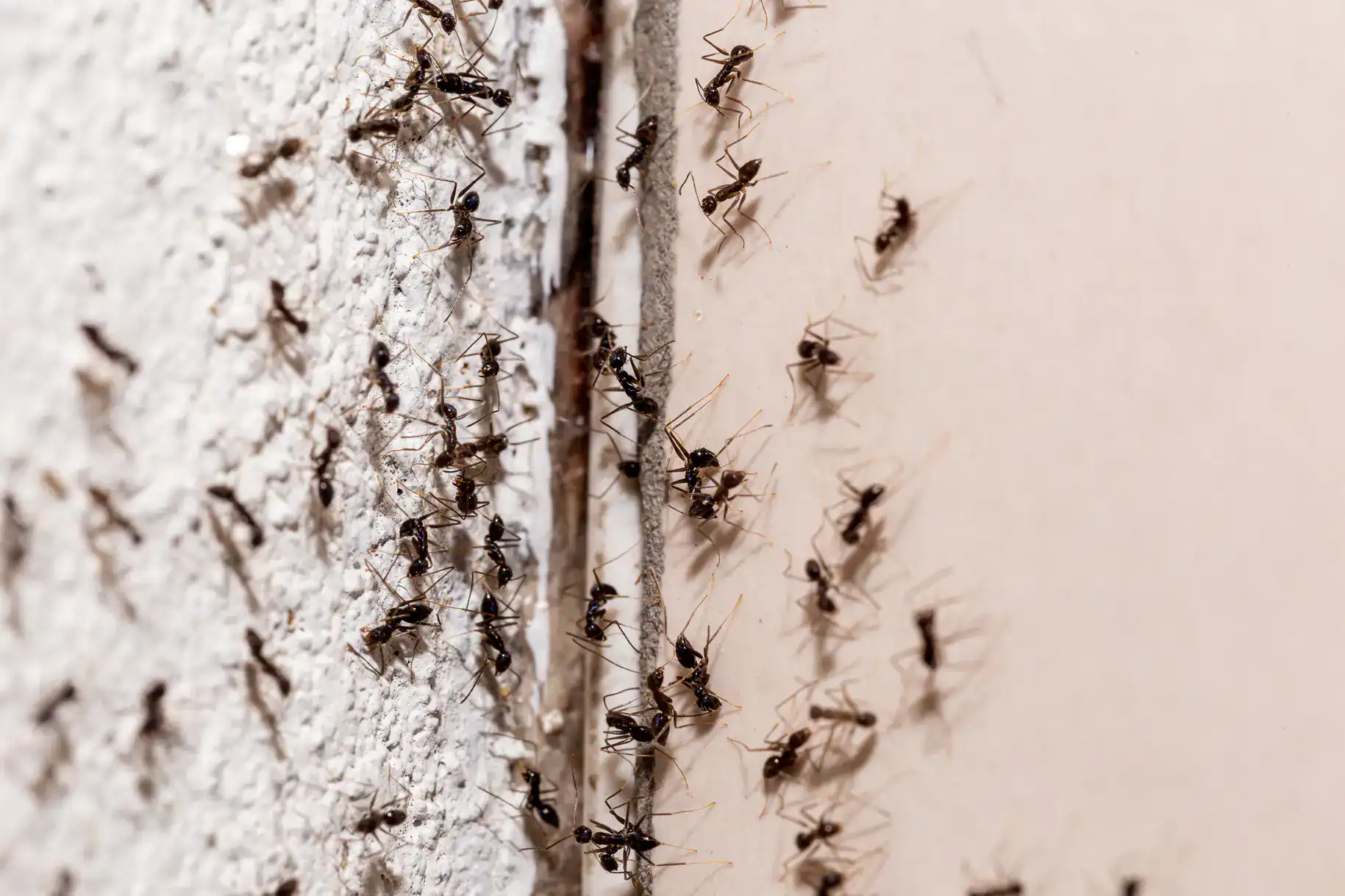
Size is the most reliable first indicator. Carpenter ants are significantly larger than the common pavement or odorous house ant typically between half an inch and an inch long, often black or dark brown. If you’re seeing large ants near windows, around plumbing, or emerging from baseboards, carpenter ants are a reasonable first assumption, especially in Murray Hill’s older residential buildings.
The other sign is sound. Carpenter ants excavate wood to create nesting galleries, and in a quiet room you can sometimes hear a faint rustling or crinkling inside walls particularly in pre-war construction with original wood framing that has absorbed moisture over decades. Winged ants appearing in late spring, typically May through June, are another strong indicator. Those are reproductives leaving an established colony to found new ones, which means the original nest has been active long enough to reach reproductive maturity. That’s not a new problem it’s an old one that’s been growing.
Yes, and it’s one of the more misunderstood aspects of ant infestations in Manhattan buildings. Ants don’t need much space to move between units. Gaps around plumbing penetrations, electrical conduit runs, and HVAC connections give them continuous pathways through a building’s structure. In a Murray Hill high-rise, an infestation that appears to be isolated to one unit is often part of a larger colony with satellite nests on multiple floors.
Pharaoh ants are particularly well-suited to this kind of spread. They’re tiny, they thrive in heated buildings year-round, and they’re known to fragment into multiple sub-colonies when disturbed which is exactly what happens when someone applies a repellent spray without understanding the colony’s full structure. That fragmentation can actually make the problem worse and harder to treat. This is why the treatment approach in a multi-unit building needs to account for more than just the unit where the complaint originated.
Under the NYC Housing Maintenance Code, landlords are legally required to address pest infestations in rental apartments and to maintain conditions that don’t attract pests. If you’ve reported an ant infestation in writing and your landlord hasn’t responded with a licensed exterminator, they’re likely in violation of that code. Documentation matters here keep a record of when you reported the issue and what response you received.
There’s also a state-level requirement worth knowing. Under New York State Environmental Conservation Law, pesticide applications in occupied dwelling units must be performed by a certified commercial pesticide applicator. Your landlord or building superintendent cannot legally apply pesticides in your apartment themselves they need to hire a licensed contractor. If your building management is dragging their feet or sending someone who isn’t properly certified, that’s both a legal issue and a practical one. We’re fully licensed under NYS DEC requirements and can document that compliance for your building’s records.
It does, and it’s a real consideration for residents living within a few blocks of Lexington Avenue in the low 20s through low 30s. Food service establishments attract forager ants consistently, and in a dense urban environment, those foragers don’t stay contained to the restaurant. They move through shared infrastructure, sidewalk gaps, and building foundations into adjacent residential buildings particularly older ones with more structural entry points.
This doesn’t mean every Murray Hill resident near Curry Hill has an ant problem, but it does mean the baseline forager pressure in that zone is higher than in parts of the neighborhood farther from that corridor. If you’re in a building on or near Lexington in that stretch and you’re seeing recurring ant activity despite repeated treatments, the source may be partly external to your building. Addressing the exterior perimeter not just the interior of your unit is especially important in this part of the neighborhood.
Peak ant season in Murray Hill runs from April through June, with a second wave of activity in September and October as temperatures drop and colonies push indoors for warmth. The spring window is the most critical, particularly May and June when carpenter ants enter swarm season. If you’re seeing winged ants inside your apartment during that period, the colony producing them is already well-established you’re not catching it early, you’re seeing the result of a problem that’s been developing through the winter.
Calling before visible activity starts especially if you had ant issues the previous year is genuinely worth doing. Preventive exterior treatment in early spring can interrupt forager activity before colonies establish indoor satellite nests, which is a much simpler problem to solve than one that’s already spread through a building’s wall voids. Murray Hill’s proximity to St. Vartan Park and the East River Esplanade means that spring rainfall drives ant colonies out of saturated outdoor nesting sites and into adjacent buildings that pattern repeats every year, and getting ahead of it makes a real difference.
Useful Links