

Hear from Our Customers
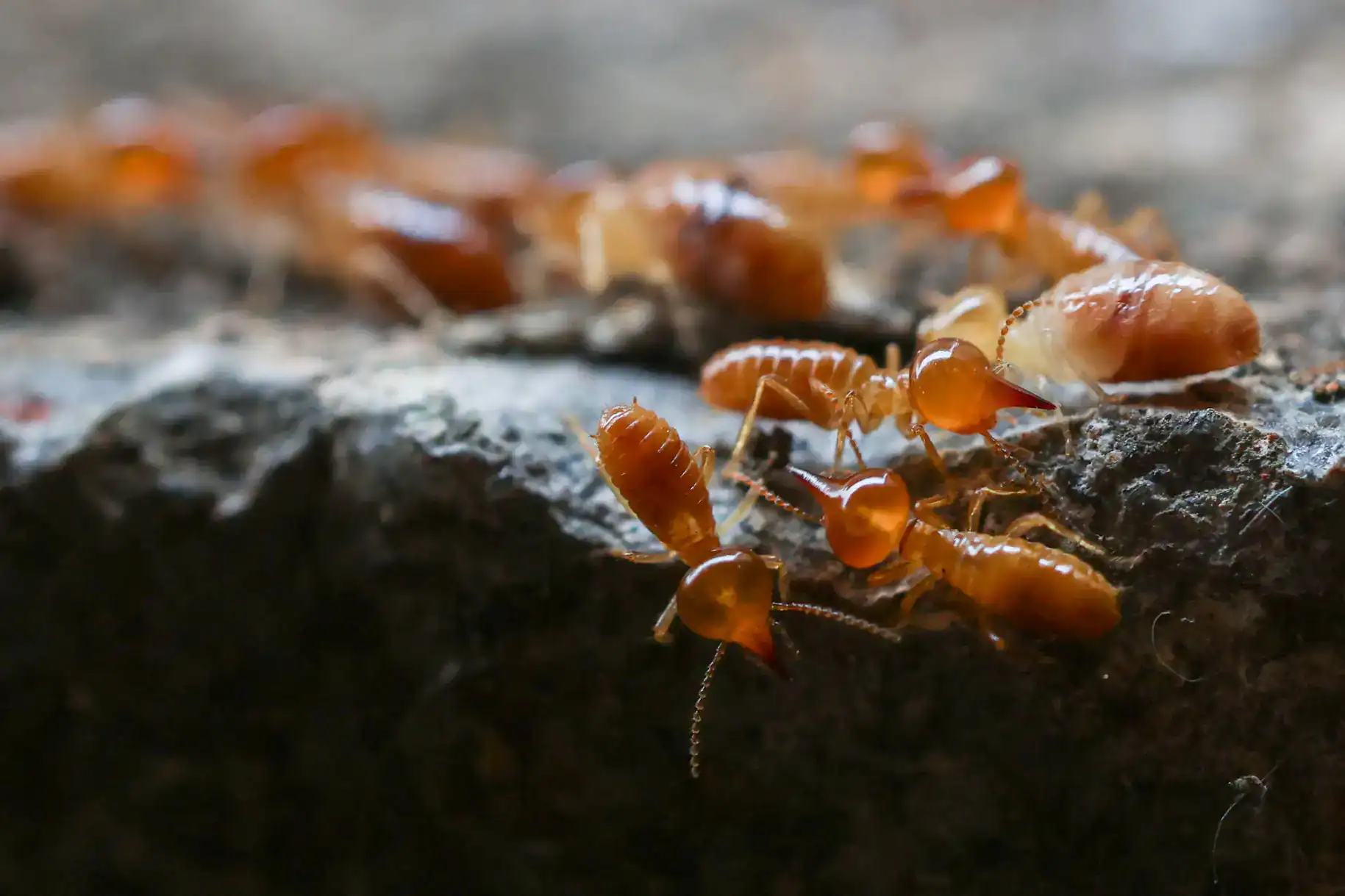
The homes that line Laurelton’s tree-shaded blocks the Tudor-style row houses near Francis Lewis Boulevard, the older Colonials off Merrick Boulevard were built in the 1920s and 1930s. That’s beautiful architecture. It’s also exactly the kind of wood-frame construction that Eastern Subterranean termites move through without leaving a single visible trace until the damage is already deep. By the time you notice hollow-sounding floors or spring swarmers near your foundation, the colony has often been active for years.
Getting ahead of that changes everything. A professional termite inspection gives you a clear picture of what’s actually happening inside your walls not a guess, not a sales pitch, but a real assessment. If treatment is needed, you know what you’re dealing with, what it costs, and what the plan is. No surprises.
For homeowners in Laurelton, where median home values are now approaching $670,000, the financial stakes are real. Termite damage that goes untreated can strip 20% from a home’s market value that’s over $130,000 gone on a property that took years to build equity in. Most homeowner insurance policies don’t cover a dollar of it. Getting a proper termite inspection and treatment done isn’t a precaution. It’s how you protect what you’ve built.
We were founded in 1971 by Richard Kourbage Sr. His sons Richard Jr. and Charles now run daily operations. That’s over 50 years of continuous service across all five boroughs, with deep roots in southeastern Queens communities Jamaica, Springfield Gardens, St. Albans, Cambria Heights, Rosedale, and Laurelton itself. Our staff brings over 100 years of combined pest control experience to every job, which means the technician walking through your Laurelton home has seen this before in this neighborhood, in this housing stock, in these exact conditions.
We hold an A+ rating with the Better Business Bureau and have maintained BBB accreditation since 1989. All materials we apply are registered with the New York State Department of Environmental Conservation. When you call, a real person answers 24 hours a day, 7 days a week and an appointment is guaranteed within two business days, with same-day inspections available more often than not.
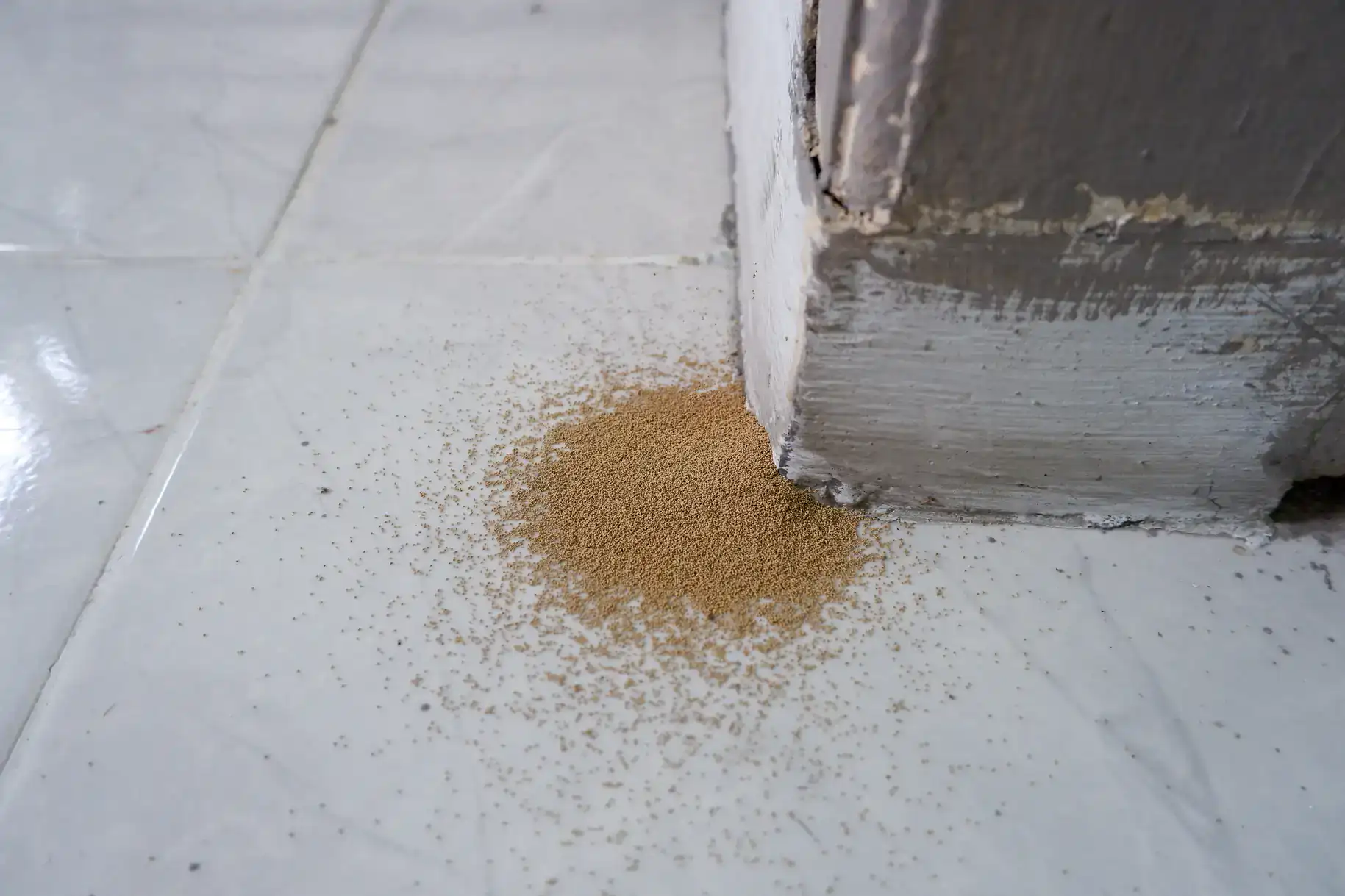
It starts with a phone call that actually gets answered. You describe what you’re seeing swarmers in the yard, hollow-sounding wood, mud tubes near the foundation and we schedule an inspection, often the same day. That inspection is a real, thorough walkthrough of your property. For the Tudor and Colonial homes common in Laurelton, that means checking the wood sill plates where they meet the masonry foundation, the subfloor and crawl space areas, any spots where aging plumbing has created hidden moisture, and the perimeter of your home at ground level. These are the entry and travel points that Eastern Subterranean termites use in pre-war construction, and a thorough inspection doesn’t skip them.
If we find an active infestation or damage, you get a clear explanation of what was found, where, and what treatment we recommend. For subterranean termite infestations, we use termite baiting systems designed to reach the underground colony not just the termites visible inside your walls. Workers carry the treatment back to the source, which is the only way to actually eliminate the problem rather than slow it down. Treatment timelines and follow-up are explained upfront, so you’re not left guessing what comes next.
Spring is peak swarm season in Queens typically March through May and that’s when most Laurelton homeowners first realize something is wrong. But termites feed year-round, every single day. If you’re seeing signs now, or if your home hasn’t had an inspection in several years, the right time to act is before the damage gets deeper.
Ready to get started?
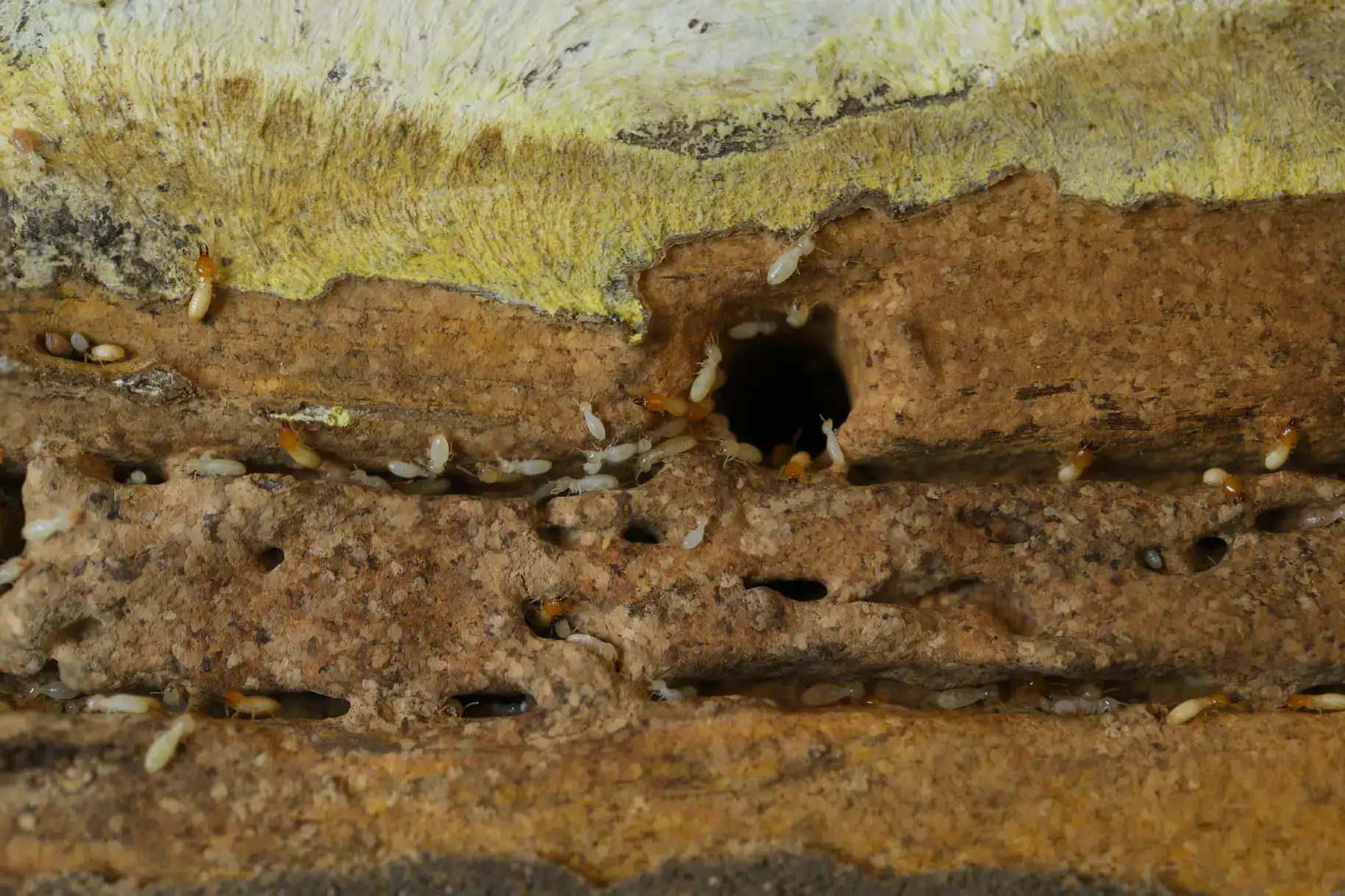
Every termite inspection we conduct starts with a complete walkthrough foundation perimeter, basement or crawl space, subfloor framing, window and door frames, and any wood-to-soil contact points. For Laurelton’s older homes, that inspection is especially thorough because pre-1940 construction creates more access points than modern builds. Wood sill plates set directly on masonry, aging plumbing with slow leaks, and mature tree root systems near the foundation are all conditions that create the moisture and entry routes subterranean termites follow. Our technicians know what to look for in this specific housing stock.
If treatment is needed, we handle Eastern Subterranean termite control using baiting systems that target the colony at its source underground. Beyond termite treatment, we also address carpenter ants and wood-boring powder post beetles other wood-destroying insects that show up in older Queens homes and cause similar structural damage if left alone. All treatment materials are NYS DEC registered, applied by our certified professionals, and safe for households with children and pets.
For homeowners buying or selling in Laurelton’s active real estate market, we provide Wood Destroying Organism (WDO) inspection reports the documentation that FHA, VA, and conventional lenders often require before closing. If you’re in a transaction and need a report quickly, same-day inspections are frequently available. We provide free estimates on every job.
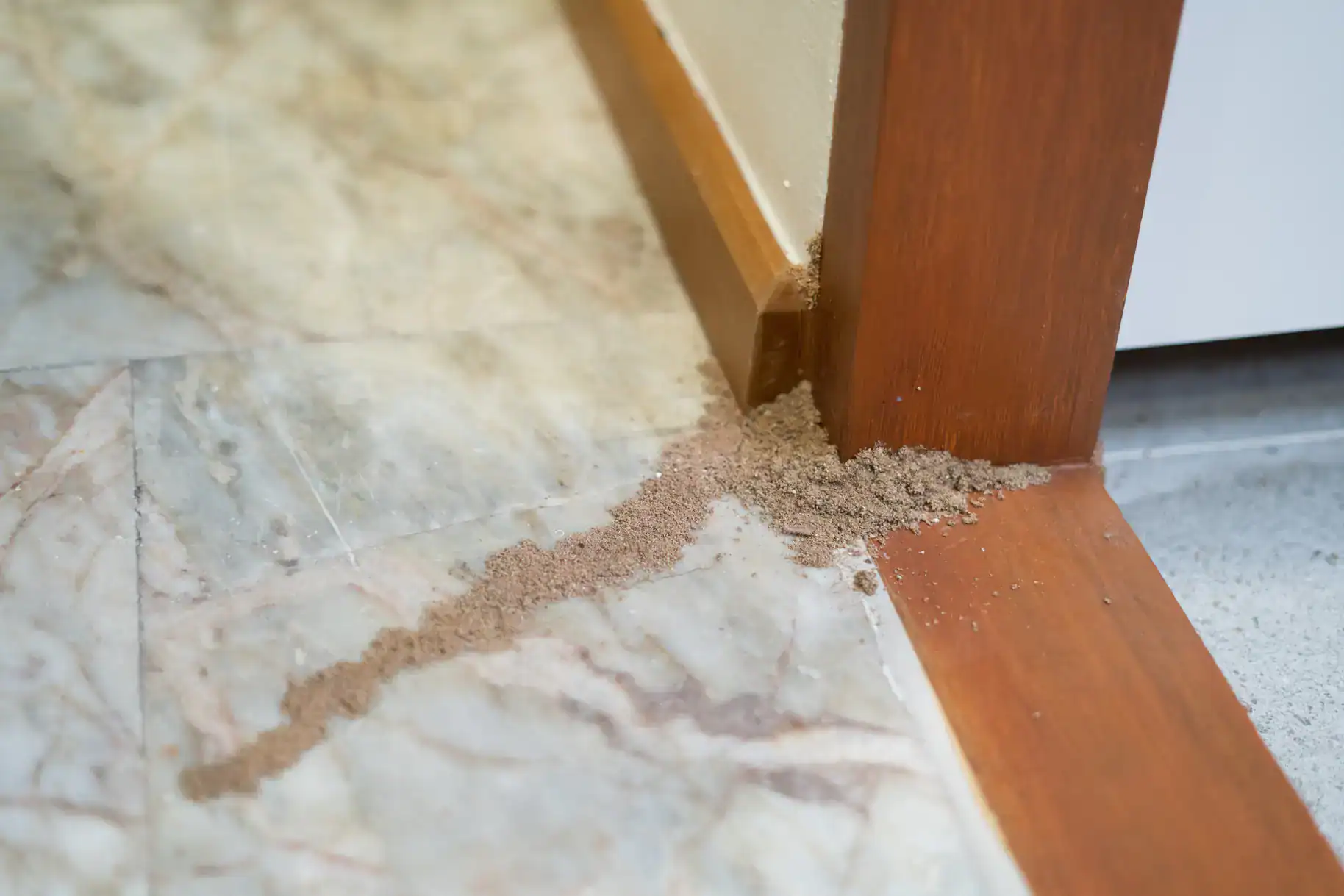
The tricky part about termites in older Laurelton homes is that the signs are easy to miss or easy to misread. The most common things homeowners notice are swarmers in the spring (winged termites that look similar to flying ants near windows or along the foundation), mud tubes running along masonry or concrete walls in the basement, and wood that sounds hollow when you tap it. In Laurelton’s Tudor and Colonial homes, you might also notice bubbling or uneven paint, soft spots in wood flooring, or doors and windows that suddenly don’t close right all of which can signal moisture damage caused by termite activity inside the wall.
Because these homes were built in the 1920s and 1930s, the wood framing is old-growth timber dense, but aged and potentially moisture-compromised in ways that aren’t visible from the surface. If you’re renovating and opening up walls or subfloor areas, that’s one of the most common discovery moments. The best way to know for certain is a professional inspection. We can typically schedule same-day, and the inspection will give you a clear answer not a guess.
For a typical single-family or two-family home in Laurelton, professional termite treatment generally runs between $1,500 and $5,000, depending on the size of the structure, the severity of the infestation, and the treatment method used. Larger homes or properties with more extensive infestations can run higher, particularly if the infestation has spread through multiple levels of framing.
What’s worth understanding is what the alternative costs. The average termite repair bill in the U.S. runs around $3,000, and structural repairs replacing joists, beams, or load-bearing timber in a century-old Tudor can exceed $10,000. Homeowner insurance policies typically don’t cover termite damage at all, classifying it as a preventable maintenance issue. For a Laurelton home currently valued near $670,000, untreated termite damage can reduce market value by 20% or more a loss that dwarfs the cost of treatment. We provide free estimates, so you know exactly what you’re looking at before any commitment is made.
This is one of the most common misconceptions homeowners have, and it’s an expensive one. Eastern Subterranean termites the species responsible for virtually all termite activity in Queens, including Laurelton do not go dormant in winter. They move deeper into the soil when temperatures drop, but they continue feeding on structural wood around the clock, every day of the year. A colony of 250,000 termites can consume 20 feet of a standard 2×4 in a single year. That damage doesn’t pause when it gets cold.
Spring is when you’re most likely to see them March through May is peak swarm season in New York City, and that’s when winged termites emerge to establish new colonies. But the swarmers you see in spring are the visible evidence of a colony that’s been active underground and inside your walls for years. Waiting until spring to address a suspected problem means giving the colony more months of uninterrupted feeding time. If you have reason to think there’s activity in your home right now, it’s worth getting an inspection done regardless of the season.
Not always legally required, but practically speaking yes, you likely need one. FHA and VA mortgage approvals frequently require a Wood Destroying Organism (WDO) report before the loan can close. Even on conventional loans, many buyers and their agents will request one as part of due diligence, especially for older homes. In Laurelton, where the housing stock is predominantly pre-war construction from the 1920s and 1930s, a buyer’s agent who doesn’t recommend a termite inspection before closing on a Tudor home isn’t doing their job.
For sellers, having a clean WDO report in hand before listing can actually strengthen your position it removes a common contingency and signals to buyers that the home has been maintained. If an inspection does turn up activity, addressing it before listing is almost always better than having it surface during a buyer’s inspection and derail the deal. We provide WDO inspection reports and can typically schedule same-day, which matters when you’re working against a closing timeline.
The longevity of termite treatment depends on the method used. Liquid soil treatments applied around the foundation perimeter typically provide protection for five years or more when properly applied. Termite baiting systems which we use for subterranean termite control work differently: bait stations are installed around the property, monitored over time, and replenished as needed. The goal is ongoing colony suppression, not just a one-time application.
For older homes in Laurelton, where pre-war construction creates more potential entry points than modern builds, the monitoring component matters. A home with masonry foundations, wood sill plates, and mature landscaping close to the structure has more termite access routes than a newer home built on a concrete slab with pressure-treated lumber. That doesn’t mean treatment won’t work it means the follow-through matters. We’ll walk you through what ongoing protection looks like for your specific property, so you’re not left wondering whether you’re still covered a year or two down the line.
It matters a lot, because the treatment is completely different. Termites eat wood they digest the cellulose inside it and use it as a food source. Carpenter ants don’t eat wood; they excavate it to build nesting galleries. Both cause structural damage, and both are common in Laurelton’s older homes, but the biology behind each pest requires a different approach to eliminate it effectively.
Visually, the easiest way to tell them apart is the body shape. Termites have a straight, thick waist and straight antennae. Carpenter ants have a pinched waist and elbowed antennae. Termite swarmers have two pairs of equal-length wings; carpenter ant swarmers have front wings that are noticeably longer than the back wings. If you’re not sure what you’re looking at, that’s exactly what an inspection is for. We handle both termite treatment and carpenter ant control along with wood-boring powder post beetles, which are another wood-destroying insect that shows up in the aged timber common throughout Laurelton’s pre-war housing stock. Getting a clear identification first means you’re treating the right problem, not just the most visible one.
Useful Links
Other Services we provide in Laurelton