
Hear from Our Customers
Richmond Hill has some of the oldest wood-frame housing stock in all of Queens. These Victorian and Queen Anne Shingle-style homes many built between the 1880s and 1920s are architectural landmarks. They’re also exactly what Eastern Subterranean Termites look for: aging wood sill plates, century-old subfloors, and foundation settling that creates the tiny entry gaps termites need to get inside.
Most homeowners don’t find out there’s a termite infestation until they’re already looking at structural damage. By then, a colony that’s been feeding around the clock seven days a week, every single day has often been active for years. Your homeowner’s insurance almost certainly won’t cover a dollar of it. And with Richmond Hill home values now sitting around $784,000 on average, the financial exposure from undetected termite damage isn’t a minor inconvenience. It’s a serious loss.
The good news is that a professional termite inspection catches what you can’t see on your own. Mud tubes along the foundation, hollow-sounding wood, swarmers emerging in spring near Liberty Avenue or along the blocks bordering Forest Park these are the signals that tell a trained technician exactly what’s happening and where. Getting ahead of it is always less expensive than dealing with the damage after the fact.
We were founded in 1976 by Richard Kourbage Sr. His sons Richard Jr. and Charles now run the operation and between our entire staff, there’s over 100 years of combined pest control experience walking through your door. That’s not a number pulled from a brochure. That’s decades of hands-on work inside the exact type of housing that defines Richmond Hill: pre-war construction, aging foundations, wood-frame homes that need someone who actually understands how they’re built.
We hold an A+ rating with the Better Business Bureau accredited since 1989 and apply only NYS DEC-registered materials on every job. When you call, a real person answers, 24 hours a day. Same-day inspections are frequently available in Richmond Hill, and you’ll have a written estimate before any treatment begins. No surprises. No pressure. Just a straight answer from a company that’s been doing this work in Queens long enough to know it well.
It starts with a phone call and since we answer 24/7, you don’t have to wait until Monday morning to get the process moving. Once you reach out, a licensed technician is scheduled, often the same day. Before anything else happens, you’ll get a thorough termite inspection of your property: foundation perimeter, basement or crawl space, sill plates, subfloor framing, and any exterior wood that could be a point of entry. In Richmond Hill specifically, that inspection also accounts for soil moisture conditions near older foundations and proximity to Forest Park’s wooded terrain, which can extend termite foraging activity into residential blocks along the neighborhood’s northern edge.
After the inspection, you get a written assessment. If there’s an active infestation or evidence of prior damage, we walk you through exactly what was found and what the treatment plan looks like including which NYS DEC-registered materials will be used and how they’ll be applied. For subterranean termite control in Richmond Hill, treatment typically involves liquid barrier applications around the foundation perimeter, targeted injection into affected wood members, or a termite baiting system depending on the scope and structure of the infestation.
Once treatment is complete, you’ll know what was done, where, and what to watch for going forward. If you’re in the middle of a real estate transaction and need a WDO inspection report for your lender, we provide that documentation as part of the process which matters in a market where buyers are under contract on homes worth close to $800,000 and can’t afford to lose a closing date.

Ready to get started?
A termite inspection from us isn’t a quick walkthrough. It’s a structured assessment of every area where Eastern Subterranean Termites the dominant species in Queens County are known to enter, nest, and feed. That means the foundation, sill plates, floor joists, basement walls, crawl spaces, exterior wood trim, and any areas with visible moisture damage or wood-to-soil contact. In Richmond Hill’s older Victorian homes, that list gets longer. Wrap-around porch columns, decorative wooden gable trim, and aged exterior cladding all represent additional surface area that needs to be evaluated.
If termite activity is confirmed, treatment is designed around the specific conditions of your property not a one-size-fits-all package. Liquid termiticide applications create a treated zone around the foundation that eliminates termites as they tunnel through it. Baiting systems work over a longer timeline but are effective for ongoing colony elimination. For properties along the Liberty Avenue corridor or South Richmond Hill’s denser residential blocks, where semi-attached homes share foundation walls, treatment scope accounts for the possibility that activity extends beyond a single unit.
We also handle termite damage repair documentation and NYC Department of Health pest citation resolution both of which come up regularly for multi-family property owners in Richmond Hill. If you’ve received a DOH citation or you’re managing a building that needs documented treatment for a health code violation, we provide the professional records that satisfy those requirements. Free estimates are available for all residential and commercial properties in Richmond Hill, NY.
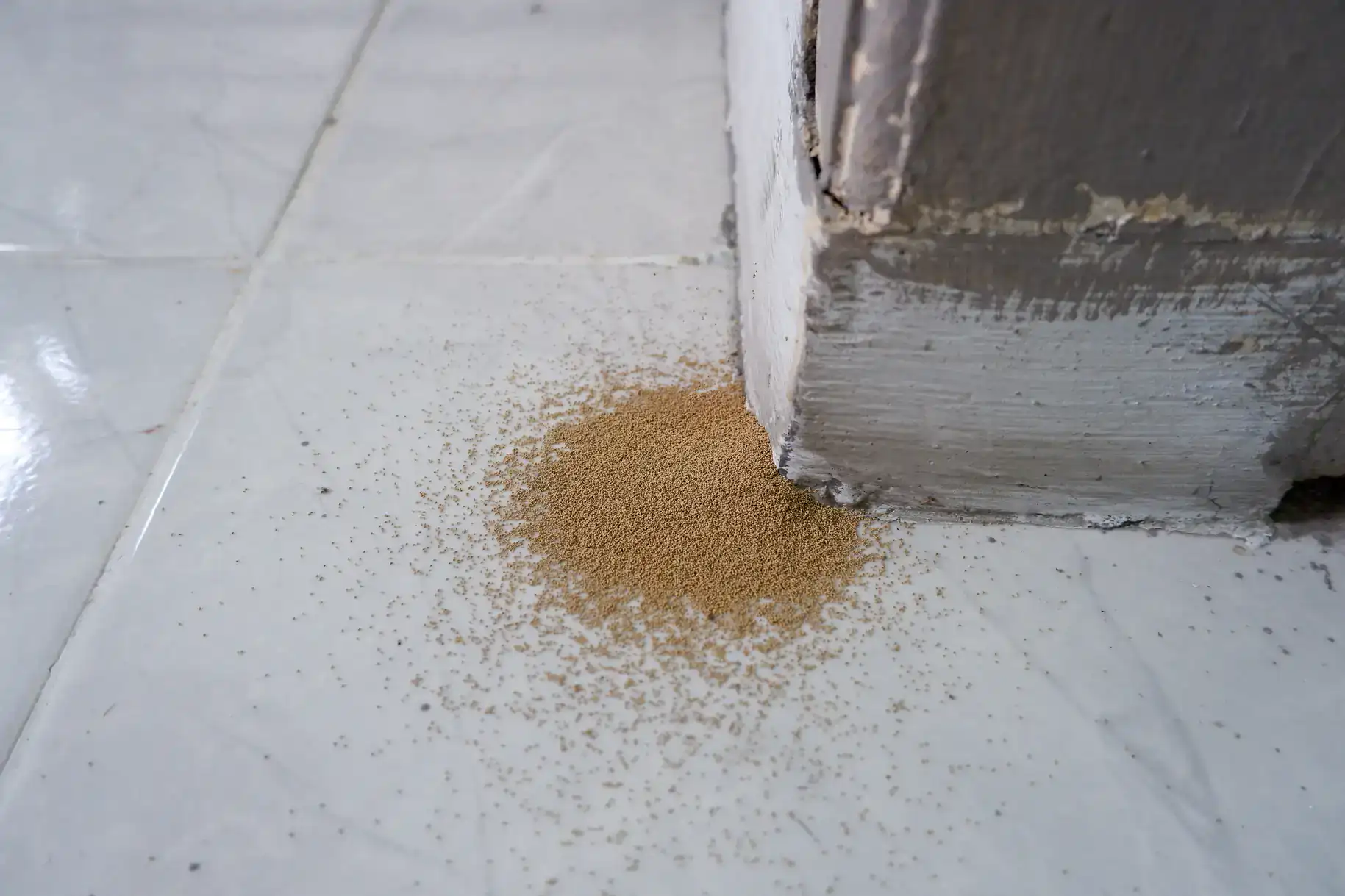
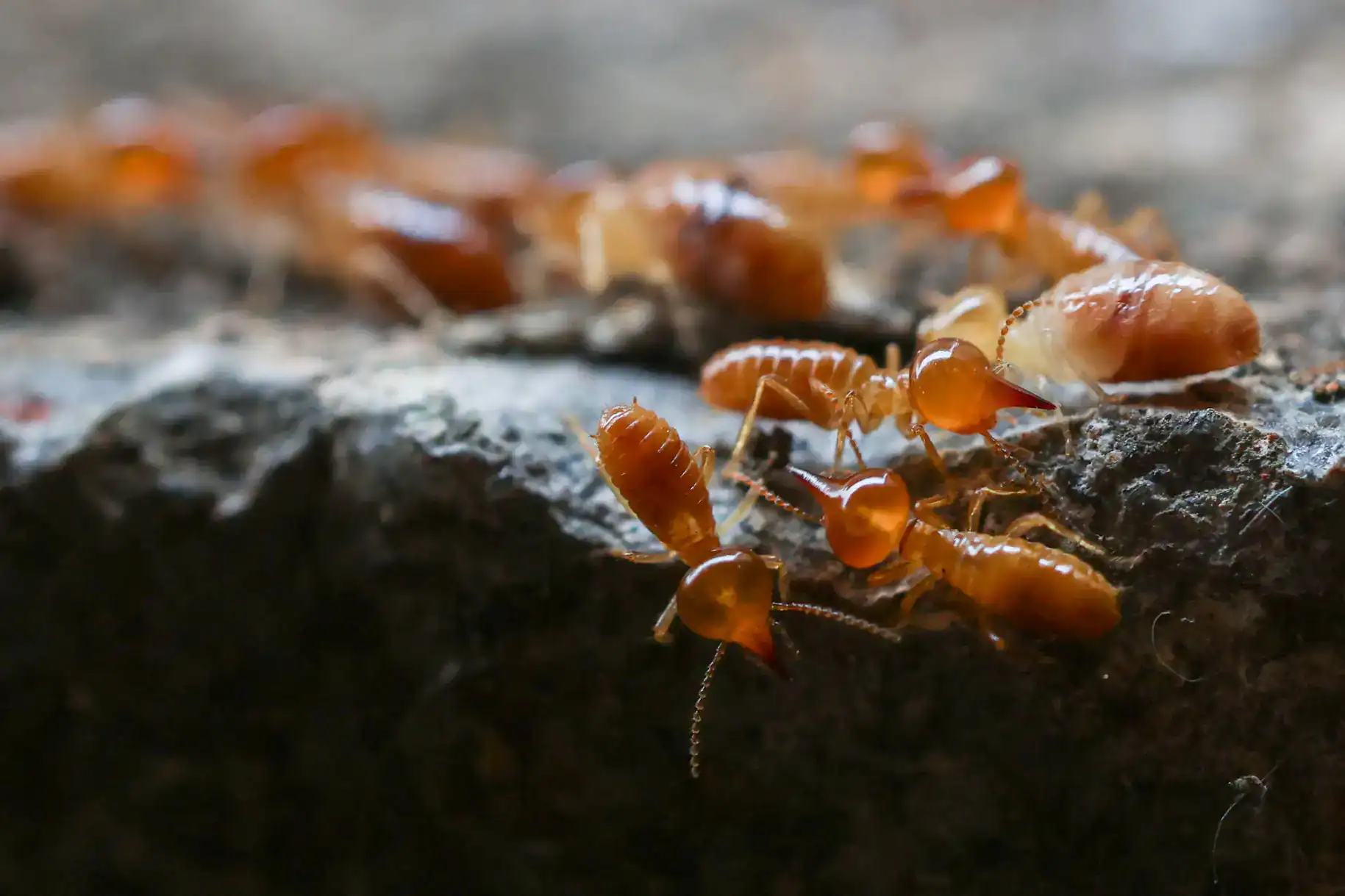
The most common first sign Richmond Hill homeowners notice is swarmers winged termites that emerge in large numbers, usually in spring when temperatures start climbing into the 60s after a rain. Finding them inside your home, particularly near windows or along baseboards, usually means a colony has been active in your structure for some time already. Swarmers don’t cause damage themselves, but they’re a clear indicator that an established colony is nearby.
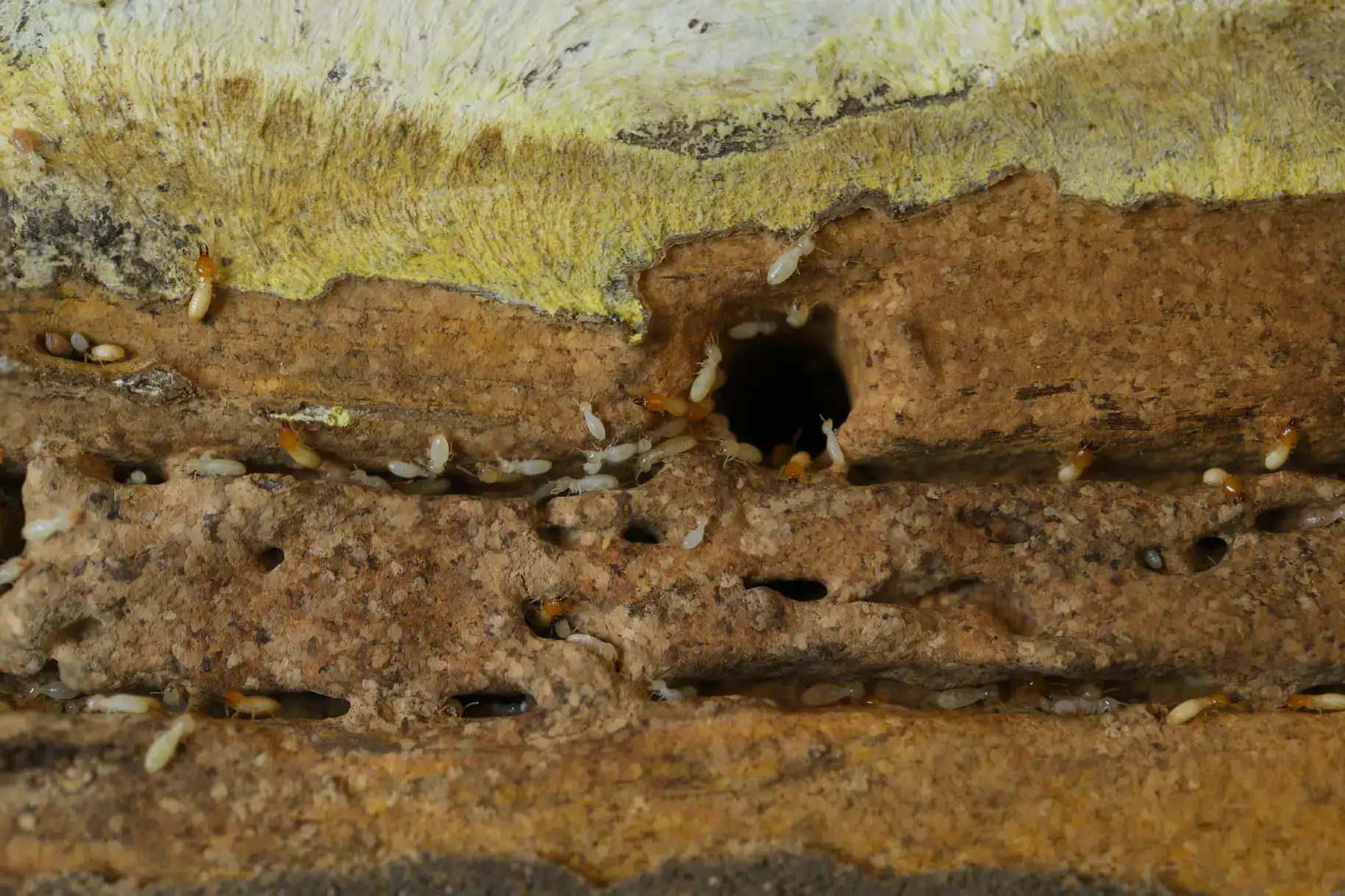
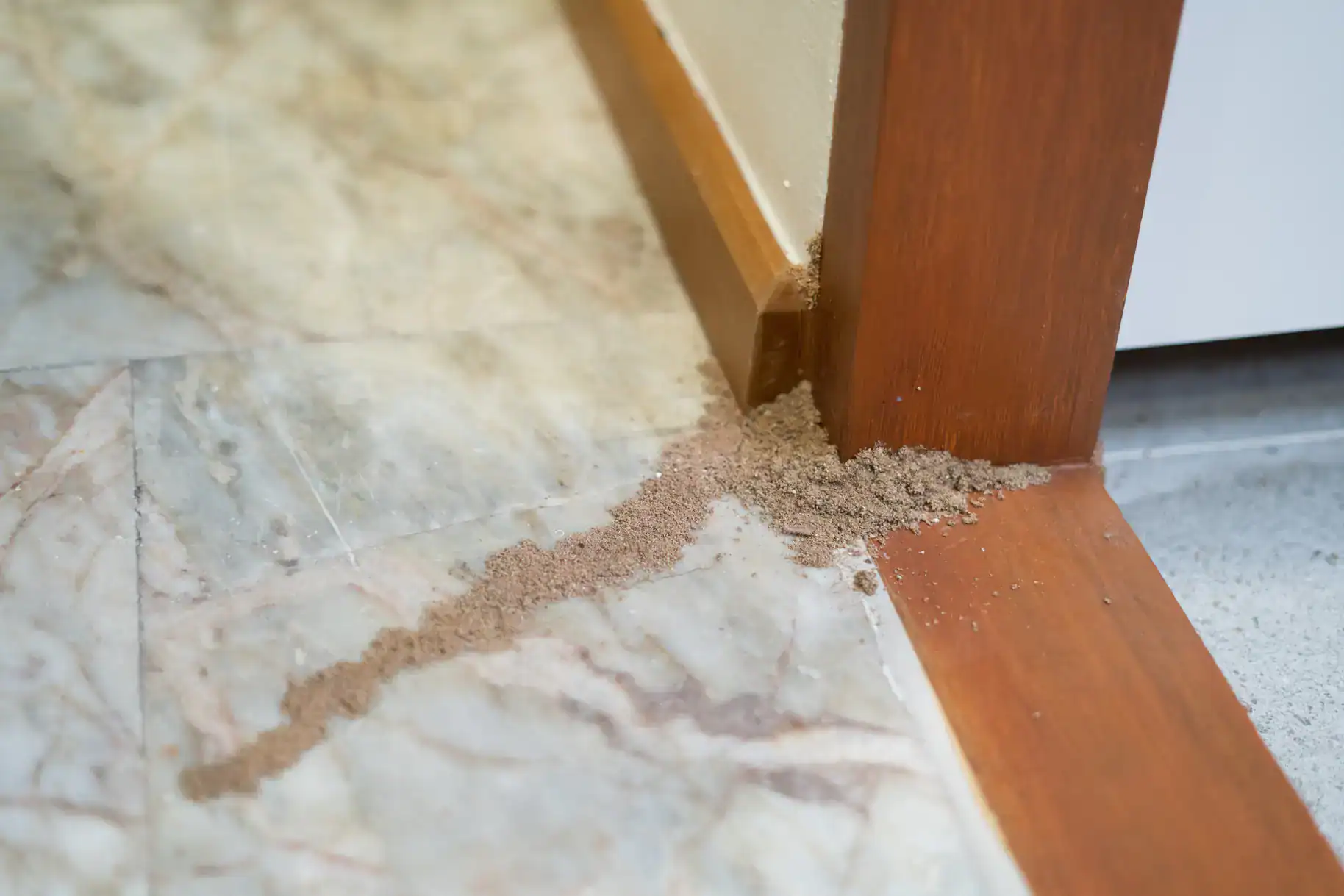
Other signs include mud tubes running along your foundation walls or basement framing these are the tunnels subterranean termites build to travel between the soil and their food source. Hollow-sounding wood when you knock on it, small piles of what looks like sawdust near baseboards or door frames, and doors or windows that suddenly stick without any obvious reason can all point to termite activity. In Richmond Hill’s Victorian-era homes, where wood substructures are often 100 years old or more, these signs can be subtle and easy to miss without a trained eye. A professional termite inspection is the only way to know for certain what you’re dealing with.
For Eastern Subterranean Termites which are the species you’re dealing with in Richmond Hill treatment almost always starts at the foundation. A licensed technician will apply a liquid termiticide barrier around the perimeter of your home, treating the soil so that termites moving through it are eliminated before they can reach the structure. In some cases, particularly where infestation is more advanced, direct wood treatment or injection into affected framing members is also part of the plan.
Termite baiting systems are another option, especially useful when liquid treatment isn’t practical or when you want ongoing monitoring after an initial infestation. Bait stations are installed around the property perimeter, and termites carry the bait back to the colony, which eliminates it over time. In Richmond Hill, where older foundations often have multiple potential entry points and some homes sit close to the wooded edge of Forest Park, a combination approach is sometimes the most thorough solution. Your technician will walk you through exactly what makes sense for your specific property before any work begins.
In almost every case, no. Standard homeowner’s insurance policies in New York including policies covering Richmond Hill properties treat termite damage as a maintenance issue, not a sudden or accidental loss. That means the structural repairs, replacement of damaged framing, and any remediation costs come entirely out of pocket. There’s no coverage to fall back on.
This is one of the reasons early detection matters so much in a neighborhood like Richmond Hill, where median home values are approaching $800,000 and the housing stock is predominantly older wood-frame construction. A termite colony feeding undetected for two or three years can cause tens of thousands of dollars in structural damage damage that would have cost a fraction of that to prevent with regular inspections and prompt treatment. The cost of a professional termite inspection is minimal compared to what an untreated infestation can do to a home’s structure and resale value.
If you’re financing the purchase with an FHA or VA loan, a Wood Destroying Organism (WDO) inspection report is typically required before the lender will approve the mortgage. This is especially common in Richmond Hill’s real estate market, where buyers are frequently purchasing older single-family Victorian homes that lenders want evaluated before committing to financing. Without that report, the transaction can stall or fall apart entirely.
Even for conventional purchases, a termite inspection is a smart move in Richmond Hill specifically. The neighborhood’s housing stock much of it built over 100 years ago carries a higher baseline risk for subterranean termite activity than newer construction. If you’re a seller, getting a pre-listing inspection means you’re not blindsided by a termite finding during the buyer’s due diligence period. If you’re buying, it gives you a clear picture of what you’re actually purchasing before you close. We provide the inspection documentation that buyers, sellers, and lenders need, and with same-day inspections frequently available, a tight closing timeline doesn’t have to be a problem.
Eastern Subterranean Termites need two things: wood and moisture. Older homes particularly the wood-frame Victorians that Richmond Hill is known for give them both in abundance. Wood sill plates in pre-war construction were often set directly on masonry foundations, creating direct wood-to-soil contact that subterranean termites exploit. Over a century of settling, foundation cracks, and aging mortar create the tiny entry gaps termites need and they only need 1/32 of an inch to get inside.
Moisture compounds the problem. Older plumbing, aging gutters that direct water toward foundations, and basements or crawl spaces that accumulate humidity over decades all create the conditions termites are drawn to. In Richmond Hill, homes along the northern blocks near Forest Park face additional pressure from the moist, organically rich soil in the park’s 538 acres of wooded terrain ideal habitat for subterranean colonies that forage outward through underground tunnels. A home doesn’t have to be in poor condition to be at risk. Even a well-maintained Victorian can have termite activity in areas that aren’t visible during a routine walkthrough.
The cost depends on the size of the property, the extent of the infestation, and what type of treatment is appropriate. For a standard single-family home in Richmond Hill, liquid barrier treatment typically runs in the range of $500 to $1,500 depending on linear footage and site conditions. Termite baiting systems can run higher depending on the number of stations required and whether ongoing monitoring is included. If there’s structural damage that needs to be addressed alongside the treatment, that’s a separate cost that varies based on scope.
What we’ll always do before any work begins is give you a written estimate at no charge. You’ll know the full cost upfront no vague ranges, no surprise add-ons after the job is done. For Richmond Hill homeowners whose properties have appreciated significantly in recent years, the cost of professional termite treatment is a straightforward investment in protecting that value. A home worth $784,000 that sustains undetected termite damage can lose 20% or more of its value and insurance won’t cover any of it. Getting a clear number upfront and making an informed decision is always the right starting point.
Useful Links