Hear from Our Customers
You stop hearing the scratching at 2 a.m. You stop finding droppings behind the stove. You stop wondering whether what’s in your walls is a mouse or something bigger. That’s what rodent control in Windsor Terrace actually looks like when it’s done right not just a trap set and a handshake, but a real inspection, real entry point work, and a treatment plan that accounts for where the pressure is coming from.
Windsor Terrace is a neighborhood where the rodent problem is structural. Your row house shares a foundation line with your neighbors. Prospect Park is half a mile wide and packed with Norway rats that forage outward into residential blocks every single night. Green-Wood Cemetery, right on your western edge, has undisturbed drainage infrastructure and stone walls that support rat colonies year-round. A single treatment without exclusion work doesn’t solve that it just delays the next call.
What you get from a properly executed rodent control service is a home where the entry points are sealed, the nesting sites are eliminated, and you’re not starting from scratch every fall when the temperature drops and the animals start looking indoors. For families with kids at home and Windsor Terrace has a lot of them that matters beyond convenience. Rodents carry real health risks, and prewar row houses with aging walls and shared utility lines give them more ways in than most homeowners realize.
We’ve been operating out of Brooklyn since 1971. That’s not a marketing line it means the Kourbage family has been treating the exact type of prewar brick row houses that line Windsor Terrace’s residential streets for over five decades. Richard Sr. built this company. Richard Jr. and Charles have been running it alongside him since the late 1980s. There’s no franchise behind our name, no national call center taking your information. We’re a family business with a half-century of Brooklyn experience, and we’ve worked on hundreds of homes in Windsor Terrace specifically.
We hold an A+ rating with the Better Business Bureau accredited since 1989 and apply only NYS Department of Environmental Conservation registered materials on every job. We’re fully licensed, bonded, and insured, and we’re regularly referred by New York attorneys and real estate brokers for property inspections and health code violation responses. If you’re in Windsor Terrace and you need someone who’s actually familiar with the neighborhood’s housing stock, its green space borders, and the rodent dynamics that come with both, you’re calling the right place.
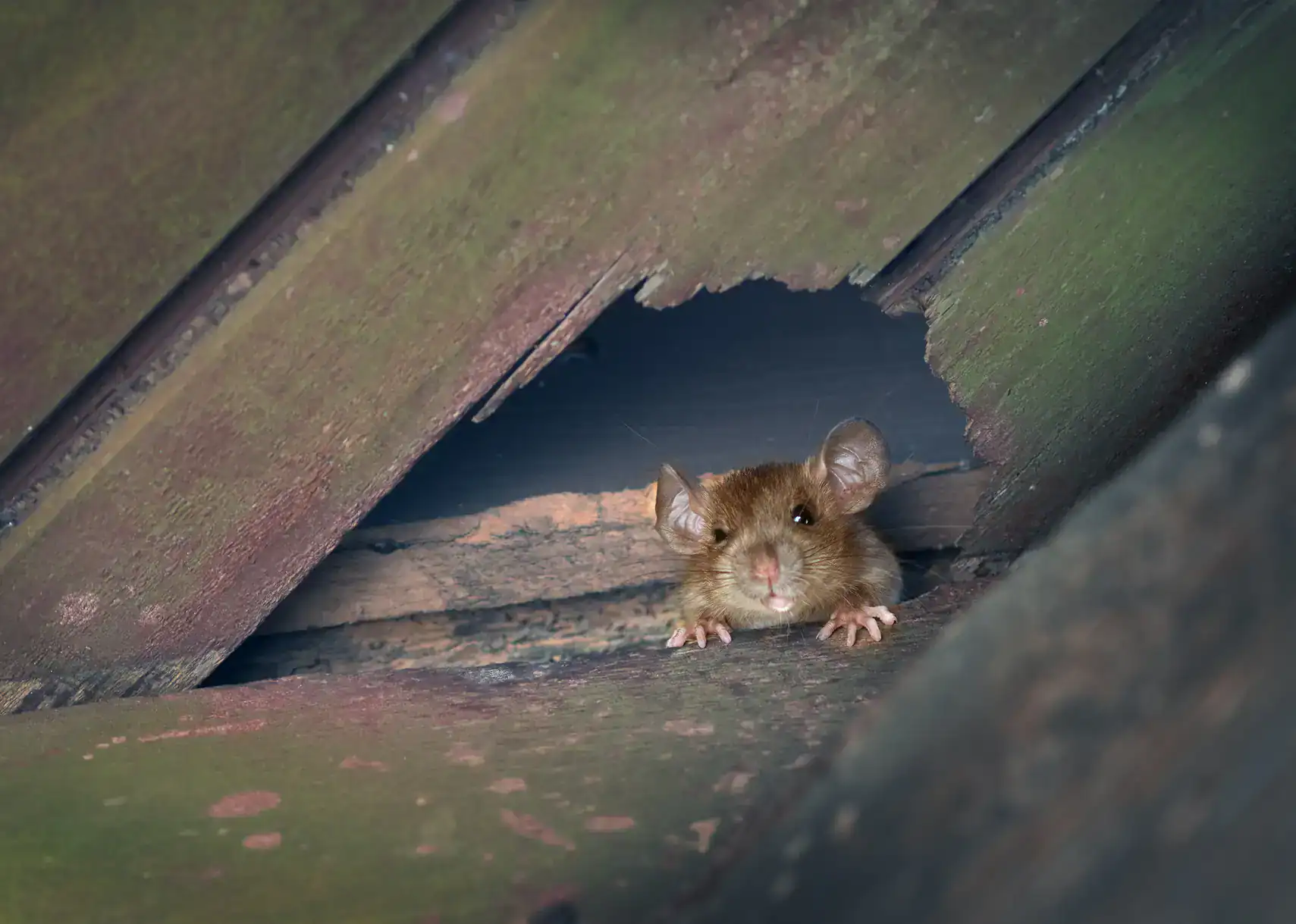
It starts with a thorough inspection. Not a glance around the kitchen a real walkthrough of your basement, your utility penetrations, your foundation perimeter, and your shared wall interfaces. In Windsor Terrace’s attached row houses, rodents almost never enter through one obvious gap. They move through aging mortar joints, original pipe chases, and the structural connections between attached units that have been settling and shifting for a hundred years. Finding the actual entry points takes time and experience, and that’s where the inspection earns its value.
Once the access points are identified, treatment and exclusion happen together. Trapping or baiting without sealing entry points is a short-term fix in a neighborhood bordered by two of Brooklyn’s largest green spaces. The exclusion work closing the gaps, reinforcing the vulnerable areas is what keeps the problem from coming back when the next wave of rodents moves in from Prospect Park in October.
After the initial service, we walk you through what was found, what was treated, and what you should watch for going forward. If your situation calls for follow-up visits or an ongoing maintenance plan, that gets discussed honestly not pushed. You’ll know what was done, why it was done, and what to expect next. Free estimates are available by phone or online, and appointments are guaranteed within 48 hours, with same-day service available in many cases.
Ready to get started?
Our rodent control services cover both the immediate infestation and the conditions that made it possible. That means rodent removal trapping, baiting, and eliminating active populations combined with a detailed inspection of how they got in. For Windsor Terrace homes specifically, that inspection pays close attention to the vulnerabilities that are common in pre-1939 construction: deteriorating mortar joints in brick and limestone facades, gaps around original gas and water line penetrations, basement window frames, and the foundation interfaces between attached units where row houses share structural elements.
The Prospect Expressway cuts directly through Windsor Terrace, and the drainage infrastructure and embankments along it create protected rodent habitat that continuously seeds the surrounding residential blocks. Our inspection accounts for that kind of environmental pressure not just what’s inside your home, but what’s driving activity toward it from the outside.
All materials we apply are registered with the NYS Department of Environmental Conservation, which matters if you have children or pets in the home. We’re also the company New York attorneys and real estate professionals refer when a property in Windsor Terrace has a health code violation or a rodent issue surfacing during a transaction so if you’re dealing with a 311 complaint or a DOHMH inspection, you’re calling the right place. A free phone consultation is available with no obligation, and we’re available 24 hours a day, seven days a week.
This is the most common frustration we hear in Windsor Terrace, and the answer almost always comes down to one of two things: the entry points weren’t fully sealed, or the environmental pressure around your home is continuous enough that new rodents are finding new ways in. Windsor Terrace sits between Prospect Park and Green-Wood Cemetery two massive green spaces that support large, self-sustaining rodent populations year-round. Norway rats from those areas forage outward into residential blocks nightly, and when temperatures drop in the fall, that pressure intensifies significantly.
If your previous treatment only addressed the animals inside and didn’t include exclusion work on the exterior, the infestation will return. In a neighborhood with this level of adjacent wildlife pressure, exclusion physically sealing the entry points in your foundation, walls, and utility penetrations isn’t optional. It’s the only part of the process that creates a durable result. Our inspections are designed specifically to identify those points in the prewar row house construction that defines most of Windsor Terrace’s housing stock.
The short answer is: through more places than you’d expect. Prewar brick and limestone row houses which make up the majority of Windsor Terrace’s residential buildings were constructed in the early 1900s through the 1930s. After nearly a century of freeze-thaw cycles, the mortar joints between bricks develop gaps. Original utility penetrations where gas lines, water pipes, and electrical conduit enter the building were never sealed to modern standards. Basement window frames settle and warp. Foundation lines crack.
In attached row houses, the problem is compounded by shared party walls and continuous foundation lines between neighboring units. Rodents don’t need to cross open ground to move from one building to the next they travel through the structural connections between attached homes. A gap that lets a rat into your neighbor’s basement can lead it directly into yours. This is why a thorough inspection of all shared structural interfaces is part of every service we provide in Windsor Terrace because treating your unit alone, without addressing the shared entry points, often isn’t enough.
Yes, and it’s well-documented. Windsor Terrace’s 2024 rat complaint rate was recorded at 73.66 per 10,000 residents more than twice the NYC citywide average of 28.41 and the neighborhood was specifically named in local news coverage as one of Brooklyn’s most rat-active areas. The geographic reason is straightforward: Prospect Park’s 526 acres provide ideal rodent habitat dense vegetation, water sources, organic matter, and minimal human disturbance. Norway rats, which are the dominant species in NYC, typically forage 100 to 150 feet from their nest. Every residential block in Windsor Terrace falls within that range from the park’s edge.
Green-Wood Cemetery on the western side adds to the pressure. Its 478 acres of undisturbed grounds, old stone walls, and underground drainage infrastructure support large rat colonies that continuously push outward into the surrounding neighborhood. This isn’t a problem that a one-time treatment resolves permanently. It’s a structural environmental condition that requires exclusion work and, for many Windsor Terrace homeowners, an ongoing maintenance relationship with a pest control provider who understands the neighborhood’s specific geography.
Rodents aren’t just a nuisance they’re a documented public health issue. The CDC identifies more than 35 diseases that rats and mice can spread to humans, including hantavirus, leptospirosis, salmonella, and rat-bite fever. Transmission happens through direct contact with droppings, urine, or saliva, and indirectly through fleas, ticks, and mites that feed on infected rodents. In a home where rodents are active inside the walls, in the basement, or behind appliances, contamination of surfaces and air quality is a real concern not a hypothetical one.
For Windsor Terrace families with young children at home, this is particularly relevant. PS 154’s growing enrollment reflects the neighborhood’s significant influx of young families over the past decade, and children are more vulnerable to the health effects of rodent contamination than adults. Beyond disease risk, rodents also chew through electrical wiring the National Pest Management Association estimates they cause up to 25% of all U.S. house fires annually. In a prewar row house with aging electrical systems, that’s not a statistic to brush off.
Fall is the peak season, and Windsor Terrace’s geography makes it more pronounced than in many other Brooklyn neighborhoods. As temperatures drop in September and October, rodent populations that have spent the summer in Prospect Park and Green-Wood Cemetery begin actively seeking indoor harborage. The vegetative cover in those green spaces thins out, outdoor food sources diminish, and the animals move toward the warmth and food availability of residential structures. Rodent activity increases by roughly 25% in winter months citywide in a neighborhood bordered by two of Brooklyn’s largest wildlife reservoirs, that seasonal surge hits harder.
The freeze-thaw cycles of a New York winter also progressively worsen the entry point vulnerabilities in Windsor Terrace’s prewar housing stock. Each winter, brick and mortar expand and contract, enlarging existing gaps and creating new ones. That’s why fall is the most important time to schedule an inspection and exclusion service before the animals are already inside and the entry points have had another winter to widen. If you’re already seeing activity, don’t wait for spring. The population inside your home will continue to grow throughout the winter.
Under the NYC Health Code, building owners including landlords are legally required to maintain their properties free of pests, including rodents. If a 311 complaint is filed or the NYC Department of Health and Mental Hygiene conducts an inspection and finds active rodent activity, the building owner can receive violations and fines. Repeated failures result in escalating penalties. Tenants in Windsor Terrace who are dealing with a rodent infestation and have notified their landlord in writing without a response have grounds to file a 311 complaint and request a DOHMH inspection.
For landlords and property owners in Windsor Terrace, we’re a company that New York attorneys and real estate professionals actively refer for exactly these situations health code violations, DOHMH inspection responses, and pre-sale pest remediation. Documentation matters in these cases, and our licensing, NYS DEC compliance, and professional service records hold up in legal and transactional contexts. Whether you’re a tenant dealing with an unresponsive landlord or a property owner trying to resolve a violation before it escalates, a free phone consultation with us is a straightforward first step.
Useful Links