
Hear from Our Customers

You stop second-guessing what you heard in the wall at 2 a.m. You stop wondering if the one mouse you saw last Tuesday has twenty cousins behind the baseboard. That’s what real pest control looks like not a temporary fix that sends the problem somewhere else, but a treatment that addresses why they’re there in the first place.
Murray Hill’s housing stock tells the whole story. Most of these homes were built in the 1940s and 1950s brick rowhouses, attached two-families, pre-war apartment buildings with decades of settling, cracked mortar, and utility gaps that pests know better than most homeowners do. Shared walls mean a problem next door can become your problem overnight, regardless of how clean you keep your place. That’s not a hygiene issue. That’s a structural reality.
Living near Kissena Park adds another layer. Squirrels and raccoons don’t stay in the park when fall hits they follow the warmth, and Murray Hill’s residential streets are right in their path. Whether it’s a rodent coming in through a foundation gap, a cockroach spreading through a shared utility chase, or something you brought home from a hotel near LaGuardia, the solution starts with understanding exactly what you’re dealing with and why.
We’ve been operating in New York City since 1976. That’s over five decades of treating the exact building types, the exact pest species, and the exact seasonal patterns that Murray Hill homeowners face every year. No national chain, no franchise model a family-owned operation that’s been doing this work longer than most of the competition has been in business.
What that means for you practically: the technicians who show up know NYC housing. We’ve worked in pre-war brick buildings, attached rowhouses, and multi-unit apartments across Queens, including the neighborhoods around Murray Hill. We know where mice enter a 1940s foundation. We know what a cockroach infestation looks like in a shared-wall building versus a standalone home. That kind of experience doesn’t come from a training manual.
We’re fully licensed by the New York State Department of Environmental Conservation and insured which matters when you’re letting someone into your home and trusting us to apply treatments safely around your family and pets. You’re not calling a guy with a spray bottle. You’re calling a licensed professional with 50-plus years of NYC-specific experience behind us.
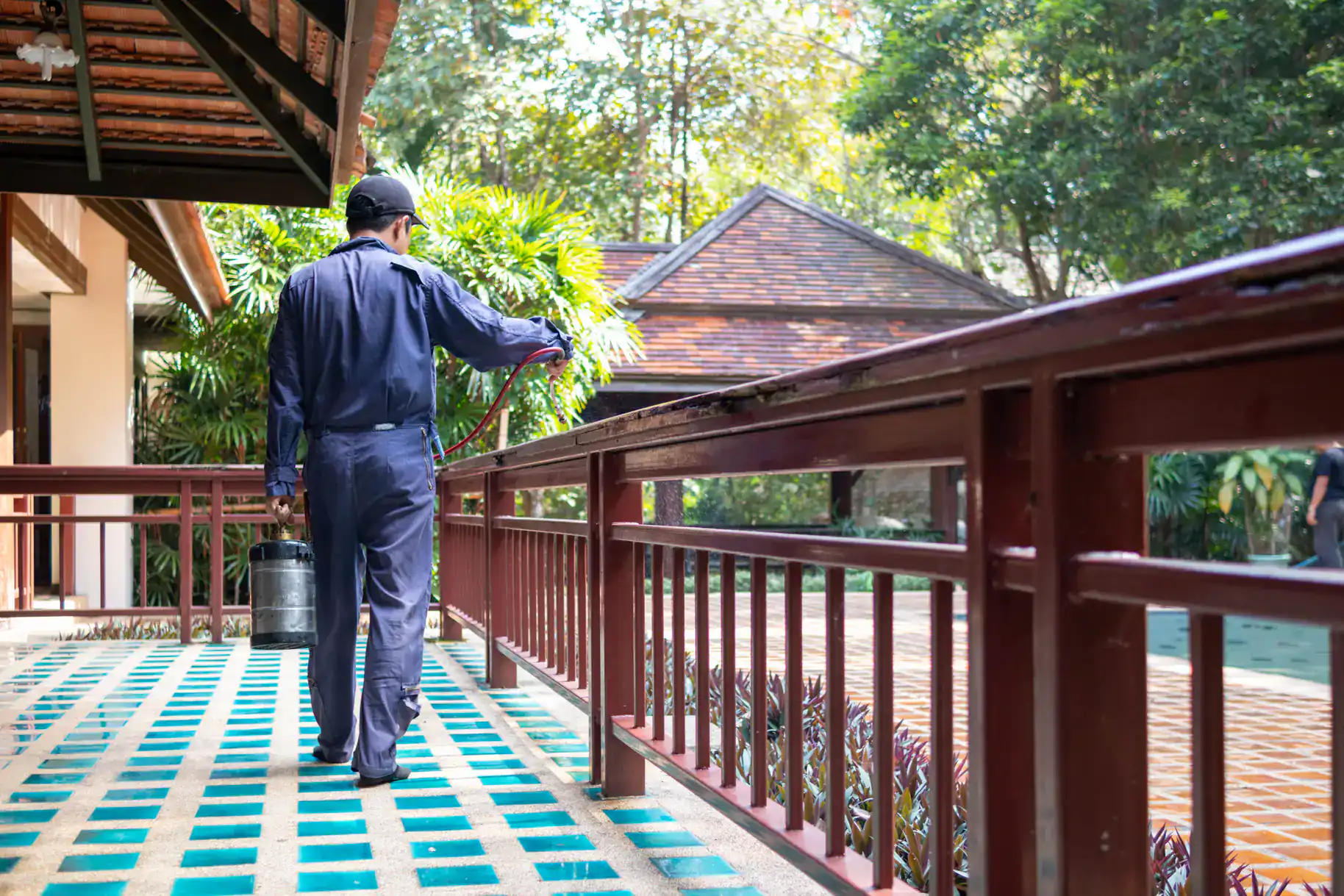
It starts with an inspection a real one, not a five-minute walk-through. Before we recommend any treatment, our technician looks at the actual conditions: where pests are entering, where they’re harboring, what’s attracting them, and what the structure of your home is doing to make it easier for them. In Murray Hill, that often means checking foundation gaps in older brick construction, utility penetrations, shared wall access points, and any moisture conditions that cockroaches and rodents gravitate toward.
From there, you get a clear picture of what’s happening and what the treatment plan looks like what materials we’ll use, where they’ll be applied, and what you need to do to prepare. We use EPA-registered materials and Integrated Pest Management principles, which means the approach is targeted, not just heavy. You’ll know the re-entry timeline and what to expect in the days following treatment.
If you’re a landlord dealing with a NYC Housing Code complaint or a 311 violation, we can document the service properly for DHPD compliance. If you’re a homeowner buying or selling in Murray Hill’s active real estate market where median property values are close to $800,000 and you need a Wood-Destroying Insect inspection report for your mortgage lender, that’s handled here too. The process is built around your situation, not a one-size-fits-all schedule.

Ready to get started?
We cover the full range of pest problems that Murray Hill homeowners and landlords actually deal with. Rodent control mice and rats is one of the most urgent calls in this neighborhood, especially in fall when animals start pushing in from the park corridors and the LIRR right-of-way near 150th Street creates additional harborage. One mouse sighting is not a small problem. A single female mouse can produce up to 60 offspring a year, which means early intervention matters more than most people realize.
Cockroach treatment, bed bug extermination, termite inspection and treatment, ant control, stinging insect removal it’s all on the table. Bed bugs in particular deserve a direct mention here: Murray Hill’s commuter population moves through Penn Station, hotels, and LaGuardia Airport regularly, and that kind of travel exposure is exactly how bed bug introductions happen. We handle both heat and chemical treatment protocols depending on the severity and the structure of the home.
For landlords managing rental buildings along Parsons Boulevard or Northern Boulevard, we provide building-wide treatment coordination and service documentation that holds up for NYC Housing Code compliance. For homeowners preparing to sell, WDI inspection reports are available for mortgage transactions a requirement that comes up regularly in Queens real estate closings and one that needs a licensed professional to complete. Whatever the pest, whatever the structure, the goal is the same: solve it completely, not temporarily.

One mouse is rarely just one mouse that’s the honest answer. Mice are nocturnal and conflict-avoidant, so if you’re seeing one during the day, it usually means the population behind your walls has grown large enough that they’re getting pushed out into open spaces. In Murray Hill’s older brick rowhouses and attached two-family homes, mice typically enter through foundation gaps, deteriorated mortar, or utility penetrations that have been there for decades. The building’s age works against you.
Signs beyond a sighting include droppings along baseboards or inside cabinets, gnaw marks on food packaging or structural materials, and a faint musky odor in enclosed spaces. If you’re hearing scratching in the walls at night, that’s a strong indicator of an active population. The right move is a professional inspection that identifies entry points and harborage not just a snap trap placed in the kitchen. Treating the symptom without sealing the entry is how the problem keeps coming back every season.
This is one of the most common questions we get, and it deserves a real answer rather than a vague reassurance. EPA-registered materials go through a federal review process that evaluates toxicity, environmental impact, and exposure risk before they’re approved for residential use. That’s not a marketing claim it’s a regulatory requirement. When a licensed applicator uses EPA-registered products correctly, the risk to people and pets is managed through proper application rates, targeted placement, and re-entry timing.
Before any treatment, you’ll get clear preparation instructions: what to put away, where to keep pets during the service, and how long to wait before re-entering treated areas. In Murray Hill households many of which include children, elderly residents, and pets we use an Integrated Pest Management approach, which means the goal is to use the most targeted, least disruptive treatment that solves the problem. That’s not a philosophy statement. It’s how the work actually gets done.
If your buyer is using an FHA or VA loan and many buyers in Queens do a Wood-Destroying Insect inspection report is typically required by the lender before closing. Even with conventional financing, many buyers and their attorneys request one as a condition of sale, particularly for older homes. In Murray Hill, where the median home construction year is around 1956 and a significant portion of the housing stock predates 1950, termite and wood-destroying insect activity is a real risk that buyers and lenders take seriously.
A WDI inspection report can only be issued by a licensed pest control professional it’s not something a general home inspector can provide. The report documents any evidence of current or past wood-destroying insect activity, including termites, carpenter ants, and wood-boring beetles. With median property values in the Murray Hill and Flushing area approaching $800,000, having this report ready before your listing goes active puts you in a stronger position and avoids last-minute delays at closing. We can schedule WDI inspections for Queens real estate transactions with the documentation your attorney and lender need.
The most common reason is that the source of the infestation wasn’t fully addressed the first time. In Murray Hill’s attached homes and multi-unit apartment buildings, cockroaches move through shared wall voids, plumbing chases, and utility runs that connect units. Treating one apartment or one room without addressing the building-wide pathway means you’re eliminating part of the population, not the infestation. They repopulate from adjacent spaces, and the cycle repeats.
There’s also a sanitation and harborage component that matters more in some situations than others. Murray Hill’s Northern Boulevard corridor has a concentration of Korean restaurants and Asian grocery stores food-service environments that can sustain large cockroach populations and create pressure on adjacent residential blocks. If you live near a commercial strip and your building has gaps in the exterior or around utility entries, you’re dealing with ongoing pressure from outside, not just a one-time event. A proper inspection identifies both the structural entry points and the harborage conditions inside and treatment that addresses both is what actually breaks the cycle.
Bed bugs don’t come from dirty homes they hitchhike. The most common introduction routes are travel, secondhand furniture, and contact with infested spaces like hotel rooms, transit seating, or other people’s homes. Murray Hill’s commuter population moves through Penn Station, LaGuardia Airport, and hotel stays regularly, and that kind of exposure is exactly how bed bugs enter homes that are otherwise well-maintained. They can also spread between units in multi-family buildings through wall voids and electrical outlets.
Getting rid of them requires more than a spray. Bed bug extermination involves a combination of heat treatment and chemical application depending on the severity of the infestation and the structure of the space. A professional inspection first identifies the scope how many rooms are affected, where the harborage points are, and what preparation the resident needs to do before treatment. Bed bug populations can double every two to three weeks under the right conditions, so waiting to see if the problem resolves on its own is not a viable strategy. We handle bed bug treatment in Murray Hill with protocols built for the types of housing in this neighborhood attached homes, co-ops, and multi-unit rental buildings included.
Under the NYC Housing Maintenance Code, property owners are legally required to keep buildings free of pests at all times. That obligation applies whether a tenant has complained or not but in practice, the enforcement process usually starts with a 311 complaint, which triggers a Health Department inspection. If the inspector finds evidence of infestation, an abatement order is issued requiring the landlord to hire a licensed pest control professional and document the remediation. Class B and Class C violations carry fines that compound if not addressed promptly.
For landlords managing rental buildings in Murray Hill whether it’s a two-family on a residential side street or a larger apartment building near Northern Boulevard the key is having a licensed, insured company that can provide proper service documentation. We’re NYSDEC-registered and can provide the service records that satisfy DHPD compliance requirements. Building-wide treatment coordination matters here too: treating one unit in a shared-wall building without addressing adjacent units and common areas is a temporary fix that leads to re-infestation and repeat violations. The goal is to resolve the violation and prevent the next one, not just check a box.
Useful Links
Other Services we provide in Murray Hill