
Hear from Our Customers
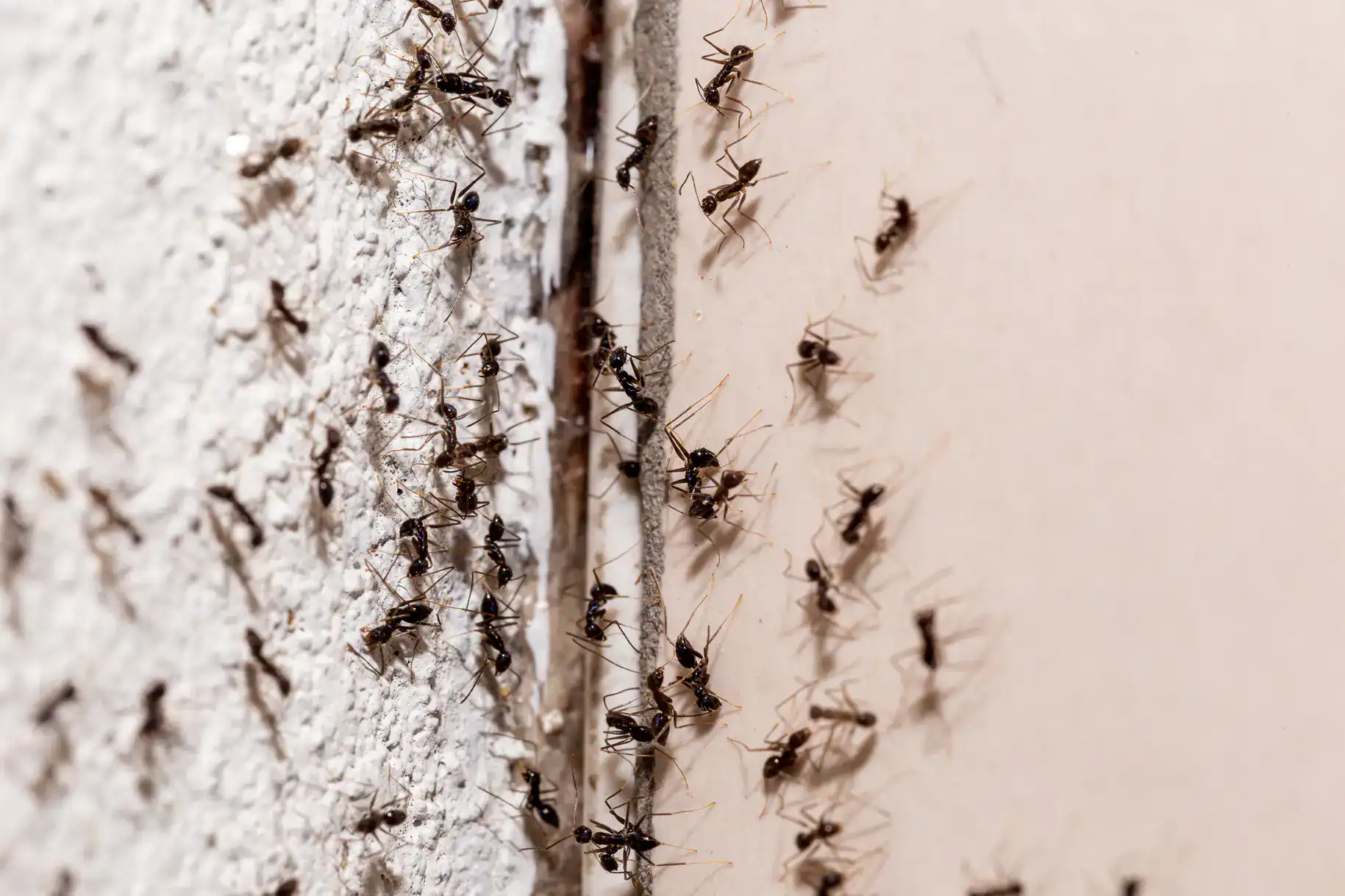
If you’ve been dealing with ants that disappear for a week and then come right back, the treatment you’ve tried whether that’s a can from the hardware store or a one-visit spray didn’t touch the colony. It just moved the problem around. The ants you see foraging across your kitchen counter or along your baseboard are scouts. The colony is somewhere else entirely: inside a wall void, under your foundation, or in moisture-softened wood framing you can’t see. Until the colony is gone, the ants keep coming.
Greenpoint’s geography makes this worse than most people expect. The neighborhood sits on a peninsula bordered by the East River to the west and north and Newtown Creek to the east and that consistent waterfront moisture creates exactly the conditions carpenter ants look for in wood-frame buildings. If you’re in one of the historic rowhouses on Freeman Street, Java Street, or India Street, your building has been absorbing that humidity for well over a hundred years. That’s just the reality of living in some of Brooklyn’s oldest residential structures.
On top of that, the pace of new construction along the waterfront has been displacing ant colonies from the ground at a scale most neighborhoods never see. When soil gets excavated for a new foundation near Kent Avenue or Quay Street, the colonies that were living there don’t vanish they move. And the nearest available structure is usually a pre-war building that’s been standing since before anyone alive today was born. Once the problem is properly treated colony and all you stop dealing with the cycle of temporary fixes and start actually getting ahead of it.
We’ve been a family-owned operation for over 50 years, serving every borough in New York City and Greenpoint has always been one of our core markets. That means the buildings on your block, the pest pressures specific to North Brooklyn, and the ant species most common in Greenpoint’s mix of pre-war rowhouses and newer waterfront construction are not new territory for us. We’ve been treating buildings like yours long before the waterfront rezoning changed what Greenpoint looks like.
We’re fully licensed, bonded, and insured, and we use only NYS Department of Environmental Conservation-registered materials which is a legal requirement in New York State. Every technician working in your home is a certified applicator. Our A+ rating with the Better Business Bureau of New York State reflects over five decades of consistent follow-through.
And our phones are answered 24 hours a day, seven days a week. If you find ants in your kitchen at 9 p.m. on a Friday, someone picks up. That alone puts us ahead of most of the competition.
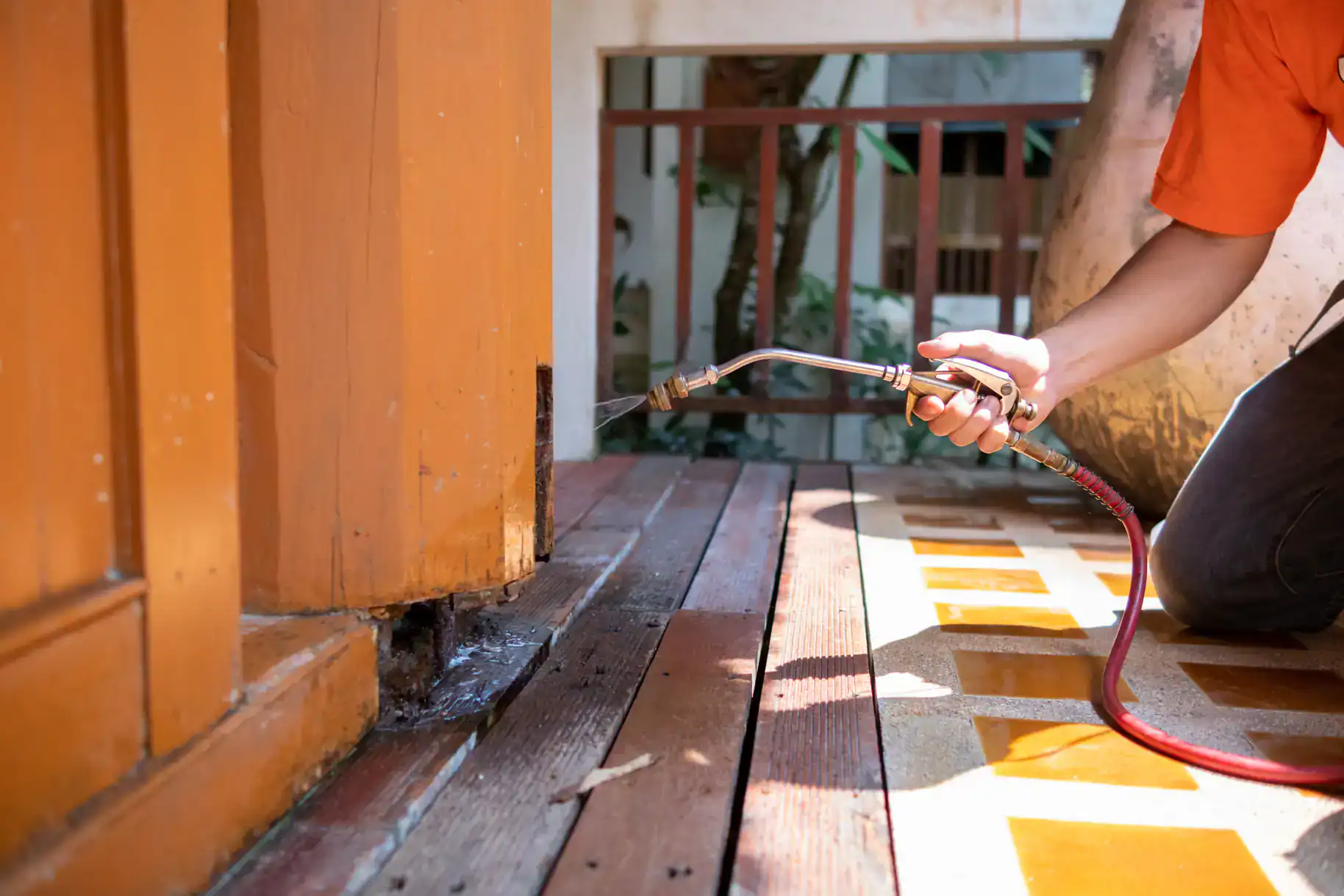
It starts with a free estimate. No obligation, no pressure just a clear picture of what you’re dealing with and what it’ll take to fix it. From there, the first visit is what we call the initial cleanout. Materials are applied both inside and outside your home, specifically formulated so that foraging ants carry the treatment back into the nest and share it with the colony. This is the part most DIY products and one-visit services skip entirely and it’s the reason those approaches keep failing.
Because ant colonies in Greenpoint’s older buildings can have satellite nests distributed across multiple locations inside wall voids, under a slab, in the wood framing around a window that’s been leaking for years one application rarely eliminates everything. That’s why the initial cleanout is always followed by scheduled follow-up visits. Depending on the severity and your property, those follow-ups happen weekly or every other week, with materials re-applied to exterior grounds and activity monitored each time. This isn’t an upsell it’s built into the process from the start, because it’s the only way to confirm the colony is actually gone and not just temporarily suppressed.
After the infestation is resolved, ongoing maintenance is available on whatever schedule makes sense for your home monthly, every other month, or seasonally. In a neighborhood where spring rains off the East River waterfront drive ant activity spikes and construction displacement keeps pushing new colonies toward established structures, having a scheduled maintenance visit in place is a lot cheaper than starting over from scratch each year.
Ready to get started?
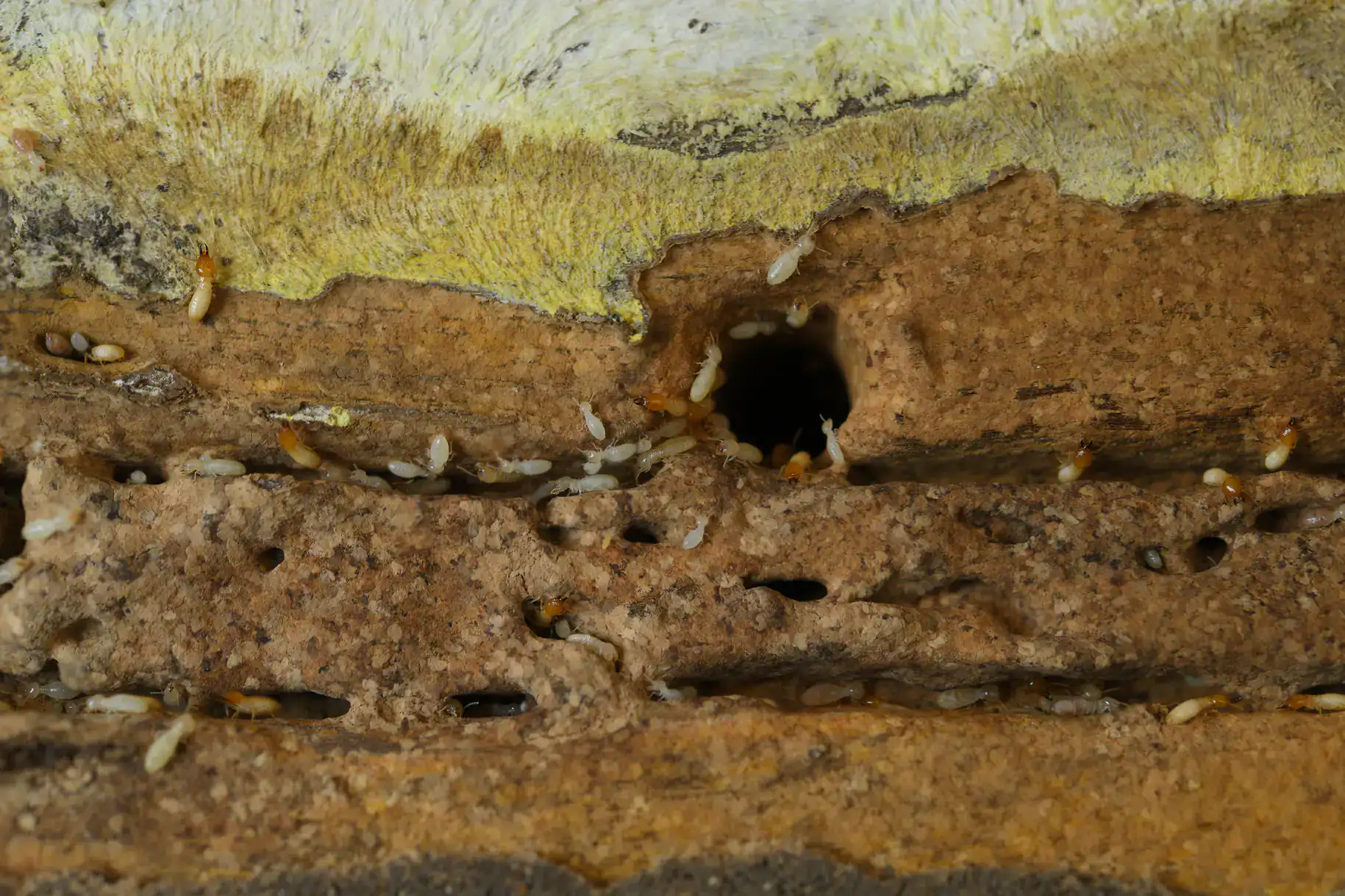
Not all ant problems in Greenpoint look the same, and the treatment approach depends entirely on what you’re dealing with. In the historic rowhouses and pre-war walk-ups that make up much of the neighborhood’s building stock particularly along the streets inside Greenpoint’s landmarked Historic District carpenter ants are the most serious concern. They don’t eat wood, but they excavate it to build nests, and they target wood that moisture has already softened. In a building that’s been absorbing East River humidity for a century, that can mean structural damage accumulating quietly inside your walls long before you see a single ant in the open.
Pavement ants are the ones you’re more likely to notice in ground-floor apartments and basement units, nesting under the cracked sidewalks and foundations along Manhattan Avenue and Nassau Avenue. Odorous house ants the small ones that smell faintly of rotten coconut when crushed are common in apartments near the neighborhood’s dense restaurant and food retail corridors, where food waste in adjacent commercial spaces gives them a consistent reason to forage. And in the newer multi-unit buildings along the waterfront, Pharaoh ants are the species most likely to cause problems. They thrive in climate-controlled, moisture-rich environments and require a fundamentally different treatment strategy than any of the others.
We handle all of them. Residential apartments, single-family rowhouses, multi-unit buildings, and commercial spaces our service is built around what’s actually in your building, not a one-size script. We also offer Demolition Clearance Certificates for commercial clients, which most local competitors don’t provide. Free estimates are available for all property types, and we offer a 10% senior discount to qualifying residents throughout Greenpoint.
This is the most common frustration with ant control, and the answer is almost always the same: the treatment didn’t reach the colony. Over-the-counter sprays and store-bought baits are designed to kill the ants you can see. But the ants you see are foragers a small fraction of a colony that may number in the thousands. The queen, the eggs, and the bulk of the population are somewhere else entirely, usually inside a wall void, under a foundation, or in a location you’d never think to spray.
In Greenpoint’s older buildings specifically, the problem compounds quickly. Pre-war construction means more entry points settling foundations, gaps at the sill plate, aging mortar joints, plumbing that’s been modified a dozen times over the past century. Ants exploit every one of them. A professional treatment uses materials that foraging ants carry back into the nest themselves, which is the only reliable way to reach the colony. Until the colony is eliminated, the trail on your counter will keep coming back no matter how many times you spray it.
Carpenter ants are a structural concern, not just an annoyance and in Greenpoint’s historic rowhouses and pre-war buildings, that distinction matters more than it would in a newer construction neighborhood. These ants don’t eat wood the way termites do, but they excavate it to build their galleries and nests. Over time, that excavation weakens the wood framing from the inside. The damage is invisible until it’s significant, and by then the repair costs are real.
The conditions in Greenpoint’s older building stock make carpenter ants particularly likely to establish themselves. High ambient moisture from the East River waterfront, century-old wood framing, aging window frames, and plumbing that has shifted and settled over decades all create exactly the soft, moisture-damaged wood that carpenter ants prefer. If you’re in one of the landmarked rowhouses on Kent Street, India Street, or Huron Street and you’re seeing large black ants especially near windows, door frames, or anywhere you’ve had a water issue it’s worth having a professional assess it sooner rather than later. The longer an established colony excavates, the more material it removes.
If nothing has changed inside your home but you’re suddenly dealing with ants, the most likely explanation is that something changed outside it. In Greenpoint, the most common culprit is construction. Between 2010 and 2024, Greenpoint and Williamsburg added more new housing units than any other neighborhood in New York City and that pace of development hasn’t stopped. Every time a foundation is poured, a vacant lot is cleared, or soil is excavated for a new building along the waterfront, the ant colonies living in that ground are displaced. They don’t disappear. They move laterally into the nearest available structure.
If there’s been active construction near your building along the Kent Avenue waterfront, near McGuinness Boulevard, or anywhere in the vicinity of Greenpoint Landing that displacement is a plausible explanation for a sudden infestation in a building that was previously fine. The Newtown Creek remediation activity in the eastern part of the neighborhood has a similar effect: ground drilling, soil sampling, and subsurface work disturb established colonies and push them toward adjacent structures. A professional treatment that addresses both the interior and the exterior grounds is the right response, because the source of the pressure is coming from outside.
The easiest way to tell them apart is size. Carpenter ants are significantly larger than the pavement ants or odorous house ants you’d typically see trailing across a kitchen counter they’re usually between a half-inch and an inch long, solid black or dark reddish-black, and they move with a purposeful, deliberate pattern rather than the erratic trailing you’d see from smaller species. If you’re seeing large ants near windows, door frames, baseboards, or anywhere moisture has historically been an issue in your home, carpenter ants are the more likely culprit.
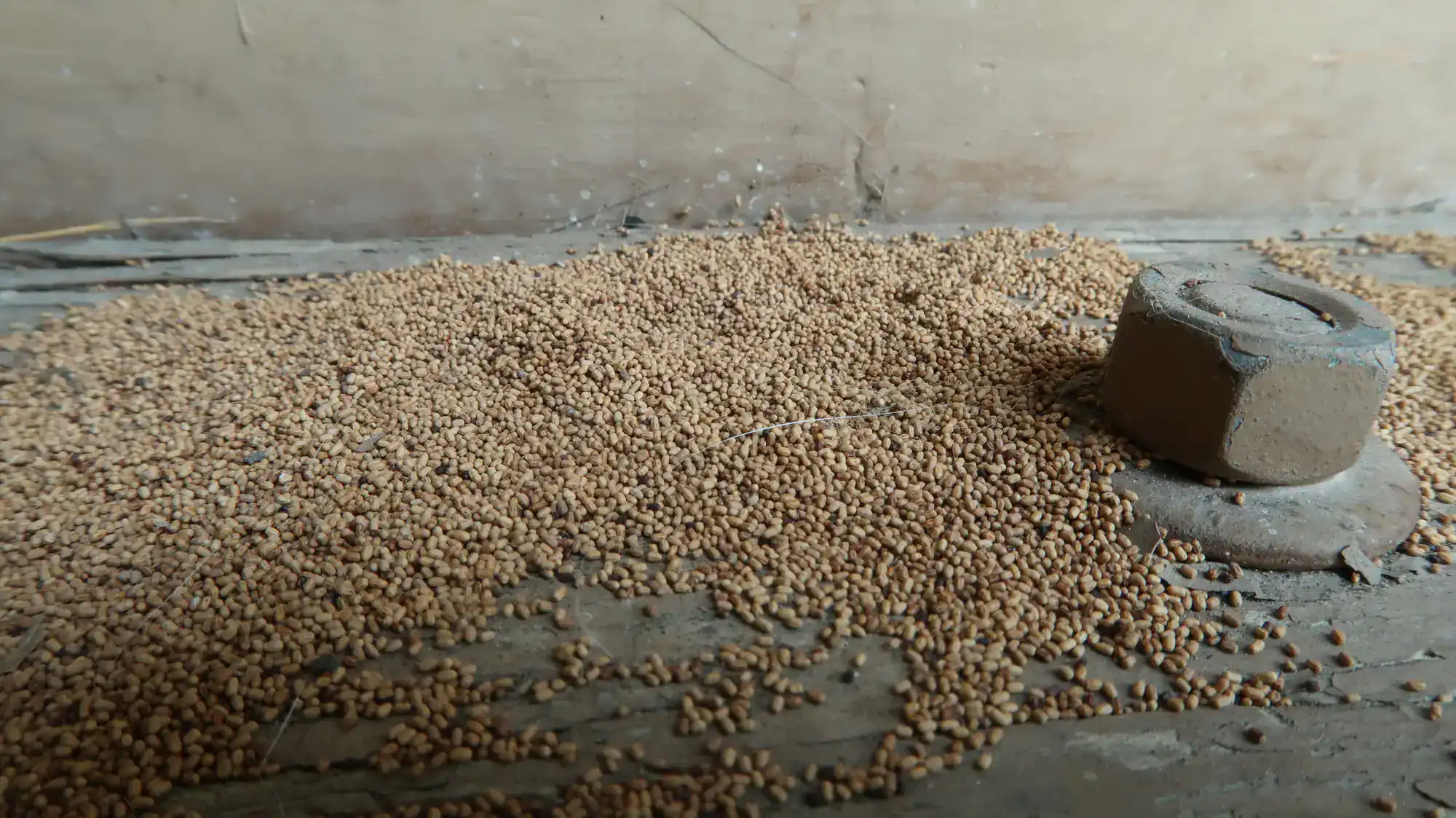
Another indicator is frass a fine, sawdust-like material that carpenter ants push out of their galleries as they excavate. If you find small piles of what looks like very fine wood shavings near a baseboard, behind a cabinet, or along a window frame, that’s a strong sign of an active carpenter ant nest nearby. In Greenpoint’s pre-war buildings, the most common nesting locations are inside wall voids adjacent to plumbing, in wood framing around windows that have had moisture infiltration, and in sill plates at the foundation level where water has been getting in. A professional inspection can confirm the species and identify where the nest is located.
Yes when it’s done correctly by a licensed applicator using properly registered materials. In New York State, all pest control services must be performed using NYS Department of Environmental Conservation-registered pesticides, applied by a certified technician. These are state-regulated products applied in controlled quantities to targeted locations not broadcast spraying throughout your living space. The approach is precise, not heavy-handed.
For households with children, pets, or anyone with sensitivities, our technicians will walk you through re-entry timing before they start meaning you’ll know exactly when it’s safe to return to treated areas and what precautions apply in the hours immediately following treatment. In Greenpoint’s dense apartment buildings, where units share walls and ceilings with neighbors, the targeted application approach also means there’s no unnecessary exposure beyond the treated areas. If you have specific concerns about a particular product or application method, ask during the free estimate a technician can explain exactly what will be used and why before any work begins.
Yes, and for most Greenpoint properties it’s worth considering. A single treatment even a thorough one eliminates the active infestation, but it doesn’t permanently change the conditions that made your building attractive to ants in the first place. In a neighborhood with persistent waterfront moisture, aging building stock, and ongoing construction displacing colonies from the surrounding soil, the pressure on your home doesn’t go away after one visit. Scheduled maintenance keeps that pressure managed.
After the initial cleanout and follow-up visits confirm the colony is gone, we offer flexible maintenance scheduling monthly, every other month, or seasonally depending on your property and what level of ongoing activity you’re seeing. There’s no mandatory long-term contract, which matters in a neighborhood with as many renters as Greenpoint. You schedule what makes sense for your situation. For homeowners in the Historic District’s older rowhouses or property managers overseeing multi-unit buildings near the waterfront, a regular maintenance visit in early spring before the first warm rains drive peak ant activity tends to be the most cost-effective way to stay ahead of the problem rather than respond to it after the fact.
Useful Links