Hear from Our Customers
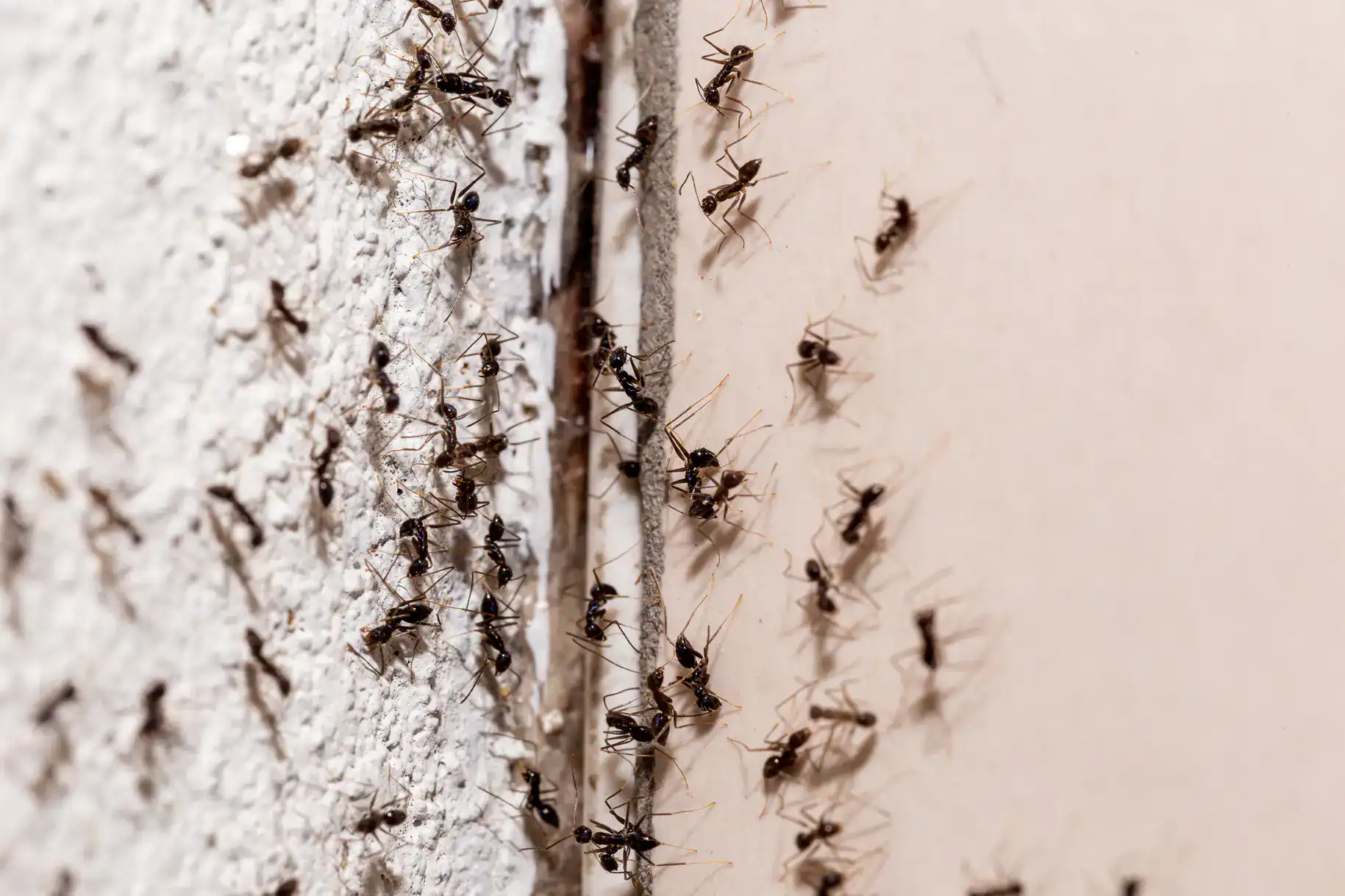
Most ant treatments fail because they only hit what you can see. The ants on your counter are foragers scouts sent out by a colony that could have tens of thousands of members nesting inside your walls, under your foundation, or deep in moisture-damaged wood. Killing the trail doesn’t end the problem. It just sends it somewhere else.
Jamaica’s housing stock makes this especially relevant. A lot of the homes here were built in the 1920s through the 1950s older wood, older foundations, and the kind of aging structure that gives ants exactly what they need. Add in Southeast Queens’ well-documented rising water table and chronic basement moisture issues, and you’ve got conditions that are genuinely favorable to carpenter ants and odorous house ants year-round, not just in summer.
When the infestation is actually eliminated not just suppressed you stop finding ants in your food, your bathroom, your kids’ rooms. You stop buying sprays that work for a week and then don’t. If you’re near Baisley Pond Park or on one of the residential streets south of Jamaica Avenue, you already know how persistent this problem can be. Getting it handled properly means it stays handled.
We were founded by Richard Kourbage and have been family-owned and operated for over 40 years, serving the five boroughs of New York from our Brooklyn headquarters on Flatbush Avenue. That’s not a marketing line it means we’ve been treating homes in Jamaica, Hollis, and South Jamaica long enough to know exactly what we’re dealing with.
We hold an A+ rating with the Better Business Bureau of New York State, are fully licensed and insured, and use only NYS Department of Environmental Conservation-registered materials. Our phone lines are answered 24 hours a day, seven days a week so when you find ants at 9 PM on a Sunday, you’re not leaving a voicemail.
For Jamaica residents who’ve dealt with unreliable contractors before, the combination of 40-plus years in business, documented reviews, and real licensing credentials matters. Our reputation is built job by job, neighborhood by neighborhood.
The first step is an inspection of your property inside and out. In Jamaica’s older single-family and two-family homes, that means checking the basement, the foundation perimeter, any moisture-damaged wood, and the common entry points that aging structures tend to develop over time. If you’re near Baisley Pond Park, the exterior inspection matters even more, because carpenter ant colonies often originate in the park’s mature trees before migrating into adjacent homes.
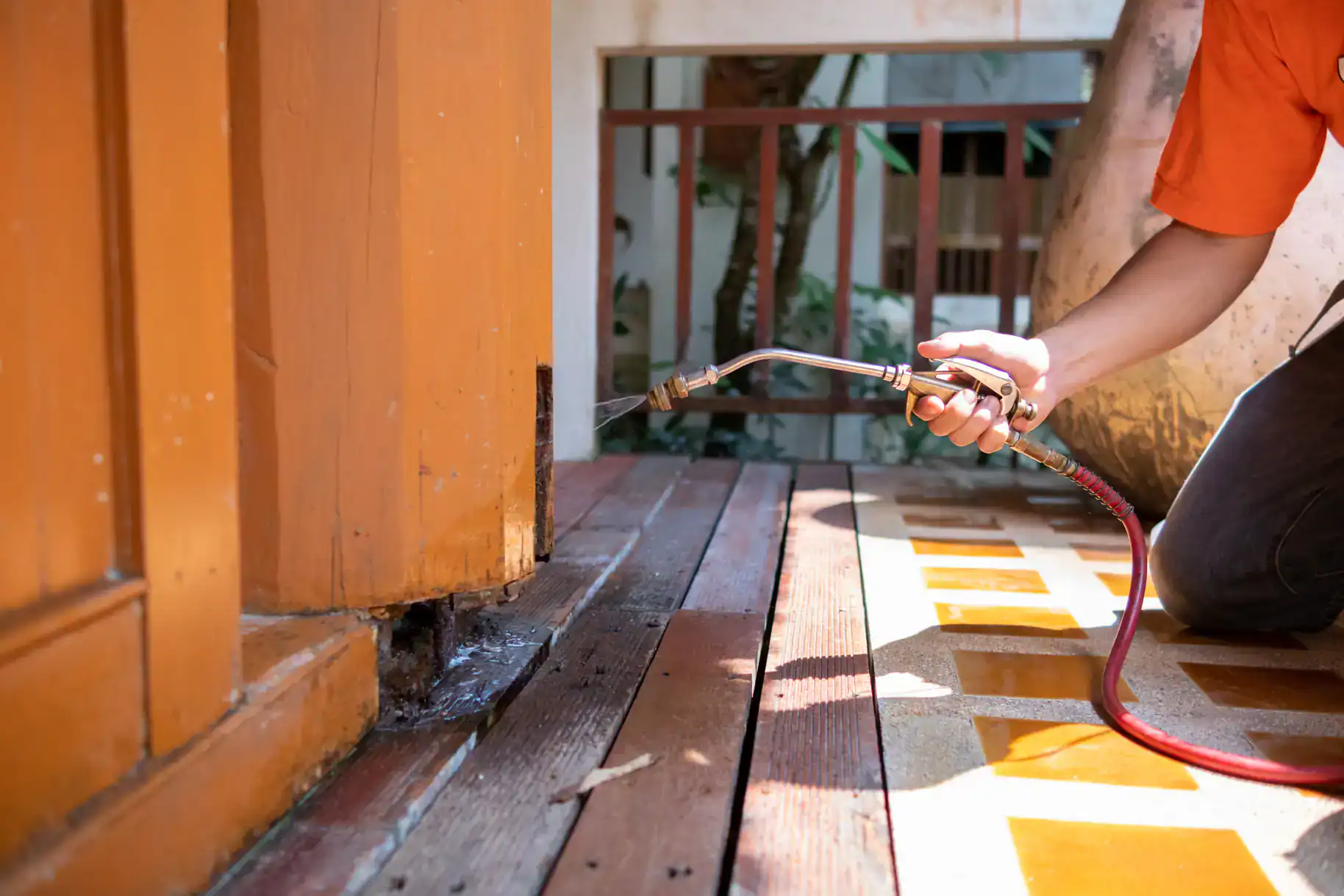
From there, we perform an initial cleanout using materials that are specifically designed to be carried back into the colony by forager ants. This is the critical part that store-bought sprays miss entirely the goal is colony elimination, not just surface knockdown. The materials are applied both inside and outside the property, targeting the source rather than just the symptom.
Because ant infestations in Jamaica homes frequently involve multiple satellite nests, the initial treatment is followed by scheduled return visits weekly, every other week, or monthly, depending on the severity. Each return visit re-applies materials, monitors activity, and confirms the infestation is moving toward full elimination. All materials used are NYS DEC-registered, applied by licensed technicians who know the difference between a controlled, targeted treatment and a spray-and-hope approach.
Ready to get started?
Our ant control service in Jamaica covers the full scope of what a real infestation requires: interior and exterior treatment, colony-targeting materials, and a follow-up schedule that doesn’t stop until the problem is resolved. There are no one-visit guarantees here, because anyone who’s dealt with ants in an older Jamaica home knows that one visit rarely finishes the job.
For property managers and landlords in Jamaica especially those managing multi-family homes, apartment buildings, or units in large cooperative complexes like Rochdale Village we handle multi-unit coordination and provide the documentation you need to demonstrate compliance with NYC housing code. Under city law, ant infestations are a violation of the warranty of habitability, and a 311 complaint can trigger an HPD inspection fast. Having a licensed, documented exterminator on record protects you legally and practically.
For homeowners, our service includes a free estimate upfront, flexible maintenance scheduling once the infestation is cleared, and a 10% discount for senior residents a meaningful offer in a neighborhood where roughly 15% of the population is 65 or older. Whether you’re dealing with carpenter ants in a moisture-damaged basement, pavement ants coming up through a cracked foundation, or Pharaoh ants in a warm interior space, the treatment is matched to what’s actually there not a generic spray applied the same way regardless of species or severity.
The most common reason ant problems keep coming back is that the treatment never reached the colony. Store-bought sprays and even some professional treatments only address the forager ants you can see the ones traveling along your counters, baseboards, or window sills. The colony itself, which can contain tens of thousands of ants and multiple queens, stays intact and keeps sending out new foragers.
In Jamaica specifically, the problem is compounded by the neighborhood’s housing stock and environmental conditions. Many homes here are pre-war construction with aging wood, deteriorating foundation seals, and structural gaps that give ants easy access and ideal nesting conditions. Southeast Queens also has a documented rising water table issue a legacy of the former Jamaica Water Supply operations that leads to chronic basement moisture. Carpenter ants and odorous house ants are strongly attracted to damp wood and wet structural materials, which means homes with wet basements are at higher risk and need treatment that addresses both the infestation and the conditions driving it.
The fix is colony elimination, not surface suppression. That requires materials designed to be carried back into the nest by forager ants, applied both inside and outside the property, followed by return visits to confirm the colony is actually gone.
Yes, it matters different ant species behave differently and require different treatment approaches. The most common species encountered in Jamaica and the broader Queens area are carpenter ants, odorous house ants, pavement ants, and Pharaoh ants.
Carpenter ants are the most structurally concerning. They don’t eat wood, but they excavate it to build nests, and they’re particularly drawn to moisture-damaged wood which is why homes near Baisley Pond Park or with basement flooding histories tend to see them more often. Odorous house ants are smaller and typically found in kitchens and bathrooms, attracted to food and moisture. Pavement ants are common in older homes with cracked foundations and come up through gaps in concrete and masonry. Pharaoh ants are a specific challenge in warm indoor environments they’re known for splitting their colonies when disturbed, which means an improper treatment can actually make the infestation worse by spreading it to new areas of the home.
Identifying the species before treating is part of what a professional inspection covers. We match the treatment materials and application method to the specific ant you’re dealing with, not apply them generically.
For most ant species, the immediate health risk is low but “mostly an annoyance” undersells what an untreated infestation can turn into. Carpenter ants are the exception that changes the conversation. They excavate wood to build nests, and in Jamaica’s older housing stock homes built in the 1920s through 1950s with wood framing, aging floor joists, and moisture-prone basements a long-term carpenter ant infestation can cause real structural damage. It’s slow, it’s not always visible, and by the time you see the signs, the damage is already done.
Beyond structural risk, ants near food preparation areas create contamination concerns, and certain species like Pharaoh ants have been associated with spreading bacteria in indoor environments. If you have young children at home and over 22% of Jamaica’s population is under 17 an active infestation near food or food prep surfaces is worth taking seriously. The practical answer is that ignoring it doesn’t make it smaller. Ant colonies grow, and satellite nests spread. The longer the infestation runs, the more access points get established and the harder it is to fully eliminate.
Under New York City housing law, landlords are legally required to maintain pest-free conditions in all rental properties. An ant infestation qualifies as a violation of the warranty of habitability meaning your landlord has an obligation to address it, and you cannot be charged for the cost of treatment as a tenant.
If your landlord isn’t responding, you can file a formal pest complaint through NYC 311, which can trigger an inspection by the NYC Department of Housing Preservation and Development (HPD). If an inspector confirms the infestation, a formal violation is issued against the property which creates legal and financial pressure on the landlord to act. Keep a written record of any communication you’ve had with your landlord about the issue, including dates and what was said. If the problem is in a multi-unit building which is common in Jamaica, particularly in older apartment buildings and cooperative complexes HPD inspections can sometimes prompt building-wide treatment rather than just your individual unit. Knowing your rights is the first step. If you’re unsure where to start, calling us for a consultation can also help you understand the scope of what you’re dealing with before filing a complaint.
This is one of the most common questions, and it’s a fair one especially in a neighborhood where the majority of households include children. The honest answer is that professional ant control, done correctly, is meaningfully safer than most people expect, and in many cases safer than repeated DIY treatments with over-the-counter products.
We use only NYS Department of Environmental Conservation-registered materials. These are state-regulated products applied in controlled quantities by licensed technicians not the same as grabbing a can off a shelf and spraying it yourself without knowing the concentration or where it’s going. Before any treatment, our technicians walk you through what to expect, including re-entry timing and any household-specific precautions based on your situation. If you have very young children, pets, or anyone with respiratory sensitivities, mention that when you call it affects how the treatment is planned and applied. The goal is to eliminate the infestation without creating a new problem in the process, and a licensed operator has both the training and the legal accountability to do that correctly.
Yes we offer a 10% discount for senior residents, and it applies to ant control services in Jamaica. Given that roughly 15% of Jamaica’s population is 65 or older and Jamaica Estates, just to the north, has an even higher concentration of senior homeowners this is something worth knowing upfront rather than finding out after the fact.
We provide free estimates for all ant control work. That means you know what you’re getting into before any work begins no ambiguous pricing, no pressure to commit before you’ve had a chance to think it over. For Jamaica residents managing household budgets carefully, the free estimate is the most practical place to start. It tells you the scope of the problem, what treatment will involve, and what it will cost, with no obligation attached. Flexible maintenance scheduling is also available once the infestation is cleared weekly, every other week, or monthly so ongoing protection doesn’t have to mean a rigid contract or a surprise bill.
Useful Links
Other Services we provide in Jamaica