Hear from Our Customers
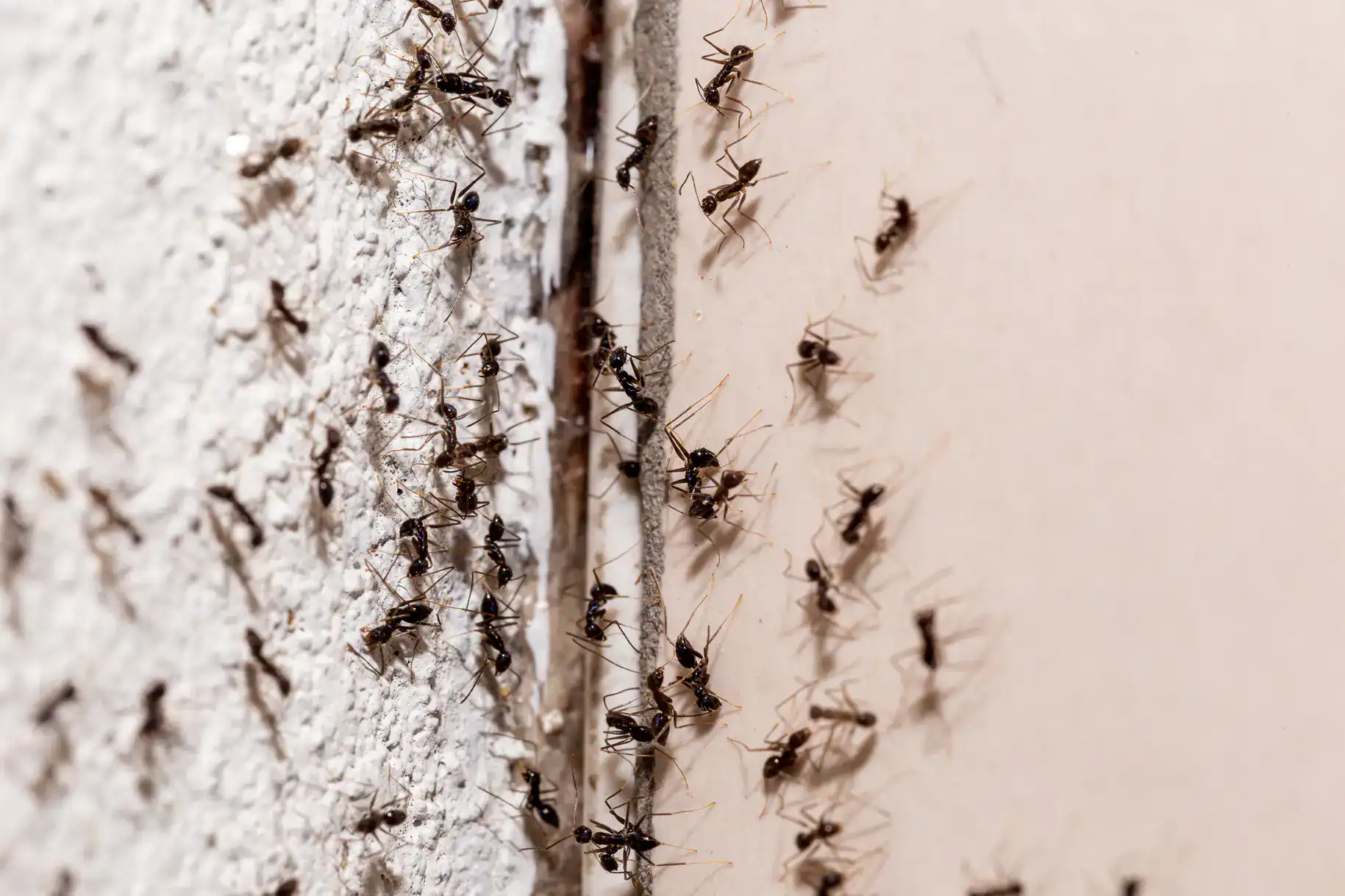
Most people dealing with ants in Midtown have already tried the store-bought sprays. They work for a day or two, then the trail reappears sometimes in a completely different part of the apartment. That’s not bad luck. That’s how ant colonies work. The ants you see are foragers. The colony which can number in the tens of thousands is somewhere else entirely, often inside a wall void, a plumbing chase, or a utility corridor that runs through multiple floors of your building.
When the colony is eliminated, not just disrupted, the difference is immediate and lasting. No more trails across your kitchen counter before your morning coffee. No more ants near your bathroom pipes or showing up in places that don’t even make sense. You stop buying sprays that don’t work and start having one less thing to deal with in a city that already demands enough of your attention.
Midtown’s environment makes this harder than it sounds. The sheer density of concrete and asphalt creates an urban heat island effect that accelerates pavement ant colony growth and keeps them active longer than in less urbanized areas. Add in the ground-floor restaurants in Hell’s Kitchen, the food corridors along 32nd Street in Koreatown, and the near-constant construction disrupting colonies throughout the neighborhood and you have a pest pressure situation that requires a real plan, not a one-time visit.
We’ve been handling pest problems across New York City’s five boroughs for over 40 years. We know the difference between treating a Murray Hill high-rise and a Hell’s Kitchen walk-up, and we understand how ant infestations move through Midtown’s specific mix of pre-war structures, mid-century towers, and newer residential conversions. That kind of building-specific knowledge isn’t something you pick up from a manual.
We hold an A+ rating with the Better Business Bureau of New York State and use only NYS Department of Environmental Conservation-registered materials applied by licensed, certified technicians. That matters in Midtown specifically because the NYC Housing Maintenance Code requires licensed exterminators for residential buildings, and working with anyone who can’t demonstrate that compliance puts you and your property at risk.
Our phones are answered 24 hours a day, seven days a week. Not a voicemail. A real person. In a neighborhood where your schedule doesn’t follow a 9-to-5, that availability is the difference between addressing a problem today and watching it get worse.
The first step is identification. Not all ants are the same, and the treatment that works on pavement ants nesting beneath a Midtown sidewalk is different from what’s needed for pharaoh ants traveling through the plumbing infrastructure of a residential high-rise. Before anything is applied, our technician identifies the species, locates the likely harborage points, and assesses the scope including whether the infestation is isolated to your unit or distributed across the building.
From there, the initial cleanout begins. We apply NYS DEC-registered materials that forager ants carry back to the colony and share a transfer effect that reaches the source of the infestation rather than just killing what’s visible. This is the critical difference between a treatment that lasts and one that sends the colony temporarily underground only to resurface two weeks later.
Because pest pressure in Midtown doesn’t stop after a single visit especially in buildings near active restaurant corridors or ongoing construction our process includes scheduled follow-up visits. Weekly, every other week, or monthly, depending on what the situation requires. The goal isn’t to manage the problem indefinitely. It’s to eliminate the colony and confirm it stays gone. That’s what the maintenance schedule is built around, and it’s why the multi-visit approach consistently outperforms anything you’ll find in a hardware store aisle.
Ready to get started?
We handle ant control for both residential and commercial properties throughout Midtown from individual apartments in Tudor City and Murray Hill to ground-floor retail spaces and restaurant operations in the Theater District and along Eighth Avenue in Hell’s Kitchen. Our service is not a one-size approach. What’s applied, where it’s applied, and how the follow-up schedule is structured depends entirely on what’s found during the initial assessment.
For residential buildings particularly the high-rises that define so much of Midtown’s housing stock pharaoh ant infestations require a coordinated baiting strategy rather than a surface spray. These ants move through plumbing and electrical conduits, which means a treatment that only addresses one unit misses the broader infestation entirely. Our technicians are trained specifically for multi-unit building environments and understand how to apply treatments that are effective without creating safety concerns for neighboring units, children, or pets.
For commercial properties, we also issue Demolition Clearance Certificates a specialized service that most residential-focused competitors cannot provide. All materials we use are NYS DEC-registered, all our technicians are licensed and certified, and we are fully bonded and insured. Free estimates are available before any work is scheduled, and we offer a 10% senior discount. Every job is backed by the same standards that have kept our BBB rating at A+ for over four decades.
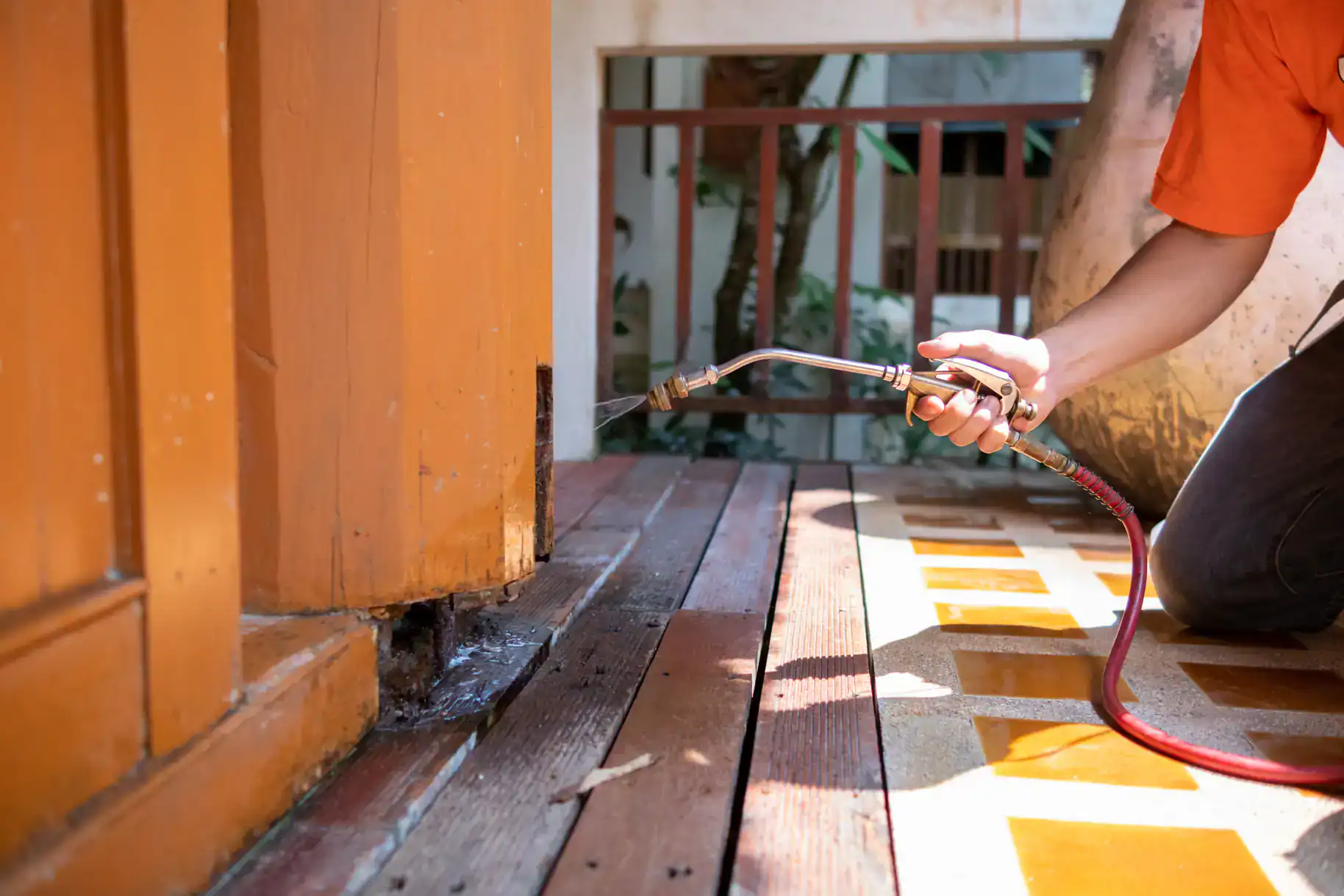
The ants you’re seeing are foragers their job is to scout for food and bring it back to the colony. When you spray them, you eliminate the scouts but leave the colony intact. Within days, the colony sends out a new wave of foragers, and the cycle repeats. This is why store-bought sprays feel like they work initially and then fail. They address the symptom, not the source.
In Midtown specifically, the problem is compounded by the building environment. If you’re in a high-rise, the colony may be located in a wall void or utility corridor several floors away from where you’re seeing activity. If you’re in a pre-war building near a ground-floor restaurant common throughout Hell’s Kitchen and the 34th to 42nd Street corridor the food source sustaining that colony is outside your unit and outside your control. Professional treatment that uses transfer-effect baiting reaches the colony directly, which is the only approach that produces results that actually hold.
This is one of the most common questions from Midtown residents, and the answer surprises most people. Ants particularly pharaoh ants, which are among the most prevalent species in Manhattan high-rises don’t climb the outside of a building to reach upper floors. They travel through the building’s internal infrastructure: plumbing chases, electrical conduits, wall voids, and the gaps around pipes where they pass through floors and ceilings. A colony can effectively move through an entire building using pathways that are completely invisible to residents.
Researchers studying urban ant populations in Manhattan have documented species capable of infiltrating apartments as high as the sixth floor through exactly these pathways. In older buildings and Midtown has significant pre-war and mid-century stock settling foundations and aging construction create additional gaps that ants exploit. This is why treating a single unit rarely solves the problem in a multi-story building. The infestation is almost always building-wide, and the treatment strategy needs to reflect that.
Under New York City’s Housing Maintenance Code and state habitability law, yes landlords are legally required to maintain residential units free from pests and to address conditions that attract them. An ant infestation is considered a violation of the warranty of habitability, which means a landlord cannot simply ignore the problem or place all responsibility on the tenant. If your landlord is unresponsive, you have grounds to file a complaint with the NYC Department of Housing Preservation and Development.
There’s an important detail here, though. The Housing Maintenance Code also specifies that when landlords do hire pest control services, they must use licensed exterminators who follow city and state safety rules and use certified products. If your building’s management is sending someone who can’t demonstrate NYS DEC licensing, that’s a compliance issue and it’s worth knowing before you assume the treatment being applied is legitimate or effective. We are fully licensed, bonded, and insured, and all materials we use are NYS DEC-registered, which satisfies both the legal requirements and the practical ones.
In most suburban or rural environments, ant activity genuinely drops during winter because outdoor temperatures suppress colony behavior. Midtown is different. The combination of Midtown’s urban heat island effect driven by the extraordinary density of concrete, asphalt, and heated building infrastructure and the consistently heated interiors of residential high-rises means that indoor ant infestations, particularly pharaoh ant colonies, can remain fully active through the coldest months of the year.
If you’re seeing ants in your Midtown apartment in January or February, that’s not unusual, and it’s not a sign that the problem will resolve on its own once spring arrives. Pharaoh ant colonies that have established themselves inside a building’s infrastructure don’t experience the seasonal dormancy that outdoor colonies do. They have warmth, moisture from plumbing, and food sources from the building’s residents everything they need to stay active year-round. Treatment during winter is just as effective as during peak season, and addressing the problem before spring activity accelerates is generally the smarter move.
The two species that account for the overwhelming majority of ant control calls in Midtown are pavement ants and pharaoh ants, and they require meaningfully different treatment approaches. Pavement ants nest beneath sidewalks, foundations, and street-level infrastructure which Midtown has in extraordinary abundance. They enter buildings through cracks in foundations, gaps around utility penetrations, and any opening at or near ground level. Heavy rain events are a reliable trigger: when their underground nests flood, they move inside, which is why ground-floor and lower-floor units in Midtown often see sudden ant activity after significant rainfall.
Pharaoh ants are the primary concern in high-rise residential buildings. They’re small, light-colored, and capable of nesting inside wall voids, behind electrical outlets, and within the building’s mechanical infrastructure. Unlike pavement ants, pharaoh ants cannot be effectively treated with spray spraying them actually causes the colony to split and spread, making the infestation worse. They require a targeted baiting approach that the colony carries back and distributes internally. Carpenter ants are also present in Midtown’s older pre-war building stock, particularly where moisture damage or aging wood provides nesting conditions. Correct identification before treatment is not optional it’s the foundation of an approach that actually works.
Yes we offer a 10% senior discount on ant control services. Midtown Manhattan’s residential population includes a significant number of long-term residents who have lived in the neighborhood for decades, many in the same pre-war and mid-century buildings that now present the greatest structural vulnerability to ant entry. For residents on fixed incomes in one of the most expensive rental markets in the country, that discount is a straightforward acknowledgment that professional pest control should be accessible not a luxury reserved for newer, higher-earning arrivals.
Beyond the discount, our free estimate policy means there’s no financial commitment required just to understand what the problem is and what it will take to fix it. You call, describe what you’re seeing, and get a clear picture of the process and the cost before scheduling anything. For a Midtown resident managing a demanding schedule and a tight budget, that transparency matters. There are no surprise charges after the visit and no pressure to commit to a service plan before you’ve had a chance to evaluate whether it makes sense for your situation.
Useful Links
Other Services we provide in Midtown