Hear from Our Customers
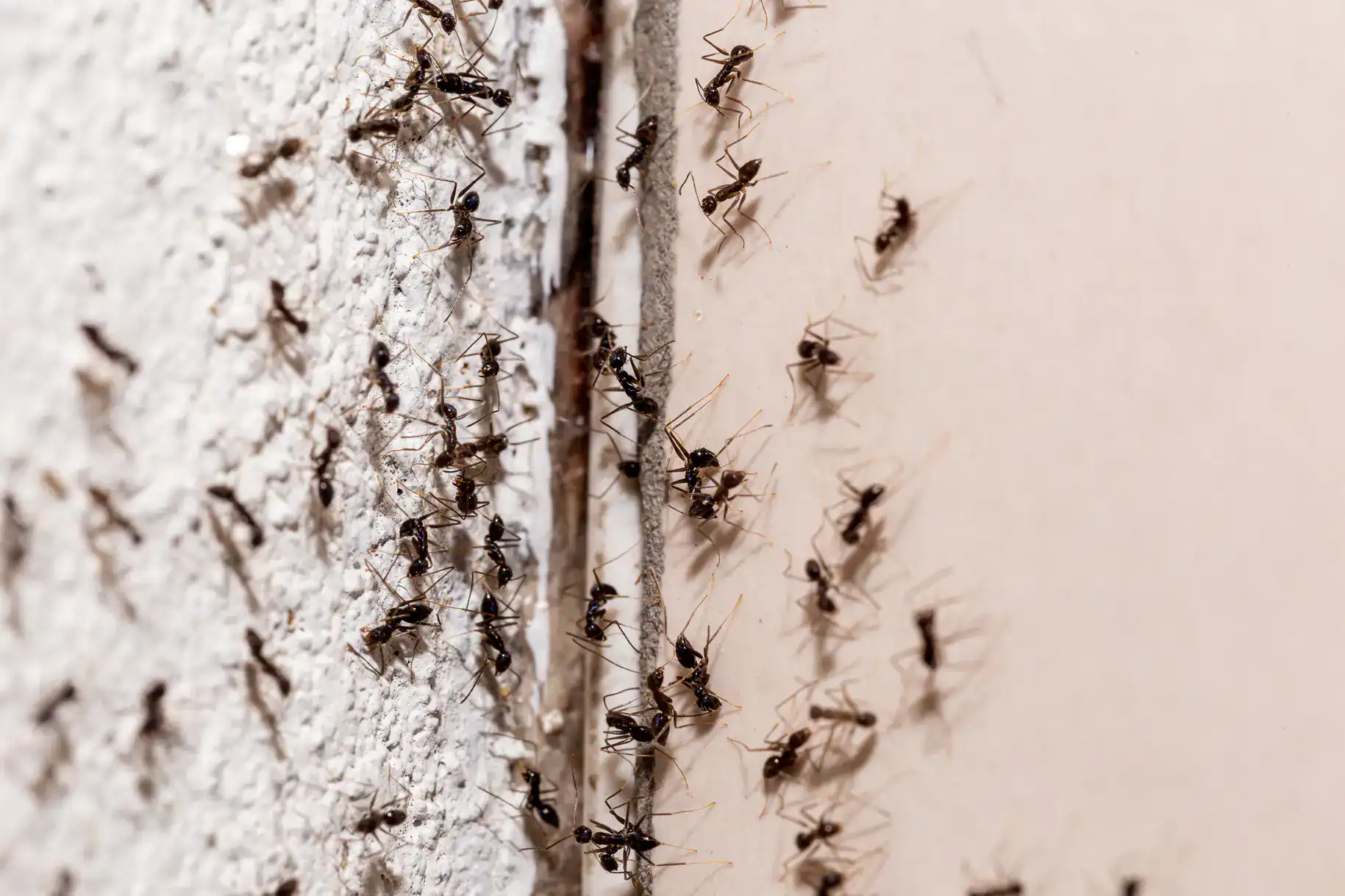
When you spot ants trailing across your kitchen counter or along the baseboards of your Tribeca loft, what you’re seeing is the small part of a much larger problem. Ant colonies in pre-war cast-iron buildings the kind that line Hudson Street, Franklin Street, and West Broadway can contain tens of thousands of individuals nesting deep inside original wood framing, behind plaster walls, and beneath century-old floor joists. The foragers you see are just the ones sent out to find food. The colony stays hidden until it’s properly targeted.
That’s the core difference between a professional ant removal treatment and whatever you’ve already tried. Store-bought sprays kill what’s visible. Our approach uses materials that forager ants carry back into the nest and share with the rest of the colony reaching the source instead of the surface. For Tribeca’s older buildings, where moisture from the Hudson River waterfront and aging plumbing create ideal nesting conditions, that distinction matters a lot.
What changes after a proper treatment is simple: the trail stops, the activity dies down, and your home stays that way. No more second-guessing whether it worked. No more watching the same ants reappear three days after you sprayed something yourself. Just a clean result, backed by follow-up visits to confirm it holds.
Kingsway Exterminating Company is a family-owned, fully licensed pest control company that has been serving all five boroughs of New York City for over four decades. Founded by Richard Kourbage and headquartered in Brooklyn, we built our name on one straightforward standard: get it right, stand behind it, and treat every property with the same care we’d want in our own home.
Tribeca is not a generic service area for us. We’ve worked in the converted warehouse lofts and landmarked co-op buildings of lower Manhattan long enough to know how ant colonies behave in 150-year-old construction where they nest, how they travel through shared plumbing chases and floor voids, and why a treatment that doesn’t account for the building’s age and layout rarely holds. From Duane Park to the cobblestone blocks near Staple Street, we know this neighborhood.
We carry an A+ rating with the Better Business Bureau of New York State, and we use only NYS Department of Environmental Conservation-registered materials applied by licensed, bonded, and insured technicians. You can verify all of it before you ever call.
It starts with a free estimate. A licensed technician comes to your property, assesses where the activity is concentrated, identifies the species involved whether you’re dealing with carpenter ants in original wood framing, pharaoh ants traveling through your building’s plumbing conduits, or pavement ants entering from ground level and explains exactly what treatment is appropriate. In Tribeca’s multi-unit loft buildings, that assessment often includes a conversation about shared building infrastructure, because ant colonies don’t respect unit boundaries.
The first visit is the initial cleanout. Materials are applied both inside and outside the property specifically formulated so that forager ants carry the treatment back to the nest and share it with the colony. This is not a surface spray. It’s a transfer-based approach designed to reach the population you can’t see. For Tribeca buildings with original cast-iron facades and landmarked exteriors, we work within the building’s parameters and coordinate with building management where needed.
Because ant infestations in older Manhattan buildings frequently involve multiple colonies, one treatment is rarely the end of the story. Follow-up visits weekly, every other week, or monthly depending on the severity allow us to re-apply materials, monitor activity, and confirm the infestation is fully resolved. You set the schedule. No rigid contracts, no guesswork, no disappearing after the first visit.
Ready to get started?
Ant control in Tribeca requires a different level of attention than a standard residential treatment. The neighborhood’s defining building stock cast-iron and brick warehouse conversions from the 1850s through the 1880s, now reimagined as luxury lofts creates specific vulnerabilities that newer construction simply doesn’t have. Aging wood framing, original floor joists, decades of accumulated gaps around plumbing penetrations, and moisture from the Hudson River waterfront all contribute to an environment where carpenter ants and pharaoh ants can establish themselves deep inside a building’s structure, often undetected until the infestation is well-advanced.
Our ant control services cover the full scope of what that environment demands: interior and exterior treatment, species identification, colony-targeting application, and scheduled follow-up visits to confirm the result. If you’re in a co-op or condominium building common throughout Tribeca’s converted warehouse properties we can work with your building’s management to address shared spaces and common areas, not just your individual unit. That building-wide perspective is what separates a temporary fix from a lasting one.
Under New York City’s Housing Maintenance Code, landlords are legally required to keep residential properties free of pest infestations. If you’re a property manager or building owner in New York County, that’s not just a service consideration it’s a compliance requirement. Our licensing and documentation make that process straightforward. And for any resident with children at home including families near PS 234 Independence School all materials we use are NYS DEC-registered, with clear guidance on re-entry timing after every treatment.
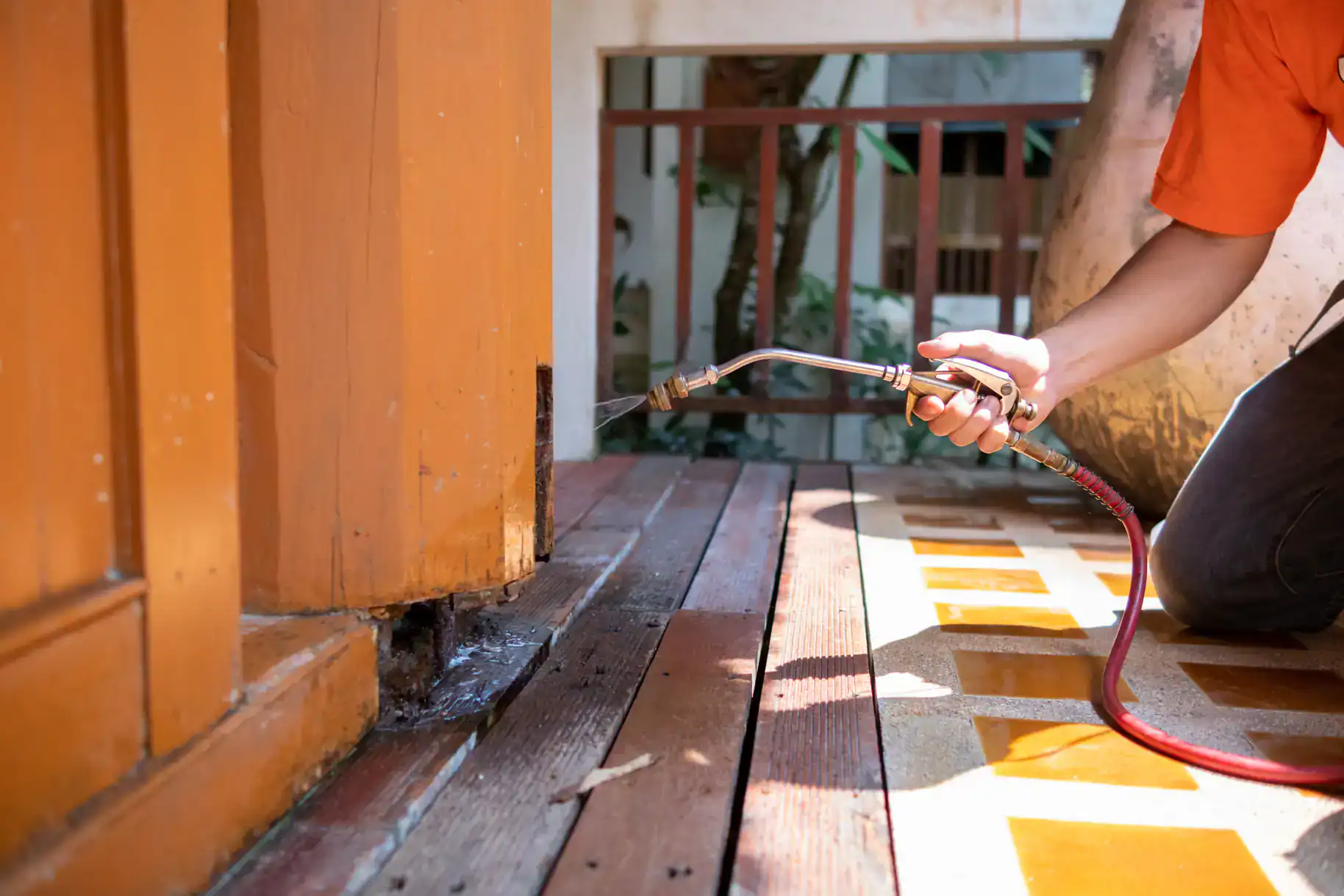
This is the most common frustration we hear from residents in Tribeca’s pre-war loft buildings, and the answer almost always comes down to the same thing: the treatment addressed the foragers but left the colony intact. Ant colonies in older Manhattan buildings can contain tens of thousands of individuals. When you kill the ants you can see with a spray, a trap from the hardware store, or even a basic professional treatment that doesn’t use transfer-based materials the colony simply produces more foragers. Within days or weeks, the trail reappears.
The buildings themselves compound the problem. In a 150-year-old cast-iron warehouse conversion, there are countless entry points and nesting sites that are completely invisible from inside the living space gaps around original plumbing, voids inside structural beams, spaces beneath original hardwood floors. A treatment that doesn’t account for the building’s age and construction type will consistently underperform. Our approach targets the colony at its source using materials that forager ants carry back and share with the nest population which is the only way to break the cycle in buildings like the ones that define Tribeca.
Carpenter ants are the largest ant species you’re likely to encounter in a Tribeca building typically black or dark brown, and noticeably bigger than the small pavement ants or pharaoh ants that also show up in lower Manhattan. If you’re seeing large, dark ants near windows, along baseboards, or coming out of wood trim especially in a building with original wood framing or exposed structural beams carpenter ants are a serious possibility. They don’t eat wood the way termites do, but they excavate it to build nests, and in a 140-year-old building, that activity can compromise structural integrity over time.
Pharaoh ants are the opposite tiny, pale yellowish ants that tend to travel in trails through plumbing and electrical conduits. They’re particularly problematic in multi-unit loft buildings throughout Tribeca because they establish satellite colonies across entire floors and are notoriously difficult to eliminate without a targeted, professional approach. Pavement ants are small, dark, and typically enter from ground level common near the restaurant-dense blocks of Tribeca where food waste is abundant. Species identification matters because the treatment strategy is different for each one. A licensed technician can confirm what you’re dealing with on the first visit.
Yes when it’s done correctly by a licensed professional using the right materials. We use only NYS Department of Environmental Conservation-registered products, which are state-regulated for safety and applied by certified technicians who know exactly where, in what quantities, and in what manner to apply them in a residential setting. Professional-grade does not mean indiscriminate. It means controlled, targeted, and effective.
After treatment, your technician will give you specific guidance on re-entry timing typically a short window while materials dry or settle, after which the space is safe for children and pets. If you have specific concerns about a particular area of your home, a pet with sensitivities, or an infant in the household, mention it before the treatment begins. That kind of information shapes how and where materials are applied. Tribeca families near PS 234 Independence School and PS 150 ask about this regularly, and it’s always worth having the conversation directly rather than assuming a one-size-fits-all answer.
Absolutely and this is one of the most important things to understand about ant infestations in Tribeca’s multi-unit loft buildings. Ant colonies don’t recognize the boundaries between units. They travel through shared wall voids, plumbing chases, elevator shafts, and floor voids. A colony established in one unit can send foragers into adjacent units, units on the floor above, and even common areas like hallways and utility rooms. In a converted warehouse building where the original structural layout creates extensive shared infrastructure, this kind of lateral movement is the norm, not the exception.
This is why treating a single unit while leaving the rest of the building unaddressed rarely produces lasting results. If you’re a resident in a Tribeca co-op or condominium and you’re seeing ongoing ant activity despite previous treatments, the issue may be originating from a shared space or a neighboring unit. We can work with building management to assess the scope of the infestation and coordinate a building-wide treatment approach where needed. If you’re a property manager or building superintendent, that conversation is worth having before the complaints start coming in from multiple floors.
Ant activity in Tribeca peaks in spring typically April through June as colonies expand after winter and foragers push into buildings in search of food and water. Summer sustains high pressure, particularly in ground-floor and basement units near the Hudson River waterfront where humidity stays elevated. A second wave often follows in early fall as ants begin preparing for winter, seeking warmth and food stores. So if you’re going to schedule a preventive treatment, late winter or early spring before the peak season begins is the most strategic timing.
That said, Tribeca’s well-heated, climate-controlled loft buildings can sustain interior ant activity well past the typical outdoor season. Radiant floor heating, warm plumbing systems, and insulated walls keep interior temperatures favorable for ant movement even in December and January. In practice, this means ant problems in Tribeca don’t always follow a clean seasonal arc the way they might in a detached house in the outer boroughs. If you’re seeing activity, the time to schedule is now not in spring. Rain events are also a known trigger throughout lower Manhattan, as flooding ground-level nests near the waterfront drives foragers indoors through any available gap.
Yes. We offer a 10% discount for senior customers. Tribeca has a meaningful population of long-term residents people who have lived in the neighborhood through its transformation from a commercial warehouse district into one of Manhattan’s most sought-after addresses. For those residents, many of whom have been in the same building for decades and have watched the neighborhood change around them, that discount is a straightforward acknowledgment of loyalty and a practical reduction on a service they genuinely need.
If you’re a senior resident in a Tribeca co-op or loft building and you’ve been dealing with recurring ant activity the kind that comes back every spring no matter what you try this is a good time to call. The discount applies to the initial service, and our flexible maintenance scheduling means you can set up ongoing protection on a timeline that works for you, without committing to a rigid annual contract. Just mention it when you call, and it will be applied to your estimate.
Useful Links
Other Services we provide in Tribeca