Hear from Our Customers
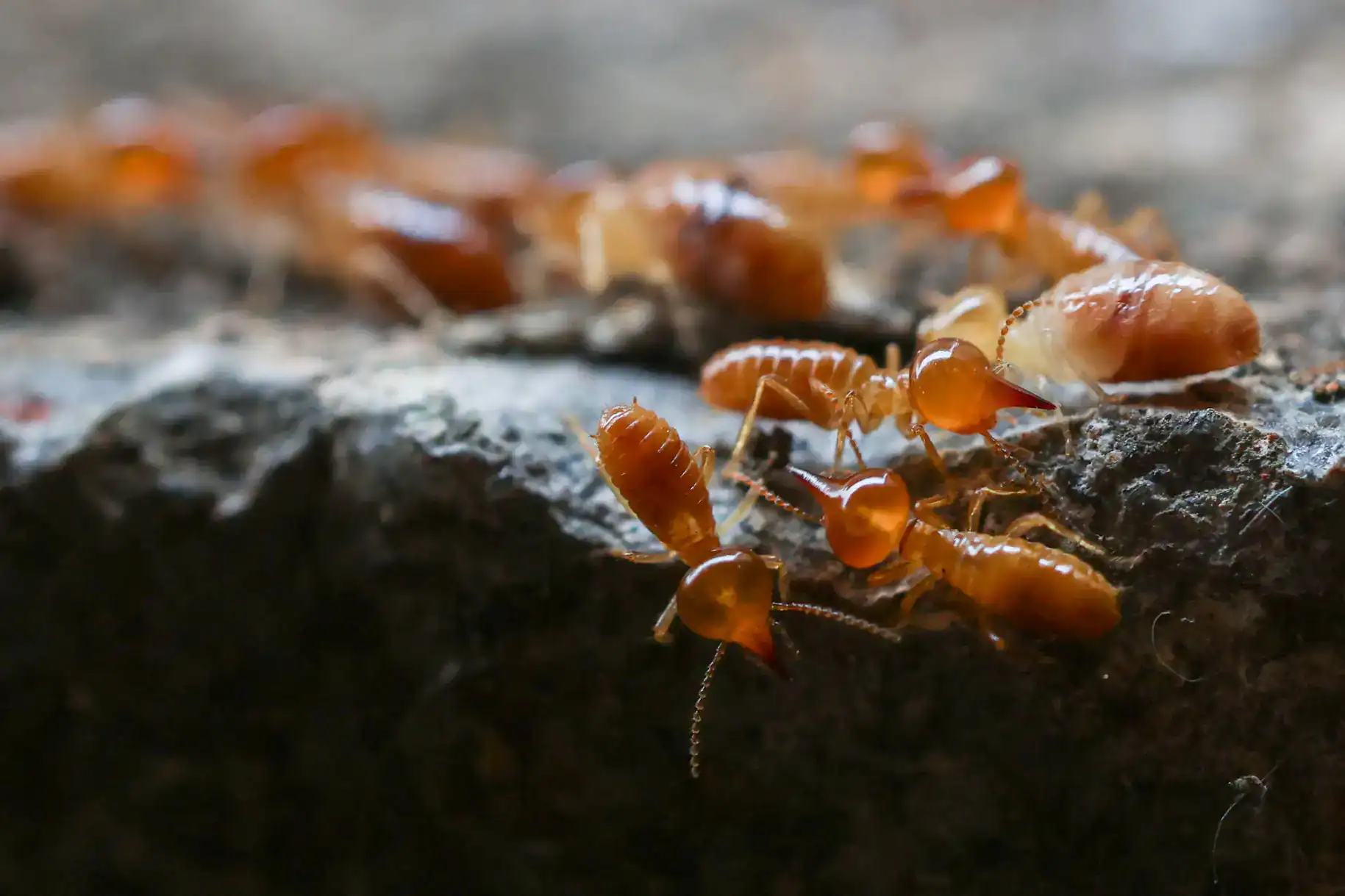
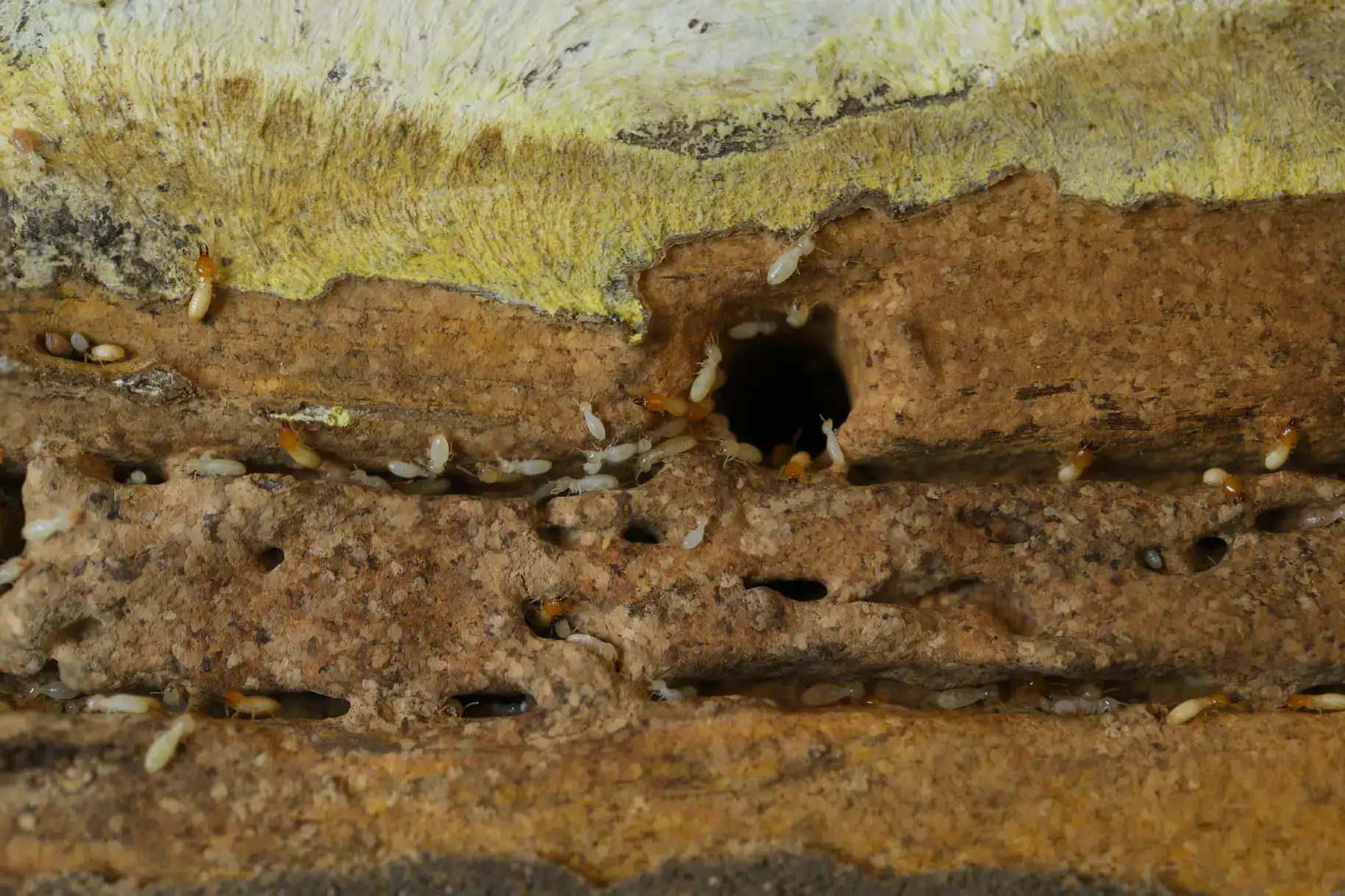
Termites don’t announce themselves. By the time you notice swarmers coming out of a baseboard on West 46th Street or spot mud tubes near your radiator pipe, a colony has likely been feeding on your building’s structural wood for years. That’s the part most people don’t realize the visible signs come last, not first.
In Hell’s Kitchen specifically, the risk runs deeper than in most neighborhoods. The pre-war tenements and walk-ups between Ninth and Tenth Avenues were built with aged wood framing, brick foundations, and plumbing systems that have been slowly leaking moisture into wall cavities for decades. Moisture is what Eastern Subterranean Termites need to survive, and older Manhattan buildings give them plenty of it. Add the constant ground vibration from Lincoln Tunnel traffic running through the southern end of the neighborhood, and you have micro-cracks in foundations that termites only need 1/32 of an inch to exploit.
Getting a professional termite inspection in Hell’s Kitchen isn’t just about peace of mind. It’s about knowing what’s actually happening inside your building before the damage compounds and before a real estate transaction, a co-op board review, or a landlord dispute forces the issue under the worst possible timing.
We’ve been operating in New York City since 1971 over five decades of working in buildings exactly like the ones lining 9th Avenue and West 45th Street in Hell’s Kitchen. Pre-war construction, shared foundations, aging infrastructure, the complexity that comes with dense urban pest control we’ve handled it all. Richard Kourbage Sr. built Kingsway Exterminating from the ground up in Brooklyn, and his sons Richard Jr. and Charles have run it alongside him ever since.
What that means for you is simple: the technician who shows up at your Hell’s Kitchen building has seen these situations before. Not similar situations this exact type of building, this exact type of infestation, in this exact city. We apply only NYS DEC-registered materials on every job, hold an A+ BBB rating that we’ve maintained since 1989, and handle NYC Department of Health pest-related citations directly. That matters in a neighborhood where landlord-tenant obligations and HPD compliance are part of the daily reality.
It starts with a phone call and we answer 24 hours a day, seven days a week. If you’re a renter who just spotted swarmers and need documentation before calling your landlord, or a property manager dealing with an HPD notice, same-day inspections are frequently available. You won’t be waiting a week to find out what you’re dealing with.
The inspection itself is thorough. One of our trained technicians walks the building foundation, basement, crawl spaces, window frames, and any areas where wood contacts soil or moisture. In Hell’s Kitchen’s pre-war buildings, that means checking aged sill plates, subfloor systems, and the kind of structural wood that’s been in place since the 1910s. If termites are present, you’ll get a clear picture of where the infestation is, how far it’s spread, and what treatment makes sense for your specific building.
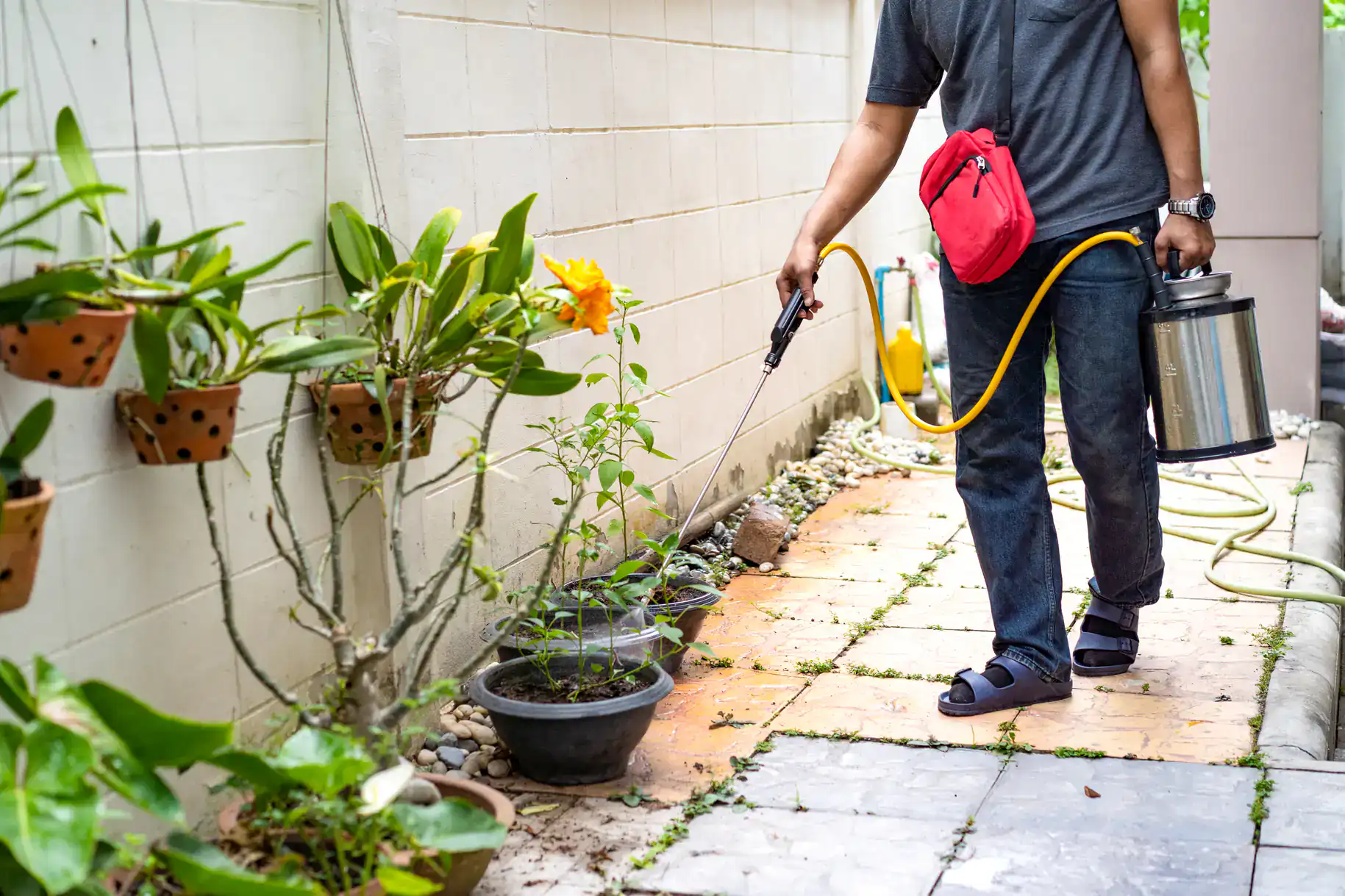
Treatment depends on what the inspection finds. For active subterranean termite infestations, we use termite baiting systems that target the colony underground not just the termites you can see inside the wall. Workers carry the bait back to the colony, which eliminates the source rather than masking the symptom. If a WDO report is needed for a real estate transaction or co-op board requirement, we provide that documentation with the inspection. Every step is handled with NYS DEC-compliant materials, which matters in occupied multi-unit buildings where families, children, and pets share walls and common areas.
Ready to get started?
Termite control in Hell’s Kitchen covers more than just the termites themselves. Eastern Subterranean Termites are the dominant species in New York City, but they’re rarely the only wood-destroying organism active in a pre-war building. Carpenter ants tunnel through structural wood alongside termite colonies, and powder post beetles bore into hardwood flooring and timber framing both common findings in Hell’s Kitchen’s older building stock. Our inspection covers all of it.
For property owners navigating a real estate transaction whether it’s a pre-war co-op on West 48th Street or a newly converted condo near the Theater District we provide Wood Destroying Organism (WDO) inspection reports that satisfy FHA, VA, and conventional lender requirements. These reports are also commonly required by co-op boards before a sale closes, and our same-day availability means a termite finding doesn’t have to derail your timeline.
For landlords and property managers dealing with NYC Housing Maintenance Code obligations or Local Law 55 compliance, we provide the licensed, documented service that HPD and the NYC Department of Health require. If a DOH citation has already been issued, we handle the resolution process directly. And for renters who’ve spotted signs of termite activity and need professional documentation to compel their landlord to act, a written inspection report from a NYS DEC-certified exterminator is exactly the kind of evidence that moves things forward.
Under the NYC Housing Maintenance Code, your landlord is legally responsible for keeping the building free of pest infestations and that includes termites. This isn’t optional or negotiable. If you’ve reported a termite problem and your landlord hasn’t acted, that’s a potential violation of both the Housing Maintenance Code and Local Law 55, which specifically requires property owners to address pests and the structural conditions that allow them in.
The practical step is to get a professional inspection done and documented. A written report from a licensed, NYS DEC-certified exterminator gives you something concrete to put in front of your landlord or building manager and if the situation escalates to an HPD complaint or a Department of Health citation, that documentation becomes part of the official record. We handle NYC DOH citation resolution directly, which is useful if your Hell’s Kitchen building has already received a notice or if you’re trying to force action through official channels.
The most common early sign in Hell’s Kitchen’s older buildings is swarming winged termites emerging from baseboards, window frames, or wall gaps, usually in early spring after a warm rain. If you’re seeing small, dark-winged insects indoors between March and May, that’s a strong indicator that an established colony is already present somewhere in the structure. Swarmers don’t cause damage themselves, but they signal that a mature colony has been feeding for long enough to start reproducing.
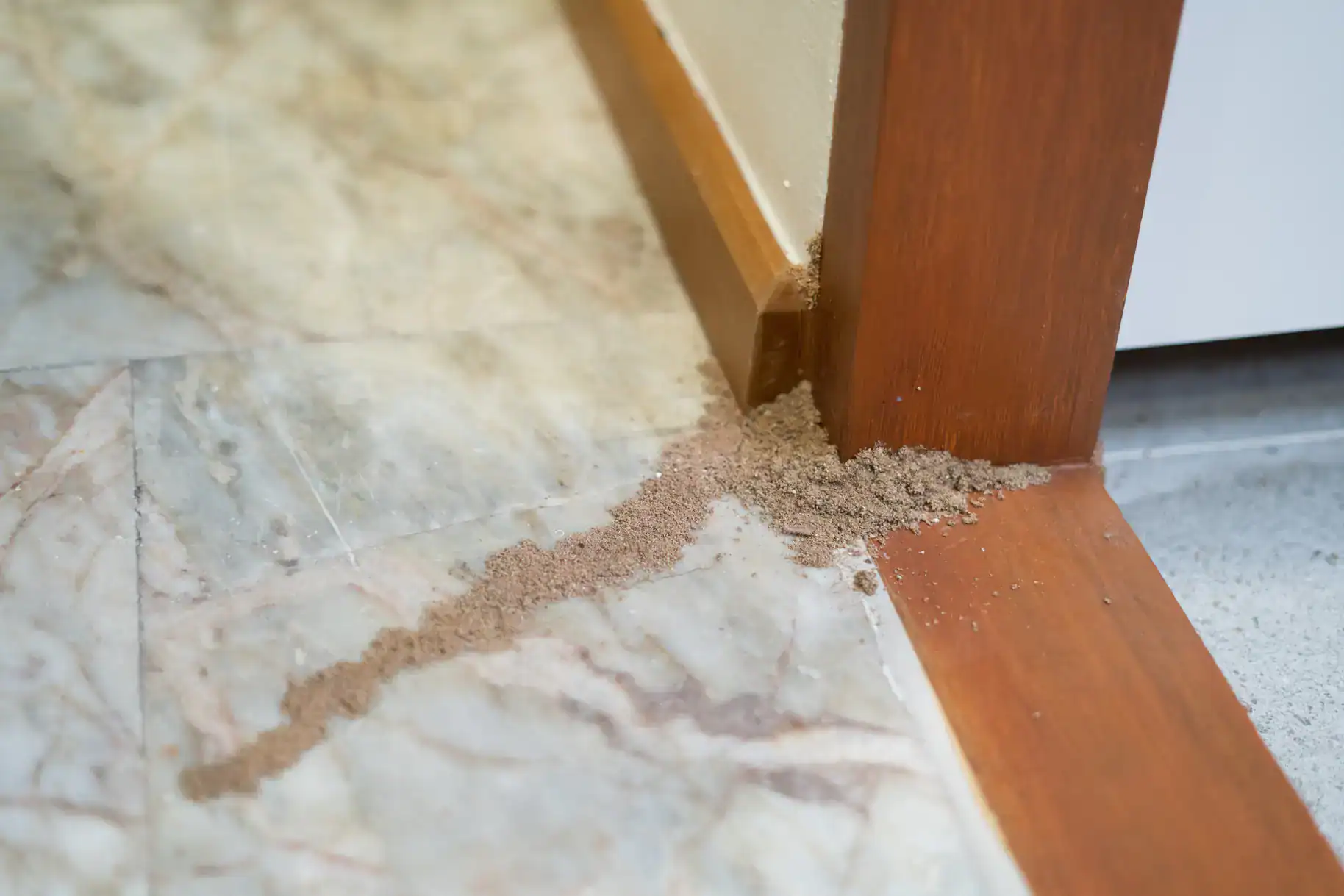
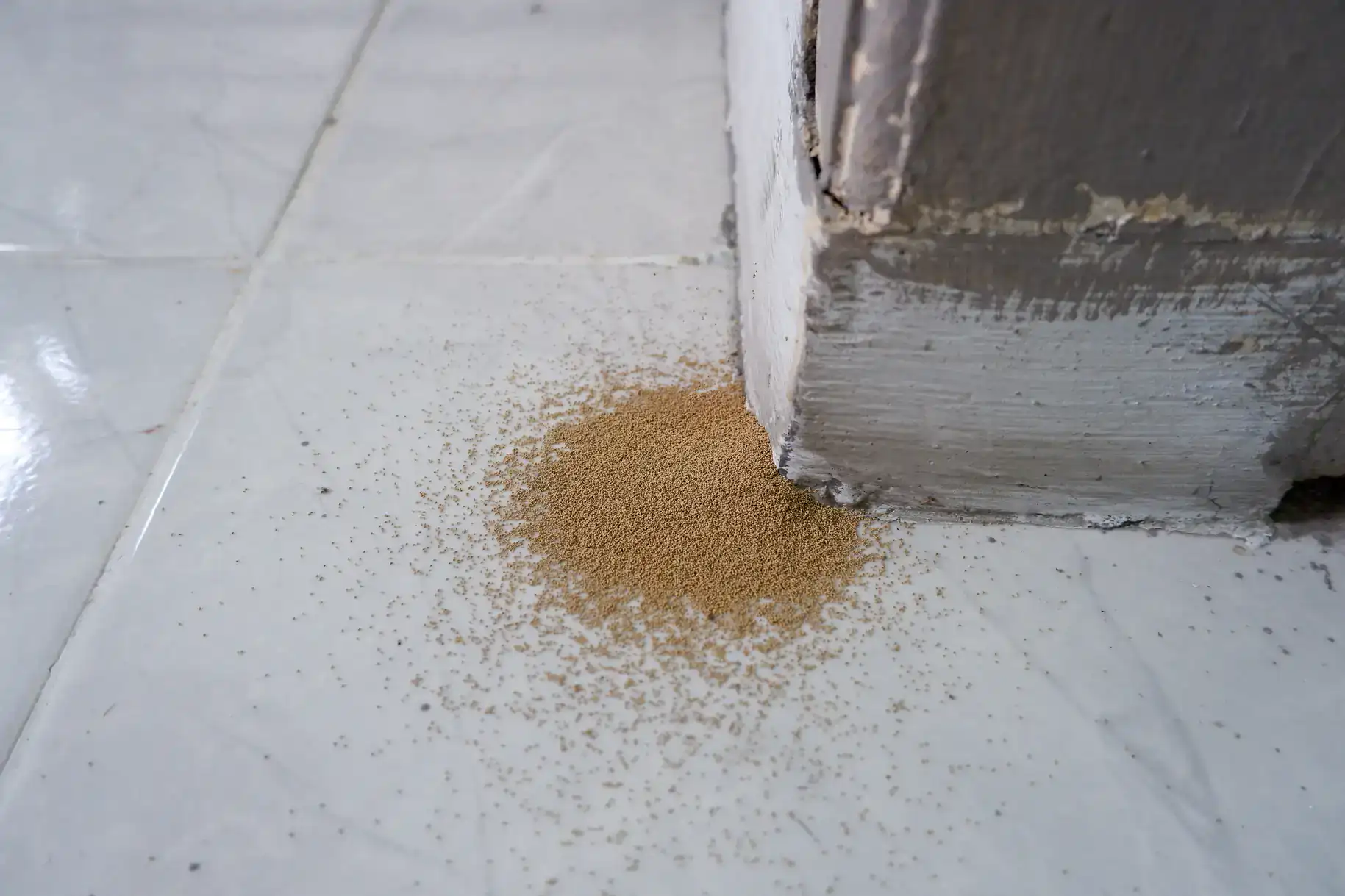
Other signs include mud tubes pencil-thin tunnels of dried soil and termite material running along foundation walls, pipes, or structural wood near the floor. In pre-war buildings, hollow-sounding wood around window frames, door casings, or baseboards is another indicator. Frass, which looks like fine sawdust or small pellets near wood surfaces, can also appear. The challenge with older Manhattan buildings is that much of the structural wood is hidden behind plaster walls, so visible damage often means the infestation has been active for years. An inspection gets into the areas you can’t see.
Yes and this is one of the reasons termite control in Hell’s Kitchen’s multi-unit buildings is more serious than in a standalone house. Eastern Subterranean Termites travel through the soil and through the structural wood that connects units in a shared building. In a pre-war tenement or walk-up on the neighborhood’s side streets, floor joists, sill plates, and party walls run continuously across multiple units. A colony that enters through the foundation of one unit has a direct pathway through that shared structural wood to adjacent units and even neighboring buildings.
This is why a single-unit treatment is rarely sufficient in a Hell’s Kitchen walk-up. The source of the infestation is almost always underground, and the colony needs to be targeted at the root not just treated at the point where termites became visible. Our baiting system works by having termite workers carry the treatment material back to the colony, which addresses the underground population rather than just the termites that have already reached the interior. For building-wide situations, we work with property managers and co-op boards to coordinate access and treatment across multiple units.
In almost every case, no. Standard homeowner and renter’s insurance policies in New York classify termite damage as a preventable maintenance issue rather than a sudden, accidental event which means it falls outside the scope of covered losses. This applies whether you own a co-op in Hell’s Kitchen or rent an apartment in a pre-war walk-up. The insurer’s position is that termite infestations develop over time and can be prevented with proper maintenance and inspections, so the resulting damage isn’t treated the same way a burst pipe or fire would be.
The average cost of termite damage repair runs around $3,000, with structural repairs in older buildings reaching significantly higher depending on how long the infestation went undetected. In a pre-war Manhattan building where structural wood has been in place for a century, the repair costs can be substantial. The practical takeaway is that a professional inspection and treatment if needed is a direct form of financial protection that your insurance policy won’t provide. Catching an infestation early costs far less than repairing the damage after years of undetected feeding.
It’s a real and locally specific factor. Eastern Subterranean Termites live underground in established colonies, and large-scale soil excavation and construction disturbance exactly the kind that’s been happening along Hell’s Kitchen’s southern and western edges as part of the Hudson Yards development can displace those colonies. When their underground environment is disrupted, termite colonies migrate toward less-disturbed soil, which often means moving toward the foundations of established residential buildings nearby.
If your building is within a few blocks of active construction on the Hudson Yards corridor, it’s worth having an inspection done particularly if you’re in a pre-war building with a brick or concrete foundation that may already have minor cracking from age and ground vibration. Termites only need a gap of 1/32 of an inch to enter a structure, and older foundations in the neighborhood have had decades to develop those entry points. Construction activity doesn’t create termite colonies, but it can redirect existing ones toward your building.
A Wood Destroying Organism report commonly called a WDO report or termite letter is a formal inspection document that identifies the presence or absence of termites, carpenter ants, powder post beetles, and other wood-destroying insects or fungi in a structure. In real estate transactions, FHA and VA mortgage approvals typically require a WDO report before closing. Many conventional lenders and co-op boards in Hell’s Kitchen also request one, particularly when the property being purchased is a pre-war building where wood-destroying organism activity is a known risk.
You’ll most commonly need a WDO report when buying or selling property, when refinancing with a lender that requires it, or when a co-op board mandates it as part of their due diligence process. Sellers sometimes order one proactively to avoid surprises during the buyer’s inspection period. In Hell’s Kitchen’s active real estate market where pre-war co-ops and newly converted condos change hands regularly having this report ready, or being able to get one quickly, can keep a transaction on schedule. We provide WDO inspection reports with same-day availability when timing is tight.
Useful Links