Hear from Our Customers
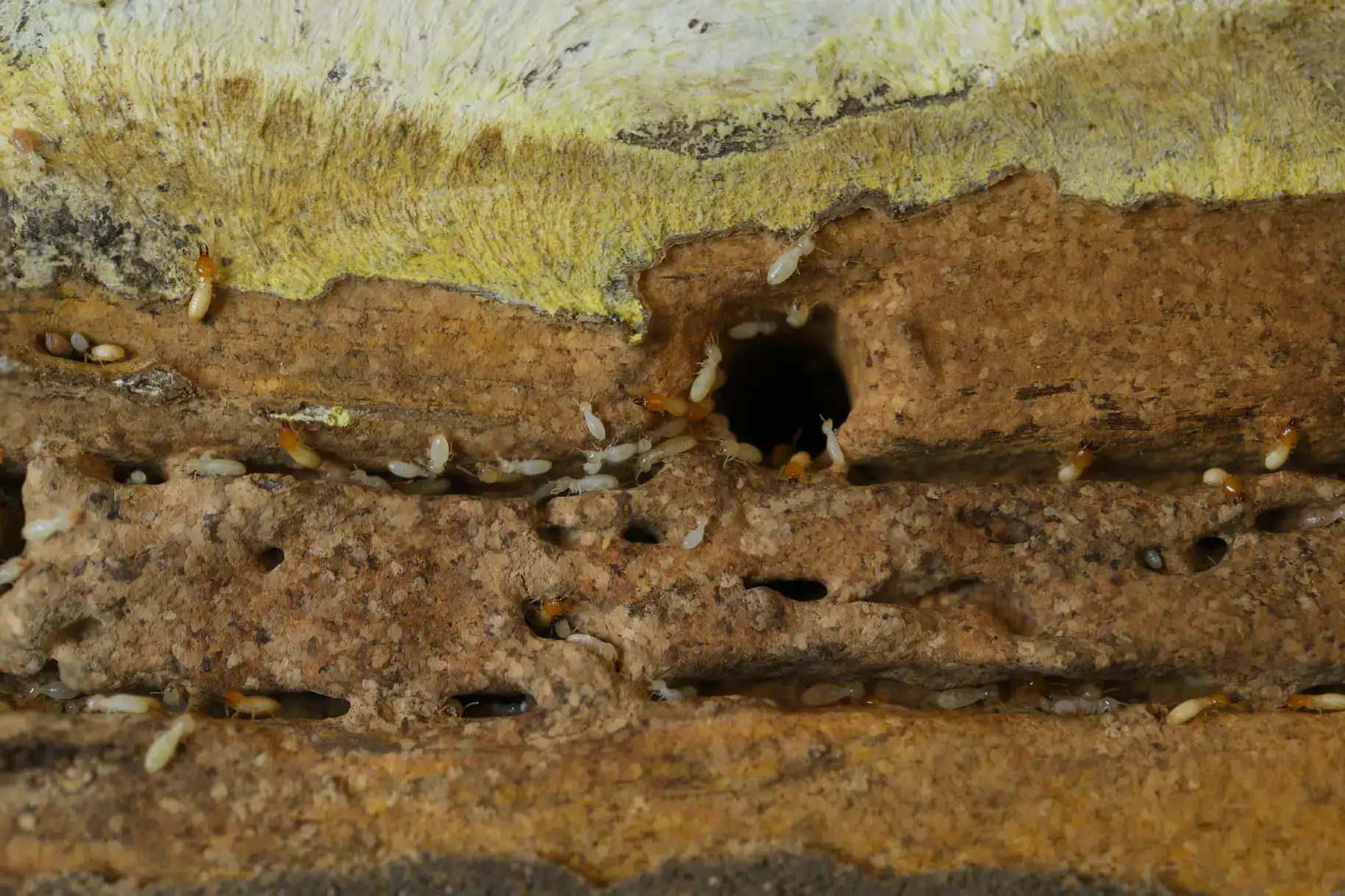
Most termite damage in Howard Beach isn’t discovered during a routine check. It shows up during a renovation, a home sale, or the moment a floor joist doesn’t feel right underfoot. By then, the colony has usually been active for years. Eastern Subterranean Termites feed around the clock, and in a neighborhood like Howard Beach where the soil stays moist year-round from its marshland origins and the water table sits close to the surface they have near-ideal conditions to thrive quietly beneath your home.
What changes after a proper termite inspection and treatment is simple: you know exactly what you’re dealing with. No more guessing whether that soft spot near the garage is something or nothing. No more putting off the basement renovation because you’re not sure what’s down there. You get a clear picture of your home’s condition, a treatment plan that targets the actual colony not just the surface signs and documentation you can use if you’re selling, refinancing, or dealing with a lender.
For Howard Beach homeowners who lived through Sandy, that peace of mind carries extra weight. Flood-saturated wood and compromised moisture barriers don’t just create structural damage they create the exact conditions subterranean termites look for. If your home was repaired or rebuilt after 2012 and never received a termite inspection, there’s a real possibility that new, untreated wood was introduced into a structure sitting on wet, termite-active soil. This is how it works in Howard Beach the conditions are ideal for silent, ongoing damage.
Kingsway Exterminating has been a family-owned operation since 1971. Richard Kourbage Sr. built this company from the ground up in Brooklyn, and his sons Richard Jr. and Charles have been part of it since the late 1980s. That’s not a backstory we lead with to seem charming it’s relevant because it means there are actual people accountable for every job, and we’ve been serving Howard Beach, the Belt Parkway corridor, southwestern Queens, and the surrounding communities for over half a century.
Our team carries more than 100 years of combined pest control experience. That’s not a number we throw around loosely it means that when someone comes to a Howard Beach home to inspect for termite activity along a canal-front foundation or in a crawl space that’s been wet since Sandy, they’ve seen it before. We hold an A+ rating with the Better Business Bureau, accredited since 1989, and we apply only NYS DEC-registered materials on every job.
We’re not a national chain routing calls through a call center. When you call Kingsway, someone answers 24 hours a day, 7 days a week.
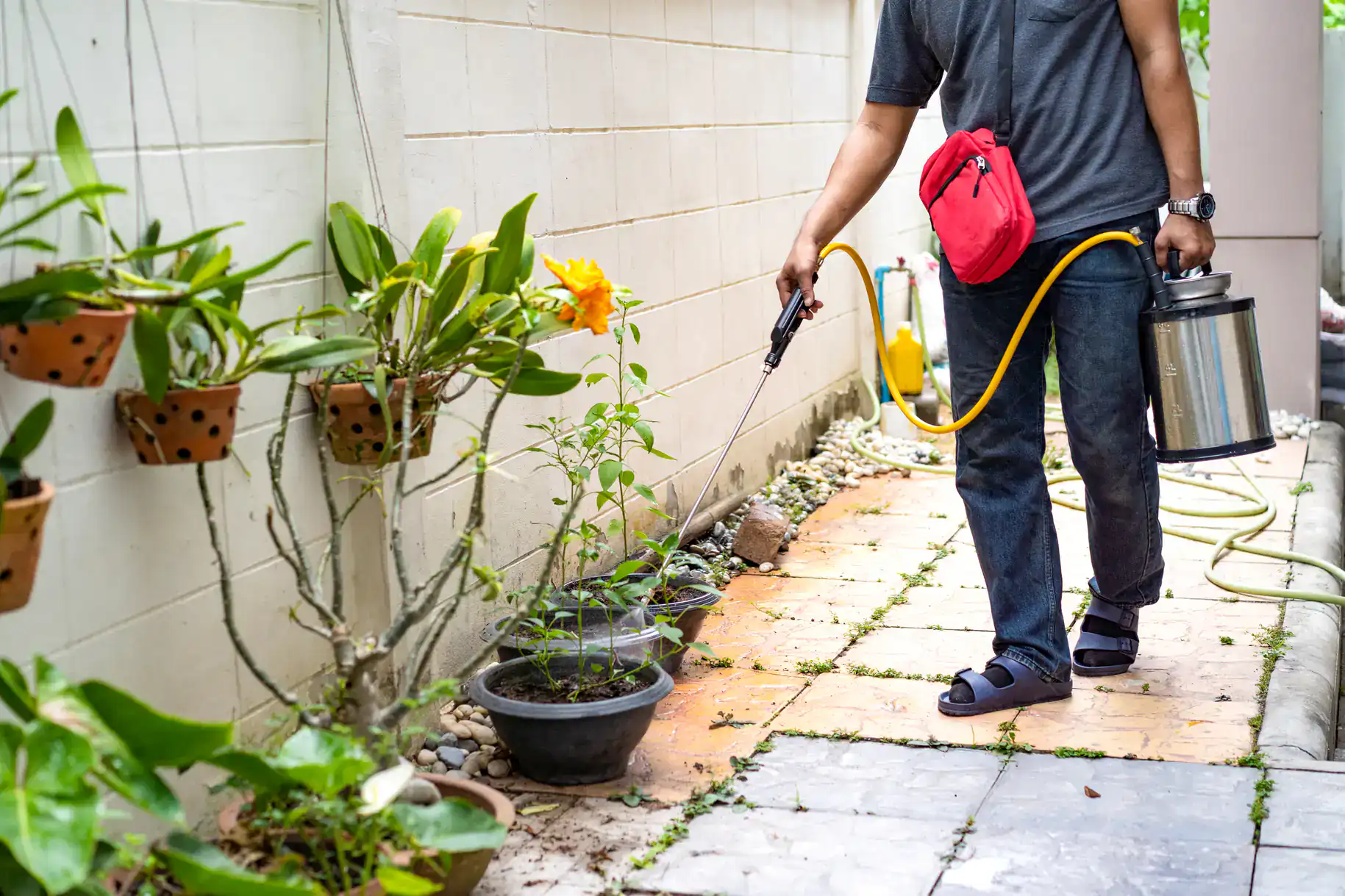
It starts with a call, and we pick up any time you make it. From there, we schedule your inspection guaranteed within two business days, and same-day is frequently available. For Howard Beach homeowners dealing with a pre-closing deadline or a renovation that just turned up something unexpected, that turnaround matters.
During the inspection, we look at the full picture: your foundation, crawl spaces, any wood-to-soil contact points, wooden decks or dock structures along the canal, and the areas of your home most vulnerable given the local conditions. Howard Beach’s high water table and post-flood construction history mean we pay particular attention to below-grade framing, moisture barriers, and any areas where new wood may have been introduced during post-Sandy repairs. We’re looking for mud tubes, frass, hollow-sounding wood, swarm evidence, and any structural signs that suggest active or past colony activity.
If treatment is needed, we’ll explain exactly what we’re recommending and why. For active subterranean termite infestations, we use termite baiting systems designed to eliminate the colony at its source workers carry the treatment back underground, collapsing the colony from the inside rather than just knocking back what’s visible. All materials are NYS DEC-registered. We provide a written estimate before any work begins, and there’s no pressure to decide on the spot. If you need a WDO report for a real estate transaction, we handle that documentation as part of the process so your closing timeline doesn’t get derailed.
Ready to get started?
Termite control in Howard Beach isn’t a one-size treatment. The waterfront homes in Old Howard Beach, the isolated properties in Hamilton Beach accessible only off 104th Street, and the co-ops and single-family homes in Lindenwood all present different risk profiles and structural considerations. What works for an inland Queens neighborhood doesn’t automatically translate here.
We provide the full range of termite services Howard Beach homeowners typically need. That includes termite identification and inspection, subterranean termite eradication, termite baiting system installation and monitoring, treatment for carpenter ants and powder post beetles (wood-boring insects that often show up alongside termite activity), and full Wood Destroying Organism inspections for real estate transactions. If you’re buying or selling a home in Howard Beach where FHA and VA lenders frequently require a WDO report before approving a mortgage we provide the credentialed documentation your lender or real estate attorney needs.
For homes near the canal system, Shellbank Basin, or Jamaica Bay, we also assess wooden docks, bulkheads, and exterior deck structures that are in direct or near-direct contact with water and soil. These are high-risk areas that often get overlooked in a standard inspection but are exactly the kind of detail that matters in a neighborhood like this. Every inspection comes with a free estimate, and all work is performed by certified applicators using only NYS DEC-registered materials.
Yes and it’s one of the more underappreciated risks in this neighborhood. When Hurricane Sandy hit in 2012, virtually every home in Howard Beach, Old Howard Beach, Hamilton Beach, and Lindenwood was inundated with tidal floodwater. The immediate damage was visible. What followed wasn’t. Flood-saturated wood framing, degraded moisture barriers, and waterlogged soil create exactly the conditions subterranean termites thrive in and those conditions don’t resolve quickly. Soil moisture levels in a flood-affected area can stay elevated for years.
Homes that were rebuilt or repaired after Sandy often had new, untreated lumber introduced into structures sitting on wet, termite-active soil. If that wood wasn’t treated and no preventive measures were taken, it’s been sitting in a high-risk environment for over a decade. A 2014 storm flooded roughly 2,700 homes in Lindenwood alone adding another layer of moisture exposure on top of Sandy. If your home was affected by either event and has never had a professional termite inspection, that’s a gap worth closing.
The most common sign people notice first is mud tubes pencil-thin tunnels made of soil and wood particles that subterranean termites build along foundation walls, crawl space supports, or any surface connecting the soil to a wood source. In Howard Beach, where foundations sit close to a high water table and many homes have crawl spaces or below-grade framing, mud tubes often appear in areas that don’t get looked at regularly.
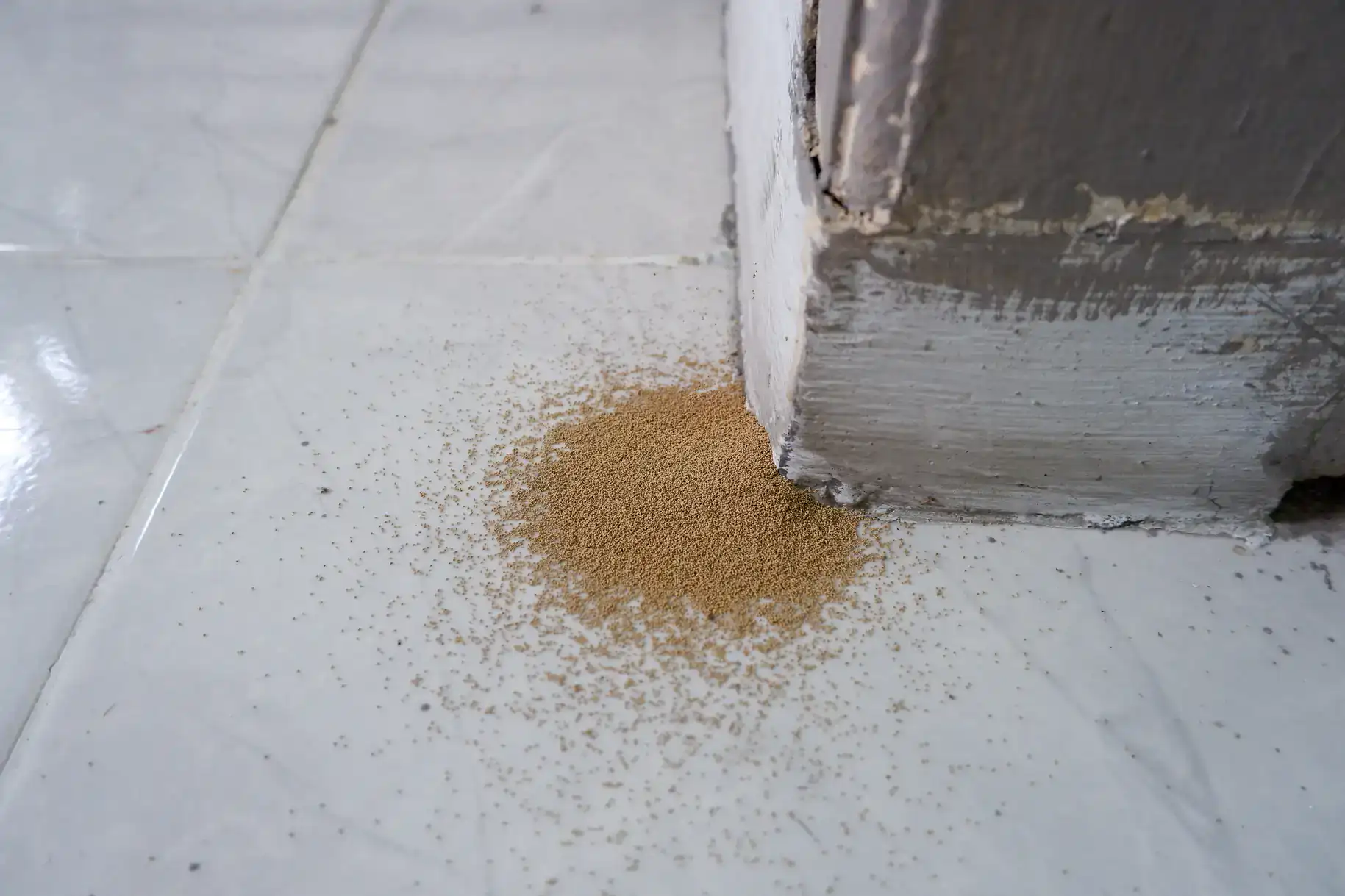
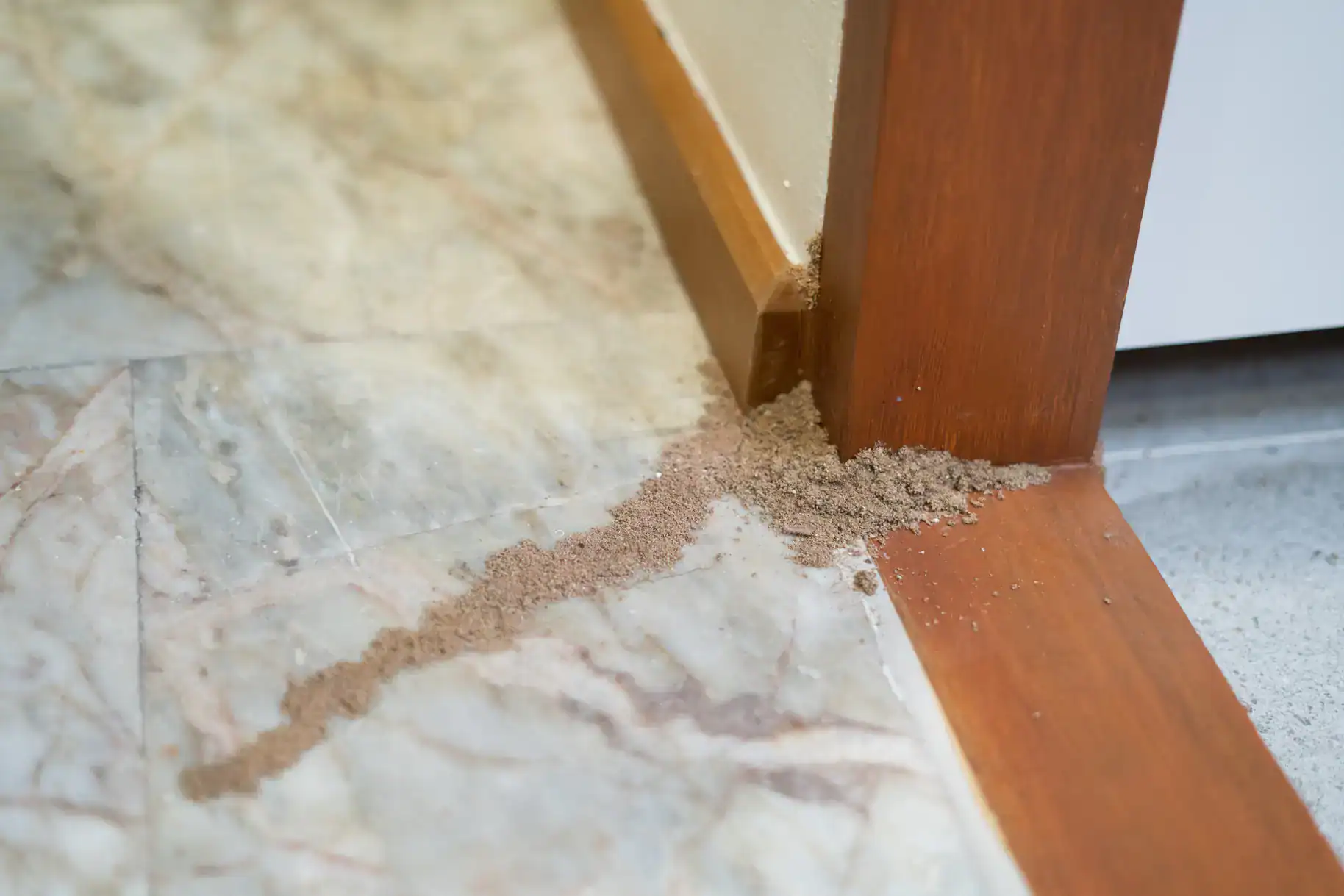
Beyond mud tubes, watch for wood that sounds hollow when you knock on it, floors that feel soft or slightly spongy in spots, paint that bubbles or blisters without an obvious moisture source, and small piles of what looks like sawdust near baseboards or door frames that’s termite frass, or waste. In spring, particularly after a warm rainy day, you may see swarmers: winged termites that emerge to start new colonies. Finding swarmers inside your home, especially near windows or along the bay-facing side of the house, is a clear signal to call for an inspection right away.
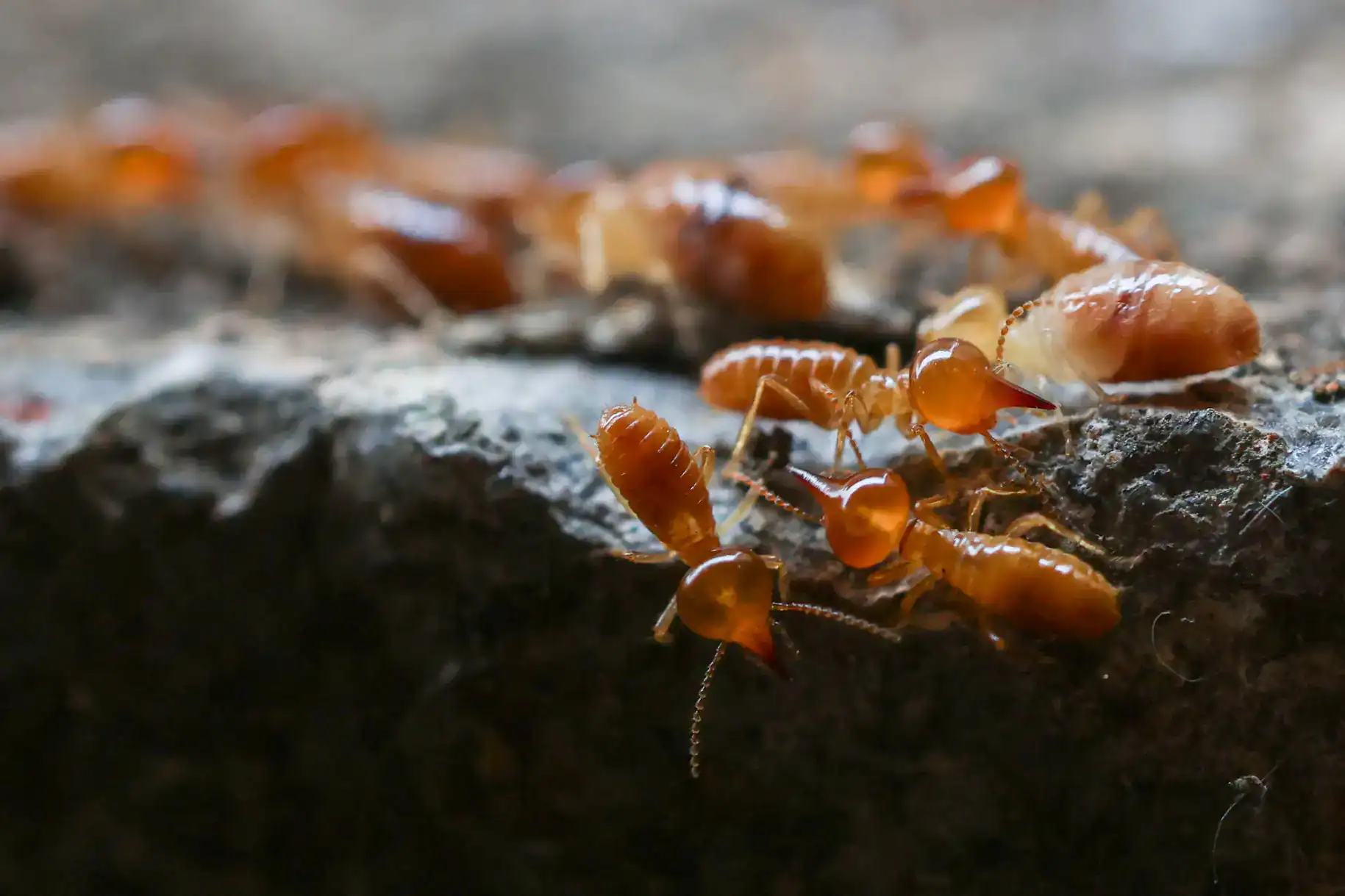
A termite baiting system works by placing bait stations in the soil around the perimeter of your home. Termite workers which forage constantly through the soil find the bait, consume it, and carry it back to the colony. The active ingredient disrupts the termites’ ability to molt, which eventually collapses the colony from the inside. It’s a slower process than a liquid soil treatment, but it targets the source rather than just creating a chemical barrier.
For Howard Beach homes, baiting systems are often a strong fit because of the soil conditions. The high moisture content and proximity to the water table in much of the neighborhood can affect how liquid treatments behave and how long they remain effective. Bait stations are also a lower-impact option from an environmental standpoint a consideration that matters when your property borders Jamaica Bay and the Gateway National Recreation Area. Whether a baiting system is the right call for your specific home depends on the level of activity, the structure’s construction type, and what the inspection reveals. We’ll walk you through the options before any decision is made.
It depends on your financing, but in many cases yes. FHA and VA lenders routinely require a Wood Destroying Organism inspection report as a condition of mortgage approval. Given that a significant number of Howard Beach home transactions involve buyers using government-backed financing, WDO reports come up frequently in this market. Even when a lender doesn’t require it, buyers purchasing homes in the $700,000 to $1 million-plus range that Howard Beach regularly sees have strong motivation to verify structural integrity before closing.
A WDO inspection covers termites, carpenter ants, powder post beetles, and other wood-destroying organisms. The report documents any active infestation, past damage, or conditions conducive to future activity. If you’re the seller, having a clean WDO report in hand can actually strengthen your position and prevent last-minute surprises from derailing a deal. If you’re the buyer, it’s basic due diligence on a major investment. We provide credentialed WDO reports with the documentation your lender, attorney, or property manager needs turned around quickly so your timeline stays intact.
The most visible termite activity in Howard Beach happens in early spring typically March through May when Eastern Subterranean Termites swarm. Swarms are triggered by warm days following rainfall, and Howard Beach’s coastal humidity along Jamaica Bay can amplify that seasonal activity compared to inland Queens neighborhoods. If you see swarmers around your foundation, near windows, or along any wood structures facing the water, that’s a spring warning sign worth acting on immediately.
That said, termites don’t take a season off. Eastern Subterranean Termites feed 24 hours a day, 365 days a year. A colony that’s been active beneath your home since before you bought it doesn’t slow down in winter it just does its damage out of sight. The spring swarm is the most visible sign, but the feeding that causes structural damage happens continuously. In a neighborhood with Howard Beach’s soil moisture profile and flood history, the risk doesn’t follow a calendar. Year-round awareness and periodic professional inspection are the only reliable ways to stay ahead of it.
Standard homeowner insurance policies in New York do not cover termite damage. Insurers classify it as a preventable maintenance issue rather than a sudden, accidental event which means the financial exposure falls entirely on you. For a Howard Beach homeowner with a property valued at $700,000 or more, that’s not a small risk. Termite damage that reaches structural framing, floor joists, or load-bearing beams can cost $10,000 or more to repair, and that number climbs quickly on older homes or properties with extensive wood framing.
The practical implication is that early detection and treatment is the only real financial protection available to you. A professional inspection that catches termite activity before it reaches structural wood costs a fraction of what repairs cost after the fact. In Howard Beach specifically where post-Sandy rebuilds introduced new wood into flood-affected structures and the soil conditions favor subterranean termite activity year-round waiting for visible signs before acting is a costly gamble. The average cost of termite repairs nationally runs around $3,000, but structural jobs regularly exceed that. Catching it early keeps the problem manageable.
Useful Links
Other Services we provide in Howard Beach