
Hear from Our Customers
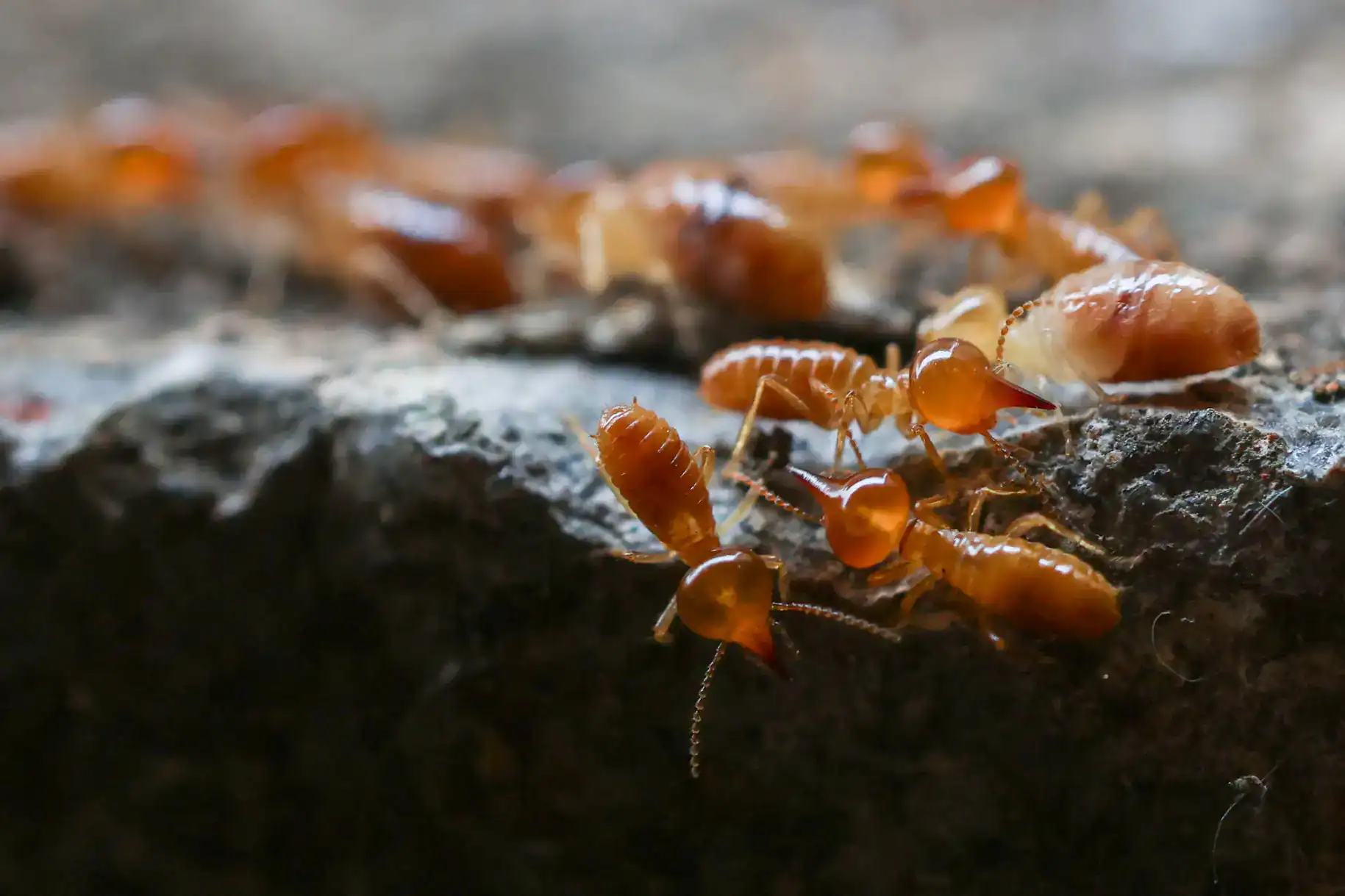
The brick rowhouses and garden co-ops that define Kew Gardens Hills look solid from the outside. That’s part of the problem. Eastern Subterranean Termites don’t care about your exterior they enter through foundation cracks thinner than a credit card and go straight for the wood framing hidden behind that masonry. By the time you notice anything, they’ve often been feeding for years.
Nearly 90% of homes in parts of this neighborhood were built between 1940 and 1969. That’s 55 to 85 years of aging wood subfloors, deteriorating joists, and moisture-prone basement walls exactly the conditions termites look for. And because so many homes here share foundation zones with a neighbor, an untreated infestation on your side of the wall doesn’t stay on your side for long.
What changes after treatment isn’t just that the termites are gone. It’s that you know the full picture. You know where the entry points are, whether there’s active feeding, and what the structural condition actually looks like. That clarity especially in Kew Gardens Hills where homes are trading at or near $380,000 is worth more than most people realize until they’re sitting across from a buyer’s inspector.
We were founded in 1971 by Richard Kourbage Sr. His sons Richard Jr. and Charles run the company today. That’s over 50 years of the same family, the same standards, and the same commitment to not cutting corners in Kew Gardens Hills, Brooklyn, Queens, and every borough in between.
We bring more than 100 years of combined pest control experience to every job. That’s not a number pulled from a brochure it reflects the actual depth of knowledge that comes from decades of treating the specific building types found throughout central Queens, including the semi-detached rowhouses along Jewel Avenue, the garden-style co-ops near Parsons Boulevard, and the low-rise apartment buildings that sit in the shadow of Queens College. We hold BBB A+ accreditation dating back to 1989 and apply only NYS DEC-registered materials on every job.
If you’ve received a NYC Department of Health pest-related violation, or you’re a co-op board trying to figure out who’s responsible for what, we’ve handled both many times over in Kew Gardens Hills and the surrounding neighborhoods.
It starts with a phone call answered 24 hours a day, 7 days a week. You describe what you’re seeing, and we get an appointment on the calendar, typically within two business days. Same-day inspections are available more often than not.
When our technician arrives, the inspection covers the areas where Eastern Subterranean Termites are most likely to enter and establish activity in a Kew Gardens Hills home foundation walls, basement window frames, cellar doors, plumbing penetrations, and any wood-to-soil contact points in landscaped common areas or along shared fence lines. In co-op buildings and semi-detached homes, the inspection also accounts for shared foundation zones where activity in one unit can indicate a broader problem. Spring is peak swarm season in Queens typically April through May so if you’re calling after seeing winged termites near a window or in a basement stairwell, that timing matters and our technician will treat it accordingly.
After the inspection, you get a clear, written estimate no verbal commitments, no surprise charges. If treatment is recommended, we walk you through the method, whether that’s a liquid termiticide application targeting active entry points or a baiting system designed to reach the colony underground. For real estate transactions requiring a Wood Destroying Organism report, we prepare that documentation to meet lender requirements for FHA, VA, and conventional financing.
Ready to get started?
Termite control in Kew Gardens Hills isn’t a one-size situation. The treatment approach depends on your building type, the extent of activity, and where the infestation is centered. We handle the full range single-family rowhouses, semi-detached two-families, garden co-ops, and small apartment buildings because the right method for a shared-foundation co-op off Union Turnpike is not the same as the right method for a standalone home near the Kew Gardens Interchange.
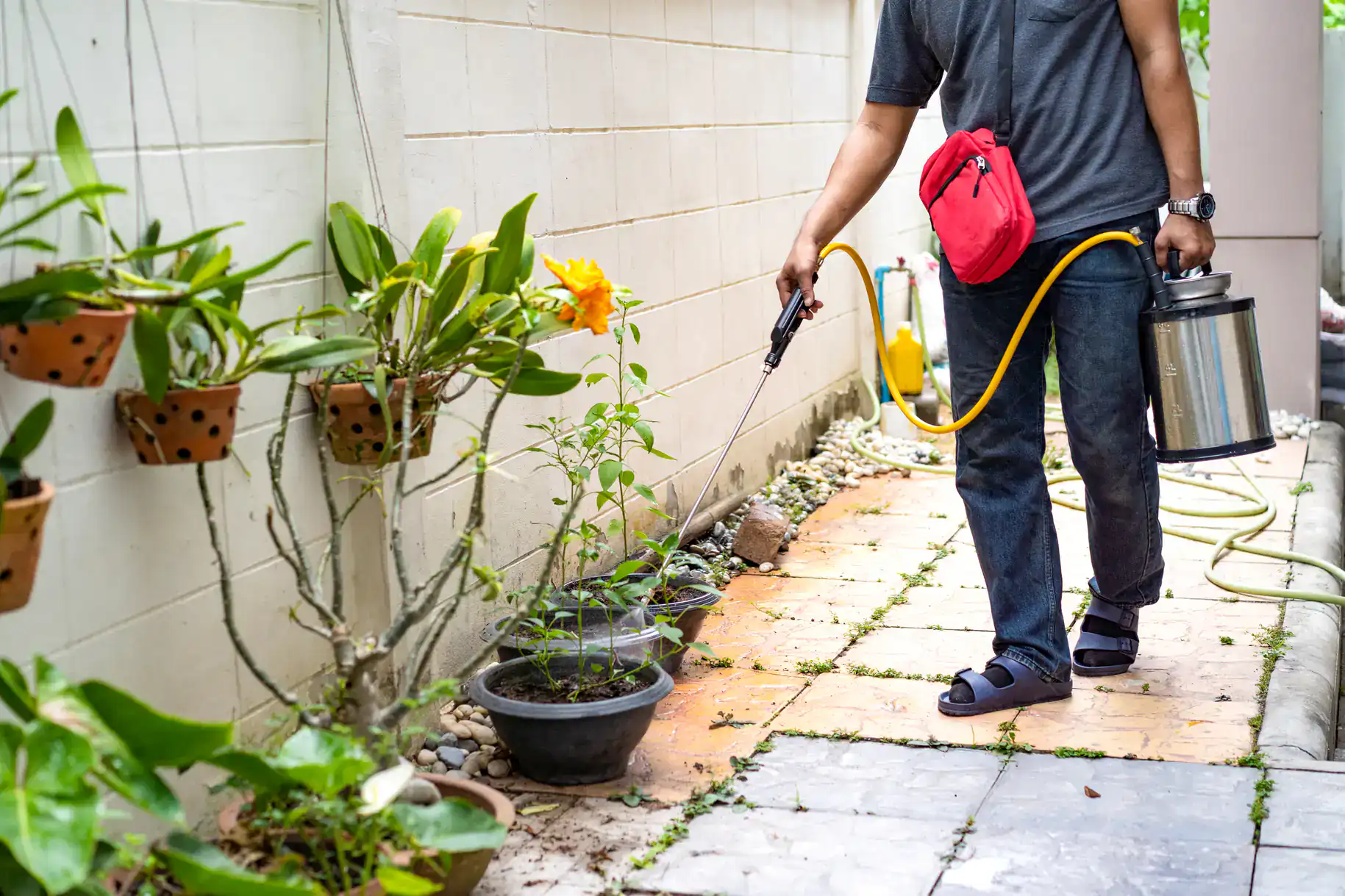
For active infestations, liquid termiticide treatment creates a continuous protective barrier in the soil around your foundation, cutting off the colony’s access to your structure. Termite baiting systems work differently bait stations are placed at strategic points around the property, and worker termites carry the bait back to the colony, eliminating the source rather than just the entry point. Both methods use only NYS DEC-registered materials, applied by our certified technicians following EPA safety protocols. In a dense residential neighborhood where homes sit close together and families with children and elderly residents share walls and common areas, that matters.
We also provide Wood Destroying Organism inspections for property purchases, sales, and leases with written reports that satisfy lender requirements. And if you’re a Kew Gardens Hills senior homeowner, ask about our senior discount when you call. It’s a straightforward acknowledgment that long-term homeowners in this neighborhood deserve straightforward pricing.
It’s one of the most common misconceptions in this neighborhood that a brick exterior means you’re protected. It doesn’t. Eastern Subterranean Termites live underground and travel through the soil to reach your structure. They enter through foundation cracks as narrow as 1/32 of an inch, through expansion joints, around plumbing penetrations, and through any point where wood framing meets or comes close to the soil. The brick is just the outer shell. Behind it, most Kew Gardens Hills homes built between 1940 and 1969 have wood-framed interiors subflooring, wall studs, window surrounds, basement joists that are fully accessible to termites once they find a way in.
The aging infrastructure of these postwar homes also creates more entry opportunities over time. Settling foundations, old plumbing that creates moisture in wall cavities, and deteriorating caulk around basement windows all give termites the access they need. A professional inspection identifies exactly where those vulnerabilities are in your specific home.
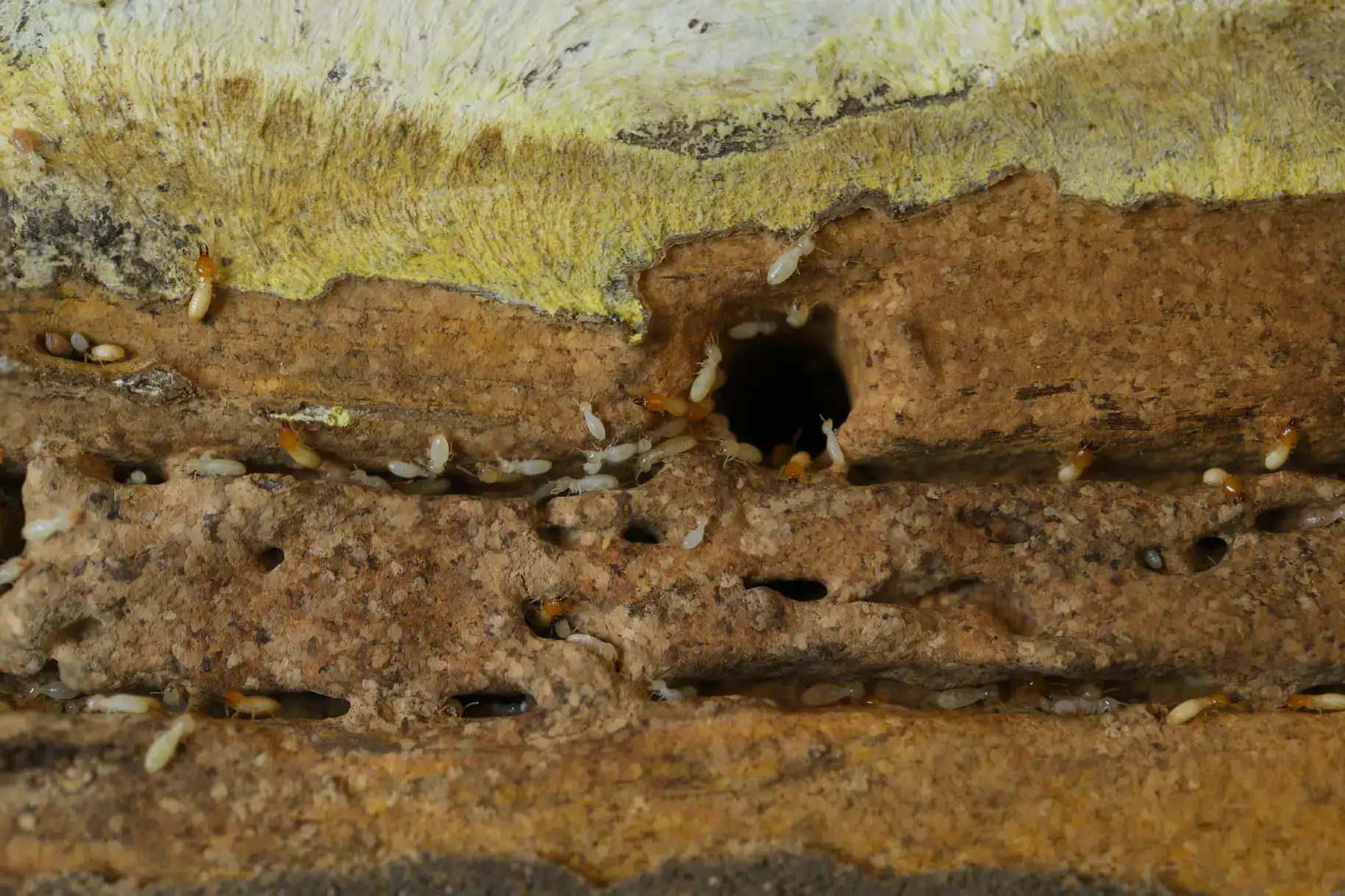
In a garden-style co-op or low-rise apartment building the kind you’ll find throughout Kew Gardens Hills the signs of termite activity are often subtle until the damage is significant. Mud tubes are the most reliable indicator. These pencil-width tunnels of soil and termite secretion appear along foundation walls, basement stairwells, and the exterior of structural posts. They’re the termites’ highway between the soil and the wood they’re feeding on, and finding one means there’s an active colony nearby.
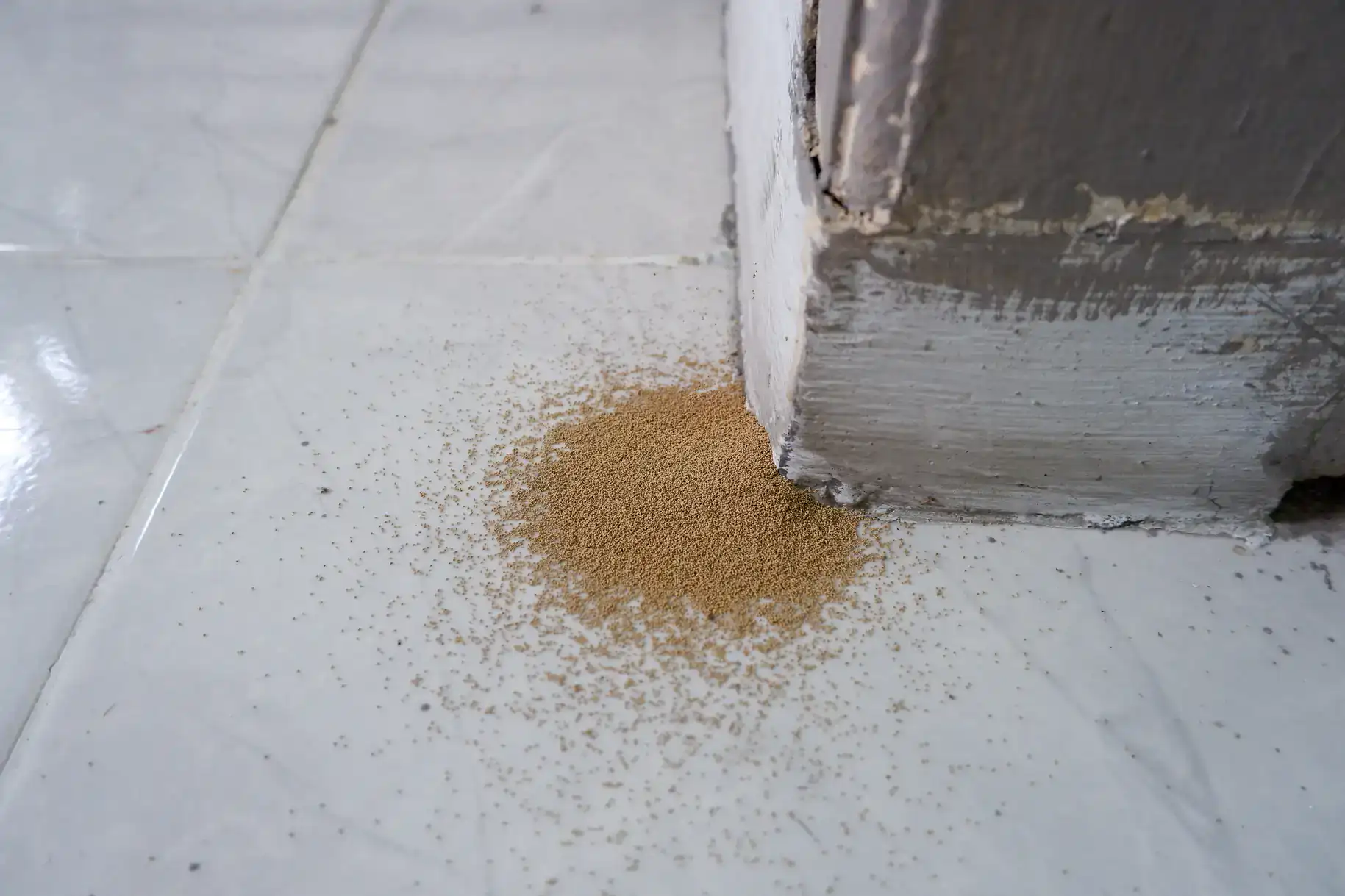
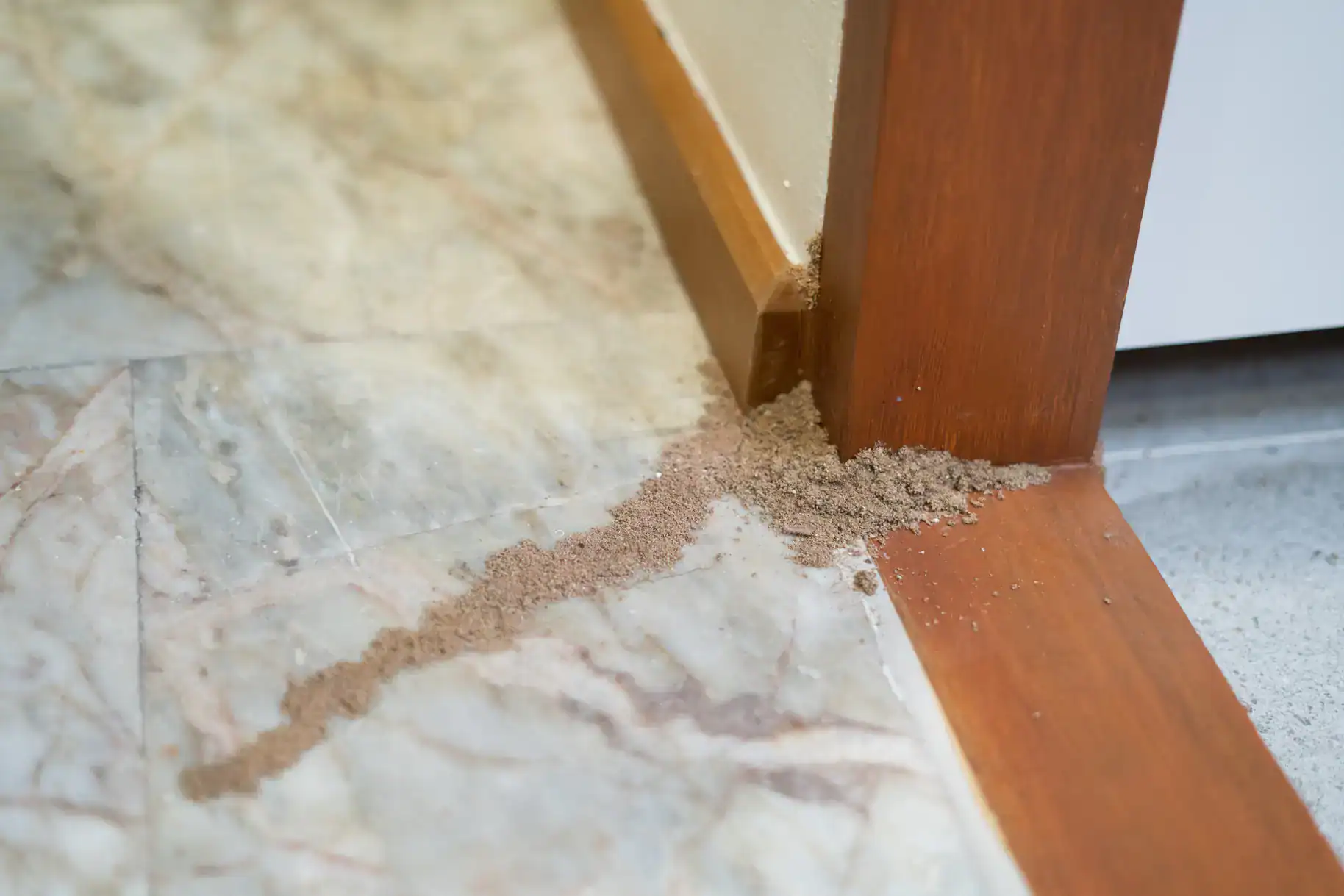
Other signs include wood that sounds hollow when tapped, floors that feel soft or slightly springy underfoot, paint that bubbles or peels without an obvious moisture source, and small piles of what looks like sawdust near baseboards or window frames. In shared-foundation buildings, activity in one unit’s basement can spread laterally before either unit’s occupant notices anything. If you’re a co-op board member or property manager in Kew Gardens Hills and you’ve had a report from one shareholder, it’s worth inspecting the adjacent units at the same time.
In Queens, termite swarm season typically runs from April through May, following warm days with rain. That’s when winged reproductive termites called alates emerge from established colonies to mate and start new ones. If you see a cluster of small, winged insects near a window, along a baseboard, or in a basement stairwell during spring, there’s a good chance you’re looking at termite swarmers, not flying ants. The two are commonly confused, but the distinction matters: termite swarmers have straight antennae, equal-length wings, and a straight waist. Flying ants have bent antennae, unequal wings, and a pinched waist.
Seeing swarmers inside your home is a strong signal that an established colony is already present somewhere in or near your structure swarmers don’t travel far from their origin colony. Don’t sweep them up and ignore it. Collect a few in a sealed bag if you can and call for an inspection. The sooner the colony is located and treated, the less structural damage you’re dealing with.
This is one of the most common and genuinely confusing questions that comes up in Kew Gardens Hills, where garden-style co-ops make up a meaningful share of the housing stock. The short answer is: it depends on your proprietary lease and house rules. In most New York City co-ops, the corporation (the board) is responsible for maintaining the building’s structure and common areas, which typically includes foundation walls, exterior walls, and shared basement spaces. If termites are found in those structural elements, the co-op board is generally responsible for the cost of treatment.
However, if the infestation originates from or is confined to a shareholder’s individual unit through wood flooring, built-in cabinetry, or interior framing the responsibility may fall to the shareholder. The lines blur quickly in shared-foundation buildings, which is why it’s worth having a licensed inspector assess the full scope before anyone starts arguing about who pays. We have experience working with both individual shareholders and co-op boards throughout Kew Gardens Hills and can provide the documentation each party needs.
Termite treatment costs in Kew Gardens Hills generally range from $1,500 to $5,000 for a typical rowhouse or garden apartment unit, depending on the size of the structure, the extent of the infestation, and the treatment method used. Liquid termiticide applications tend to be priced based on the linear footage of foundation treated. Baiting systems involve an upfront installation cost plus an annual monitoring fee. For multi-unit buildings or co-op complexes where treatment needs to cover shared foundation zones across multiple units, costs scale accordingly.
What’s worth keeping in mind is the comparison. Structural repair for termite-damaged floor joists, subflooring, or load-bearing framing can run $3,000 to $10,000 or more and standard homeowner insurance policies in New York do not cover termite damage. In Kew Gardens Hills where homes are selling near $380,000, the cost of treatment is a fraction of what deferred action can cost at the point of sale or renovation. We provide free written estimates so you know exactly what you’re looking at before any decision is made.
Yes. We provide Wood Destroying Organism inspections for property purchases, sales, and leases throughout Kew Gardens Hills and the surrounding Queens neighborhoods. If you’re financing through an FHA or VA loan, your lender will require a WDO report before approving the mortgage it’s not optional, and the inspector must be licensed under New York State requirements. Our technicians are licensed under NYS DEC standards and provide written reports formatted to satisfy lender documentation requirements.
Kew Gardens Hills has an active real estate market homes have been selling in under 50 days on average, and with median prices near $380,000, buyers and sellers both have real financial stakes in understanding what they’re dealing with structurally. If you’re under contract and your closing timeline is tight, our two-business-day appointment guarantee and frequent same-day availability make us a practical choice when you can’t afford to wait on an inspection. The report you receive documents the presence or absence of wood-destroying organisms termites, carpenter ants, powder post beetles so both parties go to the closing table with a clear picture.
Useful Links