

Hear from Our Customers
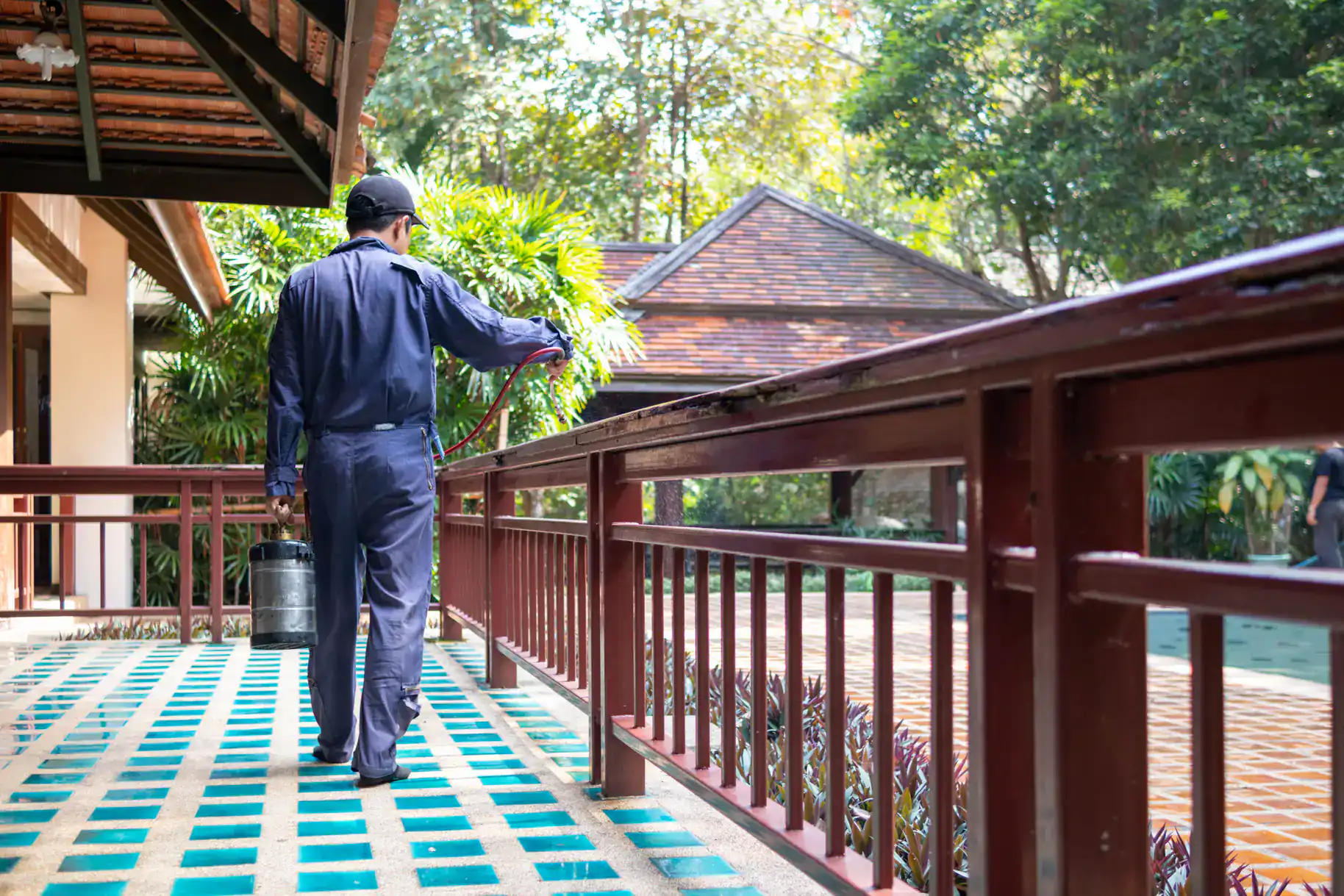
A pest problem in a Kew Gardens Hills garden apartment isn’t just your problem it’s a building problem. When cockroaches move through shared plumbing walls or mice find their way in through a degraded foundation seal, treating one unit and calling it done doesn’t hold. What you actually want is to stop seeing them come back. That’s a different job, and it requires someone who understands how these buildings work.
The postwar brick buildings that define Kew Gardens Hills many of them now 70-plus years old have pipe penetrations, wall voids, and entry points that have been quietly compromised for decades. A real fix means identifying those pathways and closing them, not just applying a treatment and hoping the problem migrates somewhere else. When that work is done right, you’re not scheduling another appointment in six weeks.
If you’re in one of the ground-floor units near Jewel Avenue or living in a building adjacent to the commercial corridor on Main Street, you already know the pressure is higher. Food establishments nearby, aging infrastructure underneath those conditions don’t go away on their own. But they can be managed, consistently and effectively, by someone who’s been doing it in this borough for over fifty years.
We’ve been operating in the New York City metro area since 1971. That’s not a marketing number it means the technicians who show up at your door in Kew Gardens Hills have seen the inside of hundreds of buildings just like yours, in neighborhoods just like this one. The kind of experience that only comes from decades of actual work, not a training manual.
This is a family-owned business. Not a franchise. Not a national chain with a local phone number. The people running it have their name attached to every job, which means accountability isn’t a policy it’s personal.
Kew Gardens Hills is a specific place with specific conditions: aging co-ops near Queens College, NYCHA buildings along Jewel Avenue, garden apartment complexes with decades of deferred maintenance, and a community that talks. If you have a neighbor who’s used us, ask them. That’s the kind of reputation that only gets built one job at a time over fifty years.

It starts with an inspection. Before any treatment happens, one of our licensed technicians walks the space not just the area where you spotted the problem, but the entry points, the plumbing walls, the baseboards, the places pests actually travel. In a multi-unit building, that context matters more than the visible infestation. Treating what you can see without understanding how it got there is how problems come back.
Once the inspection is complete, you’ll know what you’re dealing with and what the treatment plan looks like. No vague estimates. No pressure. If you’re in a co-op building or a garden apartment complex where neighboring units are involved, that gets factored into the approach because a treatment that ignores the adjacent unit or the shared wall is only solving half the problem.
Treatment is applied using EPA-registered materials by a NYSDEC-licensed applicator. For households with children, elderly residents, or kosher kitchens all common in Kew Gardens Hills you’ll get a clear, specific answer on preparation requirements, re-entry timing, and what to expect. After the job is done, follow-up monitoring is part of the process, not an upsell. That’s what it takes to keep a problem solved in a neighborhood like this one.

Ready to get started?
The pest pressures in Kew Gardens Hills aren’t random. Cockroaches move through shared walls in aging apartment buildings. Mice press indoors every fall from the green space bordering Flushing Meadows–Corona Park and Cedar Grove Cemetery. Bed bugs spread fast in multi-unit buildings where turnover happens and shared hallways connect dozens of households. These are the specific conditions here and they’re what our residential pest control services in Kew Gardens Hills are built around.
Bed bug treatment is one of the most requested services in this zip code, and for good reason. In a dense, multi-unit neighborhood, a single infestation can move through a building quickly. We handle both heat treatment and chemical treatment depending on the scope of the problem and the inspection will tell you which approach actually fits your situation before any money changes hands.
Rodent control, cockroach treatment, ant and stinging insect removal, termite inspections, and WDI reports for real estate transactions are all part of what we offer here. If you’re buying or selling a home in Kew Gardens Hills and your lender requires a Wood-Destroying Insect inspection report which is common with FHA and VA loans only a licensed professional can issue that certificate. We’ve been providing WDI clearance for Queens homebuyers and sellers for decades. Free inspections, no obligation, and scheduling that works around your timeline.

This is one of the most common frustrations in multi-unit buildings, and the answer almost always comes back to the same thing: the treatment addressed the visible infestation but not the source. In Kew Gardens Hills’ postwar garden apartment buildings, cockroaches travel through shared plumbing walls, pipe penetrations, and wall voids that connect units. If your neighbor’s unit isn’t treated, or if the structural entry points aren’t sealed, the population simply migrates back.
A treatment that actually holds requires an inspection that identifies those pathways not just the areas where you’ve seen activity. It also helps to understand what’s drawing them in the first place. Ground-floor units near the Main Street commercial corridor are under more consistent pressure from adjacent food establishments. That context changes how the treatment needs to be approached. When the inspection is thorough and the entry points are addressed, the results last.
It matters a lot, actually. Mice and rats behave differently, travel differently, and respond to different control methods. Mice are smaller, more exploratory, and tend to nest close to their entry points which in Kew Gardens Hills often means ground-floor units, basement-level spaces, or areas near utility penetrations in older buildings. Rats are more cautious, tend to follow established routes, and are harder to trap without understanding their movement patterns.
The distinction also affects where you look for entry points. A mouse can fit through a gap the size of a dime. A rat needs something closer to a quarter. In either case, the fall season is when pressure spikes hardest in this neighborhood the proximity to Flushing Meadows–Corona Park and Cedar Grove Cemetery means there’s a large outdoor rodent population actively looking for warmth as temperatures drop. Getting ahead of it before October is always better than reacting after you’ve already seen activity inside.
This is a completely reasonable question, and any exterminator worth hiring should be able to answer it specifically not vaguely. We apply treatments using EPA-registered materials by a NYSDEC-licensed applicator. That licensing requires passing category-specific written exams and maintaining continuing education, so the person applying the treatment actually knows what they’re using and why.
Before any treatment, you’ll get clear preparation instructions: what to cover, what to remove, how long to stay out of treated areas, and when it’s safe to return. For households with young children or elderly residents which describes a large portion of Kew Gardens Hills homes those re-entry timelines are taken seriously, not glossed over. If you have specific concerns about a particular product or method, ask during the inspection. You’ll get a straight answer.
If you’re using an FHA or VA loan, a WDI (Wood-Destroying Insect) inspection report is typically required before the transaction can close. Even for conventional loans, many lenders and buyers request one especially in a neighborhood like Kew Gardens Hills where a significant portion of the housing stock was built in the late 1940s and 1950s. Older wood-framed structures and aging co-op buildings with wood structural elements are genuine termite risk environments, and a clean WDI report gives both parties confidence.
Only a licensed pest control professional registered with the NYSDEC can issue the official WDI certificate your lender or attorney needs. The inspection itself is straightforward a licensed technician examines accessible areas of the structure for evidence of termites, carpenter ants, carpenter bees, and other wood-destroying insects. If you’re on a closing timeline, reach out early. These reports can usually be turned around quickly, but waiting until the last minute adds unnecessary stress to an already tight process.
For most situations, same-day or next-day scheduling is available. Pest problems especially bed bugs, mice, or a wasp nest near a door aren’t the kind of thing most people want to sit on for a week waiting for an opening. Our availability reflects that. You can reach someone by phone, and the goal is always to get a technician to you as fast as your schedule allows.
That said, the speed of the appointment matters less than the quality of what happens when the technician arrives. A rushed inspection that misses the actual entry points or doesn’t account for the building’s layout doesn’t serve you well, even if it happened fast. What you want is someone who shows up promptly and does the job right not someone who’s in and out in twenty minutes with a spray can. Both things are possible at the same time, and that’s what to expect here.
Yes and that experience is directly relevant to the kind of buildings that make up most of Kew Gardens Hills. Garden apartment complexes, postwar co-ops, and multi-unit residential buildings like those in the Parkway Village and Electchester areas require a different approach than a single-family home. Pests don’t stay in one unit. They move through shared walls, utility chases, and common areas which means effective treatment often involves coordination across multiple units or communication with building management.
We’ve been working in New York City’s multi-unit residential environments for over fifty years. That includes NYCHA buildings, co-op complexes, and the kind of aging garden apartments that define this neighborhood. If you’re a co-op board member, a building manager, or a property owner dealing with a recurring problem across multiple units, that’s a conversation worth having before you schedule anything. The inspection will tell you what you’re actually dealing with and what a building-level solution looks like.
Useful Links