Hear from Our Customers
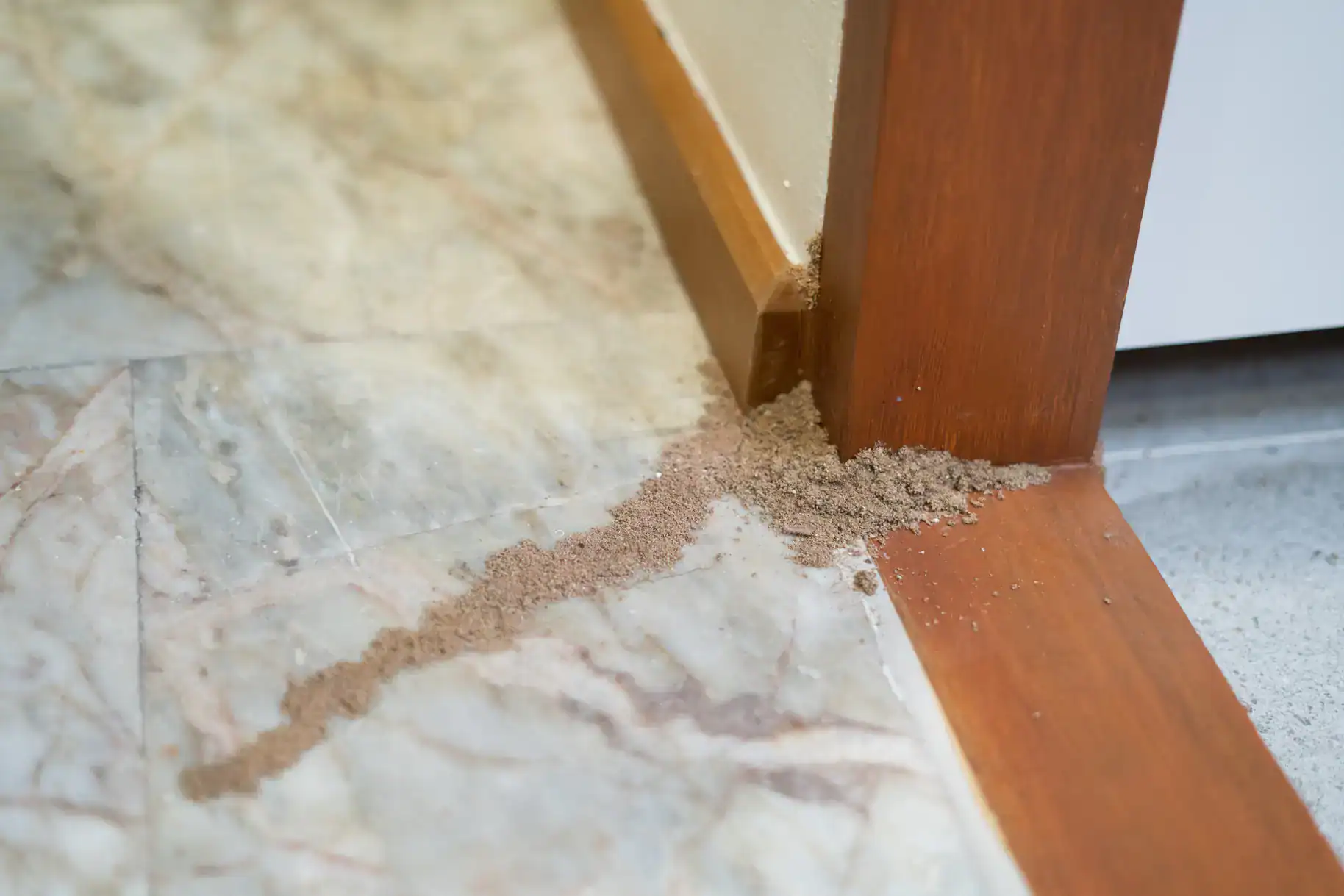
Termites don’t announce themselves. By the time you notice hollow-sounding floors or bubbling paint in your Murray Hill apartment, the damage is usually months sometimes years in the making. Eastern Subterranean Termites feed around the clock, and a mature colony can work through structural lumber faster than most people expect. The earlier you catch it, the less it costs you.
Murray Hill’s building stock makes this especially urgent. The pre-war co-ops along Park Avenue and Madison Avenue many of them 80 to 100 years old still carry original timber framing, wood subfloors, and aging foundations that are exactly what subterranean termites target. Add in the neighborhood’s dense tree canopy, the moisture corridors created by Manhattan’s underground infrastructure, and the proximity to the East River, and you have conditions that actively support termite colony activity year-round.
When we handle termite control in Murray Hill correctly, you’re not just eliminating the colony you can see. You’re cutting off the underground network that’s been feeding it. That means no retreatment surprises six months later, no structural repairs you didn’t plan for, and a building that’s actually protected not just treated on the surface.
We were founded in 1971 by Richard Kourbage Sr. His sons, Richard Jr. and Charles, now run day-to-day operations. That’s three generations of the same family, in the same business, serving the same city including every neighborhood in Manhattan, Murray Hill included. When you call, you’re not reaching a national call center. You’re reaching people whose name is on the work.
We hold an A+ rating with the Better Business Bureau and have maintained that accreditation since 1989. Every technician we employ is certified through the New York State Department of Environmental Conservation, and all our treatments use only NYS DEC-registered materials which matters in a dense residential environment like Murray Hill, where shared walls and shared HVAC systems make safety a real concern, not just a marketing line.
With over 100 years of combined staff experience across all five boroughs, we’ve worked in buildings like yours pre-war co-ops, high-rise apartment complexes, landmarked structures near the Morgan Library, mixed-use buildings along Lexington Avenue. We’re not learning on your building.
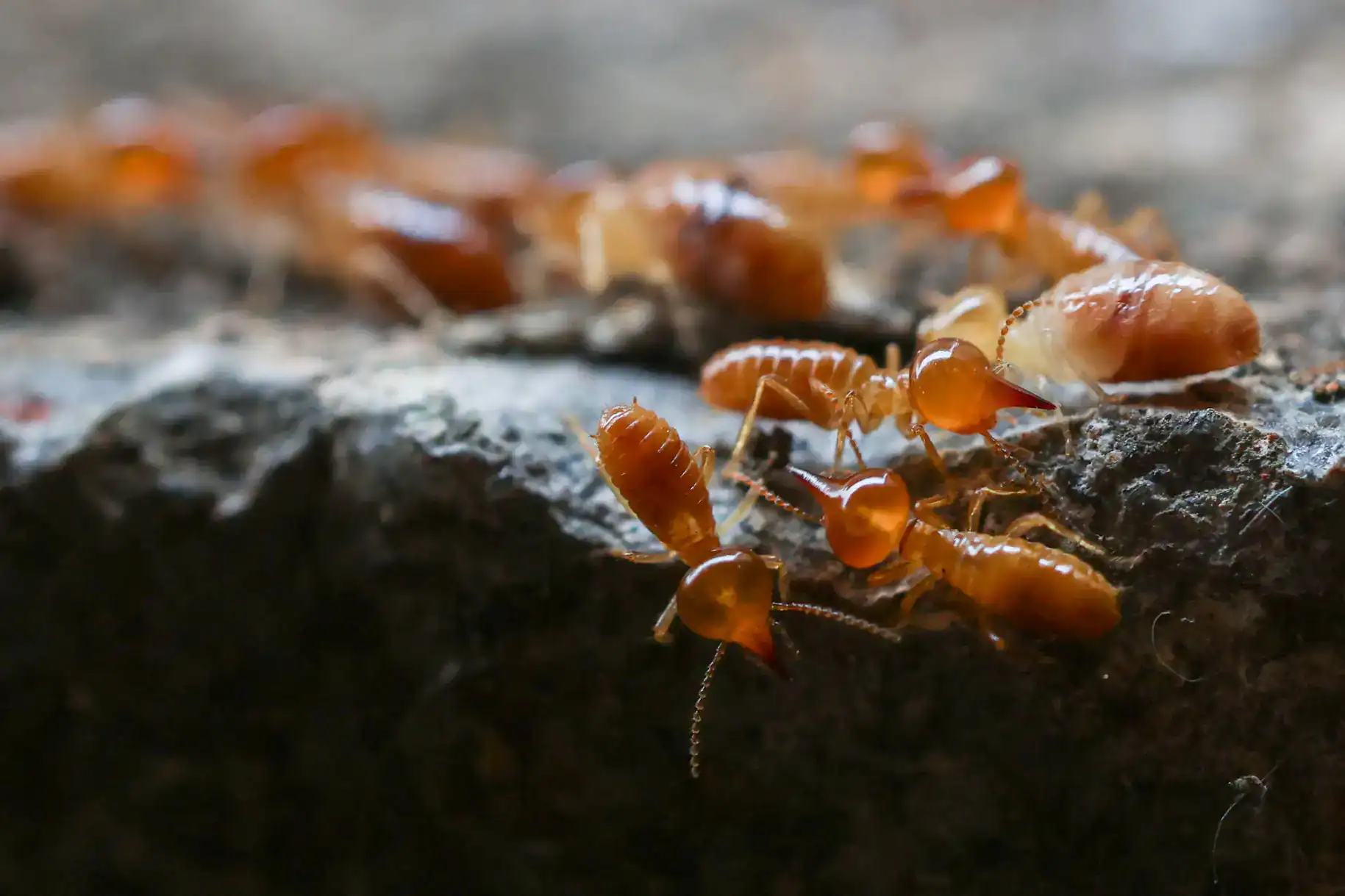
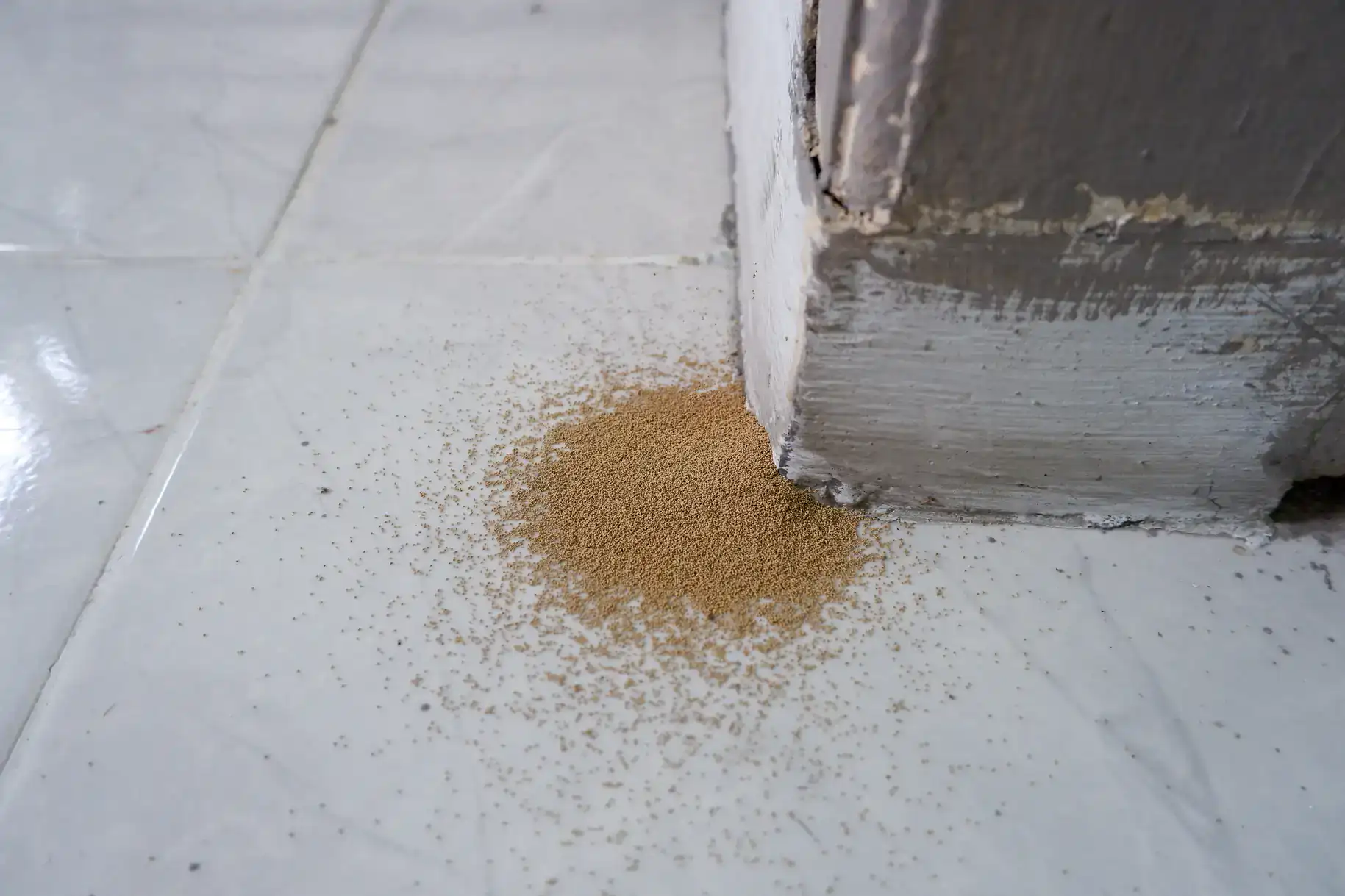
It starts with a thorough inspection. One of our licensed technicians walks the property foundation, basement, crawl spaces, mechanical rooms, window frames, and any wood-to-soil contact points looking for live activity, mud tubes, frass, swarm damage, or structural compromise. In Murray Hill’s pre-war buildings, that means paying close attention to original timber framing, aging expansion joints, and any areas where moisture has softened the wood over decades. If there’s activity, you’ll know exactly where it is and how far it’s spread before any treatment decision is made.
From there, we build the treatment plan around what’s actually found not a one-size-fits-all package. For subterranean termite infestations in Manhattan buildings, that typically means liquid soil treatment, termite baiting systems, or a combination of both, depending on building construction, severity, and access. Baiting systems are particularly effective in Murray Hill’s urban environment because they target the underground colony directly, eliminating the source rather than just treating the entry points.
After treatment, you receive full documentation treatment records, product information, and warranty terms. If you’re going through a co-op purchase or need a WDO report for a lender, that paperwork is ready when you need it. We schedule appointments within two business days, with same-day inspections frequently available, because a termite problem in a Murray Hill building isn’t something that benefits from waiting.
Ready to get started?
Termite control in Murray Hill covers the full range of what a Manhattan property actually needs. That starts with a licensed inspection by a NYS DEC-certified technician with Category 7C credentials the specific certification required by New York State for wood-destroying organism work. No certification, no legal treatment. It’s that straightforward.
For active infestations, our treatment options include liquid barrier application around the foundation perimeter, targeted interior treatments at identified entry points, and termite baiting systems designed to eliminate the underground colony over time. In buildings within Murray Hill’s Landmarks Preservation Commission historic district particularly the blocks between 35th and 38th Streets we select treatment approaches with the building’s structural and regulatory constraints in mind. Landmarked buildings carry additional repair requirements if structural damage occurs, which is exactly why early detection matters so much in this part of the neighborhood.
We also provide WDO inspection reports for real estate transactions a standard requirement for FHA and VA mortgage approvals and increasingly common in Manhattan co-op purchase applications. If your building has received an NYC Department of Health pest-related violation, we handle the documentation, treatment protocol, and follow-up required to close it out. Every service is backed by a written guarantee, and all materials we use are registered with the NYS Department of Environmental Conservation.
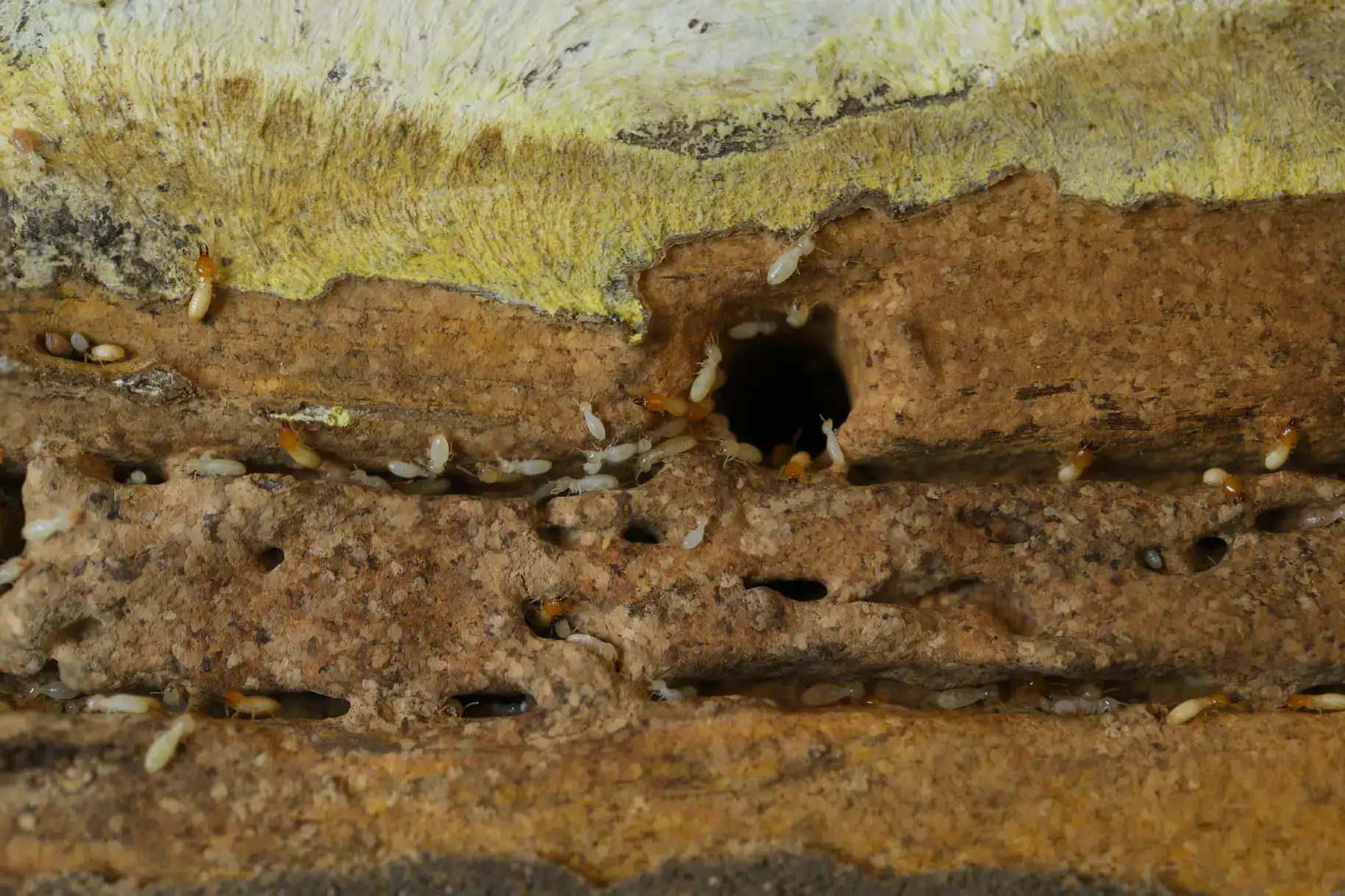
Yes and it’s more common than most people expect. Eastern Subterranean Termites nest underground and travel through soil, which means they access buildings through foundation cracks, expansion joints, utility penetrations, and concrete slabs at ground level. In Murray Hill, where roughly 70% of the building stock is high-rise, the risk isn’t limited to the brownstones and rowhouses. Any building with wood-containing interiors flooring, framing, cabinetry, window frames and a concrete foundation is a potential target.
Manhattan’s underground infrastructure also plays a role. Steam tunnels, utility conduits, and subway corridors create warm, moisture-rich environments year-round that support active termite colonies even in winter. If you’re in a high-rise along Second Avenue or First Avenue and you’ve noticed swarmers near a window or a baseboard that sounds hollow when tapped, that’s worth a professional inspection not a wait-and-see approach.
It’s a fair question, and the difference matters. Termite swarmers have straight antennae, equal-length wings, and a thick waist no pinch between the thorax and abdomen. Flying ants have elbowed antennae, wings of unequal length, and a clearly pinched waist. In Murray Hill, Eastern Subterranean Termite swarms typically happen in early spring late March through May usually following a warm day with rain. If you’re seeing swarmers near a window, a wall void, or around a baseboard, that’s a sign a colony is nearby and mature enough to reproduce.
The key thing to understand is that swarmers themselves don’t cause damage they’re the colony’s reproductive caste, not the workers. But their presence means a well-established colony is already active somewhere in or near the structure. That colony has been feeding for years before it produces swarmers. Don’t wait for a second swarm to call for a termite inspection in Murray Hill.
Almost universally, no. Standard homeowner’s insurance policies and co-op building policies in New York exclude termite damage because it’s classified as a preventable maintenance issue, not a sudden or accidental loss. This applies whether you’re in a Murray Hill co-op, a condo, or a rental unit the building’s master policy is unlikely to cover structural repairs caused by termite activity, and your personal HO-6 policy won’t either.
This is one of the most important financial realities to understand before you need it. Termite repair costs average around $3,000 nationally, but in a Manhattan building especially a pre-war co-op where structural repairs may require Landmarks Preservation Commission approval costs can climb significantly higher. The only real financial protection is early detection and treatment. A termite inspection in Murray Hill costs a fraction of what structural repair costs in a landmarked building.
If you’re buying a co-op or condo in Murray Hill and your lender or co-op board requires a WDO (Wood Destroying Organism) report, here’s what that process looks like. A licensed NYS DEC-certified technician inspects all accessible areas of the unit and any common areas relevant to the transaction foundation, basement, mechanical rooms, wood-framed elements and documents any evidence of current or past termite activity, damage, or conditions conducive to infestation.
The report we produce is a formal WDO inspection document that meets the requirements for FHA and VA mortgage approvals and satisfies most co-op board requests. We provide this documentation in a format that your attorney, lender, or managing agent can use directly. Given that Murray Hill’s real estate market sees consistent co-op transaction volume, particularly in the fall buying season, it’s worth scheduling this inspection early in your due diligence timeline not as an afterthought after the board application is already submitted.
For most residential termite treatments in Murray Hill liquid soil application, baiting system installation, or targeted interior treatment the work itself typically takes two to four hours depending on the size of the unit and the extent of access required. In most cases, you can remain in the building during treatment, though our technician will walk you through any specific precautions based on the materials being used and where they’re applied.
All materials we use are registered with the New York State Department of Environmental Conservation, which means they’ve been evaluated for safety in residential environments. In a dense apartment building with neighboring units and shared ventilation, this isn’t a minor detail it’s the standard we hold ourselves to on every job. If your building requires coordination with the super or building management for access to common areas or the basement, we handle that communication directly so you’re not stuck in the middle.
Termite colonies are active year-round, but there are times when the signs become more visible. Spring particularly late March through May is when Eastern Subterranean Termites swarm in Manhattan. A warm day following rain is the most common trigger. If you see winged insects emerging from a wall, a window frame, or near a baseboard during that window, that’s the most obvious sign a colony is present and mature.
That said, Murray Hill’s specific conditions extend the risk beyond the typical swarm window. Manhattan’s underground infrastructure maintains warmth and moisture year-round, which means termite colonies in this neighborhood don’t go dormant the way they might in a less developed environment. The fall real estate season also drives a spike in termite inspection requests, as buyers going through co-op purchase processes need WDO reports before closing. If you’re planning a transaction or have noticed any signs hollow wood, small piles of wings near a sill, mud tubes along a baseboard don’t wait for spring to find out what you’re dealing with.
Useful Links
Other Services we provide in Murray Hill