Hear from Our Customers

The real problem with termites in Tribeca isn’t just the damage it’s how long it’s already been happening before you find out. Eastern Subterranean Termites can work silently inside a building for five years or more before you see a single sign. By the time swarmers show up near your windows in March or April, the colony feeding on your structure has likely been active since before your last renovation.
In a neighborhood where the median home value sits above three million dollars, that timeline matters. The timber framing inside Tribeca’s cast-iron loft buildings much of it original, much of it exposed to decades of moisture from aging plumbing and river-adjacent humidity is exactly what subterranean termites target. The western blocks of Tribeca, built on historical landfill near the Hudson River, hold more ground moisture than the bedrock-based blocks to the east. That moisture accelerates wood decay and makes those buildings more attractive to active colonies.
Getting a thorough termite inspection done means you know what you’re dealing with not what you’re guessing at. It means a real estate transaction can move forward with documentation in hand. It means a renovation doesn’t stop dead because something unexpected turned up inside a wall. When we treat the infestation properly and eliminate the colony, you stop the clock on damage that compounds every season it goes unaddressed.
We’ve been operating in New York City since 1971 founded by Richard Kourbage Sr. and still run today by his sons, Richard Jr. and Charles. That’s not a marketing angle. It means the people making decisions about your job are the same people whose name is on the company. When something needs to get right, there’s no corporate chain to blame and no franchise playbook to hide behind.
Our staff brings over 100 years of combined pest control experience, and a significant portion of that experience has been spent inside Manhattan’s oldest and most complex buildings the kind of pre-war loft conversions and cast-iron structures that define Tribeca’s streetscape from Franklin Street down to Chambers. We know what termite activity looks like in a building where original timber has been sealed behind custom millwork for decades, and we know how to treat it without turning a high-end renovation into a demolition project.
We hold an A+ rating with the Better Business Bureau accredited since 1989 and apply only NYS DEC-registered materials on every job.
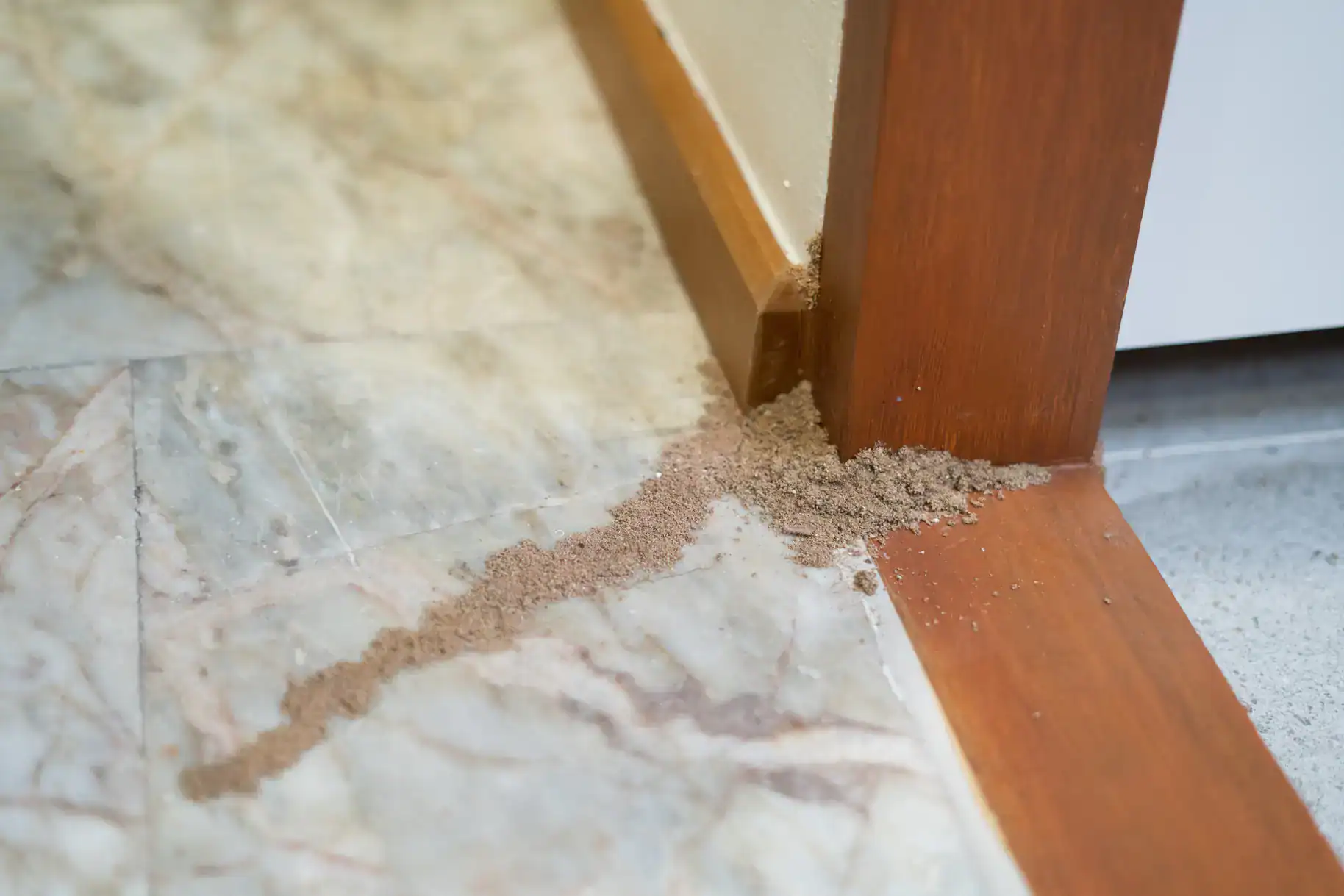
It starts with an inspection. One of our technicians walks the property with a trained eye looking at foundation contact points, checking for mud tubes along basement walls or crawl spaces, probing wood framing for hollow spots, and identifying any moisture conditions that are feeding the problem. In Tribeca’s loft buildings, that often means getting into areas that haven’t been opened since the original conversion and knowing what to look for when you do.
Once the inspection is complete, you get a clear picture of what’s there, where it is, and what it will take to eliminate it. For subterranean termites, treatment typically involves one of two approaches: a liquid termiticide barrier applied around the foundation perimeter, which creates a protective zone termites can’t cross, or a baiting system installed at strategic points around the structure, which works by letting termites carry a slow-acting agent back to the colony and eliminating it at the source. The right method depends on your specific building, its construction, and the extent of the activity and we’ll tell you which one fits your situation and why.
If you’re in one of Tribeca’s four Landmarks Preservation Commission-designated historic districts, the inspection report we provide gives you the documentation you need to move forward with any LPC-compliant structural repair work. For real estate transactions which in this market often involve lenders requiring a formal Wood Destroying Organism report that written documentation is exactly what closes the gap between a delayed deal and a signed contract.
Ready to get started?
Termites are the most common concern, but they’re not always the only one. In the aged timber of Tribeca’s warehouse conversions, the same conditions that attract Eastern Subterranean Termites old wood, hidden moisture, limited airflow inside walls also support carpenter ant colonies and powder post beetles. Our service covers all three: subterranean termite inspection and treatment, carpenter ant control, and powder post beetle treatment, so one inspection addresses every wood-destroying organism threat in the building, not just the one that triggered the call.
For Tribeca homeowners and property managers dealing with an active infestation, we offer termite baiting system installation and liquid barrier treatments, both applied using only NYS DEC-registered materials. Treatments are targeted and professionally applied important in a building where original hardwood floors, exposed timber beams, and high-end interior finishes are part of what makes the property worth what it is.
For buyers, sellers, and anyone navigating a real estate transaction in one of the most active luxury markets in New York City, we also provide formal Wood Destroying Organism inspection reports. These reports meet lender requirements, satisfy buyer due diligence expectations, and provide the written foundation for any permit applications or LPC review that follows. Appointments are available within two business days, with same-day inspections frequently available because in Tribeca, a closing deadline doesn’t move for a slow exterminator.
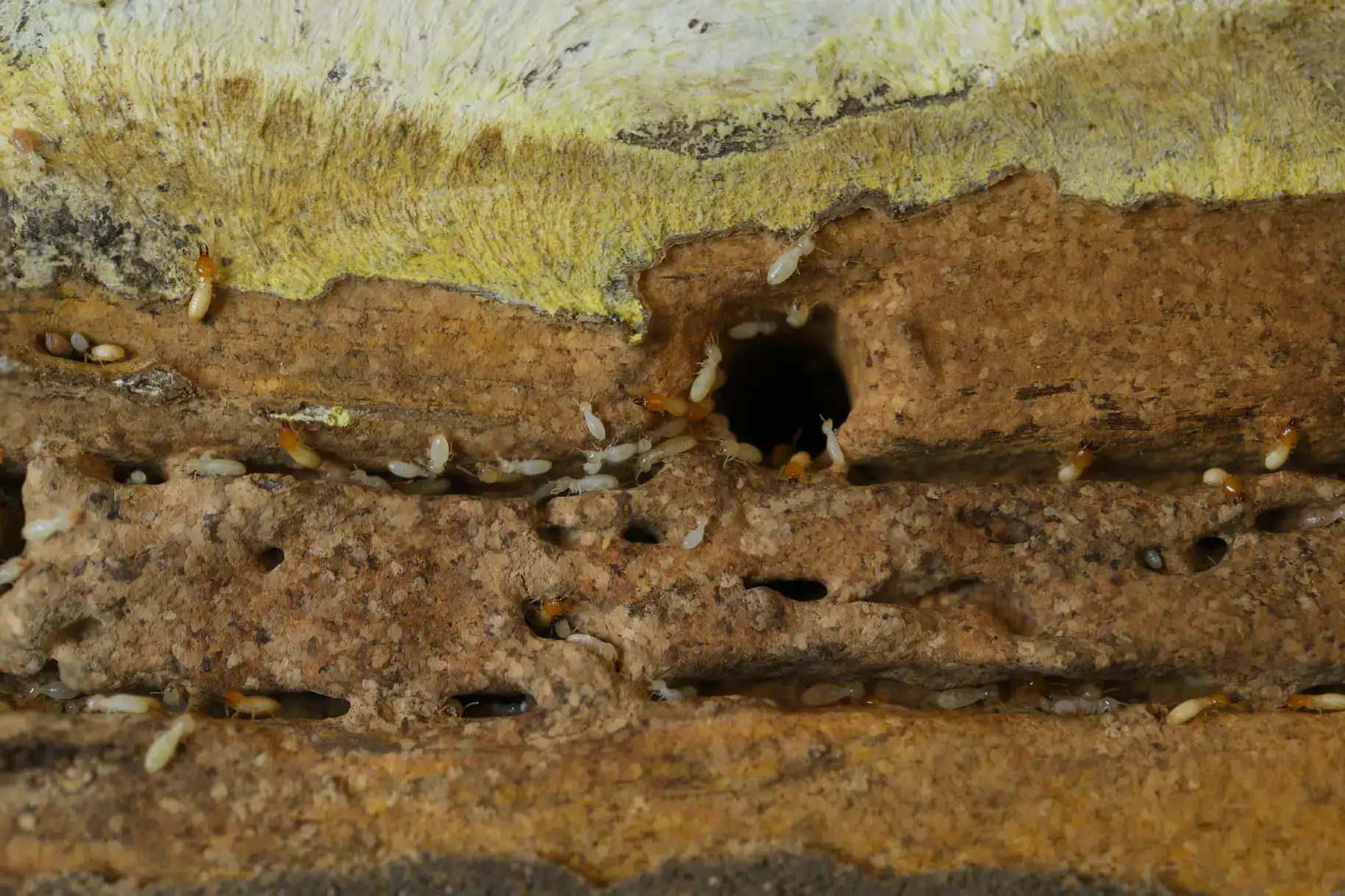
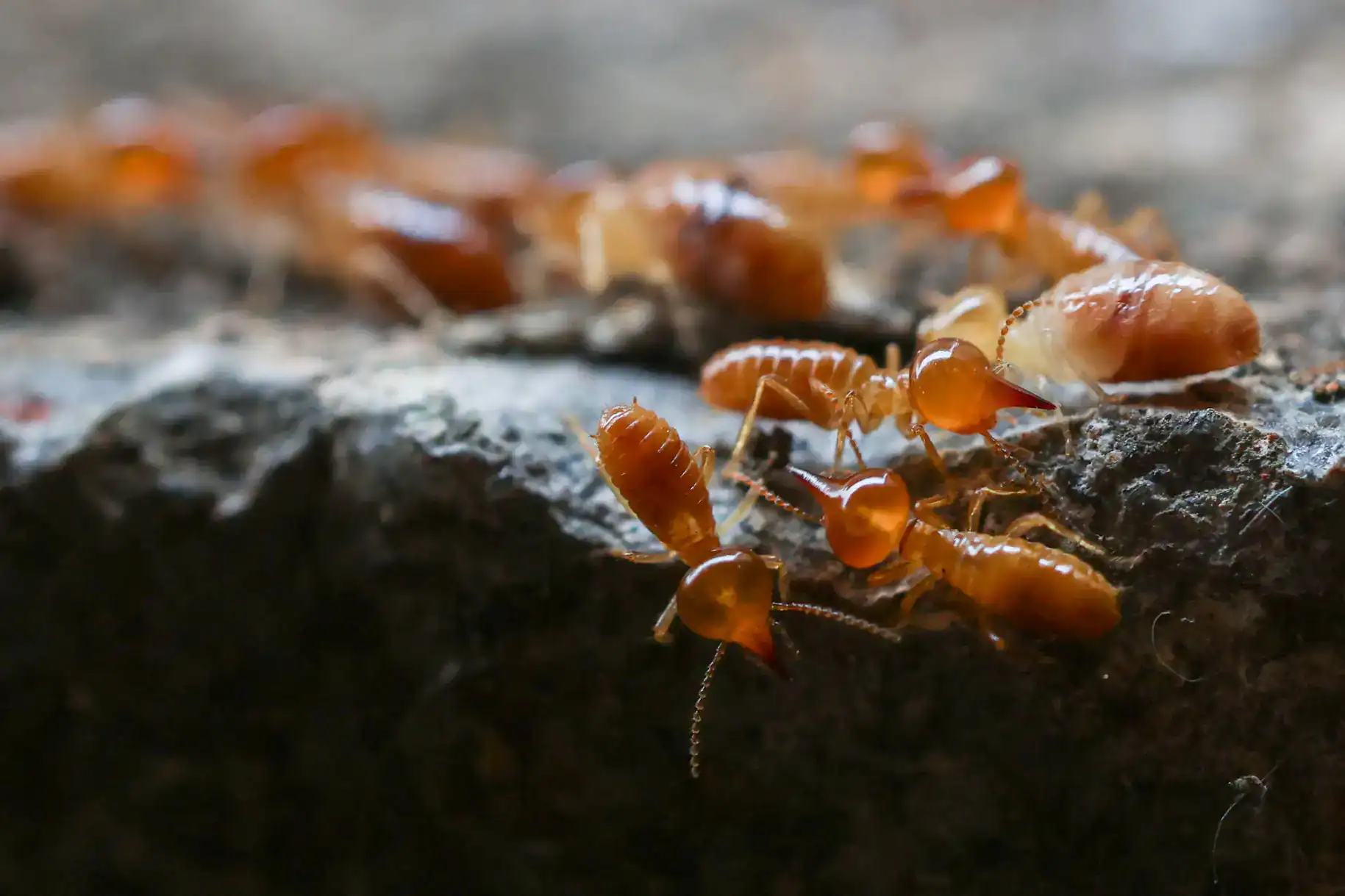
Eastern Subterranean Termites live underground and enter structures through any point where wood makes contact with soil or where gaps in the foundation give them a path inside. In Tribeca’s older cast-iron and warehouse buildings, that often means foundation joints, utility penetrations, or areas where wood structural elements are embedded directly into masonry walls that sit on aging foundations. The western blocks of Tribeca, built on historical landfill near the Hudson River, tend to hold more ground moisture than areas built on Manhattan’s bedrock and that elevated soil moisture is one of the primary conditions that draws subterranean termite colonies toward a structure in the first place.
Once inside, they move through mud tubes they construct along walls and foundation surfaces, feeding on wood framing, subfloors, and structural beams that may not be visible without opening walls. That’s why a professional inspection matters a trained technician knows where to look, including areas a homeowner walking through their own loft would never think to check.
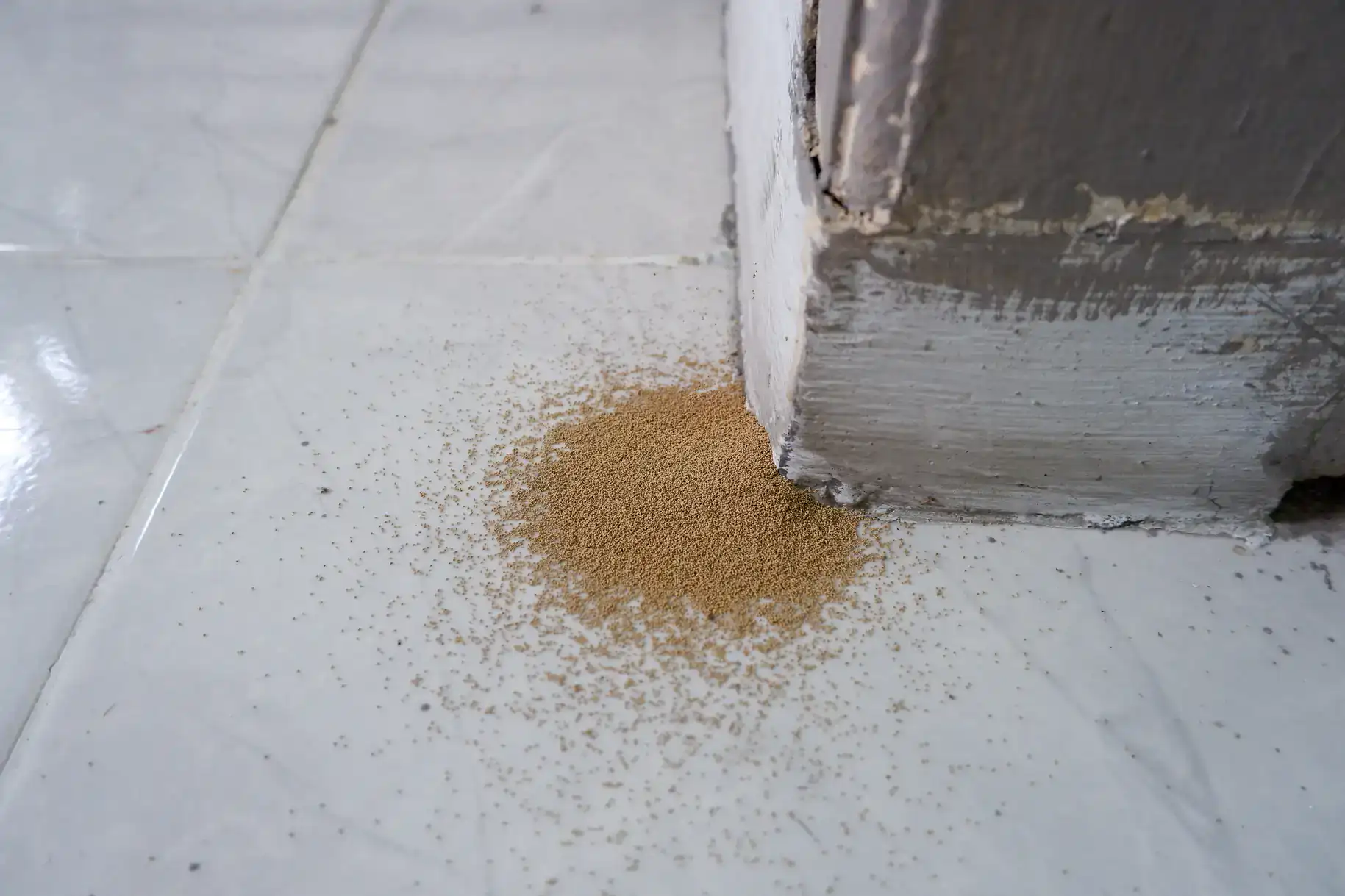
The most common first sign in a Manhattan loft or apartment is a termite swarm winged termites, called alates, emerging from inside walls and collecting near windows and light sources. In Tribeca, swarm season typically runs from March through May, following the first warm days after a rain. If you’ve found small, discarded wings on a windowsill or near a baseboard, that’s what you’re looking at.
Other early signs include mud tubes narrow, pencil-width tunnels made of soil and debris running along foundation walls, exposed framing, or the inside of utility chases. Hollow-sounding wood when you knock on it, paint that looks bubbled or uneven without an obvious cause, and doors or windows that suddenly don’t close right can all point to termite activity behind the surface. In buildings where original timber has been sealed behind drywall or custom millwork for years, visible damage is often the last sign not the first which is why a proactive inspection is worth scheduling before you have a visible problem.
If the transaction involves FHA or VA financing, a Wood Destroying Organism inspection report is required by the lender full stop. But even in conventional sales, which make up the majority of Tribeca’s luxury market, sophisticated buyers and their attorneys routinely require a documented termite inspection as a condition of purchase. At a median sale price above three million dollars, no serious buyer is skipping that step, and no experienced real estate attorney on either side is going to let them.
Beyond the transactional requirement, a clean WDO report is a meaningful piece of documentation that protects both parties. If termite activity is found during the inspection, having it identified, treated, and documented before closing is almost always better than having it surface during the buyer’s own inspection and become a negotiating point or a deal-killer. We provide formal WDO inspection reports that meet lender requirements and hold up to the scrutiny of the attorneys and buyers who work in this market.
Yes, and this is a specific concern in Tribeca’s large multi-story loft buildings, where units share common structural elements floor joists, load-bearing beams, shared walls that run continuously through the building. Subterranean termites don’t respect unit boundaries. They follow wood, moisture, and the path of least resistance through a structure. If a colony is feeding on a beam in one unit, it can work its way into adjacent units through the same continuous framing.
This is also why individual unit-level treatment sometimes isn’t enough in a building like this. Depending on the extent of the infestation and how the building is constructed, a building-wide inspection and coordinated treatment approach may be the more effective solution. We can assess the scope of the problem and give you a clear recommendation whether that’s a targeted treatment for a single unit or a broader approach that accounts for how the building is actually built.
Tribeca contains four Landmarks Preservation Commission-designated historic districts Tribeca East, Tribeca West, Tribeca North, and Tribeca South and if your building falls within one of them, any structural repair work may require LPC review before it proceeds. That includes repairing termite-damaged wood framing, beams, or other structural elements that are part of the building’s historic fabric.
The termite treatment itself the extermination doesn’t require LPC approval. But the repair work that follows it might, depending on the scope and the specific elements involved. Having a professional inspection report from a licensed exterminator gives you the documentation foundation you need to move through that review process. It establishes what was found, where, and what was done to address it which is exactly the kind of paper trail that makes an LPC application or a NYC Department of Buildings permit application go more smoothly. Our written inspection and treatment reports are detailed enough to serve that purpose.
The cost of termite treatment in Tribeca depends on the size of the building, the extent of the infestation, and the treatment method that’s appropriate for the specific situation. For a targeted liquid barrier treatment around a building’s foundation, costs generally run in the range of $1,500 to $3,500 for a typical residential structure. Termite baiting system installation, which involves placing bait stations at intervals around the perimeter and monitoring them over time, can range from $1,200 to $3,000 or more depending on the building’s footprint and the number of stations required.
In Tribeca, where you’re often dealing with large multi-story loft buildings rather than single-family homes, the scope of the job and the cost can be higher than in a more typical residential setting. That said, the math is straightforward: termite damage repair in a Manhattan building costs an average of $3,000 to $10,000 or more, homeowner’s insurance almost never covers it, and in a neighborhood where property values are what they are in Tribeca, the cost of treatment is a small fraction of what you’re protecting. We provide free estimates so you know exactly what you’re looking at before any work begins.
Useful Links
Other Services we provide in Tribeca