Hear from Our Customers
When ant control in South Ozone Park is done right, you stop playing the same game on repeat. No more wiping down the same counter, no more spraying the same corner, no more wondering if the problem is getting worse inside your walls. The infestation ends not just the visible part of it.
South Ozone Park’s housing stock is part of the equation here. These are brick rowhouses, semi-detached two-families, and aging colonials homes built between the 1920s and 1960s with the kind of settled foundations, cracked mortar joints, and shared wall cavities that ants are very good at finding. When your home shares a wall with a neighbor’s, a colony doesn’t stay on your side. It moves. Treatment that only addresses what’s inside your unit misses that reality entirely.
The neighborhood’s proximity to the Aqueduct Racetrack grounds and the ongoing construction along the Van Wyck Expressway corridor also matters. Soil disturbance from infrastructure work near JFK pushes ground-nesting ant colonies out of the ground and toward the nearest warm structure which is often a home on a residential street in South Ozone Park. Once the infestation is eliminated at the source, that pressure stops translating into an indoor problem. That’s what you’re actually paying for.
We’ve been a family-owned operation since the early 1980s, built by Richard Kourbage and still running the same way with licensed technicians, NYS DEC-registered materials, and a process that’s designed to actually resolve infestations rather than manage them indefinitely. Our A+ BBB rating reflects that consistency. So does the 40-year track record across Queens and Brooklyn.
Our Brooklyn headquarters on Flatbush Avenue sits a short drive from South Ozone Park via the Belt Parkway the same road that forms your neighborhood’s southern boundary. We’ve been treating homes throughout southwest Queens for decades, which means the technicians who show up at your door know the housing stock in South Ozone Park, the ant species common here, and the seasonal patterns that drive infestations in this part of the borough.
You’re not getting a national franchise routing a call through a dispatch center three states away. You’re getting a company that has been in this market long enough to have earned its reputation one home at a time.
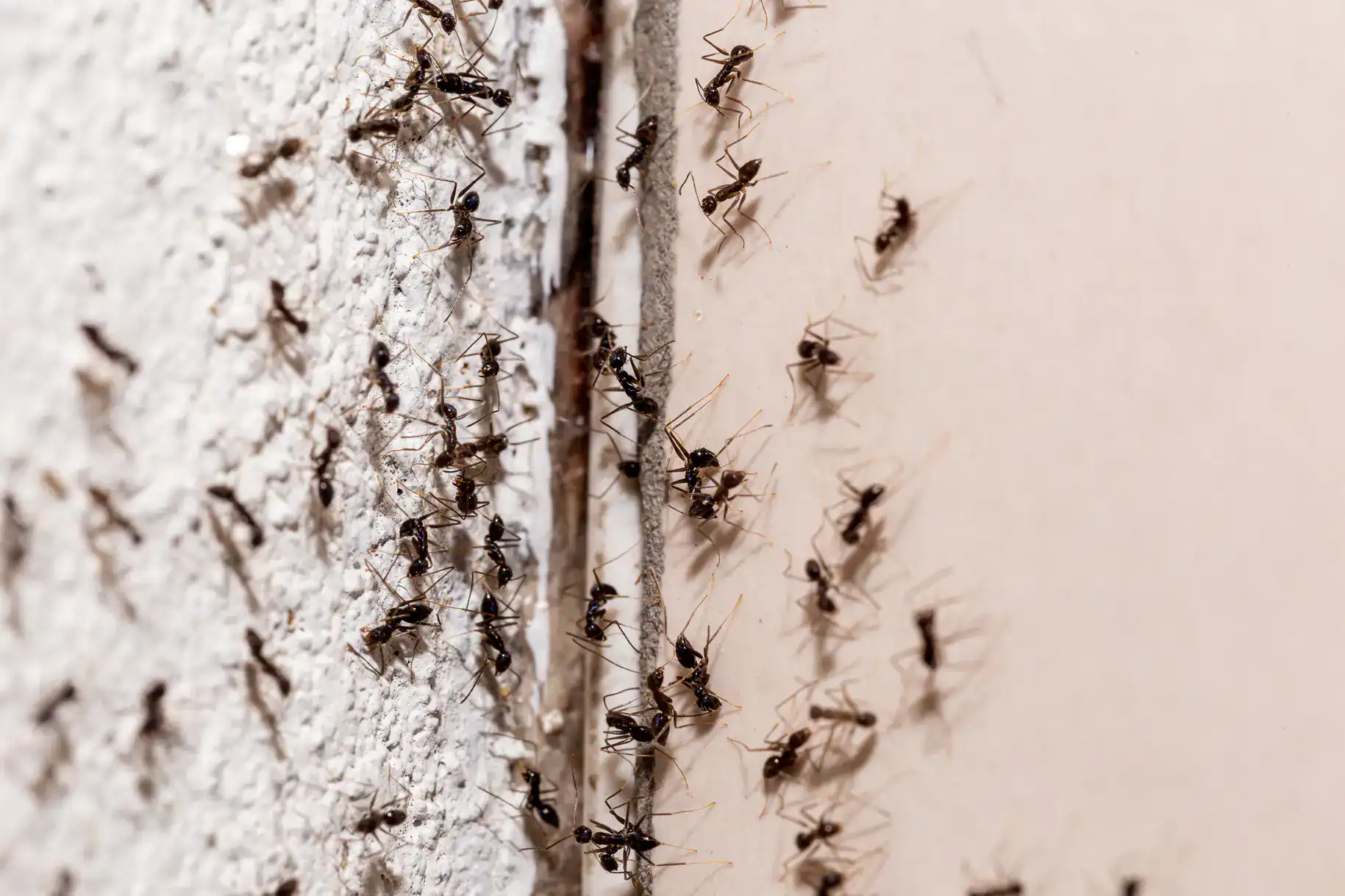
The first step is a free estimate a real walkthrough of your home, not a phone quote based on square footage. One of our licensed technicians comes out, identifies the ant species involved, locates entry points and likely nesting areas, and puts together a treatment plan based on what’s actually happening in your specific home. In South Ozone Park, that often means checking foundation cracks, mortar joints, basement perimeters, and shared wall areas that are common in the neighborhood’s older rowhouse and two-family construction.
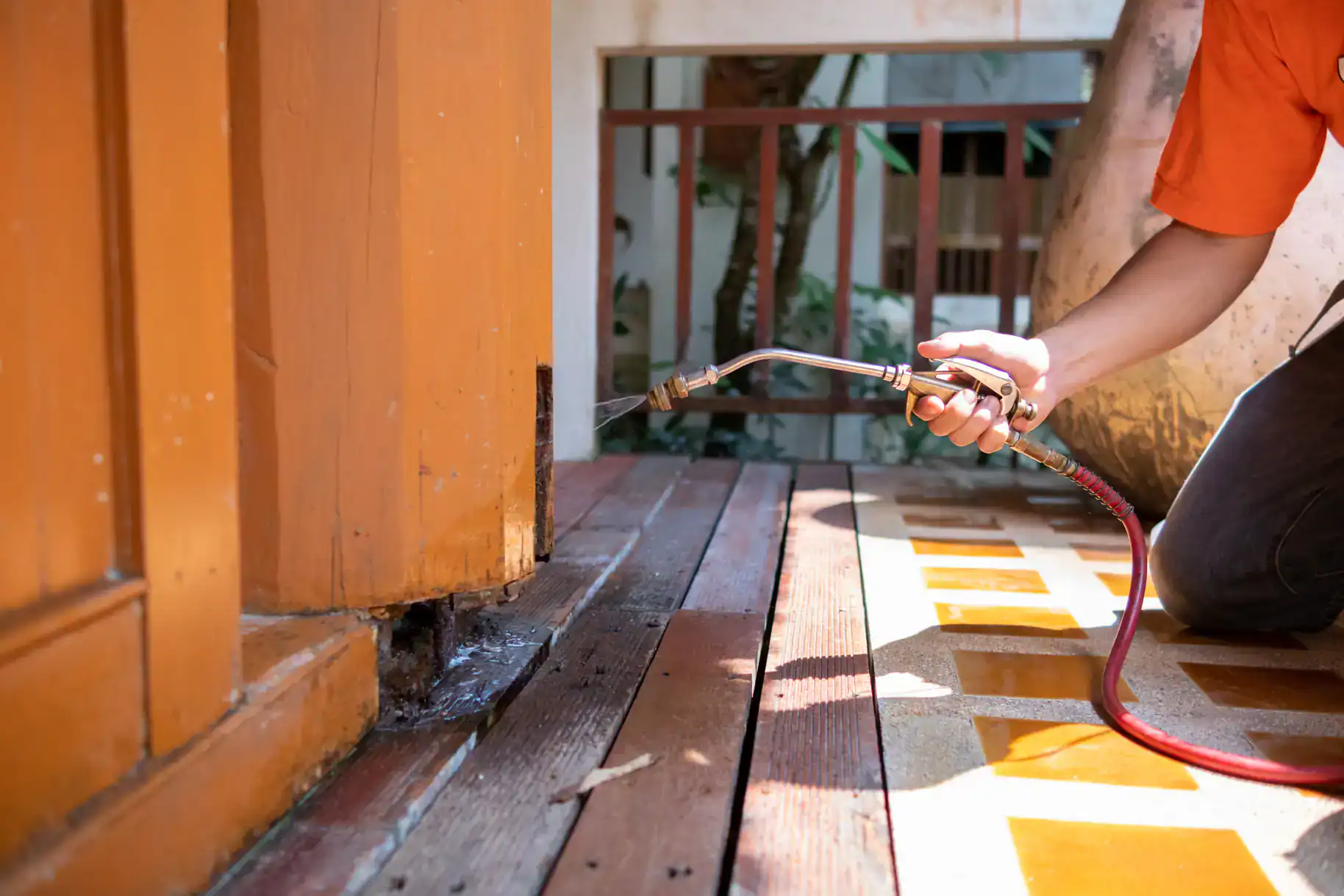
The initial cleanout applies treatment both inside and outside the structure. This matters because the goal isn’t to kill the ants you can see it’s to get foraging ants to carry the material back into the colony and share it with the population, including the queen. That’s how you eliminate a colony rather than thin it out temporarily. Given that South Ozone Park’s warm, humid summers accelerate colony growth significantly, timing and thoroughness on that first visit are critical.
After the cleanout, follow-up visits are scheduled based on the severity of the infestation. These may be weekly, every other week, or monthly. The job isn’t considered done until the infestation is resolved. If ants are still active, we come back that’s built into our process, not an upsell.
Ready to get started?
Our ant control services in South Ozone Park include interior and exterior treatment, a thorough inspection of the entry points and nesting areas most common in this area’s housing stock, and a follow-up schedule that continues until the infestation is gone. Every material we use is registered with the New York State Department of Environmental Conservation a legal requirement in NYC that not every company makes visible, but one you should always confirm before letting anyone treat your home.
The multi-visit structure is especially important in South Ozone Park, where attached and semi-detached homes mean that a colony can span multiple units through shared framing, plumbing chases, and wall voids. A single treatment visit may resolve one nest while satellite colonies remain active in adjacent spaces. Our scheduled follow-up visits catch that and re-apply materials as needed to address any remaining activity. If you’re a landlord managing a two-family home near Rockaway Boulevard or a homeowner in one of the neighborhood’s older colonials, this kind of building-aware approach is what actually protects your property.
We also offer a 10% senior discount relevant in a neighborhood where residents aged 65 and older make up a meaningful share of the homeowner population. Free estimates are available with no obligation, and our phones are answered 24 hours a day, seven days a week. If you discover ants at 9 p.m. on a Sunday after a long shift, someone picks up.
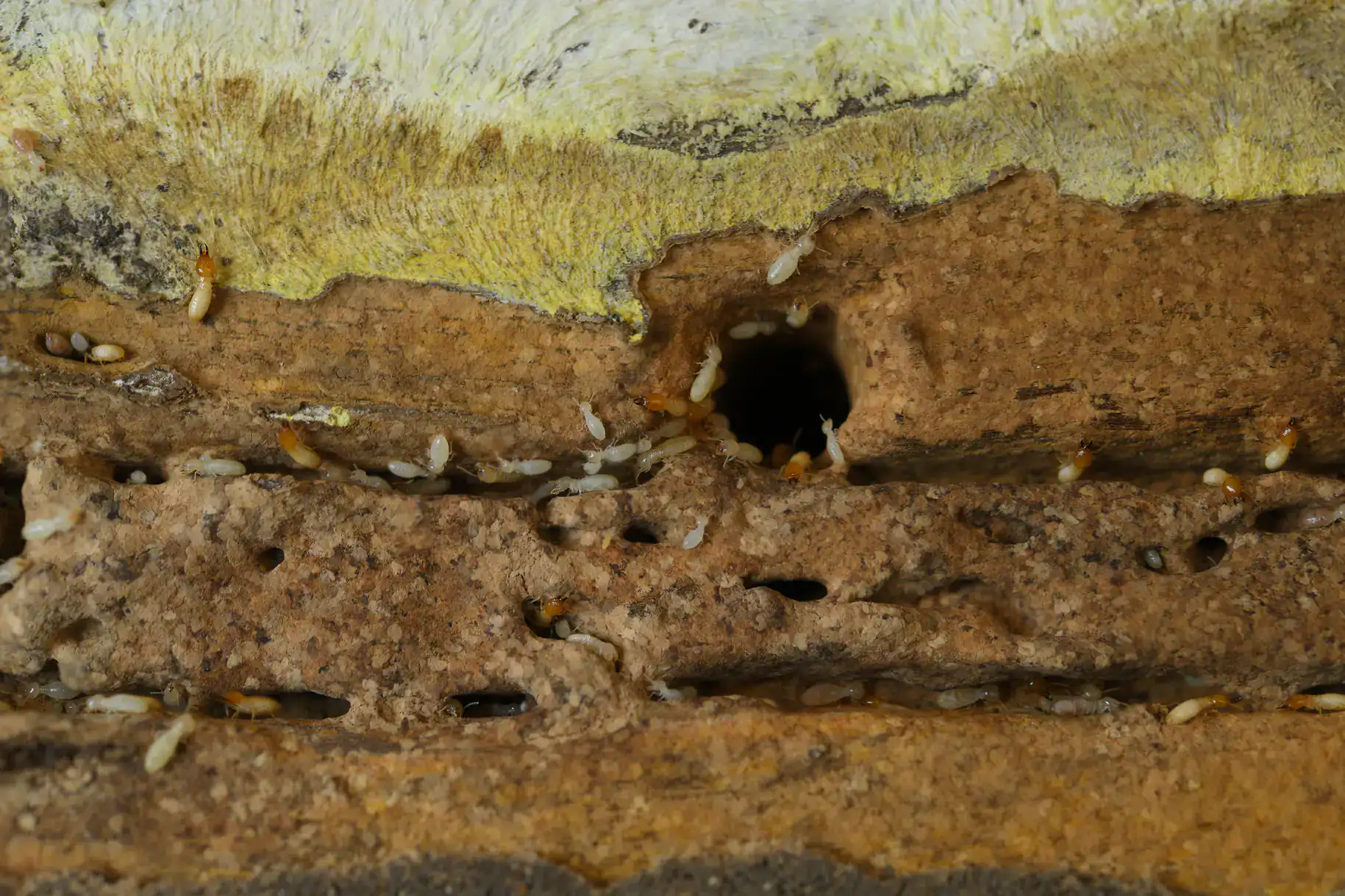
The most common reason ants return after treatment is that the colony was never actually eliminated only the foragers you could see were killed. Most store-bought sprays and even some professional one-time treatments work this way. They clear the surface, but the queen and the bulk of the colony remain active in the nest, which may be inside your walls, beneath your foundation, or in the yard. Within days or weeks, the colony sends out new foragers and the cycle starts again.
In South Ozone Park specifically, this problem is compounded by the neighborhood’s attached and semi-detached housing. If your home shares a wall with a neighbor, a colony that’s been partially treated on your side can retreat through shared framing or plumbing chases and reestablish. Effective ant pest control in South Ozone Park has to account for the building structure itself not just the interior of a single unit. That’s why we treat both inside and outside, and why follow-up visits are part of our process rather than an optional add-on.
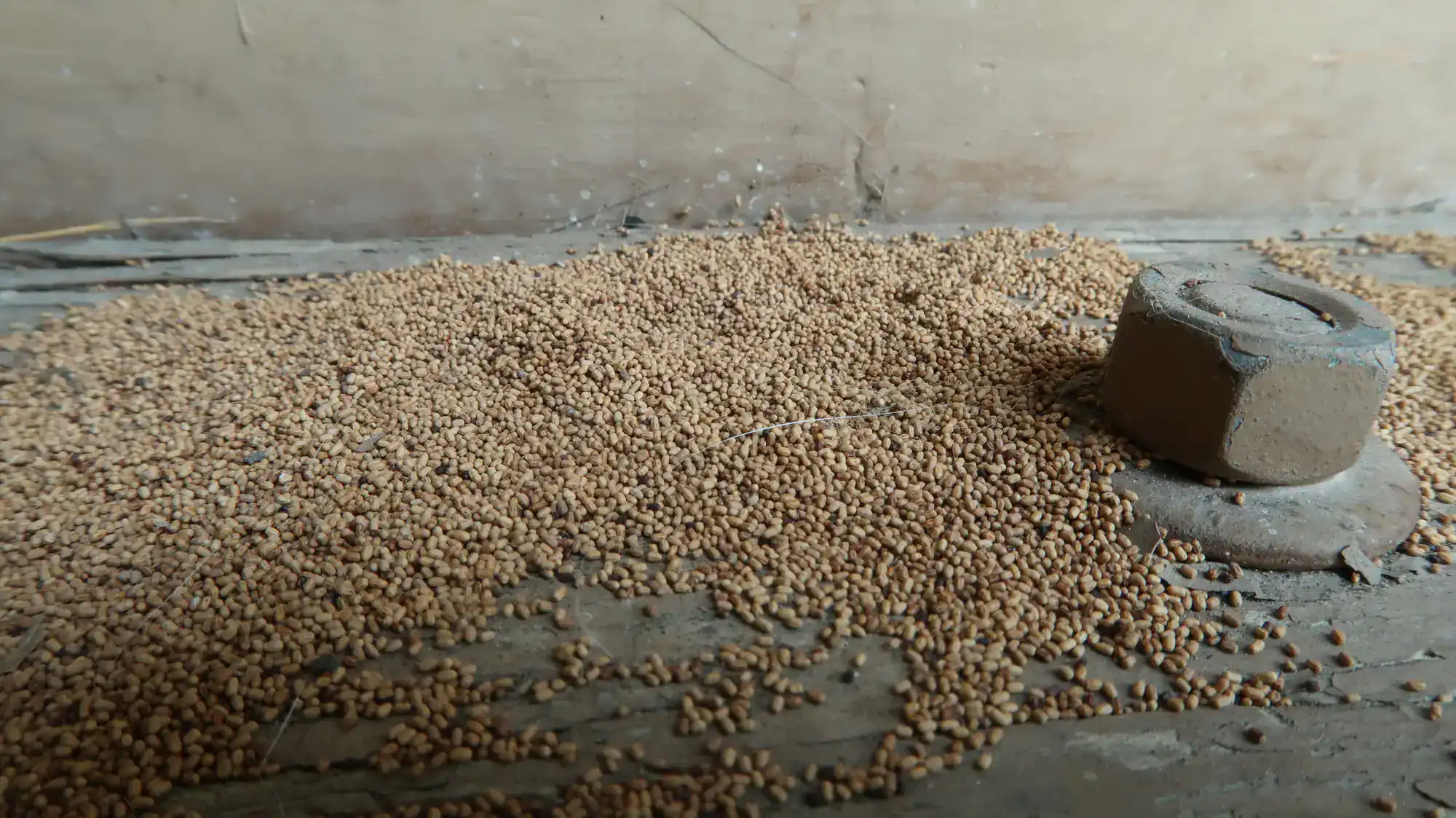
The clearest sign of carpenter ants is frass a fine, sawdust-like material that looks like wood shavings mixed with insect parts, often found near baseboards, window frames, or door frames. You might also hear faint rustling or crinkling sounds inside walls at night, which is the colony moving through wood galleries. Carpenter ants are also noticeably larger than pavement ants or odorous house ants typically a quarter inch to half an inch long, often black or reddish-black.
In South Ozone Park, carpenter ant pressure is elevated for homes near the Aqueduct Racetrack grounds and the green corridors bordering JFK Airport. Those large, lightly developed parcels provide ideal nesting habitat, and foraging trails extend into adjacent residential streets. If you’re seeing large black ants appearing consistently in your kitchen or bathroom especially in spring and early summer when winged reproductives swarm a carpenter ant exterminator in South Ozone Park should inspect the structure before the damage compounds. Carpenter ants don’t eat wood the way termites do, but they hollow it out to nest, and in older wood framing that’s already been softened by age or moisture, that damage adds up faster than most homeowners expect.
Yes when it’s done by a licensed technician using properly registered materials, professional ant control is safe for households with children and pets. Every material we use is registered with the New York State Department of Environmental Conservation, which means it’s been reviewed and approved for residential use under state law. Our technician will walk you through re-entry timing typically a few hours after treatment and any specific precautions based on what was applied and where.
What’s worth understanding is that professional-grade treatment is actually more targeted and more controlled than most store-bought products. Consumer sprays are often applied broadly and repeatedly because they don’t eliminate the colony so households end up with more chemical exposure over time, not less. A professional treatment that eliminates the infestation in fewer visits means less total material in your home. For South Ozone Park families particularly households with young children, elderly residents, or pets that’s a meaningful difference.
Rain drives ants indoors because it floods their ground-level nests. When soil becomes saturated, ground-nesting species like pavement ants have to relocate fast and the nearest dry, warm structure is usually your home. This is a well-documented pattern, and it’s particularly pronounced in South Ozone Park given the neighborhood’s low elevation and its proximity to Jamaica Bay-influenced moisture. Heavy rain events here can push large numbers of ants indoors within hours, which is why sudden infestations after storms are so common in this neighborhood.
The important thing to understand is that a rain-driven surge isn’t a new infestation it’s an existing colony that was already nesting near your foundation or yard, now looking for higher ground. That means the colony was already there before the rain, and it will remain there after things dry out unless it’s treated directly. If you’re seeing ants pour in after a storm, that’s a signal to address the nest itself, not just the ants that made it inside. Ant removal in South Ozone Park after a rain event should start with an exterior inspection of foundation perimeters, not just an interior spray.
The initial treatment visit typically takes one to two hours, depending on the size of the home and the scope of the infestation. You’ll usually see a noticeable reduction in ant activity within the first few days as the foragers carry the treatment back into the colony. Full results meaning the colony is eliminated and activity has stopped generally take one to three weeks, with follow-up visits scheduled to monitor progress and re-apply materials where needed.
It’s worth setting realistic expectations here. A large or multi-colony infestation in an older South Ozone Park rowhouse or two-family home especially one with shared walls, aging foundation cracks, and established nesting areas may take longer to fully resolve than a small, contained infestation in a newer detached home. The follow-up visit schedule exists precisely because we don’t consider the job finished after one visit. The timeline is driven by the actual infestation, not a fixed number of appointments. You’ll know it’s working when activity drops consistently between visits and you’ll know it’s done when it stops entirely.
Yes we offer a 10% senior discount on ant control services in South Ozone Park. South Ozone Park has a substantial population of longtime homeowners who have lived in and maintained their properties for decades, and the discount reflects a straightforward acknowledgment of that. Residents 65 and older make up a meaningful share of the neighborhood’s homeowner base, and pest control is a real cost for people on fixed incomes who are trying to protect a home they’ve invested in for years.
When you call to schedule your free estimate, just mention that you qualify and it will be applied to your service. There’s no complicated process, no minimum service requirement attached to it. If you’re a senior homeowner in South Ozone Park dealing with an ant infestation whether it’s in a brick rowhouse near Linden Boulevard, a two-family off Lefferts, or a detached colonial closer to the Aqueduct the discount applies, and the service itself doesn’t change. You get the same licensed technician, the same NYS DEC-registered materials, and the same multi-visit follow-up process as every other Kingsway customer.
Useful Links