
Hear from Our Customers

When you own a brick Cape Cod or Tudor in Cambria Heights, pest problems hit differently than they do for a renter in a high-rise. You’re the one responsible. You’re the one who has to call, pay, and deal with it and if the treatment doesn’t hold, you’re back to square one. That cycle stops when the job is done right the first time.
The homes in Cambria Heights were built in the 1920s through the 1950s. They have unfinished basements, aging mortar joints, and crawl spaces that create natural entry points for mice, rats, and carpenter ants. A generic treatment from a company that doesn’t understand older Queens housing stock isn’t going to cut it. What you need is someone who knows exactly where these pests enter a home like yours and closes those doors for good.
There’s also the geography to consider. Cambria Heights sits right on the Nassau County border, with the Cross Island Parkway as its eastern edge. Squirrels, raccoons, and other wildlife cross from Long Island’s suburban landscape into neighborhood yards and attics regularly. And to the south, Montefiore Cemetery borders the neighborhood open grounds that are well-known harborage areas for rodents. If you’re on the southern end of Cambria Heights and wondering why the mice keep coming back, that’s part of the answer.
We’ve been operating in the New York City metro area since 1971. That’s not a tagline it’s a track record that spans more than five decades of licensed, insured pest control work across every borough and neighborhood type Queens has to offer, including southeastern Queens communities like Cambria Heights, St. Albans, and Laurelton.
We’re family-owned. That means when something goes wrong or a treatment needs a follow-up, there’s a real person accountable for it not a franchise call center. The technicians who come to your home are NYSDEC-licensed professionals who know the difference between treating a 1930s Cape Cod in Cambria Heights and a modern apartment building in Long Island City. Those are not the same job, and we don’t approach them the same way.
If you’re buying or selling a home in Cambria Heights, we also provide WDI inspection reports the wood-destroying insect certificates that FHA and VA lenders require before closing. It’s one less thing to scramble for when you’re in the middle of a transaction.
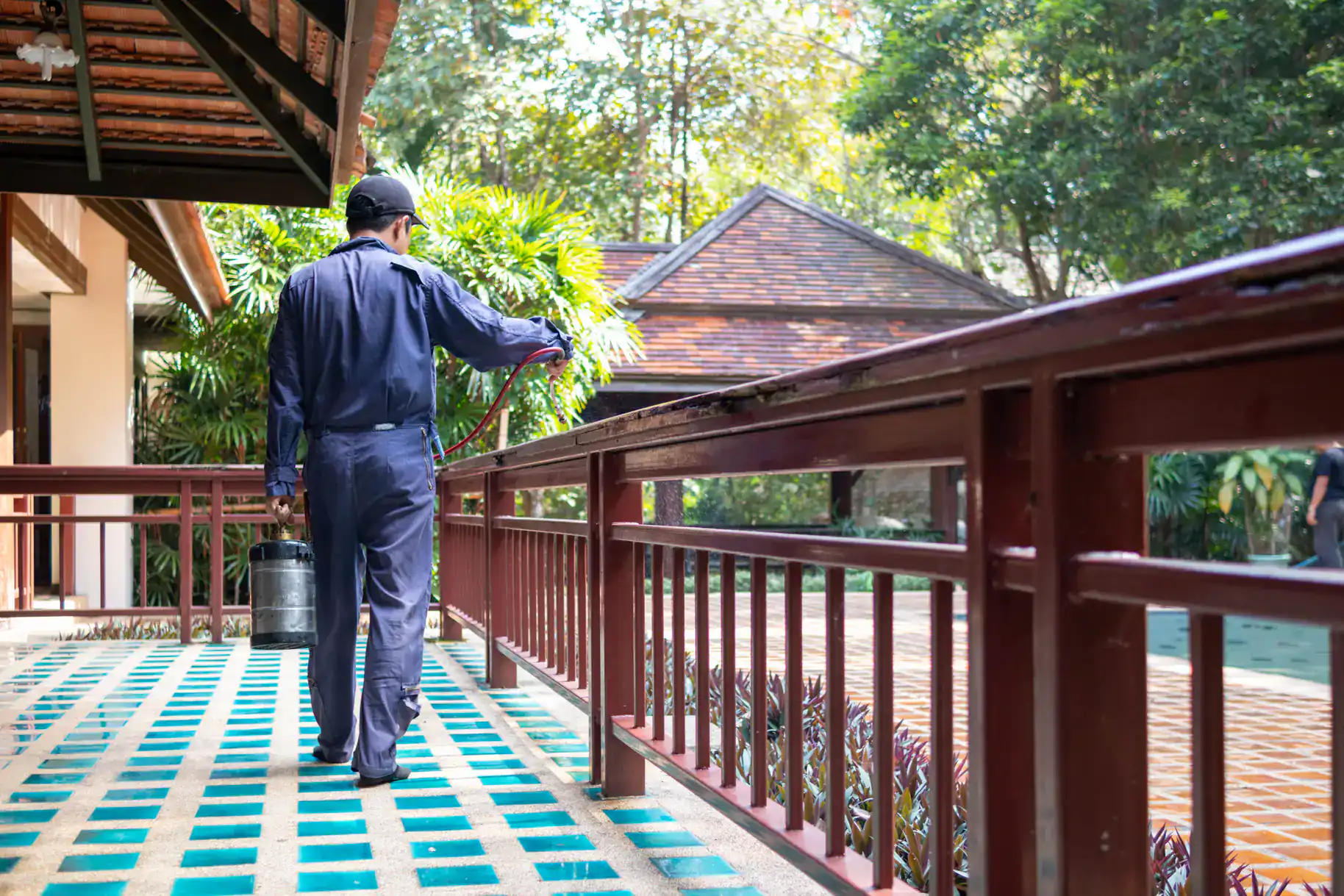
It starts with a free inspection. A licensed technician comes to your home, walks through the areas of concern, and figures out what you’re actually dealing with not what it looks like from the outside. In Cambria Heights, that inspection almost always includes the basement and foundation perimeter, because that’s where the story usually starts with older homes in this neighborhood.
From there, you get a clear picture of the pest activity, the likely entry points, and what treatment makes sense. We use an Integrated Pest Management approach, which means the least invasive, most targeted treatment gets applied first. EPA-registered materials are used throughout. If you have kids, elderly family members, or pets in the home and in a multigenerational neighborhood like Cambria Heights, that’s often all three you’ll get a straight answer about what’s being applied, where, and when it’s safe to re-enter. No vague reassurances.
After treatment, the follow-up isn’t optional. Certain pests bed bugs and cockroaches especially require more than one visit to fully eliminate. The process is built around actually solving the problem, not just getting through the appointment. If something isn’t resolved, we come back.

Ready to get started?
We handle the full range of pest issues that come up in Cambria Heights homes. Rodent control is one of the most common calls mice and rats entering through foundation gaps and basement entry points in the neighborhood’s older housing stock, with added pressure from the Montefiore Cemetery grounds to the south. Cockroach infestations are another consistent issue, particularly in homes within a few blocks of the Linden Boulevard restaurant corridor, where commercial food waste creates pest activity that radiates into nearby residential blocks.
Termite inspections and treatment are especially relevant here. The 1920s–1950s wood-frame construction throughout Cambria Heights including the two NYC Landmarks-designated historic districts along 222nd Street and 227th Street creates real subterranean termite vulnerability. Our licensed technicians know how to perform termite inspections and exclusion work on protected structures in compliance with Landmarks Preservation Commission guidelines, which matters if your home is in one of those districts.
Beyond the usual list, we also handle bed bug treatment, ant control, stinging insect removal, and wildlife exclusion for squirrels and raccoons entering from the Nassau County side of the neighborhood. One company, one call, and a service area that genuinely covers this corner of Queens County not just in name, but in actual local knowledge.
Fall is the most active season for rodent intrusion in southeastern Queens, and Cambria Heights has a few specific factors that make it worse than average. As temperatures drop in September and October, mice and rats start looking for warmth and the basements, wall voids, and crawl spaces of the neighborhood’s older brick homes give them easy access. The aging mortar joints and foundation gaps in Cape Cods and Tudors built in the 1930s and 1940s are often wide enough for a mouse to squeeze through without much effort.
The other factor is geography. Montefiore Cemetery borders Cambria Heights to the south, and open cemetery grounds are well-documented harborage areas for rodents. If you’re on the southern end of the neighborhood, you’re likely dealing with a consistent source population nearby. A one-time treatment won’t solve that. What actually works is a combination of targeted baiting, thorough exclusion work to seal the entry points, and a follow-up visit to confirm the problem is resolved not just temporarily reduced.
It’s a fair question, and it’s one that comes up often in neighborhoods like Cambria Heights where the housing stock is 70 to 100 years old. Both pests can cause serious structural damage, and both tend to target the same areas wood sill plates, basement beams, window frames, and anywhere moisture has been sitting over time. The signs can look similar on the surface.
The clearest way to tell them apart is through a professional inspection. Termites leave mud tubes along foundation walls and produce frass that looks like tiny pellets or sawdust. Carpenter ants excavate clean galleries in wood and are often seen traveling in lines, especially in spring and early summer. Either way, if you’re seeing winged insects emerging from your walls or foundation in April or May which is peak swarm season in Queens that’s a sign you need an inspection before the problem gets worse. We can identify exactly what you’re dealing with and recommend the appropriate treatment, whether that’s a termite program, carpenter ant control, or both.
If your buyer is using an FHA or VA loan which is common in Cambria Heights given the neighborhood’s active real estate market and the demographics of first-time buyers in southeastern Queens a WDI inspection report is required before the lender will approve the mortgage. WDI stands for Wood-Destroying Insects, and the report documents whether there is active termite activity, evidence of past termite damage, or the presence of other wood-destroying pests like carpenter ants or wood-boring beetles.
Even if the buyer is using a conventional loan, many real estate attorneys and buyers’ agents in Queens request a WDI report as a standard part of due diligence on older homes. Given that most homes in Cambria Heights were built between the 1920s and 1950s, it’s a reasonable ask. We’re licensed to perform and certify WDI inspections in New York State. If you’re listing your home or in the middle of a transaction and need a report quickly, that’s something we can schedule without a long lead time.
Yes but the honest answer is that it depends on the treatment method and how it’s applied. We use EPA-registered materials and follow Integrated Pest Management protocols, which means the treatment is targeted to where the bed bugs actually are, not broadcast across the entire home. Before any treatment, you’ll be told exactly what’s being applied, which rooms are affected, and what the re-entry timeline looks like so your family isn’t walking back into a treated space before it’s safe.
In a multigenerational household which is common in Cambria Heights, where many families have children and elderly parents living together those specifics matter. A toddler crawling on a treated floor and a grandparent with a respiratory condition are not the same situation, and a responsible pest control company accounts for that. Our technicians will walk you through the preparation steps before treatment and the safety timeline after, so you’re not left guessing. If you have specific concerns about a family member’s health condition, raise them during the inspection that conversation should happen before the treatment, not after.
The eastern portion of Cambria Heights the blocks closest to the Cross Island Parkway and the Nassau County line sees a different mix of pest activity than the interior of the neighborhood. Wildlife intrusion is more common here than in most of Queens. Squirrels entering attic spaces through roof vents and soffits, raccoons getting into garbage areas and under decks, and opossums taking up residence under porches are all regular calls in this part of the neighborhood. The wooded, suburban landscape of Elmont and Hempstead on the Nassau side creates a wildlife corridor that pushes animals westward into Cambria Heights yards.
Standard pest control companies that primarily handle cockroaches and rodents in apartment buildings aren’t set up for this kind of work. Wildlife exclusion requires identifying the specific entry points, sealing them properly, and in some cases removing animals that are already inside. We handle both traditional pest control and wildlife exclusion, so if you’re dealing with something in your attic or under your deck on the eastern side of Cambria Heights, it’s one call rather than trying to find a separate wildlife removal company.
The cost depends on what you’re dealing with, how severe the infestation is, and what treatment is appropriate. For general pest control rodents, cockroaches, ants a standard residential service for a single-family home in Cambria Heights typically runs in the range of $150 to $400 for an initial treatment, with follow-up visits priced separately or included in a service plan depending on the scope. Bed bug treatment costs more because it requires more labor and multiple visits expect $300 to $800 or higher depending on the number of rooms affected and the method used.
Termite treatment is its own category. A liquid termiticide application or a bait system for a home the size of a typical Cambria Heights Cape Cod can range from $800 to $2,500 depending on the extent of activity and the linear footage of the foundation. WDI inspection reports for real estate transactions are a separate, flat-rate service. The most useful thing you can do before worrying about price is get the free inspection because until someone actually looks at your home, any number you hear is a guess. Our inspection is free, there’s no obligation, and you’ll walk away knowing exactly what you’re dealing with and what it will actually cost to fix it.
Useful Links
Other Services we provide in Cambria Heights