Hear from Our Customers
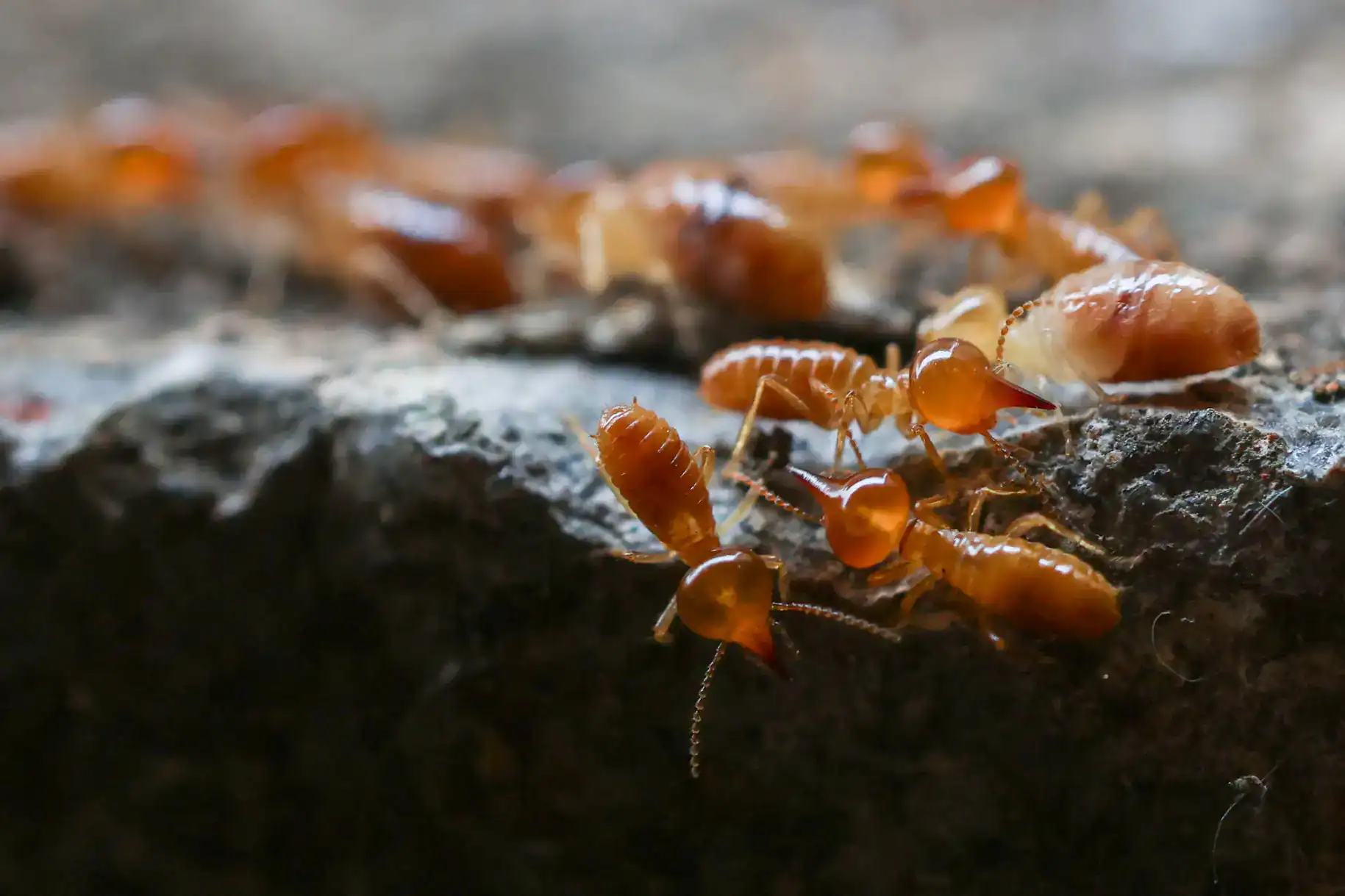
Termites don’t take weekends off. A colony of 250,000 can consume 20 feet of structural wood in a single year, and in Astoria’s attached rowhouses most of them built between the 1920s and 1940s that wood has had 80 to 100 years to absorb moisture and soften. That’s exactly what Eastern Subterranean Termites are looking for.
What changes after proper termite treatment isn’t dramatic it’s quiet. No more hollow-sounding floors. No more anxiety every time you open a basement door. No more wondering whether the damage your contractor found during that bathroom renovation is the tip of something much larger. You get your home back, and you get the documentation to prove it’s clean.
Astoria’s proximity to the East River creates persistently elevated moisture in basements and ground-floor units conditions that subterranean termites actively seek out. And because most of the neighborhood’s homes share foundations and soil contact across attached lots, a colony next door isn’t just your neighbor’s problem. It’s yours too. Treating it properly with a method that targets the colony at its source, not just the surface is the only way to actually close that door.
We were founded in 1976 by Richard Kourbage Sr. His sons Richard Jr. and Charles are active in the business today. That’s three generations of the same family, with our name attached to every inspection, every treatment, and every callback. In a neighborhood like Astoria where family-run businesses on Steinway Street and 30th Avenue have been the backbone of the community for decades that kind of accountability means something.
Our staff carries over 100 years of combined pest control experience, all of it in New York City’s specific conditions: pre-war building stock, attached urban housing, multi-unit structures, and the particular behavior of Eastern Subterranean Termites in NYC’s aging foundations. That’s not a number pulled from a brochure it’s the difference between a technician who’s seen your exact situation once and one who’s seen it hundreds of times.
We hold an A+ BBB rating, maintained since 1989, apply only NYS DEC-registered materials, and answer the phone 24 hours a day, seven days a week.
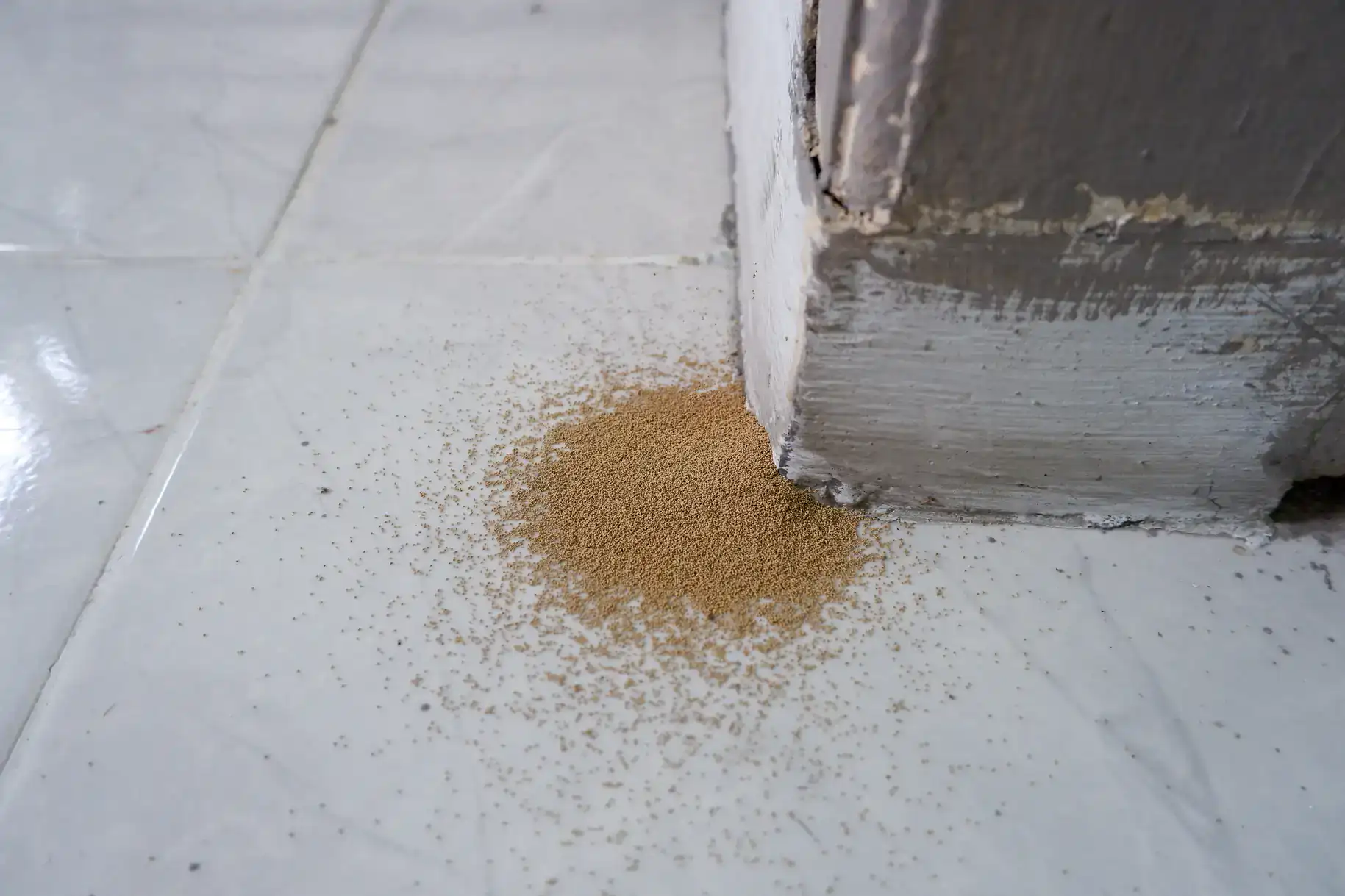
It starts with a thorough inspection. One of our technicians examines your foundation, basement, crawl space, floor joists, and any wood-to-soil contact points the areas where Eastern Subterranean Termites most commonly enter Astoria’s older homes. In attached rowhouses, that also means looking at shared wall areas and the soil along your property line, because that’s where colonies travel between lots.
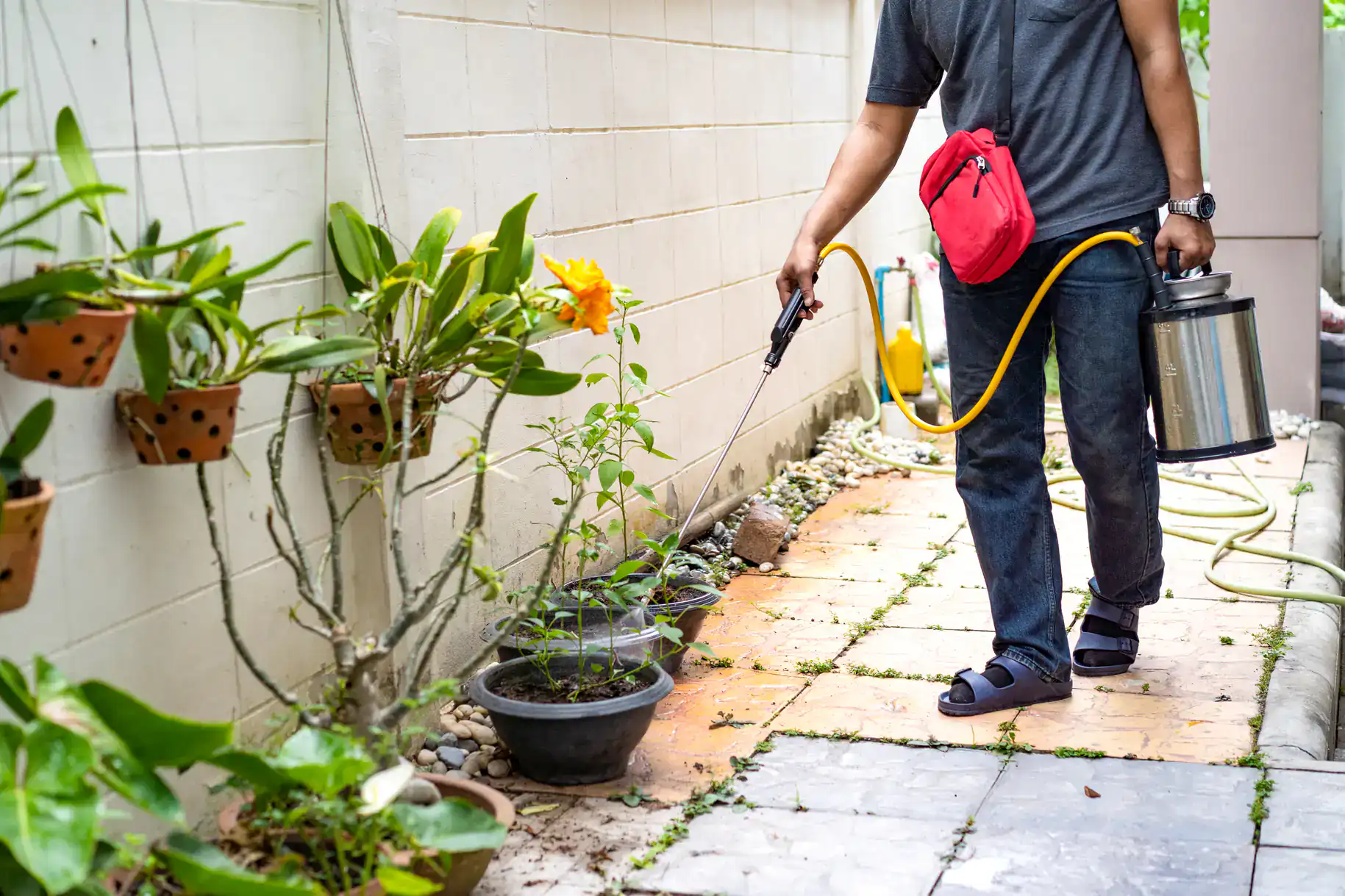
If termites are confirmed, the treatment plan is built around what’s actually there not a one-size-fits-all package. For active infestations, we use termite baiting systems that work by allowing worker termites to carry toxicant back to the underground colony, eliminating the source rather than just the visible activity. In cases where liquid barrier treatment is more appropriate, we apply that along the foundation perimeter using only NYS DEC-registered materials a legal requirement for all licensed pest control operators in New York State, and a standard we’ve never cut corners on.
After treatment, you’ll know what was found, what was done, and what to watch for going forward. If you’re in the middle of a real estate transaction and need a Wood Destroying Organism (WDO) report for your lender or attorney, that documentation is part of what we provide. Spring is the peak season for termite swarms in Queens warm days after rain are when winged termites emerge from foundations and stoops so if you’ve seen swarmers recently, that’s not something to wait on.
Ready to get started?
Our termite services in Astoria cover the full range of what homeowners, landlords, and buyers in this neighborhood actually need. That includes termite inspections, active infestation treatment, termite baiting system installation, WDO inspections for real estate transactions, and NYC Department of Health pest citation resolution which is particularly relevant for Astoria’s large stock of multi-family rental buildings and co-ops along Broadway, 31st Street, and Astoria Boulevard.
For homeowners in Ditmars-Steinway or along the 30th Avenue corridor, where attached rowhouses on 20-by-100-foot lots share foundations across entire blocks, the inspection goes beyond your four walls. Our technicians assess the full soil contact zone and any shared structural points that could serve as termite entry paths from adjacent properties. That’s a level of thoroughness that matters when your neighbor’s infestation is technically your exposure too.
For buyers and sellers in Astoria’s active real estate market where single-family homes are trading in the $630,000 to $770,000 range WDO reports are frequently required by lenders and requested by attorneys before closing. We provide credentialed inspection reports that meet those requirements, with same-day availability when the timeline is tight. Whether you’re managing a property, closing a deal, or just noticed something concerning in your basement, the process starts with one call.
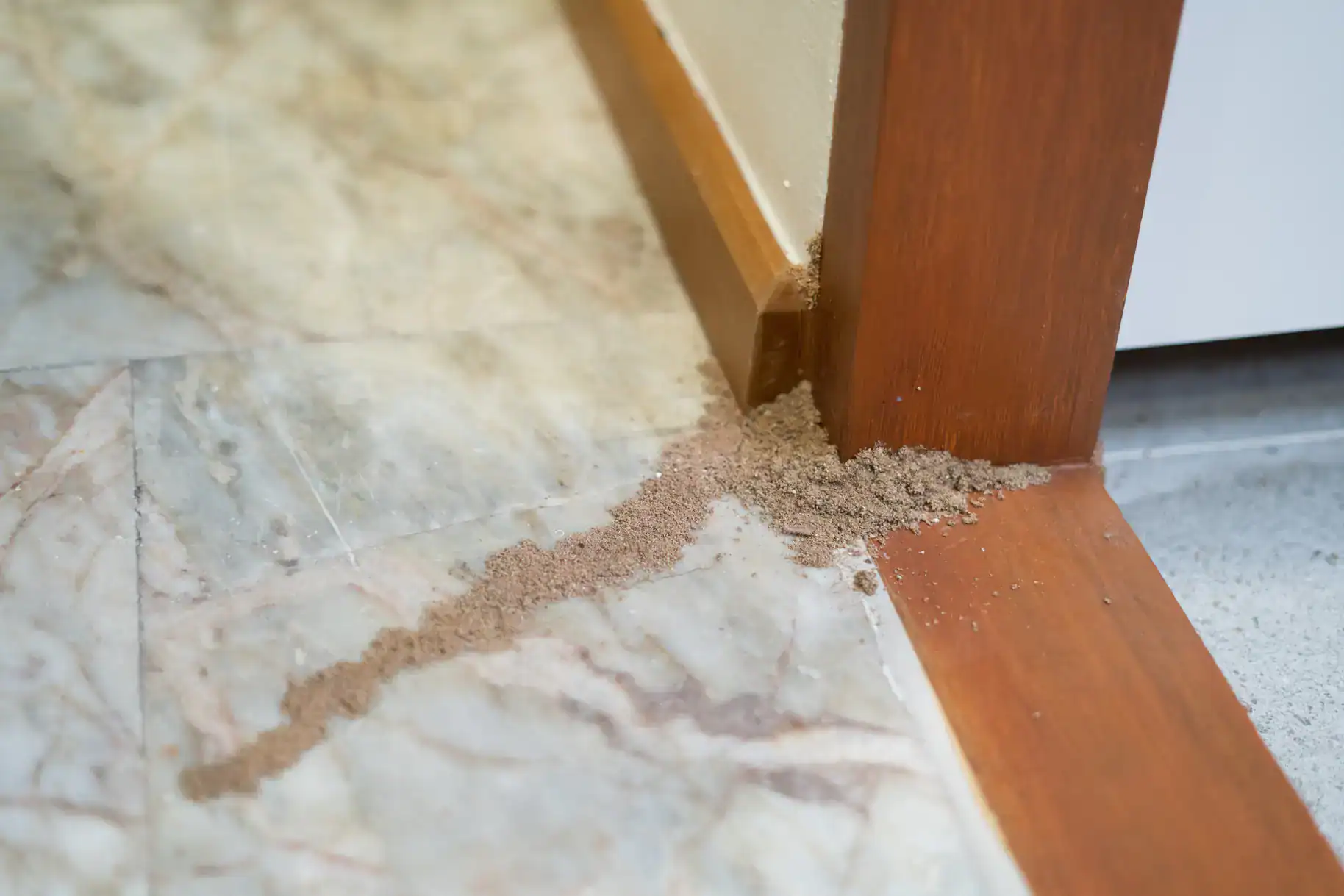
It’s a fair question termites aren’t something most people in Astoria think about until they have a reason to. But New York City, including Astoria, falls within the USDA Forest Service’s “moderate to heavy” termite infestation probability zone. The Eastern Subterranean Termite is the dominant species here, and it thrives in exactly the conditions Astoria has in abundance: moist soil, aged wood, and dense attached housing where colonies can travel between properties without ever surfacing.
Astoria’s waterfront position along the East River means basement moisture levels are consistently higher than in more inland Queens neighborhoods. Add 80-to-100-year-old wood framing, and you have a combination that subterranean termites actively seek out. The risk isn’t hypothetical it’s a documented, ongoing condition in this neighborhood. The reason most people don’t know they have termites is that colonies typically take five or more years to cause visible damage. By the time you see something, the infestation has usually been active for a long time.
This is one of the most important things to understand about termite risk in Astoria specifically. Eastern Subterranean Termites nest underground and travel through soil. In a neighborhood built on attached rowhouses sharing foundations and soil contact across entire lots, a colony doesn’t need to breach a wall to move from one home to the next it simply travels through the ground beneath the shared property line.
That means if your neighbor has an active infestation, your home is already at risk even if you’ve never seen a single termite. It also means that treating only your unit in a multi-family building, or only your home on a shared-foundation block, may not fully resolve the problem. A thorough inspection accounts for the full soil contact zone around your property, including shared foundation areas and the perimeter along adjacent lots. That’s the kind of assessment that actually tells you where you stand.
This comes up constantly in spring, which is peak swarm season for Eastern Subterranean Termites in New York City. Warm days following rain typically between March and May trigger swarmers to emerge from colonies near foundations, stoops, and window frames. In Astoria’s dense urban environment, they’re often noticed inside homes near windows or emerging from cracks in basement walls.
The key differences: termite swarmers have straight, bead-like antennae, equal-length wings, and a straight body with no defined waist. Flying ants have elbowed antennae, unequal wings (front wings are longer), and a pinched waist. Both can appear suddenly in large numbers, which is alarming either way but if what you’re seeing has equal wings and a straight body, that’s a termite swarm, and it means there’s an active colony nearby. Don’t vacuum them up and move on. That’s the moment to call for an inspection, because the colony itself is underground and won’t go away on its own.
Cost depends on the size of the structure, the severity of the infestation, and the treatment method used. For a typical Astoria attached rowhouse or two-family home, professional termite treatment generally runs in the range of $1,500 to $3,500. If there’s structural damage that needs repair alongside the treatment, that’s a separate cost and the national average for termite damage repair alone is around $3,000, with severe cases running significantly higher.
The important context here is that homeowner’s insurance in New York does not cover termite damage. Every dollar of repair comes out of pocket. In a neighborhood where the median home sale price is between $630,000 and $770,000, undetected termite damage can reduce a property’s value by roughly 20% that’s a potential loss of well over $100,000 on an average Astoria home. The cost of treatment is real, but it’s a fraction of what you’re protecting. We provide free estimates so you know exactly what you’re looking at before committing to anything.
For FHA and VA loans, a Wood Destroying Organism (WDO) inspection is required before closing no exceptions. Many conventional lenders and real estate attorneys in New York City request them as well, particularly for older properties, which describes most of Astoria’s housing stock. If you’re buying a pre-war rowhouse or a low-rise apartment building in Ditmars-Steinway or anywhere along the 30th Avenue corridor, there’s a reasonable chance your lender or attorney will ask for one.
Even if it’s not required for your specific transaction, it’s worth having. A WDO report documents the current condition of the property relative to wood-destroying organisms, gives you negotiating leverage if damage is found, and protects you from inheriting a problem the seller may not have disclosed. In Astoria’s active real estate market, where deals move quickly, our same-day inspection availability means you don’t have to hold up a closing waiting for documentation.
Yes and this is a question worth asking directly, because Astoria has a large share of multi-family rental buildings, co-ops, and attached structures where treatment in one unit is physically close to a neighbor’s living space, a shared hallway, or a common basement. The short answer is that properly applied, NYS DEC-registered termite treatments are safe for occupied buildings when handled by a licensed applicator following all required protocols.
We apply only materials registered by the New York State Department of Environmental Conservation, and all our technicians hold the required Commercial Pesticide Applicator Certification. For multi-unit buildings, the treatment plan accounts for shared spaces and adjacent units not just the unit where activity was found. We also have specific experience resolving NYC Department of Health pest-related citations, which landlords and property managers in Astoria sometimes face when a building’s pest conditions reach a compliance threshold. If you’re managing a property and dealing with a DOH notice, that’s something we handle directly documentation, treatment, and all.
Useful Links
Other Services we provide in Astoria