Hear from Our Customers
When termite control is done right, you stop watching your home deteriorate from the inside out. No more second-guessing every soft floorboard or discolored baseboard. You know what’s there, what was treated, and what’s protected and that clarity alone is worth something.
For homeowners in Broadway-Flushing and Auburndale, where a lot of the housing stock goes back to the 1910s and 1920s, this matters more than most people realize. These homes were built before termite barriers were standard practice. Many have never been treated. By the time visible damage shows up, the colony has usually been feeding for years sometimes longer than the current owner has lived there.
Flushing’s soil conditions make the risk even more specific. The neighborhood sits on historically low-lying land near Flushing Creek, and moisture levels in the soil across parts of the area are consistently high. Eastern Subterranean Termites thrive in exactly that environment. Add in the attached and semi-detached row houses throughout the interior of Flushing many built on continuous foundation systems in the 1920s through 1940s and you have a situation where an infestation in one property can quietly migrate to the next without either homeowner knowing. Getting ahead of that is the whole point.
We’ve been serving all five boroughs including Flushing and the surrounding Queens neighborhoods since 1971. That’s over 50 years of showing up for homeowners, property managers, and building owners across New York City. The company was founded by Richard Kourbage Sr. and is now run by his sons Richard Jr. and Charles, who have been part of the business since the late 1980s. When you call, you’re reaching a family that has their name on every job we take.
Our staff collectively brings more than 100 years of combined pest control experience which means when a technician walks through a home near Kissena Park or a row house in Queensborough Hill, they’re not guessing. They’ve seen this before. We hold an A+ rating with the Better Business Bureau and have maintained BBB accreditation since 1989. We apply only New York State Department of Environmental Conservation registered materials, and we’re certified under the NYS DEC Category 7C designation required for termite and wood-destroying organism work in New York State.
It starts with a phone call and we answer 24 hours a day, seven days a week. If you’re seeing swarmers in your living room on a Saturday morning or you pulled back a baseboard during a renovation and found mud tubes, you don’t have to wait until Monday. Same-day inspections are frequently available, and an appointment is guaranteed within two business days.
The inspection itself is a thorough walkthrough of your property foundation, basement or crawl space, wood framing, any areas of moisture exposure, and exterior entry points. For Flushing properties specifically, the inspection accounts for the shared-wall risk common in attached and semi-detached homes. If your neighbor has an active colony and your foundations share soil contact, that’s not a separate problem it’s the same problem, and the inspection treats it that way. Spring is the most visible season for termite activity in Flushing, typically March through May when swarms follow warm rain events, but the inspection process is relevant year-round because Eastern Subterranean Termites feed continuously regardless of season.
If termites are found, you get a clear explanation of what was discovered, where it is, and what treatment looks like before any work begins. No surprises on the invoice. For real estate transactions, we also provide formal Wood Destroying Organism reports with the documentation FHA and VA lenders require, which is a common need in Flushing’s active property market.
Ready to get started?
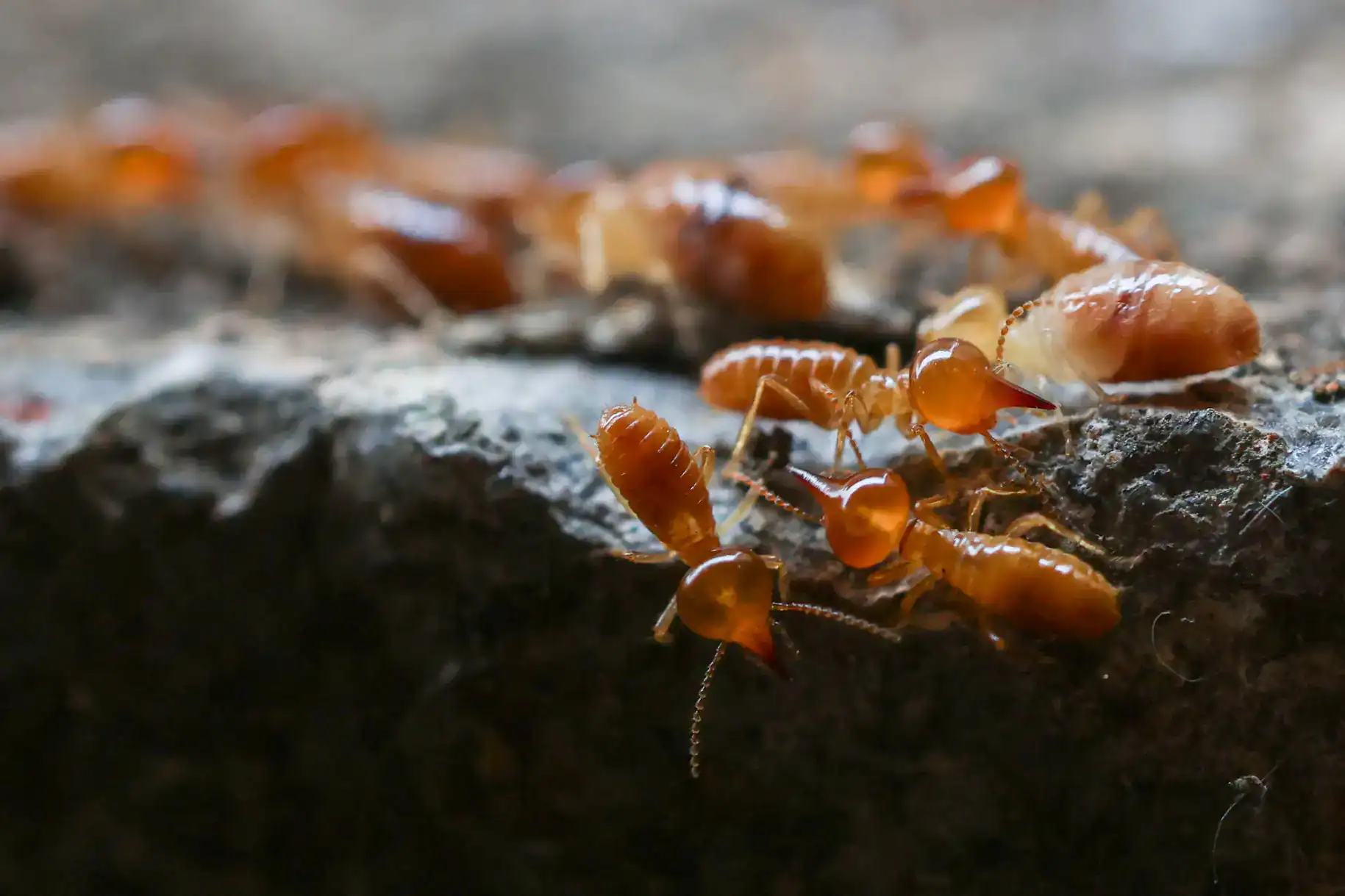
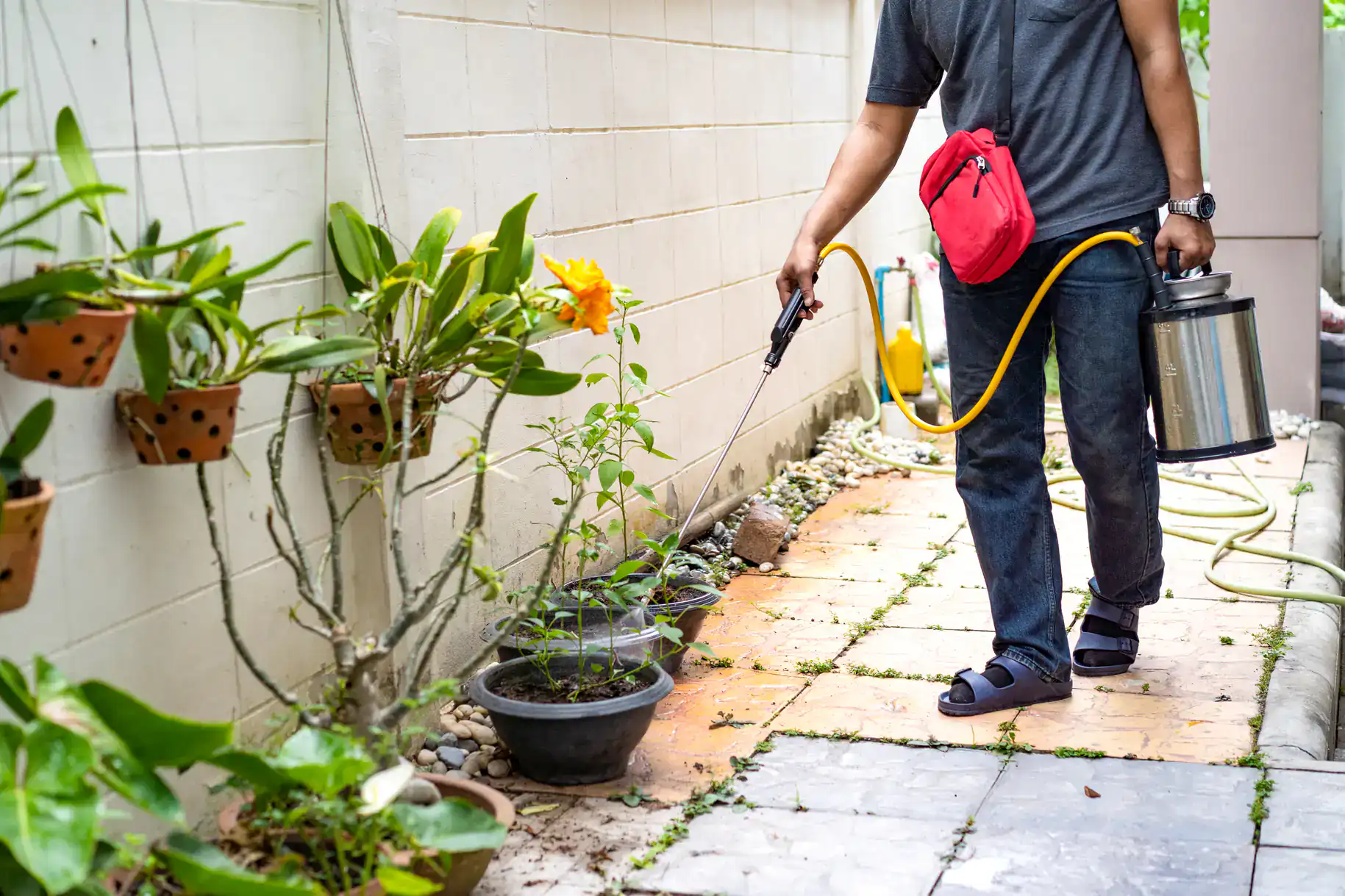
Our termite control work covers the full scope of what Flushing homeowners and property managers deal with not just the Eastern Subterranean Termite, but the complete category of wood-destroying organisms, including carpenter ants and powder post beetles. The treatment approach depends on what’s found and where, but the core options include liquid termiticide barriers applied along foundation perimeters and termite baiting systems designed to eliminate the colony at its source rather than just the termites you can see at the surface.
For Flushing’s attached row houses and semi-detached homes particularly those built in the 1920s through 1940s on continuous foundation systems liquid termiticide injection along shared foundation walls is often part of the treatment plan. Monitoring stations are used where ongoing colony activity warrants long-term tracking. For older homes in Broadway-Flushing or properties near the moisture-heavy corridors around Flushing Creek, the treatment plan accounts for the specific entry points and feeding conditions that make those structures more vulnerable than a newer detached home would be.
We also handle NYC Department of Health pest-related health code violations which is relevant for Flushing’s large inventory of two-family and three-family homes and small multi-family buildings. If you’ve received a DOH citation, we know exactly what’s required to clear it. All materials we use are NYS DEC registered, applied by certified professionals following EPA safety protocols.
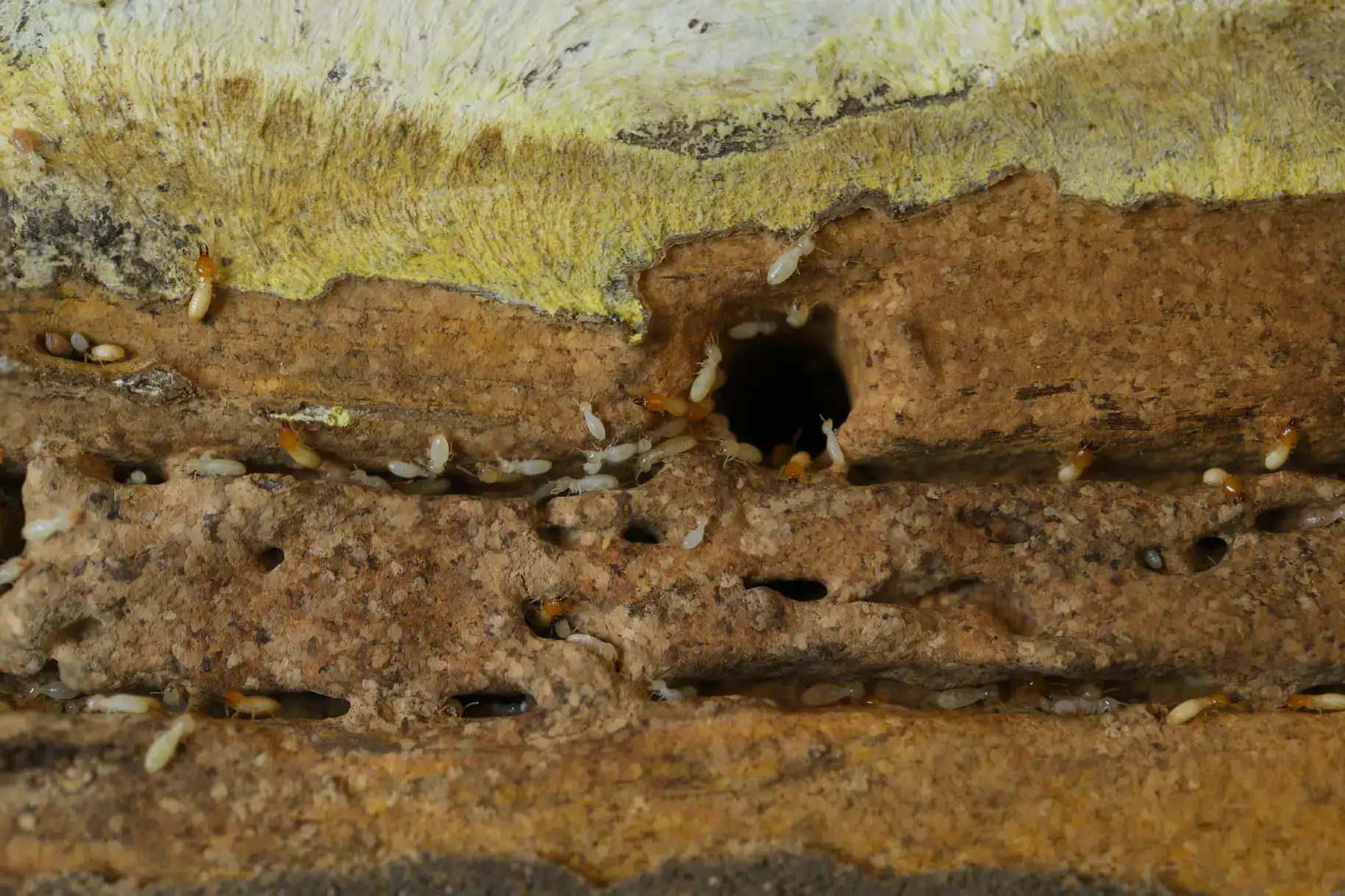
This is one of the most common concerns we hear in Flushing, and it’s a legitimate one. Eastern Subterranean Termites nest underground and travel through soil to reach wood they don’t stay neatly within property lines. In neighborhoods like Queensborough Hill, Murray Hill, and the interior residential blocks east of Main Street, attached and semi-detached homes built on continuous foundation systems share soil contact between properties. A colony that has established itself under one unit can extend its foraging tunnels into adjacent structures without either homeowner being aware of it.
The practical implication is that treating one property without accounting for the shared-wall dynamic can leave the problem partially unresolved. A thorough inspection for an attached Flushing home should assess not just the interior of your unit but the foundation perimeter and any shared contact points. If your neighbor has visible signs of termite activity or if you do it’s worth having both properties evaluated, even if the other owner hasn’t noticed anything yet. Termite colonies can take five or more years to grow large enough to cause visible damage, which means the absence of obvious signs doesn’t mean the colony isn’t there.
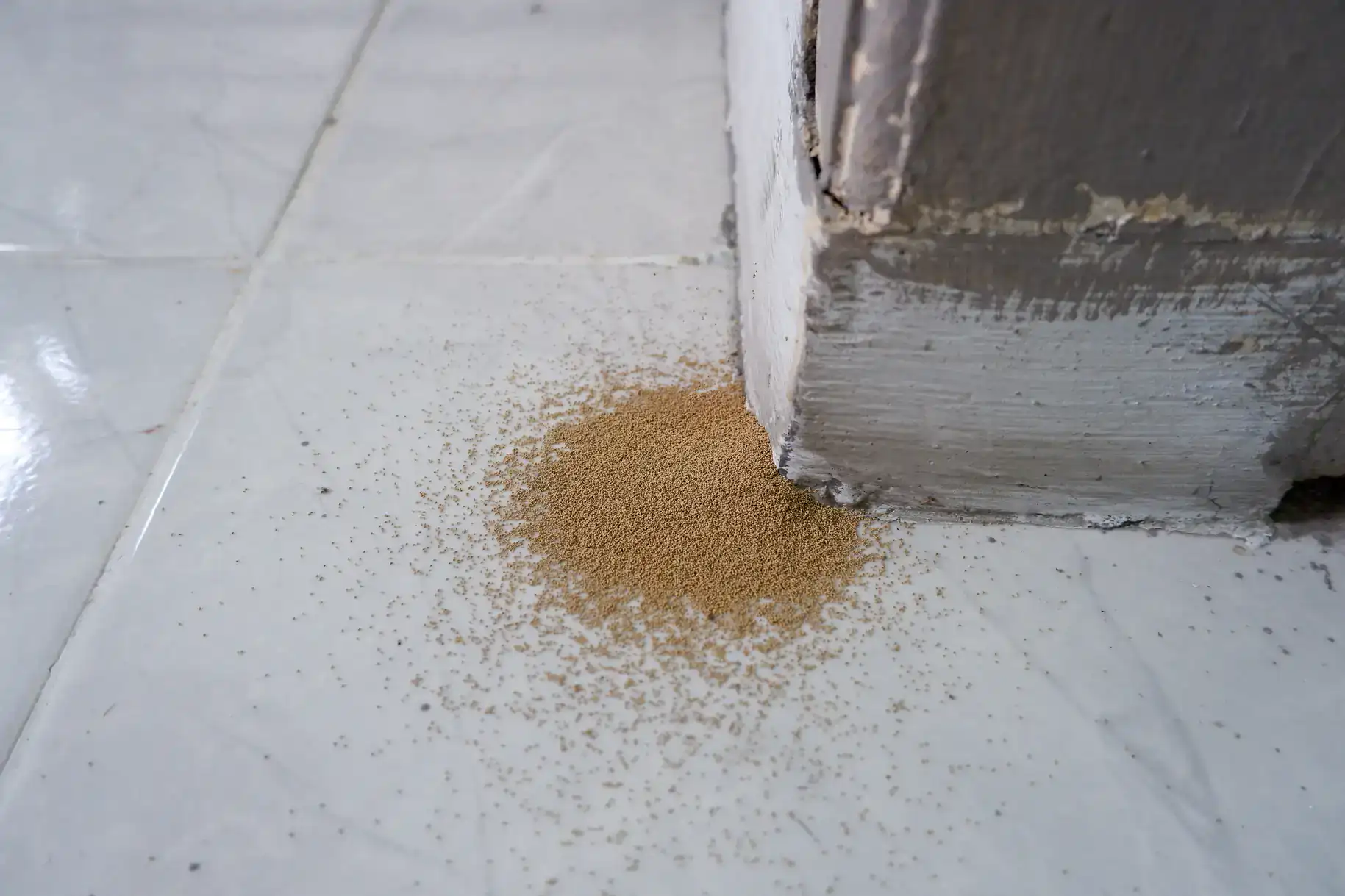
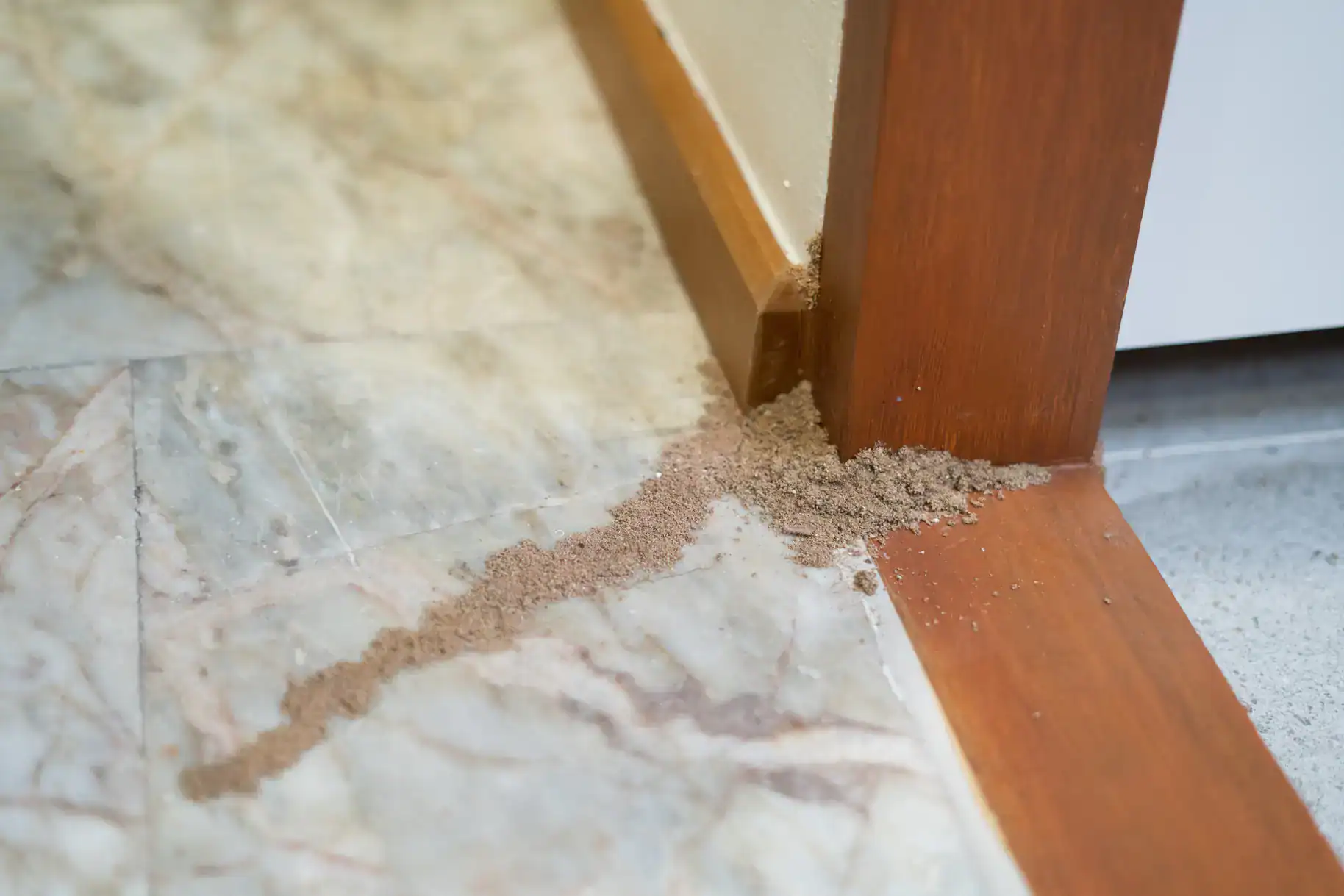
A termite inspection is a systematic walkthrough of your property looking for evidence of active infestation, prior damage, or conditions that make infestation likely. In a Flushing home, that typically means examining the basement or crawl space, foundation walls, wood framing near the foundation, any areas of moisture exposure including around plumbing penetrations and exterior grading and the exterior perimeter of the structure. We’re looking for mud tubes, frass (termite excrement), hollow-sounding wood, discarded wings from swarmers, and any wood-to-soil contact points that give termites direct access.
For older homes in Broadway-Flushing or Auburndale, where wood framing from the 1910s and 1920s may have never been treated, the inspection pays particular attention to areas that are difficult to see during normal home maintenance inside wall voids, under flooring near the foundation, and in utility areas where moisture tends to collect. If you need a formal Wood Destroying Organism report for a real estate transaction which lenders frequently require for older Flushing properties the inspection produces written documentation certifying whether active infestation or prior termite damage is present. That report is what your lender, your buyer’s agent, or your title company needs to move forward.
Treatment cost in Flushing depends on the size of the property, the extent of the infestation, the construction type, and the treatment method used. For a single-family home, you’re generally looking at a range of $1,000 to $3,000. For a larger attached structure, a multi-family building, or a property where the infestation has spread across a shared foundation, costs can run $1,500 to $5,000 or more. These are real ranges not lowball estimates designed to get you to call and then surprise you later.
The number that matters more for most Flushing homeowners is the cost of not treating. The average homeowner who discovers termite damage spends approximately $3,000 on repairs and structural repairs in older wood-frame homes can reach $10,000 or more. Homeowner insurance in New York does not cover termite damage, which means every dollar of repair comes directly out of pocket. In a neighborhood like Flushing, where a significant portion of the housing stock is 80 to 100 years old and has never been treated, the financial risk of waiting is substantially higher than the cost of a professional inspection and treatment. We provide a clear written estimate before any work begins no work starts until you’ve agreed to the scope and the cost.
Spring is when most Flushing homeowners first notice termites, because that’s when Eastern Subterranean Termite colonies produce swarmers winged reproductives that emerge on warm days following rain, typically between March and May. If you’ve seen what looks like flying ants appearing suddenly near a window or in your basement, swarmers are likely what you’re looking at. That visible event is the most obvious sign, but it doesn’t mean the colony is only active in spring.
Eastern Subterranean Termites feed continuously 24 hours a day, seven days a week regardless of season. In Flushing specifically, the urban heat island effect in denser areas and the insulating properties of attached building construction keep soil temperatures relatively stable through winter months, which supports uninterrupted colony activity even when it’s cold outside. The spring swarm is a signal that a colony exists and is mature enough to reproduce but the feeding that causes structural damage happens every day, all year. Waiting until next spring to schedule an inspection after seeing swarmers this year means giving the colony another full season to keep feeding.
For many Flushing property transactions, yes and in some cases it’s not optional. FHA and VA loans require a Wood Destroying Organism report as part of the underwriting process, which means if your buyer is using either of those loan types, you’ll need a formal termite inspection completed by a licensed pest control professional before the loan can close. Even for conventional transactions, buyers’ agents in the Flushing market routinely recommend a termite inspection as part of due diligence, particularly for older single-family and multi-family homes in Broadway-Flushing, Auburndale, and Queensborough Hill.
Flushing’s real estate market moves quickly and attracts a significant number of buyers who may be purchasing their first home in the United States and encountering termite inspection requirements for the first time. The WDO report is a specific document it certifies whether active infestation or prior termite damage is present, and it needs to be prepared by a licensed professional holding the appropriate NYS DEC certification. We provide these reports with the documentation format lenders require, and given the pace of closings in this market, fast turnaround matters. If you’re under contract and a closing date is approaching, that’s exactly the kind of situation where 24/7 availability and same-day inspection capability make a real difference.
The most reliable signs fall into a few categories, and knowing what to look for in an older Flushing home specifically is useful because the construction type affects where they show up. Mud tubes are the most definitive indicator thin, pencil-width tunnels made of soil and termite saliva that run along foundation walls, floor joists, or any surface connecting soil to wood. In older homes in neighborhoods like North Flushing or Queensborough Hill, these often appear in basement corners, along the base of foundation walls, or behind stored items that haven’t been moved in years.
Hollow-sounding wood is another clear signal. If you tap on a baseboard, door frame, or floor joist and it sounds empty rather than solid, termites may have consumed the interior while leaving the surface intact. Discarded wings near windowsills or in basement corners indicate a past swarm even if you didn’t witness the swarm itself, the wings left behind confirm that reproductives were present. Paint that bubbles or blisters without an obvious moisture source, or wood that appears slightly darker or blistered, can also point to termite activity behind the surface. In Flushing’s older wood-frame homes particularly those near moisture-prone areas like the blocks adjacent to Kissena Park or properties close to Flushing Creek these signs can appear in areas that don’t get regular attention, which is exactly why a professional inspection covers the spaces most homeowners never think to check.
Useful Links
Other Services we provide in Flushing