Hear from Our Customers
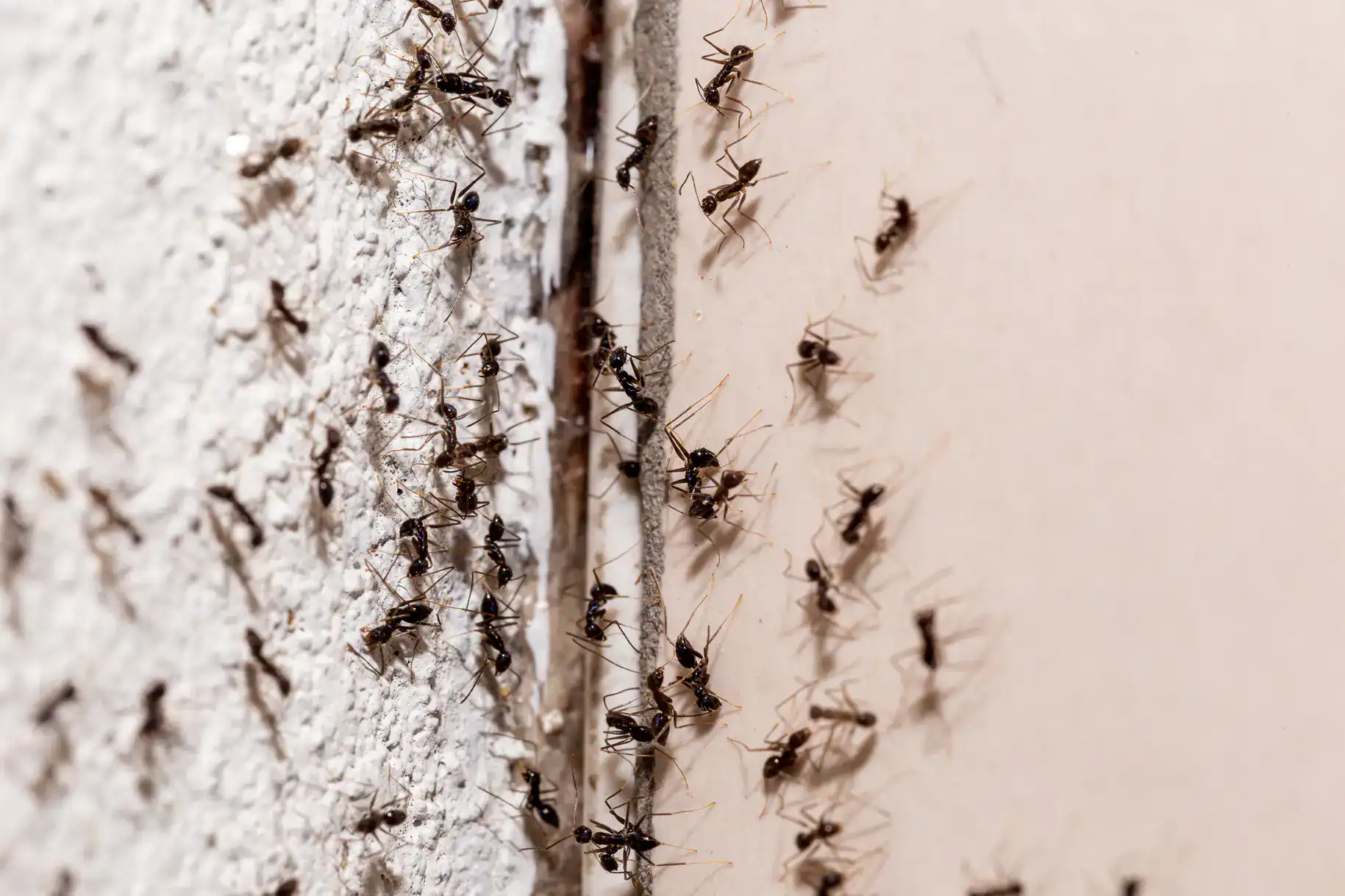
The frustrating part isn’t just seeing ants. It’s spraying them, watching them disappear for a few days, and then finding a new trail in the exact same spot a week later. That cycle happens because the colony is still intact. The ants you see are foragers scouts from a nest that can hold tens of thousands of individuals. Killing the foragers doesn’t touch the colony.
In East Flatbush’s brick rowhouses and semi-attached homes, that colony could be nesting beneath a shared foundation, inside a wall void, or in the soil along the exterior and it can spread laterally into neighboring units through mortar gaps and plumbing penetrations. That’s not a DIY problem. That’s a structural reality of the housing stock in Farragut, Erasmus, and Remsen Village, and it’s exactly why store-bought spray keeps failing you.
When the colony is actually eliminated not just disrupted the trail stops. The kitchen stays clear. You stop checking the baseboards every morning. That’s what professional ant control in East Flatbush actually looks like when it’s done right.
We are a family-owned business headquartered on Flatbush Avenue in Brooklyn the same arterial corridor that runs along the western edge of East Flatbush. We have been treating homes in this neighborhood for over 40 years, which means our technicians know the difference between a Wingate wood-frame house and a Farragut brick rowhouse, and we treat them accordingly.
We hold an A+ rating with the Better Business Bureau of New York State, are fully licensed, bonded, and insured, and use only NYS DEC-registered materials on every job. That’s not a credential list for show it means you’re legally protected, your family is safe, and the company behind the work is accountable.
When you call, someone answers. Twenty-four hours a day, seven days a week. And when the first visit isn’t enough which in East Flatbush’s shared-wall environment it sometimes isn’t we come back. That follow-through is what separates a real solution from a temporary fix.
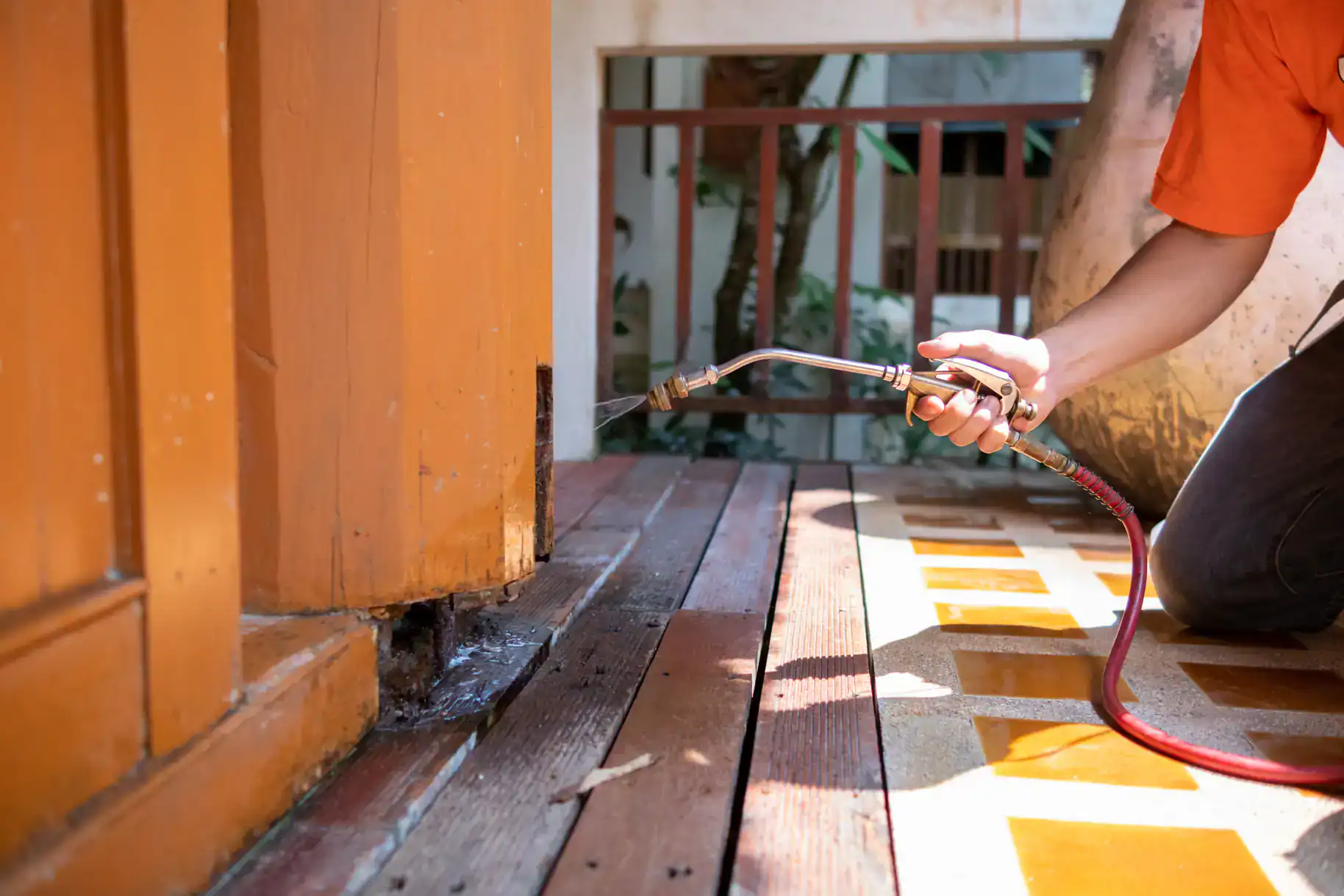
It starts with a free estimate. No commitment, no pressure just a straightforward look at what you’re dealing with and what it’s going to take to fix it. For most East Flatbush homes, that means assessing both the interior and the exterior, because in a neighborhood of attached and semi-attached buildings, the entry points are rarely just inside your unit.
The first visit is a full cleanout. Materials are applied inside and outside the property along baseboards, entry points, foundation perimeter, and anywhere forager activity has been spotted. The key here is that the materials are designed to be carried back to the nest by the foragers themselves, which is how the colony gets eliminated rather than just temporarily scattered. This is especially important in older homes near Church Avenue or Linden Boulevard, where ant colonies can be drawing from both the building’s foundation and the soil pressure created by the commercial food activity on those corridors.
After the initial cleanout, follow-up visits are scheduled based on your infestation weekly, every other week, or monthly to re-apply materials, monitor activity, and make sure the colony doesn’t re-establish. Spring and early summer are peak season in East Flatbush, when overwintering colonies activate and carpenter ants begin swarming, so timing that first treatment correctly matters. The process is transparent, the timeline is realistic, and you’ll know exactly what’s happening at every step.
Ready to get started?
Not every ant problem is the same, and our treatment approach changes depending on what you’re dealing with. Odorous house ants the ones that smell like rotten coconut when crushed are the most common kitchen invader in East Flatbush apartments and ground-floor units, particularly along busy corridors like Nostrand Avenue and Church Avenue where commercial food activity creates constant foraging pressure. They form massive colonies and require a transfer-treatment approach to eliminate effectively.
Carpenter ants are a different situation entirely. If you’re in a wood-frame home in Wingate or a two-story townhouse with aging structural lumber, carpenter ants aren’t just a nuisance they’re excavating your walls to build their nests. East Flatbush has a significant stock of wood-frame homes built between the 1920s and 1950s, and moisture issues from aging plumbing or basement humidity make them a prime target. The NYC Landmarks Preservation Commission designated East Flatbush’s first historic district in 2020 56 Renaissance Revival rowhouses built in the early 1900s which is a reminder of just how old and architecturally significant much of this neighborhood’s housing stock is. Carpenter ant damage in structures like these is not cosmetic. It’s structural.
Pavement ants, which nest in sidewalk and foundation cracks, are also extremely common in East Flatbush’s dense, impervious-surface environment and are a frequent cause of ground-floor and basement intrusions. Fire ant identification and control is also available if you’re dealing with an aggressive species you can’t identify. Whatever you’re seeing, our ant control services in East Flatbush are built around the specific species, the specific building type, and the specific conditions driving the infestation not a generic spray-and-go approach.
This is the most common frustration we hear from East Flatbush homeowners, and the answer is almost always the same: the colony was never eliminated. Over-the-counter sprays kill forager ants on contact, but the colony which can number in the tens of thousands is still alive and sending out new scouts. Within days, a new trail appears, often in the same spot.
In East Flatbush’s attached and semi-attached rowhouses, the problem is compounded by the fact that ant colonies can nest beneath shared foundations and migrate laterally through mortar gaps and utility penetrations between units. Treating only the interior of your own unit doesn’t address the exterior source. We apply materials both inside and outside the property, using a transfer-treatment method that foragers carry back to the nest eliminating the colony at the source rather than disrupting it temporarily. That’s the difference between a result that holds and one that lasts three days.
Carpenter ants are larger than most common ant species typically black, sometimes with a reddish midsection, and noticeably bigger than the small ants you’d see trailing across a kitchen counter. The clearest sign of carpenter ants isn’t the ants themselves but what they leave behind: small piles of sawdust-like material called frass near baseboards, window frames, or door frames. You may also hear faint rustling sounds inside walls, particularly at night.
In East Flatbush, wood-frame homes in Wingate and older two-story townhouses are at the highest risk, especially where there’s been any moisture exposure a slow plumbing leak, a damp basement, or aging wood around window sills. If you’re seeing large black ants near wood structures, don’t wait to find out. Carpenter ants don’t sting and they’re not aggressive, but they do structural damage over time, and the older the wood in your home, the faster that damage compounds. A professional inspection will confirm the species and assess whether structural damage has already begun.
This is one of the first questions people ask, and it’s a fair one. We use only NYS Department of Environmental Conservation-registered materials every product applied in your home meets state regulatory standards for safety and efficacy. That’s not a marketing claim; it’s a licensing requirement. Our technicians are trained in proper application protocols, which means materials are applied in targeted locations at appropriate quantities not sprayed indiscriminately throughout your living space.
East Flatbush households are often multigenerational, and the concern about chemical exposure for children, elderly residents, or family members with health conditions is real and taken seriously. After treatment, your technician will advise you on re-entry timing typically when surfaces are dry and will walk you through any precautions specific to your home’s layout. Professional treatment is not more hazardous than what’s available at a hardware store. In most cases, it’s significantly more controlled, more targeted, and applied by someone who knows exactly what they’re doing.
Ant activity in East Flatbush follows a predictable seasonal pattern. Spring roughly April through June is peak season, when colonies that overwintered inside wall voids and beneath foundations become active as temperatures rise. This is when most residents first notice trails appearing along baseboards or in the kitchen. Carpenter ant swarms, where winged reproductives emerge to establish new colonies, are most common in May and June.
Summer brings sustained high activity, particularly during hot and humid stretches when ants push indoors seeking water. Fall is a secondary wave ants seeking warmth before winter will enter through foundation gaps and utility penetrations, and carpenter ants are especially active establishing overwintering galleries in wood. That said, if you’re seeing ants in January, you’re not imagining it. An established interior colony in a heated wall void will remain active year-round. The short answer: call as soon as you notice consistent activity. Waiting gives the colony more time to expand and makes treatment more involved.
Yes, and this is one of the most underappreciated dynamics in East Flatbush’s housing stock. In attached rowhouses, semi-attached homes, and multi-unit buildings, ant colonies don’t recognize unit boundaries. They establish nests beneath shared foundations, inside wall voids that run between units, and in the soil along shared exterior walls. A colony that started in a neighboring unit or even a neighboring building can migrate into your space through mortar gaps, plumbing penetrations, and gaps around electrical conduits.
This is also why treating only your own unit sometimes produces short-term results that don’t hold. If the source colony is partially or fully in a shared structural space, it will keep sending foragers into your unit regardless of what’s applied inside. Our exterior perimeter treatment addresses this directly by creating a treated barrier around the building’s foundation and entry points, not just the interior surfaces. For renters, it’s worth knowing that under New York City’s Housing Maintenance Code, landlords are legally required to address ant infestations in rental units it’s classified as a hazardous condition that must be corrected within 30 days of notice.
We offer a free estimate on all ant control services, so you know exactly what you’re committing to before any work begins. There’s no obligation attached to that estimate it’s just a straightforward look at what you’re dealing with and what it will take to resolve it.
For seniors, we also offer a 10% discount. East Flatbush has a significant population of long-term homeowners many of whom have lived in Remsen Village, Farragut, and Wingate for decades who are on fixed incomes but deeply invested in maintaining the homes they’ve built their lives in. The discount reflects a straightforward recognition of that reality. A family-owned business that has operated in Brooklyn for over 40 years understands the community it serves, and that includes making professional ant control accessible to the residents who have been here the longest.
Useful Links