Hear from Our Customers
When the ants are gone, your kitchen is yours again. No more wiping down counters twice before making coffee. No more wondering if something got into the food. That’s the most immediate thing people notice the house just feels clean again, and you’re not on edge every time you walk into a room.
But in Floral Park, there’s a longer-term concern that matters just as much. Most homes in this village were built in the 1940s and 50s beautiful, well-maintained properties, but older wood-frame construction that carpenter ants treat like an open invitation. Left unchecked, a carpenter ant colony doesn’t just annoy you. It excavates the structural wood inside your walls, your sill plates, your attic framing. With median home values in Floral Park now above $800,000, that’s not a pest problem it’s a property value problem.
The other thing that changes after real ant control is the peace of mind around your yard. Floral Park is known for its mature trees, dense landscaping, and the kind of gardens that trace back to the village’s flower-farming roots. That same lush environment creates prime nesting conditions right outside your foundation. Effective treatment addresses both sides inside and out so the problem doesn’t just move from one to the other.
We’ve been serving homeowners and businesses across the five boroughs and Long Island for over 40 years. Founded by Richard Kourbage, this is a family-owned operation not a franchise, not a call center routing jobs to whoever’s available. When you call, a real person answers, any time of day or night.
Floral Park sits right on the Queens-Nassau County border, and we’ve been working in the communities on both sides of that line for decades. The housing stock here, the seasonal pest patterns in western Nassau, the older construction along the streets off Jericho Turnpike none of that is new to us. We hold an A+ rating with the Better Business Bureau of New York State, we’re fully licensed, bonded, and insured, and we use only NYS Department of Environmental Conservation-registered materials on every job.
You’re not hiring a company that’s figuring out your neighborhood. You’re hiring one that already knows it.
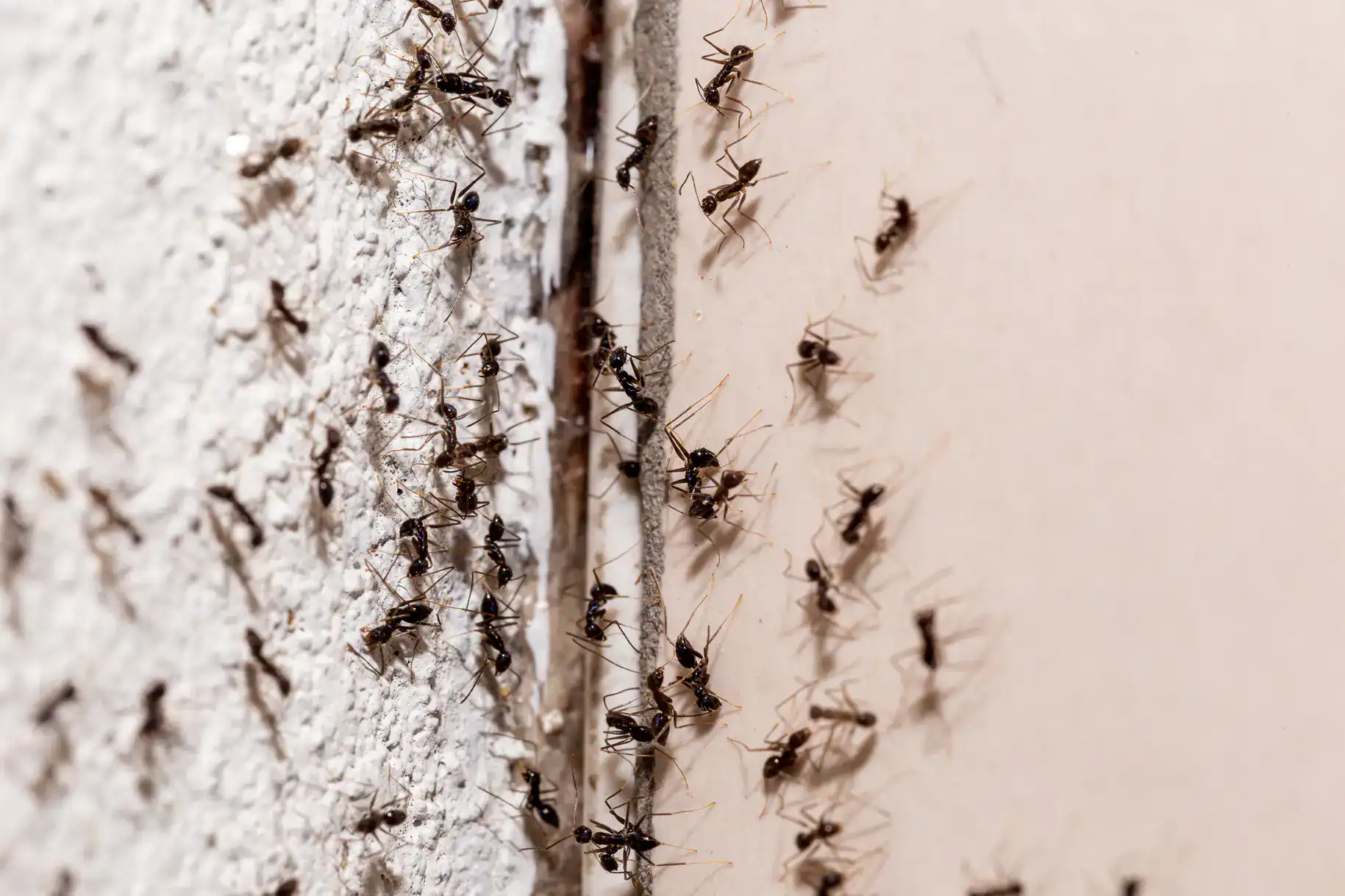
The reason most ant treatments fail whether it’s a store-bought spray or a one-and-done service call is that they only address the foragers. The ants trailing across your kitchen counter are a fraction of the colony. The nest itself, and the queen driving reproduction, are somewhere else entirely. Treating what’s visible without reaching the source is why the problem keeps coming back.
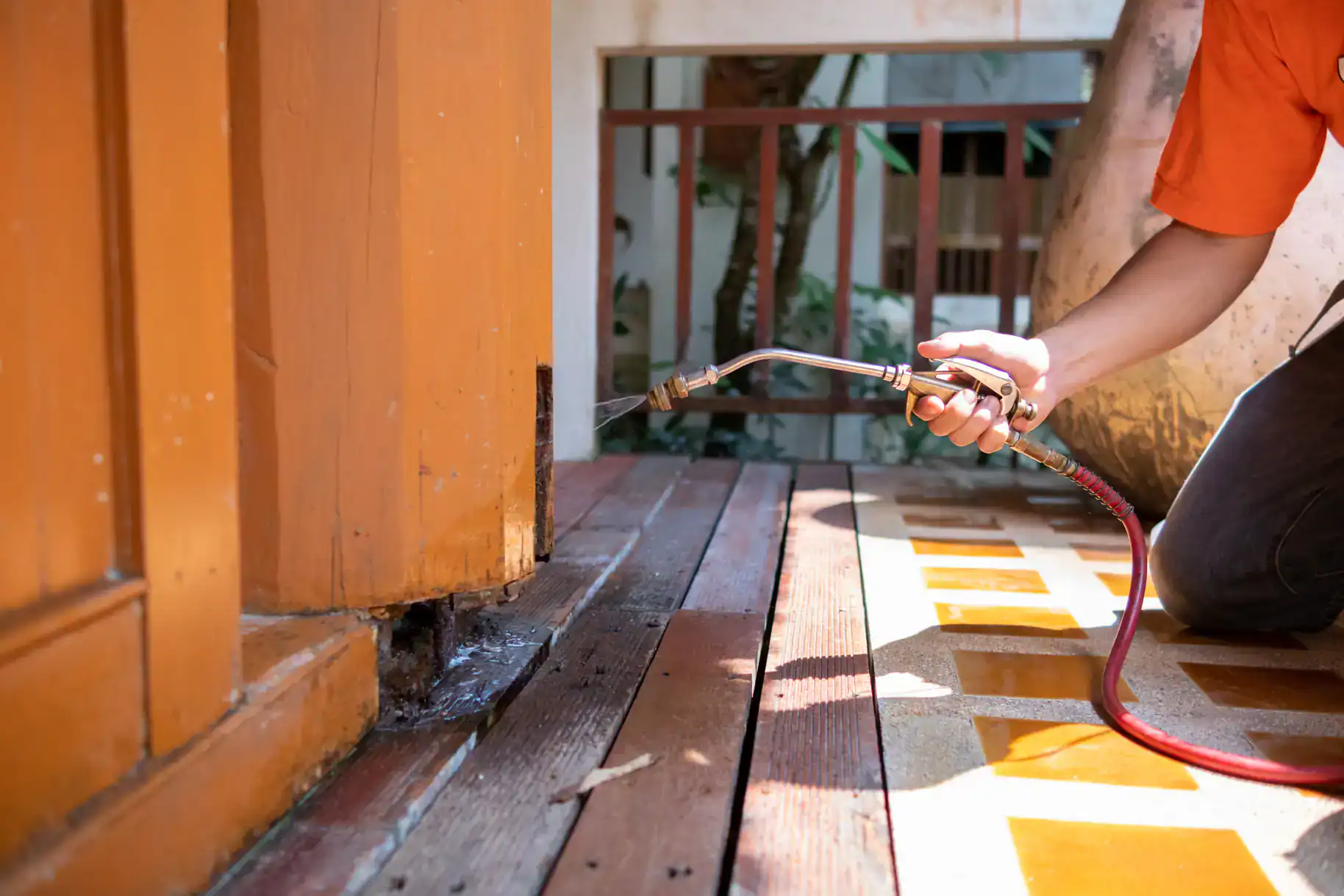
Here’s how we approach it. The first visit is a full cleanout materials applied both inside and outside the home using products that foraging ants pick up and carry back into the nest. That’s how you reach the colony: you use the ants’ own behavior against them. In Floral Park’s older homes, where carpenter ants often establish satellite colonies inside wall voids, attic insulation, or structural wood near moisture-damaged framing, this interior-exterior approach is especially important. A surface treatment alone won’t cut it.
After the initial cleanout, we schedule follow-up visits weekly, every other week, or monthly depending on the severity and what we’re seeing to re-apply materials and confirm the colony is being eliminated. Spring is the peak season in Nassau County, when rains flood outdoor nests and drive ants indoors, but carpenter ants in established interior colonies can stay active well into fall and even winter in older homes with less effective sealing. The follow-up schedule accounts for that. We don’t disappear after the first visit.
Ready to get started?
Every ant control job starts with a free estimate. No obligation, no pressure just a clear picture of what you’re dealing with and what it’s going to take to fix it. From there, the service is built around the specific ant species active in your home and the conditions driving the infestation.
In Floral Park and across western Nassau County, the most common species we encounter are carpenter ants, pavement ants, and odorous house ants and each one requires a different treatment strategy. Carpenter ants nesting in the aging wood of a 1950s Cape Cod are not the same problem as pavement ants pushing up through the cracks in your driveway or concrete stoop. Getting the identification right matters, because applying the wrong approach doesn’t just fail it can scatter the colony and make the problem harder to resolve.
The full service includes an interior and exterior treatment, scheduled follow-up visits to monitor activity and re-apply as needed, and materials that are registered with the NYS Department of Environmental Conservation safe for use in homes with children and pets when applied correctly by a licensed technician. Nassau County’s IPM framework encourages targeted, responsible pest management, and that’s exactly how we operate. Senior customers also receive a 10% discount a straightforward acknowledgment of the long-standing homeowners in this community who have kept these properties maintained for decades.
Spring is the peak season for ant activity across Nassau County, and Floral Park gets hit from two directions at once. The first is rain when spring storms saturate the soil, outdoor ant colonies get flooded and the foragers move inside looking for dry ground and food. The second is the housing stock itself. Most homes in Floral Park were built in the 1940s and 50s, and over decades, the sealing around foundations, window frames, and utility penetrations degrades. That gives ants easy entry points that didn’t exist when the home was newer.
If you’re seeing ants every spring and the problem resolves on its own by summer, you may be dealing with pavement ants or odorous house ants responding to seasonal flooding. If the ants are large, dark, and appearing near wood window sills, door frames, baseboards carpenter ants are the more likely culprit, and those don’t go away on their own. A licensed inspection is the fastest way to know which you’re dealing with and what the right treatment looks like.
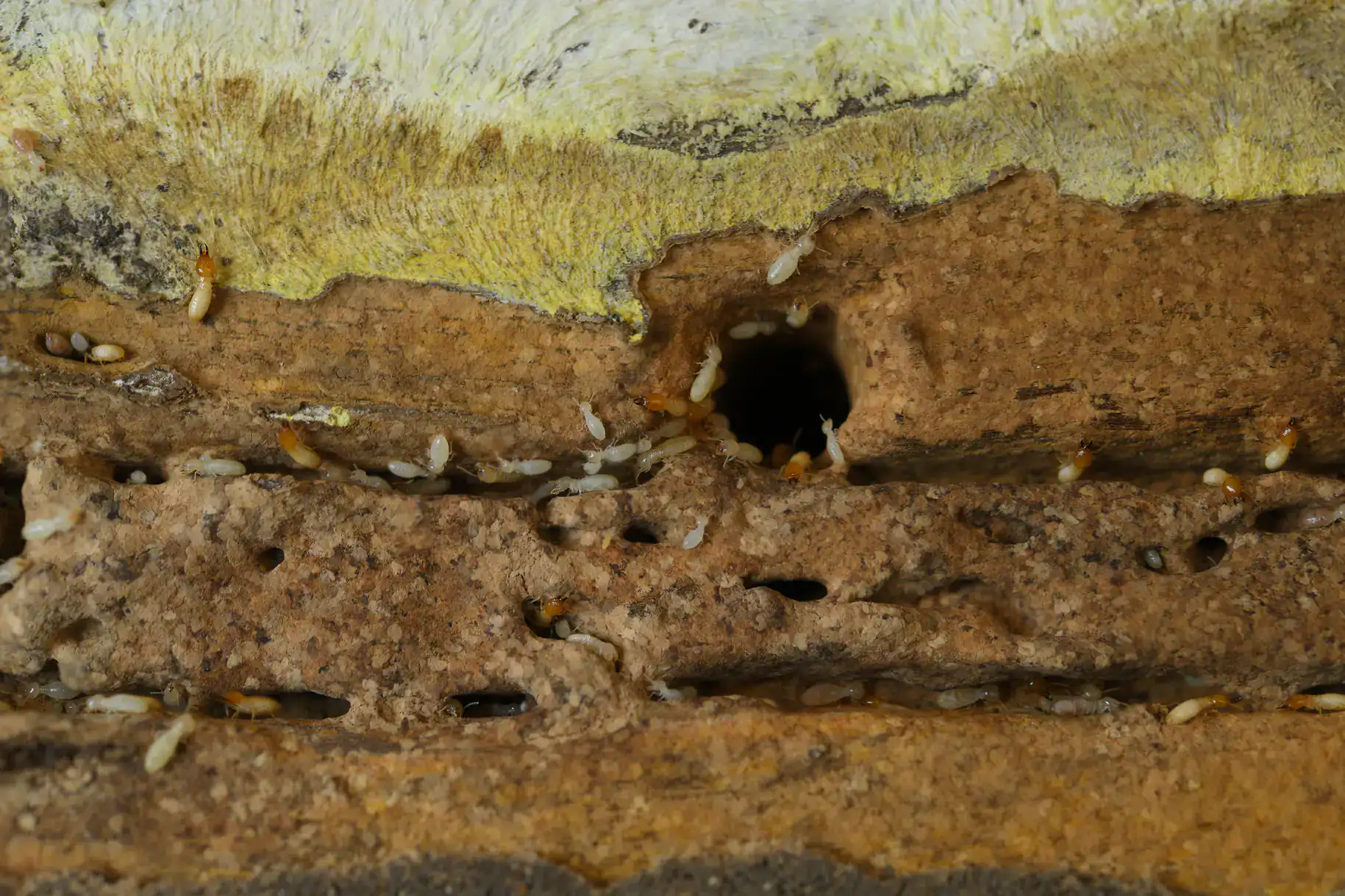
It matters a lot, and it’s one of the most important distinctions in ant control. Regular ants pavement ants, odorous house ants, little black ants are nuisance pests. They’re looking for food and moisture, and while they’re frustrating to deal with, they don’t cause structural damage. Carpenter ants are a different category entirely. They excavate wood to build their nests, and in the older wood-frame homes that make up most of Floral Park’s residential inventory, that means they can be quietly hollowing out sill plates, wall studs, and attic framing while you’re going about your day.
Carpenter ants are the largest ant species you’ll encounter in Nassau County typically black, sometimes with reddish coloring, and noticeably bigger than the ants you’d see trailing toward a spilled drink. If you’re seeing large ants near wood, especially in spring when swarms emerge, or finding small piles of sawdust-like material near baseboards or window frames, that’s a carpenter ant signal. Treatment needs to reach the colony inside the wood, not just the ants foraging on the surface.
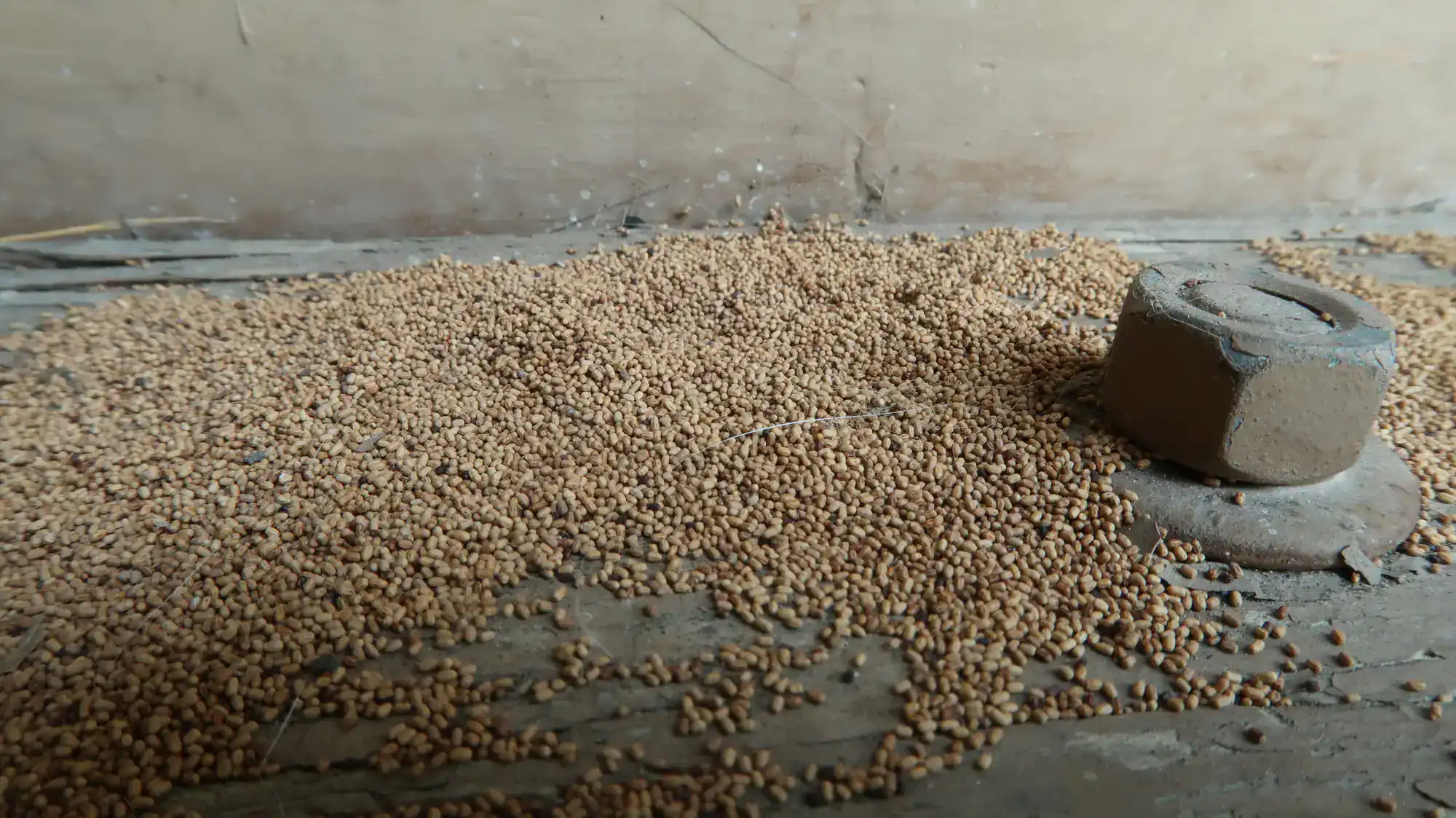
The signs that a colony has established inside the structure are pretty specific. Sawdust-like material called frass near baseboards, door frames, or window sills is one of the clearest indicators. You might also hear faint rustling inside walls, particularly at night when carpenter ants are most active. And in older Floral Park homes where moisture has gotten into structural wood over the years around roof leaks, plumbing penetrations, or poorly sealed exterior trim carpenter ants are drawn to that softened wood and will nest deep inside it.
The challenge with interior colonies is that surface treatments don’t reach them. Spraying the perimeter or applying a store-bought product along the baseboards might knock down the foragers you can see, but the colony continues unaffected. That’s why the treatment approach matters materials need to be applied in a way that the ants carry back into the nest themselves, reaching the queen and the brood that are driving reproduction. A professional inspection can identify the likely nesting sites based on where activity is concentrated and what the structure looks like.
Yes when it’s done by a licensed technician using properly registered materials, professional ant control is safe for households with children and pets. In New York State, all commercial pest control operators are required to hold a Commercial Pesticide Applicator Certification from the NYS Department of Environmental Conservation, and the materials used must be DEC-registered. We use only DEC-registered products on every job that’s not optional, it’s the legal standard we operate under.
In practice, our technician will walk you through any precautions specific to the treatment being applied whether that means keeping kids and pets out of treated areas for a short period after application or any other steps relevant to your home. Nassau County’s Integrated Pest Management framework also emphasizes targeted application, meaning materials go where they need to go rather than being broadcast indiscriminately. The goal is effective treatment with the smallest necessary footprint which is both the responsible approach and the more effective one.
Because it wasn’t designed to eliminate the colony it was designed to kill the ants it contacts. Store-bought sprays work on contact, which means they take out the foragers you can see and create a short-term barrier at the entry point. But the colony itself which can contain thousands of workers, brood, and a queen is somewhere else entirely, and it keeps producing new foragers to replace the ones you killed. That’s why the ants come back within days, often in the same spots.
There’s also a scattering effect to be aware of. Some over-the-counter repellent sprays actually cause ant colonies to split and relocate, which can spread the problem to new areas of the home rather than concentrating it where you can treat it. We use non-repellent materials that foraging ants pick up without detecting, carry back into the nest, and share with the colony reaching the source rather than just the symptom. For Floral Park homeowners who’ve already gone through a few cans of spray with no lasting result, this is the distinction that changes the outcome.
Yes we offer a 10% discount for senior customers. Floral Park has a significant population of long-term homeowners who have lived in the village for decades, maintaining properties that in many cases have been in the family for generations. These are homes that have been carefully kept up, and the last thing a senior homeowner on a fixed income needs is an unexpected pest control bill without any acknowledgment of that reality.
The discount applies to ant control services and is straightforward to apply just mention it when you call. There’s no complicated qualification process. It’s one of the ways a family-owned company with 40 years in this market tries to stay connected to the communities we serve rather than treating every job as a transaction. If you have questions about pricing or want a free estimate before committing to anything, call us any time we answer 24 hours a day, 7 days a week.
Useful Links