
Hear from Our Customers
When the treatment actually works, you stop thinking about it. No more checking the counter before you make coffee. No more wondering if the trail you saw yesterday is going to be worse tomorrow. That’s the goal not just fewer ants, but none.
Here’s what’s specific to Kew Gardens Hills: your neighborhood sits between two major green spaces. Flushing Meadows–Corona Park runs along your western boundary, and Cedar Grove Cemetery anchors the north. Both are large, undisturbed stretches of soil where ant colonies establish themselves and send foragers out into the surrounding residential blocks every spring and summer. You’re not imagining a seasonal spike it’s real, and it’s tied directly to where you live.
The postwar brick buildings and semi-detached homes throughout Kew Gardens Hills many built in the 1940s through 1960s have aging infrastructure that gives ants exactly what they need: deteriorating caulk around pipes, worn weatherstripping, and shared walls that let colonies move freely between units. A spray on your counter doesn’t touch any of that. Proper ant control in Kew Gardens Hills means treating the building the way it actually works, not the way it looks from the inside.
We’ve been handling pest control across New York City’s five boroughs for over 40 years. Family-owned and operated out of Brooklyn, we were built on a straightforward idea: do the job right, show up when you say you will, and charge a fair price. That’s still how we work today.
Queens has always been a core part of our territory. The technicians who come to Kew Gardens Hills to the co-op buildings near Kissena Boulevard, the semi-detached homes off Main Street, the garden apartment complexes throughout the neighborhood know this building stock. They’ve worked in it for decades. That familiarity matters when you’re dealing with an infestation that keeps coming back despite repeated attempts to stop it.
We hold an A+ rating with the Better Business Bureau of New York State, are fully licensed, bonded, and insured, and use only materials registered with the NYS Department of Environmental Conservation. Our phones are answered 24 hours a day, 7 days a week. A 10% senior discount is available, and every job starts with a free estimate.
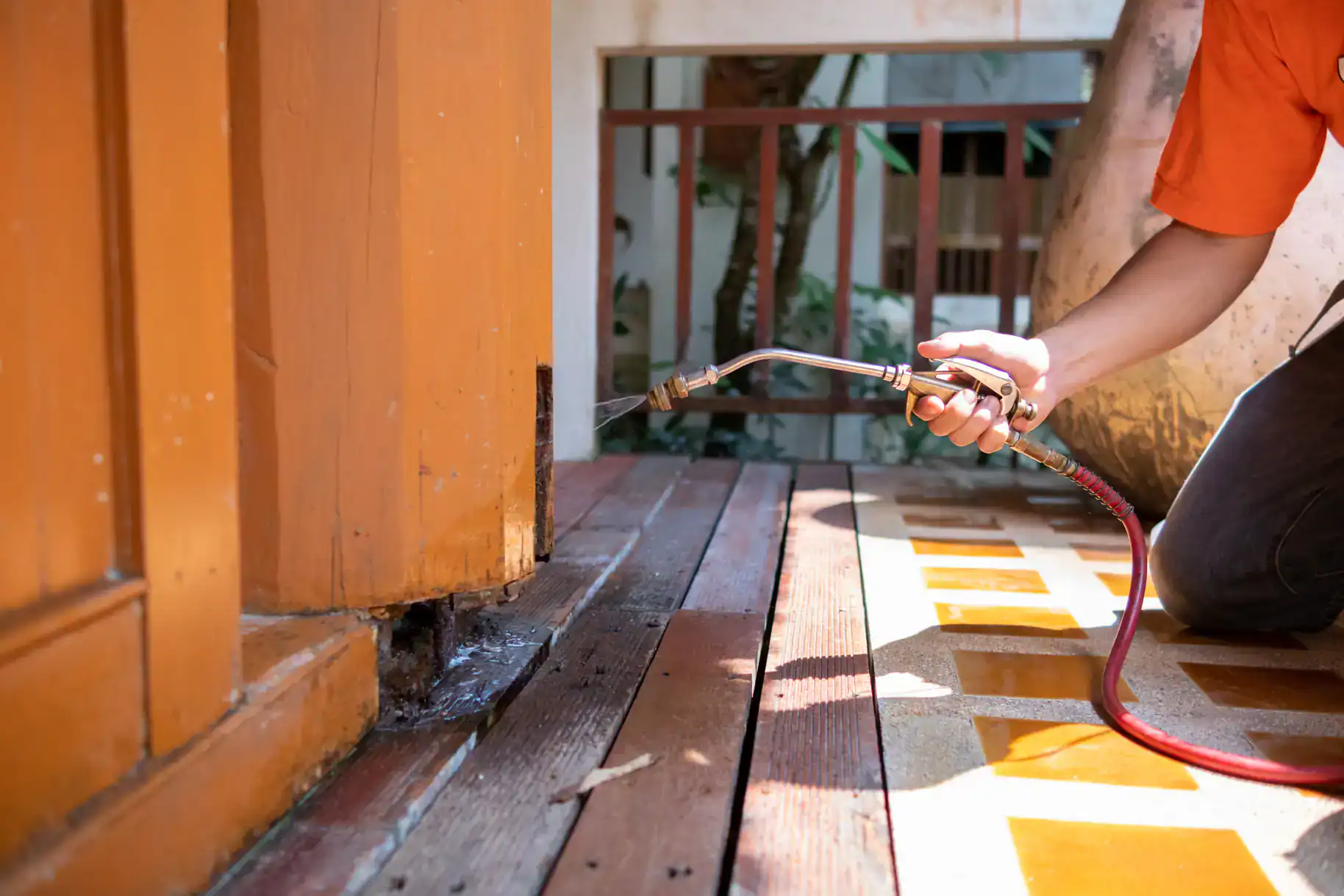
The first visit is a cleanout. One of our licensed technicians comes to your property, assesses what’s going on where the activity is, how they’re getting in, what species you’re dealing with and applies treatment both inside and outside the structure. The materials we use aren’t surface sprays. They’re products that forager ants pick up and carry back into the nest, sharing them with the colony. That’s how you get to the source instead of just knocking back the scouts.
In Kew Gardens Hills specifically, exterior treatment along the foundation is critical. With ant pressure coming from the park corridor to the west and the cemetery boundary to the north, the perimeter of your building is where the activity starts. Sealing that off not just treating what’s already inside is what breaks the cycle.
After the initial cleanout, follow-up visits are scheduled based on your situation. That might be weekly, every other week, or monthly. Each follow-up re-applies materials, checks for new activity, and adjusts our approach if needed. For buildings with shared walls, like many of the co-ops and multi-unit structures throughout Kew Gardens Hills, this ongoing monitoring is what keeps a solved problem solved.
Ready to get started?
We handle ant infestations for both residential and commercial properties throughout Kew Gardens Hills. That includes single-family homes, semi-detached two-family houses, co-op apartments, garden-style complexes, and commercial spaces along Main Street and Kissena Boulevard. Our service covers the full range of ant species common to this area pavement ants, odorous house ants, and carpenter ants, which are a particular concern in the older wood-frame and mixed construction found throughout Kew Gardens Hills’s postwar housing stock.
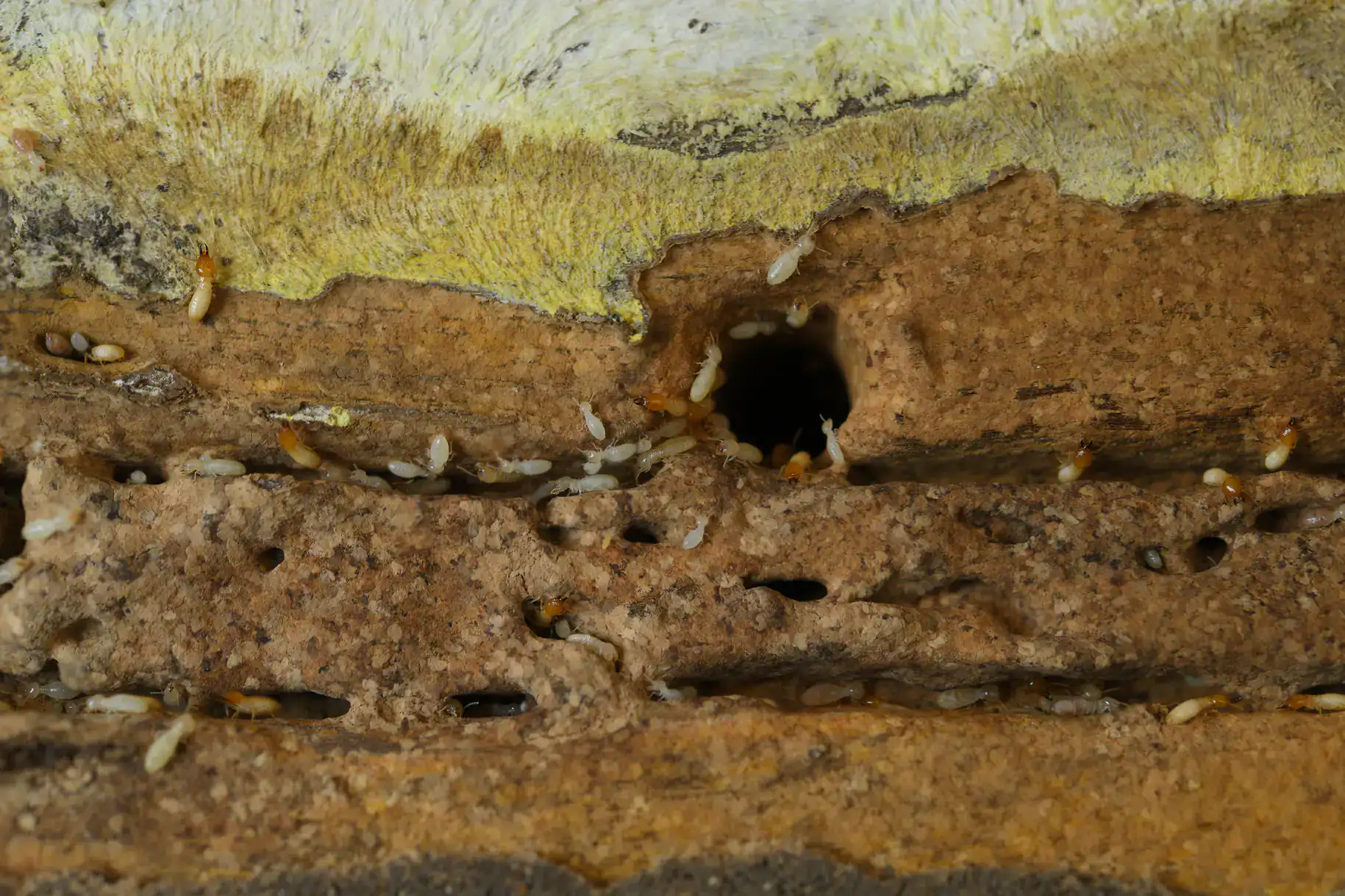
Carpenter ants deserve specific attention here. If you’re in one of the older brick or wood-frame buildings in Kew Gardens Hills and you’re seeing large black ants near windows, baseboards, or emerging from wall gaps, that’s not a minor nuisance carpenter ants excavate galleries inside damp or aging wood, and in a building that’s 60 to 80 years old, that’s a structural concern. Our technicians are trained to identify and treat carpenter ant infestations at the colony level, not just the surface.
Every service uses NYS DEC-registered materials applied by licensed applicators a legal requirement in New York State that not every operator meets. For households that observe kashrut, kitchen and food-preparation areas are treated with precision, and re-entry guidance is always provided. The free estimate gives you a clear picture of what the job involves before anything starts.
The most common reason is that the treatment addressed what was visible the foragers on your counter or floor without reaching the colony behind it. Ant colonies in Kew Gardens Hills buildings can be deep inside wall voids, in the soil along the foundation, or even in the landscaped courtyards of garden apartment complexes. The ants you see are scouts. As long as the colony is intact, it keeps sending them out.
In multi-unit buildings which are common throughout Kew Gardens Hills the issue is compounded by shared walls and plumbing chases. A colony can move between units through structural pathways that a single-unit treatment never touches. Effective ant control in Kew Gardens Hills means treating the interior and the exterior perimeter simultaneously, and following up to make sure the colony doesn’t simply relocate to an adjacent section of the building. That follow-up scheduling is a core part of how we approach infestations in this type of housing.
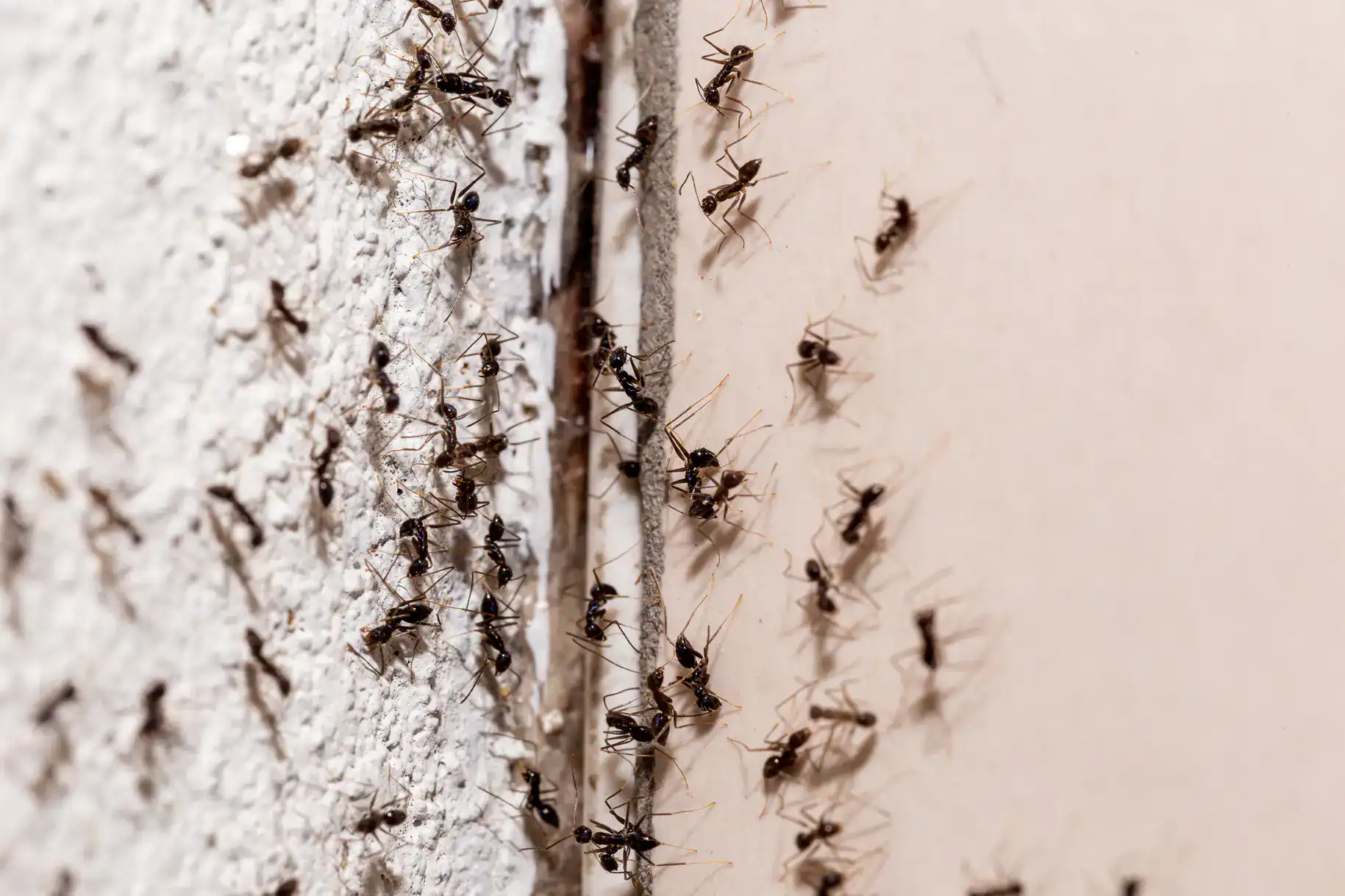
The three species that show up most frequently in Kew Gardens Hills are pavement ants, odorous house ants, and carpenter ants. Pavement ants are the small ones that trail along baseboards and counters they nest in the soil beneath sidewalks and building foundations, which is exactly the type of terrain surrounding the neighborhood’s postwar brick buildings. Odorous house ants are attracted to moisture and sweet food sources, and they tend to spike after rain events when their outdoor nests get flooded.
Carpenter ants are the most serious of the three. They’re larger, often black, and they don’t eat wood they nest inside it. In Kew Gardens Hills, where a significant portion of the housing stock was built in the 1940s through 1960s, aging wooden structural elements, window frames, and moisture-damaged timber create ideal conditions for carpenter ant colonies. If you’re seeing large ants near your walls or windows, especially in spring or fall, that’s worth getting looked at quickly.
Yes when it’s done by a licensed applicator using registered materials, professional ant treatment is safe for households with children and pets. We use only materials registered with the New York State Department of Environmental Conservation, applied by technicians who hold valid NYS pesticide applicator certifications. These aren’t off-the-shelf products used at uncontrolled concentrations they’re professional-grade formulations applied in targeted locations and at rates that are tested for safety.
After treatment, your technician will give you specific re-entry guidance: how long to stay out of treated areas, any surfaces to avoid until dry, and any precautions relevant to your specific situation. For households in Kew Gardens Hills that keep kosher, kitchen and food-prep areas are treated with particular care, and any questions about what was applied and where are answered directly. If you have specific concerns about a child with sensitivities or a pet with health issues, mention it when you call that information shapes how we approach the treatment.
Rain drives ants indoors and in Kew Gardens Hills, that effect is more pronounced than in many other Queens neighborhoods. The low-lying areas near Flushing Meadows–Corona Park and along the Van Wyck Expressway corridor don’t drain quickly, and when soil becomes saturated, ant colonies that were living comfortably underground get flooded out. The nearest dry structure is your home, and that’s exactly where they go.
Queens has had several significant flooding events in recent years the remnants of Hurricane Ida in 2021 caused severe flooding across the borough, and the pattern repeats with major summer storms. If you notice a surge of ant activity within 24 to 48 hours of a heavy rain, that’s not a coincidence. Our 24/7 phone line means you can call as soon as you see it, not days later when the activity has spread further into the unit. Follow-up scheduling after treatment also accounts for this pattern, so a subsequent storm doesn’t reset everything.
Store-bought sprays kill what they touch. That’s their ceiling. The foragers that die on contact are immediately replaced by the colony, which can contain tens of thousands of members and is completely unaffected by a surface spray. You may see activity drop for a day or two, but the colony is still there, still active, and still sending scouts into your space. That cycle spray, temporary relief, repeat is what most people in Kew Gardens Hills have already been through by the time they call us.
Professional treatment works differently because the materials are designed to be carried back into the nest. Forager ants pick up the product and transfer it to the colony, including to the queen. That’s how you actually reduce the population rather than just disrupting it temporarily. Add to that the exterior perimeter treatment, the follow-up visits, and the structural knowledge of how ants move through the specific building types in this neighborhood, and you’re dealing with a fundamentally different approach not just a stronger version of what you already tried.
Yes we offer a 10% senior discount, and it’s genuinely relevant in Kew Gardens Hills. The neighborhood has a well-established older population, including many long-term residents who have lived in the same apartment or home for decades people who know their building, know their neighbors, and tend to rely on service providers they can trust over time rather than rotating through whoever’s cheapest this month.
For many older residents on fixed incomes in the neighborhood’s co-ops and garden apartments, the discount makes professional-grade ant control more accessible without cutting corners on the quality of treatment. Every job still starts with a free estimate, so you know what you’re looking at before committing to anything. If you’re a senior resident in Kew Gardens Hills dealing with a recurring ant problem especially in one of the older buildings where the issue tends to be structural rather than surface-level the discount applies automatically. Just mention it when you call.
Useful Links