
Hear from Our Customers
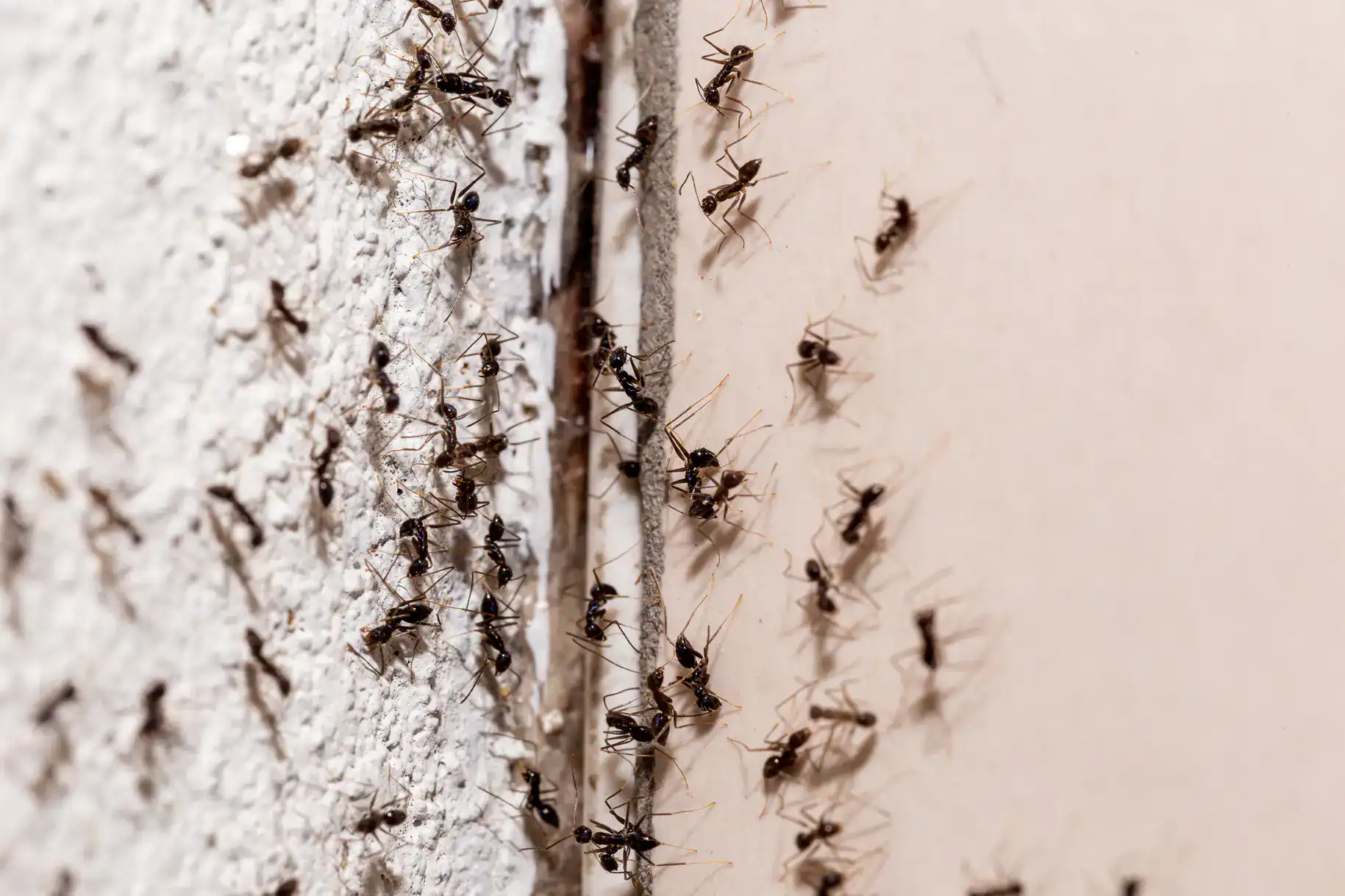
The ants you see on your kitchen counter aren’t the problem. They’re just the messengers. The colony the queen, the satellite nests, the thousands of workers you never see is living somewhere inside your walls, your foundation, or the shared structure of your building. Until that’s addressed, no amount of spraying will give you anything more than a few days of relief.
That dynamic hits especially hard in Woodside. The neighborhood’s prewar rowhouses and co-op buildings like Big Six Towers weren’t built with ant colonies in mind, but they’re practically designed for them aging wood framing, shared foundations, decades of small cracks and pipe gaps that give ants a highway between units. Treat one apartment and the colony shifts next door. It comes back. That cycle doesn’t end until the source is eliminated.
When the colony is gone, you stop seeing trails across your bathroom floor after a rainstorm. You stop finding them in the kitchen every time the weather turns. The pavement ants that swarm along Roosevelt Avenue every spring stop making their way into your building. For residents in Woodside’s older housing stock, that kind of lasting result only comes from a treatment approach that targets the colony itself not just the ants that happened to show up in front of you.
We’ve been serving Woodside, Queens, and Brooklyn for over 50 years. That’s not a marketing number it’s a reflection of how many attached rowhouses, prewar apartment buildings, NYCHA complexes, and co-op units we’ve walked through and treated in neighborhoods exactly like this one. We know what ant infestations look like in western Queens. We know which species are most common in Woodside’s building stock, how they move through shared walls, and what it actually takes to stop them.
We’re family-owned and operated, fully licensed, bonded, and insured, and we maintain a consistent A+ rating with the Better Business Bureau of New York State. We use only NYS DEC-registered pesticide materials state-regulated products applied by our trained, certified technicians. And we answer the phone 24 hours a day, seven days a week, because if you’re getting off the 7 train at 61st Street and coming home to an ant problem, you shouldn’t have to wait until morning to reach someone.
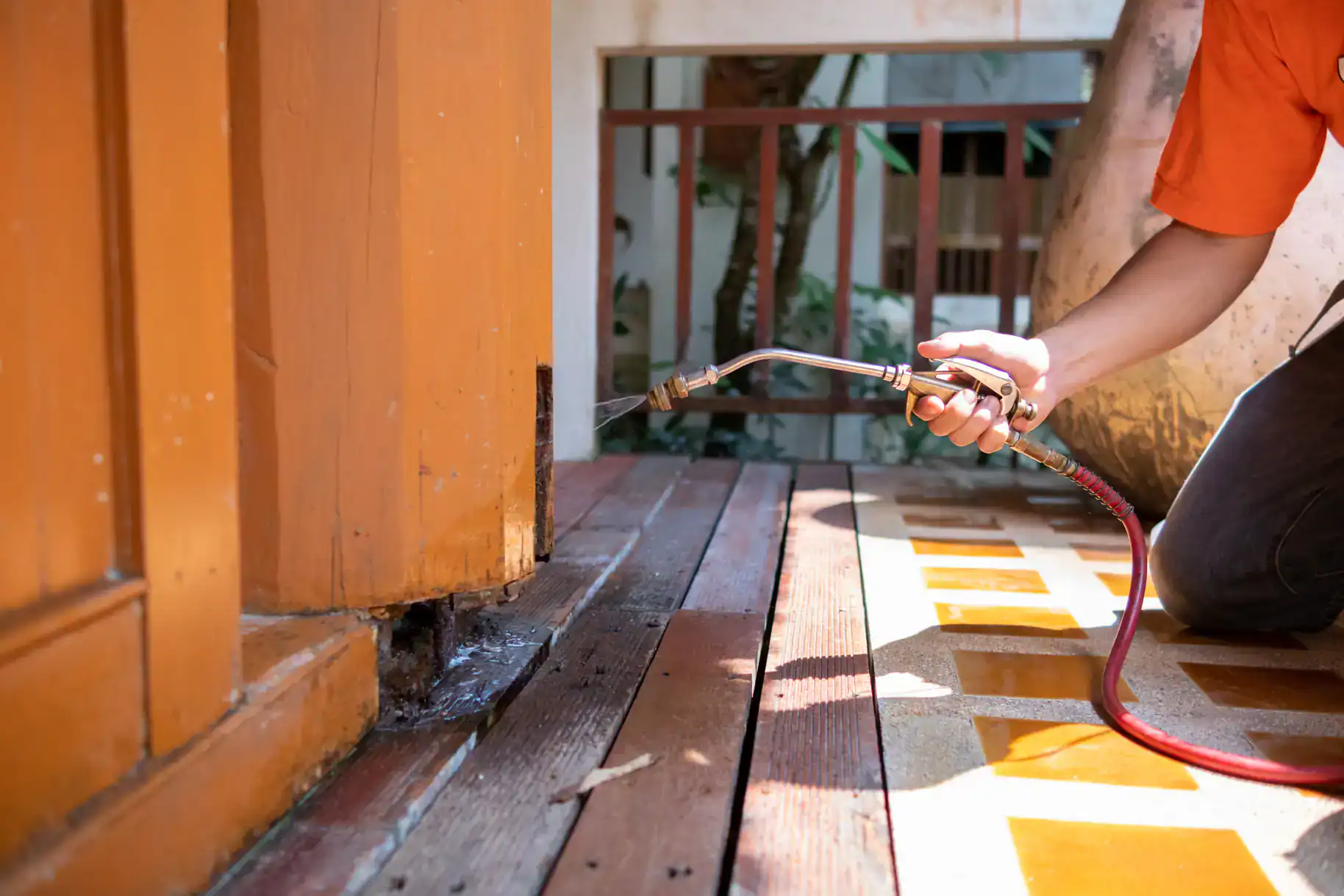
It starts with a cleanout service. One of our licensed technicians comes to your home, assesses the infestation, identifies the species involved whether that’s pavement ants coming in through foundation cracks, carpenter ants nesting in moisture-damaged wood, or pharaoh ants that have been quietly spreading through your building’s heated interior all winter and applies materials both inside and outside the structure. These aren’t surface sprays. The products we use are carried back into the nest by the ants themselves and shared with the colony, including the queen. That’s what makes the difference.
Because Woodside’s attached housing means colonies can span multiple units through shared wall voids, one visit is rarely the complete answer. After the initial cleanout, we schedule follow-up visits weekly or every other week to re-apply materials, monitor activity, and confirm the infestation is being eliminated at the source. This isn’t an upsell. It’s just how ant control works in dense urban buildings, and skipping it is why so many one-and-done treatments fail.
Once the infestation is resolved, we offer ongoing maintenance scheduling monthly, every other month, or whatever interval makes sense for your property. Spring is the heaviest pressure season in Woodside, when carpenter ant swarms emerge from the mature trees lining the neighborhood’s residential streets and pavement ants become aggressive along every sidewalk and foundation. Having a maintenance plan in place before that window hits means you’re not starting from scratch every year.
Ready to get started?
Ant control in Woodside isn’t a one-size situation. The species you’re dealing with matters. Carpenter ants in a prewar rowhouse near Winfield Gardens are a structural concern they target moisture-softened wood inside wall voids and can cause real damage that compounds quietly over time. Pavement ants colonizing the foundation of a building on Queens Boulevard are a different problem with a different treatment approach. Pharaoh ants in a heated NYCHA apartment at Woodside Houses are among the hardest to control because improper treatment can cause the colony to split and spread a phenomenon called budding that makes things significantly worse if the wrong product is used.
Our treatment accounts for all of this. The initial service includes interior and exterior application, species-specific product selection, and a clear follow-up plan. For residents in co-op buildings or rental units, our technicians work within the realities of shared-building environments we know what can be treated at the unit level and how to advise on building-wide coordination when it’s needed. All materials we use are NYS DEC-registered, which matters in a dense residential environment where you’re sharing walls with neighbors and living in close quarters with family.
Free estimates are available with no obligation. For Woodside’s senior residents who make up a meaningful portion of the neighborhood’s population we offer a 10% senior discount. No long-term contracts, no pressure. Just a clear process, honest pricing, and follow-through until the problem is actually solved.
This is the most common frustration in Woodside’s multi-unit buildings, and the answer is straightforward: store-bought sprays and most over-the-counter products only kill the forager ants you can see. The colony which can have hundreds of thousands of workers and one or more queens stays intact inside your walls, your neighbor’s walls, or the shared foundation of your building. Once the surface product wears off, the colony sends out a new wave of foragers and you’re back to square one.
In attached rowhouses and co-op buildings, the problem compounds. Even if your unit is treated thoroughly, the colony can simply relocate through a shared wall void into the adjacent unit and return once conditions settle. The only way to break that cycle is to use materials that the ants carry back to the nest themselves, eliminating the colony at the source. That’s exactly how we approach every infestation in Woodside and it’s why follow-up visits are part of the process, not an optional add-on.
Carpenter ants are a structural concern, not just a nuisance especially in Woodside’s older housing stock. Unlike termites, they don’t eat wood, but they excavate it to build their nesting galleries. In prewar frame homes and brick rowhouses where wood framing has been absorbing moisture for 80 to 100 years, carpenter ants find ideal conditions. The damage they cause is slow and often invisible until it’s significant hollowed-out joists, weakened beams, structural elements compromised inside wall voids where no one is looking.
The carpenter ant swarms that appear along Woodside’s tree-lined streets every May and June are a warning sign worth taking seriously. Swarmers the winged ants you see mean an established colony is mature enough to reproduce, which typically means it’s been present for at least three to five years. If you’re seeing swarmers inside your home, the colony is likely already inside the structure, not just foraging in from outside. Early professional treatment is significantly less expensive than the structural repairs that follow delayed treatment.
For most infestations in Woodside’s residential buildings, you’ll see a noticeable reduction in ant activity within the first week after the initial cleanout. The colony-targeting materials we use take time to work because they rely on ants carrying the product back to the nest and sharing it that process doesn’t happen overnight, but it’s what makes the treatment durable rather than temporary.
Full resolution in a multi-unit building typically takes two to four weeks, accounting for follow-up visits that reinforce the treatment and address any remaining activity. Species matters here too. Pavement ants and odorous house ants generally respond faster. Pharaoh ants which are common in Woodside’s heated apartment complexes and NYCHA buildings can take longer because their colonies are large, diffuse, and sensitive to treatment errors that cause splitting. Our technicians identify the species before selecting products, which is a step that a lot of quick-turnaround services skip and then wonder why the problem persists.
Rain drives ants indoors, and in Woodside it’s a predictable and recurring pattern. When heavy rain saturates the soil around your building’s foundation, it floods the underground nesting galleries where pavement ants and other ground-nesting species live. The ants don’t drown they relocate, and the nearest dry, warm space is usually your home. In a neighborhood like Woodside, where most of the land surface is impervious sidewalks, asphalt, concrete there’s very little soil drainage, so water accumulates quickly around foundations and drives ants inside faster than it would in a more suburban setting.
The fix isn’t just treating the interior after a rain event. It’s addressing the exterior foundation and perimeter so that the ants have nowhere to go when the next storm hits. Our cleanout service treats both inside and outside the structure specifically for this reason. If you’re on a residential block near Roosevelt Avenue or anywhere with dense sidewalk coverage, exterior perimeter treatment is an especially important part of the equation.
Yes when it’s done correctly by a licensed professional using state-regulated materials. We use only NYS DEC-registered pesticide products, which means every product we apply has been reviewed and approved by the New York State Department of Environmental Conservation for residential use. These are not the same as hardware store sprays applied indiscriminately. They’re targeted, applied in specific locations and quantities by our certified technicians who know exactly how to use them safely in a residential environment.
In Woodside’s dense co-op buildings and attached rowhouses, where you’re sharing walls with neighbors and children may be playing in common areas, that regulatory compliance matters. Our technicians will walk you through any re-entry protocols relevant to your home typically, you’ll be asked to stay out of treated areas for a short period while products dry, after which the space is safe for normal activity. If you have specific concerns about a particular product or application method, ask during the estimate. We’ll answer that question directly.
Yes. We offer a 10% senior discount on ant control services, and it’s worth mentioning if you’re booking for yourself or a family member. Woodside has a meaningful senior population roughly 17% of residents are 65 or older and many of them are on fixed incomes in co-op units or long-term rentals where pest problems can feel especially disruptive and hard to manage alone. The discount is a straightforward way we acknowledge that reality.
Beyond the discount, our free estimate policy means there’s no cost to find out what you’re dealing with before committing to anything. If you’re a senior living in one of Woodside’s prewar buildings or co-op complexes and you’ve been dealing with recurring ant activity especially the kind that keeps coming back after DIY attempts a professional assessment costs you nothing upfront and gives you a clear picture of what’s actually happening and what it will take to fix it. Call any time, including evenings and weekends. Someone will answer.
Useful Links