Hear from Our Customers
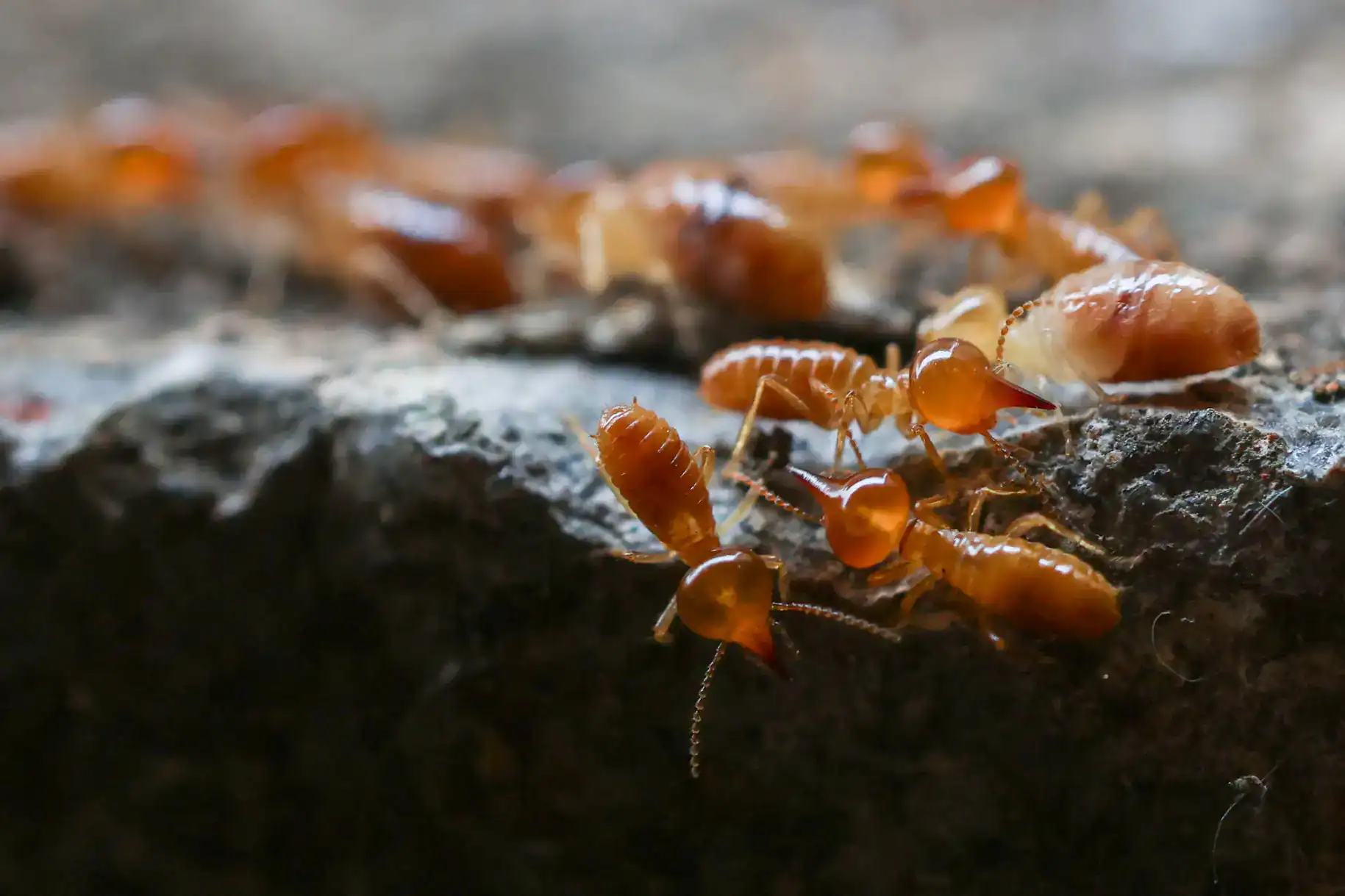
Termites don’t announce themselves. In Fordham’s dense rows of pre-war apartment buildings the five- and six-story Art Deco structures that line the Grand Concourse and surrounding blocks they work silently inside aging wood framing for years before anyone notices. By the time you see a swarm near a basement window or hollow-sounding wood along a ground-floor wall, the colony has likely been feeding around the clock for a long time.
The Eastern Subterranean Termite is the species doing the damage here in the Bronx. It nests underground, travels through soil, and enters structures through gaps as small as 1/32 of an inch. In Fordham, where apartment buildings share soil zones across adjacent foundations, a colony detected in one unit can easily extend beneath the building next door. That’s a building-wide situation that needs to be handled correctly the first time.
What changes after treatment is straightforward: the feeding stops, the structural risk is contained, and you have documentation that the problem was addressed by a licensed professional using NYS DEC-registered materials. For landlords managing multi-family buildings in Fordham, that documentation also protects you against NYC Department of Health violations something that matters a great deal in a neighborhood where the Housing Maintenance Code puts pest control responsibility squarely on the building owner.
We’ve been family-owned and operated since 1971 more than 50 years serving New York City’s five boroughs, including the Bronx and Fordham. Founded by Richard Kourbage Sr. and now run with his sons Richard Jr. and Charles, this is a company where the family name is attached to every job. Charles personally responds to customer feedback. Our owner’s son has shown up on-site for termite inspections in Fordham apartment buildings. That level of accountability doesn’t come from a franchise.
Our staff brings over 100 years of combined pest control experience to the table and that depth matters when you’re dealing with a 90-year-old apartment building near Fordham University or a multi-family property a few blocks from Fordham Road. These aren’t cookie-cutter structures, and they don’t respond to cookie-cutter treatment. We hold BBB accreditation dating back to 1989, apply only NYS DEC-registered materials, and have handled NYC Department of Health pest citations for property owners across the city. If you need a licensed, accountable termite exterminator in Fordham, NY, we’re the team that’s been doing it longer than most of the competition has been in business.
It starts with a call and we answer 24 hours a day, 7 days a week. If you’re a Fordham landlord who just got a DOH notice, or a tenant who spotted swarmers coming up from a basement wall on a warm March morning, you don’t have to wait until Monday. Appointments are typically scheduled within two business days, and same-day inspections are often available.
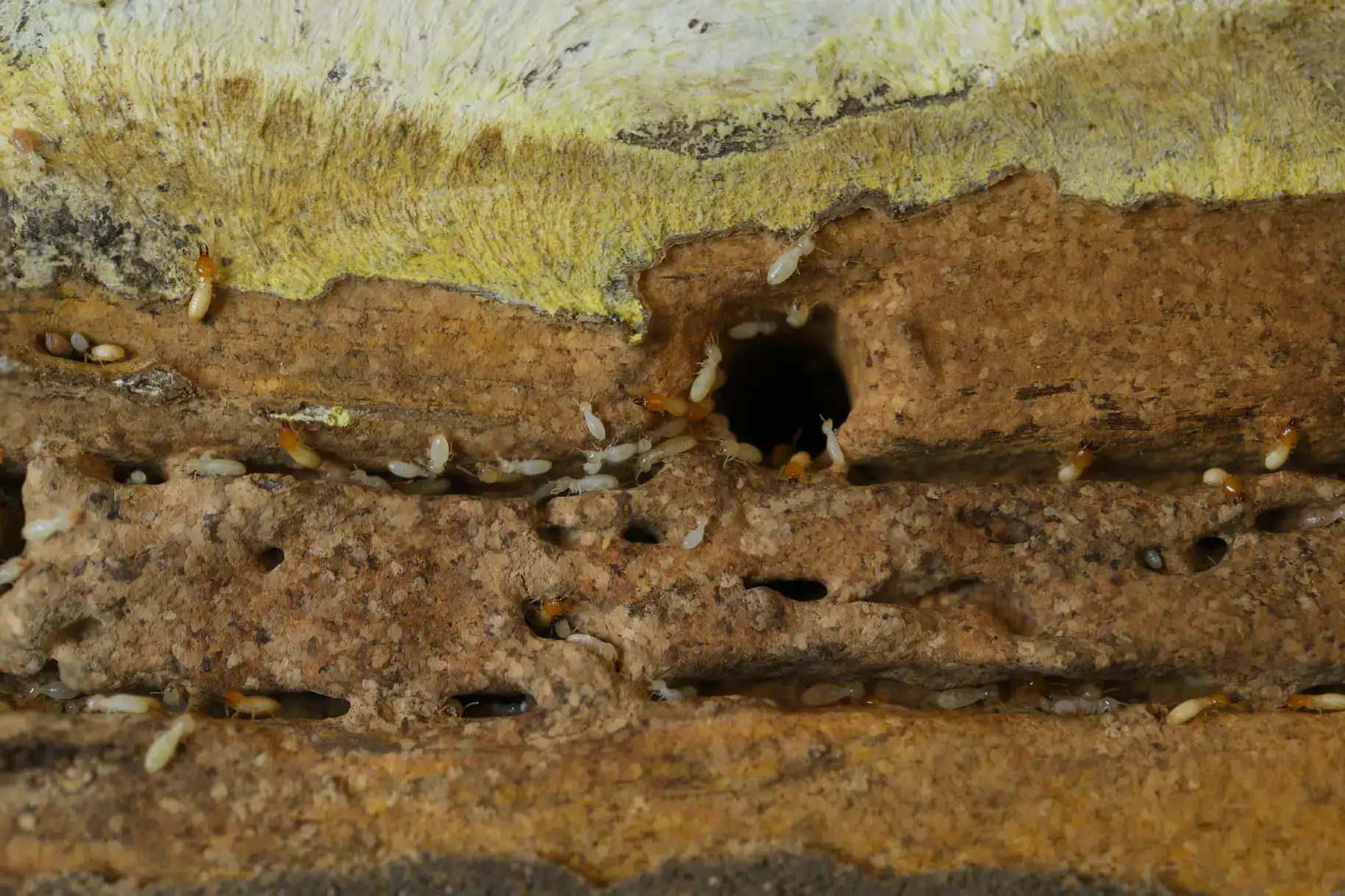
The inspection comes first. A certified technician walks the property foundation perimeter, basement, ground-floor units, utility penetrations, any area with soil-to-wood contact and looks for the specific signs that Eastern Subterranean Termites leave behind: mud tubes along masonry walls, damaged or hollow wood, discarded wings near window frames, and moisture conditions that invite activity. In Fordham’s pre-war buildings, the inspection also accounts for the building’s construction type wood framing inside masonry exteriors, aging sill plates, and basement conditions that tend to hold moisture longer than newer construction.
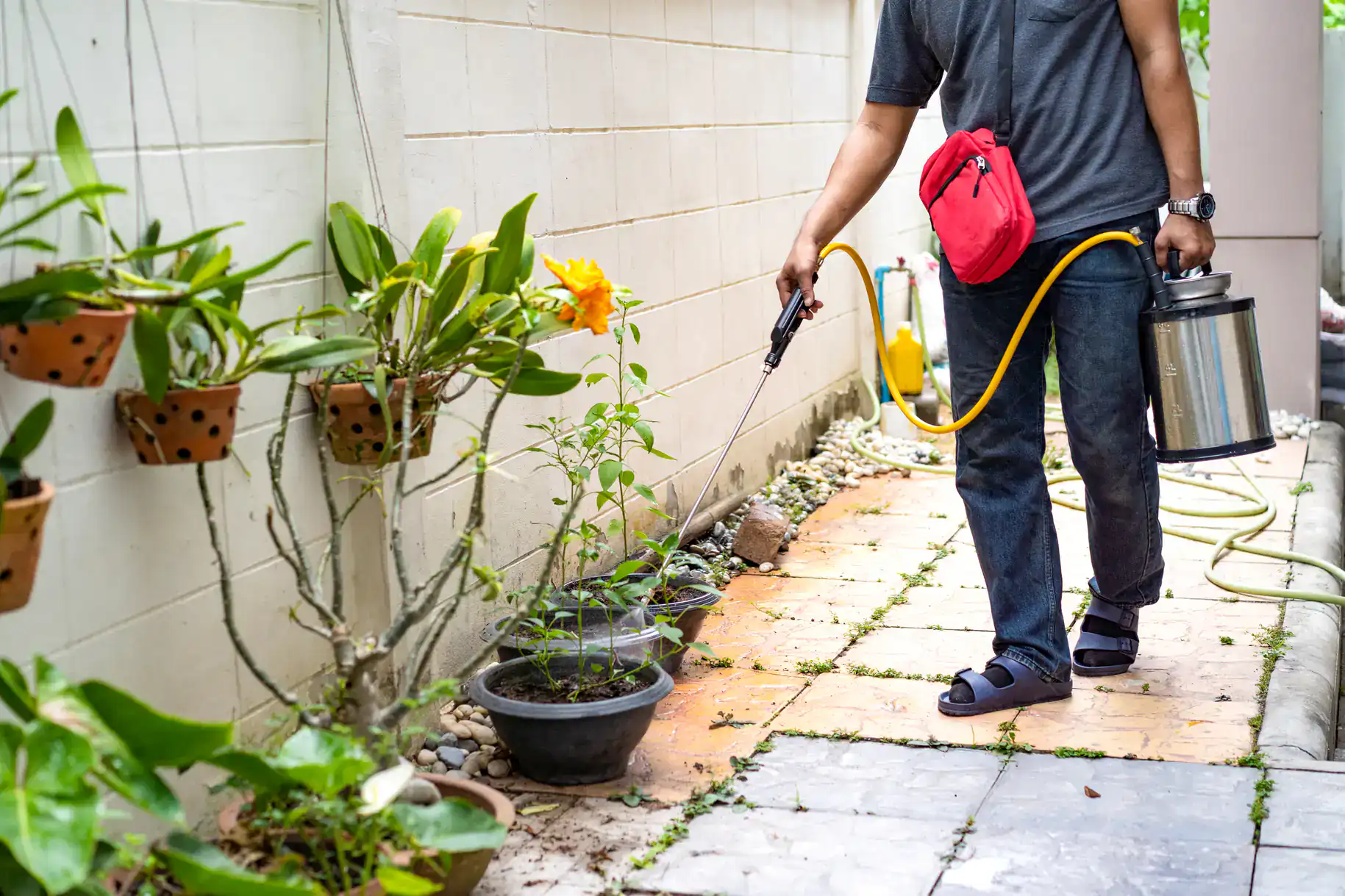
Once the inspection is complete, you get a clear picture of what’s happening and what treatment we recommend. For active infestations, we use targeted liquid treatments and termite baiting systems designed to eliminate the colony at its source not just the visible activity at the surface. Bait stations draw termites in, they carry the treatment back to the colony underground, and the entire colony is eliminated over time. After treatment, you receive written documentation of everything materials used, areas treated, and follow-up steps which satisfies NYC DOH compliance requirements and gives you a record you can actually use.
Ready to get started?
Every termite job in Fordham starts with a free estimate. There’s no obligation, no pressure, and no vague ballpark you get a clear assessment of what’s present, what’s at risk, and what treatment will cost before anything begins. For property owners managing buildings near the Bronx Zoo and New York Botanical Garden corridor where adjacent parkland sustains large subterranean termite populations in deep, forested soil that upfront clarity matters.
We handle the full range of termite-related services relevant to Fordham’s building stock and regulatory environment. That includes termite inspections for active infestations, Wood Destroying Organism (WDO) reports for real estate transactions (required for FHA and VA mortgage approvals), termite baiting system installation, targeted liquid treatments for subterranean termite colonies, and NYC Department of Health pest citation resolution for landlords and property managers. All materials we apply are NYS DEC-registered, all our technicians are certified, and all work is documented.
For Fordham property owners dealing with a building-wide infestation across shared soil zones, our team has the experience and the capacity to coordinate treatment across the full structure not just a single unit. We offer senior discounts and serve both residential and commercial properties throughout the Bronx. Whether you manage one apartment or a full building on Fordham Heights, you’re getting the same standard of work from a team that’s been doing this in New York City for over five decades.
The Eastern Subterranean Termite the species responsible for virtually all termite damage in New York City lives underground and travels through soil to reach the wood inside a structure. In Fordham’s pre-war apartment buildings, the entry points are often where aging masonry meets soil: foundation cracks, utility penetrations, gaps around pipes, and deteriorating sill plates where wood sits directly on masonry. These buildings were constructed in the 1920s and 1930s, and after 90-plus years, the number of potential entry points has only grown.
What makes Fordham’s building stock particularly vulnerable is the shared soil zone beneath adjacent structures. When apartment buildings are built close together as they are throughout Fordham Heights and along the Grand Concourse a termite colony that originates under one building can extend its foraging tunnels beneath the foundations of neighboring properties. A colony can forage more than 300 feet from its central nest, which means an infestation that appears isolated to one unit or one building may actually be drawing from a colony that spans the entire block face.
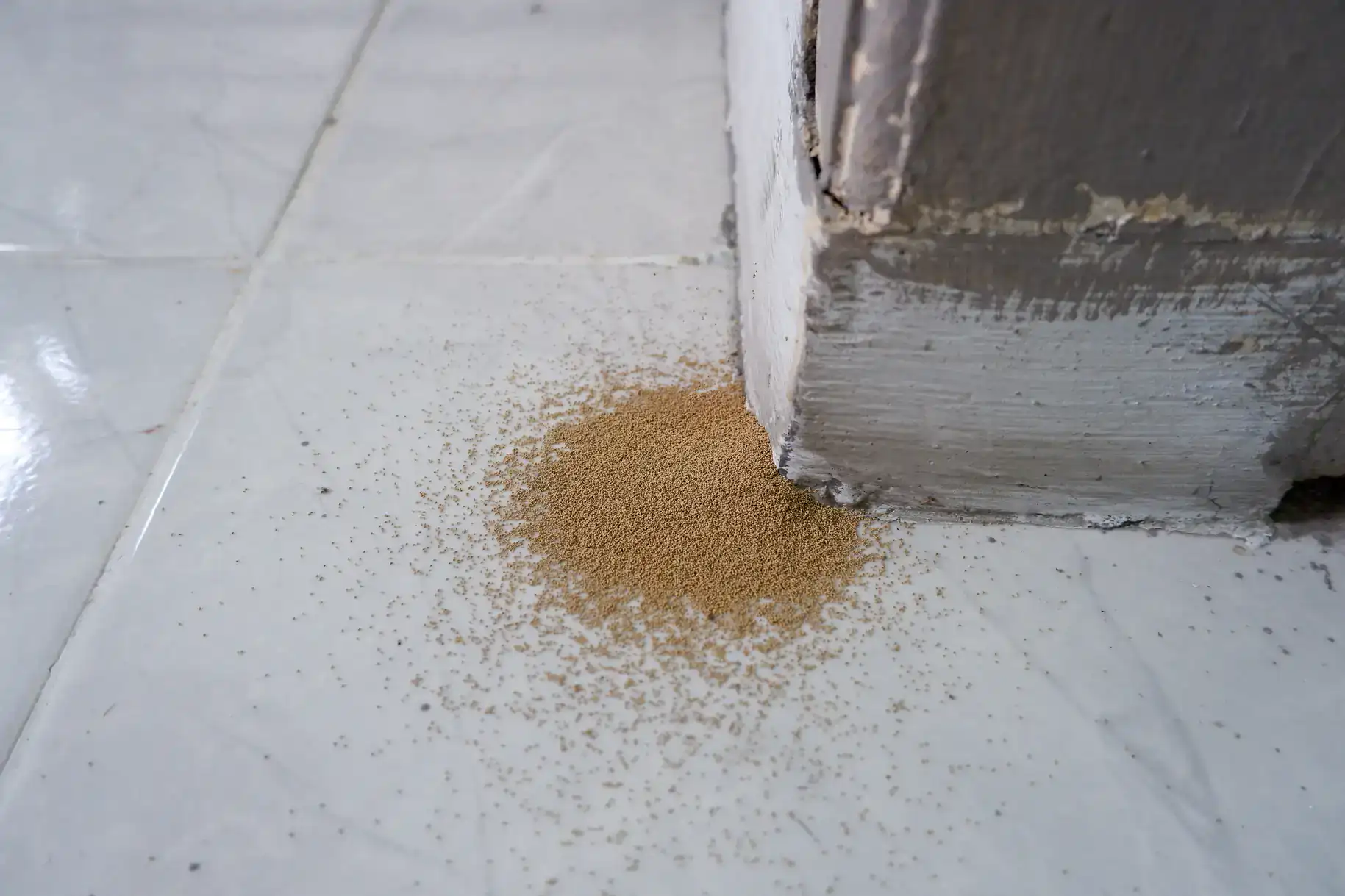
The most common early sign Fordham residents and building managers notice is a swarm winged termites emerging from walls, floors, or window frames, typically in early spring following a warm day with rain. March through May is peak swarm season in New York City, and when it happens inside a basement laundry room or near a ground-floor apartment window in Fordham, it’s alarming. The swarmers themselves don’t cause damage, but their presence means an established colony is nearby and has been active for years.
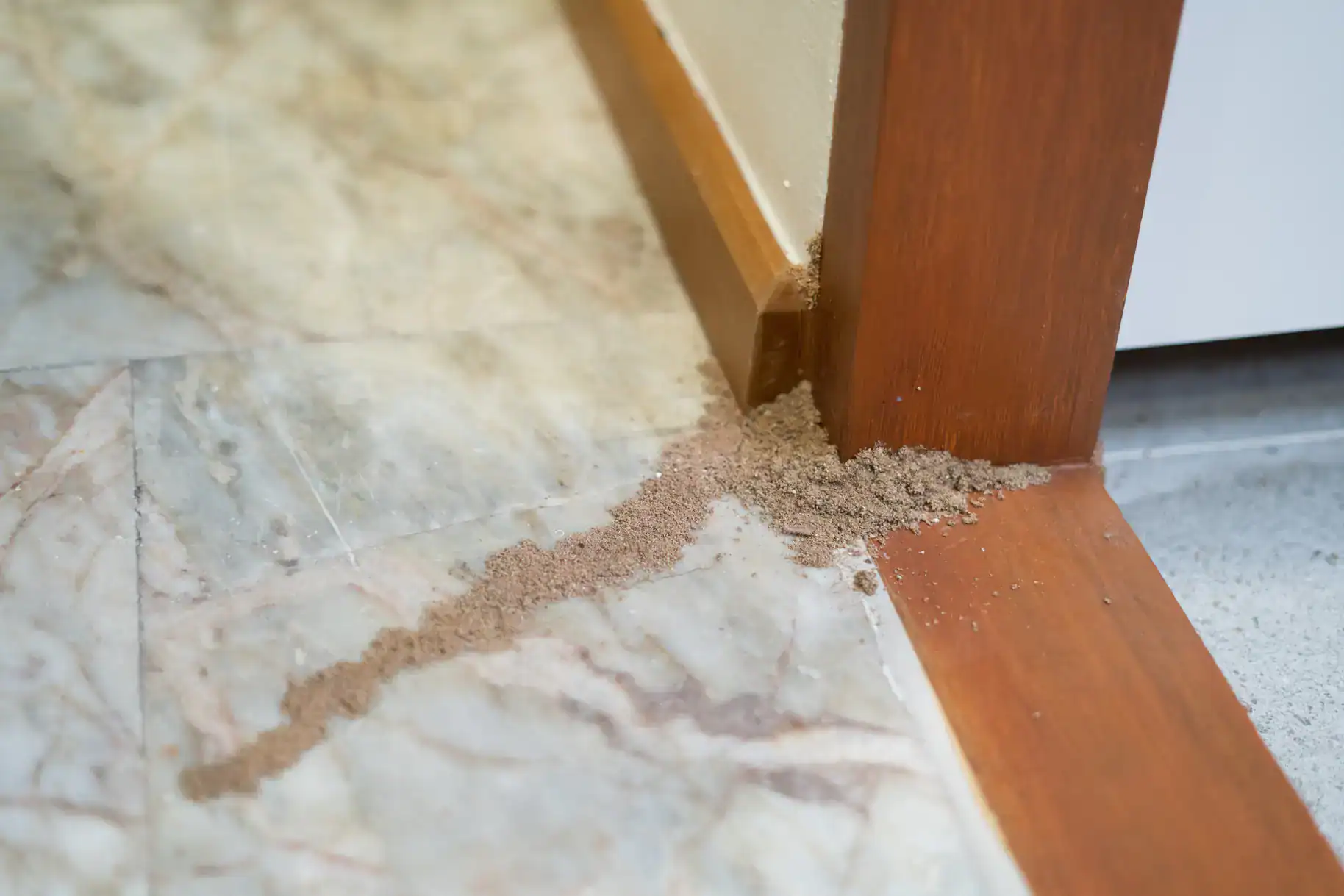
Beyond swarms, the signs to look for are mud tubes pencil-thin tunnels made of soil and wood particles running along foundation walls, basement ceilings, or masonry and wood that sounds hollow when tapped. In Fordham’s older buildings, damaged wood along baseboards, door frames, or subfloors is another indicator. Discarded wings near windowsills or in spider webs are also a signal that swarmers have been active recently. If you’re seeing any of these, the right move is to call for an inspection before the damage progresses further.
Under New York City’s Housing Maintenance Code, building owners and landlords are responsible for maintaining their properties free from pest infestation. When a termite infestation originates from building-wide conditions shared foundations, common areas, exterior soil contact the landlord bears the legal obligation to remediate it. This applies directly to the multi-family rental buildings that make up most of Fordham’s housing stock. If you’re a tenant and you’ve identified signs of termites in your unit, documenting what you’ve found and notifying your landlord in writing is the right first step.
If the landlord does not act, tenants in New York City have the right to file a complaint with the NYC Department of Housing Preservation and Development (HPD), which can result in a housing code violation being issued against the property. For landlords on the receiving end of a DOH or HPD pest citation, we handle the full remediation and documentation process including the written records needed to demonstrate compliance and close out the violation. That’s a specific capability that most general pest control companies don’t offer.
The cost of termite treatment in Fordham depends on the size of the building, the extent of the infestation, and the treatment method required. For a single-family or smaller residential property, treatment typically runs in the range of $1,500 to $3,000. For a larger multi-family apartment building which is the dominant property type in Fordham treatment costs can range from $3,000 to $5,000 or more, depending on the square footage, the number of entry points, and whether a baiting system installation is part of the scope.
The more important number to keep in mind is what untreated termite damage costs. The national average for termite-related structural repairs is around $3,000, and significant structural damage can run $10,000 or more. Most homeowner and landlord insurance policies do not cover termite damage meaning every dollar of repair comes directly out of pocket. For a Fordham property owner managing a building that’s already 80 to 100 years old, the cost of treatment is a fraction of what deferred action could end up costing in structural repairs down the line. We offer free estimates, so you know exactly what you’re looking at before committing to anything.
If the transaction involves FHA or VA financing, a Wood Destroying Organism (WDO) inspection report is required before the loan can close. This is a federal requirement tied to the mortgage type, not a local one but it comes up frequently in Fordham real estate transactions involving multi-family properties and mixed-use buildings. The WDO report documents whether any wood-destroying organisms, including termites, carpenter ants, or powder post beetles, are present or have caused damage to the structure.
Even when a WDO report isn’t required by the lender, buyers purchasing older buildings in Fordham particularly the pre-war apartment buildings along the Grand Concourse and surrounding blocks are well-served by getting an independent termite inspection before closing. These buildings are old enough that termite activity, past or present, is a genuine possibility. Discovering an active infestation or significant termite damage after closing is a costly surprise that a pre-purchase inspection can prevent. We provide WDO inspections with the credentials and documentation that lenders and property managers require, and inspections can typically be scheduled quickly to accommodate transaction timelines.
Yes and this is one of the most important things to understand about termite infestations in Fordham’s multi-family buildings. Eastern Subterranean Termites don’t live inside the walls; they live underground and travel up through the soil into the structure. Because the colony exists beneath the building rather than within a single unit, an infestation that surfaces in one apartment is often drawing from a colony that spans the entire foundation and potentially extends beneath adjacent buildings that share the same soil zone.
This means that treating a single unit without addressing the colony source underground is not a real solution. The activity may quiet down temporarily, but the colony continues feeding from below. In Fordham’s tightly packed rows of apartment buildings particularly in Fordham Heights and along the Grand Concourse the shared soil environment means building-wide assessment and coordinated treatment is the only approach that actually works. Our termite baiting systems are specifically designed for this scenario: bait stations are installed around the building’s perimeter, termites carry the treatment back to the colony, and the entire colony is eliminated at the source rather than just suppressing visible surface activity.
Useful Links
Other Services we provide in Fordham