Hear from Our Customers
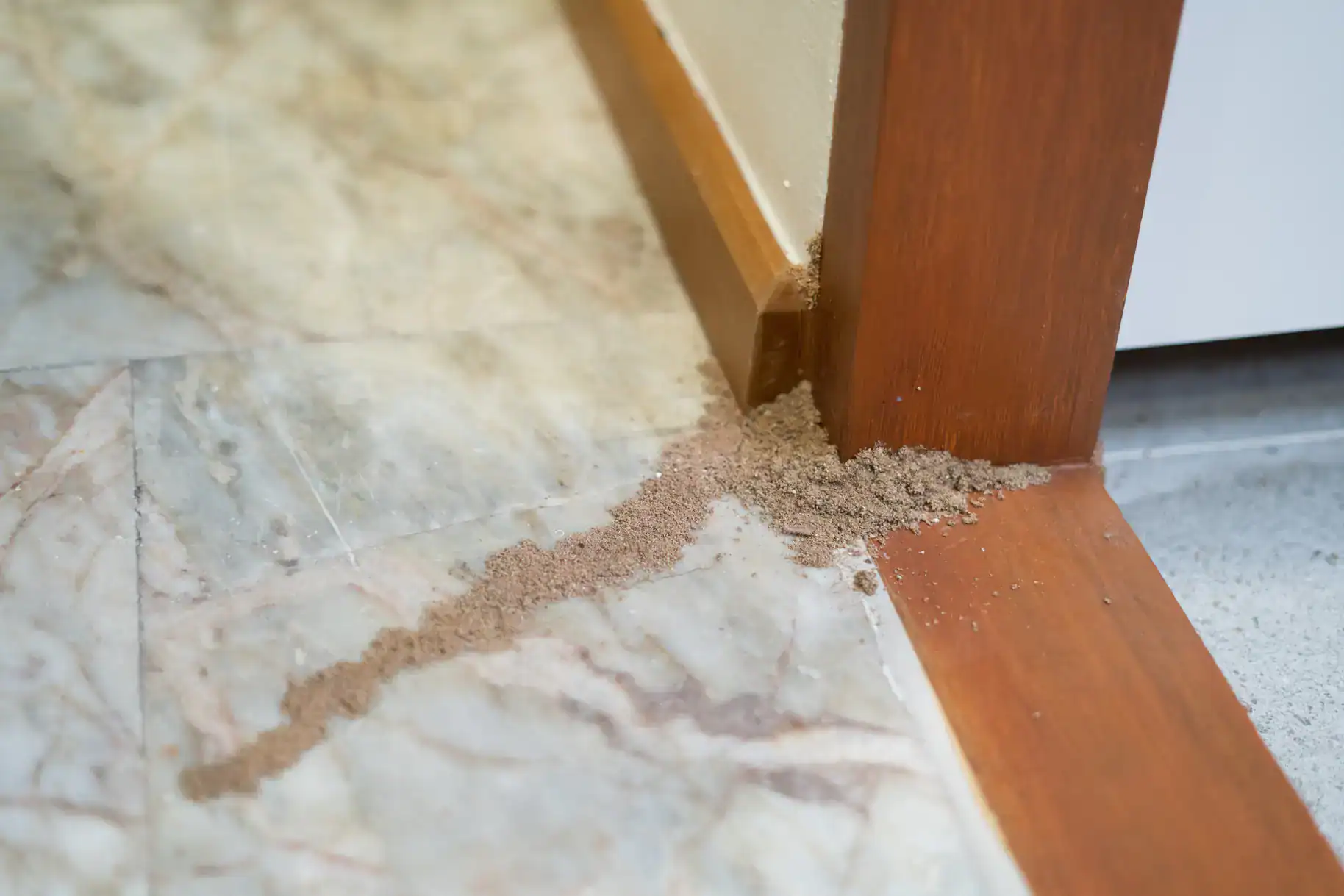
When termites are feeding inside the floor joists and stair stringers of a pre-war rowhouse, the damage doesn’t announce itself. It builds quietly behind plaster walls, under old linoleum, along the basement perimeter until a renovation or a real estate inspection finally brings it into the light. By that point, what started as a treatable infestation has often become a structural repair bill. Getting ahead of it is the whole point.
In Ozone Park, the attached rowhouse construction that defines nearly every residential block creates a risk that detached-home neighborhoods don’t face: a termite colony that establishes beneath one home has a direct pathway through shared framing and foundation elements into the units on either side. This isn’t a hypothetical. It’s the reality of dense, connected housing stock built a century ago, and it means your neighbor’s infestation can become yours without either of you knowing it until the damage is done.
Once we complete a professional termite treatment, that feeding stops. The structural integrity of your home is protected. If you’re in the middle of buying or selling and at Ozone Park’s current median property values above $700,000, the stakes of a termite discovery during a transaction are significant you have the documented inspection report your lender or attorney needs to move forward. That’s the outcome that matters: your home is protected, your investment is intact, and you’re not left holding a repair bill that your homeowner’s insurance won’t touch.
We’ve been operating since 1971 founded by Richard Kourbage Sr. and now run by his sons Richard Jr. and Charles. When something goes wrong, you’re not calling a 1-800 number routed to a regional call center. You’re calling a family that has staked its name on every job for over five decades in Ozone Park and across southwestern Queens.
Our team collectively brings more than 100 years of combined pest control experience to every inspection and treatment. That depth matters in a neighborhood like Ozone Park, where the housing stock is old, the construction is dense, and termite activity in one attached rowhouse can move laterally through shared walls to the homes on either side. We know exactly where to look in these buildings not because we read about it, but because we’ve been doing this work in Ozone Park and across the five boroughs for a very long time.
We’re BBB-accredited since 1989, apply only NYS DEC-registered materials, and offer free estimates with appointments guaranteed within two business days same-day inspections are frequently available.
It starts with a phone call one that gets answered, any time of day or night. Our 24/7 availability isn’t a marketing line; it’s how we’ve operated since 1971, because pest discoveries don’t follow business hours. If you pulled back a wall during a weekend renovation and found mud tubes, or if your real estate attorney just called about a WDO report, you can reach a real person right now.
The inspection comes next. A licensed technician will walk your property basement perimeter, crawlspace, foundation walls, floor joists, window frames, door frames, and any wood-to-soil contact points that are common in Ozone Park’s older rowhouse stock. In attached homes, that inspection accounts for the shared-wall risk specific to this type of construction. You’ll get a clear picture of what was found, where, and how severe it is no inflated findings, no pressure.
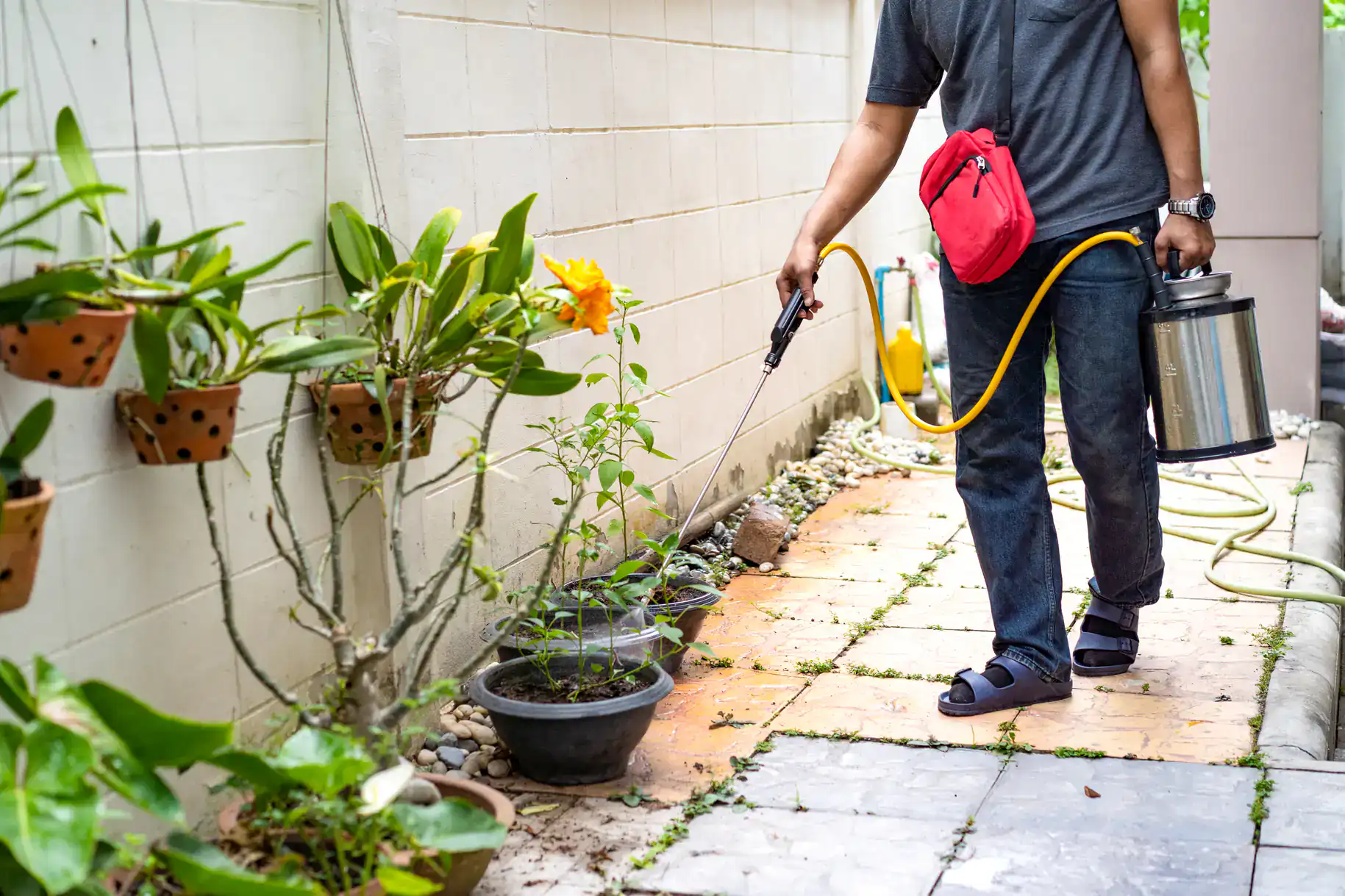
If treatment is needed, we use only NYS DEC-registered materials, applied in full compliance with New York State and NYC requirements. Termite treatment in these older Ozone Park homes typically involves a liquid barrier treatment along the foundation perimeter, targeted to the entry points Eastern Subterranean Termites use to travel from the soil into the structure. Spring is the peak swarming season in Queens March through May but treatment is effective year-round. After the job is complete, you receive written documentation of everything we’ve done, which is what lenders, attorneys, and property managers require for real estate transactions in Ozone Park.
Ready to get started?
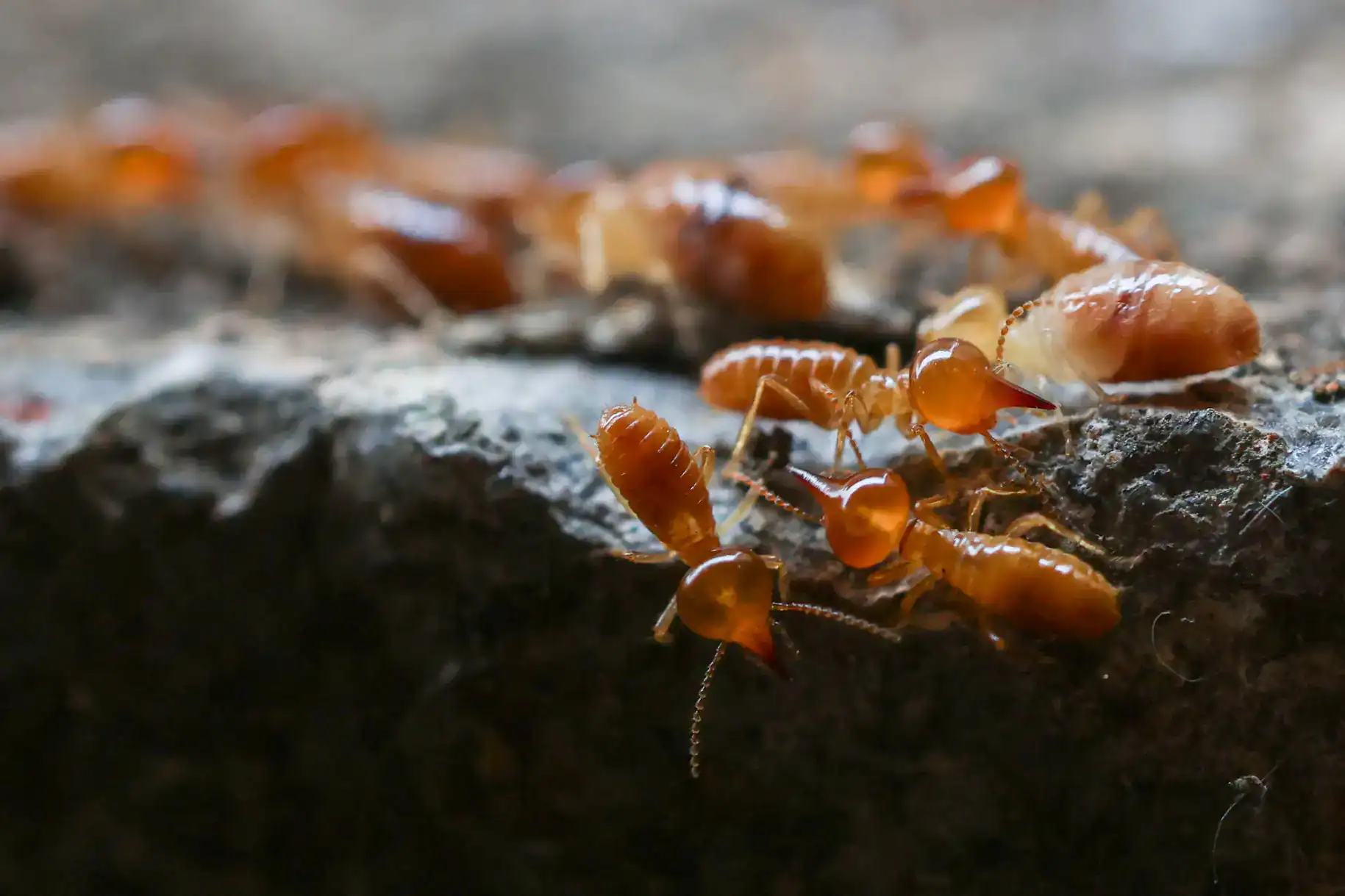
The Eastern Subterranean Termite is the dominant species in New York City. It nests underground, builds mud tubes to reach above-ground wood, and needs a gap of just 1/32 of an inch to enter a structure a gap that exists in virtually every foundation wall and stoop joint in Ozone Park’s century-old rowhouses. A mature colony feeds 24 hours a day, seven days a week, and can consume 20 feet of a 2×4 in a single year. The wood inside these homes floor joists, stair stringers, interior framing has been in place for 80 to 130 years. It doesn’t take long for a colony to do serious damage.
Our termite control service for Ozone Park homes includes a thorough inspection of all at-risk structural elements, identification of active infestation and entry points, and a treatment plan using NYS DEC-registered materials. For attached rowhouses, that means addressing the full foundation perimeter not just the side with visible activity because termite pressure in connected structures doesn’t respect property lines.
If you own a two-family home in Ozone Park and rent the second unit, you have an additional layer of responsibility. NYC housing code places pest remediation on the landlord, and a tenant complaint or DOH inspection can create legal urgency fast. We handle the documentation and treatment standards the city requires, so you’re covered on both fronts. Free estimates are available, and all work comes with a written record of what was treated and how.
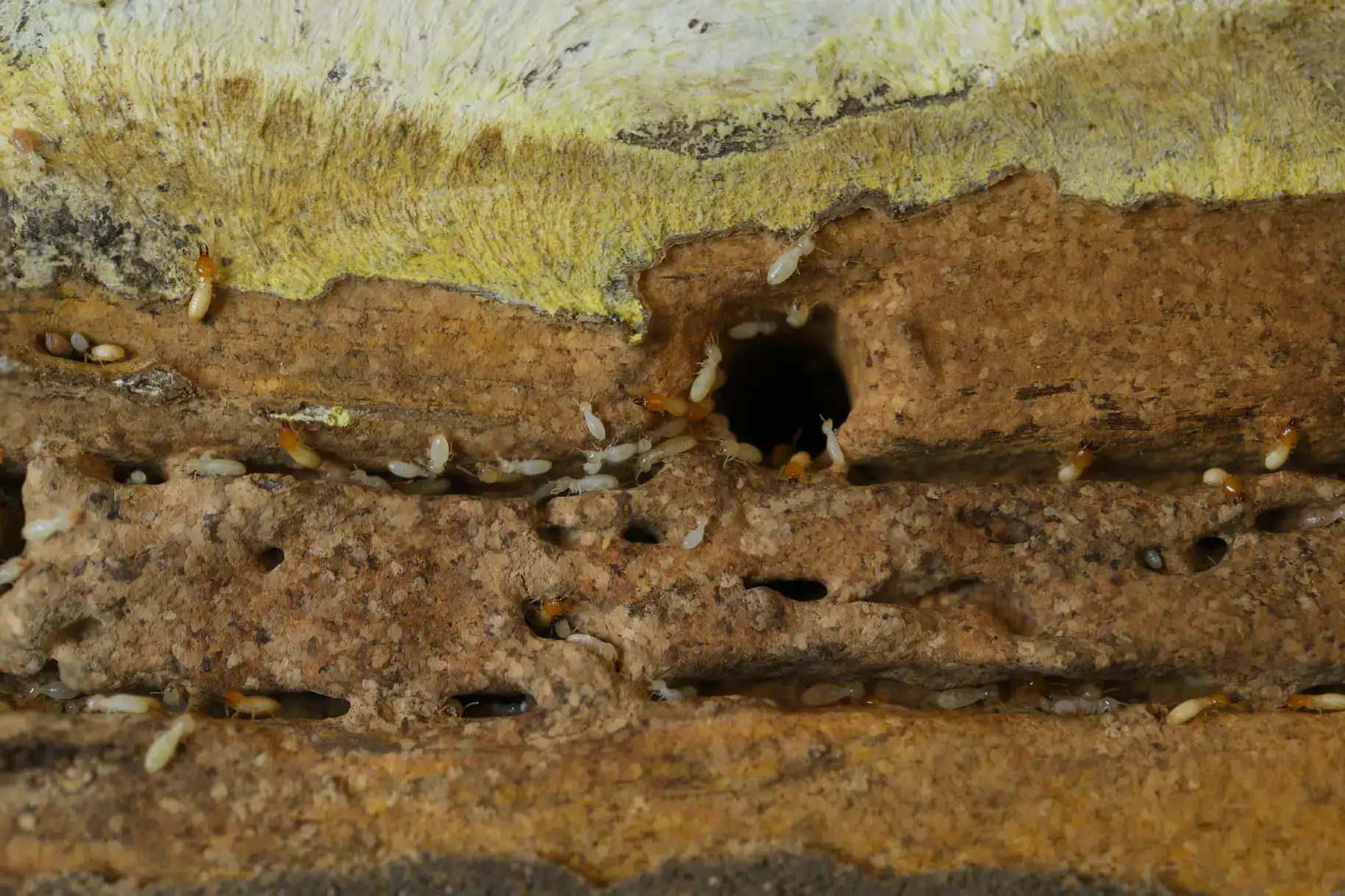
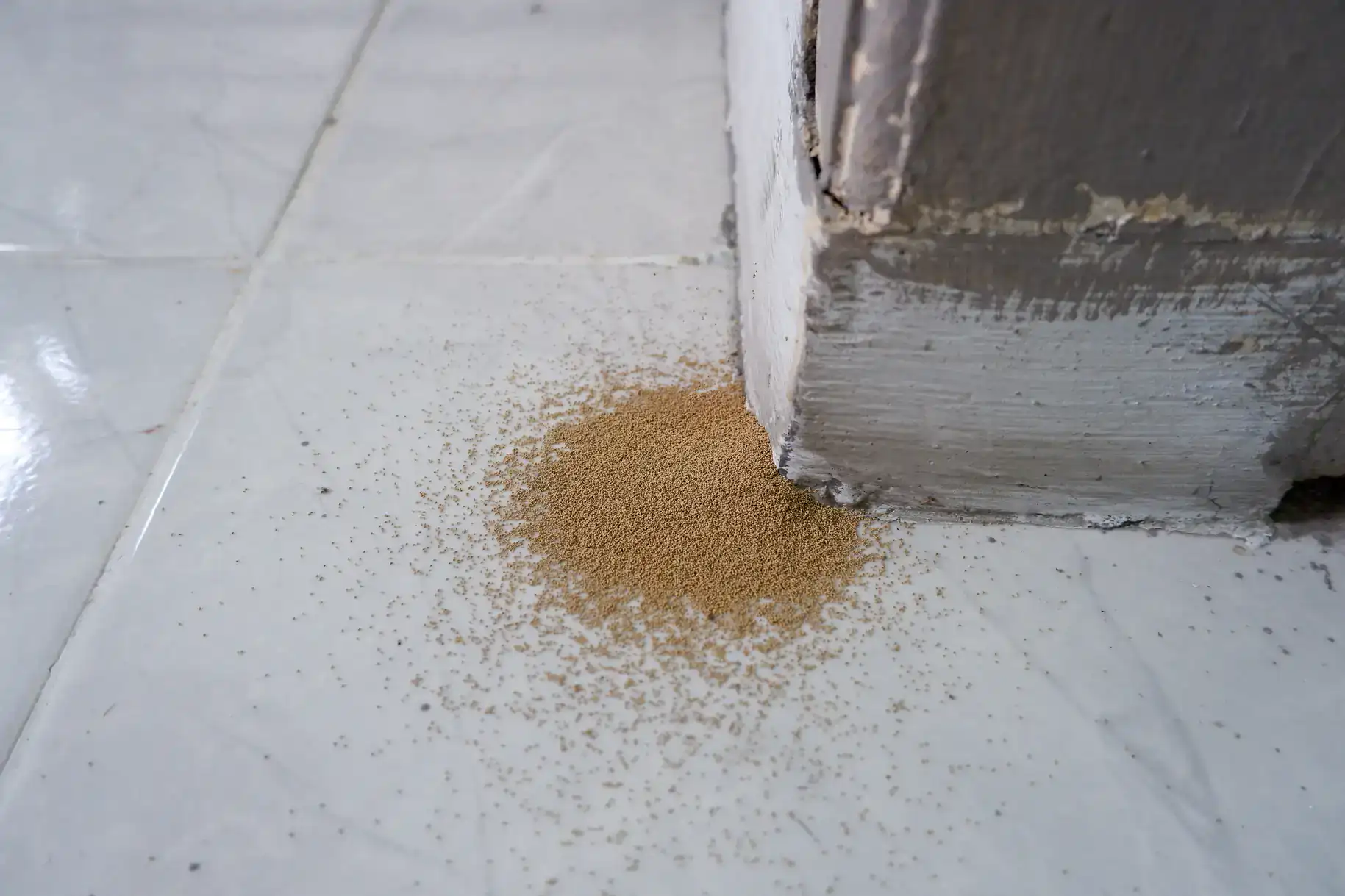
The most common signs in Ozone Park’s pre-war rowhouses are mud tubes along the basement walls or foundation perimeter, hollow-sounding wood when you knock on floor joists or door frames, discarded wings near windowsills or basement entry points in spring, and bubbling or uneven paint that looks like water damage but isn’t. Swarmers winged termites that emerge in early spring after the first warm days following rain are often the first visible sign homeowners in Ozone Park notice, typically in the basement or around ground-floor windows.
The problem is that by the time any of these signs appear, a colony has usually been established and feeding for two to five years. The absence of visible signs doesn’t mean the absence of termites it means they haven’t been detected yet. In Ozone Park’s older housing stock, where interior walls are often plaster over wood lath and crawlspaces are tight, a professional inspection is the only reliable way to know what’s actually happening inside your home’s structure.
The cost of termite treatment in Ozone Park generally ranges from $1,500 to $3,000 for a standard attached rowhouse, depending on the size of the structure, the severity of the infestation, and the treatment method used. Liquid barrier treatments along the foundation perimeter are the most common approach for the type of subterranean termite activity found in southwestern Queens, and pricing reflects the scope of that perimeter work.
What’s worth keeping in mind is that termite damage repair replacing compromised floor joists, stair stringers, or structural framing can run $2,000 to $10,000 or more, and virtually no homeowner’s insurance policy covers it. At Ozone Park’s current median property values above $700,000, the cost of treatment is a fraction of what undetected damage can cost you in repairs or in a reduced sale price. We provide free estimates, so you know exactly what you’re looking at before any decision is made.
Yes, and this is one of the most important things to understand about termite risk in Ozone Park. Eastern Subterranean Termites nest underground and travel through the soil, which means a colony doesn’t stop at your property line. In attached rowhouses where homes share foundation walls and continuous structural framing a colony that establishes beneath one unit has a direct pathway into the adjacent units on either side.
This doesn’t mean your neighbor’s infestation is automatically your problem, but it does mean the risk is meaningfully higher than it would be in a neighborhood with detached single-family homes. If you’ve been told by a neighbor that they found termites, or if you’re seeing swarmers in your basement during spring, a professional inspection is worth doing promptly. Our treatment approach for attached homes in Ozone Park addresses the full foundation perimeter of the affected structure, not just the area with visible activity, because that’s the only way to actually contain the problem.
A Wood Destroying Organism (WDO) inspection is a documented assessment of a property for evidence of termites, carpenter ants, wood-boring beetles, and other organisms that damage wood. FHA and VA loans require a WDO report as part of the mortgage approval process, and many conventional lenders and real estate attorneys in Queens request one as standard practice particularly for older homes like the pre-war rowhouses that make up most of Ozone Park’s residential inventory.
If you’re buying or selling a home in Ozone Park and your attorney or lender has asked for a termite inspection, we can move quickly enough to keep your closing on schedule. The inspection results in a written report that documents the findings and any treatment performed, which is what the lender, attorney, or property manager needs to proceed. Given how active Ozone Park’s real estate market has been with median values climbing past $700,000 this is a step that comes up regularly, and having a licensed exterminator who can turn it around fast matters.
A liquid barrier termite treatment, which is the most common method we use for the Eastern Subterranean Termites found in Ozone Park, typically remains effective for five years or more when properly applied. The treatment creates a chemical barrier in the soil around the foundation perimeter that termites cannot pass through without contacting the material which eliminates them before they reach the structure.
That said, no treatment is permanent, and older homes in Ozone Park present some specific considerations. Aged foundation walls with cracks or gaps, multiple stoop-to-building joints, and the tight crawlspaces common in pre-war rowhouses can create points where the barrier needs to be carefully addressed. A follow-up inspection a year or two after treatment or whenever you’re doing renovation work that opens up walls or floors is a reasonable precaution. We provide written documentation of all treatment performed, so you have a clear record of what was done and when, which is useful for future inspections and real estate transactions alike.
Yes, when applied by a licensed professional using NYS DEC-registered materials, termite treatment is safe for the families and pets living in Ozone Park’s close-quarters homes. We apply only materials that are registered with the New York State Department of Environmental Conservation and administered in compliance with EPA safety protocols. Targeted application means the treatment goes where the termites are along the foundation perimeter and soil entry points not broadcast throughout your living space.
In Ozone Park’s attached rowhouses and two-family homes, where multiple people and often pets share a relatively compact space, this matters. Your technician will walk you through any specific precautions before the job begins things like keeping children and pets away from treated areas until the application has dried, which is typically a short window. There’s no extended displacement required for standard barrier treatments. If you have specific concerns about sensitivities, allergies, or pets with particular health conditions, bring those up when you call we’ll give you a straight answer about what to expect.
Useful Links
Other Services we provide in Ozone Park