
Hear from Our Customers
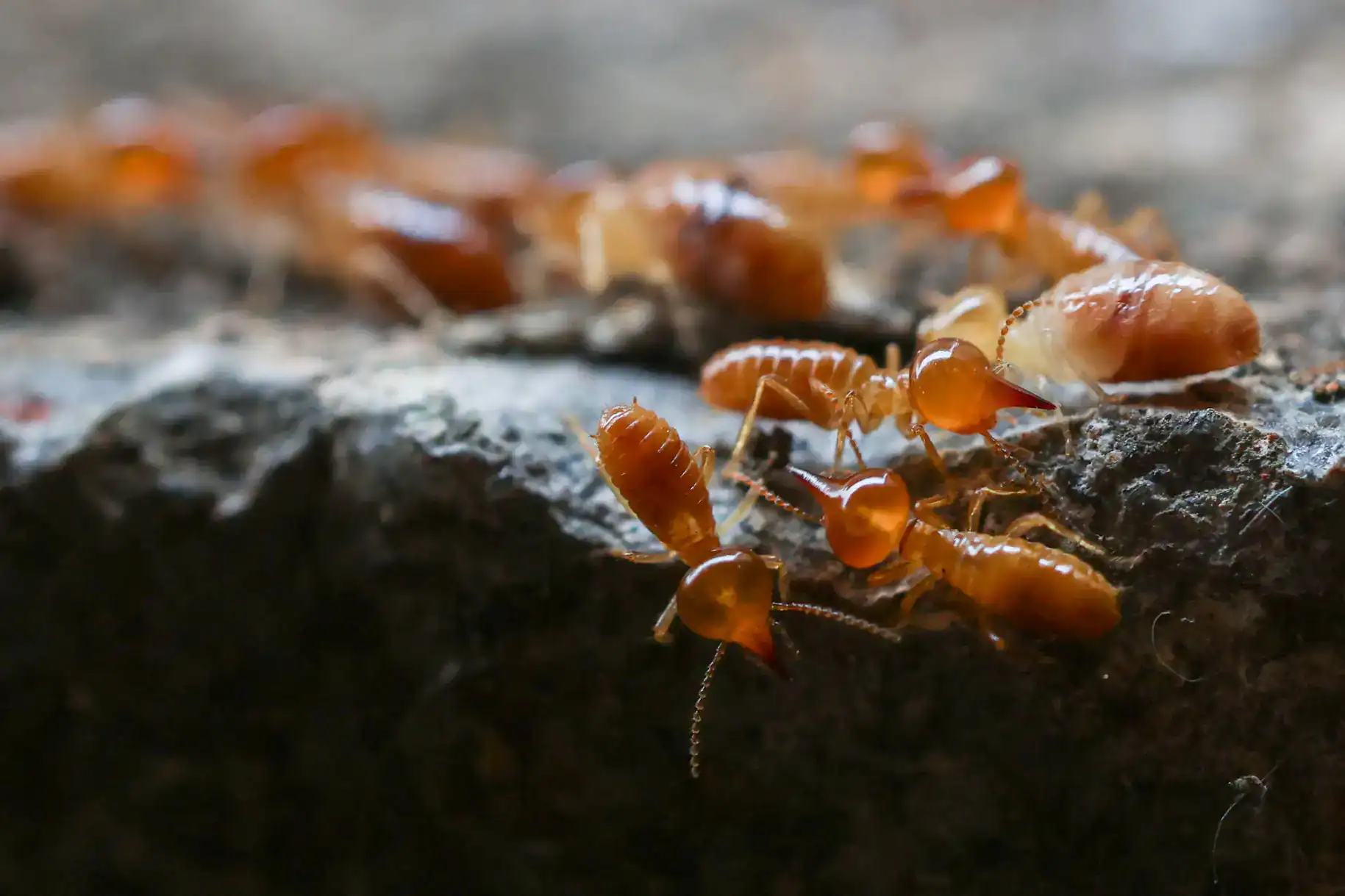
Most South Jamaica homeowners don’t find out they have termites until something gives a soft spot in the floor, a door frame that suddenly doesn’t sit right, a contractor pulling back drywall during a renovation and going quiet. By that point, the damage has usually been building for years. Eastern Subterranean Termites don’t announce themselves. They work underground, travel through mud tubes, and feed inside your wood structure without a single visible sign until the damage is done.
What professional termite treatment actually gives you is time you didn’t know you were losing. Once we eliminate the colony and put a proper barrier in place, your home stops being a food source. For a house built in the 1940s or 1950s which describes a significant portion of South Jamaica’s housing stock that matters more than it would in a newer build. Older wood-frame construction, aging foundations, and decades of soil contact create exactly the conditions subterranean termites look for. Catching it now costs a fraction of what structural repair costs later.
The other thing you get is documentation. Whether you’re planning to sell, refinancing, or just want to know where you stand, a professional termite inspection gives you a written record. In South Jamaica, where homes are moving at a median price around $680,000 and FHA financing is common, that paperwork isn’t optional it’s expected.
Kingsway Exterminating has been doing this work across New York City since 1971, with deep roots in South Jamaica and the surrounding Queens neighborhoods. That’s not a tagline it’s a straightforward fact that matters when you’re dealing with something as serious as a termite infestation in a home your family has owned for decades. Founded by Richard Kourbage Sr. and now run by his sons Richard Jr. and Charles, this is a company where the people making decisions have their name attached to every job.
Our staff collectively brings over 100 years of combined pest control experience to the table. That kind of depth shows up when a technician walks into a wood-frame colonial near Baisley Pond Park or a two-family home off Linden Boulevard and knows exactly what they’re looking at not because they read about it, but because we’ve seen it hundreds of times across South Jamaica, Queens, and Brooklyn. We hold an A+ BBB rating, have been accredited since 1989, and use only NYS Department of Environmental Conservation registered materials on every job.
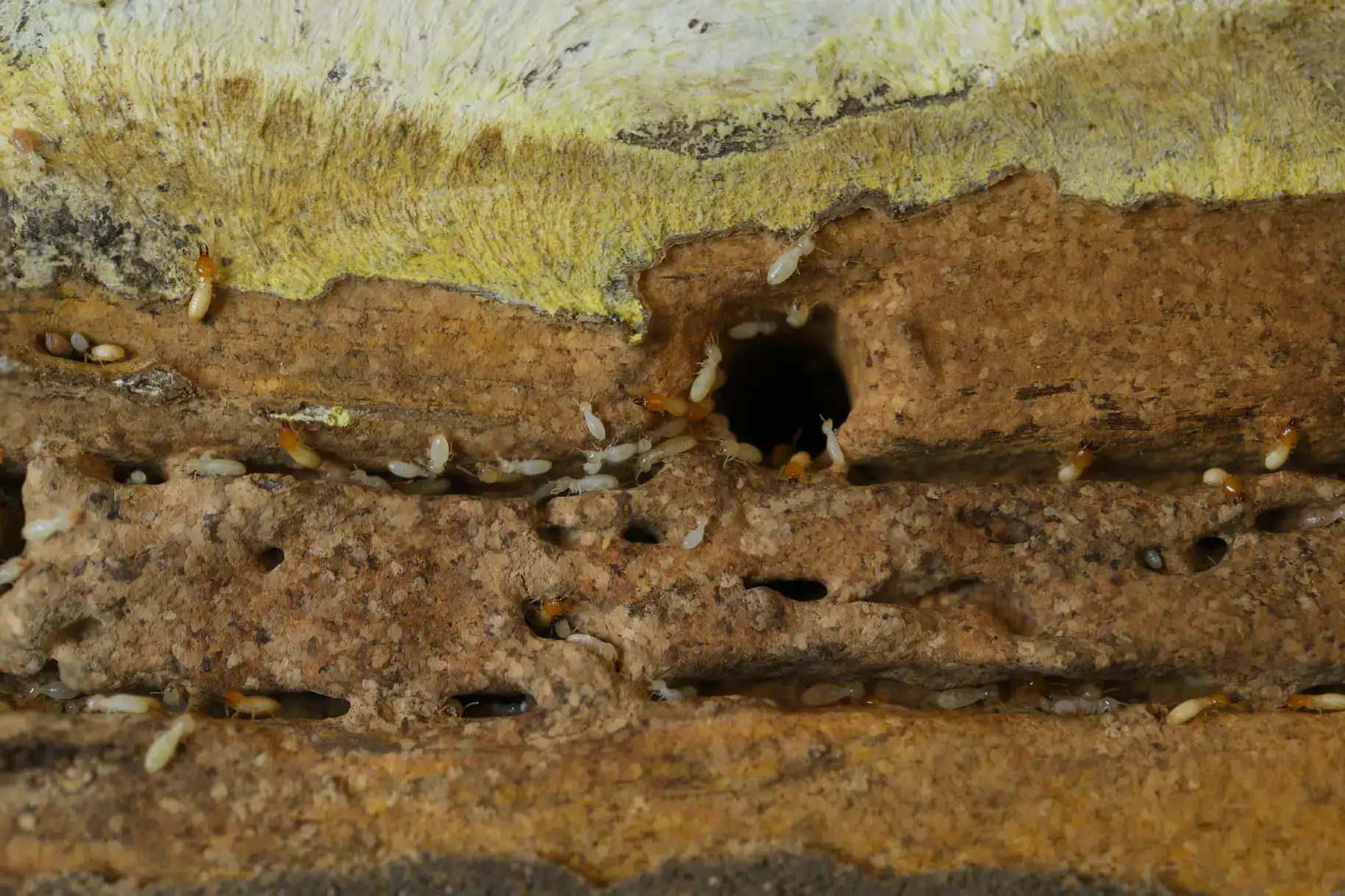
It starts with an inspection. One of our licensed technicians comes to your home, walks the perimeter, checks the foundation, examines the basement or crawl space, and looks for the specific signs of Eastern Subterranean Termite activity mud tubes along the foundation wall, damaged wood, discarded wings near entry points, and moisture conditions that indicate active foraging. In South Jamaica’s older housing stock, where basements haven’t always been professionally inspected in years, this step alone surfaces things homeowners didn’t know were there.
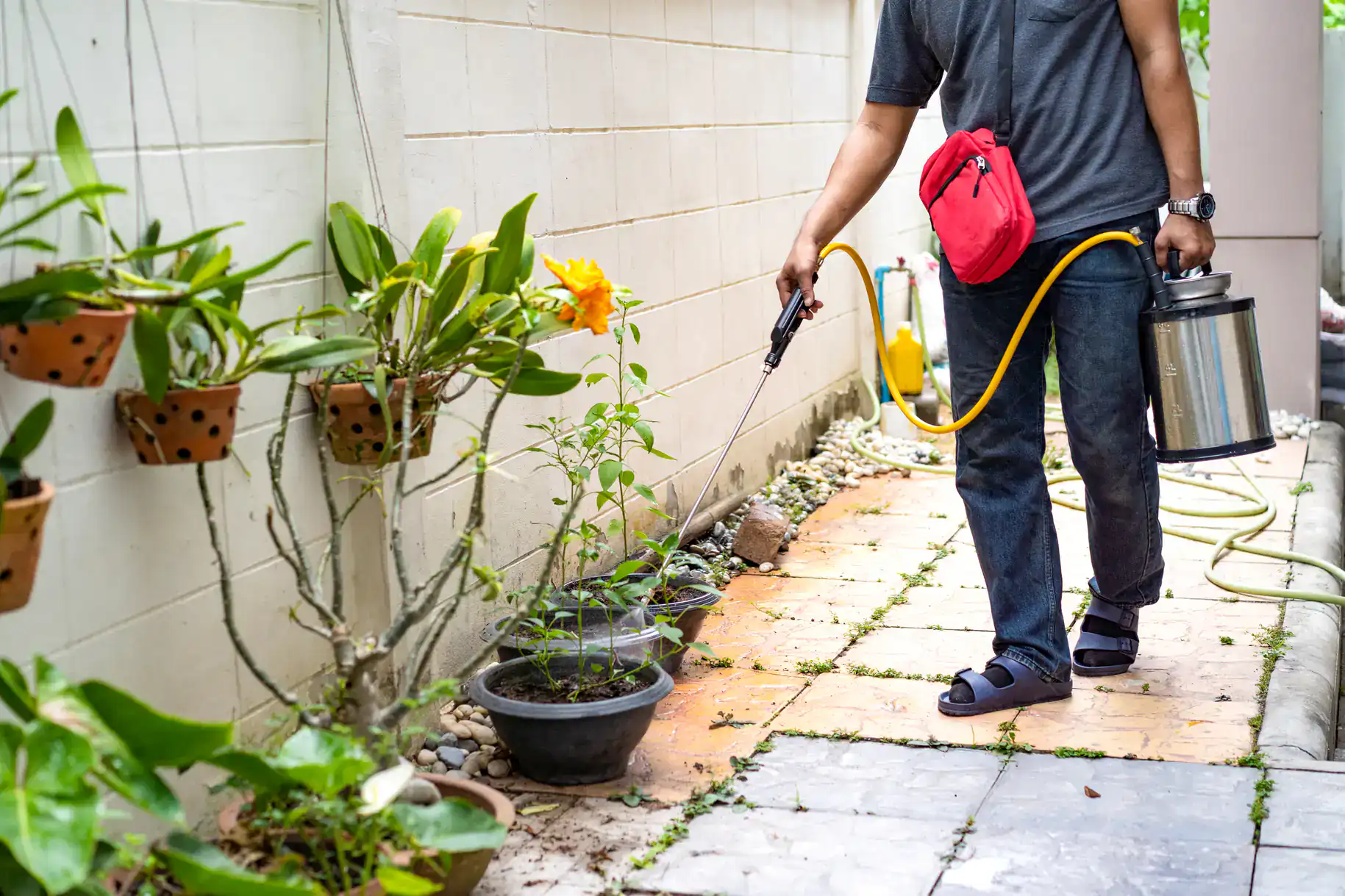
From there, you get a clear picture of what’s happening and a written estimate before any treatment begins. No pressure, no vague pricing. If there’s an active infestation, we use professional-grade liquid barrier treatments and termite baiting systems that target the colony at its source not just the visible surface activity. These aren’t hardware store products. They’re applied by NYS DEC-certified technicians using registered materials that meet New York State’s safety standards, which matters if you have kids or pets in the house.
After treatment, you receive documentation of the work completed. If you’re in the middle of a real estate transaction and need a Wood Destroying Organism report for your lender, we handle that here too. Appointments are available within two business days, and same-day inspections are frequently possible because termite problems don’t wait for a convenient opening in someone’s calendar.
Ready to get started?
Every termite job we handle starts with a thorough inspection not a quick walkthrough, but a real assessment of your foundation, basement, crawl space, and any wood-to-soil contact points. South Jamaica’s housing mix creates a range of entry scenarios: older single-family homes with aging slab foundations, brick rowhouses in the Bricktown section of the neighborhood, two-family conversions with partially finished basements, and larger multi-family buildings where a single infestation can spread across shared structural elements. We handle all of it.
Treatment is matched to what the inspection actually finds. Liquid termiticide barrier applications create a treated zone around the foundation that eliminates termites as they move through the soil. Termite baiting systems work differently they introduce a slow-acting material that worker termites carry back to the colony, collapsing it from the inside. Both methods are applied using only NYS DEC-registered products, which is a legal requirement for any licensed pest control operator working in Queens County, and a baseline we’ve met for over five decades.
For property managers, co-op boards, and owners of multi-unit buildings including the kind of mid-size rental properties common throughout South Jamaica and the larger cooperative structures like those in the Rochdale Village area we also provide the commercial-scale termite treatment and documentation that NYC Department of Health compliance and building management require. If you’re buying, selling, or refinancing, the WDO inspection report you need for your mortgage is part of what we provide.
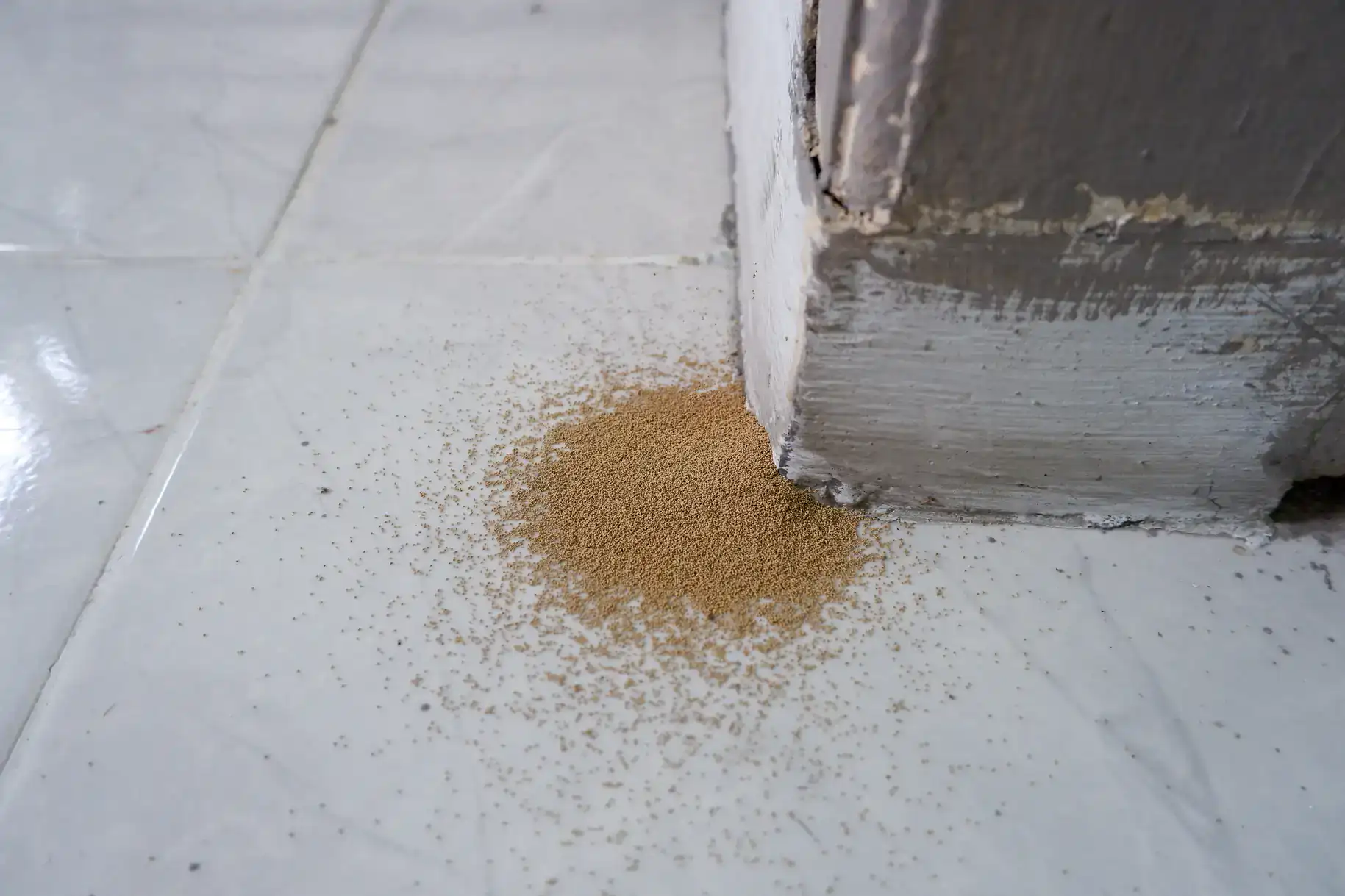
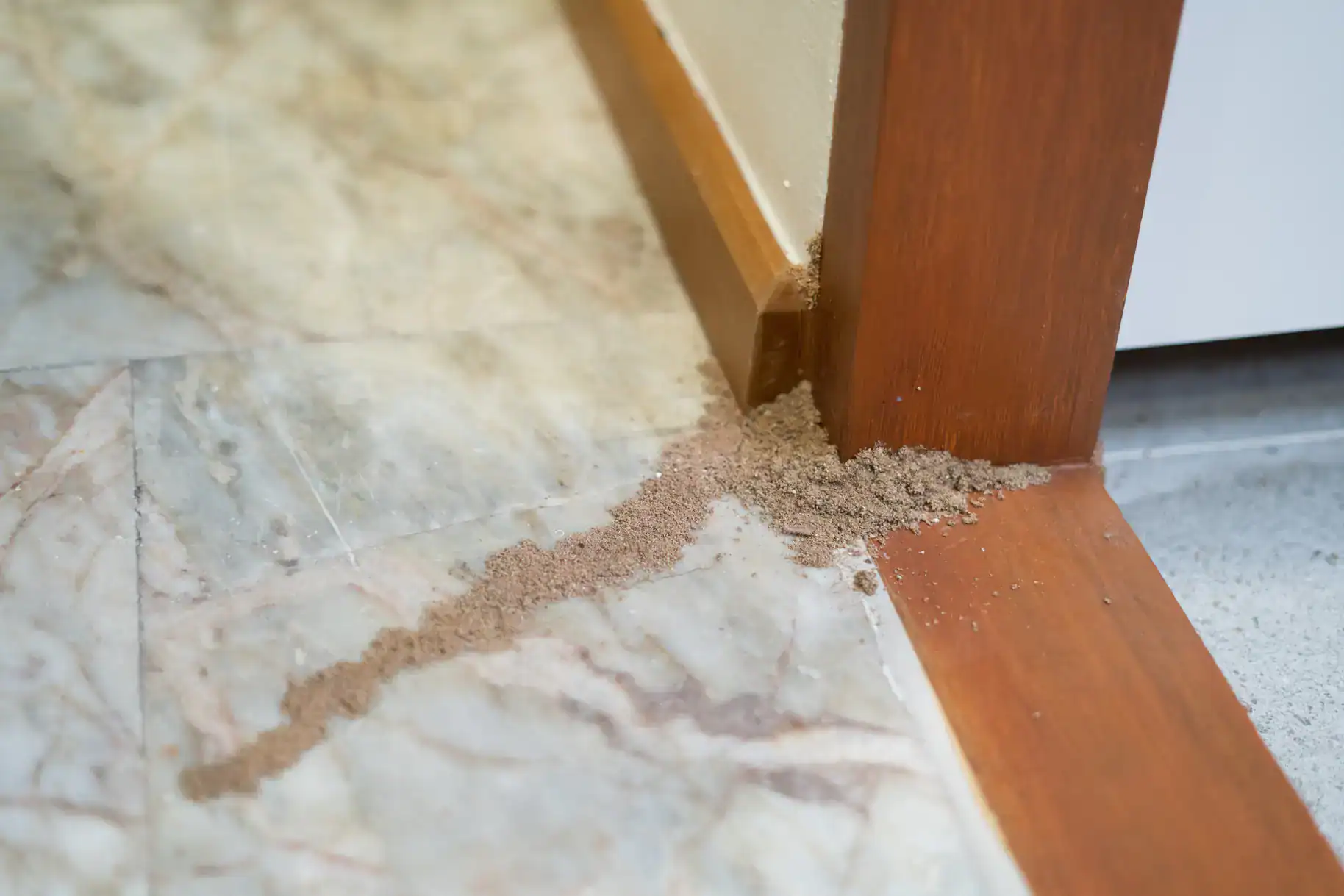
The most common signs in older South Jamaica homes are mud tubes running along foundation walls or basement ceilings, wood that sounds hollow when you tap it, small piles of what looks like sawdust near baseboards or window frames, and discarded wings near windowsills or light fixtures especially in spring when Eastern Subterranean Termites swarm. Swarmers are often mistaken for flying ants, but they’re not. If you’re seeing winged insects emerging from the ground or from inside your walls on a warm day after rain, that’s a termite swarm, and it means a colony is already established nearby.
In South Jamaica specifically, basements and crawl spaces in homes built before 1970 are the highest-risk areas. Many of these structures have wood elements that have been in or near soil contact for decades without ever being professionally inspected. If you haven’t had an inspection in the last few years or ever that’s the place to start.
In almost every case, no. Standard homeowner’s insurance policies in New York classify termite damage as a preventable maintenance issue, not a sudden or accidental event. That means the cost of repairing termite-damaged framing, subflooring, joists, or structural beams comes entirely out of your pocket. The average homeowner spends around $3,000 on termite repairs, and structural remediation the kind that involves replacing compromised beams or floor systems can run $10,000 or more.
That’s the financial reality that makes professional termite treatment worth taking seriously. In South Jamaica, where a significant portion of homes were built between the 1940s and 1960s and have never been treated, the risk isn’t theoretical. The cost of a professional inspection and treatment is a fraction of what you’d spend repairing damage from an infestation that went undetected for years. Don’t wait for visible damage to make the call by then, the colony has already been working for a long time.
The cost of termite treatment depends on the size of your home, the extent of the infestation, and the type of treatment required. A liquid termiticide barrier application for a standard single-family home in South Jamaica typically runs in the range of a few hundred to several hundred dollars, while more extensive infestations requiring baiting systems or treatment of multiple access points will cost more. The only way to get an accurate number is with an inspection which we provide with a written estimate before any work starts.
What’s worth keeping in mind is the comparison point. With homes in South Jamaica selling at a median price around $680,000, the cost of professional termite treatment is genuinely small relative to the asset you’re protecting. And given that your insurance won’t cover the repair bill if an infestation goes untreated, the math on getting it handled professionally is straightforward. We also offer senior discounts and free estimates so you’re not committing to anything until you know exactly what you’re dealing with.
If your transaction involves FHA or VA financing which is common among first-time buyers in South Jamaica the lender will typically require a Wood Destroying Organism (WDO) inspection report before approving the loan. Even in conventional transactions, buyers’ attorneys and real estate agents in Queens routinely request termite inspection documentation on older properties, particularly those built before 1970. Sellers who have an inspection on file before listing are in a much stronger position than those who find out mid-contract that there’s an active infestation.
We provide WDO inspection reports for purchases, sales, and leases. Given the pace of the South Jamaica real estate market and the neighborhood’s active transaction volume, having that documentation handled quickly matters. Our two-business-day appointment guarantee and frequent same-day availability mean you’re not holding up a closing because you’re waiting on an inspection.
Termites swarm in spring typically April and May in Queens, usually on warm days following rain but the colony itself is active year-round. Eastern Subterranean Termites don’t go dormant in winter. They move deeper into the soil when temperatures drop, but inside a heated structure, they continue feeding regardless of the season. If you find mud tubes or hollow wood in January, that’s still an active infestation that needs immediate attention.
South Jamaica’s proximity to Baisley Pond Park and the moisture-retaining clay soils common to southeast Queens mean the soil stays damp through much of the year, which extends the window of active termite foraging beyond what you’d see in drier areas. The elevated humidity near Jamaica Bay and the neighborhood’s mature tree canopy also contribute to the kind of moist soil environment that subterranean termite colonies thrive in. Spring is when most homeowners notice the problem, but the colony has usually been there long before the first swarmers appear.
Yes, and it’s one of the more common scenarios in South Jamaica’s housing stock. In a two- or three-family home which makes up a large share of the neighborhood’s residential buildings a termite colony accessing the foundation on one side of the structure doesn’t stay contained to one unit. Subterranean termites follow wood and moisture through shared framing, common walls, and connected subflooring. By the time one tenant notices a problem, the infestation may already span the entire building.
The same principle applies to larger multi-unit properties and cooperative buildings. For property owners and co-op boards managing buildings in South Jamaica, a single termite report from one unit is a signal to inspect the entire structure not just the unit where the activity was found. We work with individual homeowners, property managers, and building owners across Queens, and can assess and treat multi-unit properties at the scale the job requires. Waiting to see if it spreads is not a strategy that works in your favor when you’re dealing with a species that feeds continuously.
Useful Links