
Hear from Our Customers
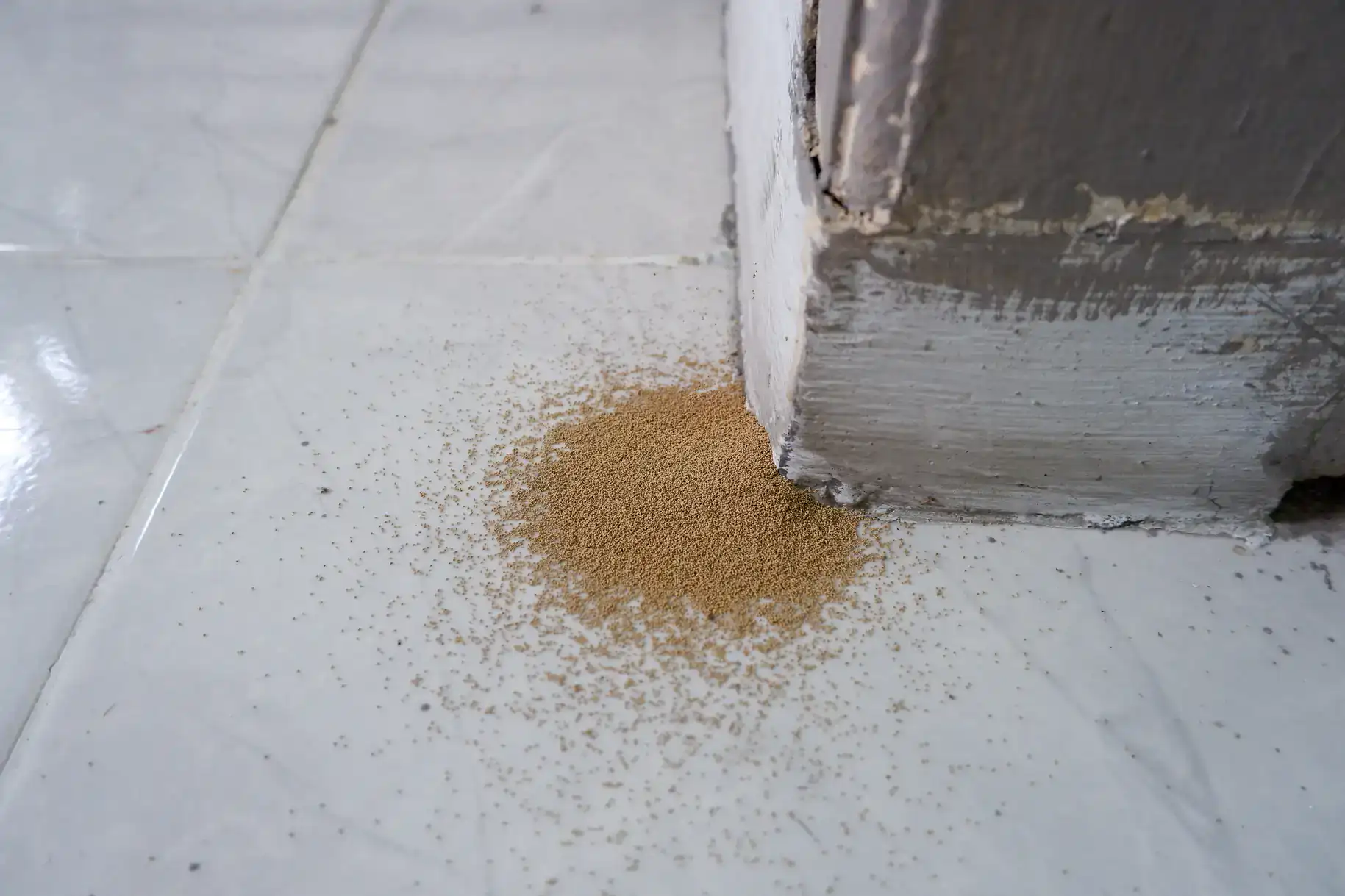
Termites don’t announce themselves. By the time you notice hollow-sounding wood, bubbling paint, or a swarm of winged insects near a window, a colony has likely been active for years. The average termite repair runs around $3,000 and structural damage can push well past $10,000. Your homeowner’s insurance won’t cover it. Insurers treat termite damage as a preventable maintenance issue, which means the cost lands entirely on you.
For Springfield Gardens specifically, the risk runs deeper than it does in many other Queens neighborhoods. The homes here sit on soil that holds moisture a byproduct of the neighborhood’s low-lying geography and its proximity to the Jamaica Bay corridor near JFK. Eastern Subterranean Termites need moist soil to survive underground, and this area gives them exactly that. Add in the documented basement flooding that hits parts of Springfield Gardens after heavy rain, and you’ve got a combination of conditions that makes regular termite inspection less of a precaution and more of a necessity.
Getting ahead of this protects more than your structure. For the many families in Springfield Gardens who’ve owned their homes for decades some passing them between generations a termite infestation isn’t just a repair bill. It’s a threat to something that took a long time to build. Catching it early keeps that investment intact.
We’ve been operating in the New York City market since 1971. Richard Kourbage Sr. started Kingsway Exterminating, and his sons Richard Jr. and Charles run it today. That’s more than 50 years of the same family name on every job no corporate turnover, no franchise ownership changes, no rotating management. When something goes wrong, there’s a real person accountable for it.
We’re based in Brooklyn and serve all of Queens, including Springfield Gardens and the surrounding Brookville, Laurelton, and St. Albans areas. Our team carries more than 100 years of combined pest control experience built in the exact housing types and soil conditions found throughout southeastern Queens. We hold BBB accreditation dating back to 1989 and apply only NYS DEC-registered materials on every job.
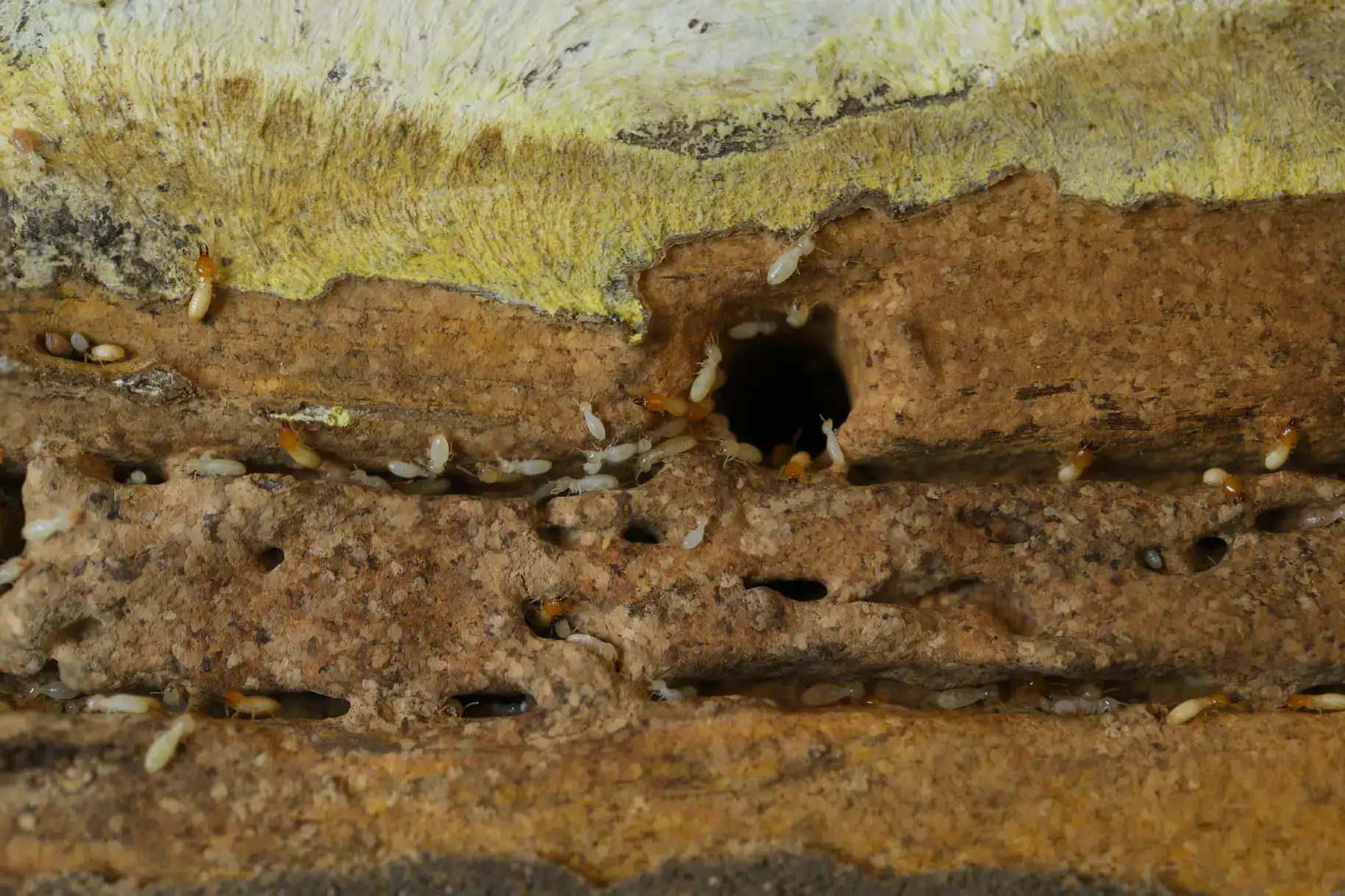
It starts with a thorough inspection not a quick walkthrough. One of our licensed technicians examines the areas where subterranean termites are most likely to enter and establish: basement sill plates, foundation walls, floor joists, crawl spaces, and any point where wood meets or comes close to soil. In Springfield Gardens homes, that also means paying close attention to moisture-affected areas. If your basement has taken on water after a storm something that’s happened to many homes in this neighborhood those areas get extra scrutiny, because softened or moisture-damaged wood is a primary termite target.
If we find termite activity or conditions favorable to infestation, we’ll give you a clear explanation of what was found and where, followed by a written treatment recommendation. We use subterranean termite eradication methods and baiting systems, depending on what the inspection reveals and what makes the most sense for your specific property. All materials we use are registered with the New York State Department of Environmental Conservation a non-negotiable standard on every job.
For homeowners buying or selling in Springfield Gardens, we also provide Wood Destroying Organism (WDO) inspection reports the documentation required for FHA and VA mortgage approvals. If you’re under contract and your lender is asking for one, same-day and next-day inspections are frequently available.
Ready to get started?
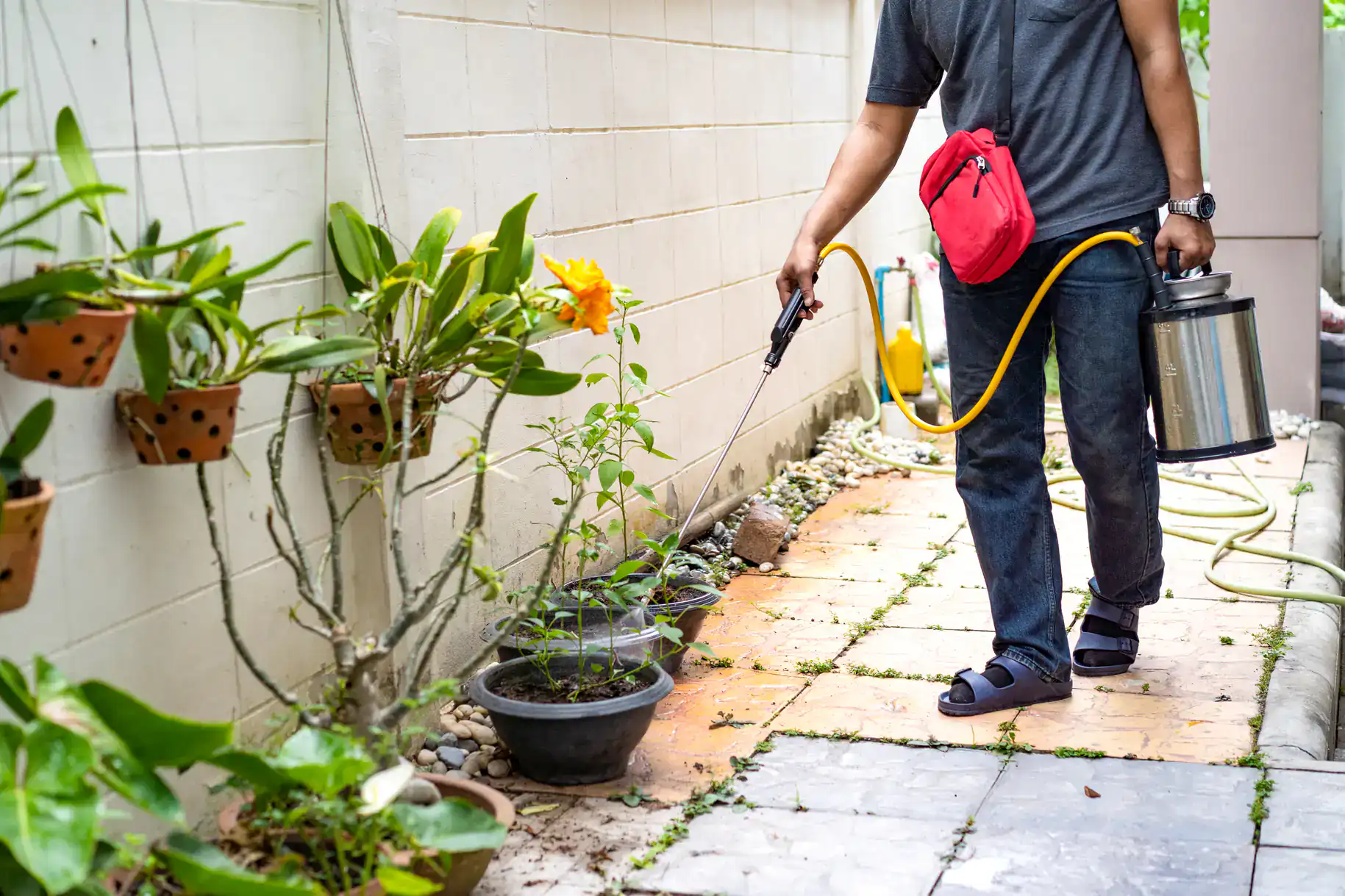
There’s no single termite treatment that works the same way in every home. The approach depends on what the inspection reveals the extent of activity, where the colony is accessing the structure, and the specific construction of your home. For the mid-century Cape Cods, Colonials, and two-family homes that make up most of Springfield Gardens’ residential stock, subterranean termite control typically involves either a liquid barrier treatment applied around the foundation or a termite baiting system installed at strategic points around the property. In some cases, we use both together.
We also handle carpenter ants and powder post beetles wood-boring insects that are commonly mistaken for termites and can cause their own structural damage. If the inspection turns up activity beyond termites, you’ll know exactly what you’re dealing with and what the recommended next step is.
All treatments are performed by NYS DEC-certified applicators using registered materials that are safe for households with children and pets. Queens Community Board 12 residents can also expect us to address any NYC Department of Health pest-related citations tied to the property a service that matters for two-family homeowners and anyone with a rental unit on site. We answer the phone 24 hours a day, seven days a week, and we guarantee an appointment within two business days.
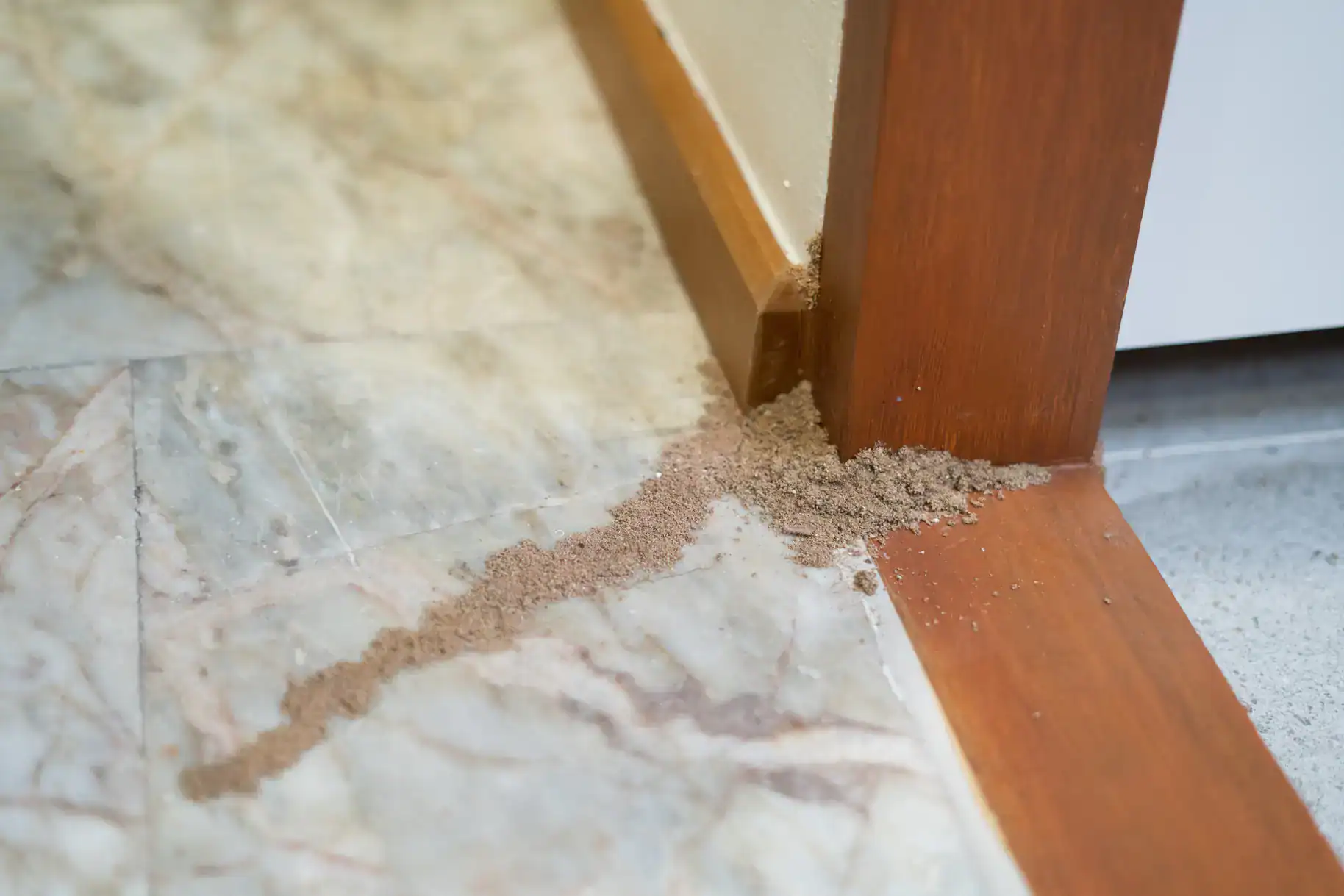
The honest answer is that most homeowners don’t know and that’s the problem. Eastern Subterranean Termites feed around the clock and stay hidden inside wood and soil. A colony typically needs more than five years to grow large enough to cause visible damage, which means you can have an active infestation for years before a single sign appears above ground.
What you might eventually notice: mud tubes running along foundation walls or basement beams, wood that sounds hollow when you tap it, paint that bubbles or peels without an obvious moisture source, or a swarm of small winged insects near windows or doors in spring. That last one a termite swarm is the clearest visible signal, and in the New York area it typically happens on warm days following rain between March and May. If you’ve seen any of these in your home, the next step is a professional inspection, not a wait-and-see approach.
Yes, and it’s worth taking seriously. Eastern Subterranean Termites require moisture to survive. When a basement floods even once it can soften wood framing, saturate insulation, and leave residual moisture in floor joists and sill plates long after the water is pumped out. That kind of moisture damage creates exactly the conditions termites look for when they’re exploring a structure for a feeding site.
Springfield Gardens has a documented pattern of basement flooding after heavy rain events, tied to the neighborhood’s low-lying geography and stormwater drainage challenges. If your home has experienced this, a termite inspection should include a close look at every moisture-affected area not just the obvious entry points. Our inspectors are trained to treat post-flood moisture zones as elevated-risk areas and assess them accordingly.
A Wood Destroying Organism (WDO) inspection is a formal assessment of a property for evidence of termites, carpenter ants, powder post beetles, and other wood-destroying insects. It results in a written report prepared and signed by a licensed pest control professional and it’s required documentation for FHA and VA mortgage approvals. Many conventional lenders also request one as part of the underwriting process.
If you’re buying or selling a home in Springfield Gardens, there’s a good chance your transaction will require one. Given the age of most homes in the neighborhood the majority built between 1940 and 1969 lenders and buyers have good reason to want a clear picture of the property’s condition before closing. We provide WDO inspection reports with same-day and next-day availability in most cases, which matters when you’re working against a contract deadline and your lender needs documentation quickly.
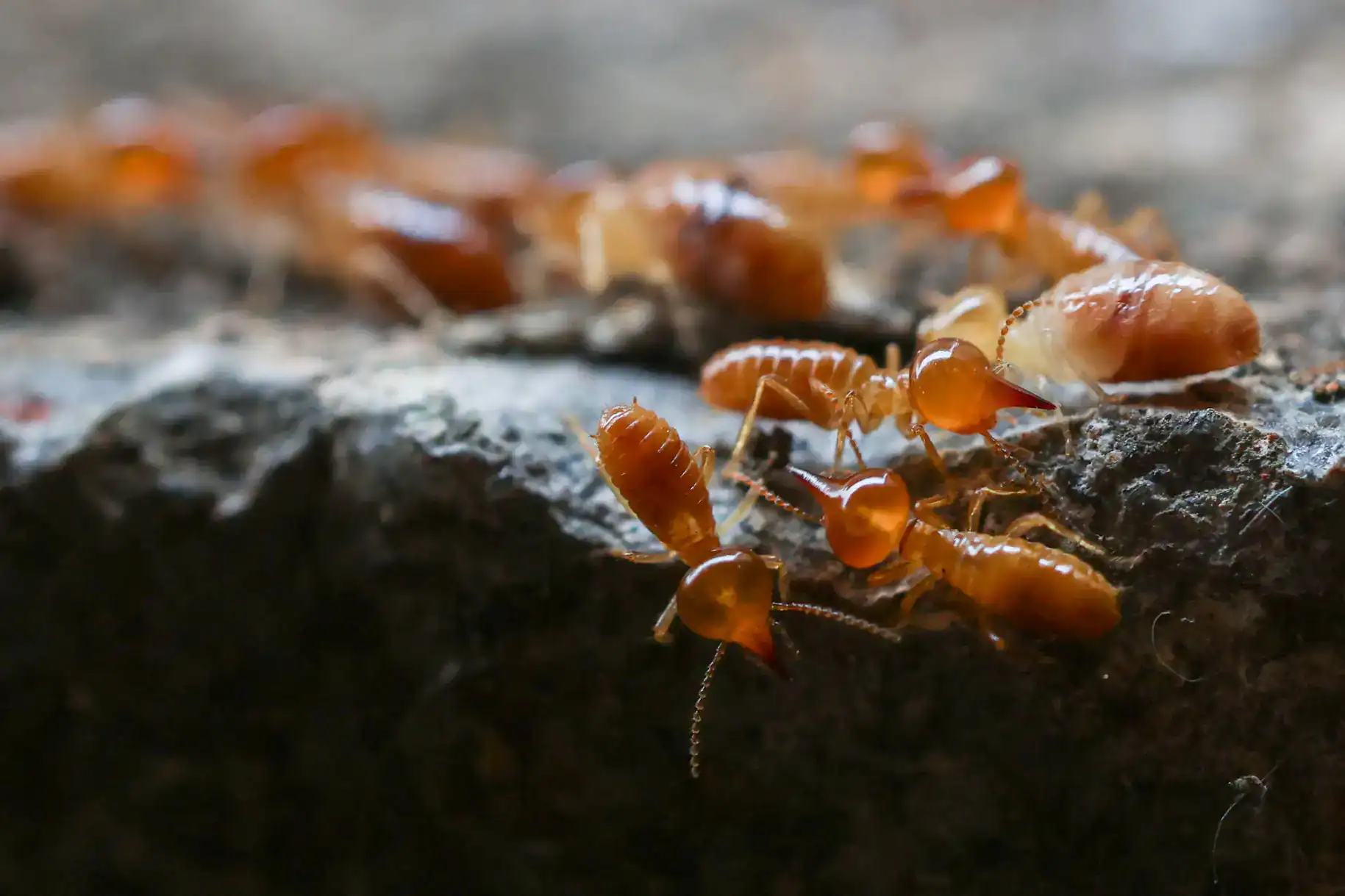
It matters quite a bit, because the treatment is completely different. Termites eat wood from the inside out they digest the cellulose and cause structural damage over time. Carpenter ants don’t eat wood; they excavate it to build galleries for nesting. Both can cause real damage, but the way they’re treated, the materials used, and the access points targeted are not the same.
Visually, the easiest way to tell them apart is by body shape. Termites have a straight waist and straight antennae. Carpenter ants have a pinched waist and elbowed antennae. Swarmers (winged reproductives) from both species can appear in spring, which is when most homeowners in Queens first notice them and start asking questions. If you’re not sure what you’re looking at, don’t guess a professional inspection will identify the species, confirm the extent of activity, and give you a treatment recommendation based on what’s actually there, not what it might be.
That depends on the treatment method we use. Liquid barrier treatments where a termiticide is applied around and beneath the foundation typically provide protection for five years or more when properly applied. Termite baiting systems work differently: bait stations are installed around the perimeter of the property and monitored on a schedule, with bait replaced as needed. Baiting systems are designed as ongoing protection rather than a one-time application.
For Springfield Gardens homes, the soil conditions in the area moisture-retentive and relatively close to the water table given the neighborhood’s geography near Jamaica Bay mean that liquid treatments need to be applied carefully and at the right depth to maintain an effective barrier. This is one of the reasons it matters who does the work. A properly applied treatment from a licensed applicator using NYS DEC-registered materials will last significantly longer than a rushed or improperly applied one. We’ll explain the expected protection window for whatever method is recommended for your specific property.
The cost depends on the size of your home, the extent of any infestation, and the treatment method that makes sense for your specific situation. For a standard single-family home in Springfield Gardens, liquid barrier treatments typically range from $500 to $1,500. Termite baiting systems are often priced similarly for initial installation, with ongoing monitoring costs on top of that. If there’s active structural damage that needs to be addressed alongside treatment, that’s a separate cost and it’s the one that climbs the highest when an infestation has gone undetected for years.
What’s important to understand is that the cost of treatment is almost always far lower than the cost of doing nothing. The average termite repair bill runs around $3,000, and structural damage can reach well past $10,000 in older wood-framed homes which describes most of the housing stock in Springfield Gardens. Your homeowner’s insurance won’t cover it. Getting an inspection now, while the cost of treatment is manageable, is a straightforward financial decision for anyone who’s serious about protecting what they’ve built here.
Useful Links