Hear from Our Customers
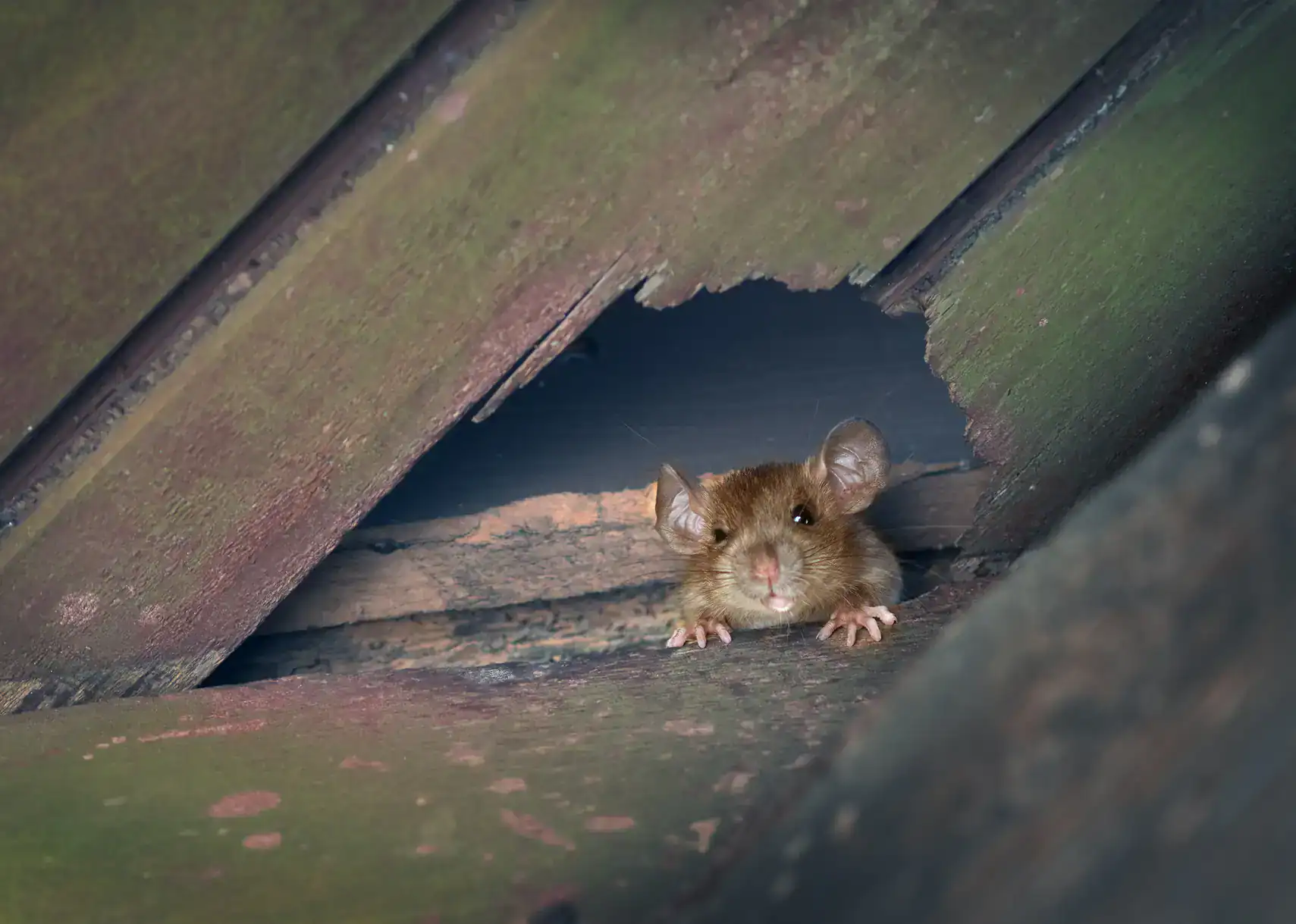
When rodent control is done right, you stop finding droppings in the kitchen. You stop hearing scratching behind the walls at night. You stop wondering if your kids are safe playing on the floor near the baseboards. That’s the real outcome not just fewer rodents, but a home you’re not anxious about anymore.
Inwood’s housing stock is older than most people realize. The median construction year here is 1947, and more than 40% of homes were built before the 1940s. That means deteriorated mortar joints, aged pipe penetrations, and gaps around utilities that have never been sealed. Rats need a hole the size of a quarter. Mice need even less. In a pre-war home in Inwood near the Jamaica Bay waterfront, those openings aren’t hypothetical they’re everywhere. Fixing the infestation without addressing those entry points just resets the clock.
Living on the Nassau-Queens border also means Inwood absorbs pressure from two directions. Rodents from the commercial corridors along Rockaway Turnpike and the food service operations near JFK Airport don’t stop at county lines. When construction at the airport disturbs established colonies which happens regularly nearby residential neighborhoods like Inwood take the overflow. A thorough treatment plan accounts for that ongoing pressure, not just what’s already inside your walls.
We were founded in 1971 by Richard Kourbage Sr. His sons Richard Jr. and Charles joined in 1987 and 1989, and the family has been running the company ever since. That’s not a marketing angle it’s just the reality of how we’ve operated for over 50 years. When the same family has been doing this work across generations, there’s a level of accountability that a franchise or a call center can’t replicate.
We’re based in Marine Park, Brooklyn directly across Jamaica Bay from Inwood. That proximity matters. Our technicians have spent decades working along the Jamaica Bay corridor, treating waterfront homes in Inwood and the surrounding area, and understanding the specific rodent pressures that come with being this close to the water and the airport. We know this environment because we’ve been working in it since before most of the current housing in Inwood changed hands.
We hold an A+ rating with the Better Business Bureau, have been BBB-accredited since 1989, and apply only N.Y.S. Department of Environmental Conservation registered materials. We’re fully licensed, bonded, and insured and that’s not just a checkbox. In Nassau County, where unlicensed operators do exist, it’s the difference between a real solution and a liability.
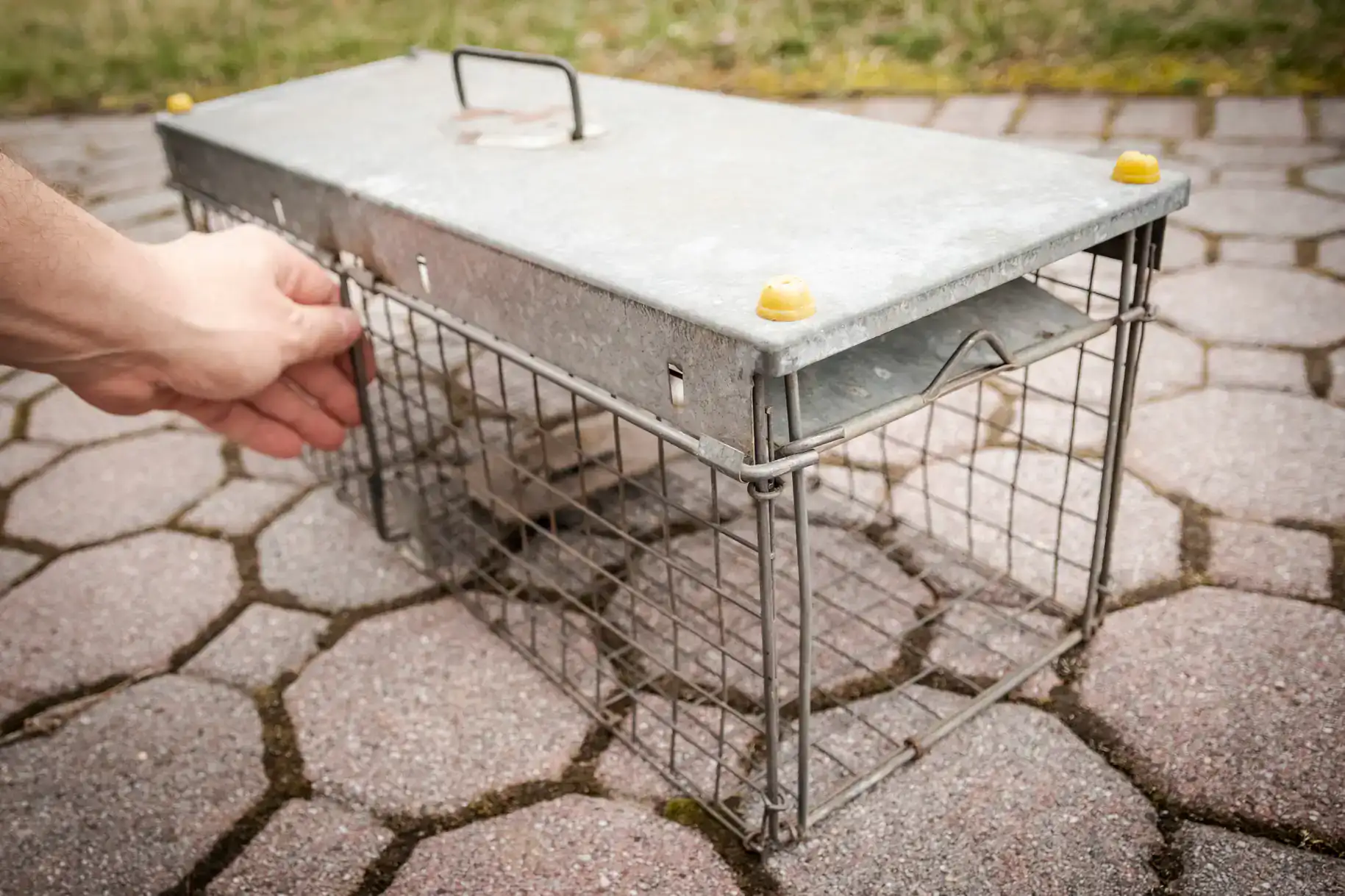
The first step is an inspection and in Inwood, that inspection has to be thorough. Pre-war homes have a lot of places to look. Our technician will go through the interior and exterior, checking foundation gaps, pipe penetrations, sill plates, basement window wells, and anywhere else that rodents commonly use as entry points. The goal isn’t just to confirm there’s a problem. It’s to understand how they’re getting in, where they’re nesting, and what’s drawing them there in the first place.
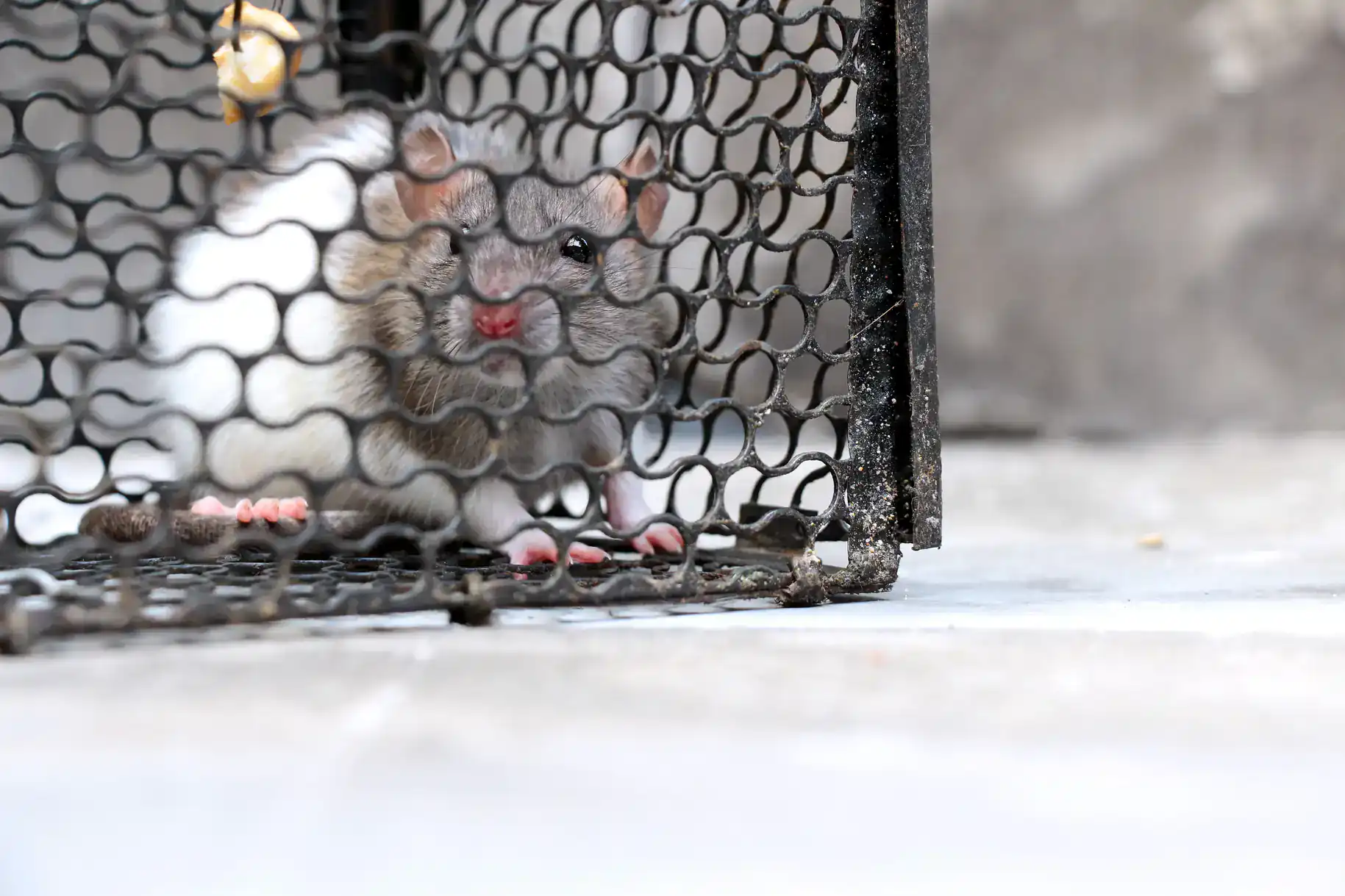
From there, we put together a treatment plan based on what was actually found not a one-size-fits-all protocol. Depending on the severity, that typically includes bait stations, trapping, and targeted application of NYSDEC-registered materials in the areas where activity was identified. Exclusion work physically sealing the entry points is a critical part of any lasting solution. Treating the rodents without closing the doors they’re using is just a temporary fix.
After the initial treatment, follow-up matters. Rodent populations near the Jamaica Bay waterfront tend to push inland more aggressively in fall and early winter as bay-edge habitats become less hospitable. If your Inwood home has been treated but the structural vulnerabilities haven’t been addressed, that seasonal pressure will find its way back in. We build follow-up into the process so that what gets solved stays solved.
Ready to get started?
Rodent control in Inwood isn’t a single visit and a few traps. Our service covers interior and exterior inspection, identification of active entry points, targeted treatment using NYSDEC-registered materials, and exclusion work to seal the structural gaps that older homes in this area almost always have. If you’re a renter dealing with a landlord who isn’t responding, we have experience navigating those situations Nassau County landlords are legally required to maintain properties free of pest infestation under the New York State Property Maintenance Code, and having a licensed exterminator involved creates a clear record.
For homeowners in Inwood near the Mott’s Basin area or anywhere along the Jamaica Bay waterfront, our service takes the seasonal migration pattern into account. Norway rats that forage along the shoreline in warmer months start moving inland when temperatures drop typically in October and November. That timing is built into how we approach treatment and follow-up scheduling for properties in flood-adjacent zones.
The free phone consultation and free estimate mean you can get a real picture of what you’re dealing with before committing to anything. Same-day service is available in many cases, and appointments are guaranteed within 48 hours. If you’ve already called the Nassau County Department of Health’s Community Sanitation Program and the problem is still there, we’re the next step a licensed professional who can actually treat the interior of your home, not just the surrounding property.
DIY treatments traps, store-bought bait, steel wool stuffed into gaps can reduce the number of rodents you’re seeing, but they almost never stop the cycle. The reason is straightforward: if the entry points aren’t sealed, new rodents move in to replace the ones you’ve caught. In Inwood specifically, homes built before 1950 have decades of wear on their foundations, pipe penetrations, and sill plates. Those gaps don’t get smaller on their own.
There’s also the pressure factor. Living near the Nassau-Queens border and the JFK Airport corridor means your Inwood home is in a high-pressure zone. Rodent populations in the surrounding commercial and industrial areas are large and active. When you remove some of them from inside your house without addressing the structural access points, the void fills quickly. A professional inspection identifies exactly where they’re entering and addresses both the infestation and the access which is the only approach that actually holds.
It does change the approach, and the signs are usually pretty clear once you know what to look for. Rat droppings are larger roughly the size of a raisin and you’ll often find burrow holes along the base of walls, near the foundation, or in garden areas. Mouse droppings are much smaller, and mice tend to nest in wall voids, behind appliances, and in cluttered storage areas. Both species are active in Inwood, but Norway rats are the dominant concern near the Jamaica Bay waterfront and in homes close to commercial corridors.
Treatment differs because the two species have different behaviors. Rats are neophobic they’re cautious around new objects in their environment, which means bait stations need to be placed and left undisturbed for several days before they become effective. Mice are more curious and will investigate new items quickly. Placement, bait type, and the location of exclusion work all shift depending on what’s actually present. A proper inspection tells you which species you’re dealing with so the treatment is matched to the actual problem.
The CDC documents more than 35 diseases that rats and mice can spread either through direct contact or through secondary vectors like fleas and ticks. The ones most relevant to a household with children are hantavirus, leptospirosis, salmonella, and rat-bite fever. Hantavirus is particularly concerning because it can be contracted just by breathing in dust from dried rodent droppings you don’t have to touch a rodent or even see one. In a home where kids are close to the floor and baseboards, that’s not a remote risk.
In Inwood, the waterfront proximity adds a layer. Norway rats that live near the Jamaica Bay shoreline and Mott’s Basin area carry the same pathogens as urban rats, and they move into residential structures in fall and winter. If droppings are found in a living space, the cleanup process matters as much as the treatment itself. Our technicians handle contaminated materials safely and can walk you through the proper cleaning protocol which is not the same as regular vacuuming, and doing it wrong can actually increase your exposure.
Most homeowners in Nassau County spend somewhere between $180 and $600 for professional rodent treatment, depending on the severity of the infestation and the size of the property. If exclusion work is needed physically sealing entry points that typically adds another $200 to $600 depending on how many access points need to be addressed and the condition of the structure. For older homes in Inwood, where pre-war construction means more gaps and more deterioration, exclusion work is usually part of the equation rather than an optional add-on.
The free estimate from us means you know the number before you commit to anything. What’s worth keeping in mind is the cost comparison: repeated DIY attempts, replacement of contaminated food and materials, and the potential cost of electrical damage from gnawed wiring all add up quickly. Rodents are responsible for a significant share of house fires annually due to chewed wiring and in a pre-war home with aging electrical systems, that’s not a theoretical concern. Professional treatment done once, done right, is typically the more cost-effective path.
Fall is the most active entry season typically October and November when dropping temperatures push rodents out of outdoor habitats and into warm structures. For Inwood and the surrounding Five Towns communities, this seasonal shift is more pronounced than in inland areas because of the Jamaica Bay waterfront. Norway rats that forage along the bay and around Mott’s Basin in warmer months start moving inland earlier and more aggressively than rodents in neighborhoods further from the water. Homes that haven’t had exclusion work done are most vulnerable during this window.
There’s also a secondary peak in late winter, typically January through February, as indoor colonies that established themselves in fall have had time to grow. A female house mouse can produce her first litter at just two months old, and a single pair can produce up to 60 offspring in a year. By the time you’re hearing scratching in the walls in February, what started as a small problem in October has had months to develop. The best time to address it is before that fall migration begins but whenever you’re dealing with it, sooner is always better than waiting.
In New York State, landlords are required to maintain rental properties free of pest infestation under the New York State Property Maintenance Code. That applies to Nassau County properties, including rentals in Inwood. If you’ve notified your landlord in writing and haven’t gotten a response within a reasonable timeframe, you have options including filing a complaint with the Nassau County Department of Health’s Community Sanitation Program at (516) 227-9715, which handles rodent-related complaints from residents during weekday business hours.
That said, the county program addresses public property and can log your complaint, but it can’t conduct the interior inspection and treatment your unit actually needs. Some renters in Inwood choose to hire a licensed exterminator directly both to solve the problem faster and to create a documented record of the infestation that can support further action if the landlord remains unresponsive. We work with tenants in these situations regularly. The free consultation costs you nothing, and having a licensed professional’s assessment in hand gives you something concrete to work with whether you’re dealing with a landlord, a property manager, or a housing authority.
Useful Links
Other Services we provide in Inwood