Hear from Our Customers
You stop second-guessing your kitchen. You stop waking up to something running across the counter at 2 a.m. You stop wondering if it’s going to get worse because it won’t. That’s what real cockroach pest control in Long Island City looks like when it’s done right.
Here’s what most people don’t know: in a dense building like the ones throughout Hunters Point and the Queens Plaza corridor, cockroaches don’t just live in your unit. They travel through shared plumbing stacks, utility chases, and the gaps around pipes that connect every floor of the building. Treating one apartment without addressing the building-level entry points is like mopping the floor while the faucet’s still running. We need to treat the infrastructure, not just your space.
There’s also the health side that doesn’t get talked about enough. Cockroach allergens are a documented asthma and allergy trigger, and NYC research has found cockroach allergen present in the air of the majority of apartments where infestations were active. For families, for kids, for anyone with respiratory sensitivities getting this handled isn’t just about comfort. It’s about the air quality in the place where you sleep.
We’ve been serving New York City homes and businesses for over 40 years not as a franchise, not as a rebranded startup, but as a family-owned company built by people who actually live and work in this city. Richard Kourbage Sr. founded Kingsway Exterminating, and Richard Kourbage Jr. has been part of it since 1987. That kind of continuity doesn’t happen by accident.
Our team collectively brings more than 100 years of hands-on pest control experience across NYC’s most demanding environments high-rise towers, converted industrial buildings, commercial kitchens, and everything in between. Long Island City has all of those. From the new luxury buildings going up along the East River waterfront to the older converted warehouse spaces in Dutch Kills, we’ve worked in buildings just like yours.
Every technician is certified under NYS Department of Environmental Conservation standards. Every treatment we use is NYS DEC Registered. And our A+ rating with the Better Business Bureau of New York State isn’t something we just put on a website it’s maintained, year after year, because the work actually holds up.
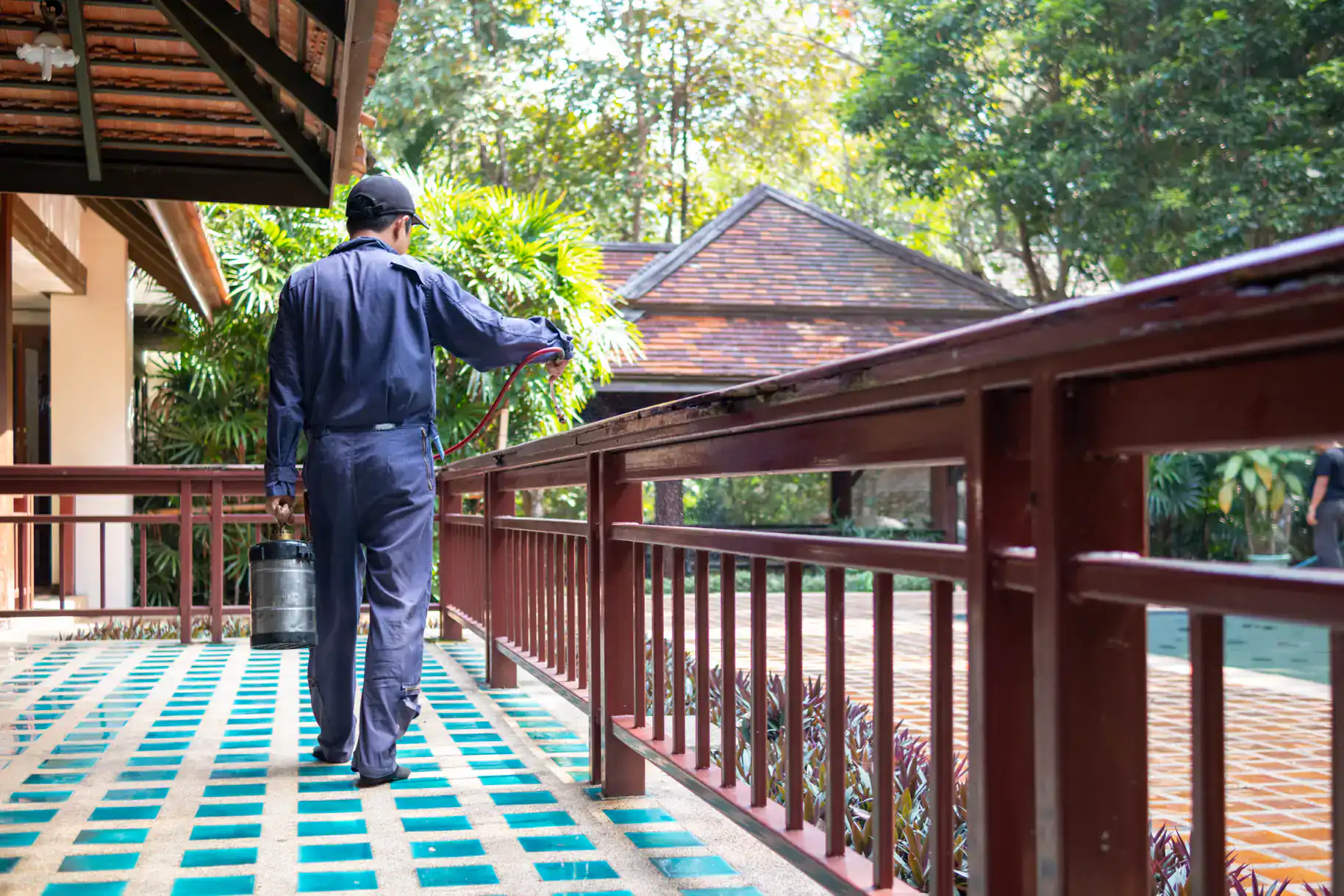
It starts with an inspection a real one. Not a five-minute walkthrough. Our technician goes through your unit, identifies the species (German cockroaches and American cockroaches, locally called waterbugs, require completely different treatment approaches), and maps out where activity is concentrated and where it’s entering from. In Long Island City’s high-rise buildings, that often means checking the plumbing penetrations in the bathroom and kitchen, the gaps around pipes under the sink, and any floor drains that connect to the building’s main stack.
From there, treatment is built around what’s actually in your space. German cockroaches the small, fast ones that spread through apartment buildings are treated with gel bait placed in targeted locations, insecticidal dust applied inside wall voids, and crack-and-crevice applications along baseboards and behind appliances. American cockroaches coming up through floor drains or sewer connections, which is a known issue in buildings near Newtown Creek and along the East River corridor, require a different focus on entry point treatment and drain management.
After the initial treatment, we walk you through what to expect. Cockroach egg cases are resistant to most products, so newly hatched nymphs can appear 2 to 4 weeks after the first visit. That’s not a treatment failure it’s biology. We factor that into the follow-up schedule so the problem is fully resolved, not just temporarily reduced.
Ready to get started?
Cockroach pest control in Long Island City covers a wide range of situations, and what’s included in your service depends entirely on what you’re dealing with. For residential clients whether you’re in a new tower in Hunters Point or a converted loft building in Dutch Kills our service includes a full inspection, species identification, targeted treatment using gel bait, insecticidal dust, and crack-and-crevice application, and a follow-up schedule based on the severity of the infestation and the type of building.
For commercial clients, the stakes are different. Long Island City’s growing restaurant scene along the Court Square and Queens Plaza corridors means more businesses subject to mandatory NYC Department of Health inspections and cockroach activity is one of the most serious violation categories on the DOH scorecard. We work directly with restaurant owners, property managers, and facility operators to bring spaces into compliance quickly. That includes the documentation that matters: we’re equipped to issue Demolition Clearance Certificates to the NYC Department of Health, which is a credential most local providers simply don’t hold.
For property managers overseeing multi-unit buildings including NYCHA-managed properties in the Queensbridge area we offer ongoing maintenance schedules on a weekly, monthly, or bi-monthly basis. The NYC Housing Maintenance Code requires landlords to maintain pest-free conditions, and documented, recurring professional service is the most defensible way to meet that obligation. We also offer a 10% senior discount for qualifying residents.
This is one of the most common questions we hear, and the answer has nothing to do with how clean you are. In Long Island City’s multi-unit buildings especially the older converted industrial spaces in Dutch Kills and the high-density towers near Court Square cockroaches travel through shared plumbing lines, utility chases, and the gaps around pipes that connect your unit to every other unit in the building. They’re not coming in because of crumbs. They’re coming in through the infrastructure.
German cockroaches in particular spread horizontally through apartment buildings by moving along plumbing runs and through wall voids. If a neighboring unit has an active infestation, yours is at risk regardless of how spotless your kitchen is. The solution isn’t cleaning harder it’s treating the entry points and harborage areas that connect your unit to the rest of the building, which is exactly what our professional inspection is designed to find.
They’re both cockroaches just different species, and that distinction matters a lot for treatment. German cockroaches are the small, light-brown ones that infest kitchens, spread through apartment buildings, and are the most common species in NYC residential buildings. American cockroaches are what most New Yorkers call waterbugs they’re much larger, dark reddish-brown, and they typically come up through floor drains, sewer connections, and basement-level entry points.
In Long Island City specifically, waterbug pressure is elevated in buildings near Newtown Creek LIC’s southern boundary and one of the most heavily infrastructure-loaded waterways in the city. Heavy rain events can overwhelm sewer systems and push American cockroaches upward through drain connections into ground-floor and basement units. But they also travel through vertical plumbing chases in high-rise buildings, which is why LIC residents on upper floors sometimes encounter them even in newer towers. Treatment for each species is different, which is why identification comes before anything else.
Yes, and it’s more common in Long Island City than most people realize. LIC has been one of the most active construction zones in New York City for the past decade new residential towers, commercial developments, and infrastructure projects throughout Hunters Point, the Queens Plaza corridor, and along the East River waterfront. When construction disturbs the ground, it displaces cockroach populations that were living in the soil, in old drainage systems, and in the foundations of demolished structures. Those displaced insects move into the nearest occupied building.
If your building is adjacent to an active construction site, you may notice increased pest activity during the demolition and excavation phases typically spring through fall when construction is most active. This isn’t a reflection of the building’s maintenance. It’s a direct result of habitat disruption next door. The practical response is to treat entry points proactively and schedule a professional inspection rather than waiting for the infestation to establish itself fully inside your unit.
Under New York City’s Housing Maintenance Code, Section 27-2018, landlords are legally required to maintain all dwelling units free of pests. That means if you document a cockroach infestation in writing to your landlord and they fail to address it within a reasonable timeframe, you have legal standing to pursue remediation through housing court. The NYC Warranty of Habitability which applies to every tenant in the five boroughs reinforces that right.
In practice, the process works like this: you notify your landlord or building management in writing, they are obligated to arrange professional treatment, and if they don’t act, you can file a complaint with the NYC Department of Housing Preservation and Development. For tenants in Long Island City’s luxury towers and in NYCHA-managed buildings like Queensbridge Houses, the obligation is the same the building owner or manager is responsible for pest-free conditions. Keeping a written record of your notification and any follow-up is important if the situation escalates to a formal complaint.
For a German cockroach infestation in a multi-unit building which is the most common scenario in Long Island City one treatment is rarely enough to fully resolve the problem. Cockroach egg cases, called ootheca, are physically resistant to most pesticide products. That means even after a thorough first treatment eliminates the active adults, newly hatched nymphs will begin emerging two to four weeks later. A follow-up treatment timed to that emergence cycle is what actually breaks the reproductive chain.
For moderate infestations in a single apartment, two to three treatments spaced two to four weeks apart is a realistic expectation. For severe infestations, or for buildings where multiple units are involved which is common in LIC’s high-density residential stock ongoing monthly or bi-monthly maintenance is the most reliable approach. The goal isn’t just to knock down the current population. It’s to prevent re-establishment from neighboring units, shared infrastructure, and the building’s common areas, which are often the actual source of recurring activity.
Yes, and commercial cockroach control in Long Island City is a significant part of what we handle. LIC’s restaurant and hospitality sector has grown rapidly in recent years, particularly around Court Square, Queens Plaza, and the Hunters Point waterfront area. Every food service establishment in NYC is subject to mandatory Department of Health inspections, and cockroach activity triggers some of the most serious violation points on the DOH scorecard the kind that can push a restaurant from an A grade to a C, or result in a temporary closure order.
We’re equipped to respond to commercial cockroach situations with the urgency they require. That includes working directly with restaurant owners and property managers to bring kitchens into DOH compliance, and issuing Demolition Clearance Certificates to the NYC Department of Health a credential that most local pest control providers are not set up to provide. For office managers, facility operators, and property management companies overseeing LIC’s commercial and mixed-use buildings, we also offer ongoing maintenance contracts with documented service records.
Useful Links
Other Services we provide in Long Island City