Cockroach pest control is evolving fast. Here's why integrated pest management is taking over, and what it actually means for Brooklyn, Manhattan, and Queens residents dealing with a real infestation.
If you’ve spotted a cockroach in your apartment, or worse, a few of them during the day, you’re probably already wondering if a spray treatment is going to be enough. In most NYC buildings, the honest answer is no. Not because pest control doesn’t work, but because the way most people think about it hasn’t caught up with how cockroach infestations in dense urban housing actually behave. Integrated pest management, or IPM, is the approach that’s changing that. It’s not a buzzword. It’s a fundamentally different way of solving the problem, and it’s worth understanding before you hire anyone.
IPM is a method that combines inspection, monitoring, exclusion, targeted treatment, and prevention, rather than defaulting to a scheduled chemical spray and calling it done. The goal is to understand why cockroaches are there in the first place, eliminate the conditions that allow them to survive, and apply treatments precisely where they’re needed instead of everywhere at once.
This matters because cockroaches don’t just appear out of nowhere. In a Brooklyn brownstone or a Queens apartment building, they’re usually traveling through shared plumbing, wall voids, or gaps around pipes, moving between units in ways that a single-apartment spray treatment can’t address. We look at the whole picture, not just what’s visible on the surface.
Here’s something the pest control industry doesn’t always lead with: over 60% of German cockroach populations in urban U.S. cities have shown partial resistance to fipronil, one of the most commonly used insecticides in standard extermination treatments. That’s documented research, and it explains a lot of the frustration people feel when they pay for a treatment and see roaches again two weeks later.
The resistance issue is compounded by how NYC buildings are built. Pre-war walk-ups in Flatbush, attached rowhouses in Ridgewood, high-rise apartment towers in Harlem: these structures have decades of accumulated cracks, gaps around pipes, and wall voids that give cockroaches almost unlimited places to hide and breed. A spray treatment that doesn’t address those harborage areas isn’t solving the problem. It’s just temporarily reducing the visible population.
There’s also the multi-unit reality. In most Brooklyn, Manhattan, and Queens apartment buildings, cockroaches don’t respect unit boundaries. They move through shared infrastructure, including the plumbing stack, the electrical conduits, and the gap under the front door of the unit next to yours. Treating one apartment in isolation is like bailing water without plugging the hole. The infestation keeps coming back because the source was never addressed.
We work differently because we start with an inspection: a real one, where a trained technician identifies the species present, locates nesting and activity zones, maps how cockroaches are moving through the space, and documents findings before a single product is applied. That inspection is what makes everything else more effective. Gel bait placed directly at harborage sites outperforms broadcast spraying in study after study. A 27-month research study found that IPM combining targeted bait treatment and sanitation guidance reduced cockroach populations by 86% compared to pre-IPM levels. That’s not a marginal improvement; it’s a different category of result.
One of the most common concerns we hear, especially from parents, pet owners, and anyone in a household with someone who has asthma, is about pesticide exposure. It’s a legitimate concern, and IPM actually addresses it directly.
Because IPM uses targeted bait application rather than broad chemical spraying, the amount of pesticide introduced into your living space is significantly lower. Gel baits are placed in the specific locations where cockroaches feed and nest (inside cabinet hinges, behind appliances, along the base of plumbing fixtures) not across countertops, floors, and open surfaces. This precision approach means less overall chemical exposure for your family while delivering more effective results where it counts.
This is especially relevant in Brooklyn, Manhattan, and Queens, where cockroach allergens are a documented public health issue. Cockroach shed skin and droppings are proven asthma triggers, and the density of NYC’s housing stock means that allergen levels in infested apartments can build up quickly. A peer-reviewed study of New York City public housing buildings in Brooklyn and Manhattan found that IPM significantly reduced both cockroach populations and cockroach allergen levels: not just the bugs themselves, but the health impact they leave behind. That’s a meaningful distinction for anyone raising kids in a Flatbush apartment or managing a building in Washington Heights.
We apply only N.Y.S. Department of Environmental Conservation registered materials; every product used in your home meets the regulatory standard the state requires. That’s not a marketing line; it’s a compliance commitment we take seriously on every job.
Want live answers?
Connect with a Kingsway Exterminating expert for fast, friendly support.
Knowing that IPM works is one thing. Knowing what it actually looks like when we show up at your door is another, and it’s worth setting clear expectations, because not every company that mentions IPM is actually practicing it.
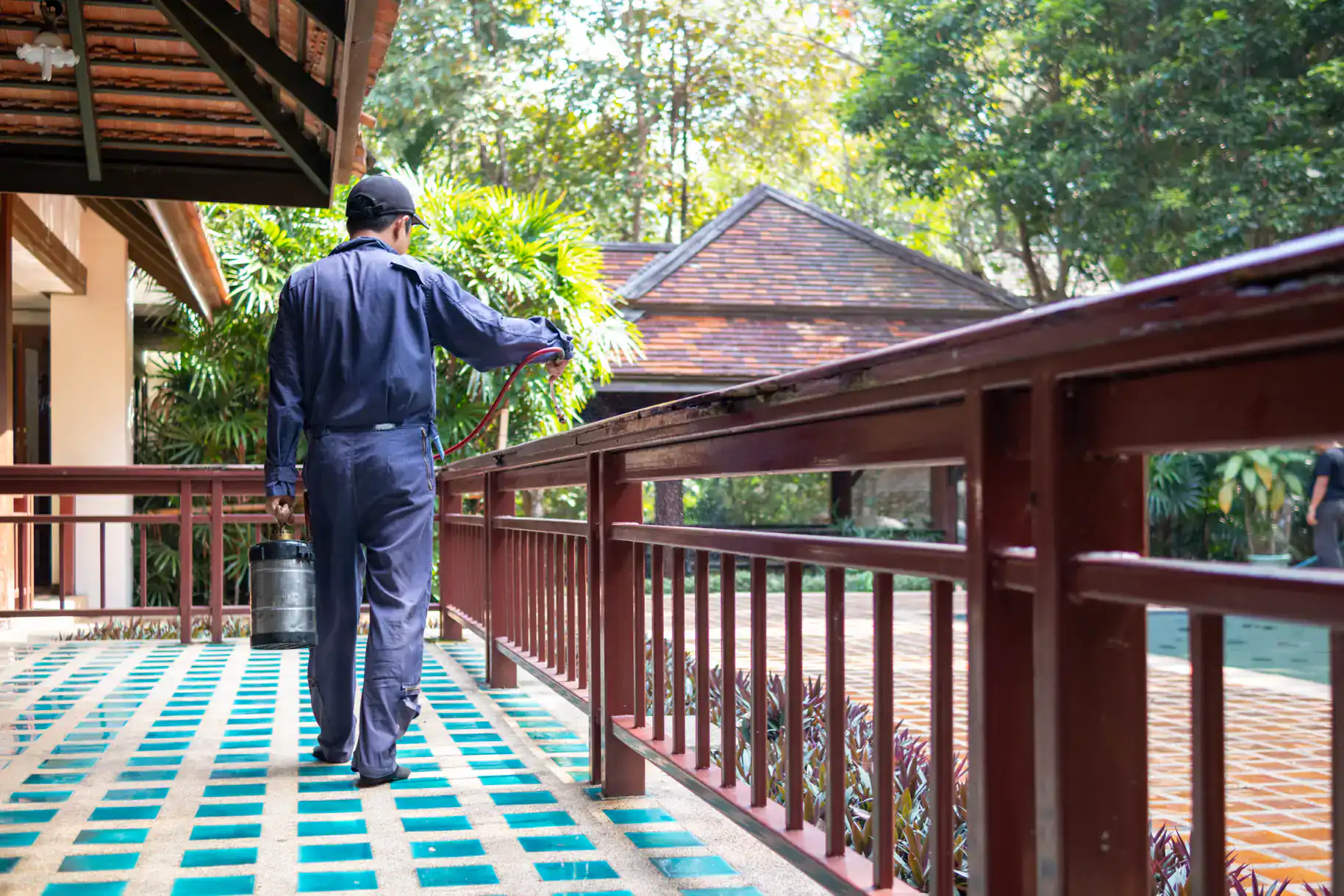
A real IPM approach starts before any product is applied. Our technician inspects the property, identifies the species, because German cockroaches and American cockroaches (the large ones New Yorkers often call waterbugs) require completely different treatment strategies, and locates where activity is concentrated. From there, treatment is targeted, documented, and followed up. One visit is rarely the complete picture.
It matters more than most people realize. German cockroaches, small, light brown, and fast-breeding, live almost entirely indoors. They thrive in kitchen cabinets, behind refrigerators, inside wall voids near plumbing, and anywhere there’s consistent warmth and moisture. They reproduce rapidly, which is why a small problem can become a severe infestation in a matter of weeks. Because they never go outside, they’re not going to disappear on their own, and they’re the species most likely to spread between units in a multi-unit building.
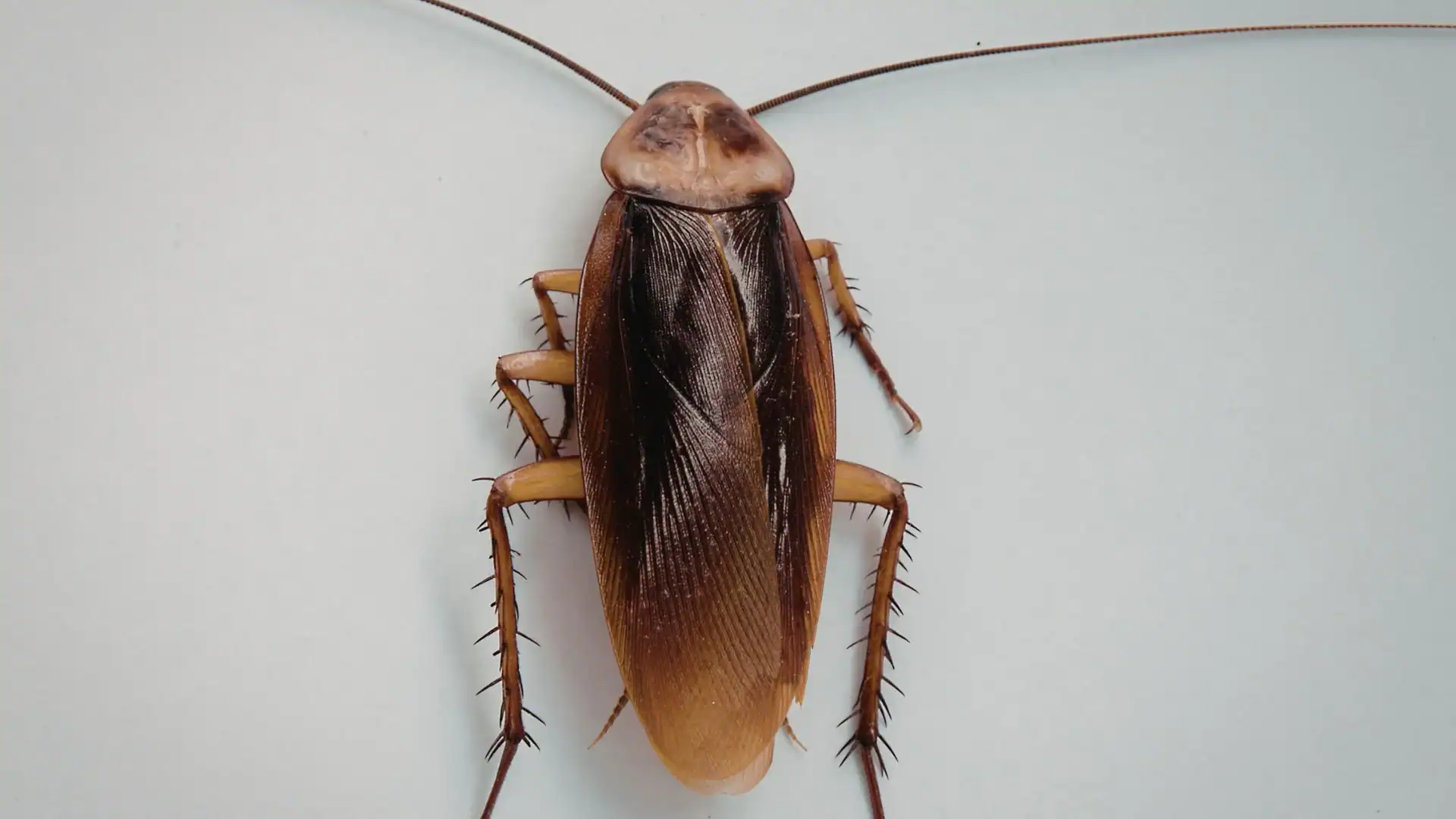
American cockroaches, the large, reddish-brown insects that New Yorkers have been calling waterbugs for generations, are a different situation. They typically enter buildings from the outside: through sewer lines, basement drains, gaps around utility pipes, and the gaps under exterior doors. NYC’s subway infrastructure and aging sewer system create an almost unlimited reservoir of them underground. In older Brooklyn brownstones and Queens rowhouses with basement apartments, waterbug entry is a recurring seasonal problem, particularly in fall when dropping temperatures drive them indoors.
The treatment approach for each is different. German cockroaches require targeted interior bait placement, harborage elimination, and often a building-wide strategy if you’re in a multi-unit property. American cockroaches require exclusion work (sealing the entry points they’re using) combined with perimeter treatment and drain treatment in basements and utility areas. Treating a waterbug problem the same way you’d treat a German cockroach infestation doesn’t work. This is why species identification at the inspection stage isn’t optional; it’s the foundation of everything that follows.
If you’ve had a pest control company come out and spray without first asking you what the roaches look like, where you’re seeing them, and if you’ve noticed them near drains or coming up from the basement, that’s a sign the inspection step was skipped. And that’s usually why the problem comes back.
How long does cockroach pest control actually take to work?
With an IPM approach, you’ll typically see a significant reduction in activity within two to four weeks of the initial treatment. The reason it’s not instant is that cockroach eggs, contained in protective cases called oothecae, are often resistant to the initial treatment. A follow-up visit, usually scheduled two to four weeks after the first, addresses newly hatched nymphs and any remaining adults. Skipping that follow-up is one of the most common reasons infestations rebound. A company that doesn’t schedule or offer a follow-up visit as part of the treatment plan is leaving the job half-finished.
My landlord sent an exterminator, but the roaches came back. What went wrong?
This is one of the most common situations we hear about across Brooklyn, Queens, and Manhattan. In most cases, the issue is that the landlord’s exterminator treated only one unit, yours, without addressing the building as a whole. In a connected apartment building, that’s rarely sufficient. Cockroaches from neighboring units, shared walls, or the building’s plumbing stack simply repopulate the treated space. A building-wide or multi-unit treatment strategy, combined with exclusion work to seal the travel routes between units, is what produces lasting results in NYC’s interconnected residential buildings. If your landlord’s approach isn’t working, you have options, and getting an independent professional assessment is a reasonable next step.
Is IPM safe for households with children, pets, or someone with asthma?
Yes, and it’s actually a better fit for those households than traditional broad-spray treatments. Because IPM uses targeted bait placement rather than open-surface pesticide application, the exposure risk is substantially lower. Products are applied inside harborage areas (behind appliances, inside cabinet hinges, along plumbing fixtures) not across floors and countertops. For households where cockroach allergens are already an asthma trigger, IPM’s ability to reduce both the cockroach population and the allergen levels they leave behind makes it the more health-conscious choice.
Do I really need a professional, or can I handle this with store-bought products?
For a minor, early-stage problem, some over-the-counter gel baits can make a dent. But for an established infestation in Brooklyn, Manhattan, or Queens, especially in an apartment building where cockroaches are traveling between units, DIY products rarely get to the root of the problem. They don’t address harborage areas, they don’t include exclusion work, and many common store-bought sprays are becoming less effective as urban cockroach populations develop resistance. A professional inspection at minimum will tell you what you’re actually dealing with before you spend time and money on something that won’t solve it.
The shift toward integrated pest management isn’t a trend in the trendy sense; it’s the pest control industry catching up with what the research has been showing for years. In a city like New York, where buildings are old, dense, and deeply connected, a spray-and-hope approach was never going to be enough.
What actually works is a methodical process: inspect first, identify the species, target the treatment, follow up, and seal the entry points. That’s what IPM looks like in practice, and it’s what separates a company that solves your problem from one that temporarily reduces it.
We’ve been doing this work in Brooklyn, Queens, and Manhattan since 1976: over 50 years of experience in the specific buildings, neighborhoods, and pest pressures that define this city. If you’re dealing with a cockroach problem and want a straight answer about what it’s going to take to resolve it, we’re ready to help.
Summary:

Article details:
Share: