Bed bugs don't go away on their own, and store-bought sprays usually make things worse. Here's what professional treatment actually looks like.
Finding bed bugs is one of those moments where your stomach drops. You start questioning everything: your mattress, your couch, or the secondhand chair you picked up off the curb in Flatbush. And then comes the bigger question: now what?
The internet will tell you to try this spray, that fogger, or this “natural remedy.” Most of it won’t work. Some of it will make things worse. What actually works is professional bed bug treatment, but even that phrase gets thrown around without much explanation.
This page is here to change that. We’re going to walk you through the real process, answer the questions people actually ask, and give you a clear picture of what it takes to get rid of bed bugs for good.
Professional bed bug treatment isn’t a single spray-and-done visit. It’s a structured process that accounts for the full lifecycle of the insect, including the eggs, which most DIY products can’t touch.
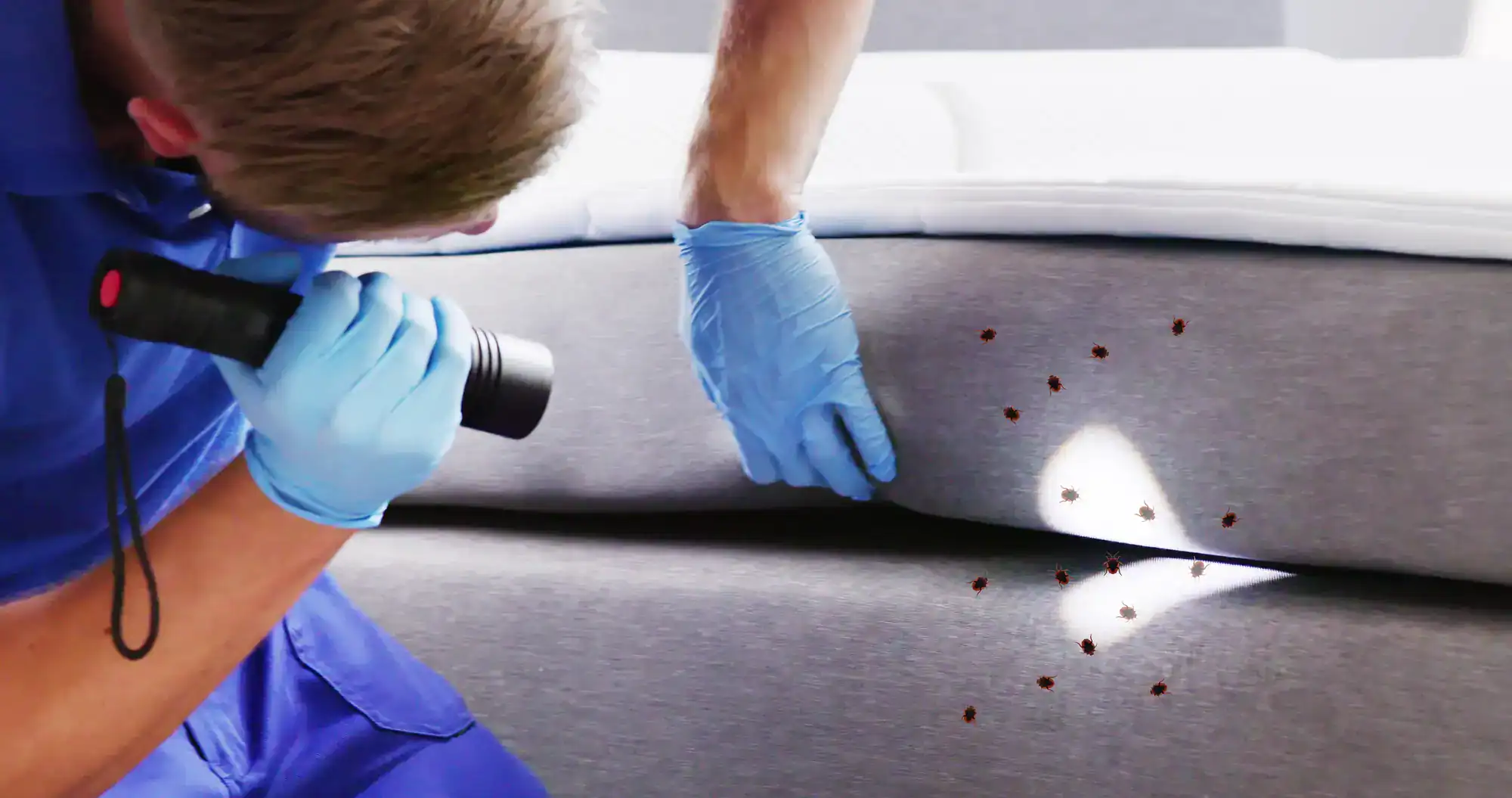
A proper treatment starts with a thorough inspection to confirm the infestation, map out where the bugs are hiding, and assess the scope of the problem. From there, we build a treatment plan around your specific situation: the type of building, the severity of the infestation, and any sensitivities in the household. That plan usually involves multiple methods and, critically, multiple visits.
This is the part most people don’t expect. You might have your apartment treated and feel like the problem is solved, only to spot a bug a week later. That’s not necessarily a sign the treatment failed. It’s often a sign that the process is working exactly as it should.
Here’s why: chemical and steam treatments are highly effective at killing live bed bugs and nymphs on contact. But bed bug eggs are remarkably resilient. They can survive initial treatment, hatch 7 to 10 days later, and appear as new activity. This is why the industry standard is a minimum of two treatment visits spaced roughly 7 to 21 days apart: the second visit targets those newly hatched nymphs before they can reproduce and restart the cycle.
Skipping that second visit is one of the most common reasons infestations come back. Any company that promises permanent eradication in a single visit is either oversimplifying the biology or overselling the outcome. We’re upfront about this because it matters.
It’s also worth knowing that treatment barriers from professional chemical applications can remain active for up to three months after the visit, continuing to work even after our technician has left. That’s part of why professional-grade materials, specifically those registered with the New York State Department of Environmental Conservation, perform so differently from anything you’d find at a hardware store.
One more thing worth mentioning: in NYC’s dense housing stock, your treatment plan may need to account for neighboring units. In a Brooklyn brownstone or a Queens apartment building, bed bugs travel through wall voids, electrical conduits, and shared plumbing chases. Treating one unit while an adjacent unit stays untreated is a reliable recipe for re-infestation. We flag this and help you navigate the conversation with your landlord or building manager.
This is one of the most important things to understand before you spend $60 on a can of spray or a box of foggers: over-the-counter bed bug products have two significant problems that make them largely ineffective against established infestations.
The first is resistance. Bed bug populations across the country, and especially in high-density urban areas like New York City, have developed significant resistance to pyrethroids, which is the active ingredient in most consumer-grade sprays. What would have killed a bed bug population 20 years ago often barely slows them down today.
The second problem is coverage. Bed bugs don’t live out in the open. They hide in mattress seams, inside box springs, behind baseboards, inside electrical outlets, in the joints of bed frames, and deep inside wall voids. A fogger or surface spray can’t reach those locations. Worse, the aerosol from a bug bomb can actually push bed bugs deeper into hiding, dispersing them further into the walls and potentially into neighboring rooms or units, spreading the infestation while giving you the illusion of progress.
By the time most people call us, they’ve already spent weeks and real money on DIY attempts. That delay matters. A female bed bug can lay 5 to 8 eggs per day. One small introduction (a bug picked up on a subway seat, a piece of furniture brought in from the street in Bushwick, or luggage carried back from a hotel near JFK) can multiply into hundreds of bugs in the span of a few weeks if left untreated.
The earlier you bring in a professional, the simpler and less expensive the treatment tends to be. Waiting rarely makes the problem smaller.
Want live answers?
Connect with a Kingsway Exterminating expert for fast, friendly support.
We’ve been doing this work in Brooklyn, Manhattan, and Queens since 1971. Over more than five decades, certain questions come up again and again, not because people aren’t informed, but because bed bugs are genuinely confusing and the stakes feel high. Here are the ones worth addressing directly.
Almost certainly not, and in many cases, throwing out your mattress actually makes the problem worse, not better. Here’s why: if you drag an infested mattress through a hallway, down an elevator, or out the front door of your Brooklyn or Queens building, you risk dropping bugs and eggs along the way, potentially spreading the infestation to common areas or neighboring units.
Our professional bed bug treatment can save your mattress, your box spring, your sofa, and most of your furniture in the vast majority of cases. After treatment, a quality mattress encasement will trap any surviving bugs inside and prevent new ones from establishing a hiding spot. That’s a far better outcome than a $1,500 mattress replacement that doesn’t solve the underlying problem.
The one exception is furniture that is severely damaged, heavily infested, and not worth treating, but that’s a judgment call made after inspection, not a blanket recommendation. If a technician tells you to throw out all your furniture before they’ve even looked at it, that’s a red flag. There’s also a practical NYC dimension here. In Brooklyn and Queens especially, discarded mattresses and furniture left on the curb are a primary vector for spreading bed bugs to other households. What you leave on the street, someone else may bring inside. The responsible move, for your neighbors and for the community, is professional treatment, not curbside disposal.
One more misconception worth clearing up: bed bugs are not a sign of a dirty home. They’re attracted to warmth and carbon dioxide, not filth. They’ve been found in luxury Manhattan co-ops, five-star hotels near Times Square, and freshly renovated apartments in Astoria. Cleanliness has nothing to do with it.
This is one of the most common questions we hear from renters in Brooklyn, Queens, and Manhattan, and the honest answer is: it depends, but landlords carry significant legal responsibility in New York City.
Under NYC housing law, property owners are required to address bed bug infestations in rental buildings. NYC Local Law 69 of 2017 added another layer: all multiple-dwelling property owners must attempt to obtain bed bug infestation history from tenants and file annual bed bug reports. The NYC Department of Housing Preservation and Development (HPD) can issue Notices of Violation to building owners for confirmed infestations, and those violations carry real financial consequences.
In practice, this means that if you’re a renter and your landlord is slow to act, you have options. You can file a complaint through 311, which creates a documented record. HPD can then inspect and issue a violation if the infestation is confirmed. Many landlords move faster once a violation is on the table.
That said, the legal picture gets more complicated when the tenant introduced the infestation, for example, by bringing in infested secondhand furniture. In those cases, responsibility can shift. The situation also gets complicated in multi-unit buildings where the source of the infestation is unclear or disputed between tenants and management.
What we’d tell any renter: document everything, communicate with your landlord in writing, and don’t wait for a legal resolution before getting a professional inspection. The longer an infestation goes untreated, the more it spreads. If you’re a property manager or landlord dealing with a building-wide situation in Brooklyn, Manhattan, or Queens, we have extensive experience working through those scenarios and can help you address it in a way that satisfies HPD requirements.
The most important thing to take away from this page is that bed bugs are solvable, but they require the right approach. That means a licensed professional using state-registered materials, a multi-visit treatment plan, honest communication about the process, and someone who knows NYC’s specific housing dynamics well enough to catch the things a generalist might miss.
We’ve been doing this work in Brooklyn, Manhattan, and Queens since 1971. Our team brings more than 100 years of collective pest control experience to every job, and we’ve seen every kind of infestation in every kind of NYC building: pre-war brownstones in Park Slope, high-rises in Midtown, row houses in Jackson Heights, and everything in between. We answer phones 24 hours a day and can typically get to you within two days of your first call, often sooner.
If you’re dealing with bed bugs right now, reach out to Kingsway Exterminating Company. We’ll start with an inspection, give you a straight answer about what you’re dealing with, and walk you through exactly what treatment will look like: no pressure, no guesswork.
Summary:
Article details:
Share: