
Hear from Our Customers
The goal isn’t just to kill what you can see. It’s to make sure nothing is waiting in the walls, under the floor, or behind the stove when your family shows up for Memorial Day weekend. That’s what a real cockroach control program delivers — not a quick spray, but a confirmed result.
For Breezy Point homeowners, the stakes are specific. You’re not dealing with a standard apartment infestation that built up over a few weeks. You’re dealing with a home that was closed from October through April — warm enough to sustain a colony, quiet enough that nothing disturbed it, and stocked with whatever food residue was left behind. By the time you’re crossing the Marine Parkway Bridge for the season opener, a cockroach problem that started small in November can be well-established.
The other factor here is the ground itself. Breezy Point’s sandy soil and high water table mean that after a heavy rain or a tidal push off Jamaica Bay, American cockroaches move upward — through floor drains, crawl space gaps, and foundation openings. Especially in homes that were elevated post-Sandy, those new under-floor voids are exactly the kind of warm, damp, enclosed space waterbugs look for. Solving that isn’t a one-visit job. It’s an inspection, a targeted treatment, and a follow-up to confirm the problem is actually gone.
We’ve been operating out of Marine Park, Brooklyn since 1971 — which means our office is at the Brooklyn end of the same bridge you cross to get to Breezy Point. That’s not a coincidence worth ignoring. The Jamaica Bay coastline, the coastal building stock, the drainage conditions that push waterbugs up from below — our technicians have been working in these exact conditions for over half a century.
We hold an A+ rating with the Better Business Bureau and have maintained that accreditation continuously since May 5, 1989. That’s more than 35 years of independently verified complaint history and business conduct — not a self-awarded badge, but a public record anyone can look up. Every technician on our staff is certified through the New York State Department of Environmental Conservation, and only NYS DEC-registered materials are used on every job.
We’re family-owned and operated. When you call, you reach people connected to the actual business — not a call center routing your request to whoever’s available.
The first visit starts with a real inspection — not a glance around the kitchen, but a full walkthrough to identify the species involved, locate harborage areas, and assess how the infestation is structured. In Breezy Point, that means paying attention to things that don’t come up in a standard apartment job: crawl space conditions in elevated post-Sandy homes, floor drain access points, foundation gaps along the perimeter, and any moisture accumulation under the structure. German cockroaches and American cockroaches require different treatment approaches, and getting that identification right upfront is what separates a targeted program from a wasted visit.
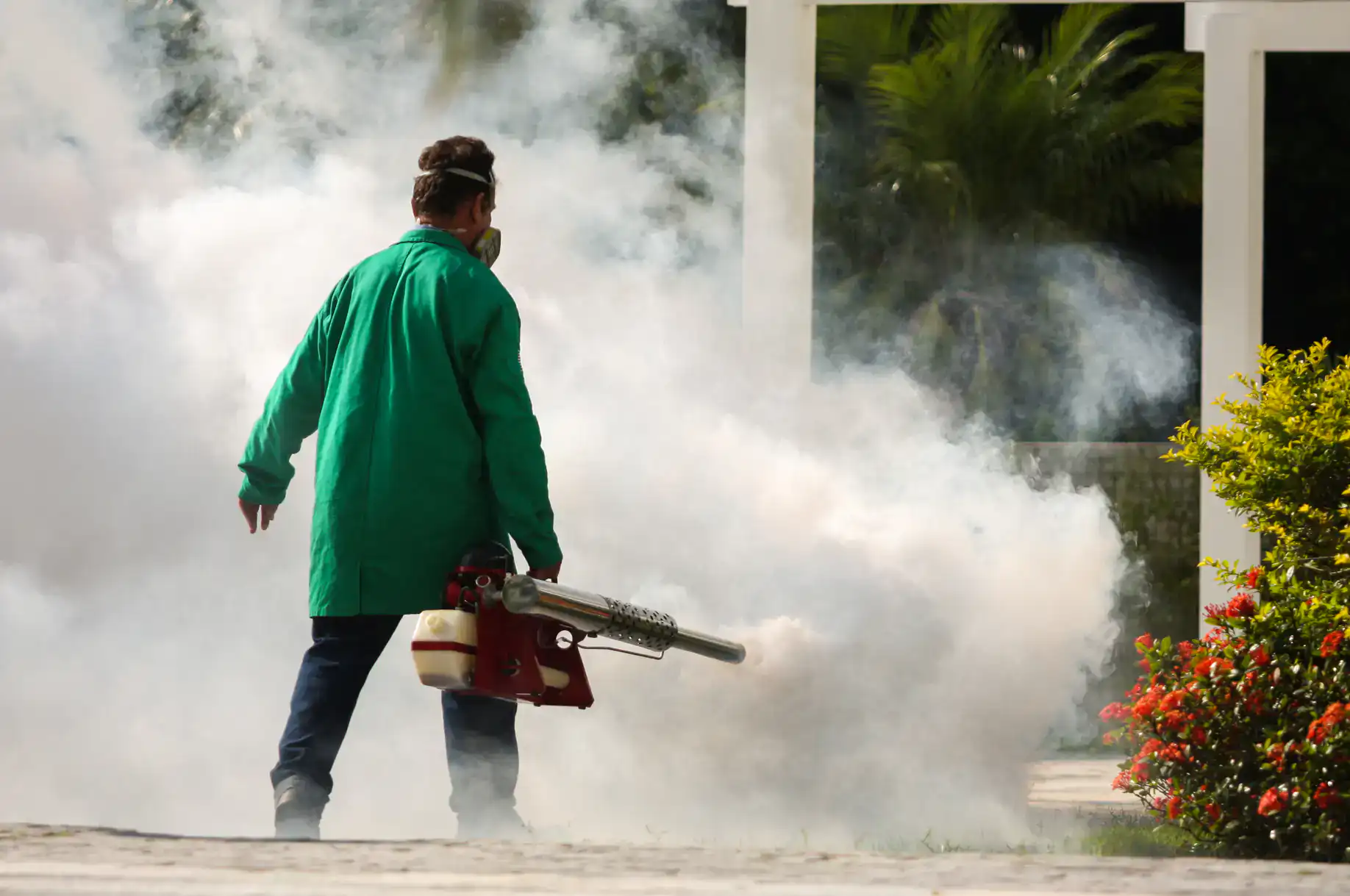
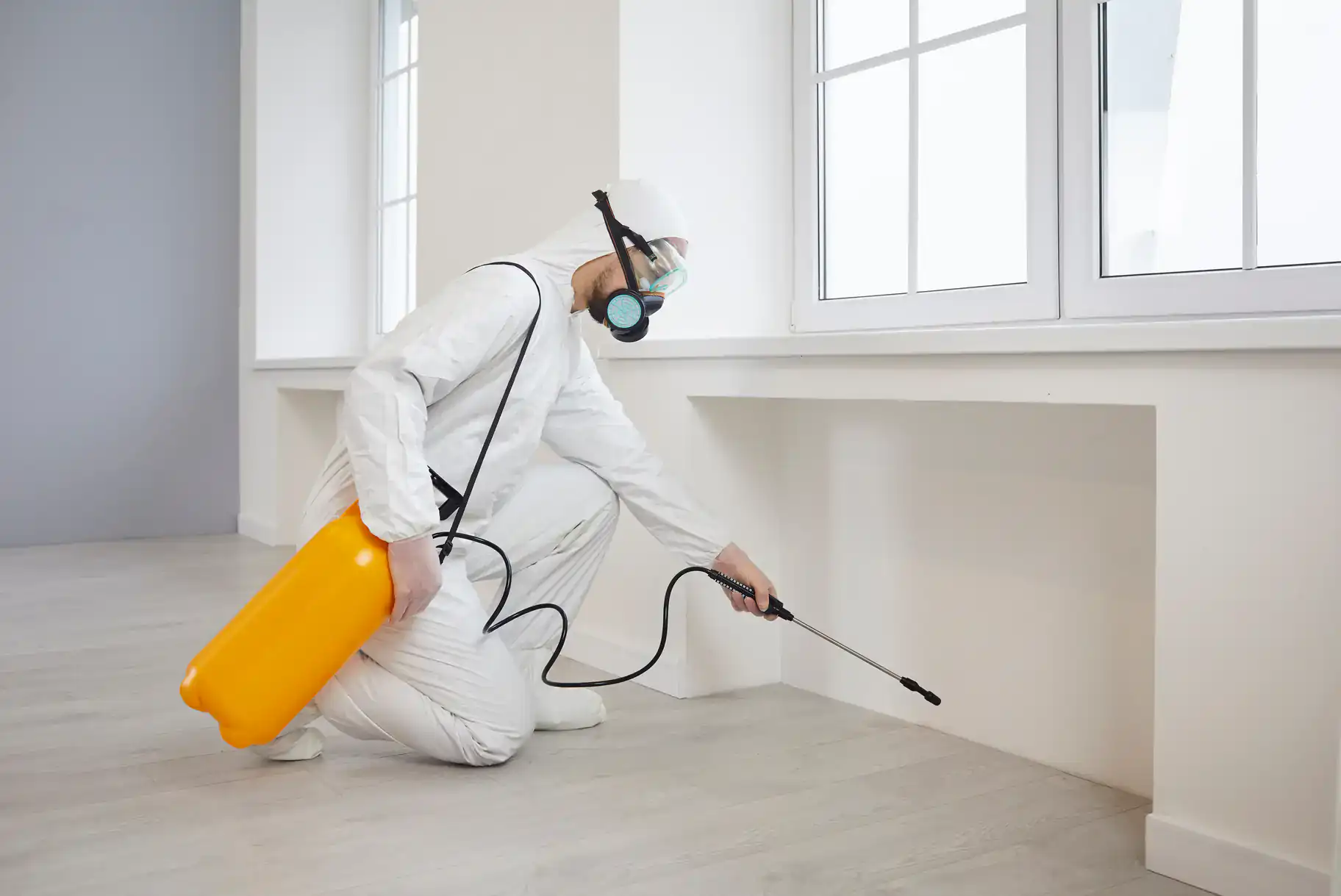
Treatment uses NYS DEC-registered gel baits, insecticidal dust, and crack-and-crevice applications — placed where cockroaches actually live and breed, not broadcast across surfaces. We don’t use fogging or bombing. The materials go into harborage sites, wall voids, and entry points specific to what was found during the inspection.
The second visit is built into our service. It’s not an upsell — it’s the verification step. Cockroach eggs survive initial treatment, and hatched nymphs need to be addressed before you can confirm the infestation is actually gone. For a Breezy Point home that’s been closed all winter, that follow-up is especially important. You want confirmation before you’re back for the season, not a question mark.
Ready to get started?
Cockroach pest control in Breezy Point isn’t a one-size job. The community sits where Jamaica Bay, Rockaway Inlet, and the Atlantic all converge, and that geography shows up in the pest pressure. American cockroaches — what most people around here call waterbugs — are a persistent issue because they move through the same drainage infrastructure that runs beneath Rockaway Point Boulevard and the surrounding private roads. When bay-side water levels rise, they come up. That’s a coastal drainage problem, not a housekeeping problem, and it calls for treatment that addresses entry points at the foundation and drain level, not just what’s visible in the kitchen.
For homes in Roxbury and Rockaway Point that were rebuilt or elevated after Sandy, the under-floor crawl space is a new variable that didn’t exist in the original bungalow footprint. Those spaces need to be assessed as part of any thorough cockroach control program — not assumed to be clean just because the rest of the home looks fine.
Our service includes species identification, full interior inspection, targeted gel bait application, crack-and-crevice dust treatment, and a structured second visit for verification and any necessary reapplication. Because Breezy Point is a gated cooperative community, we coordinate scheduling directly with you to make sure access through the checkpoint is confirmed before our technician arrives — no missed windows, no wasted trips. Written documentation of the service is available for cooperative records or any other purpose you need it.
This is one of the most common situations Breezy Point homeowners run into, and it has a straightforward explanation. When a home is closed up from October through April, it stays warm enough to sustain a cockroach colony — especially if there’s any residual food, grease, or moisture left behind. With no human activity to disturb them, a small population that moved in during fall can grow significantly over a five-to-seven-month winter. By the time you’re back for the season, you’re not discovering a new problem — you’re uncovering one that’s been developing since you left.
The fix isn’t just treating what you find when you arrive. It’s a thorough inspection that identifies where the colony is established, what species you’re dealing with, and what entry points allowed them in. A proper two-visit treatment program addresses the active population on the first visit and confirms elimination on the second — which matters especially in a Breezy Point home that’s been unmonitored all winter. Some homeowners also find it worth scheduling a preventive treatment before closing up in the fall, so the home isn’t starting from zero when they return.
Both are real possibilities in Breezy Point, and the answer depends on which species you’re seeing. American cockroaches — commonly called waterbugs — are the ones most likely to come up through floor drains, basement entries, and crawl space gaps. They live in sewer and drainage infrastructure and move upward when conditions push them — heavy rain, tidal surges off Jamaica Bay, or any event that raises water levels in the drainage system beneath the community’s private roads. If you’re seeing large, reddish-brown cockroaches near floor drains or in lower-level areas, that’s almost certainly what’s happening.
German cockroaches are a different situation entirely. They’re small, fast, and almost always associated with the kitchen and bathroom — they don’t come up from the drain. They spread through shared spaces and infest harborage sites near food and moisture. For homes that were elevated post-Sandy with new crawl spaces beneath the living area, that under-floor void can become a harborage zone for American cockroaches regardless of how clean the interior is. A proper inspection identifies which species is present and where they’re coming from, because the treatment approach for each is genuinely different.
This is one of the first questions most Breezy Point families ask, and it’s a fair one. The short answer is that professional treatment using targeted gel baits and crack-and-crevice applications is a fundamentally different approach from the foggers and bombs you’d buy at a hardware store. Gel bait is placed inside harborage areas — behind appliances, inside cabinet voids, along wall junctions — not on open surfaces where children or pets would contact it. Insecticidal dust is applied inside wall voids and crack-and-crevice locations, not broadcast across floors or countertops.
All materials we use are registered with the New York State Department of Environmental Conservation, which has its own registration requirements on top of federal EPA standards. Our technician will tell you exactly what was applied, where it was placed, and what, if any, precautions apply for your specific situation. In most cases, the precautions are minimal and straightforward. What’s worth keeping in mind is that cockroach allergens — the shed skins, droppings, and body particles from an active infestation — are a documented trigger for asthma, particularly in children. Getting the infestation resolved is itself a health measure, not just a comfort one.
The timeline depends on how established the infestation is when treatment begins. Gel bait starts working within hours — cockroaches that feed on it begin dying quickly, and the bait spreads through the colony as others consume affected individuals. You’ll typically see significant activity reduction within a few days. But “significant reduction” isn’t the same as elimination, and that distinction matters.
For a Breezy Point home that’s been closed since October, the infestation has had months to establish. Cockroach eggs — contained in egg cases called oothecae — are not killed by the initial treatment. They hatch on their own schedule, typically within a few weeks. That’s exactly why the second visit is built into our service: it’s scheduled to address the hatched nymphs and any remaining activity after the first treatment has done its work. For most homes, the full elimination process runs two to four weeks from the first visit. If you’re opening the house in late April and want the problem resolved before Memorial Day, calling as soon as you discover the issue gives you enough runway to get there.
Yes, and in Breezy Point’s housing stock, this is a real consideration. The community’s bungalows and beach houses are often built close together on relatively small lots, and many share drainage infrastructure beneath the cooperative’s private roads. American cockroaches moving through that shared drainage system don’t distinguish between one property and the next — they go where conditions are favorable. A treatment that addresses your home but ignores the entry points connecting your property to the drainage system underneath Rockaway Point Boulevard is an incomplete solution.
German cockroach spread between neighboring homes is less common than in apartment buildings with shared walls and plumbing chases, but it does happen — particularly during construction activity, which has been ongoing in Breezy Point since the post-Sandy rebuilding program. Renovation work disturbs harborage sites and pushes cockroach populations into adjacent properties. If you’re treating your home and a neighbor is actively renovating or rebuilding, it’s worth mentioning that context during the inspection so our technician can assess entry points accordingly. The goal is to close off the pathways, not just treat the population that’s already inside.
Yes. We serve Breezy Point, including all three sections of the cooperative — Breezy Point, Rockaway Point, and Roxbury. Because the community is gated and access requires coordination through the cooperative’s checkpoints, we schedule directly with you to confirm that a resident will be present or that access arrangements are in place before our technician makes the trip across the Marine Parkway Bridge. There are no surprises on arrival and no wasted visits.
Our base in Marine Park, Brooklyn puts us at the Brooklyn end of the bridge — closer to Breezy Point than most pest control companies operating in the broader Queens market. That proximity matters for scheduling, for response time, and for the kind of repeat-visit service that cockroach control actually requires. The technicians who serve this area are familiar with the coastal conditions specific to the Rockaway Peninsula — the bay-side drainage pressure, the post-Sandy elevated home construction, the seasonal occupancy patterns that shape when and how infestations develop here. Written documentation of service performed is available upon request, which some cooperative shareholders find useful for their own records.
Useful Links
Other Services we provide in Breezy Point