Termites don't wait. Here are five things Brooklyn, Manhattan, and Queens homeowners need to know before the damage gets worse, and what to actually do about it.
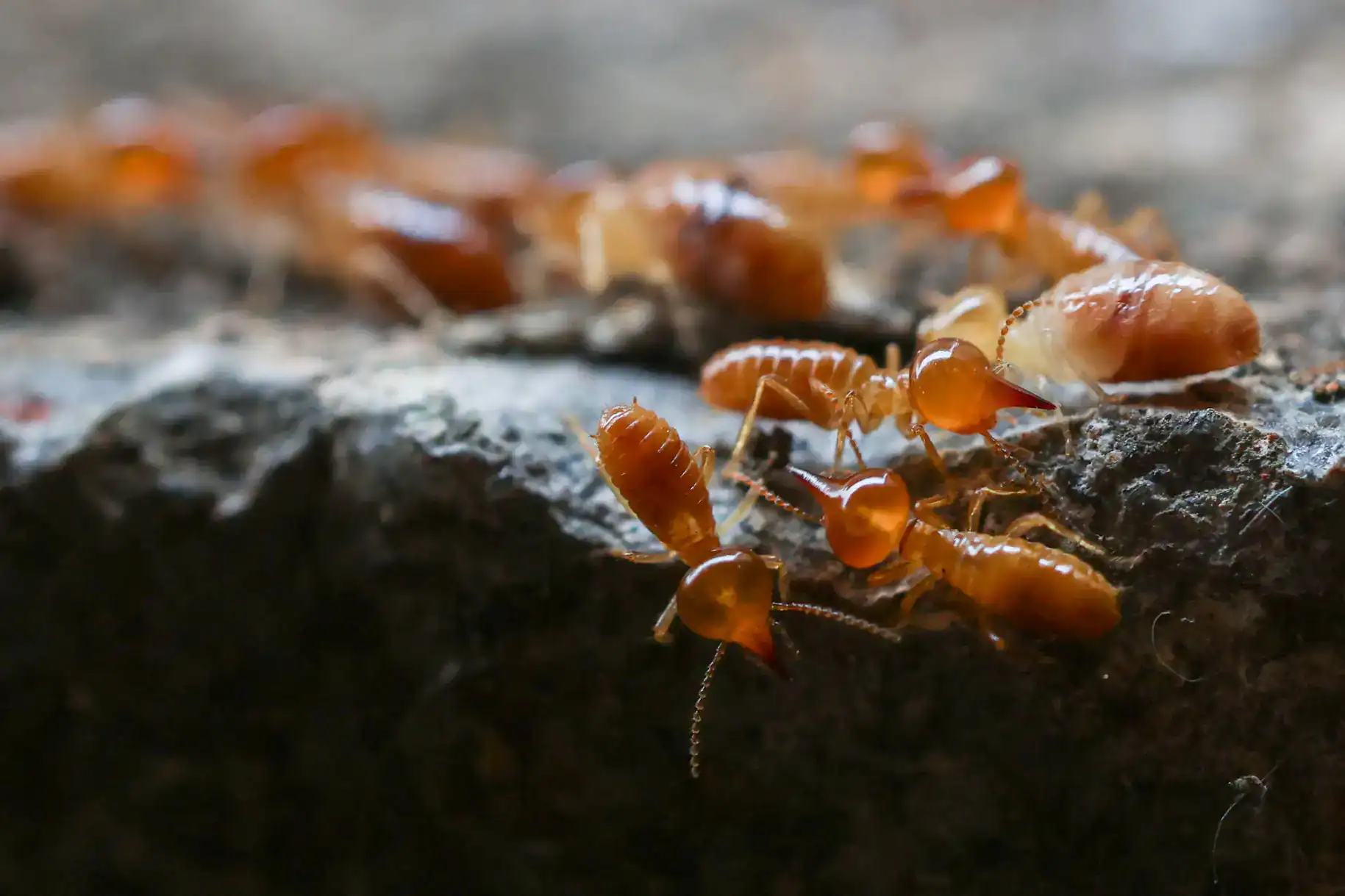
You probably didn’t think much about termites until something made you look it up. Maybe you found a small pile of wings near a windowsill. Maybe a door started sticking that never used to. Maybe your neighbor mentioned it and now you can’t stop thinking about it.
Whatever brought you here, you’re right to take it seriously. Termites work quietly, around the clock, and they don’t stop on weekends. In a city where your home might be your most valuable asset, catching this early, or preventing it entirely, is worth understanding properly. Here’s what you actually need to know.
Most homeowners don’t discover termites by seeing one. They discover them by noticing something feels off: a floor that sounds hollow, paint that’s bubbling without a moisture source, or a door frame that’s slowly warping. By the time those signs show up, the colony has usually been active for a while. The other common moment of discovery is spring. Every year across Brooklyn, Manhattan, and Queens, homeowners find swarms of winged insects crawling out of wall cracks, window frames, and baseboards. That’s not a coincidence; it’s swarming season, when termite colonies send out reproductive members to start new colonies. If you see them inside your home, the colony isn’t outside exploring. It’s already in.
This is one of the most common questions we hear, and it matters because the answer changes everything about how urgently you need to act. Flying ants and termite swarmers look similar at a glance, but there are clear differences once you know what to look for.
Termite swarmers have straight, bead-like antennae and two sets of wings that are equal in length. Flying ants have bent, elbowed antennae and wings where the front pair is noticeably larger than the back. Termite bodies are also more uniform (no pinched waist) while ants have that distinct narrow midsection.
Here’s why this matters in Brooklyn, Manhattan, and Queens specifically: brownstones and pre-war buildings in neighborhoods like Crown Heights, Bed-Stuy, and the Upper West Side are full of the kind of old, moisture-rich wood that subterranean termites love. When swarming season hits in March or April, these buildings are among the first places colonies target. A lot of homeowners in these areas assume what they’re seeing is just a nuisance ant problem and wait it out. That delay is where the real damage happens.
If you find wings, even just a small cluster of them, near a window, baseboard, or light fixture, don’t dismiss it. Wings left behind after a swarm are one of the clearest signs that termites have been active in or near your structure. The swarmers themselves die quickly, but the colony they came from doesn’t.
Visual identification from a photo or a quick glance isn’t reliable enough to make a confident call. A professional inspection is the only way to know for certain what you’re dealing with, and what kind of treatment, if any, is actually needed.
New York City’s housing is old. That’s part of what makes it beautiful, and part of what makes it vulnerable. A brownstone in Park Slope or Carroll Gardens might have original wood framing from the 1890s. A row house in Astoria or Jackson Heights might have a foundation that’s been in direct soil contact for 80 years. A pre-war co-op in Harlem might have aging plumbing that’s been leaking slowly inside a wall for longer than anyone knows.
Subterranean termites, the most common species found in all five boroughs, need two things to thrive: wood and moisture. Older NYC buildings provide both, often in abundance, and often in places that are impossible to inspect without professional equipment.
What makes this particularly tricky in attached housing throughout Brooklyn, Manhattan, and Queens is how termites travel. In a Brooklyn row house or a Queens attached home, a termite colony doesn’t stay contained to one unit. They move through soil and can enter multiple connected structures through shared foundation walls. Your neighbor’s problem can become your problem without either of you knowing it until the damage is already done.
There’s also the basement apartment factor. Brooklyn alone has tens of thousands of basement units, and those below-grade spaces tend to hold moisture, have limited airflow, and sit in direct contact with soil, which is essentially a welcome mat for subterranean termites. If you own a property with a basement apartment or a finished basement, that’s the first place a thorough inspection should start.
The takeaway here isn’t to panic; it’s to be realistic about what your building’s age and construction type means for your risk level. Knowing your risk is the first step toward doing something smart about it.
Want live answers?
Connect with a Kingsway Exterminating expert for fast, friendly support.
There’s a lot of outdated information floating around about termite treatment: images of entire floors being torn up, chemicals being pumped through walls, and weeks of displacement. The reality of modern termite control is considerably less dramatic, and considerably more targeted. The right treatment depends on the type of termite, the severity of the infestation, the construction of your building, and where the colony is located. We assess all of those factors before recommending anything. If someone quotes you a treatment plan before they’ve done a thorough inspection, that’s a red flag worth paying attention to.
Termite baiting is one of the most effective and least disruptive treatment methods available, and it’s particularly well-suited to the kind of dense, attached housing you find throughout Brooklyn, Manhattan, and Queens.
Here’s how it works: we install bait stations in the ground at intervals around the perimeter of your property. Termites find the bait while foraging, feed on it, and carry it back to the colony. The active ingredient in the bait disrupts the termites’ ability to molt, meaning the colony gradually dies from the inside out rather than just being repelled from one entry point. It’s a slower process than some liquid treatments, but it targets the source rather than just the symptom.
For homeowners in attached row houses in Woodside or Astoria, or brownstone owners in Fort Greene or Cobble Hill, this matters a lot. Liquid soil treatments sometimes require drilling through floors or trenching around the foundation, work that’s complicated, messy, and potentially disruptive to neighboring units. Baiting systems avoid most of that. The stations are placed outside, the chemical footprint is minimal, and the treatment doesn’t require you to vacate the property.
One thing worth understanding about baiting: it requires patience and monitoring. Colonies don’t disappear overnight. The stations need to be checked and refreshed on a regular schedule, which is why ongoing monitoring after initial treatment is part of a responsible termite control plan, not an upsell. Annual monitoring plans in Brooklyn, Manhattan, and Queens typically run $300 to $600 per year, and they’re genuinely worth it given what a re-infestation would cost to address.
We use only NYS Department of Environmental Conservation-registered materials, which means everything applied on your property has been evaluated and approved by the state for safety and effectiveness. That matters if you have kids, pets, or just don’t want unknown chemicals in and around your home.
This is one of the most important questions a Brooklyn, Manhattan, or Queens homeowner can ask, and the answer is almost always no.
Standard homeowner’s insurance policies in New York do not cover termite damage. The reasoning insurers use is that termite infestations are considered a preventable maintenance issue rather than a sudden, unexpected event. Regardless of if you agree with that logic or not, the financial reality is that if termites damage your floor joists, your subfloor, your window frames, or your structural beams, you’re paying for that repair yourself.
In a market like Brooklyn or Manhattan, where the cost of structural repairs can easily run into the tens of thousands of dollars, that’s not a small thing. It’s one of the clearest arguments for treating termite control as a genuine investment rather than an optional expense. The average termite treatment in New York runs $412 to $601 for most situations, though more severe infestations can push that higher. Compare that to the cost of replacing a compromised floor system in a Park Slope brownstone, and the math isn’t complicated.
There’s also the real estate angle. If you’re buying or selling a property in Queens, Brooklyn, or Manhattan, a Wood-Destroying Insect (WDI) inspection report is often required as part of the mortgage approval process. We provide those inspections, and if an issue is found, we can address it and document the treatment, which keeps your transaction moving rather than falling apart at the last minute.
For landlords and property managers, the stakes are even higher. NYC’s health code means that a documented pest infestation, including termites, can result in a violation citation. If you’ve received one, or you’re trying to get ahead of one, getting a professional inspection on record is both a practical and a legal necessity. We work with property managers throughout Brooklyn, Manhattan, and Queens and can help you resolve violations involving all types of pests, not just termites.
Don’t wait until you can see the damage. By then, the insurance won’t help you, the repair bill will be real, and the colony has had months or years to grow.
When you’re looking for pest control services in Brooklyn, Manhattan, or Queens, the most important things to verify are straightforward: Is the company licensed and insured? Do they use state-registered materials? Do they inspect before they recommend? And have they actually been doing this long enough to know what they’re looking at in a 100-year-old brownstone or a Queens row house with a crawl space?
We’ve been based in Marine Park, Brooklyn since 1971. That’s over 50 years of working in these boroughs, in these buildings, with these specific pest pressures. We’re fully licensed, bonded, and insured, and we carry an A+ rating with the Better Business Bureau, having been accredited since 1989.
If you’ve noticed something that’s got you concerned, or you just want to know where things stand before a real estate transaction or a seasonal inspection, reach out to us. We’ll give you a straight answer about what you’re dealing with and what it actually takes to fix it.
Summary:

Article details:
Share: