If you keep a clean apartment but still find roaches, you're not imagining things — and it's not your fault. Here's what's really going on in Brooklyn, Manhattan, and Queens buildings.
You keep your apartment clean. You wipe down the counters, take out the trash, seal the leftovers. And then, at 11pm, you turn on the kitchen light and there it is.
The frustrating truth is that in New York City apartments — whether you’re in Brooklyn, Manhattan, or Queens — cockroaches have very little to do with how clean your unit is. They’re coming from somewhere else. And until someone addresses that somewhere else, they’ll keep coming back.
This guide explains what’s actually driving the problem, what your rights are as a NYC tenant, and what a treatment plan looks like when it’s built to last.
This is the part nobody tells you, and it’s the reason so many treatments fail. In a single-family home, a cockroach infestation is usually contained to that structure. In a six-unit Brooklyn walk-up or a twenty-story Queens high-rise, that’s never the case.
Cockroaches move through buildings the same way water does — along the path of least resistance. That means shared plumbing stacks, gaps around pipe penetrations, compactor chutes, and wall voids that connect unit to unit and floor to floor. Your neighbor’s problem becomes yours without either of you doing anything wrong.
There’s a specific scenario that generates a huge number of calls in Brooklyn and Queens, and it goes like this: a neighbor moves out, or their unit gets treated, and suddenly you have roaches when you never did before. It feels random. It isn’t.
When cockroaches lose access to food and water — because a neighboring unit is vacated or treated — they migrate. They follow the plumbing risers and utility chases in search of a new source, and they end up in your walls, your kitchen, your bathroom. This is one of the most common triggers for a new infestation in NYC multi-family buildings, and it has nothing to do with anything you did or didn’t do.
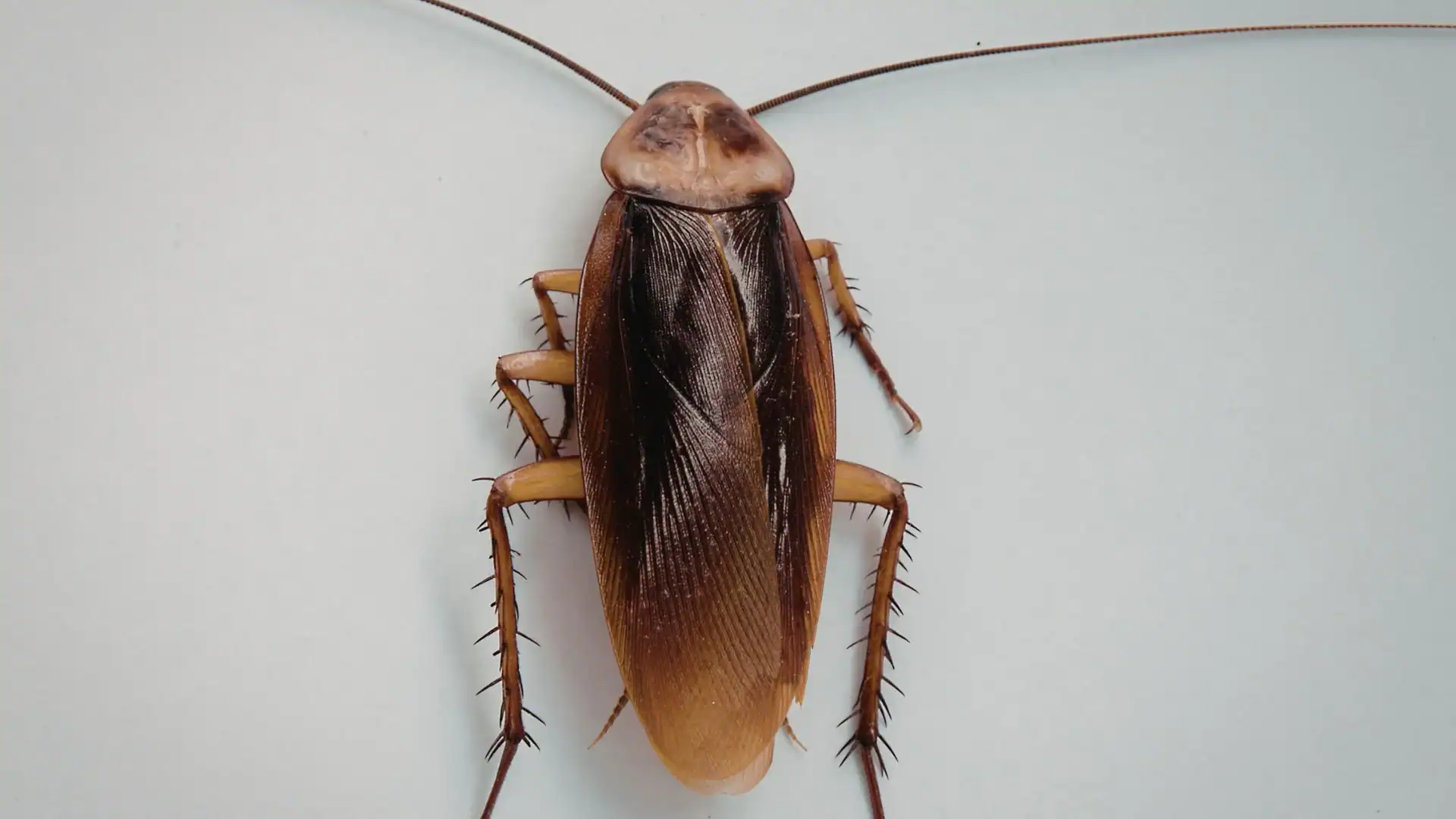
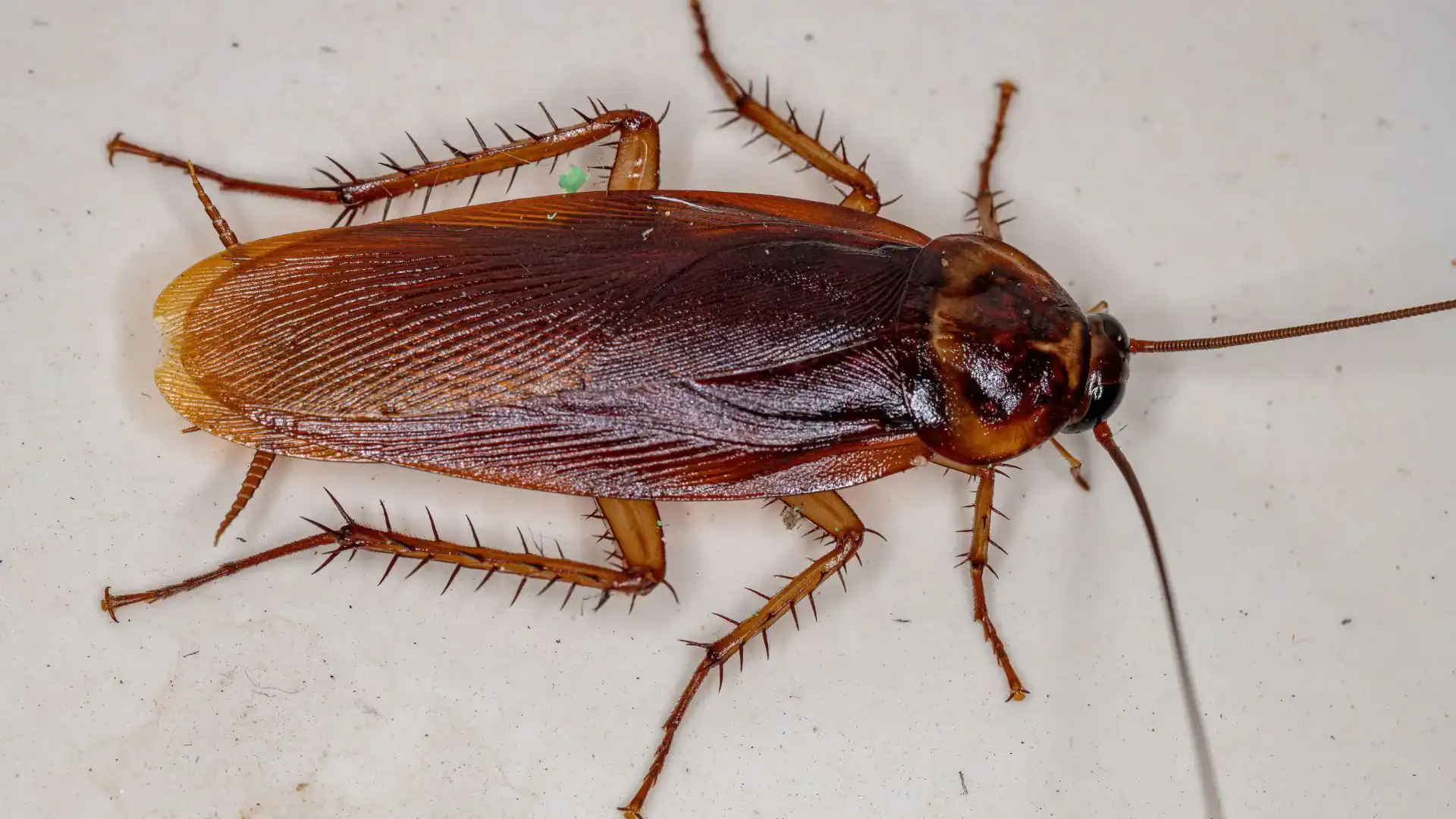
The four cockroach species that show up most often in Brooklyn, Manhattan, and Queens apartments are the American cockroach, the German cockroach, the Oriental cockroach, and the brown-banded cockroach. Of those, German cockroaches are the most common inside apartments — small, fast, and capable of producing up to 50 eggs per egg case with a hatch cycle of roughly 28 days.
American cockroaches, which New Yorkers often call waterbugs, tend to come up from sewer lines and basement drains, especially in warmer months. They’re the same insect — just a different name for a different species. Understanding which species you’re dealing with actually matters for treatment. German cockroaches require gel baits and crack-and-crevice work in the areas where they harbor — behind appliances, inside cabinet hinges, under sinks. American cockroaches often require drain treatments that many providers skip entirely.
A technician who doesn’t identify the species before treating isn’t doing the job correctly. One more thing worth knowing: cockroaches are nocturnal. If you’re seeing them during the day, or spotting them regularly at night, the population is already large enough that individuals are being pushed out of hiding by competition. One visible cockroach is rarely just one cockroach.
This is where a lot of tenants get stuck — they know something is wrong, they’ve told their landlord, and nothing has happened. So it helps to know exactly what the law says.
Under New York City’s Warranty of Habitability, landlords are legally required to maintain a pest-free living environment. Cockroach infestations are classified as Class B violations — listed as hazardous — under the NYC Housing Maintenance Code. That’s not a minor complaint. It’s an enforceable housing code violation that can result in fines levied against your landlord by the city.
NYC’s Local Law 55, the Asthma-Free Housing Act passed in 2018, goes further. It requires landlords of buildings with three or more units to conduct annual inspections for pests — including cockroaches — and to remediate any conditions found. The law exists specifically because of the documented connection between cockroach allergens and asthma, particularly in children. It’s not a suggestion. It’s a mandate.
If your landlord isn’t acting, your first step is to file a complaint through 311. That triggers an HPD inspection, creates a formal record, and puts your landlord on notice that the city is now involved. If the problem still isn’t addressed, tenants can pursue an HP proceeding in housing court — a legal process that compels landlords to make repairs, pest control included.
Here’s the practical reality, though: the legal process takes time, and an infestation doesn’t wait. Some tenants choose to hire their own exterminator while pursuing the landlord through proper channels, and in some cases can seek rent reduction or reimbursement through housing court. That’s a decision worth making with full information rather than just waiting and hoping the problem resolves itself. It won’t.
The health stakes are real. Cockroaches carry up to 30 types of bacteria — including E. coli and Salmonella — and their shed body parts and droppings are a documented trigger for asthma attacks. For families with children or elderly residents, that’s not an abstract concern.
Want live answers?
Connect with a Kingsway Exterminating expert for fast, friendly support.
If you’ve had a pest control company come through before and the roaches came back within two weeks, there’s usually a reason. A surface spray covers what’s visible. It doesn’t reach the wall voids, the pipe gaps, the drain lines, or the cracks behind the refrigerator where cockroaches actually live and reproduce.
Effective treatment in a Brooklyn, Manhattan, or Queens apartment building requires more than one visit and more than one technique. It requires understanding the building’s structure and treating the infestation at its source — not just the evidence of it.
For NYC apartment infestations, we recommend our special 2-visit clean-out service, followed by regularly scheduled maintenance visits. The structure matters.
The first visit handles the heavy lifting — inspection, species identification, gel bait placement in harborage areas, crack-and-crevice treatment, drain treatment where American cockroaches are entering, and treatment of wall voids and utility penetrations where cockroaches are traveling between units. This is the part most providers skip or rush through.
The second visit, typically scheduled a few weeks later, addresses what the first visit flushed out. Cockroaches that were deep in the walls during the initial treatment will have moved. Egg cases that weren’t yet hatched will have hatched. The follow-up isn’t optional — it’s the visit that closes the gap between “mostly gone” and actually gone.
Maintenance visits after the clean-out exist because the building doesn’t change. If your neighbors haven’t treated, if the plumbing risers are still providing a travel path, if the building’s compactor area is still a food source, the pressure on your unit continues. Regular maintenance keeps that pressure from turning back into a full infestation.
Every material we use is EPA-approved and NYS DEC-registered. Before we start any work, you’ll have a written cost estimate — no vague quotes, no surprise charges when the invoice arrives. And if the problem isn’t resolved, we come back. That’s not a marketing line; it’s how we’ve operated for over 50 years in Brooklyn and Queens.
This comes up constantly, and the answer is no — and the NYC Department of Health agrees. Foggers, commonly called bug bombs, do not penetrate the areas where cockroaches actually live. They disperse a chemical cloud through open air, which cockroaches avoid by retreating deeper into wall voids and cracks. The result is that the fogger kills some exposed insects, leaves toxic residue on your kitchen surfaces and food prep areas, and does nothing to the population that’s actually driving the infestation.
Worse, foggers can scatter cockroaches into adjacent units — which is exactly the migration dynamic that creates infestations in neighboring apartments across Brooklyn, Manhattan, and Queens. You treat your unit with a bomb, the roaches move next door, and two weeks later they’re back. The cycle continues.
The same logic applies to most over-the-counter sprays. They work on contact, which means they only affect cockroaches you can see. German cockroaches, the most common species in NYC apartments, spend the vast majority of their time hidden inside cabinet hinges, behind appliances, inside wall voids, and under sinks. A spray you apply to a visible surface doesn’t reach them.
Gel baits work differently. They’re placed directly in harborage areas, cockroaches consume them and carry the active ingredient back to the colony, and the effect spreads through the population over time. Combined with crack-and-crevice treatment, drain treatment, and exclusion work — sealing the entry points cockroaches are using — this is the approach that produces lasting results rather than a two-week reprieve.
If you’ve already tried the store-bought options and you’re still finding roaches, that’s not a sign that your situation is hopeless. It’s a sign that the infestation is deeper than a surface treatment can reach, and that it’s time to address the building-level source.
The short version: cockroaches in a clean NYC apartment are a building problem, not a personal one. They travel through shared infrastructure, they migrate when neighboring units are treated or vacated, and they reproduce fast enough that a small problem becomes a large one in a matter of weeks.
You have legal protections as a tenant, a landlord with enforceable obligations, and a 311 complaint process that creates a formal record. But the law moves slowly, and the infestation doesn’t.
If you’re ready to actually resolve it, Kingsway Exterminating Company has been doing exactly that in Brooklyn, Manhattan, and Queens for over 50 years. Give us a call — we’ll tell you what we’re seeing, what it will take to fix it, and what it costs before we do anything.
Summary:

Article details:
Share: