
Hear from Our Customers
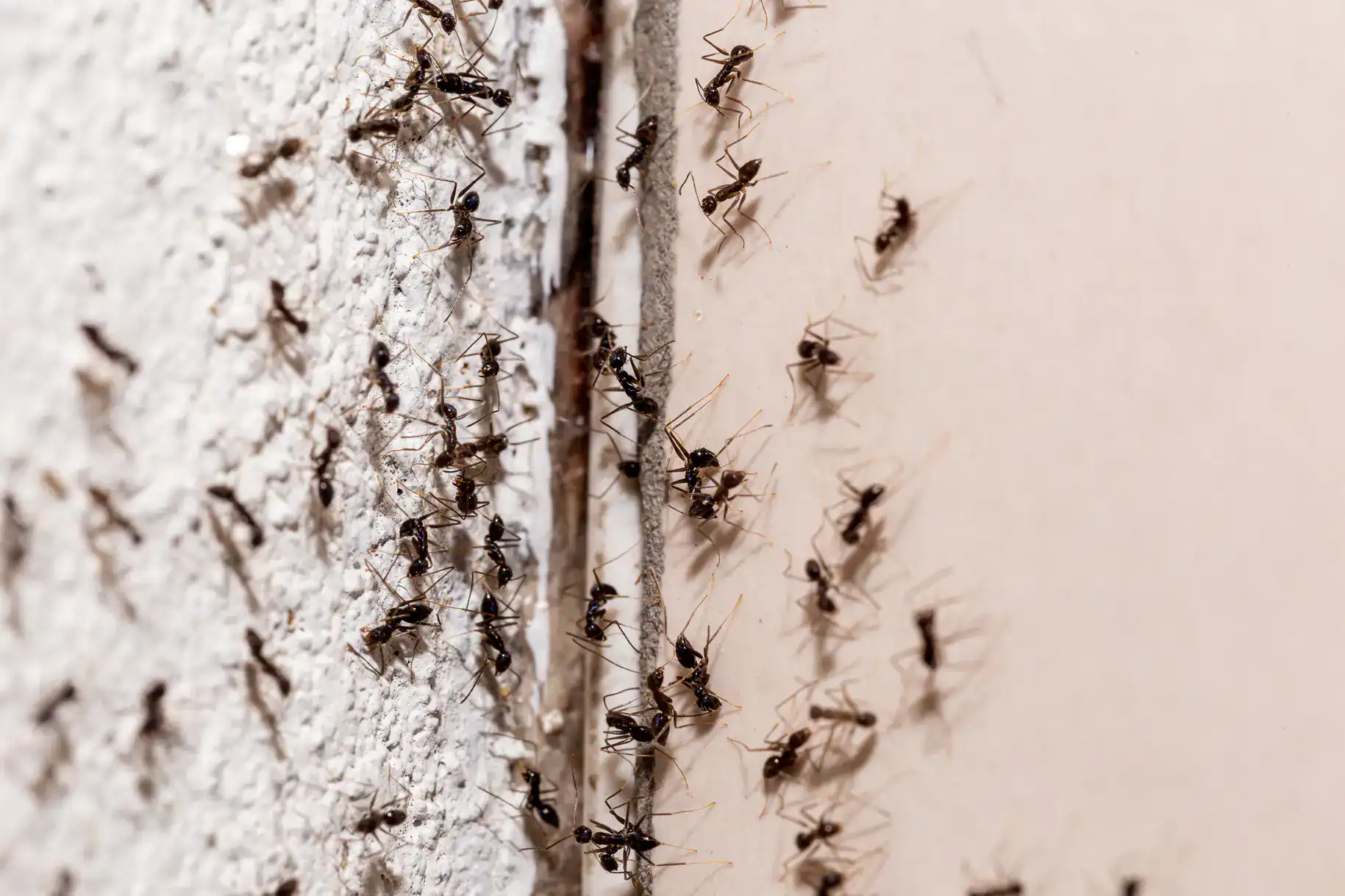
When you stop seeing ants, that’s not the finish line it’s just the beginning of what actually working looks like. Real ant control in Bensonhurst means the colony is gone, not just the trail on your kitchen counter. That’s the difference between a spray and a solution.
Bensonhurst’s housing stock is the issue most people don’t think about until it’s too late. These brick rowhouses and two-family homes along 79th Street, Bay Parkway, and 18th Avenue were built in the 1920s and 1930s. Decades of settling foundations, aging concrete, and shared party walls between attached homes create entry points that ants exploit every single spring and again after every heavy rain when flooded ground nests push them indoors. A can of spray from the hardware store doesn’t reach any of that.
Carpenter ants are a separate conversation entirely. If you’re seeing large black ants near a window frame, in the basement, or around your plumbing, that’s not a nuisance that’s a structural warning. Pre-war building stock like what dominates Bensonhurst gives carpenter ants everything they need: moisture-softened wood, aging joists, damp basement sills. Getting rid of them means finding and eliminating the nest, not treating the surface.
We’re a family-owned business headquartered at 2216 Flatbush Avenue in Brooklyn not a national franchise, not a call center in another state. Richard Kourbage founded our company over 50 years ago, and we’ve been operating in the same borough ever since, treating the same types of buildings Bensonhurst residents live in. That matters when the home you’re trying to protect is a 90-year-old rowhouse with a shared wall and a basement that’s seen better days.
We hold an A+ rating with the Better Business Bureau of New York State and are fully licensed, bonded, and insured. Every material we use is registered with the NYS Department of Environmental Conservation a non-negotiable compliance standard that protects your family, your kids, and your pets. We also offer a 10% senior discount, because a significant portion of Bensonhurst’s long-term homeowners have been on the same block for decades and deserve straightforward, fair service.
It starts with a free estimate no obligation, no mystery pricing. One of our licensed technicians comes to your property, assesses where the infestation is coming from, identifies the species involved, and maps out the scope of the problem. In Bensonhurst, that assessment almost always includes the exterior perimeter, the foundation line, and any basement or ground-floor entry points because that’s where pavement ant colonies establish themselves in this neighborhood’s older concrete and sidewalk infrastructure.
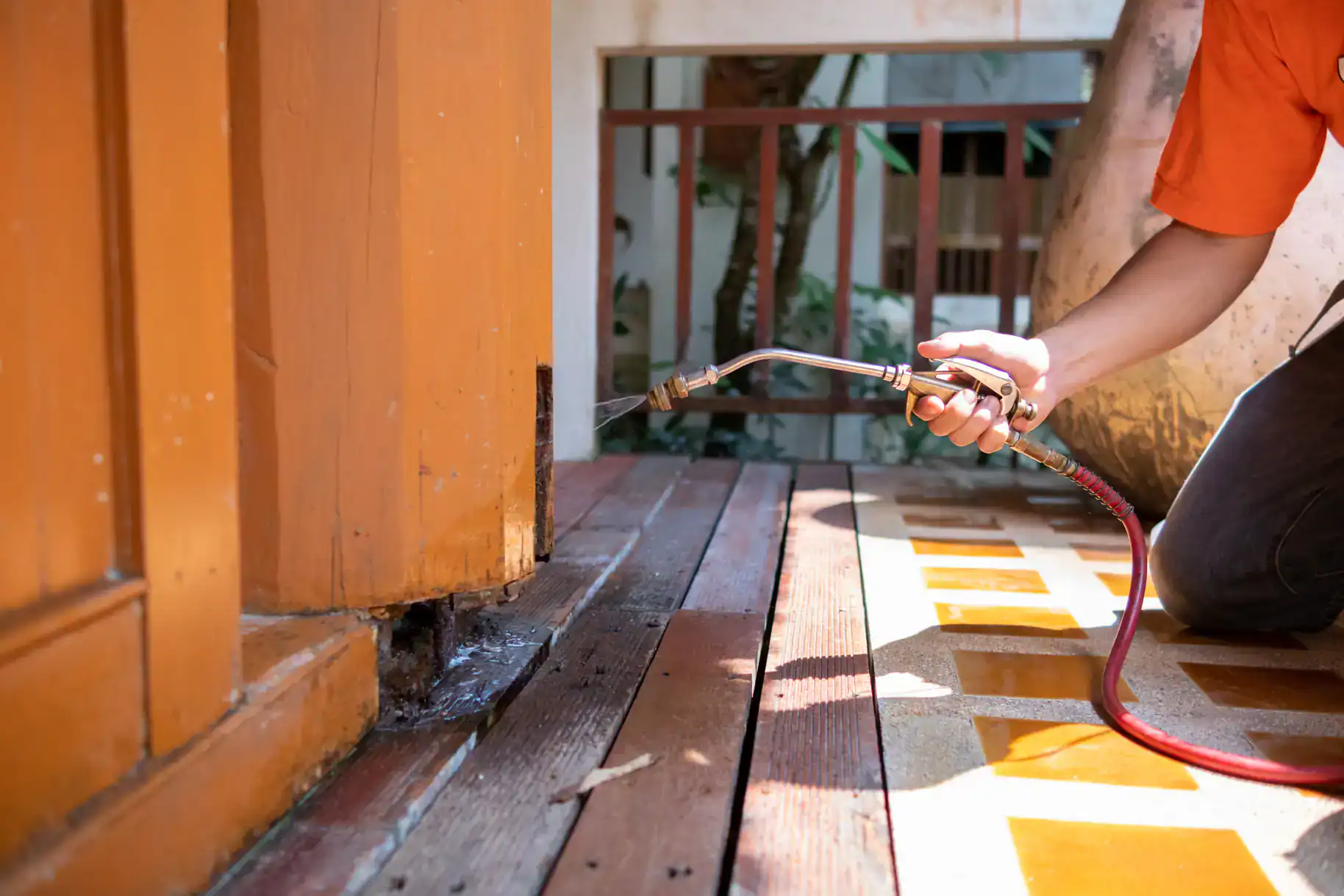
The first service is a full cleanout. We apply treatment both inside and outside the property using materials that foraging ants carry back into the nest and share with the colony. That transfer effect is what eliminates the source not just the ants you can see. Surface sprays don’t do this. That’s why they don’t work long-term.
After the initial treatment, we schedule follow-up visits weekly, every other week, or monthly depending on the severity to re-apply materials and confirm the infestation is fully resolved. In attached rowhouses, where ants can migrate laterally through shared walls from a neighboring unit, that follow-through isn’t optional. It’s the only way to make sure the problem stays gone. Our phones are answered 24 hours a day, seven days a week, so if something comes up between visits, you’re not waiting until Monday morning.
Ready to get started?
Ant control in Bensonhurst isn’t one-size-fits-all, and it shouldn’t be treated that way. The two species that cause the most problems in this neighborhood are pavement ants and carpenter ants and they require completely different approaches. Pavement ants nest in the cracks and gaps under Bensonhurst’s aging sidewalks and building foundations, entering homes through plumbing penetrations and foundation seams. Carpenter ants nest inside moisture-damaged wood the kind found in basement floor joists, window frames, and wall voids in pre-war construction throughout the neighborhood.
Every service we provide includes interior and exterior treatment, perimeter application along the foundation line, and targeted placement of transfer-based materials that reach the colony rather than just the surface. For carpenter ant infestations, we locate the nest not just the activity because surface treatment alone will not eliminate a colony that’s established inside the structural wood of your home. All materials we use are NYS DEC-registered and applied by licensed technicians who understand both the regulatory requirements and the specific conditions of Brooklyn’s older residential building stock.
Follow-up visits are built into the process, not sold as an add-on. Kings County’s housing density and Bensonhurst’s attached rowhouse typology mean that a single visit rarely tells the full story. Maintenance scheduling whether weekly, monthly, or every other month is flexible and based on what your property actually needs, not a rigid contract.
Store-bought sprays kill the ants you can see but they do nothing to the colony. Ant colonies in Bensonhurst’s rowhouses and two-family homes can contain thousands of workers spread across multiple nests, including satellite nests inside wall voids, under foundation slabs, and along the shared party walls between attached units. When you spray the trail, the colony simply reroutes. The foragers you killed get replaced within days, and the cycle starts over.
Professional ant control works differently because the materials are designed to be transferred. Foraging ants pick up the treatment and carry it back into the nest, where it spreads through the colony including the queen, which is the only way to actually stop reproduction. That’s the mechanism that ends an infestation rather than just suppressing it temporarily. In a neighborhood where homes share walls and sit on 90-year-old foundations with no shortage of entry points, that colony-elimination approach is the only one that holds.
The most reliable visual indicator is size. Carpenter ants are significantly larger than the small pavement ants that trail across kitchen floors in spring they’re typically a quarter to a half inch long, and they’re usually black or dark brown. If you’re seeing large ants near window frames, in the basement, around plumbing, or emerging from wall voids, carpenter ants are the likely culprit.
The bigger concern with carpenter ants in Bensonhurst’s pre-war building stock is what they’re doing inside your walls. Unlike termites, carpenter ants don’t eat wood they excavate it to build their nests, and they specifically target wood that’s already been softened by moisture. Basement sills, aging floor joists, and window frames in 80- or 90-year-old rowhouses are prime nesting sites. If you’re seeing large black ants in winter when outdoor ant activity has completely stopped that’s a strong sign the colony is established inside your home’s structure and active year-round in the heated building. That situation warrants a professional inspection, not another can of spray.
Yes, and this is one of the most common reasons ant infestations in Bensonhurst’s attached rowhouses keep returning even after treatment. In a detached single-family home, treating your property creates a contained barrier. In an attached rowhouse or two-family home which is the dominant housing type throughout Bensonhurst the shared party wall between units is a direct migration pathway. If your neighbor has an untreated colony, ants will move laterally through gaps, conduit penetrations, and structural voids in that shared wall and re-enter your unit.
This doesn’t mean treatment is futile it means the exterior perimeter treatment and the placement of transfer-based materials need to account for that shared boundary specifically. Our protocol includes exterior perimeter application that addresses the full footprint of the infestation, not just the interior of your unit. In multi-unit buildings and attached homes along blocks like those between 18th Avenue and Bay Parkway, that full-perimeter approach is what makes the difference between a treatment that holds and one that doesn’t.
Ant activity in Bensonhurst follows a predictable seasonal pattern, with the most intense period running from April through August. As temperatures climb above 50°F in spring, colonies that have overwintered in wall voids and under foundations begin expanding and foraging. Pavement ant trails become visible along sidewalks and through foundation cracks, and carpenter ant swarms winged reproductive ants typically emerge in May and June. That swarm event is often when homeowners first realize the scale of what they’re dealing with, and it’s a strong signal to call before the colony grows further.
Heavy rain events accelerate the timeline significantly. Bensonhurst’s dense impervious surfaces sidewalks, driveways, and streets give water fewer places to go, and ground-nesting ants get displaced in large numbers when their nests flood. Post-rain ant surges into homes are common throughout the neighborhood’s summer thunderstorm season. The short answer: if you’re seeing trails in spring, don’t wait for it to get worse. The earlier you address a colony, the smaller it is and the faster it’s eliminated.
This is one of the most common questions we get, and it’s a fair one. Bensonhurst is a family-dense neighborhood, and most households have children, elderly family members, or pets sharing the space. The materials we use are registered with the New York State Department of Environmental Conservation, which means they’ve been evaluated and approved by the state agency responsible for environmental and public health standards. These are not the same as the aerosol products sold at hardware stores, which are often over-applied and poorly targeted.
Professional application is precise and controlled. Our technicians know exactly where to apply materials, in what quantities, and how to minimize exposure to non-target areas. Re-entry timing after treatment is straightforward your technician will walk you through it before they leave. The goal is effective treatment with the smallest possible footprint in your living space, and that’s what licensed, DEC-compliant application delivers. If you have specific concerns about a family member’s health condition or a pet with sensitivities, mention it when you call we’ll factor that into the approach.
We offer a 10% senior discount, and it applies to Bensonhurst residents the same as anywhere else we serve in Brooklyn. A significant share of this neighborhood’s homeowners have lived on the same block for 20, 30, or 40 years long-term residents in aging homes who are dealing with the same structural realities that come with pre-war construction: settling foundations, old plumbing, moisture in the basement. The discount is a straightforward acknowledgment that those residents deserve fair pricing on a service they genuinely need.
Beyond the senior discount, every service starts with a free estimate no commitment required. You’ll know exactly what the treatment involves and what it costs before we do any work. There are no hidden fees and no pressure to sign a long-term contract. Maintenance scheduling after the initial cleanout is flexible weekly, monthly, or every other month based on what your property actually needs. For Bensonhurst homeowners who’ve been burned by vague quotes or one-visit-and-done exterminators before, that upfront clarity tends to matter a lot.
Useful Links