
Hear from Our Customers
There’s a version of this problem that never fully goes away where you spray, they disappear for a week, and then you’re back at the kitchen sink watching a trail move across the counter. That cycle is exhausting, and it’s not your fault. Store-bought products kill what you can see. They don’t reach the colony.
The Lower East Side presents a specific kind of ant pressure that most neighborhoods don’t deal with at the same scale. Pre-war tenements along Orchard and Rivington carry decades of moisture in their wall joists exactly the conditions carpenter ants look for when establishing a nest. Pavement ants colonize the dense sidewalk infrastructure that runs beneath every block, and when it rains, they move fast. A single heavy rain event can push a ground-floor unit from “a few ants” to a full trail in hours.
When the source of the infestation is treated not just the surface the difference is immediate and lasting. No more checking the baseboards every morning. No more worrying about what’s inside the walls. That’s what professional ant control in Lower East Side actually looks like when it’s done right.
We’ve been treating pest infestations across New York City for over 40 years. That means our technicians have worked inside the same pre-war walk-ups and mixed-use buildings that define the Lower East Side buildings where ant problems travel through shared plumbing voids and wall cavities, not just through an open window.
We’re family-owned and operated, hold an A+ rating with the Better Business Bureau of New York State, and use only NYS Department of Environmental Conservation-registered materials. Those aren’t just credentials they’re the reason property managers and longtime residents from Two Bridges to Essex Crossing keep calling back year after year.
When you work with us, you’re not getting a franchise tech running a route. You’re getting a licensed, named professional who knows what these buildings are made of and how ant colonies actually behave inside them.
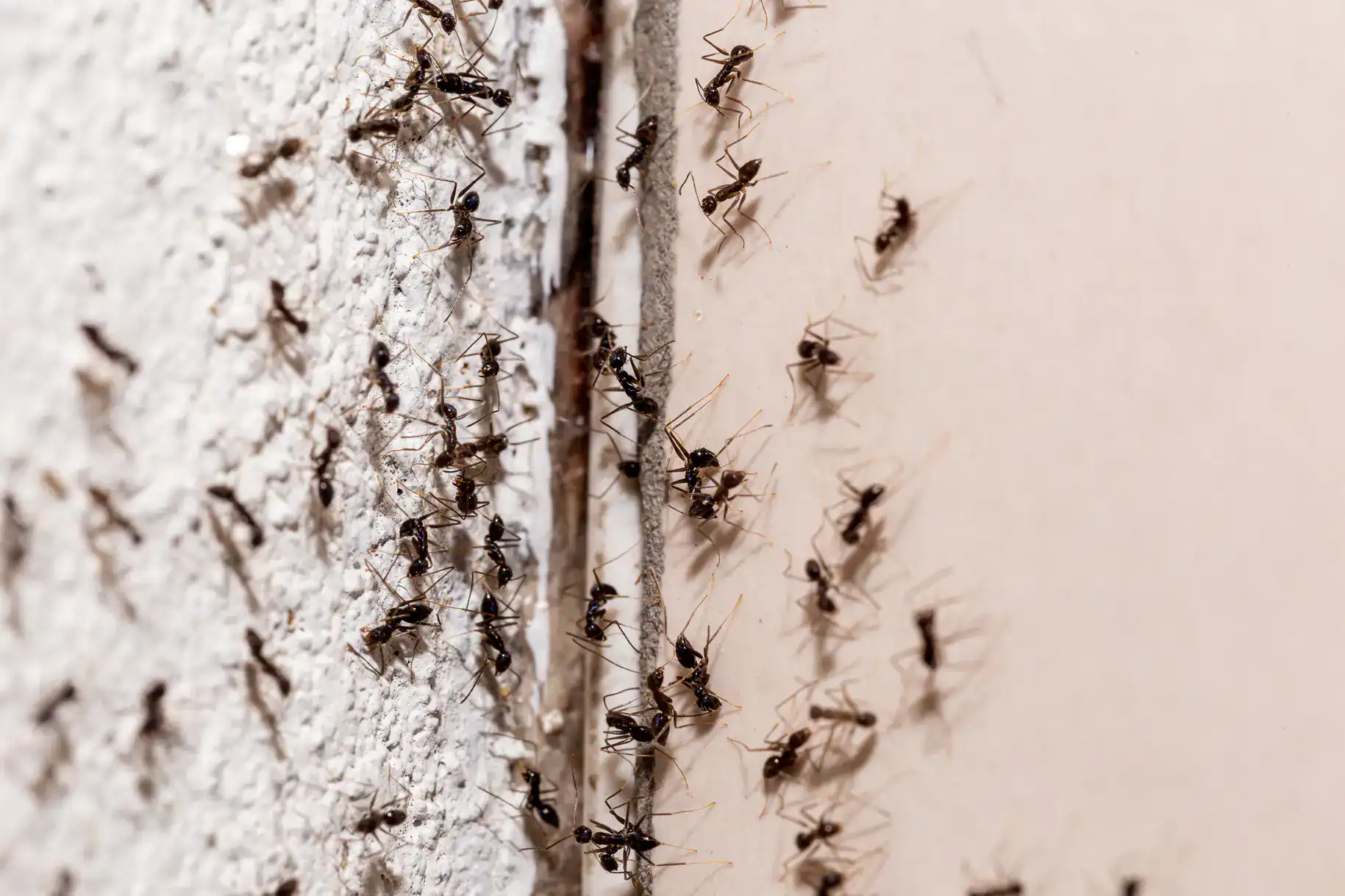
The process starts with a free estimate, so you know exactly what you’re dealing with before anything begins. Once service is scheduled, the initial treatment addresses both the interior of your unit and the exterior of the building entry points, foundation lines, and the structural zones where colonies establish themselves. This matters especially in Lower East Side buildings, where ants rarely stay contained to one apartment. They travel through the same infrastructure the whole building shares.
The materials we use are professional-grade and NYS DEC-registered, applied in targeted quantities by a licensed technician. They’re designed so that foraging ants carry the treatment back into the nest and share it with the colony which is how you get to the source rather than just knocking back the visible trail. Re-entry guidance is provided so your household knows exactly when it’s safe to resume normal activity.
After the initial cleanout, follow-up visits are scheduled based on what your property needs weekly, every other week, or monthly. Spring is when ant pressure peaks in the Lower East Side, particularly for carpenter ants in older buildings, but our maintenance scheduling keeps protection active year-round. If something comes back between visits, we come back too.
Ready to get started?
Ant control in the Lower East Side isn’t the same job it is in a detached home with a lawn and a perimeter. The buildings here are vertical, shared, and old and the ant species that dominate this neighborhood reflect that environment. Carpenter ants nest in moisture-damaged wood inside walls. Pavement ants come up through concrete. Odorous house ants follow plumbing lines between floors. Each one requires a different approach, and our technicians know the difference.
For residential tenants, our service covers your unit and the building’s exterior contact points. For property managers and building owners across the Lower East Side, we offer commercial ant control services with documented, multi-visit treatment programs the kind of paper trail that matters when HPD is involved. Under New York City’s Housing Maintenance Code, landlords are required to address pest infestations, and a reactive response after a violation is always more disruptive than a scheduled maintenance program.
Every service includes a free estimate, uses NYS DEC-registered materials, and is backed by our 24/7 phone availability. Seniors receive a 10% discount. Whether you’re in a rent-stabilized Stanton Street walk-up or a new unit near Essex Crossing, the service is the same: thorough, documented, and followed up until the problem is resolved.
Spring is peak season for ant activity throughout New York City, but the Lower East Side has a few specific factors that make it more intense than most neighborhoods. The pre-war tenement buildings that line streets like Orchard, Rivington, and Stanton accumulate moisture in their aging wood framing over the winter and when temperatures rise, carpenter ants that have been dormant in wall voids become active and start expanding their colonies. At the same time, pavement ants nesting in the dense sidewalk infrastructure throughout the neighborhood begin foraging aggressively as the ground warms.
If you’ve tried sprays and the ants keep coming back each spring, it’s because the colony was never treated only the foragers you could see were killed. A professional ant control treatment reaches the nest itself, which is the only way to break the cycle. Scheduling service in early spring, before colonies reach full activity, gives you the best result heading into the warmer months.
Yes and in the Lower East Side’s pre-war tenements and walk-ups, this is one of the most common reasons ant infestations are so persistent. Ants don’t recognize the boundaries between units. They travel through shared plumbing voids, electrical conduits, and wall cavities that connect apartments throughout the building. A colony established in the basement or ground floor can send foraging trails into multiple units above it without anyone on the upper floors ever seeing where the ants are actually coming from.
This is also why a single-unit treatment often doesn’t hold. If the colony source is in a shared structural space which is common in older Lower East Side buildings treating only one apartment leaves the rest of the infestation untouched. Our process addresses both the interior of your unit and the exterior of the building, targeting the entry points and structural zones where colonies are most likely to be established. For property managers dealing with building-wide activity, a coordinated multi-unit treatment is the only approach that actually works.
This is one of the most common questions we get, and it’s a fair one especially in a neighborhood where apartments are small and there’s no easy way to keep kids or pets out of a treated room for long. All materials we use are NYS Department of Environmental Conservation-registered, which means they’ve been reviewed and approved for use in residential settings in New York State. They’re applied in targeted quantities by a licensed technician who knows exactly where and how much to use not broadcast-sprayed across every surface.
After treatment, your technician will give you specific re-entry guidance based on what was applied and where. This is a meaningful difference from over-the-counter aerosols, which many Lower East Side residents over-apply in small, poorly ventilated spaces without any guidance on safe exposure levels. Professional application is more controlled, more targeted, and ultimately safer than the DIY approach most people try first.
Three species show up most consistently in the Lower East Side’s residential and commercial buildings. Pavement ants are extremely common throughout the neighborhood because they nest in cracks in concrete and sidewalks infrastructure that covers virtually every block in the Lower East Side. They enter ground-floor apartments and basement-level spaces through foundation gaps, and they move fast after rain events when their nests get waterlogged.
Odorous house ants are the ones most people encounter in their kitchens small, fast-moving, and attracted to any food source. They follow plumbing lines and can appear seemingly out of nowhere in upper-floor units. Carpenter ants are the most structurally significant concern, particularly in the Lower East Side’s pre-war tenement buildings, where aging wood and moisture from decades of plumbing use create ideal nesting conditions. Carpenter ants don’t eat wood, but they excavate it to build their nests and in an older building, that can mean real structural damage over time if the colony goes untreated.
Under New York City’s Housing Maintenance Code, your landlord is legally required to keep your unit free of pest infestations, including ants. If they’re not responding, you have the right to file a complaint through 311, which can trigger an HPD inspection. HPD can issue violations and fines against landlords who fail to address documented pest conditions and those violations create a legal record that strengthens your position as a tenant.
If you want to move faster than the HPD process allows, you can hire us directly and document everything the infestation, the treatment, and any communication with your landlord. We provide free estimates, so you can understand the cost before committing. Some tenants in rent-stabilized Lower East Side buildings have successfully sought reimbursement from their landlords after self-arranging treatment that the landlord was obligated to provide. Keeping a paper trail from the start makes that process significantly easier.
Yes. The Lower East Side’s concentration of restaurants, bars, and mixed-use buildings makes commercial ant control one of the most common service requests we handle in this neighborhood. Food service environments with open food storage, floor drains, and grease traps create continuous foraging pressure that can spread from a ground-floor commercial space into the residential units above it. Treating one without addressing the other rarely holds.
Our commercial ant control services are built around documented, multi-visit treatment programs that give property managers and business owners a clear record of proactive pest management. This matters both for HPD compliance and for the practical reality of running a food service operation in a dense urban environment. Service is available for individual commercial units, entire mixed-use buildings, and ongoing maintenance accounts with scheduling flexible enough to work around business hours and operational needs. If you manage multiple properties in the Lower East Side, we can structure a maintenance program across all of them.
Useful Links