Hear from Our Customers
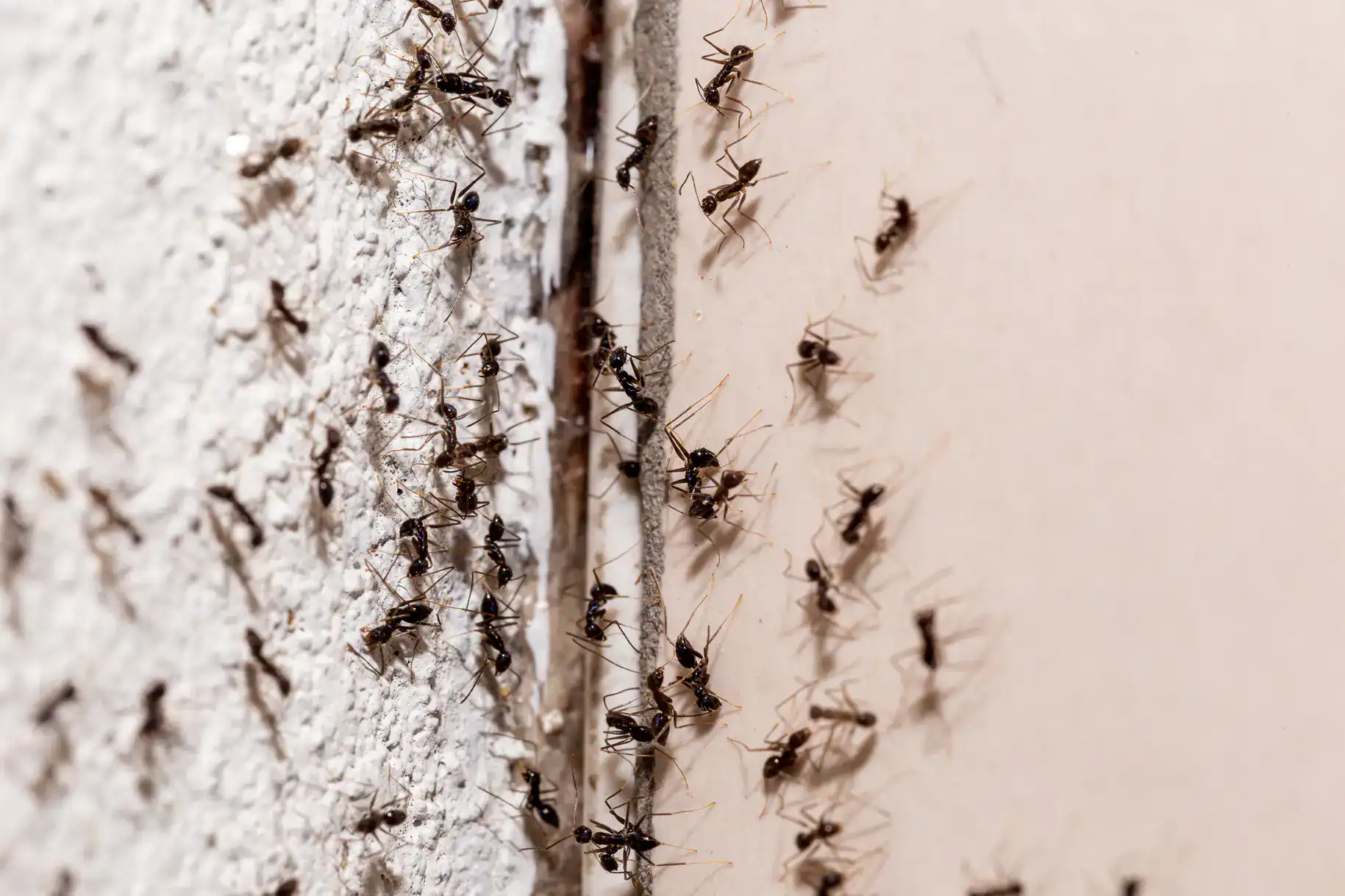
The ants on your counter aren’t the problem. They’re a symptom. The colony potentially tens of thousands of workers is somewhere inside your building’s infrastructure, and until that’s eliminated, the foragers you keep seeing will keep coming back no matter what you spray.
In Upper East Side apartments, that colony is usually hiding somewhere you can’t easily access. The pre-war co-ops and brownstones along Fifth Avenue, Park Avenue, and Carnegie Hill were built between the 1880s and 1930s. Decades of plumbing work, renovation layers, and aging mortar have left behind a network of gaps, voids, and penetrations that ants navigate freely often spreading from one unit to the next through shared walls without anyone knowing where the source is.
When the colony is gone, the difference is immediate and lasting. No more trail across the kitchen counter every morning. No more ants appearing after rain. No more wondering if your neighbor’s unit is the real problem. You get your kitchen back, your peace of mind back, and the confidence that the treatment actually worked not just for a week, but for good.
We’ve been serving all five boroughs of New York City for over 50 years. The buildings on the Upper East Side the pre-war co-ops near Museum Mile, the Carnegie Hill townhouses, the Yorkville walkups a few blocks from the Q train are exactly the kind of buildings our technicians have been working in for decades. We know the infrastructure of these buildings, the common entry points for ants, and the shared wall systems that make multi-unit infestations spread.
We’re fully licensed, bonded, and insured, and we use only NYS Department of Environmental Conservation-registered materials. We hold a consistent A+ rating with the Better Business Bureau of New York State not because we ask for it, but because it reflects how we’ve operated since day one. Our company was built on a straightforward idea: do the job right, do it at a fair price, and show up when you say you will.
We answer calls 24 hours a day, 7 days a week. We offer free estimates. And we offer a 10% senior discount which matters in a neighborhood where many residents have lived in the same co-op apartment for thirty years.
The first visit starts with an inspection. Before any treatment goes down, we identify what species you’re dealing with because that determines everything. Pavement ants nesting under your building’s foundation slab are treated differently than carpenter ants in moisture-damaged wood behind a bathroom wall. And if you have pharaoh ants the tiny pale yellow ones common in Manhattan apartment buildings using a repellent spray is the worst thing you can do. It causes the colony to split into multiple new colonies, each with its own queen. One infestation becomes five. Identifying the species first isn’t a formality. It’s what keeps the treatment from making things worse.
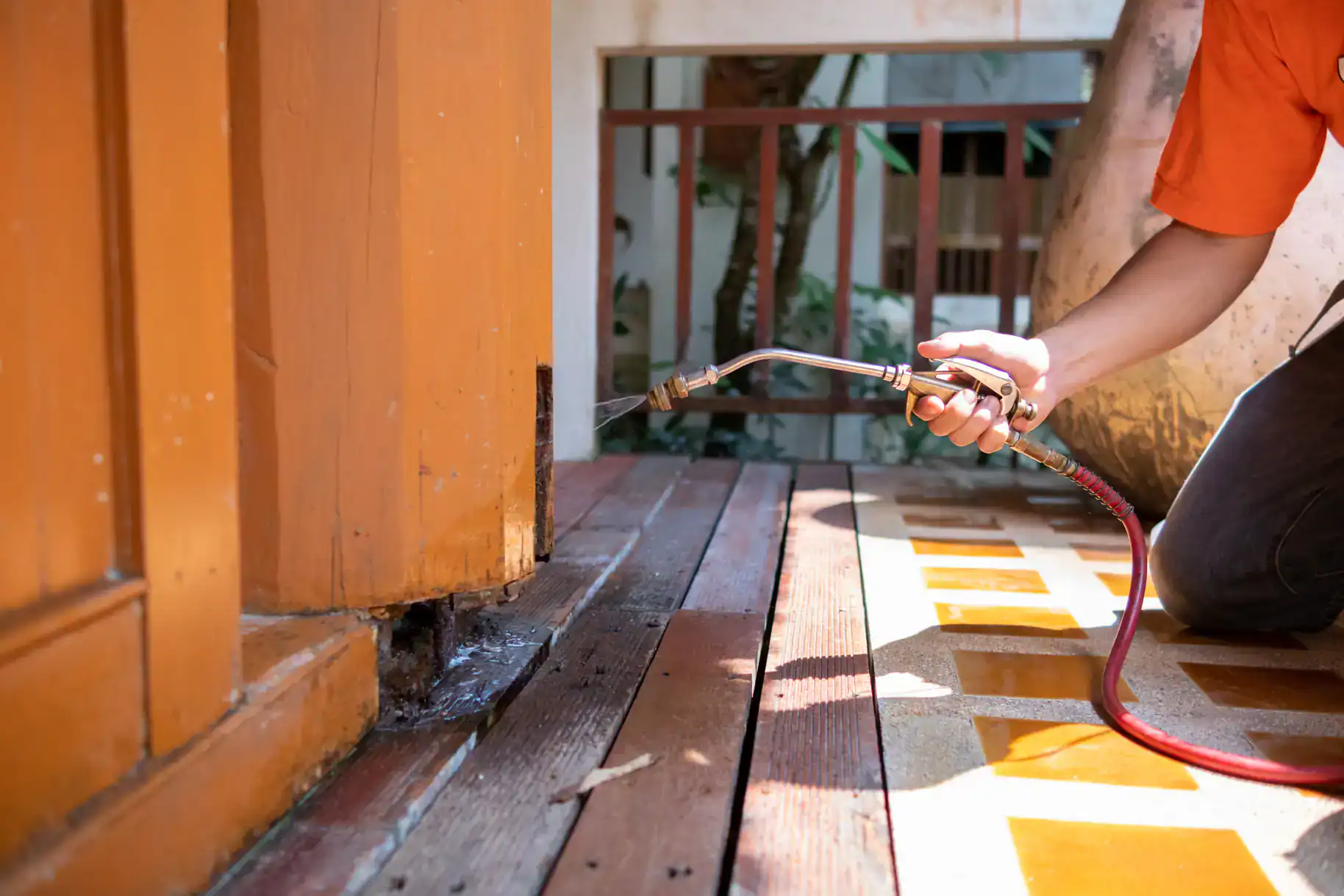
Once we know what we’re dealing with, we apply materials both inside and outside the unit. The key is that foraging ants carry these materials back into the nest and share them with the colony that’s what eliminates the source, not just the ants you can see. In multi-unit buildings like the ones throughout the Upper East Side, we also account for shared wall voids and common-area access points where ants migrate between units.
After the initial cleanout, we schedule follow-up visits weekly, every other week, or monthly depending on the severity to reapply materials, monitor activity, and make sure the infestation doesn’t re-establish from a satellite colony in an adjacent unit or below-grade entry point. We also coordinate with your building’s superintendent when needed, which matters in co-op and doorman buildings where contractor access has its own set of protocols.
Ready to get started?
Ant control in the Upper East Side is a different job than ant control in a single-family home. There’s no yard perimeter to treat. The entry points are inside the building around pipe penetrations, through mortar cracks, along utility chases that run vertically through multiple floors. The infestation doesn’t stay in one unit. It moves. And the treatment has to account for that.
Our ant control services cover the full scope of what that looks like here: species identification, targeted interior and exterior application, colony-focused treatment that works through the ants themselves, and scheduled follow-up visits to monitor and maintain results. For carpenter ant situations which are genuinely common in pre-war buildings with any history of moisture damage, and in buildings along East End Avenue where mature London plane trees grow close to facades we locate and address the nesting site, not just the foraging trail.
Under New York State Environmental Conservation Law, only a licensed commercial pesticide applicator can legally treat a dwelling unit they don’t occupy. That means your super can’t legally do this, and neither can an unlicensed contractor. Every Kingsway technician is certified, and every material we use is NYS DEC-registered. If your building board requires documentation of contractor credentials which many Upper East Side co-op boards do we can provide it.
Store-bought sprays kill the ants you can see the foragers. But foragers are only a small fraction of the colony. The rest of the colony, including the queen, is somewhere inside your building’s structure: a wall void, a gap around a pipe, a section of moisture-damaged wood behind tile. As long as the colony is intact, it keeps sending new foragers out. You’ll spray, see fewer ants for a few days, and then they’ll be back.
In a pre-war Upper East Side building, this cycle is especially hard to break on your own because the entry points and nesting sites are genuinely difficult to locate without knowing what to look for. The gaps in century-old plaster, the original plumbing chases, the shared wall cavities between units these aren’t obvious. A professional inspection identifies where the ants are actually coming from, and the treatment targets that source directly rather than just interrupting the foraging trail.
The three species you’re most likely dealing with in an Upper East Side apartment are pavement ants, odorous house ants, and pharaoh ants. Pavement ants are small and dark brown they nest beneath sidewalks, stoops, and foundation slabs and enter through the smallest cracks at ground level. In a heated Manhattan building, they can stay active year-round rather than going dormant in winter like they would in a suburban yard. Odorous house ants are tiny, dark, and emit a faint rotten-coconut smell when crushed they form large colonies and spread easily through shared building infrastructure.
Pharaoh ants are the ones that require the most careful handling. They’re pale yellow, extremely small, and they thrive in the warm interior environments that Manhattan’s steam-heated pre-war buildings provide. The critical thing to know about pharaoh ants is that repellent sprays including most consumer products cause the colony to bud, meaning it splits into multiple new colonies, each with its own queen. If you’ve sprayed and the problem got noticeably worse, pharaoh ants may be the reason. They require bait-based treatment carried back to the colony, applied by someone who has correctly identified the species first.
Carpenter ants are less common but more serious when they do appear. They’re large, black, and they excavate moisture-damaged wood to build nests. If you’re seeing large black ants especially near windows, bathrooms, or exterior walls that warrants a closer look.
The treatment itself is largely the same, but the coordination process is different and it matters. In a co-op or condo building, your unit shares walls, plumbing chases, and utility spaces with adjacent units. An ant infestation in your apartment often has a source somewhere in that shared infrastructure, which means treating only your unit may resolve the visible problem temporarily without eliminating the colony. In some cases, coordinating access to adjacent units or common areas produces significantly better results.
From a legal standpoint, under New York State Environmental Conservation Law, only a licensed commercial pesticide applicator can treat a dwelling unit they don’t occupy. That applies to building superintendents and property managers as well they cannot legally apply pesticides to tenant apartments without the appropriate DEC certification. Many Upper East Side co-op boards also require documentation of contractor licensing and insurance before allowing any vendor access to the building. We’re fully licensed, bonded, and insured, and we can provide whatever documentation your building requires. We’re used to working within co-op building protocols coordinating with the super, respecting access rules, and working discreetly in doorman buildings.
Yes more than most people expect. Carpenter ants are the largest ant species you’ll encounter in New York City, and they’re drawn specifically to moisture-damaged wood. Pre-war buildings throughout the Upper East Side have had decades of plumbing history, and anywhere there’s been a slow leak behind a wall, a chronic drip under a bathroom floor, or water infiltration around a window frame, the wood framing in that area may be compromised. Carpenter ants find that wood and excavate it to build nests they don’t eat it, but the structural damage they cause over time is real.
There’s also an outdoor pressure source that’s specific to this neighborhood. The mature London plane trees lining East End Avenue and other Upper East Side streets are a known carpenter ant habitat. When those trees are close to building facades which they often are they create a direct pathway for carpenter ant colonies to move from the tree into the building. If you’re seeing large black ants in your apartment, particularly in spring or early summer when carpenter ant swarmers (winged reproductive ants) are active, that’s worth taking seriously. Swarmers emerging from inside a wall void mean the colony is already established inside the building not just foraging in from outside.
There’s no honest single answer to this because it depends on the species, the size of the colony, and how many satellite nests are involved. What we can tell you is that a single visit rarely eliminates a Manhattan ant infestation completely and any company that tells you otherwise is either oversimplifying or underselling the complexity of the problem.
After the initial treatment, most situations require follow-up visits typically weekly for the first few weeks, then transitioning to every other week or monthly as activity decreases. The follow-up visits aren’t just a formality. They allow us to reapply materials as needed, monitor whether activity has shifted to a different entry point, and confirm that the colony hasn’t re-established from a satellite nest in an adjacent unit or a below-grade access point. In a dense multi-unit building which describes most of the residential housing stock in the Upper East Side that monitoring step is what separates a treatment that holds from one that provides temporary relief. We’ll give you a realistic timeline after the inspection, once we know what species and scope we’re actually dealing with.
Yes we offer a 10% senior discount. In a neighborhood like the Upper East Side, where a meaningful number of residents have lived in the same co-op apartment for decades, that discount reflects something straightforward: long-term residents shouldn’t have to pay a premium to keep a home they’ve maintained for thirty years pest-free.
Beyond the discount, the things that tend to matter most to long-term Upper East Side residents are reliability and clear communication knowing that someone will actually answer the phone, show up when scheduled, and explain what they found and what they did. We answer calls 24 hours a day, 7 days a week, offer free estimates before any work begins, and provide flexible maintenance scheduling so you’re not locked into a rigid contract. If you have questions about what a treatment involves, what materials are used, or what re-entry timing looks like for your household, those are exactly the kinds of questions we expect and answer directly.
Useful Links