
Hear from Our Customers

You stop second-guessing every noise behind the wall. You stop tossing products under the sink that work for a week and then don’t. You stop wondering if the issue is in your unit or coming from the building next door because someone finally looked, found it, and treated it at the source.
In Bushwick, that’s not a simple ask. Nearly half the neighborhood’s buildings went up before 1940, and those walls weren’t built with pest exclusion in mind. Shared wall cavities, aging plumbing chases, and decades-old foundation gaps connect units in ways that make a roach problem in 2B everyone’s problem. When a building is that old and that connected, surface-level treatment doesn’t cut it. You need someone who understands the construction, not just the chemical.
The Rat Mitigation Zone designation Bushwick carries isn’t a technicality it’s a city government acknowledgment that this neighborhood has a documented, ongoing rodent problem. The Brooklyn Bed-Stuy/Bushwick zone logged nearly 1,000 rodent complaints in just the first half of 2024. With active construction displacing burrows across Bushwick, the pressure on existing buildings isn’t going away on its own. What changes after real pest control is that you’re not managing the problem anymore. It’s gone.
We’ve been operating continuously since 1971 which means we were treating infestations in Bushwick’s pre-war tenements and row houses before most of the people calling us today were born. We’re a family-owned, NYSDEC-licensed business, and that combination matters more than it might sound. Licensed means every technician passed state-mandated exams and stays current on continuing education. Family-owned means the person accountable for your result isn’t a regional manager three states away.
We’ve worked in every type of building Bushwick produces converted lofts near Morgan Avenue, attached row houses off Knickerbocker Avenue, six-family walk-ups along the Broadway corridor. We know how pests move through these structures because we’ve been inside them for decades. No competitor currently showing up in Bushwick search results comes close to that tenure, and tenure in this neighborhood’s housing stock isn’t a talking point. It’s the difference between a technician who knows where to look and one who doesn’t.
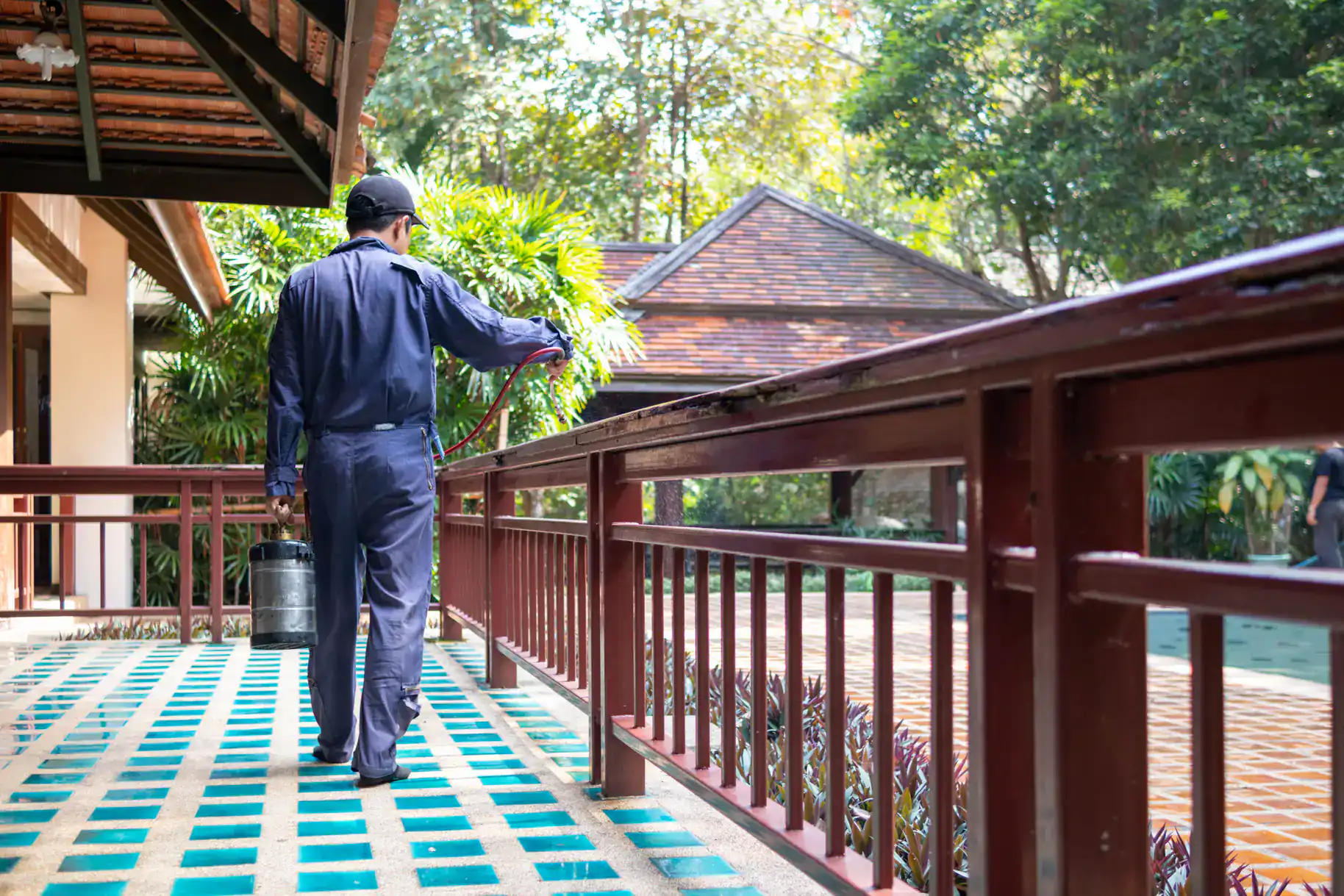
It starts with the free inspection and that’s not a formality. A licensed specialist comes out, walks the space, and actually looks: behind appliances, along baseboards, inside wall voids where possible, around utility penetrations, and at any entry points on the building’s exterior. In Bushwick’s older buildings especially, the inspection often reveals things the tenant never noticed a gap behind a pipe chase that’s been open for years, a basement access point that’s been feeding the whole building.
From there, you get a clear picture of what’s present, how bad it is, and what treatment makes sense. No pressure to sign anything before you understand what you’re dealing with. If it’s a German cockroach issue in a pre-war kitchen, that calls for a different protocol than a rodent entry problem in a converted loft. The treatment is built around what’s actually there, not a standard package applied regardless of the situation.
After treatment, you’ll know what was done, what to expect in the days following, and whether a follow-up visit is warranted. If you’re a building owner managing a Rat Mitigation Zone property or resolving an HPD violation, we provide the service documentation you need for compliance. The process is straightforward because it’s designed to solve the problem not to keep you on a billing cycle indefinitely.
Ready to get started?
Rodent control is the most urgent call we get from Bushwick and for good reason. Between the Rat Mitigation Zone designation, active rezoning construction displacing established burrows, and a dense food service corridor along Myrtle Avenue and Knickerbocker Avenue, the rodent pressure in Bushwick is structural and seasonal. Every fall, as temperatures drop, rats and mice that have been active outdoors start looking for a way in. In a neighborhood with buildings this old, they usually find one. We locate those entry points, seal them, and eliminate what’s already inside.
Cockroach treatment particularly German cockroaches is the other constant in Bushwick. These aren’t occasional visitors. They live inside walls, inside appliance motors, and inside the infrastructure of buildings that connect unit to unit. Over-the-counter products disrupt them temporarily. Professional-grade gel baits and targeted applications eliminate the colony and the harborage. For bed bugs, we offer both heat treatment and chemical treatment options, which matters in a neighborhood with Bushwick’s renter turnover rate and proximity to music venues, galleries, and short-term rentals all primary transmission vectors.
Beyond rodents, roaches, and bed bugs, we handle ants, termites, stinging insects, fleas, and more across residential and commercial properties. For building owners operating under NYC Local Law 69 bed bug reporting requirements or managing an active Health Department abatement order, we provide the documented professional treatment that satisfies inspectors and closes violations. If your landlord needs proof of service, we produce it.

Bushwick is one of a small number of New York City neighborhoods officially designated as a Rat Mitigation Zone by the NYC Department of Health and Mental Hygiene a designation reserved for areas with formally documented, elevated rat activity. That distinction exists for a reason. The neighborhood’s aging building stock, dense food service corridors along Myrtle Avenue and Knickerbocker Avenue, and ongoing construction activity all contribute to a rodent environment that’s genuinely harder to control than in newer or less dense areas.
The construction factor is particularly significant right now. Active development projects including large affordable housing builds along DeKalb Avenue are physically displacing established rat burrows, pushing populations that were living underground into neighboring Bushwick buildings. Scientists and pest control experts have specifically identified this pattern as a driver of the neighborhood’s rat problem. When you combine that displacement pressure with buildings that have foundation gaps and utility penetrations that haven’t been sealed in decades, you get a rodent problem that doesn’t resolve on its own. It requires professional exclusion work, not just bait placement.
Under the NYC Housing Maintenance Code, your landlord is legally required to maintain the building free of pests and to respond to pest complaints within a defined timeframe. If they’re not acting, you can file a complaint through 311, which triggers an inspection by the NYC Department of Housing Preservation and Development. If a violation is issued, the landlord is required to address it and for bed bugs specifically, NYC Local Law 69 requires building owners to retain a pest management professional certified and registered by the New York State Department of Environmental Conservation. An unlicensed operator doesn’t satisfy that requirement.
If you’re in a Rat Mitigation Zone property which Bushwick is there’s additional Health Department enforcement in play. Properties that fail inspections for active rat signs or harborage conditions receive abatement orders that carry real consequences for landlords who ignore them. Knowing your rights matters, and so does having documentation. If you call us and we treat your unit, you’ll have a service record that shows professional, licensed treatment was performed which is useful if you need to escalate with your landlord or HPD.
Bed bugs are one of the most misidentified pests in urban apartments, and Bushwick’s housing conditions make the question especially common. The most reliable signs are small rust-colored stains on mattress seams or bedding, tiny dark fecal spots along baseboards or behind headboards, shed skins near harborage areas, and in more advanced infestations a faint musty odor. Bites alone aren’t a reliable indicator because people react differently, and other insects like fleas or mites can produce similar bite patterns.
The only way to know for certain is a professional inspection. Bed bugs at early stages are extremely difficult to spot without knowing exactly where to look inside box spring folds, behind outlet covers, along the tack strip under carpet edges. In Bushwick’s multi-unit buildings, where infestations can travel through wall voids from adjacent units, catching it early is the difference between a contained treatment and a building-wide problem. If you’ve recently moved, bought secondhand furniture, or had overnight guests, those are common transmission points worth mentioning when you call. We’ll inspect thoroughly and tell you exactly what’s present before recommending any treatment.
This is one of the most common questions we hear, and it’s the right one to ask. We use only EPA-registered pesticides applied by NYSDEC-licensed technicians according to label directions which means the materials have been evaluated for safety and the people applying them are trained and legally accountable for how they’re used. The approach follows Integrated Pest Management principles, which means we use the least toxic effective treatment for each situation rather than defaulting to maximum-strength applications across the board.
For households with young children, pets, or anyone with respiratory sensitivities, we’ll tell you specifically what was applied, where, and what the re-entry time is so you know when it’s safe to be back in treated areas. It’s worth noting that the NYC Department of Health has documented that cockroach and mouse droppings and body parts are themselves triggers for allergic reactions and asthma particularly in children. Leaving an active infestation untreated carries its own health risks. Professional, targeted treatment is genuinely safer than letting the problem persist or applying over-the-counter bug bombs, which disperse chemicals indiscriminately and often don’t solve the underlying issue.
The products available at hardware stores are formulated for consumer use which means lower concentrations, broader application, and no customization for what’s actually in your space. They can knock back visible pests temporarily, but they don’t address harborage, entry points, or the population living inside walls and utility voids. German cockroaches, which are the dominant species in Bushwick apartment buildings, develop resistance to over-the-counter products quickly and retreat deeper into the structure when treated with them. You end up in a cycle of temporary suppression rather than elimination.
Professional-grade materials gel baits, targeted residual applications, and exclusion products work differently. They’re applied based on what an inspection reveals, not guessed at from the outside. More importantly, the inspection itself identifies where pests are entering and living, which is information a hardware store product never gives you. In a pre-war Bushwick building where your unit shares walls with multiple neighbors, knowing that the roaches are coming through a pipe chase behind your stove and sealing it is what actually solves the problem. The product is part of it. The knowledge behind where and how to use it is the rest.
Cost varies depending on what pest is present, the size of the space, and the severity of the infestation so a single number doesn’t tell the whole story. A one-time cockroach treatment for a standard apartment typically runs in the range of $150 to $300. Rodent exclusion work, which involves sealing entry points in addition to baiting and trapping, can run higher depending on how many access points are found. Bed bug treatment particularly heat treatment for a full unit is a more significant investment, often in the $500 to $1,200 range depending on unit size and treatment method.
The free inspection is genuinely free. There’s no obligation attached to it, and nothing is applied until you understand what’s present and agree to a treatment plan. For Bushwick residents who’ve already spent money on products that didn’t work, or who’ve had a pest control company come out and charge for a visit before telling them anything useful, the inspection-first approach is a meaningful difference. You’ll know what you’re dealing with, what treatment makes sense, and what it costs before you commit to anything. That’s how it should work.
Useful Links
Other Services we provide in Bushwick