
Hear from Our Customers
The average termite repair bill runs around $3,000. When floor joists, sill plates, or load-bearing beams are involved which they often are in Bed-Stuy’s pre-war construction that number climbs to $10,000 or more. And your homeowner’s insurance almost certainly won’t cover a dollar of it, because insurers classify termite damage as a preventable maintenance issue, not a sudden event.
What makes Bedford-Stuyvesant particularly vulnerable is the housing stock itself. Most brownstones here were built between 1870 and 1920, and a significant number still have original wood sill plates sitting in direct contact with soil, original basement framing that’s never been professionally inspected, and foundation conditions that Eastern Subterranean Termites exploit without hesitation. Add in the neighborhood’s tree-lined streets beautiful, but effective at keeping soil around your foundation moist long after a rain and you have near-ideal conditions for a colony to establish and grow quietly for years.
Catching an infestation before it reaches structural framing is the difference between a manageable treatment and a major repair project. If you’re renovating, buying, or simply haven’t had an inspection in years, that’s where the conversation starts.
We founded Kingsway Exterminating in Brooklyn in 1971 and have been running it as a family operation ever since. Richard Kourbage Jr. and Charles Kourbage have been part of the operation since the late 1980s, and between our full team, there are more than 100 years of combined pest control experience on the floor. That’s not a marketing number it means the technician who shows up at your brownstone on Decatur Street or along the Gates Avenue corridor in Bedford-Stuyvesant has seen this type of construction, this type of infestation, and this type of problem before.
We’re based at 2216 Flatbush Avenue in Brooklyn not a regional call center, not a national franchise dispatching from New Jersey. We hold an A+ BBB rating, have been accredited since 1989, and use only NYS DEC-registered materials on every job. We answer the phone 24 hours a day, guarantee an appointment within two business days, and offer free estimates and a senior discount. When you call, you’re reaching a Brooklyn operation with real accountability behind the name.
It starts with an inspection. One of our licensed technicians walks your property basement framing, foundation contact points, mud tubes along walls, wood near soil and gives you a clear picture of what’s there and what isn’t. Same-day inspections are frequently available, which matters when you’ve got a contractor on-site mid-renovation and need an answer before the walls go back up.
If there’s active termite activity, the next step is treatment. For Bedford-Stuyvesant brownstones, that typically means a targeted approach using liquid barrier application and termite baiting systems that attack the colony at its underground source. This is especially important in Bed-Stuy’s attached rowhouse fabric, where termites can travel through shared soil and foundation lines between buildings treating only what’s visible inside your unit isn’t enough. The baiting system draws worker termites in, and they carry the treatment back to the colony, eliminating it over time.
For properties within the Stuyvesant Heights Historic District or other landmarked areas, our team is familiar with the considerations that come with working near protected structures including how exterior drilling for liquid barrier application may intersect with Landmarks Preservation Commission requirements. After treatment, you receive full documentation of what we did, which matters for real estate transactions, HPD compliance, and your own records going forward.
Ready to get started?
Our termite services in Bedford-Stuyvesant cover the full range of what pre-war property owners actually need. That includes termite identification, professional termite inspections, subterranean termite control, termite baiting systems, and Wood Destroying Organism (WDO) inspection reports for real estate transactions. If you’re buying or selling a brownstone in Bed-Stuy and your lender is requiring a WDO report which is standard for FHA and VA financing on pre-war properties we provide the documentation your transaction needs.
For active infestations, treatment is scoped to your specific building. A three-story rowhouse on Bainbridge Street is a different job than a two-family on Nostrand Avenue, and our approach reflects that. All materials we use are registered by the New York State Department of Environmental Conservation, applied by licensed technicians holding the appropriate NYS DEC Category 7C certification for wood-destroying organism work. This isn’t optional in New York it’s a legal requirement and it’s a baseline that not every operator in this market meets.
For landlords managing multi-unit brownstones, we also provide treatment documentation that holds up under NYC Department of Health and HPD scrutiny. Brooklyn ranks second among all five boroughs for building violation volume, and pest-related citations are among the most common. If you’ve received a notice or want to get ahead of one, that’s a conversation we know how to have.
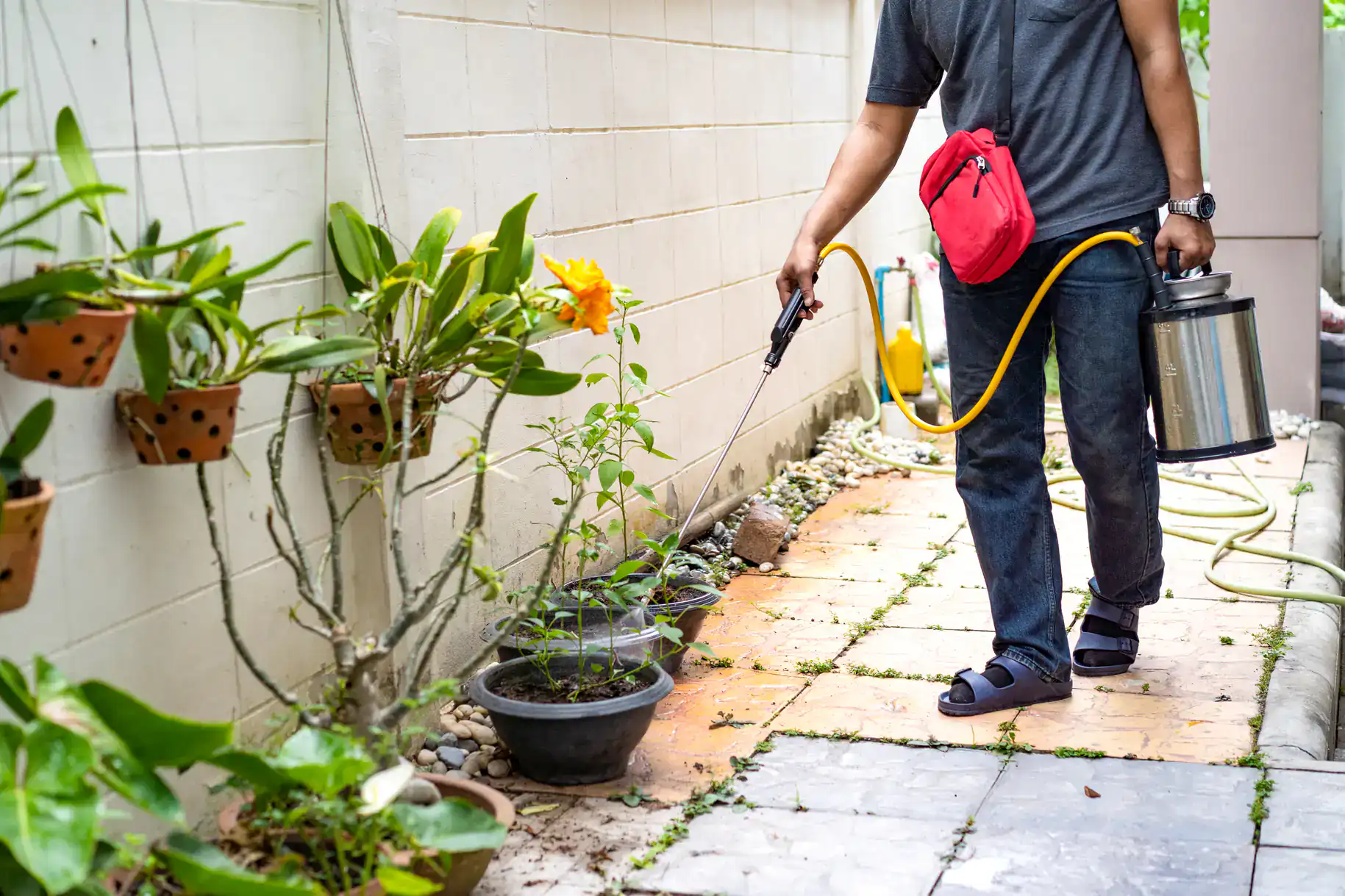
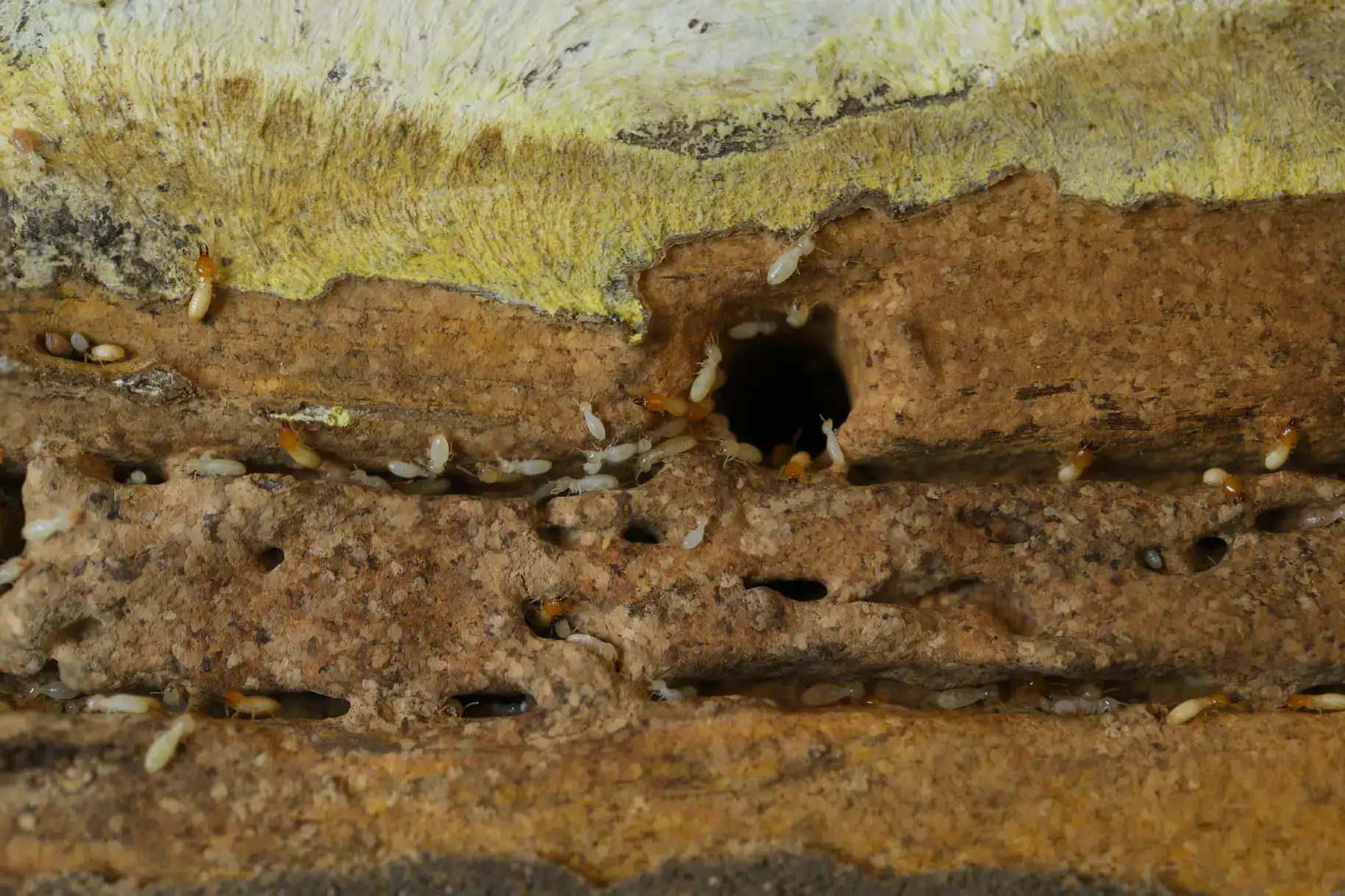
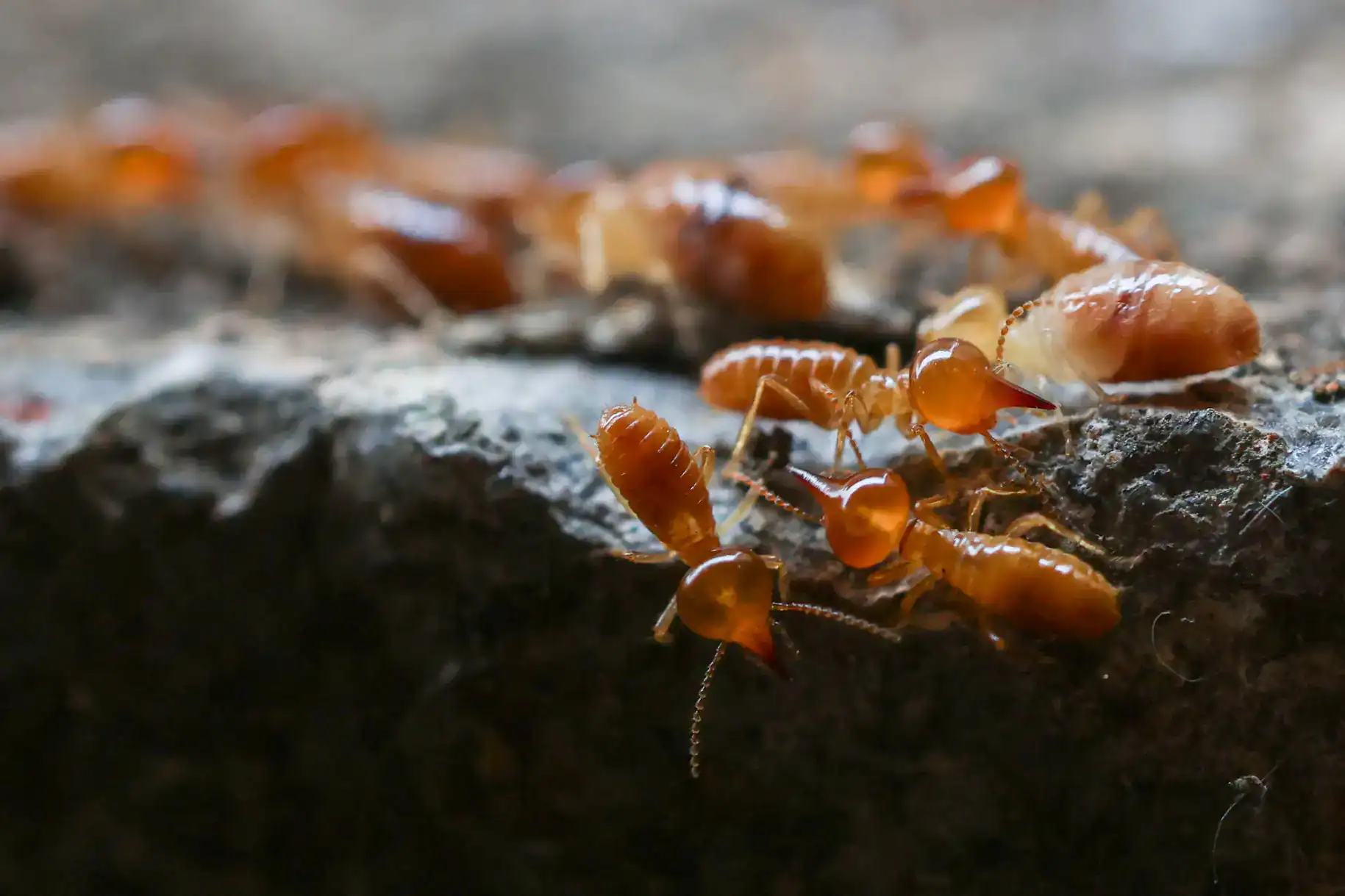
Eastern Subterranean Termites the species responsible for virtually all termite activity in New York City live underground and travel up through soil to reach wood inside a structure. They only need a gap of about 1/32 of an inch to get in, which means foundation cracks, gaps around utility lines, and any point where wood meets soil are all potential entry points. In a Bedford-Stuyvesant brownstone, the most common access points are basement sill plates sitting directly on the foundation, wood framing near the base of exterior walls, and areas around older plumbing or utility penetrations.
What makes this particularly relevant in this neighborhood is that many of these buildings have original construction that’s never been professionally assessed. The masonry exterior looks solid, but termites aren’t getting through the brick they’re coming up through the soil beneath the foundation and into the wood framing hidden inside. By the time you notice a mud tube on a basement wall or hear hollow-sounding wood underfoot, the colony has typically been active for several years.
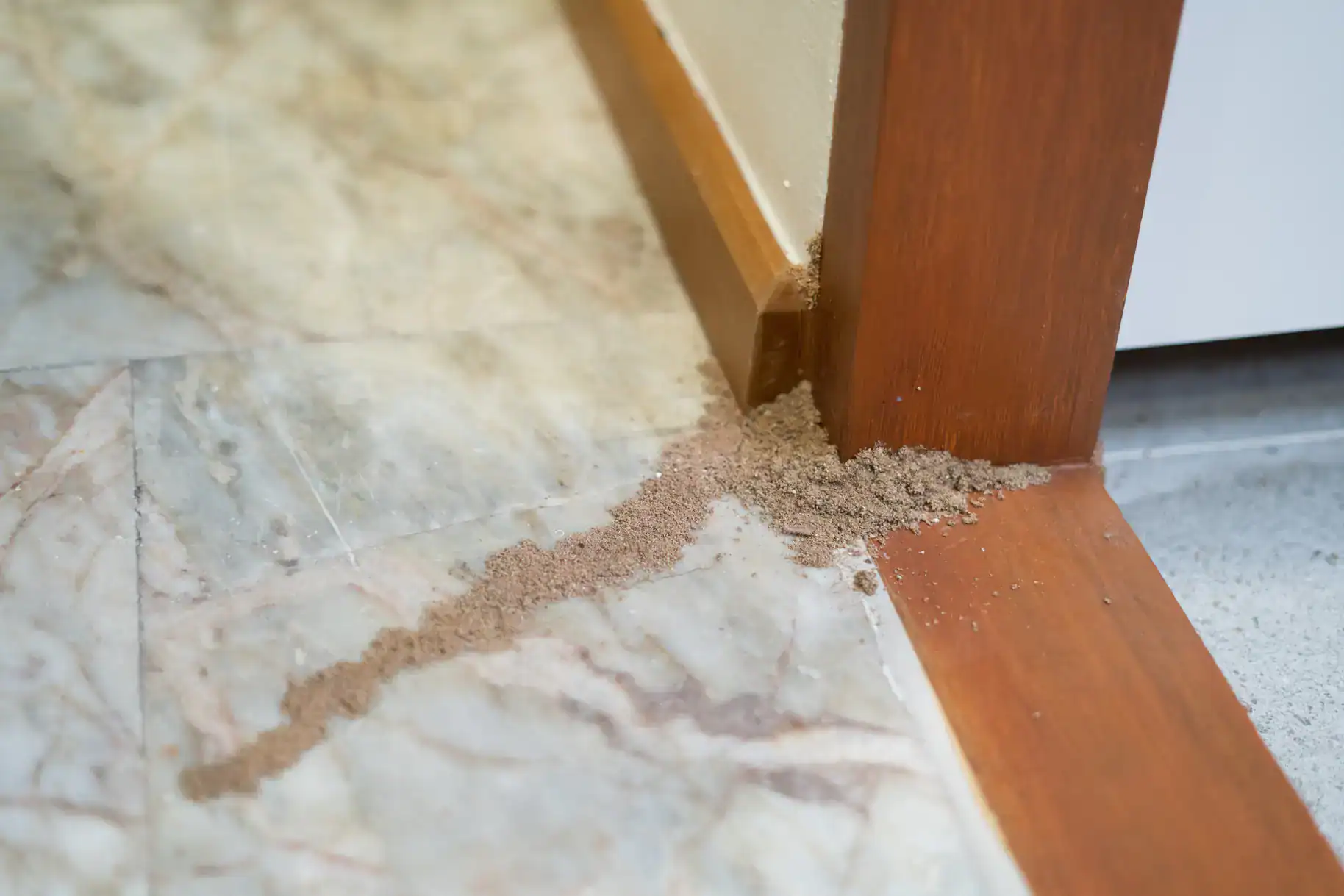
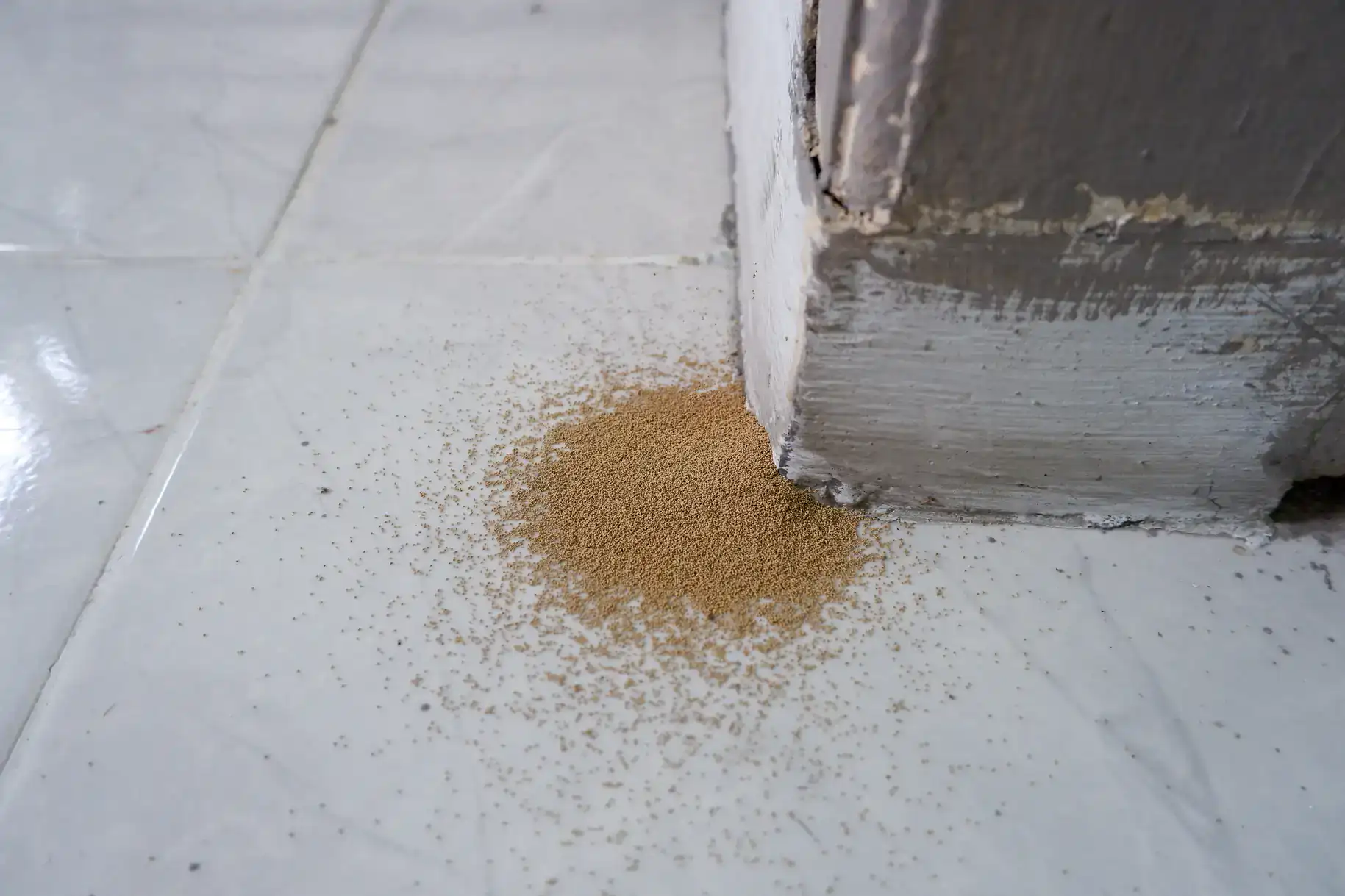
A professional termite inspection covers the areas of your home where Eastern Subterranean Termites are most likely to establish activity: the basement and foundation perimeter, exposed wood framing, sill plates, floor joists, and any areas where moisture has been an issue. We’re looking for mud tubes the small, pencil-width tunnels termites build to travel from soil to wood as well as hollow-sounding structural members, frass (termite droppings), and any wood that shows signs of internal damage.
For a typical Bed-Stuy brownstone, an inspection takes roughly 45 minutes to an hour depending on the size of the building and how accessible the basement and crawl spaces are. If you’re in the middle of a renovation and walls are already open, that can actually speed things up and give us a clearer view of what’s happening inside the framing. We provide free estimates as part of every inspection, so you walk away knowing what was found and what it would cost to address it before you commit to anything.
Yes, and this is one of the most common concerns for homeowners in Bedford-Stuyvesant’s attached rowhouse blocks. Eastern Subterranean Termites don’t travel through the walls themselves they move underground through soil. Because Bed-Stuy’s rowhouses share continuous foundation lines and the soil beneath them is connected, a colony established under one building can extend its foraging territory into the foundation area of the building next door without ever surfacing between them.
This is exactly why surface-level treatments that only address what’s visible inside your unit aren’t a complete solution in an attached-building context. Our termite baiting systems are designed to target the colony at its underground source worker termites carry the bait back to the colony, and the colony is eliminated over time rather than just pushed back temporarily. If your neighbor has had a termite problem, or if you’re on a block where several buildings are being renovated simultaneously, a professional inspection is a reasonable step regardless of whether you’ve seen direct signs of activity in your own building.
In almost every case, no. Standard homeowner’s insurance policies in New York and across the country exclude termite damage. The reasoning insurers use is that termite damage is considered a preventable maintenance issue rather than a sudden, accidental event like a fire or burst pipe. Because termite colonies grow slowly and damage accumulates over years, insurers classify it as something the homeowner had an opportunity to prevent or catch through regular inspection.
That means every dollar of termite repair comes directly out of your pocket. In a Bed-Stuy brownstone where original floor joists, stair carriages, or decorative wood elements are involved, those costs can be significant. The most practical protection available to you isn’t an insurance policy it’s a professional inspection and, if needed, early treatment before damage reaches load-bearing framing. That’s a much cheaper conversation to have now than after a contractor opens a wall and finds years of damage.
Spring is when termite activity becomes most visible in Brooklyn. Eastern Subterranean Termites swarm on warm days following rain typically between March and May and if you see winged insects emerging near your foundation, in your basement, or around window sills during that window, that’s a strong signal that a colony is established nearby. Bed-Stuy’s tree-lined blocks and soil-rich brownstone gardens tend to retain moisture longer after rain events, which creates favorable conditions for swarm activity.
That said, the best time to schedule an inspection isn’t necessarily when you see swarmers it’s before you see any signs at all. Termite colonies can take five or more years to grow large enough to produce visible damage, which means by the time something catches your eye, the infestation has likely been active for a while. If your brownstone hasn’t had a professional termite inspection in the past few years, or if you’re about to start a renovation that will open up basement framing or exterior walls, scheduling an inspection before the work begins is the most cost-effective timing you have.
If you’re financing with an FHA or VA loan, a Wood Destroying Organism (WDO) inspection report is required before closing there’s no getting around it. For conventional financing, it’s not always mandated by the lender, but buyers’ agents in Brooklyn routinely recommend termite inspections on pre-war properties as a condition of purchase, and for good reason. A brownstone in Bed-Stuy that’s changed hands without a recent termite inspection may have years of undetected damage sitting inside the framing damage that becomes your problem the moment you sign.
Beyond the financing requirement, a WDO inspection gives you real information before you commit. If the inspection comes back clean, you close with confidence. If it finds active activity or prior damage, you have documentation to negotiate repairs or a price adjustment before the deal is done. We provide the professional termite inspections and WDO reports that lenders, attorneys, and buyers need, and given how active the Bed-Stuy real estate market has been the neighborhood added nearly 9,400 new housing units between 2010 and 2024 the demand for this kind of documentation before closing is as consistent as it’s ever been.
Useful Links