Hear from Our Customers
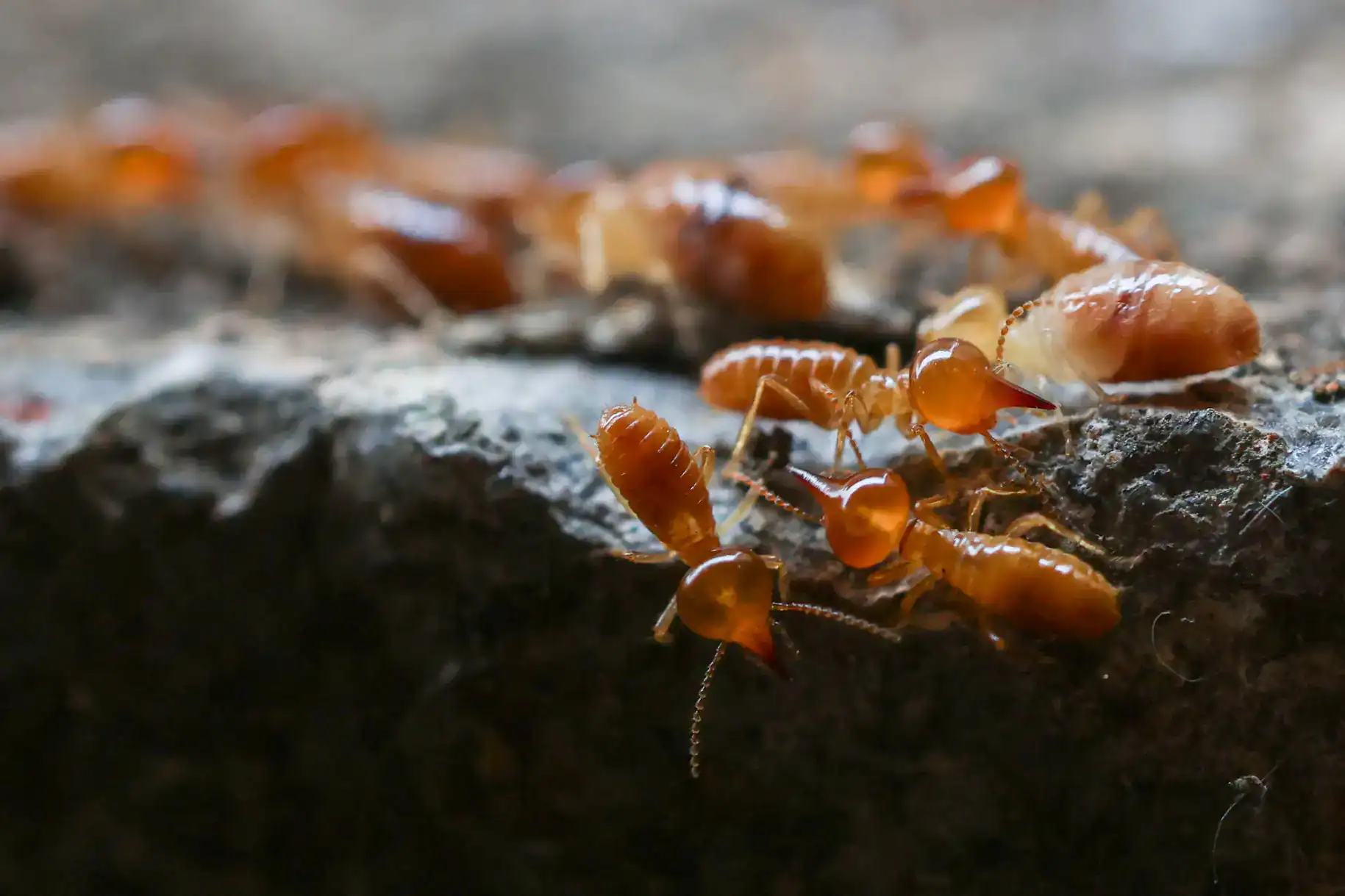
When termite activity is caught before it spreads, you’re dealing with a treatment — not a reconstruction project. The average cost to repair termite structural damage runs around $3,000, and serious cases involving floor joists, sill plates, or load-bearing members can reach $10,000 or more. Catching it early keeps that number off your plate entirely.
In Brooklyn Heights, that math carries extra weight. These aren’t generic suburban homes — they’re attached rowhouses with original timber framing that in many cases has been in place for over a century. The brownstones along Pierrepont Street, Remsen Street, and Willow Place are stunning from the outside, but behind those landmarked facades is old softwood that subterranean termites are drawn to. When you get ahead of an infestation here, you’re not just protecting a house — you’re protecting a property that may be worth several million dollars and sits inside NYC’s first designated historic district.
There’s also the real estate angle. If you’re planning to sell, your buyer’s attorney will order a Wood Destroying Insect report. Finding out about a termite problem on your own terms — before a deal is on the table — gives you time to handle it professionally. Finding out under contract deadline pressure is a different situation entirely. Early action means you control the timeline, not the other way around.
We’ve been operating out of Brooklyn since 1976 — headquartered on Flatbush Avenue, a few miles from the brownstone blocks of Brooklyn Heights. This isn’t a regional franchise routing your call through a national call center. We’re a family business that has been inspecting and treating Brooklyn’s pre-war building stock for over half a century, and the people answering the phone actually know the neighborhood.
Every technician performing termite work holds NYS DEC Category 7C certification — the specific state license required for termite and wood-destroying organism control in New York. That’s not a general pest control license. It’s the credential that makes a WDI report legally valid for your lender or real estate attorney, and it’s the credential that ensures treatment materials are applied correctly under NYS DEC registration requirements.
We’ve maintained an A+ rating with the Better Business Bureau since 1989. That’s 35+ years of third-party verified standing — something you can look up before you ever make a call. In a neighborhood full of professionals who vet every service provider carefully, that kind of documented track record matters.
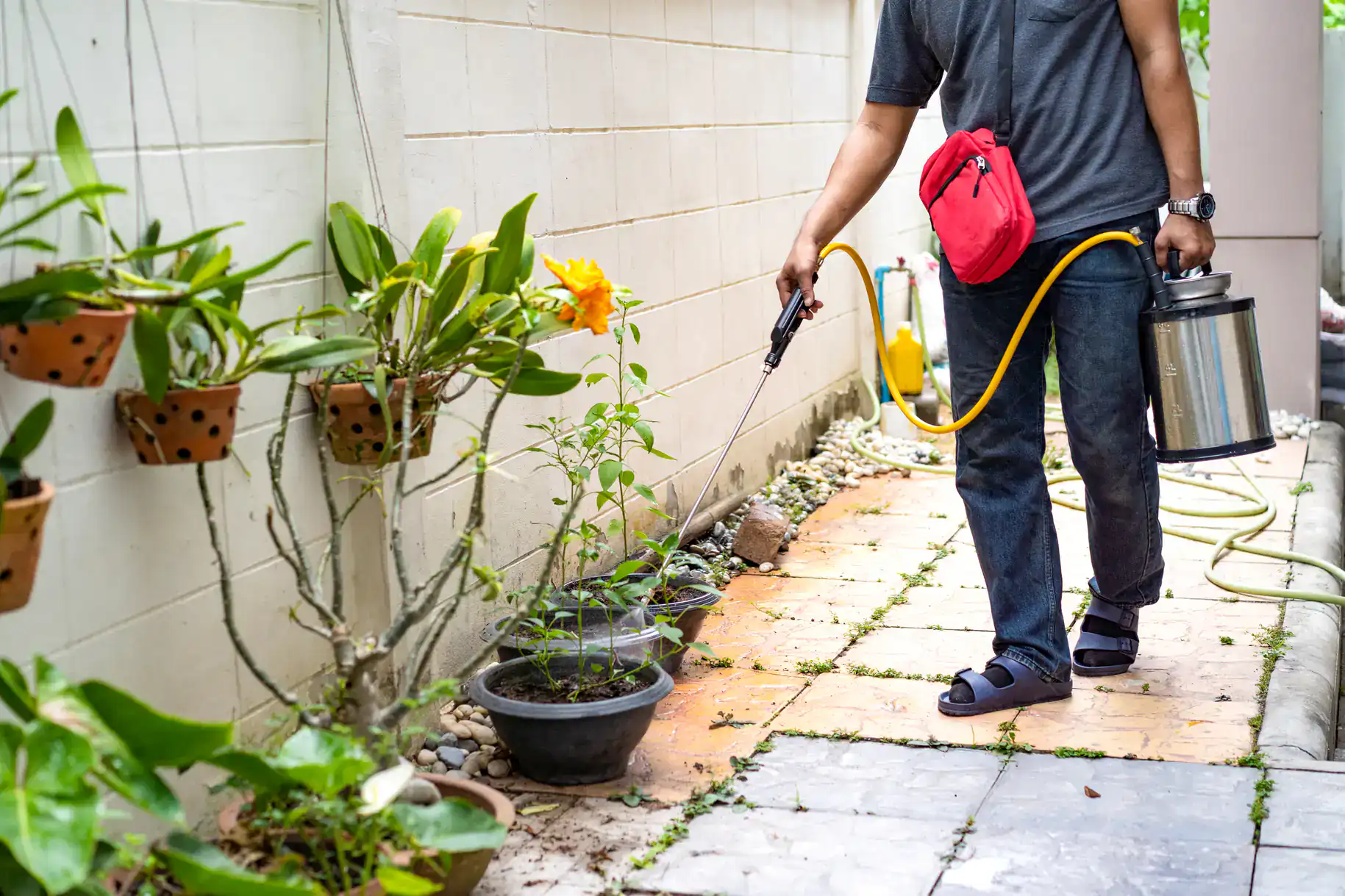
It starts with a thorough inspection — and in a Brooklyn Heights rowhouse, that means going beyond what’s visible. A 7C-certified technician will examine your basement and subfloor framing, foundation walls, sill plates, and any areas where wood meets soil or moisture. In attached buildings with party walls, the inspection also accounts for the shared structural interfaces where termite colonies can migrate between properties — something a checklist-driven inspection will miss.
If activity is found, you’ll get a clear assessment of what’s there, where it is, and what treatment is appropriate. For subterranean termites — the dominant species in Brooklyn — that typically means a liquid termiticide barrier applied to the soil around the foundation, a termite baiting system, or direct wood treatment depending on the conditions. All materials used are registered with the New York State Department of Environmental Conservation. Nothing gets applied that isn’t fully compliant.
If you need a Wood Destroying Insect report for a real estate transaction, we produce that as part of the process using a licensed 7C technician — the only kind of inspector whose report satisfies FHA, VA, and conventional lender requirements. Spring is the peak season for termite activity in Brooklyn Heights, with Eastern Subterranean Termites typically swarming between late March and May. But termite colonies are active year-round inside the old timber framing of these buildings, so there’s no wrong time to schedule an inspection.
Ready to get started?
We handle the full scope of termite and wood-destroying organism work — inspections, subterranean termite eradication, baiting system installation and monitoring, direct wood treatment, and legally valid WDI reports for real estate transactions. We also resolve NYC Department of Health pest citations for property owners with rental units facing obligations under NYC Local Law 55.
For Brooklyn Heights specifically, a few things are worth knowing. If termite damage has reached a point where exterior repairs are needed on a landmarked structure — stoops, structural elements visible from a public way, anything subject to LPC review — you’ll need Landmarks Preservation Commission approval before that remediation work can begin. Catching an infestation while it’s still confined to interior structural members avoids that layer of complexity entirely. Our inspections are designed to find activity at that stage, not after it’s already a bigger problem.
The 100+ years of combined experience across our team isn’t a marketing figure — it’s the difference between a technician who knows what termite damage looks like behind a finished basement wall in a pre-war rowhouse and one who’s working from a general inspection protocol. Brooklyn Heights buildings are old, dense, and architecturally complex. The inspection and treatment process reflects that. Estimates are free, and the phones are answered 24 hours a day, seven days a week.
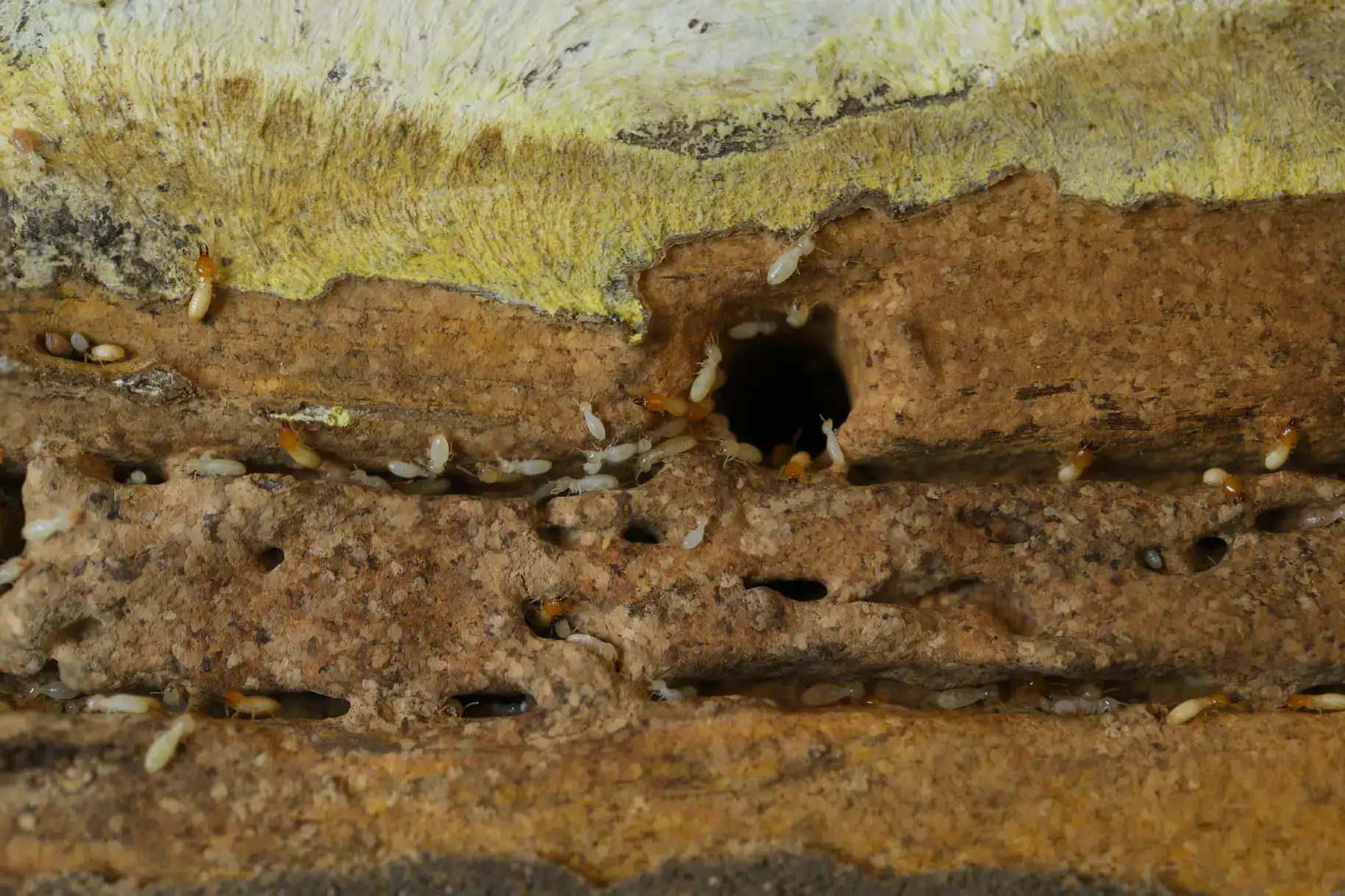
Yes, and this is one of the more important things to understand about termite risk in Brooklyn Heights specifically. Eastern Subterranean Termites live underground and forage through soil and wood. In a neighborhood of attached rowhouses, the continuous soil beneath the buildings and the shared party walls create pathways that a colony can travel through without any visible sign above ground. A termite problem that starts in one unit or one building can migrate to an adjacent property through shared foundation elements — and the homeowner next door may have no idea it’s happening.
This is why a professional inspection in Brooklyn Heights isn’t just about looking inside your own four walls. A thorough inspection accounts for the full foundation perimeter and the structural interfaces where your building connects to its neighbors. If you’ve heard that a neighboring property has had termite activity, or if a renovation on an adjacent building has disturbed the soil near your foundation, that’s a reasonable trigger for getting your own property inspected — not because you’ve seen anything, but because the structural logic of attached buildings makes shared risk real.
No. Termite damage is explicitly excluded from virtually all standard homeowner’s insurance policies — this is a consistent fact across the industry, not a technicality buried in the fine print. Insurance companies classify termite infestations as a preventable maintenance issue, not a sudden or accidental loss, so the damage they cause doesn’t qualify for coverage regardless of how severe it is.
In Brooklyn Heights, where brownstones and co-ops routinely trade at $1.5 million and above, this matters more than it might elsewhere. The average cost to repair termite structural damage is around $3,000, and serious cases involving floor joists, sill plates, or load-bearing members can reach $10,000 or more — all of it coming out of pocket. For a property in a landmarked district where even exterior repairs can require LPC coordination, remediation costs can climb further. The cost of a professional inspection and treatment is a fraction of what unchecked damage ends up costing. That’s the real math.
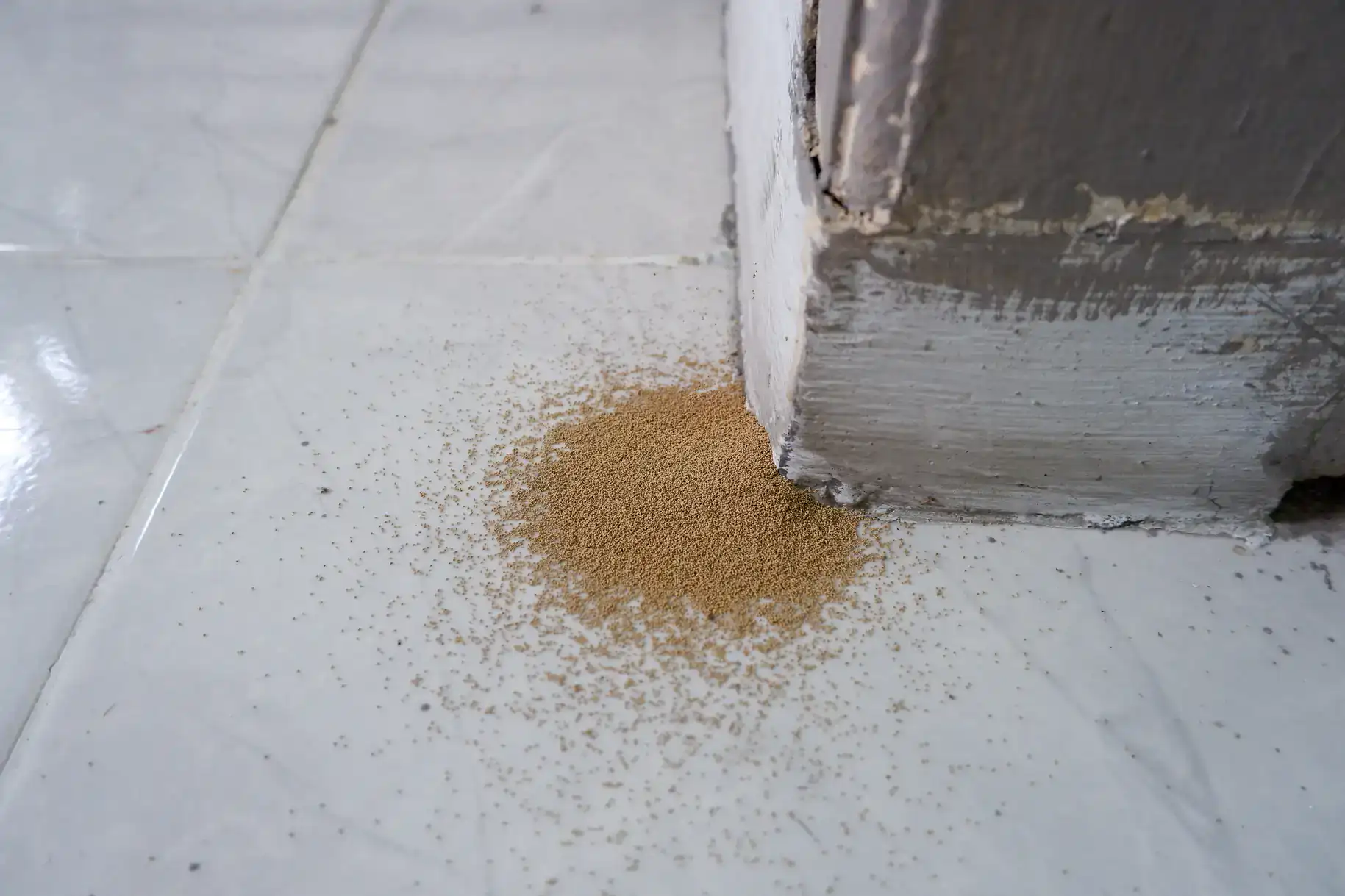
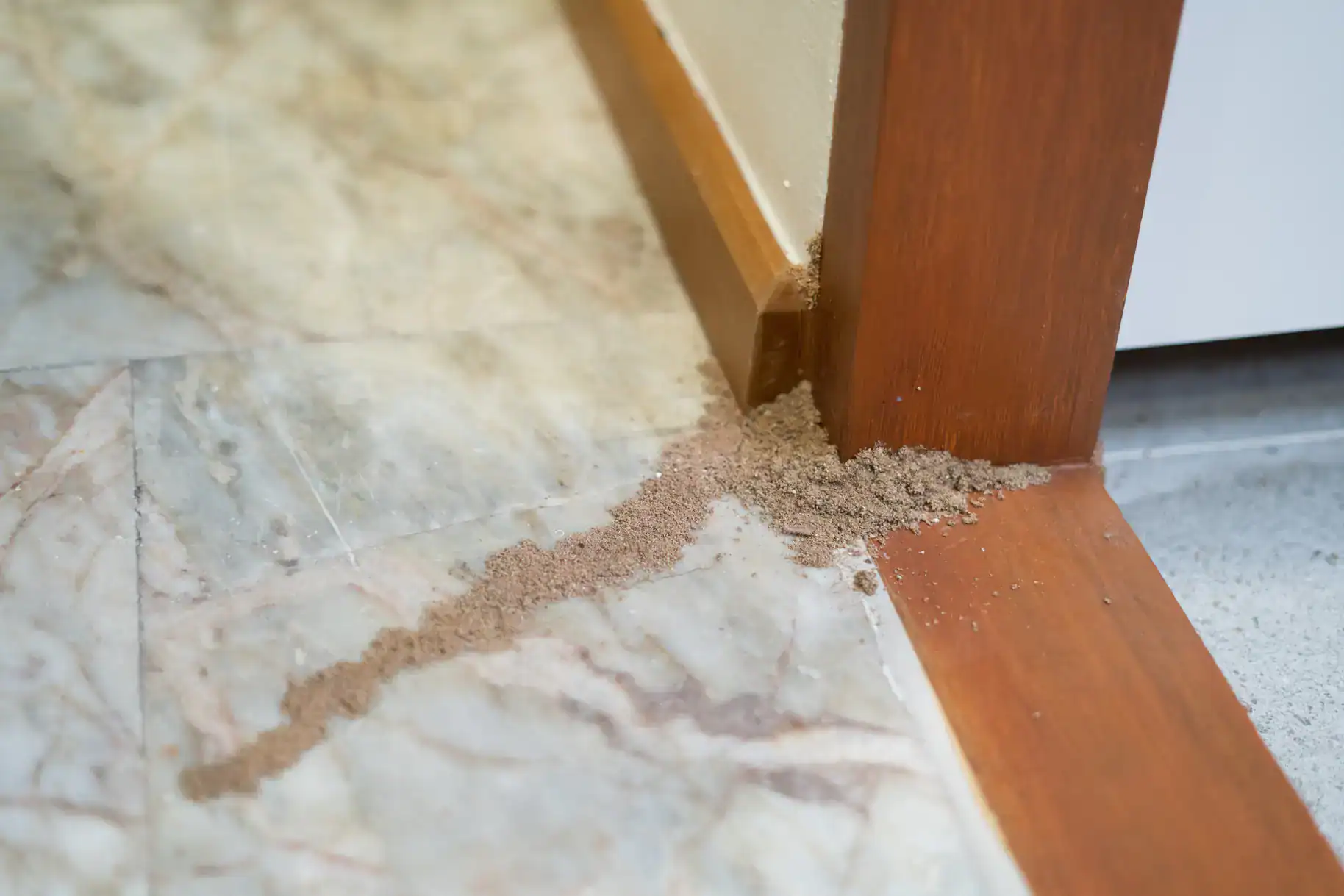
The most common signs in Brooklyn Heights buildings are mud tubes along foundation walls or basement framing, hollow-sounding wood when you knock on floor joists or sill plates, discarded wings near windows or entry points after a spring swarm, and paint or plaster that looks bubbled or uneven without any obvious water source behind it. In pre-war rowhouses, these signs often appear in basement areas first — near the foundation wall, around original plumbing penetrations, or along the sill plate where the wood framing meets the foundation.
The challenge in these buildings is that finished surfaces hide a lot. A basement that’s been drywalled or paneled over original framing can conceal years of termite activity. The same is true for finished floors over old subfloor material. Eastern Subterranean Termites typically swarm in Brooklyn Heights between late March and May — if you see small winged insects emerging from walls, floors, or foundation areas during that window, that’s a strong indicator of an established colony nearby. Don’t wait to see structural damage before calling for an inspection.
For transactions involving FHA or VA financing, a Wood Destroying Insect report is required — it’s a lender condition, not optional. For conventional sales, it isn’t always legally mandated, but buyers’ attorneys and real estate brokers in the Brooklyn Heights market routinely request one, particularly for older properties. Given that the neighborhood’s housing stock is predominantly pre-war and the buildings are architecturally complex, a WDI inspection is standard due diligence at these price points.
What matters is who produces the report. A legally valid WDI report must be completed by a NYS DEC Category 7C certified inspector — that’s the specific license required for termite and wood-destroying organism work in New York State. Not every pest control company in Brooklyn Heights employs 7C-certified technicians, and a report produced by someone without that credential won’t satisfy your lender or your buyer’s attorney. Our entire termite inspection team holds 7C certification, and we can produce the documentation your transaction requires on a timeline that real estate deals actually work within.
That depends on the treatment method and the scope of the infestation, but for most Brooklyn Heights rowhouses, a liquid termiticide barrier application or baiting system installation is completed in a single visit. The work is focused on the foundation perimeter and soil interface — not the interior living spaces — so in most cases there’s no need to vacate the property for the treatment itself.
If direct wood treatment is needed for interior structural members, the timeline and any temporary displacement requirements will be explained clearly before work begins. All materials we use are registered with the New York State Department of Environmental Conservation, which means they’ve been evaluated for safety and efficacy under state standards. After treatment, a follow-up inspection is the professional standard — particularly in Brooklyn Heights’s attached buildings, where monitoring the full perimeter over time is important to confirm that the colony has been eliminated and that no new activity has established from adjacent soil.
Yes. We offer a senior discount, which is listed directly on our website. For longtime Brooklyn Heights residents — many of whom have owned their brownstones or co-ops for decades and are now living on fixed incomes in one of Brooklyn’s most expensive neighborhoods — that’s a real consideration when budgeting for a professional termite inspection or treatment.
It’s also worth noting that we offer free estimates, so the first step costs nothing. You can get a clear picture of what you’re dealing with — whether that’s a current infestation, evidence of past activity, or a clean inspection for a pending real estate transaction — before committing to any treatment cost. For a Brooklyn Heights homeowner trying to make an informed decision about a property you’ve maintained for years, starting with a no-cost inspection from a 7C-certified technician is a reasonable and low-risk first move. The phones are answered 24 hours a day, seven days a week.
Useful Links
Other Services we provide in Brooklyn Heights