
Hear from Our Customers
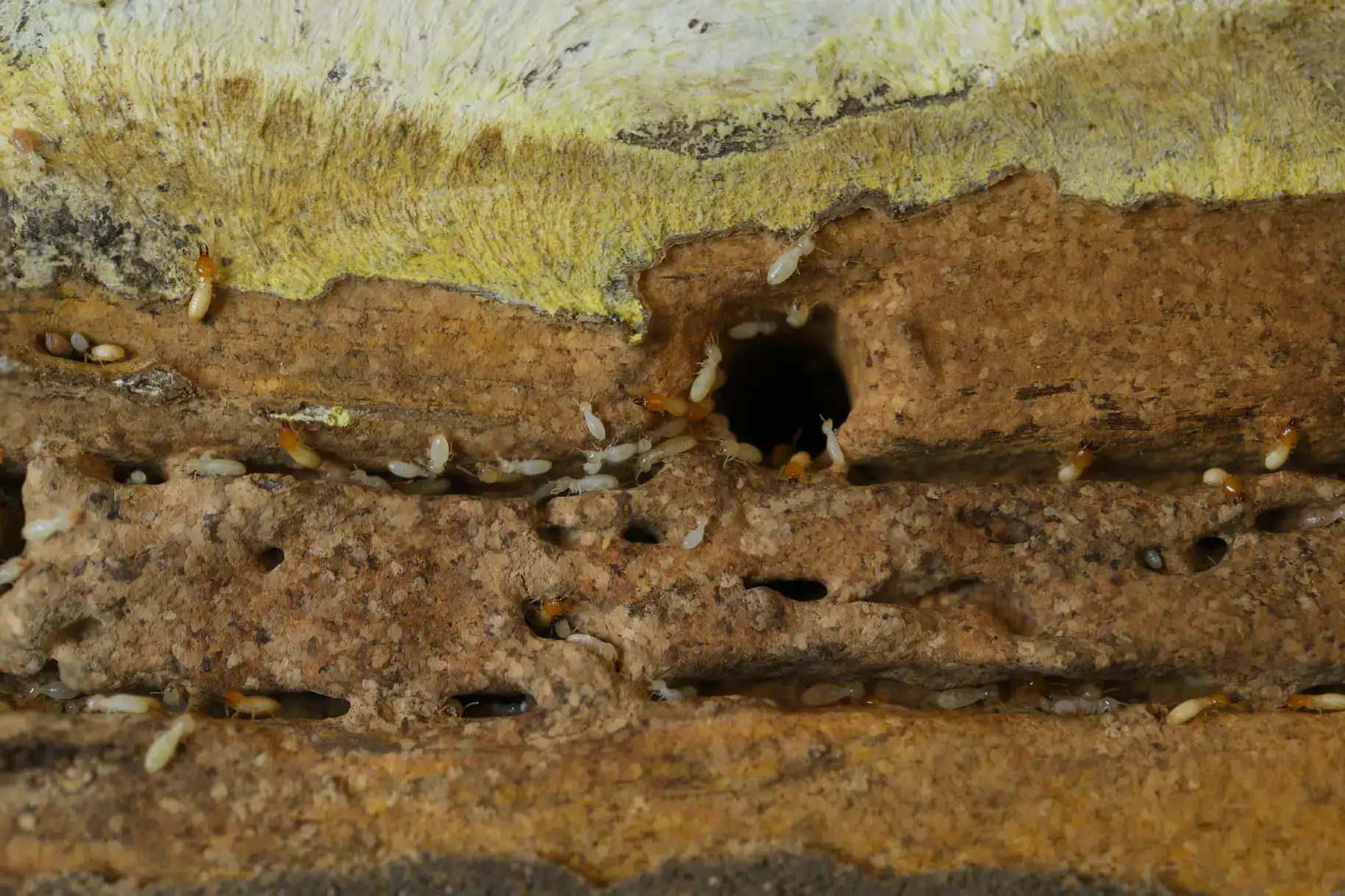
When termites are active in a Douglaston home, they are not waiting. They are feeding through original floor joists, sill plates, and porch framing that took craftsmen a century ago to build and cannot be replaced at any price. The damage does not announce itself it accumulates quietly, often for years, before you ever see a mud tube or a buckled floorboard.
Getting ahead of that is what termite control actually does for you. You stop the feeding. You protect the structural integrity of a home that, in Douglas Manor or Douglaston Hill, may be carrying landmark designation and a price tag north of $900,000. You also protect your ability to sell or refinance without a WDO report coming back with findings that kill the deal.
Douglaston’s geography makes this more urgent than most people realize. The neighborhood sits on a peninsula surrounded by Little Neck Bay, and that bay-adjacent soil stays moist in a way that subterranean termites depend on to survive. Combine that with century-old untreated timber, mature tree canopy, and the subsurface moisture conditions created by Douglas Manor’s cesspool infrastructure, and you have an environment where termite colonies do not just survive they thrive. Dealing with it now is the practical move.
We have been protecting New York City homes since 1976. Richard Kourbage Sr. built this company from the ground up, and his sons Richard Jr. and Charles run it today. That kind of continuity is not common in this industry, and it matters because when a family name is on the work, the accountability is personal.
We hold BBB accreditation dating back to 1989 and apply only NYS DEC-registered materials on every job. For homeowners near Little Neck Bay and Alley Pond Park in Douglaston, that environmental compliance is not a footnote it is a real consideration when pesticide applications happen near wetlands and waterfront soil.
Our staff collectively brings more than 100 years of pest control experience to the table. That includes deep familiarity with the pre-war, wood-frame construction that defines Douglas Manor and Douglaston Hill. These are not homes you treat the same way you treat a 1990s colonial. We know the difference, and that experience shows in how we inspect and how we treat.
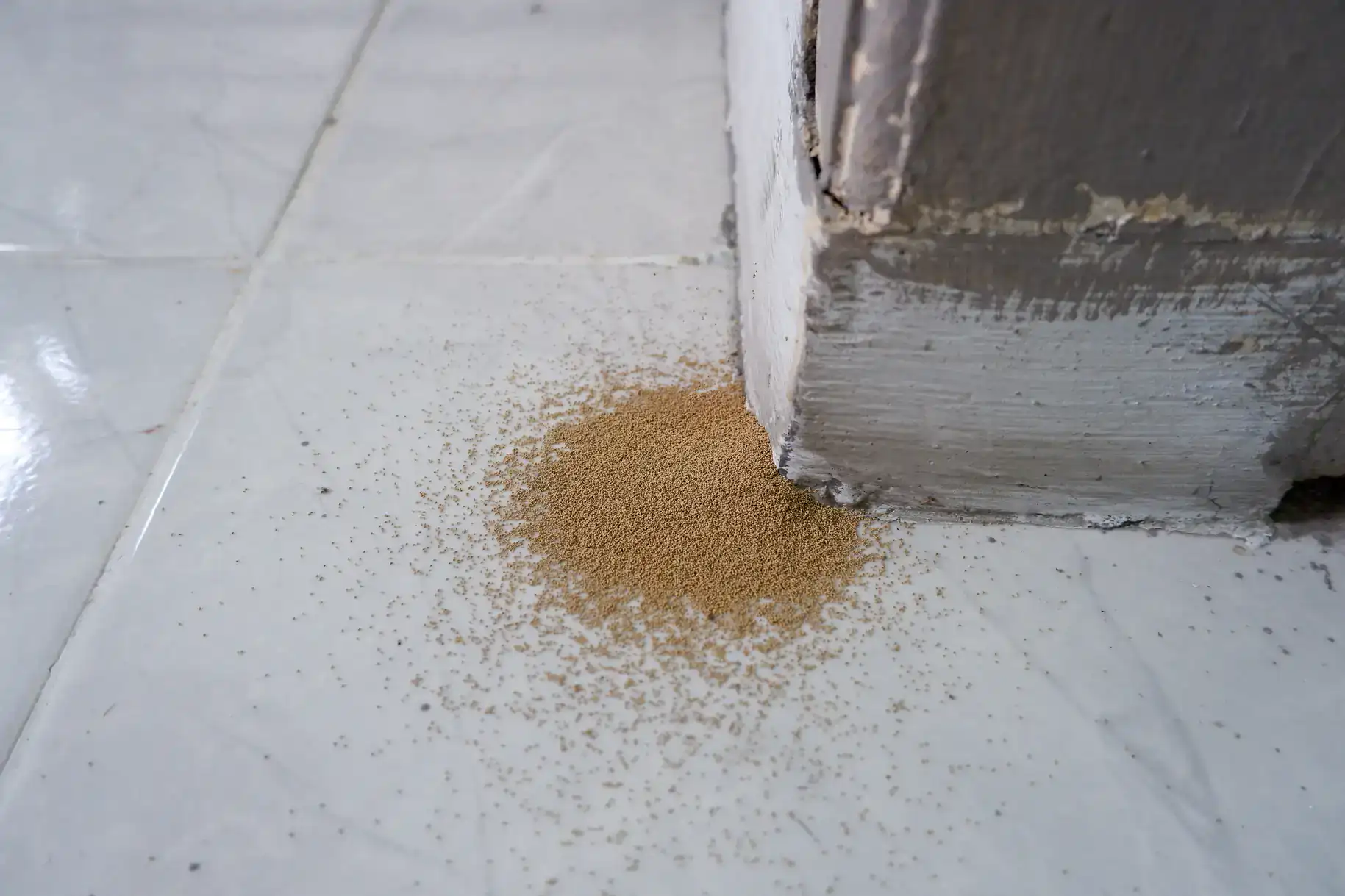
It starts with a thorough inspection. One of our technicians walks the property systematically foundation perimeter, basement framing, sill plates, floor joists, crawl spaces, and any accessible structural wood. In Douglaston’s older homes, that means paying close attention to areas where wood has been in direct or near-direct contact with soil for decades, and where bay-adjacent moisture has had a long time to do its work. If there is activity, you will know where it is, how extensive it appears, and what treatment makes sense for your specific structure.
From there, treatment is matched to what the inspection actually finds. For active subterranean termite infestations, that typically means a liquid termiticide applied to the soil around the foundation, a baiting system, or a combination of both. Baiting systems are particularly well-suited to Douglaston properties near the water or within the historic districts, where minimizing broadcast chemical application is a priority. The bait stations intercept foraging workers, who carry the toxicant back to the colony and eliminate it from the source not just the termites you can see.
If you are in Douglas Manor or Douglaston Hill and the inspection turns up visible damage to exterior historic fabric, document everything before any repair work begins. The NYC Landmarks Preservation Commission requires approval for exterior alterations to contributing buildings in both districts, and having a clear inspection record from a credentialed exterminator will support that process. We can provide the documentation you need.

Ready to get started?
Our termite inspection is not a walk-through with a flashlight. It is a systematic evaluation of every area where Eastern Subterranean Termites are likely to enter, travel, or feed in a structure like yours. That means the full foundation perimeter, all accessible basement and crawl space framing, sill plates, floor joists, any wood-to-soil contact points, and visible structural elements throughout the home. In Douglaston’s pre-war housing stock homes built between 1890 and 1930 with old-growth timber framing those contact points are often more numerous and more vulnerable than in newer construction.
For real estate transactions, we provide the WDO (Wood Destroying Organism) inspection reports that lenders, buyers, and real estate attorneys require. On a $900,000-plus home in Douglas Manor, no buyer’s attorney is closing without that documentation, and no FHA or VA lender is approving a loan without a clear termite inspection on file. We turn those inspections around promptly, which matters when you are working against a contract deadline.
Beyond inspection, we offer liquid termiticide treatments, termite baiting systems, and combination approaches depending on what the property requires. The right method depends on your home’s specific construction, its proximity to the bay, and the extent of any confirmed activity. You get a straight answer on what is needed not an upsell.
Yes, and the risk is higher than most homeowners expect. Douglas Manor contains hundreds of wood-frame homes built between 1890 and 1930, constructed with old-growth timber that has never been pressure-treated or chemically protected. That wood has been in place for nearly a century, cycling through decades of seasonal moisture from Little Neck Bay, and in many cases sitting close to or in contact with soil that stays damp year-round due to Douglaston’s peninsula geography and the neighborhood’s cesspool infrastructure.
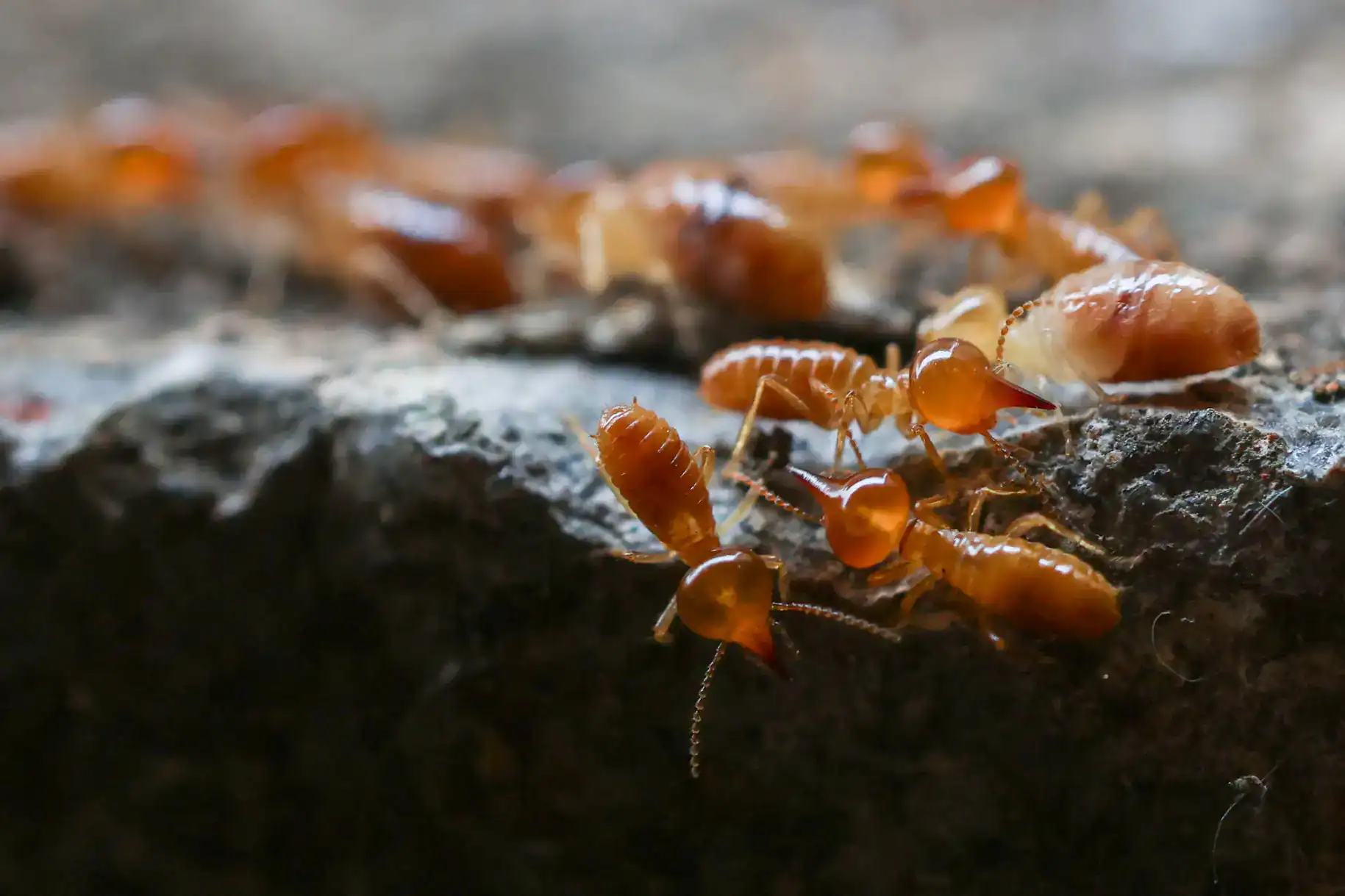
Eastern Subterranean Termites, the dominant species in Queens, require moist soil to establish and sustain a colony. Douglaston’s bay-adjacent terrain gives them exactly that. A colony does not need to be large to cause serious structural damage it just needs time. Most colonies go undetected for three to five years before any visible sign appears. By that point, the feeding has already compromised framing that, in a landmarked historic home, is genuinely irreplaceable.
The most common first sign homeowners in Douglaston notice is a spring swarm winged termites, called alates, emerging from walls, window frames, or basement stairs on warm days following rain, typically between March and May. People often mistake them for flying ants, but the difference matters. Termite swarmers have straight antennae, equal-length wings, and a straight body without a pinched waist. If you are seeing them inside the house, the colony is already established nearby.
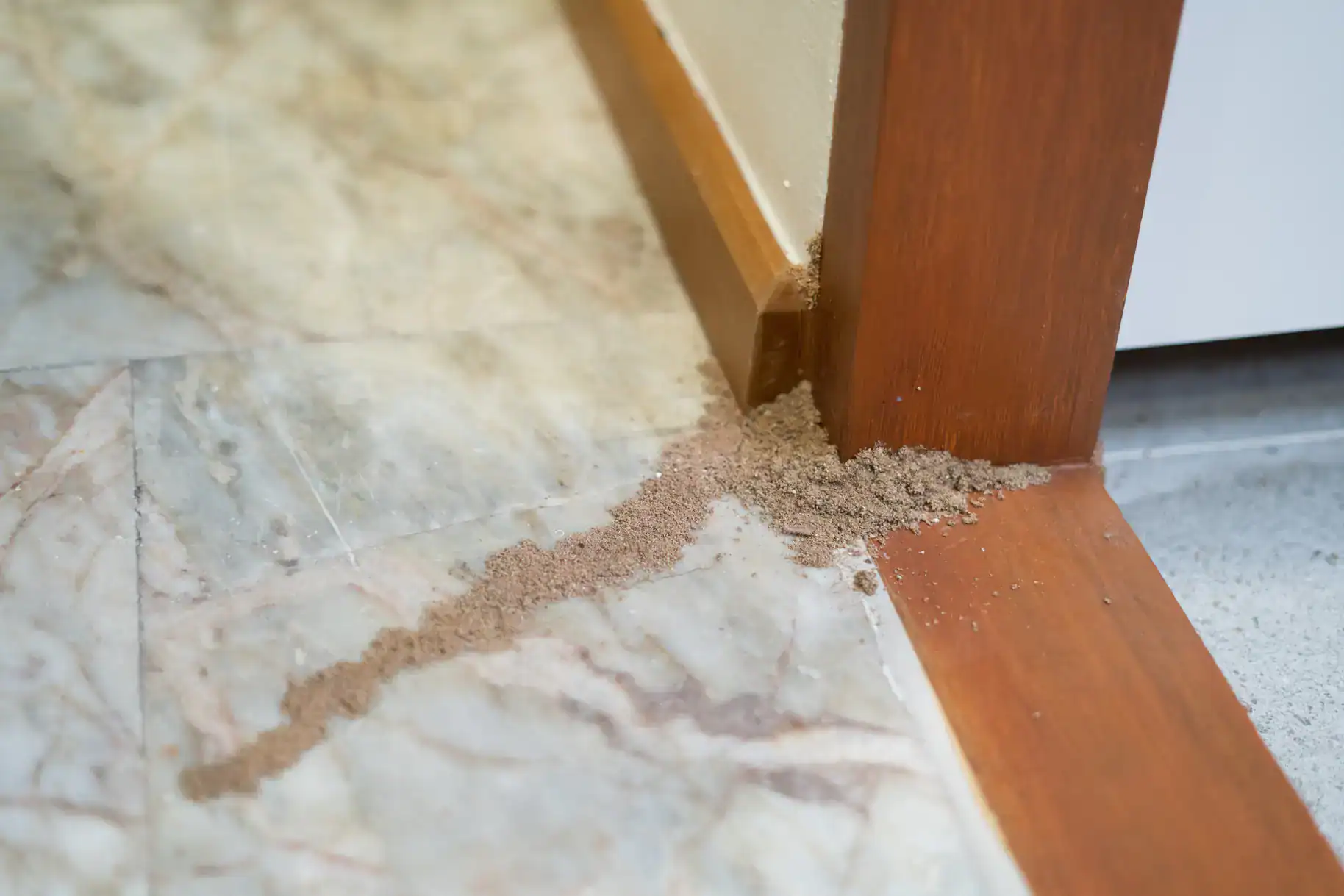
Outside of swarm season, the signs are more subtle. Mud tubes running along foundation walls or basement framing are a reliable indicator these are the highways termites build to travel between the soil and their food source. You might also notice wood that sounds hollow when tapped, floors that have developed an unexplained soft spot or slight buckle, or paint that is bubbling in a pattern that does not match a water leak. In a pre-war Douglaston home, any of these warrant a professional inspection, not a wait-and-see approach.
It can, and this is something Douglaston homeowners in the historic districts need to understand before damage reaches that stage. Both Douglas Manor and Douglaston Hill are designated NYC Landmarks Preservation Commission historic districts. That designation means any exterior alteration to a contributing building including repair or replacement of historic wood elements damaged by termites may require LPC approval before work begins.
This does not mean you cannot repair the damage. It means the repair process involves an additional layer of review, documentation, and potential delay that does not apply to non-designated properties. The practical implication is straightforward: catching a termite infestation early, before it causes visible exterior damage, is far less complicated and far less expensive than dealing with it after the fact. An annual termite inspection is genuinely a preservation strategy in these districts, not just routine maintenance. We can provide the inspection documentation you would need to support any subsequent LPC repair application.
It depends on the treatment method used. Liquid termiticide treatments applied to the soil around a foundation typically remain effective for five years or more, provided the treated zone is not significantly disturbed by landscaping work, excavation, or major foundation changes. In Douglaston, where many properties have mature landscaping and older foundations, the initial application creates a treated barrier that foraging termites cannot cross without contacting the product.
Termite baiting systems work differently they require periodic monitoring visits, typically every three to six months, to check bait station activity, replenish bait as needed, and confirm that the colony has been eliminated or is in decline. Baiting is often the preferred approach near Little Neck Bay and within the historic districts, where minimizing soil chemical application is a priority. Regardless of which method is used, an annual inspection is the most practical way to catch any new activity before it has time to develop into a structural problem. Given the age of Douglaston’s housing stock, that annual check is worth the cost.
It is not legally required by New York State in every transaction, but in practice, it is almost always necessary. If the buyer is using an FHA or VA loan, a termite inspection is a mandatory condition of loan approval no inspection, no closing. Even on conventional purchases, buyers’ attorneys routinely require a WDO (Wood Destroying Organism) report before signing off on a sale, particularly for older homes. In Douglaston, where the median sale price is approaching $915,000 and the housing stock is predominantly pre-war wood-frame construction, no serious buyer is going to skip that step.
From the seller’s side, having a clean termite inspection on file before you list is a smart move. It removes a potential deal-killer from the negotiation table and signals to buyers that the home has been properly maintained. If the inspection does turn up activity, you are better off knowing before listing and addressing it than having it surface during a buyer’s due diligence period and watching the deal fall apart or the price get renegotiated downward.
The cost varies depending on the size of the home, the extent of any confirmed activity, the treatment method used, and how accessible the affected areas are. For a standard liquid termiticide treatment on a single-family home in Douglaston, you are generally looking at a range of $800 to $2,500. Baiting system installation typically runs in a similar range for initial setup, with ongoing monitoring visits adding to the annual cost. If the infestation has caused structural damage that requires repair floor joists, sill plates, framing that work is separate and can range from $2,000 to $10,000 or more depending on the scope.
The number that matters most for a Douglaston homeowner is not the treatment cost it is the exposure you are managing. Homes in Douglas Manor and Douglaston Hill routinely sell for $800,000 to well over $1,000,000. A documented history of untreated termite damage can reduce a property’s value by 20% or more, which on a $900,000 home represents a potential loss exceeding $180,000. The treatment cost, viewed against that exposure, is not a significant line item. And unlike most other home repairs, termite damage is not covered by standard homeowner’s insurance so the financial risk of inaction sits entirely with you.
Useful Links
Other Services we provide in Douglaston