

Hear from Our Customers
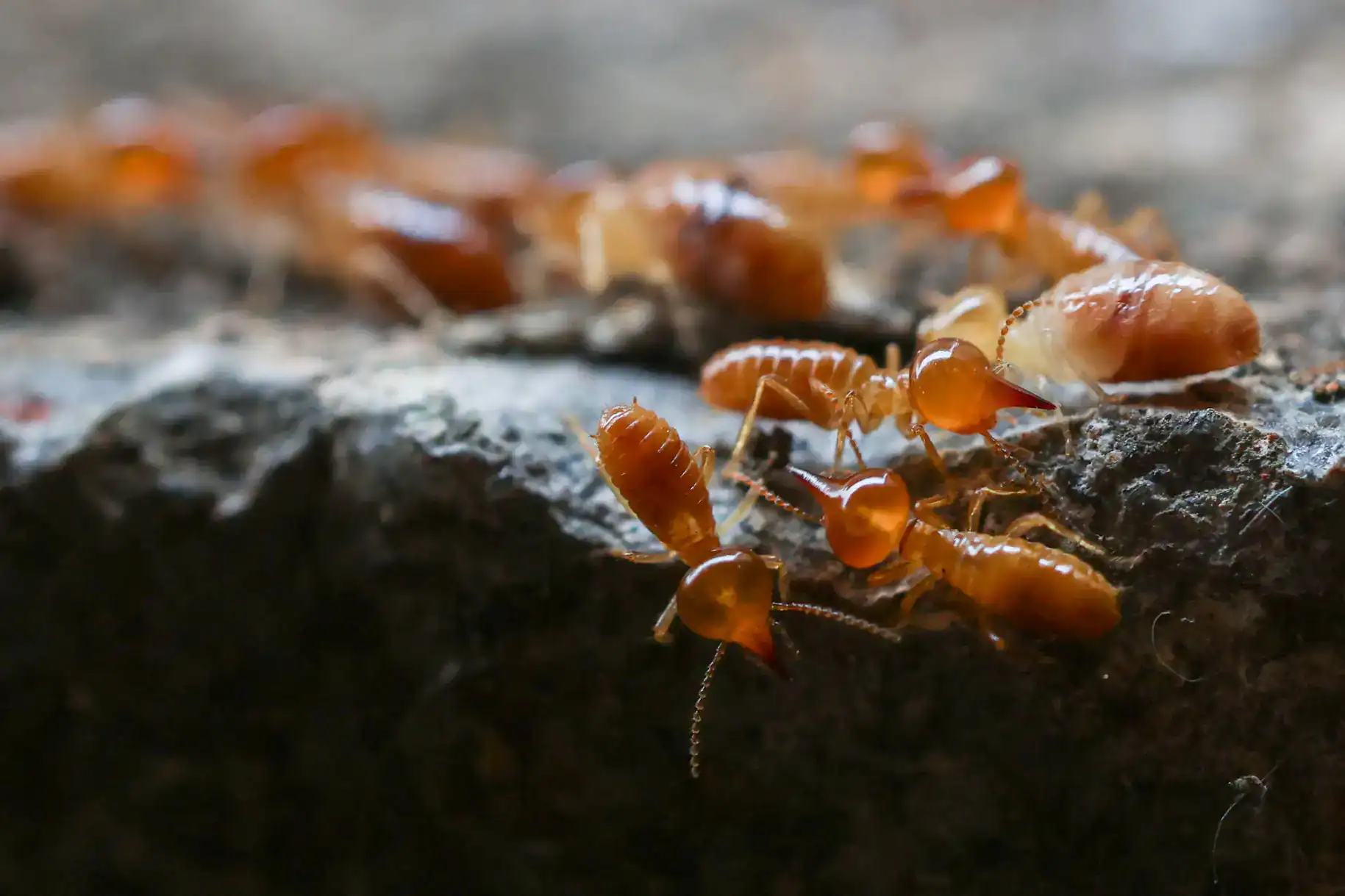
Most Lefferts Gardens homeowners don’t find out they have termites until a contractor opens a wall during a renovation and by then, the damage has been building for years. The Eastern Subterranean Termite, which is the dominant species throughout Brooklyn, feeds 24 hours a day and can work through a home’s structural framing for five years or more before anything looks wrong on the surface. By the time you see a mud tube or a swarm of winged insects near your foundation, the colony is already well-established.
The homes along the tree-lined blocks of Lefferts Manor and throughout Prospect Lefferts Gardens are particularly exposed. Structures built between 1895 and 1940 were framed with untreated lumber, and a century of settling has opened up the kinds of hairline foundation gaps that subterranean termites exploit without effort. Add the fact that Prospect Park sits directly to the west 585 acres of trees and soil that harbor active termite populations and the pressure on properties along Ocean Avenue and the surrounding blocks is real and ongoing.
Catching an infestation early means the difference between a treatment cost and a structural repair bill. Termite damage repair in Lefferts Gardens can run anywhere from $2,000 to $10,000 or more depending on how far it’s progressed, and your homeowner’s insurance almost certainly won’t cover it. An inspection now costs far less than finding out later.
We’ve been based at 2216 Flatbush Avenue since 1976 the same Flatbush Avenue that runs directly through the heart of Lefferts Gardens. This isn’t a regional franchise routing calls through a national system. We’re a family business, founded by Richard Kourbage Sr. and now led by his sons Richard Jr. and Charles, who between them and our staff bring over 100 years of combined pest control experience to every job.
That matters here. The pre-war rowhouses in Lefferts Manor, the converted brownstones along Bedford Avenue, the mixed-use buildings on Flatbush these aren’t generic structures. They have specific vulnerabilities that a company with decades of Lefferts Gardens and Brooklyn experience understands in a way that a national chain simply doesn’t. We’ve held BBB accreditation since 1989, apply only NYS DEC registered materials, and answer the phone 24 hours a day, seven days a week. When you call, you’re talking to people who know exactly where you are and what your building is likely dealing with.
It starts with a call. We answer 24/7, and same-day inspections are frequently available with a guaranteed appointment within two business days. If you’re mid-renovation, under a real estate closing deadline, or you’ve just noticed something that doesn’t look right near your foundation, that response time matters.
When one of our licensed technicians arrives, they’re not doing a quick visual sweep. They’re inspecting foundation perimeters, crawl spaces, basement framing, and any wood-to-soil contact points the exact areas where subterranean termites enter Lefferts Gardens homes. For properties in the Prospect Lefferts Gardens Historic District, that inspection also accounts for the kinds of original structural materials that were standard in 1910 but aren’t used today. If your home falls under NYC Landmarks Preservation Commission oversight, that context matters when assessing damage and planning treatment, since exterior structural repairs may require LPC review.
If termites are found, you’ll get a clear explanation of what was found, where, and what the treatment options are liquid barrier treatment, termite baiting systems, or a combination depending on the severity and the property type. Liquid termiticide barriers like Termidor can protect a structure for five to ten years. Baiting systems target the colony directly and require periodic monitoring to stay effective. You’ll know exactly what’s being applied, where, and why before anything starts.
Ready to get started?
Termite treatment in Lefferts Gardens covers the full range of what Brooklyn’s oldest residential buildings actually need. That means subterranean termite control using NYS DEC registered termiticides applied by our licensed, Category 7C certified technicians not general pest control operators doubling as termite exterminators.
For single-family homes in Lefferts Manor, where detached and semi-detached structures have more foundation perimeter exposed to soil than typical attached rowhouses, liquid barrier treatments are often the most effective first line of defense. The treatment creates a continuous treated zone in the soil around the foundation that termites cannot pass through without being eliminated. For properties with active infestations or where long-term colony elimination is the goal, termite baiting systems are installed at strategic points around the perimeter and monitored on a scheduled basis. Both approaches are available, and the right choice depends on your specific property and the extent of the activity found during inspection.
We also provide Wood Destroying Organism (WDO) inspection reports for real estate transactions the documentation that FHA and VA lenders require before closing on a property in Lefferts Gardens. If you’re buying or selling a Prospect Lefferts Gardens home and need a termite inspection report on a timeline, same-day and next-day availability means you won’t lose a deal over a scheduling gap. Every inspection comes with a written estimate, and all materials we use are safe for families, children, and pets a real consideration in a neighborhood where 22% of residents are under the age of 17.
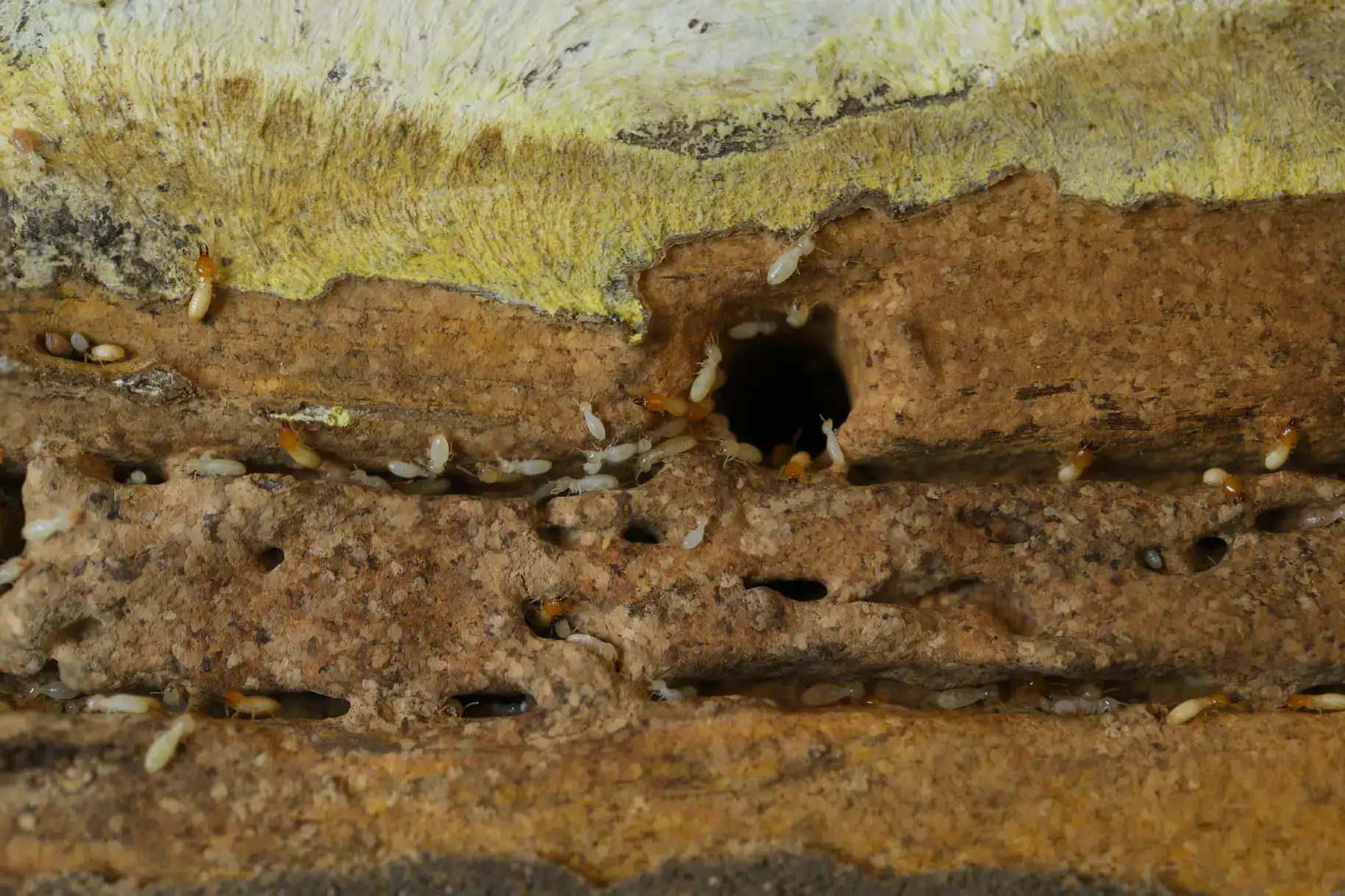
The earliest signs are usually subtle and easy to miss if you’re not looking for them. Mud tubes are one of the clearest indicators. These are pencil-thin tunnels made of soil and wood particles that Eastern Subterranean Termites build along foundation walls, basement framing, or concrete block to travel between the soil and the wood they’re feeding on. If you find one, the colony is already active.
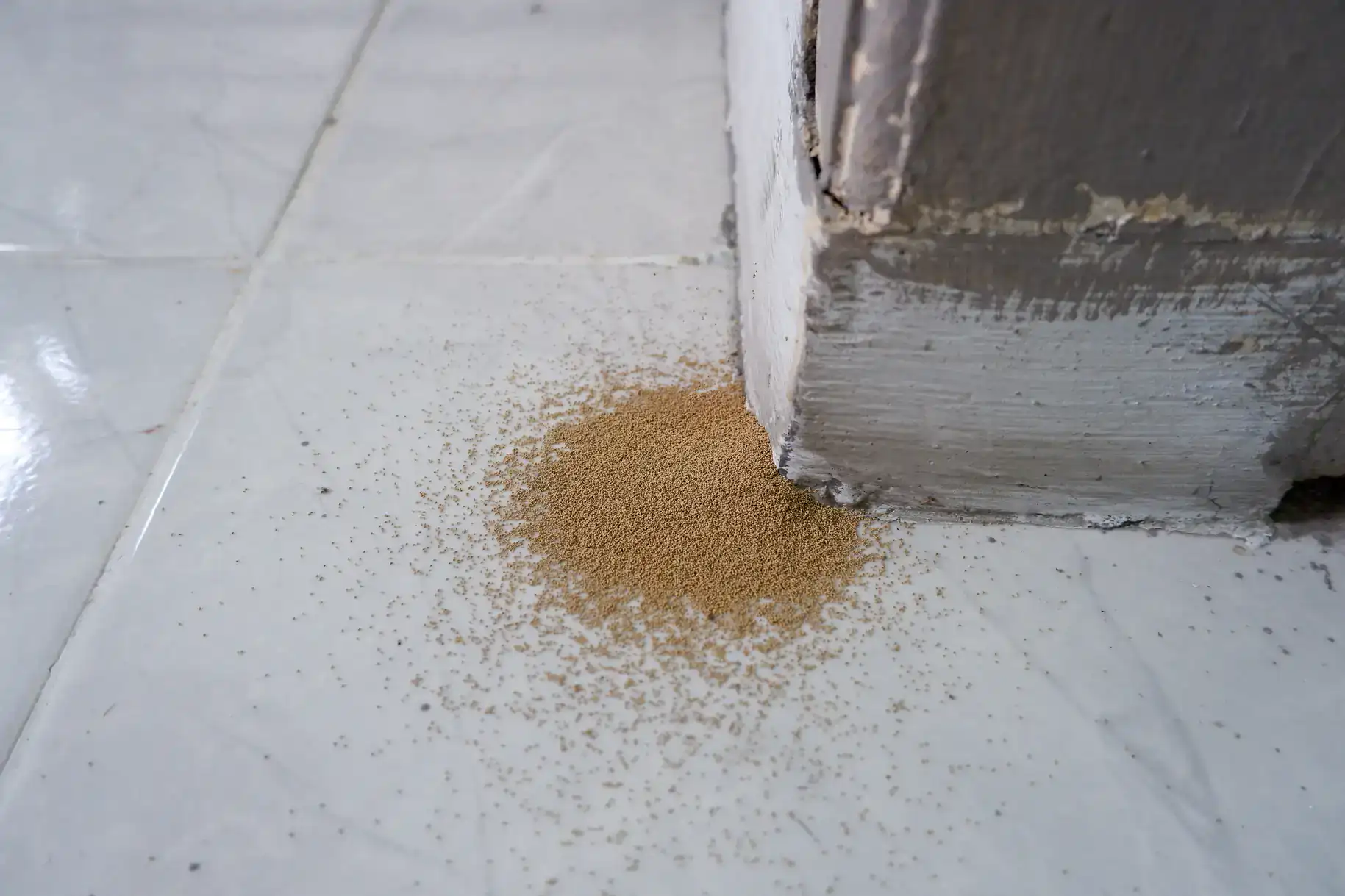
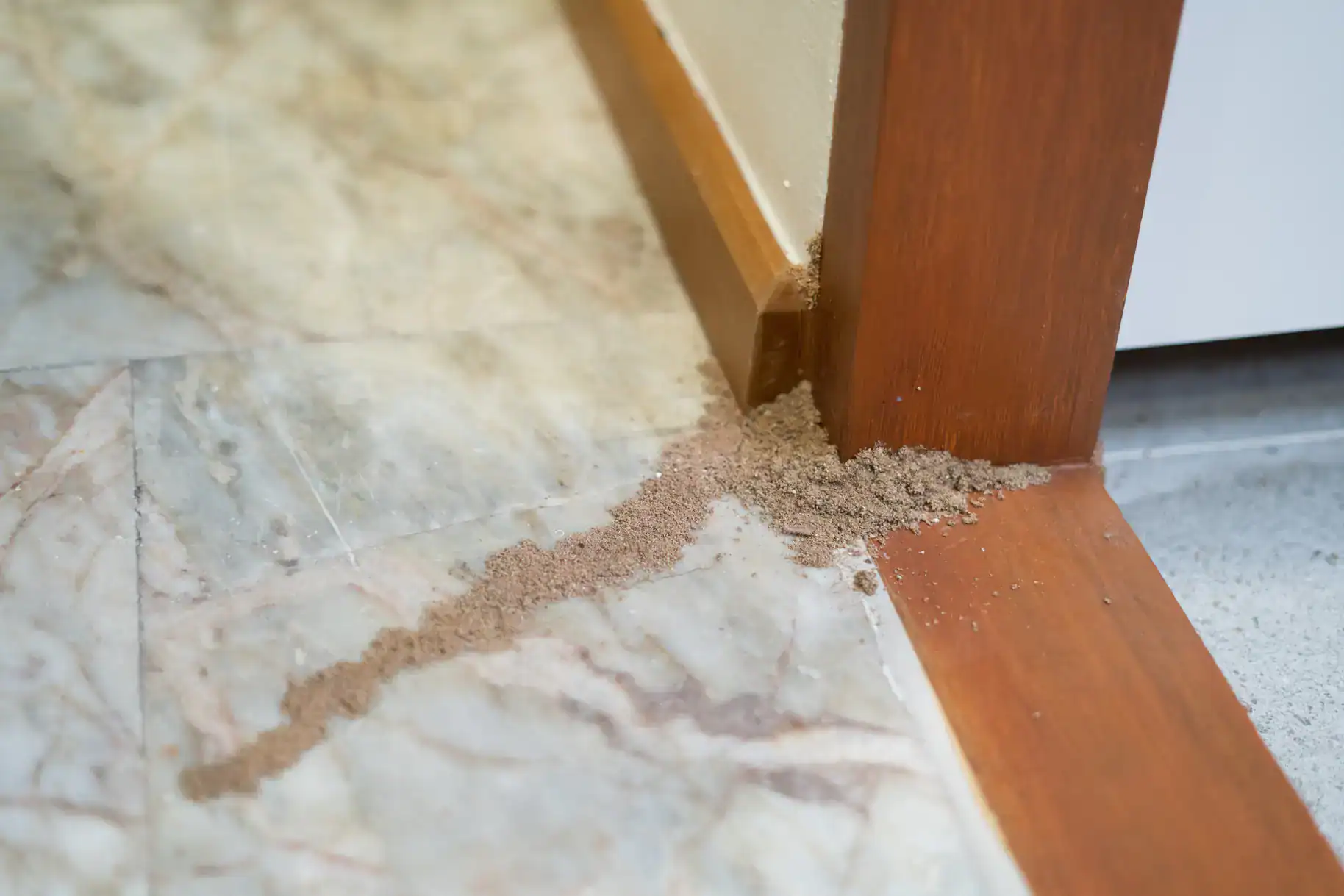
Other early signs include wood that sounds hollow when tapped, small piles of what looks like sawdust or sand near baseboards or window frames, and paint that bubbles or peels without an obvious moisture source. In pre-war Lefferts Gardens homes, these signs can appear in basement stairwells, along the sill plates just above the foundation, or inside wall cavities that haven’t been opened since the building was constructed. Spring is also when you’re most likely to see swarmers winged termites that emerge from soil or wood to start new colonies. If you see them inside your home between March and May, that’s not a coincidence. That’s a colony telling you it’s been there long enough to reproduce.
The cost depends on the size of the property, the extent of the infestation, and the treatment method used. For a typical Lefferts Gardens rowhouse or brownstone, a liquid barrier treatment generally runs in the range of $500 to $1,500 depending on linear footage of foundation treated. Termite baiting systems, which require installation and ongoing monitoring, are typically priced similarly upfront with annual monitoring costs on top of that. These are rough ranges the only way to get an accurate number for your specific property is through an inspection and a written estimate.
What’s worth keeping in mind is the comparison: the average cost of termite damage repair nationally is around $3,000, and structural repairs in older Brooklyn buildings can run $2,000 to $10,000 or more. Homeowner’s insurance in New York almost universally excludes termite damage, classifying it as a preventable maintenance issue rather than a sudden event. That means every dollar of repair cost comes out of your pocket directly. For a Lefferts Manor home or a Prospect Lefferts Gardens brownstone that you’ve invested significantly in, the cost of treatment is a fraction of what delayed discovery tends to cost.
It does, and it’s worth taking seriously. Prospect Park covers 585 acres of trees, soil, and natural woodland directly west of Lefferts Gardens and that environment naturally sustains large populations of Eastern Subterranean Termites. Termites don’t recognize park boundaries. Their colonies extend through soil in all directions, and properties along Ocean Avenue, the western blocks of Lefferts Manor, and the streets closest to the park’s perimeter face consistent termite pressure from that adjacent habitat.
It’s not that every home near the park has termites it’s that the soil conditions and organic material in that area create a favorable environment for termite colonies to establish and expand outward. Mature street trees throughout Lefferts Gardens compound this: their root systems disturb soil near foundations, and decaying root material in the ground is exactly the kind of organic food source that sustains subterranean termite populations. If your home is on the western side of the neighborhood and hasn’t had a termite inspection in the last few years, that’s a gap worth closing.
In almost every case, no. Standard homeowner’s insurance policies in New York including those held by Lefferts Gardens property owners classify termite damage as a preventable maintenance issue, not a sudden or accidental event. That exclusion is consistent across most major insurers, and it means that if a termite colony has been quietly damaging your home’s structural framing, floor joists, or original woodwork, the repair bill is entirely yours to cover.
This is a particularly sharp reality in Lefferts Gardens, where many homeowners have invested significantly in historic properties some in the $800,000 to $1.5 million range for brownstones and rowhouses and where the homes themselves are often protected under the NYC Landmark Historic District designation from 1979. Structural damage in a landmarked property isn’t just expensive to repair; it may require NYC Landmarks Preservation Commission review and approval before exterior work can begin, which adds time and complexity to an already costly situation. The most straightforward way to avoid that scenario is a professional inspection before damage reaches that threshold.
Yes and the implications go beyond the repair cost itself. The Prospect Lefferts Gardens Historic District was designated by the NYC Landmarks Preservation Commission in 1979, and properties within it are subject to LPC oversight for exterior alterations. If termite damage progresses to the point where structural or exterior repairs are needed replacement of original facade elements, exterior framing, or visible architectural details that work may require LPC review and approval before it can proceed. That adds a layer of process and timeline to what would otherwise be a straightforward repair.
The practical takeaway is that early detection matters more in a historic district than it does in a neighborhood with newer, more replaceable building stock. Termite damage caught at the mud tube stage, before it reaches structural framing or original woodwork, can often be treated without triggering any LPC review at all. Damage discovered after years of undetected feeding is a different situation entirely. If your home is within the historic district boundaries or if you’re not sure whether it is that’s a good reason to schedule an inspection sooner rather than later.
If you’re purchasing a home in Lefferts Gardens with an FHA or VA loan, a Wood Destroying Organism (WDO) inspection report is required by your lender before closing full stop. Many conventional lenders also request one for properties built before 1978, which covers the vast majority of homes in Lefferts Gardens given the neighborhood’s median construction year of 1938. Even if your lender doesn’t require it, getting a termite inspection before purchasing a pre-war Brooklyn property is simply sound due diligence.
Here’s the practical reason: termite damage doesn’t always show up in a standard home inspection. General home inspectors are looking at systems and visible conditions they’re not trained to identify the specific signs of subterranean termite activity in a basement or crawl space the way a licensed termite exterminator is. A separate WDO inspection by one of our certified professionals gives you a clear picture of what’s actually in the structure before you close. If damage is found, you have the option to negotiate with the seller, request treatment as a condition of sale, or walk away with full information. If nothing is found, you close with confidence. Either way, you’re not discovering it six months later when a contractor opens a wall.
Useful Links