Hear from Our Customers
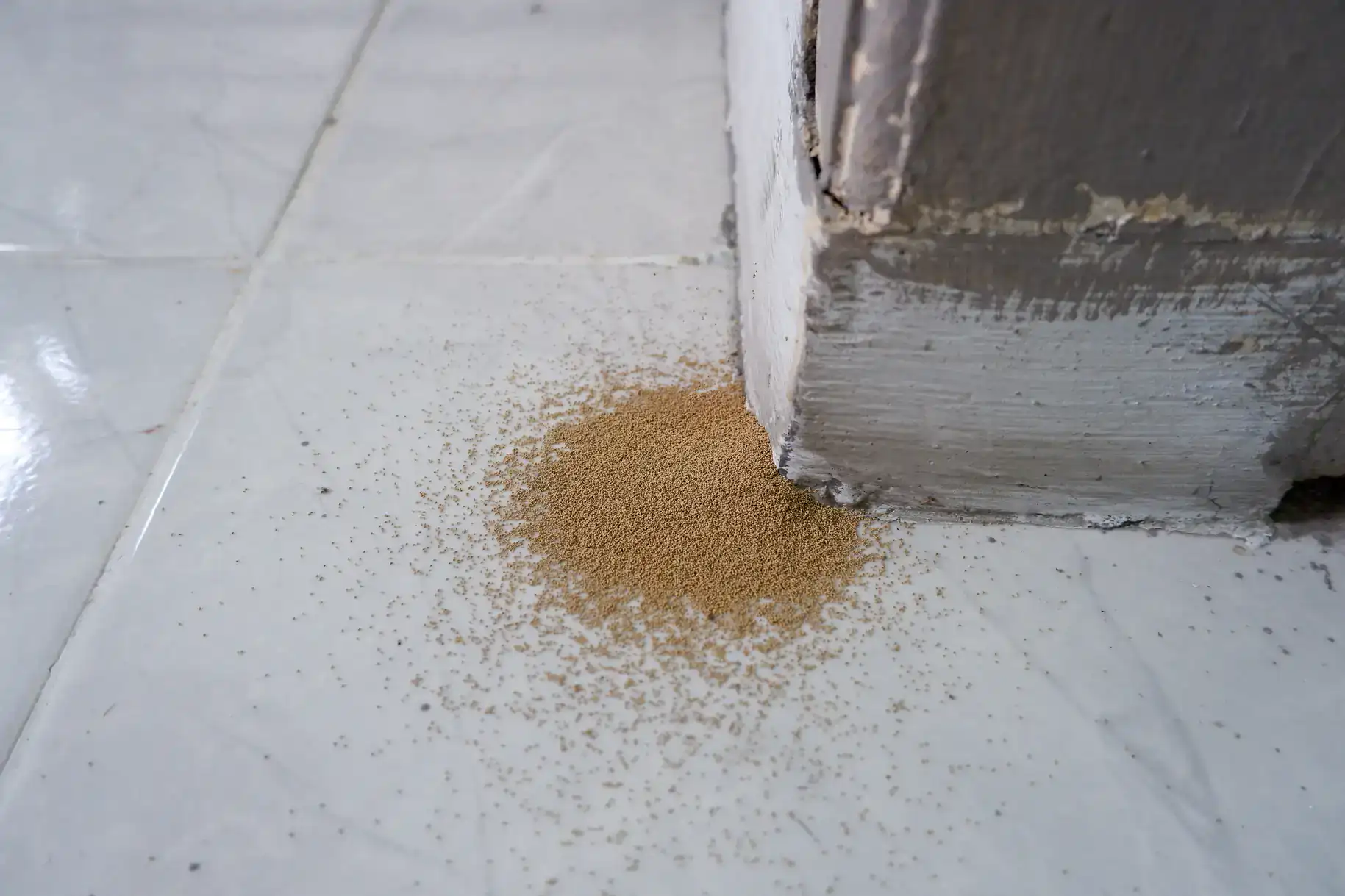
Termites work quietly. By the time you notice something a hollow sound when you knock on wood, a door that suddenly won’t close right, or a cluster of winged insects near your basement window in April a colony has usually been feeding for months. That’s just how subterranean termites operate in Rego Park and throughout Queens, and the neighborhood’s housing stock gives them plenty to work with.
The older buildings in Rego Park are particularly vulnerable. Many of the attached brick row houses in the Crescents were built in the 1930s and 1940s, and the wood-framed interiors behind those brick facades have been aging for nearly a century. Subterranean termites don’t need much a hairline crack in a foundation, a gap around a pipe, a patch of soil-contact wood and they’re in. In attached homes with shared party walls, what starts in one unit doesn’t stay there.
For residents in Rego Park’s large co-op buildings along Queens Boulevard, the dynamic is different but the stakes are just as high. A termite infestation in a shared basement or foundation affects the entire structure, not just the unit closest to the entry point. Catching it early is the difference between a straightforward treatment and a building-wide structural problem that your co-op board has to answer for. That’s what a thorough termite inspection actually protects your investment, your unit’s value, and your neighbors’ too.
We were founded in 1976 by Richard Kourbage Sr. not as a franchise, not as a corporate branch, but as a family business built on doing the work right. Richard Jr. joined in 1987, Charles joined in 1989, and Charles now runs day-to-day operations as General Manager. When something goes wrong on a job, there’s a named person responsible. That’s not common in this industry.
We hold a BBB A+ rating accredited since 1989 and apply only New York State Department of Environmental Conservation registered materials on every job. For Rego Park residents, especially those in large co-op complexes or multi-family buildings, that matters. It means the treatment is documented, compliant, and safe for the elderly residents, children, and families living in close proximity throughout the building.
We’ve been serving Rego Park and Queens as part of our five-borough territory since the beginning. Our collective experience exceeds 100 years and that kind of depth shows up in how we assess a pre-war building differently than a newer condo, and how we communicate findings to a co-op board versus an individual homeowner.
It starts with a call and we answer 24 hours a day, seven days a week. If you’ve spotted swarmers near a window, found mud tubes in your basement, or just bought a co-op in Rego Park and want to know what you’re working with before closing, you can reach someone immediately. Appointments are typically scheduled within two business days, and same-day inspections are available more often than not.
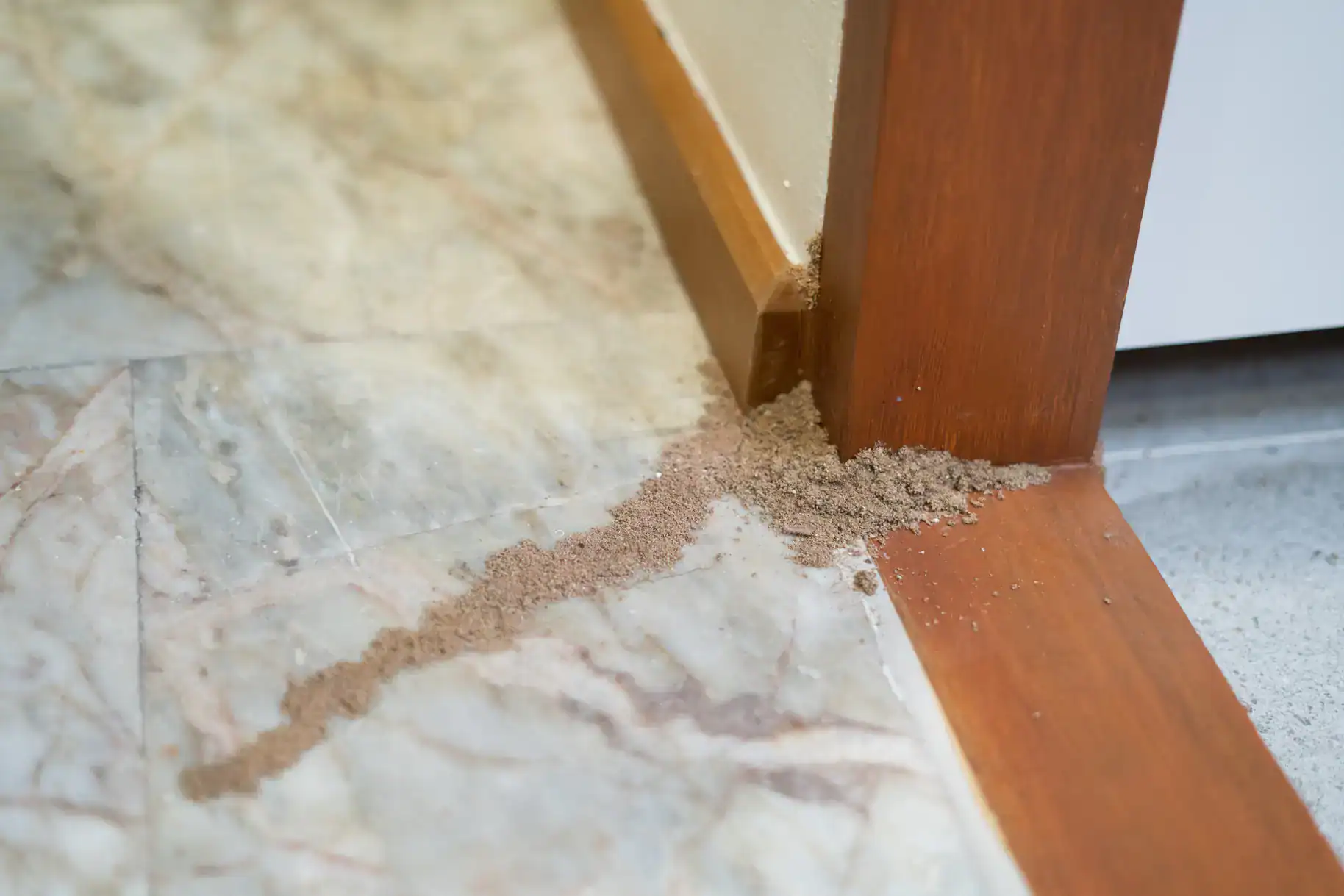
The inspection itself is thorough. Our technician assesses your foundation for cracks and soil-contact wood, checks basement and crawl space conditions, looks for mud tubes and moisture sources, and evaluates the full structural risk profile of your property. In Rego Park’s attached homes particularly in the Crescents, where shared party walls and connected foundations are the norm that inspection covers more ground than it would in a freestanding house. We’re looking at your risk, but also the risk that travels through the wall from next door.
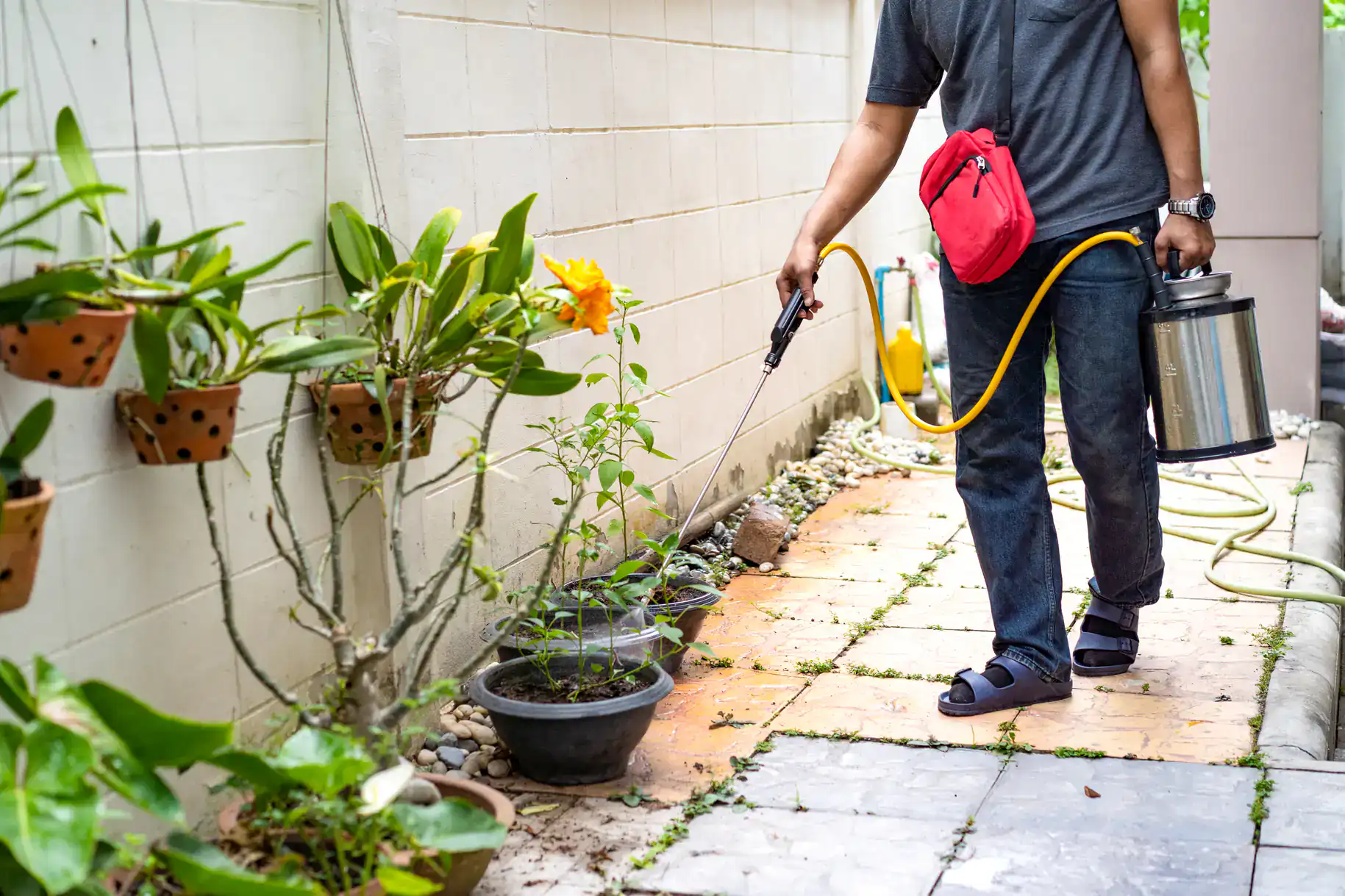
If termites are found, you get a clear explanation of what was discovered, where, and what treatment makes sense. For subterranean termites the dominant species throughout Queens that typically means liquid barrier treatment applied to the soil around the foundation, termite baiting systems, or a combination of both depending on the structure. Everything we use is NYS DEC registered. For co-op sales or lender-required documentation, we provide WDO inspection reports that meet board and mortgage requirements. No guesswork, no vague recommendations just a specific plan for your specific building.
Ready to get started?
Our termite services cover the full scope of what Rego Park residents actually need. That includes termite identification and inspection, subterranean termite eradication, termite baiting systems, and treatment for related wood-destroying insects like carpenter ants and powder post beetles. For properties with active infestations, we target the colony at the source not just the visible damage.
For real estate transactions, we provide WDO (Wood Destroying Organism) inspection reports. If you’re buying or selling a co-op in Rego Park, your lender may require one. Co-op boards frequently ask for pest inspection documentation as part of the buyer approval process, and FHA and VA loans have their own termite inspection requirements. Our reports are formatted to meet those standards, which keeps your transaction on schedule instead of derailing it at the last minute.
One service that sets us apart from most local competitors is our ability to help property owners resolve NYC Department of Health pest-related health code violations. For building management companies and co-op boards along Queens Boulevard or in large complexes like Park City Estates, that’s a meaningful capability not just treating the problem, but clearing the official record. Every service is backed by over 50 years of NYC pest control experience, and a senior discount is available for Rego Park’s significant 65-and-older population.
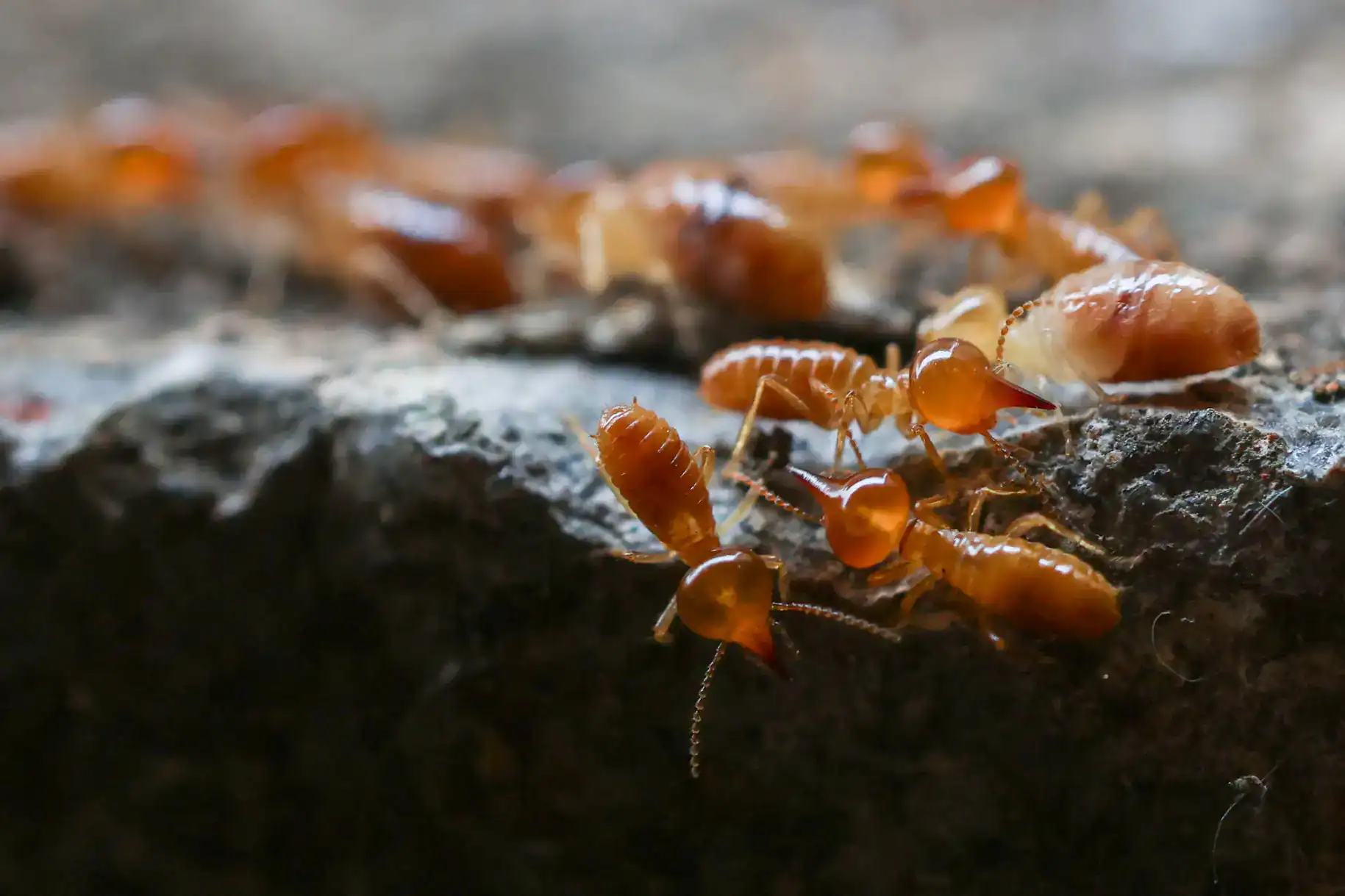
Yes and more than most residents expect. Rego Park’s housing stock is older, and age is one of the biggest risk factors for termite activity. The pre-war and mid-century co-op buildings along Queens Boulevard have wood-framed interiors, wooden floor joists, and basement areas where moisture tends to accumulate over time. That combination old wood, moisture, and direct or near-direct soil contact at the foundation is exactly what Eastern Subterranean Termites look for.
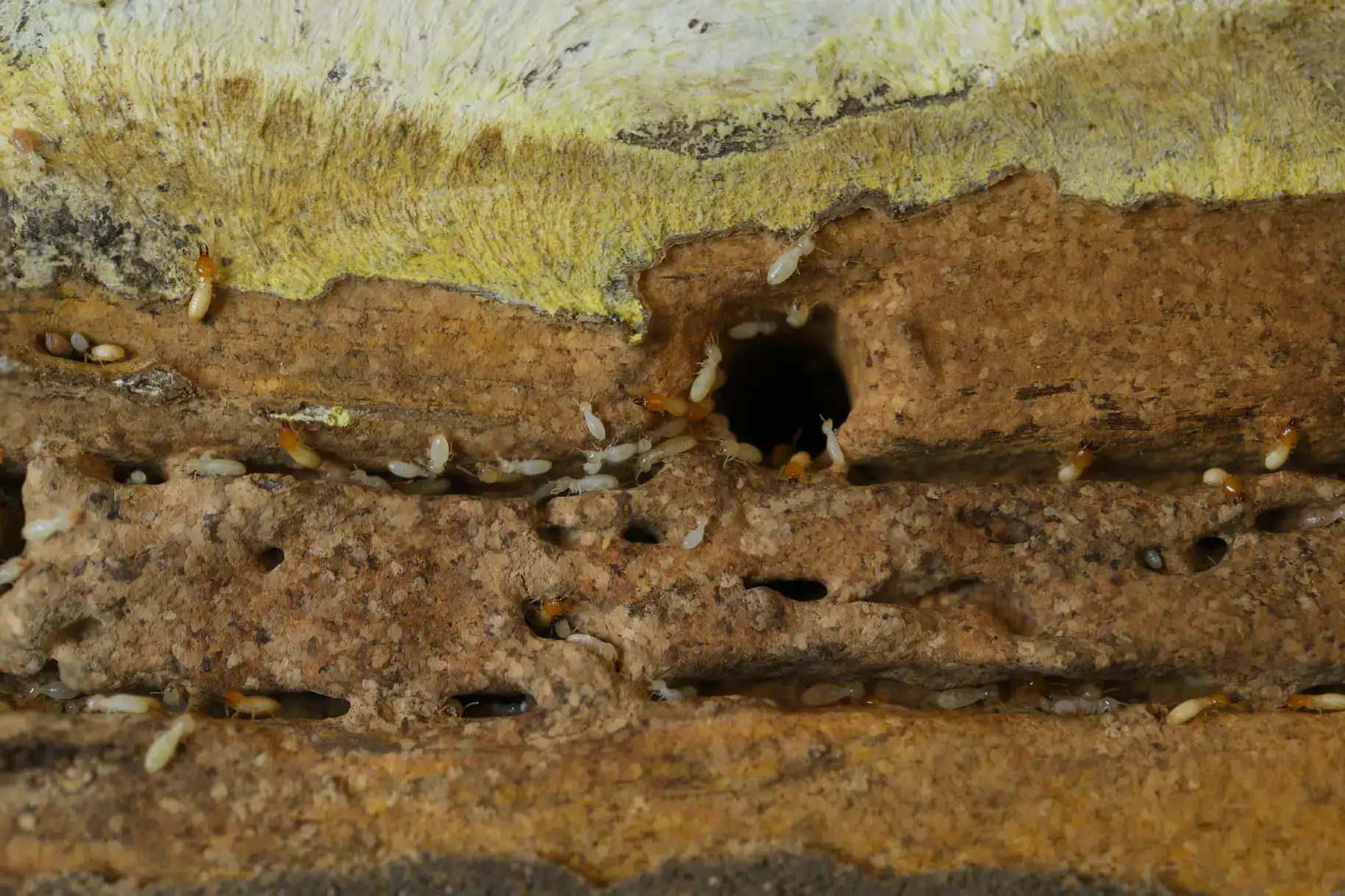
These termites are the dominant species throughout New York City, including all of Queens. They nest underground and build mud tubes to reach above-ground wood, meaning they can enter a building through a crack in the foundation without ever being visible until the damage is already underway. In large multi-unit buildings like those common in Rego Park, an infestation that starts in the basement or foundation can spread through shared structural elements to affect multiple units. If you’ve seen swarmers small, winged insects near your windows or in your basement during spring months, that’s a strong sign of an established colony nearby.
It’s one of the most common questions, and the confusion is understandable both swarm in spring, both have wings, and both show up in similar spots. The key differences come down to body shape and wing length. Termite swarmers have a straight, uniform body with no visible waist, and their four wings are all the same length. Flying ants have a pinched waist and wings of unequal length, with the front pair noticeably longer than the rear.
In Rego Park, swarm season typically peaks between March and May, triggered by warm days following rain. If you’re seeing large numbers of winged insects near a window, around a door frame, or coming up from a crack in your floor or basement, and they have that straight, uniform body shape, treat it as urgent. Swarmers don’t cause structural damage themselves they’re reproductives looking to start new colonies but their presence means an established colony is already in or near your building. The swarmers are the symptom. The colony is the problem, and it’s been there a while.
This depends on your co-op’s proprietary lease and house rules, and the answer isn’t always straightforward. In most New York City co-ops, the building’s underlying structure foundation, floor joists, shared walls, basement is the co-op corporation’s responsibility to maintain. If termites are found in structural elements that serve the building as a whole, the co-op board is typically the party responsible for arranging and paying for treatment.
Where it gets complicated is when the infestation appears to originate within a specific unit, or when the damage is limited to non-structural elements inside your apartment. In those cases, some co-ops push responsibility back to the individual shareholder. The safest move is to report the issue to building management in writing as soon as you notice anything suspicious, document what you’ve found, and request a professional inspection. We can inspect and provide a written assessment that clearly identifies the scope and location of the infestation which is exactly the kind of documentation a co-op board or property manager needs to determine who acts next.
It depends on how the sale is being financed and what the co-op board requires. For buyers using FHA or VA loans, a termite inspection formally called a WDO (Wood Destroying Organism) inspection is typically required before the loan can close. Conventional loans don’t always mandate one, but lenders can request it at their discretion, and many do for older buildings.
Beyond lender requirements, Rego Park co-op boards have their own approval processes, and some boards request pest inspection documentation as part of reviewing a buyer’s application. Even when it’s not required, getting a WDO inspection before closing is a smart move for any buyer purchasing a unit in a pre-war or mid-century building. If termites are found after you close, the repair costs which can run from a few thousand dollars to well over $10,000 for structural damage are yours to deal with. Most homeowner and co-op insurance policies do not cover termite damage. We provide WDO inspection reports formatted to meet lender and board requirements, so the documentation holds up when it needs to.
The cost varies based on the size of the structure, the extent of the infestation, and the treatment method used. For a standard single-family or attached home in the Crescents, a liquid soil barrier treatment typically runs somewhere in the range of $800 to $2,000 depending on the linear footage of the foundation being treated. Termite baiting systems involve an upfront installation cost plus ongoing monitoring fees, which can make them more cost-effective over time for certain property types.
For large multi-unit co-op buildings along Queens Boulevard or in complexes like Park City Estates, the scope is bigger and pricing reflects that building-wide treatments involve more access points, more linear footage, and coordination with building management. What matters most is getting an accurate inspection first, because treatment without a proper assessment often means retreating the same problem six months later. We provide free estimates, so you know exactly what you’re looking at before committing to anything. There are no hidden fees and no pressure just a clear number based on what your property actually needs.
Safety in dense residential buildings is a legitimate concern, and it’s one we take seriously. Rego Park has a significant senior population nearly one in five residents in the area is over 64 and many of the neighborhood’s large co-op buildings house elderly residents, families with young children, and pets in close proximity to one another. The question of what gets applied, where, and how it affects non-target residents matters.
We apply only materials registered by the New York State Department of Environmental Conservation on every job. NYS DEC registration means the product has been reviewed and approved for use in New York, with specific application protocols designed to minimize exposure to people and animals who aren’t the target of the treatment. Liquid termiticide treatments are applied to the soil around and beneath the foundation not broadcast through living spaces. Baiting systems are enclosed and placed in the ground. In both cases, targeted application keeps the treatment where it needs to be and away from where people live. Our technician will walk you through exactly what’s being used, where it’s going, and what if any precautions apply for your specific situation before any work begins.
Useful Links
Other Services we provide in Rego Park