
Hear from Our Customers
Most homeowners in Whitestone don’t find termites during a routine check. They find them during a renovation, a home sale, or the morning after a spring swarm shows up on a windowsill. By that point, the colony has usually been active for years. The damage is already there. What changes after proper termite treatment isn’t just the absence of insects it’s the confidence that your foundation, your floor joists, and the structural frame of your home are actually sound.
Whitestone’s position along the East River and Powell Cove isn’t just what makes the neighborhood desirable. It’s also what makes the soil here consistently moist and Eastern Subterranean Termites thrive in exactly that kind of environment. The mature trees, landscaped lots, and wooded character of neighborhoods like Malba give colonies a food source close to your foundation before they ever reach your walls.
For homeowners in a market where the median sale price sits around a million dollars, a termite infestation that goes untreated isn’t just a pest problem. It’s a financial exposure that your homeowner’s insurance almost certainly won’t cover. Getting ahead of it with a proper inspection and a treatment plan that actually reaches the colony underground is the difference between a manageable situation and a structural repair bill that runs well into five figures.
We founded Kingsway Exterminating Company in 1976. Our sons Richard Jr. and Charles run it today. That’s three generations of the same family, the same name, and the same accountability on every job we send a technician to including yours in Whitestone.
Our staff collectively brings over 100 years of pest control experience to the work. That’s not a marketing number it means when a technician walks into a 1940s Colonial near Clintonville Street or a waterfront estate in Malba, they’ve seen that construction before. They know where Eastern Subterranean Termites enter, where they travel, and what the damage looks like behind a finished basement wall before it becomes visible from the outside.
We hold BBB accreditation dating back to 1989, apply only NYS DEC-registered materials, and answer the phone 24 hours a day. Appointments are guaranteed within two business days, with same-day inspections frequently available in Whitestone.
It starts with a thorough inspection. One of our certified technicians walks the full property foundation perimeter, basement or crawl space, any wood-contact areas, and the soil around the structure. In Whitestone, that means paying close attention to moisture-prone zones near the waterfront, checking for mud tubes along foundation walls, and looking at any landscaping, mulched beds, or wood structures like decks and fencing that may already be drawing termite activity toward the house.
If an active infestation is confirmed, you’ll get a clear explanation of what was found and where. From there, treatment is built around what the property actually needs. For subterranean termite control in Whitestone, that typically means a liquid termiticide barrier applied to the soil around the foundation, a termite baiting system, or a combination of both. Liquid barriers create a treated zone that termites pass through and carry back to the colony. Bait stations work more slowly but are designed to eliminate the colony at its source which matters when you’re dealing with a colony that may number in the hundreds of thousands living 18 inches underground.
Because all termite treatment in New York requires NYS DEC-certified applicators using DEC-registered materials, every step we take is fully compliant with state regulations. If you’re in the middle of a real estate transaction, we also provide Wood Destroying Organism reports the documentation your lender or attorney will require before closing on a Whitestone property.

Ready to get started?
The homes in Whitestone are predominantly mid-century single-family construction Tudors, Colonials, and Cape Cods built largely between the 1930s and 1960s. That era of building means wood-framed foundations, wooden sill plates, and structural elements that were set close to or in direct contact with soil. Combined with Whitestone’s waterfront geography and the moisture levels that come with it, these homes carry a higher baseline termite risk than newer construction further inland.
Our termite control service addresses that reality directly. Inspections cover the full structure not just the visible surfaces, but the areas where termites actually travel: inside wall voids, beneath concrete slabs, along plumbing penetrations, and through any crack or gap in the foundation as small as 1/32 of an inch. Treatment options are explained clearly, and the approach is matched to the property a large-lot Malba estate with extensive landscaping requires a different scope than a Clearview Gardens co-op unit, and we have the experience to handle both.
For homeowners buying or selling in Whitestone’s active real estate market, we provide WDO inspection reports with fast turnaround. These reports satisfy the requirements of FHA and VA lenders and are commonly required by attorneys before a transaction closes. If termite damage is discovered, we provide documentation of findings in writing useful for negotiations, repair planning, or insurance review.
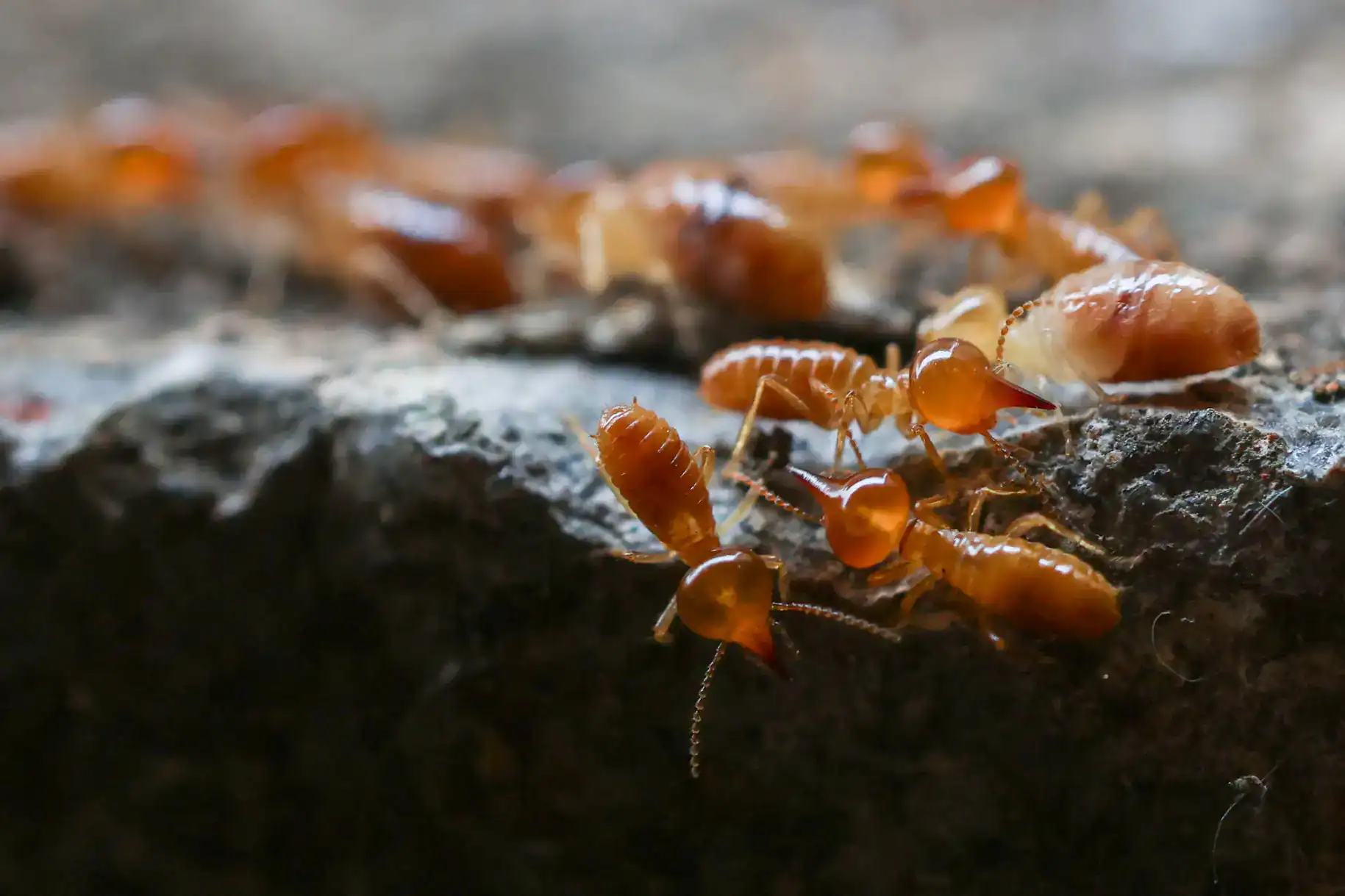
The most common early sign in Whitestone homes is swarmers winged termites that emerge in early spring, typically between March and May, following a warm day with rain. If you see what looks like a swarm of flying ants near a window, along a baseboard, or emerging from soil near your foundation, that’s a strong indicator of an active Eastern Subterranean Termite colony nearby. Swarmers themselves don’t cause damage, but their presence means a mature colony is established and looking to expand.
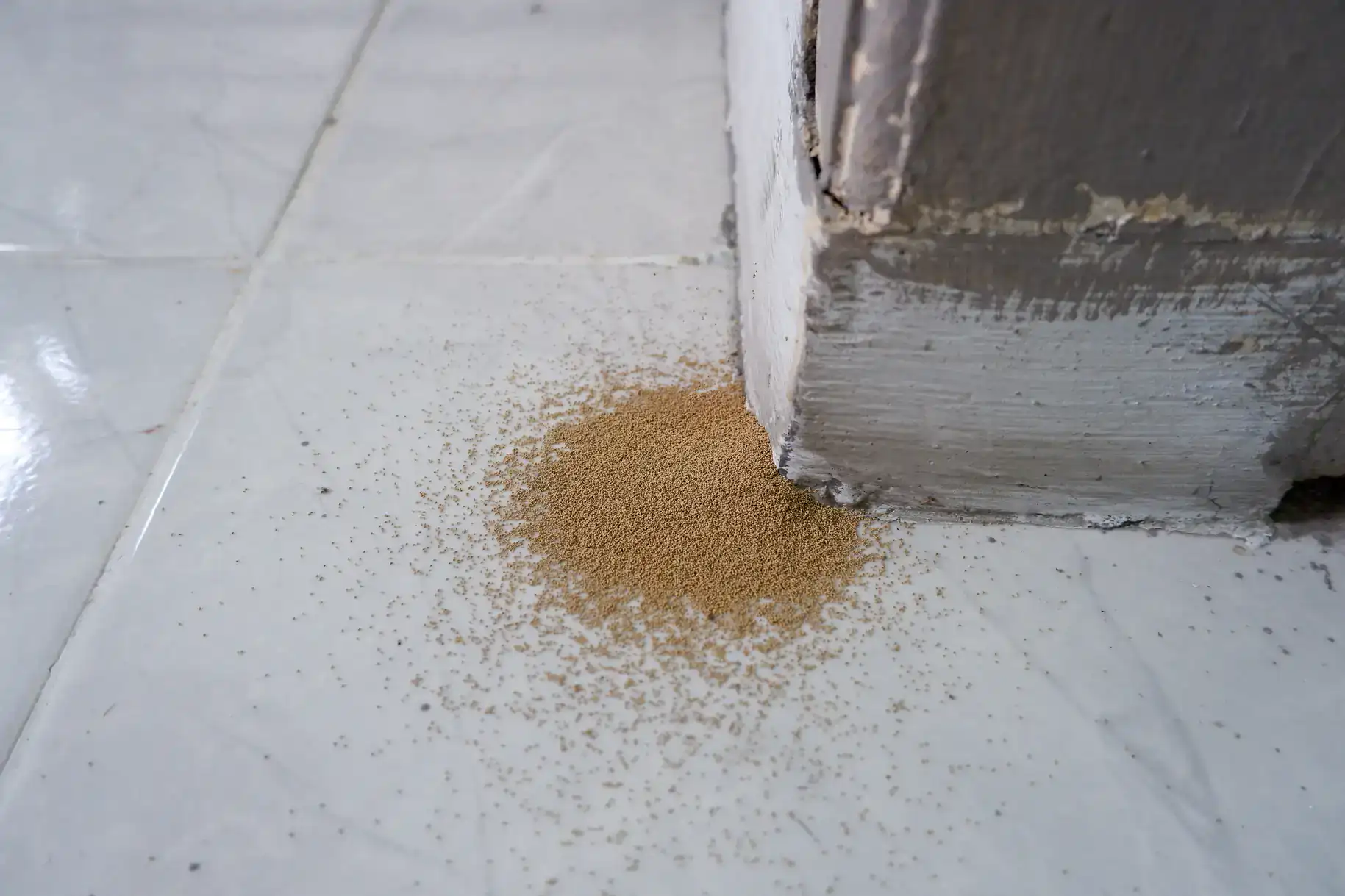
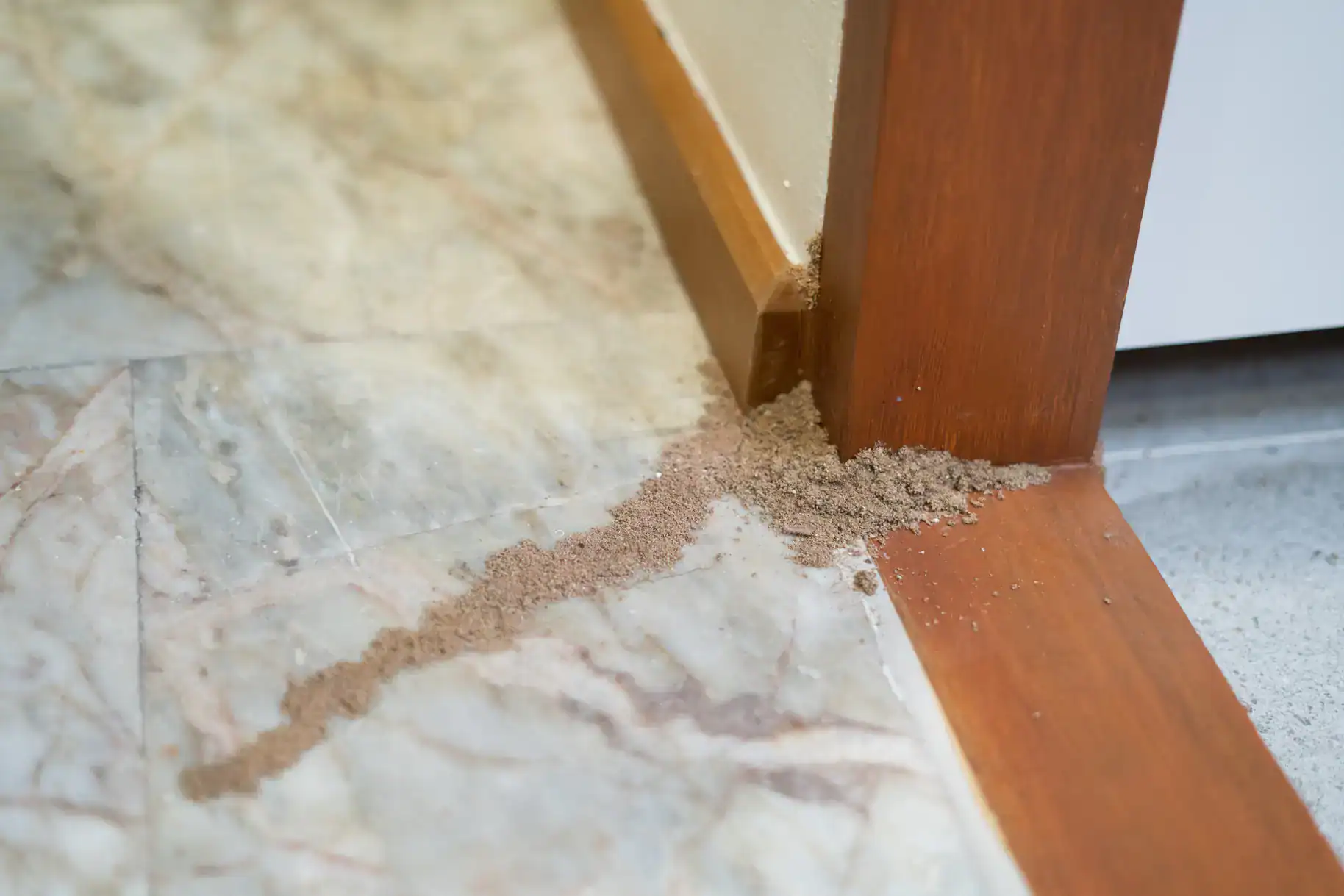
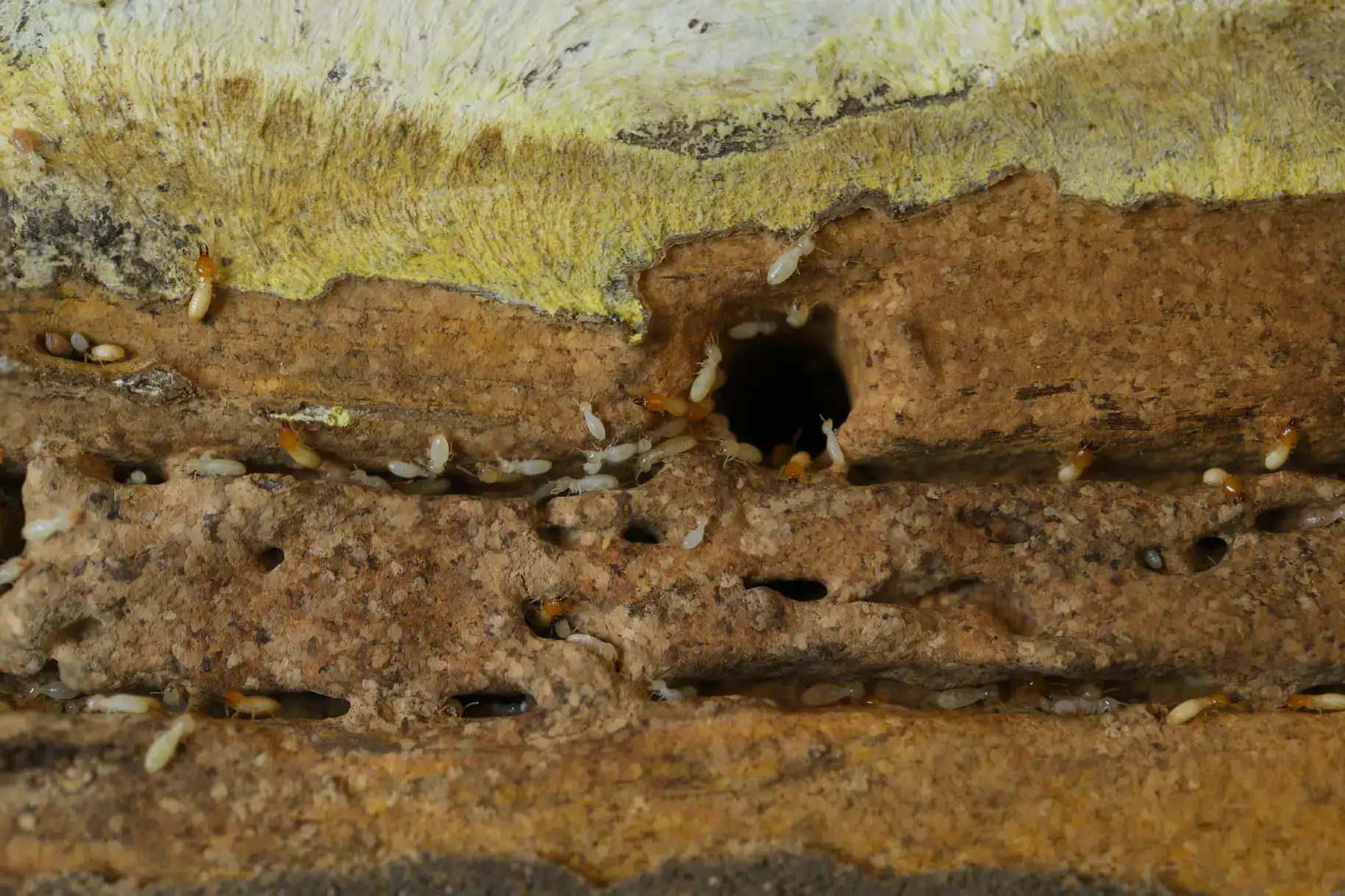
Other signs include mud tubes pencil-thin tunnels of soil and debris running along foundation walls or wooden beams hollow-sounding wood when you knock on it, bubbling or uneven paint on walls or window frames, and small piles of what looks like sawdust near wood structures. In Whitestone’s older housing stock, these signs often appear first in basements, crawl spaces, or along the exterior foundation where soil contact is highest. If you notice any of these, don’t wait by the time termite damage is visible, the infestation has typically been active for several years.
For a standard single-family home in Whitestone, professional termite treatment generally runs between $1,500 and $5,000 depending on the size of the structure, the extent of the infestation, and the treatment method used. Liquid termiticide barrier treatments tend to fall on the lower end of that range for smaller homes. Bait station systems, which are often the better long-term choice for larger properties with extensive landscaping like many of the homes in Malba may involve an ongoing monitoring component that adds to the overall cost.
What’s worth keeping in mind is that the average cost to repair termite damage nationally is around $3,000, and structural repairs involving floor joists, beams, or subflooring can run $10,000 or more. Homeowner’s insurance in New York almost universally excludes termite damage, which means that cost falls entirely on you. In a neighborhood where Whitestone homes sell for $800,000 to well over a million dollars, the cost of professional treatment is a small fraction of what you’re protecting. A free inspection is the right place to start it tells you what you’re actually dealing with before any decisions are made.
Not every transaction requires one by law, but in practice, most lenders do particularly FHA and VA loan programs, which explicitly require a Wood Destroying Organism report as a condition of mortgage approval. Even in conventional transactions, buyers’ attorneys in the New York market routinely request termite inspection documentation before closing, especially on older single-family homes like the mid-century Colonials and Tudors that make up most of Whitestone’s housing stock.
Beyond the lender requirement, it’s simply good due diligence. A home in Whitestone can sell for $900,000 to $4 million or more in Malba. Discovering a significant termite infestation after closing in a structure where damage may have been accumulating for five or more years is a costly surprise that a pre-purchase inspection would have caught. We provide WDO inspection reports with fast turnaround, which can keep your transaction on schedule without delaying the closing process.
Eastern Subterranean Termites, the dominant species throughout Queens and all of New York City, establish their colonies underground and depend on soil moisture to survive. Whitestone’s location along the East River and Powell Cove means the soil throughout the neighborhood retains higher moisture levels than you’d find in drier, inland communities. That moisture accelerates colony establishment and makes the area more hospitable for termite activity year-round.
It goes beyond just the waterfront itself. The mature trees, established landscaping, and wooded lots that characterize Whitestone and especially Malba mean there’s often organic material in the soil close to residential foundations: buried roots, decomposing mulch, old fence posts, tree stumps. That organic material draws termite colonies toward a property before they ever make contact with the structure. Homes along the waterfront corridor and on larger wooded lots should be inspected more frequently than average, and any wood-to-soil contact around the foundation perimeter should be addressed as a preventive measure.
A liquid barrier treatment involves applying a termiticide to the soil around and beneath your foundation, creating a treated zone that termites pass through and carry back to the colony. It works relatively quickly and is effective at stopping active termites from reaching the structure. For homes with a confirmed infestation and immediate structural concerns, a liquid barrier is often the first line of response.
A termite bait system works differently. Stations are installed in the soil around the perimeter of your property, and termites find the bait while foraging. They carry the slow-acting termiticide back to the colony, which gradually eliminates the population from the inside out. It takes longer than a liquid barrier, but for properties with large lots, extensive landscaping, or mature trees which describes a significant portion of Whitestone and Malba homes bait systems provide broader, longer-term protection because they address the colony rather than just the termites that happen to reach your foundation. In many cases, a combination of both methods gives you the most complete coverage, and one of our technicians will recommend what makes sense for your specific property after the inspection.
Liquid termiticide barriers, when properly applied, typically remain effective in the soil for five years or more though that can vary based on soil conditions, rainfall, and any landscaping changes that disturb the treated zone. Given Whitestone’s higher soil moisture levels near the waterfront, it’s worth confirming with your technician how those conditions may affect the longevity of the barrier on your specific property.
Termite bait systems are designed for ongoing monitoring. The stations remain in the ground and are checked periodically which is how you catch new activity before it becomes an infestation. For most single-family homeowners in Whitestone, an annual inspection is a reasonable baseline, particularly for homes built before 1970 with older foundations and any wood-to-soil contact. If you’ve had a previous infestation, or if your property has the kind of mature landscaping and moisture exposure common in the Malba area, more frequent monitoring makes sense. The goal isn’t to sell you a recurring service you don’t need it’s to make sure a new colony doesn’t get five years of undetected feeding time before you find out about it.
Useful Links
Other Services we provide in Whitestone