
Hear from Our Customers
When you live in an attached row house on a Borough Park block where every home shares a wall with the next, a pest problem is never really just your problem. Cockroaches, mice, and bed bugs move through pipe chases, wall voids, and utility gaps without any awareness of property lines. The difference between a real fix and a temporary one is whether the treatment addresses those pathways or just the room where you spotted something.
Borough Park’s housing stock is almost entirely pre-war construction. These are beautiful, solid buildings, but they were built in an era before modern pest exclusion standards. Gaps around plumbing, aging mortar joints, and decades of minor structural wear create the kind of harborage that pests rely on year-round. A thorough pest control approach here means understanding how these buildings are actually built not applying a generic treatment and hoping for the best.
For families with young children or elderly grandparents at home, the other side of this equation matters just as much. Effective pest control should not mean trading one health concern for another. The goal is a home that stays protected, stays safe, and stays that way not a revolving cycle of re-treatments every few months.
We have been operating continuously since 1971, which means decades of working inside Borough Park’s attached homes, multi-family buildings, and pre-war residential structures the exact building types that line the streets between 13th Avenue and New Utrecht Avenue. This is not a national franchise applying a one-size-fits-all approach. We are a family-owned Brooklyn business that has built our reputation one solved problem at a time in this neighborhood.
We are licensed and registered with the New York State Department of Environmental Conservation and hold certification as bed bug specialists which matters in a neighborhood where roughly 12% of homes report bed bug issues, one of the higher rates in Brooklyn. Every technician who comes to your door is experienced, accountable, and working under that same license.
The free inspection is not a sales tactic. It is how we start every job by actually looking at what is going on before recommending anything.
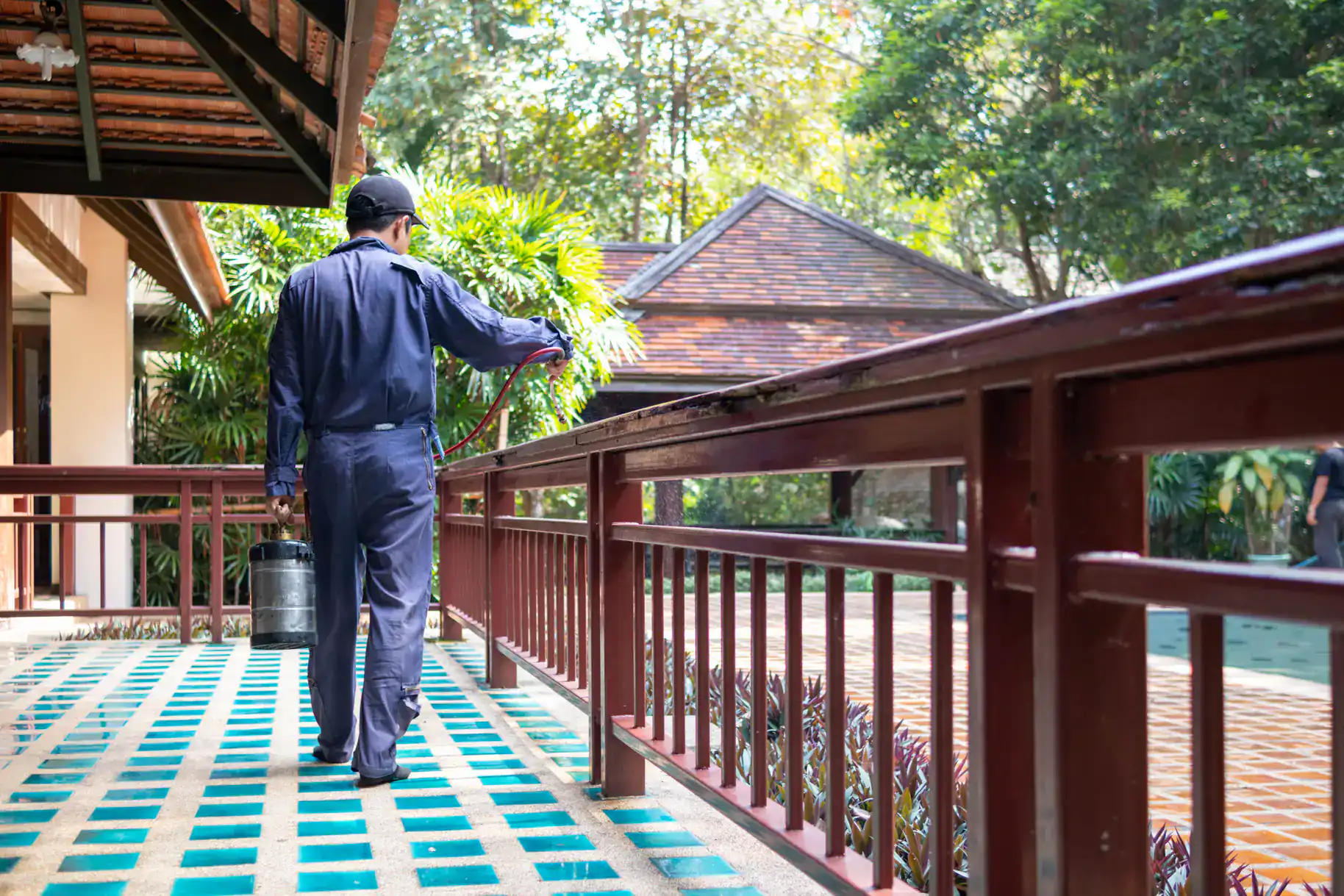
It starts with a free inspection. A licensed technician comes to your home, assesses the affected areas, and looks at the structural conditions that may be contributing to the problem gaps around plumbing, entry points along the foundation, shared wall conditions. In Borough Park’s attached housing, this step is not optional. Skipping it means treating symptoms without understanding the source.
From there, you get a clear picture of what you are dealing with and what treatment is recommended. No pressure, no upselling, no vague estimates. If treatment is needed, the approach is targeted to the specific pest, the specific building conditions, and the specific needs of your household. For families with children or elderly residents at home, the technician will walk you through exactly what is being applied, where, and what precautions to take.
After treatment, we do not disappear. If the problem persists or returns, you have a direct line back not a call center, not a franchise ticket number. Because Borough Park’s dense, connected housing stock can allow re-infestation from adjacent units, follow-up matters. That accountability is built into how we work, not added on as a fee.

Ready to get started?
The most common pest calls in Borough Park follow a predictable pattern: cockroaches in the kitchen, mice appearing as the weather cools, and bed bugs discovered after someone in the household wakes up with bites. We handle all of them. Cockroach treatment in a kosher kitchen requires particular care not just effective elimination, but an approach that accounts for the food preparation environment and the standards that households here maintain. That context matters, and our technicians understand it.
Rodent control in Borough Park cannot stop at traps. The neighborhood’s ongoing construction activity driven by the community’s demand for larger homes regularly displaces established rodent colonies into adjacent structures. A mouse that appears in October is often not a stray; it is a displaced animal looking for a new harborage. Exclusion work, meaning identifying and sealing the entry points, is what separates a lasting result from a temporary one.
We also provide WDI (wood-destroying insect) inspections and mortgage clearance certificates for real estate transactions a service that Borough Park’s active property market generates consistent demand for. If you are buying or selling a home and your lender or attorney requires a pest clearance, we can issue the required report. Bed bug heat and chemical treatments, termite inspections, ant and stinging insect control, and general residential pest management are all part of what we bring to Borough Park.

This is the first question most Borough Park families ask, and it deserves a real answer. We use EPA-registered materials applied by licensed professionals according to label directions. Before any treatment begins, the technician will tell you exactly what is being used, where it will be applied, how long your family should stay out of treated areas, and when it is safe to return. There is no ambiguity in that conversation.
For households where chemical exposure is a significant concern particularly in homes with infants, toddlers, or elderly residents with health conditions we follow Integrated Pest Management principles that prioritize targeted, lower-toxicity applications wherever the situation allows. The goal is always to use the least intervention necessary to solve the problem completely. If you have specific concerns about particular products or application methods, raise them during the free inspection. That is exactly the right time to have that conversation.
In Borough Park’s attached housing stock, cockroaches rarely stay contained to a single unit. They travel through shared wall voids, pipe chases, and gaps around utility penetrations meaning a treatment that clears your apartment can be undone within weeks if adjacent units remain untreated or if the structural entry points are not addressed. Hardware store sprays make this worse, not better. They push cockroaches deeper into wall voids and can create pesticide-resistant populations without eliminating the colony.
Professional treatment addresses the harborage areas the places cockroaches actually live and breed not just the surfaces where they are visible. It also involves identifying the gaps and cracks that are allowing them to move between units. If you are a tenant and the problem keeps returning despite treatment, your landlord has a legal obligation under the NYC Housing Maintenance Code to address it. Cockroach infestations are classified as Class C violations immediately hazardous requiring landlord response within 24 hours of an HPD complaint. We can document the condition and advise you on your options.
Bed bugs leave a specific pattern of evidence. Bites typically appear in clusters or lines on exposed skin arms, neck, and shoulders and tend to show up overnight. Beyond bites, look for small rust-colored stains on mattress seams or sheets, tiny dark spots along mattress edges and box spring seams, and occasionally a faint musty odor in heavily infested rooms. Bed bug eggs and shed skins are small but visible if you know where to look.
The challenge is that bites alone are not a reliable identifier reactions vary significantly from person to person, and some people show no reaction at all. The only way to confirm a bed bug infestation is a thorough physical inspection of the mattress, box spring, bed frame, and surrounding furniture. Our free inspection includes exactly that assessment. Given that roughly 12% of homes in Borough Park report bed bug problems a rate on the higher end for Brooklyn it is worth getting a definitive answer rather than guessing. Early identification means a less extensive and less costly treatment.
Under the NYC Housing Maintenance Code, landlords are legally required to maintain rental units free of pest infestations. If you report a cockroach, rodent, or other pest problem to your landlord and they do not respond, you can file a complaint through NYC 311, which triggers an HPD inspection. Depending on the severity, the violation can be classified as Class A, B, or C with Class C (immediately hazardous, which includes cockroach infestations) requiring landlord action within 24 hours.
That said, the practical reality in many Borough Park buildings is that tenants end up managing pest issues themselves while pursuing the landlord route in parallel. If you choose to hire a professional exterminator independently, keep documentation of the infestation and the treatment that record can support your case if you later seek reimbursement or pursue a formal complaint. We can provide written documentation of the inspection findings, which is useful in those situations. If you are unsure whether your specific situation qualifies for a landlord complaint, NYC 311 is the right starting point.
A WDI inspection short for wood-destroying insect inspection is a formal assessment of a property for evidence of termites, carpenter ants, carpenter bees, and other insects that damage structural wood. The resulting report is sometimes called a termite letter or pest clearance certificate. Many mortgage lenders, particularly those issuing FHA or VA loans, require a WDI report before approving financing. Real estate attorneys handling Brooklyn transactions frequently request them as well.
Only a licensed pest control professional can issue a legally valid WDI report in New York State. We provide these inspections and issue the required documentation on a timeline that works with your closing schedule. Borough Park has an active real estate market, with properties frequently changing hands within the community, and the demand for WDI clearance is consistent. If you are in the middle of a transaction and your lender or attorney has asked for a pest inspection, call us directly this is a routine service and can typically be scheduled quickly to avoid delays in your closing.
The most active period for rodent intrusion in Borough Park is early fall typically September through November when dropping temperatures drive mice and rats to seek indoor harborage. In an attached residential neighborhood like Borough Park, where construction and renovation activity has been ongoing for years to accommodate the community’s growing families, this seasonal pressure is compounded. Demolition and excavation work disturbs established rodent colonies, and displaced animals move quickly into the nearest heated structure with a food source.
A single mouse sighting in October is worth taking seriously. A female mouse can produce up to 60 offspring in a year, and by the time you see one in your kitchen, there are likely others you have not seen yet. The most effective response combines treatment to eliminate the current population with exclusion work sealing the gaps, cracks, and utility penetrations that allowed them in. In Borough Park’s pre-war attached homes, those entry points are rarely obvious, which is why a professional inspection matters. Waiting until spring to address a fall rodent problem typically means dealing with a much larger infestation.
Useful Links
Other Services we provide in Borough Park