Hear from Our Customers

You stop waking up to something moving in the kitchen. You stop dreading what’s behind the stove. You stop wondering if the problem is in your unit or coming through the wall from next door because someone finally checked both.
In East Harlem, pest pressure is structural. More than half of homes in this neighborhood deal with cockroaches on a daily basis. That’s not a cleanliness issue. That’s what happens when pre-war tenements, steam-heated buildings, and aging plumbing create the exact conditions cockroaches need to thrive year-round and when infestations spread freely through shared walls, elevator shafts, and basement infrastructure that connects entire buildings.
The same goes for rodents. East Harlem sits inside one of only four official Rat Mitigation Zones designated by the NYC Health Department a designation based on documented, severe rat activity across the neighborhood. Snap traps and hardware store bait stations weren’t designed for that level of infestation. A real solution means identifying where they’re getting in, treating the population that’s already inside, and closing the entry points so the problem doesn’t come back two weeks later.
We’ve been operating continuously since 1976. That’s over five decades of treating every type of building New York City produces pre-war tenements in upper Manhattan, NYCHA-adjacent properties, mid-century apartment towers, and everything in between. The kind of experience you only get by actually doing the work, year after year, in one of the most demanding pest environments in the country.
We’re a family-owned business, not a franchise. There’s no corporate call center routing your job to whoever’s available. When you reach out, you’re working with a company whose reputation is built job by job and we’ve been building it in neighborhoods like East Harlem for a long time.
East Harlem is not a simple market. The Washington Houses, Jefferson Houses, and other NYCHA developments in this neighborhood have some of the most documented pest pressure in the entire city. We know these buildings, we know what drives infestations here, and we know what it actually takes to get them under control.
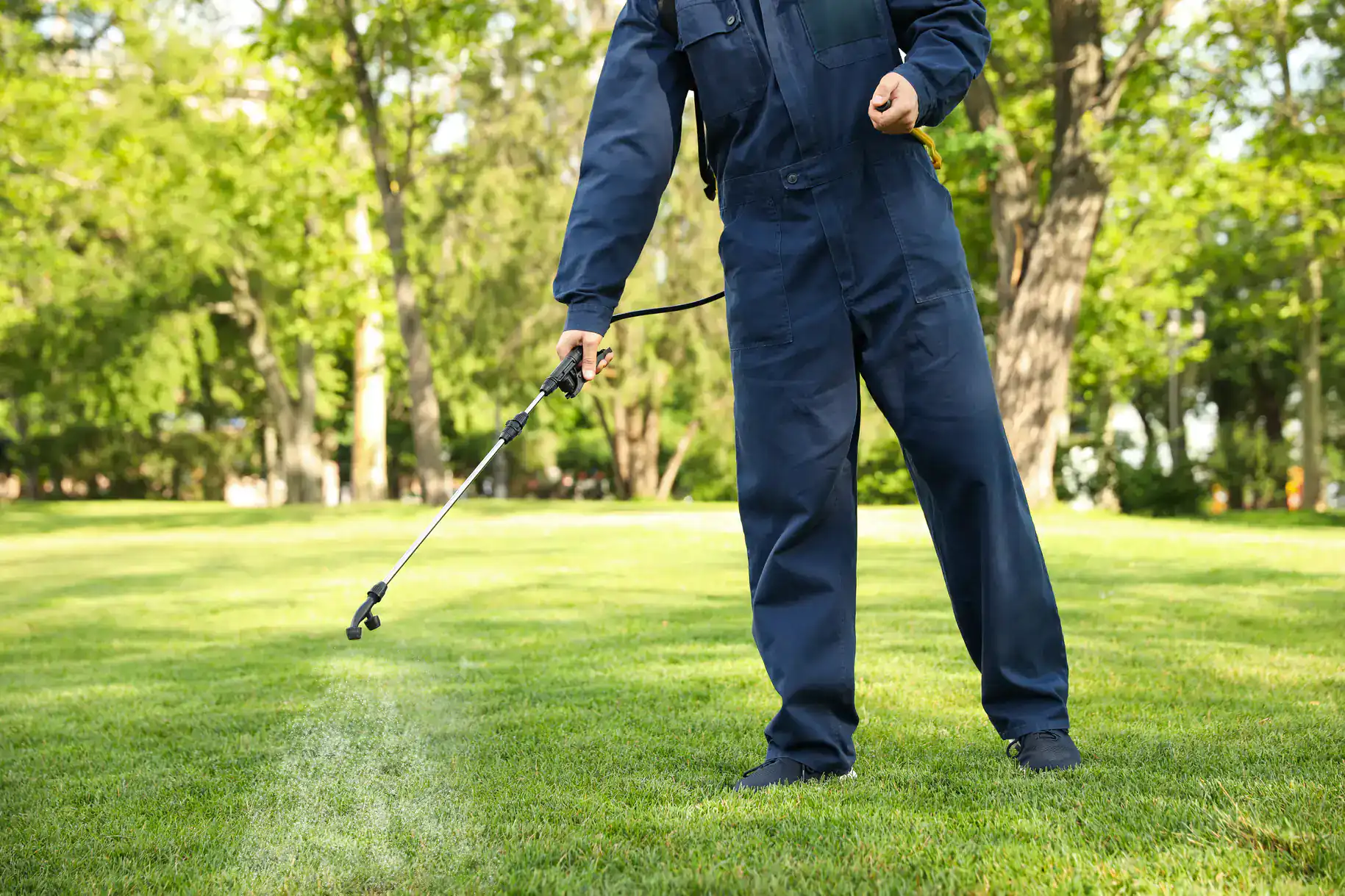
It starts with a free inspection. Before any treatment happens, a licensed technician walks your space and actually looks behind appliances, inside wall voids, under sinks, along baseboards, in the areas pests use as harborage that most people never think to check. In East Harlem’s older building stock, that inspection often reveals that the source of the problem isn’t even in the room where you’re seeing activity. Cockroaches travel through plumbing chases. Rodents enter through gaps in the foundation that have been there for decades.
Once we know what you’re dealing with and where it’s coming from, we build the treatment around that not around a standard package that gets applied the same way regardless of what’s actually going on. EPA-registered materials are applied in targeted areas by a NYSDEC-licensed applicator. For cockroaches, that means gel baits and targeted residual applications in harborage zones. For rodents, it means professional-grade baiting combined with exclusion work to seal the entry points that keep letting them back in.
After treatment, you get a service report the kind of documentation that satisfies HPD’s certification of correction process if your building has an active Class C pest violation. Because in East Harlem, a lot of calls we get come from landlords and property managers who have 24 hours to fix a problem before the fines start stacking up.

Ready to get started?
Cockroaches and rodents get most of the attention in this neighborhood and for good reason but they’re not the only problems residents here face. Bed bugs are a real and growing concern in East Harlem, and the neighborhood’s transit connectivity makes the risk higher than most people realize. The 4, 5, and 6 trains, Metro-North at Harlem-125th Street, and the daily movement of thousands of commuters creates ongoing exposure. Bed bugs travel on luggage, clothing, and secondhand furniture. They show up in clean apartments and expensive buildings. We offer both heat treatment and chemical treatment options, with the inspection determining which approach fits the situation.
Beyond cockroaches, rodents, and bed bugs, we handle the full range: ants, termites, mosquitoes, wasps, fleas, wildlife, and WDI inspections for real estate transactions. If you’re buying or selling property in East Harlem and need a Wood-Destroying Insect report for the mortgage process, we handle that too.
For property owners and managers in ZIP codes 10029 and 10035, the licensing piece matters. Under New York State law, pest control must be performed by NYSDEC-licensed applicators working under a registered pest control business. We meet that requirement and provide the service documentation to prove it, which matters when HPD is involved and the clock is running.

In most East Harlem apartments, cockroaches keep coming back because the treatment addressed the visible population but not the source. German cockroaches the most common species in NYC apartments harbor deep inside wall voids, behind appliances, inside cabinet hinges, and along plumbing runs that connect your unit to adjacent ones. A spray applied to open surfaces will knock back what you see. It won’t reach what’s living inside the walls.
The other factor is the building itself. East Harlem’s pre-war tenements and mid-century apartment buildings have shared infrastructure plumbing chases, steam heating systems, basement corridors that allow cockroaches to move freely between units. Treating your apartment without addressing those shared pathways is a temporary fix at best. A professional inspection identifies where the harborage actually is and applies treatment that reaches it, rather than treating the symptom and leaving the source untouched.
The products at the hardware store are designed for light, isolated rodent activity a mouse that found its way in once, not an established population with active nesting sites. In East Harlem, which sits inside the NYC Health Department’s designated Rat Mitigation Zone, rodent pressure is rarely light or isolated. Rats in this neighborhood are entrenched in the building infrastructure, underground utility corridors, and the outdoor spaces around dense residential developments. Snap traps and consumer bait stations are not built for that level of infestation.
Professional rodent control combines commercial-grade rodenticide baiting, tamper-resistant bait station placement, and critically exclusion work. Exclusion means physically sealing the gaps, cracks, and structural openings that allow rodents to enter the building in the first place. Without that step, you’re managing a revolving door. A licensed technician also knows where to look for entry points in East Harlem’s older building stock, where foundation gaps and deteriorating masonry are common and often overlooked.
Under New York City’s Housing Maintenance Code, cockroach and rodent infestations are classified as Class C Immediately Hazardous violations. That’s the highest severity level in NYC’s housing code, and it places the legal responsibility for correction squarely on the landlord. If your landlord receives an HPD violation for pests, they have 24 hours to correct it or face fines ranging from $500 to $1,000 per day.
That said, the practical reality for many East Harlem tenants is that waiting for a landlord to act or filing an HPD complaint and waiting for the process to move takes time you may not want to spend living with the problem. Some tenants choose to hire a professional exterminator directly for a faster resolution, especially when they’ve already been through the cycle of complaining to the building and getting little response. If you’re a tenant and you want to understand your rights before deciding how to proceed, the NYC Department of Housing Preservation and Development’s website has clear guidance on the complaint and violation process.
Bed bug bites alone aren’t a reliable way to confirm an infestation reactions vary widely between people, and bites from other insects can look similar. The more reliable indicators are physical evidence in the bed itself: small rust-colored stains on the mattress or box spring from crushed bugs, tiny dark fecal spots along the seams of the mattress or behind the headboard, and the bugs themselves which are about the size of an apple seed and visible to the naked eye in their adult form.
If you’ve recently traveled, purchased secondhand furniture, or had guests stay over, those are the most common introduction pathways in East Harlem. The neighborhood’s transit connections particularly Metro-North at Harlem-125th Street and the Lexington Avenue subway lines mean residents move through a lot of high-traffic environments regularly. A professional inspection is the only way to confirm an infestation and determine its scope before any treatment is applied. Treating for bed bugs without knowing the extent of the problem leads to incomplete treatment and reinfestation.
This is one of the most common questions we get, and it deserves a straight answer rather than a reassuring brush-off. The materials we use are EPA-registered and applied according to label directions by NYSDEC-licensed applicators. “EPA-registered” means the product has been reviewed for safety and efficacy by the federal agency responsible for regulating pesticides it’s not a marketing term.
The Integrated Pest Management approach we use means applying the least toxic effective treatment for each specific situation. For cockroach control, that often means gel baits placed inside cabinet hinges and behind appliances areas children and pets don’t contact rather than broad spray applications across open surfaces. Before any treatment takes place, your technician will explain exactly what will be applied, where it will be applied, and what the re-entry timeline looks like for your household. If you have specific concerns about a child with respiratory sensitivities or a pet with known chemical reactions, raise those before the inspection and the treatment plan can be adjusted accordingly.
If you live in one of East Harlem’s NYCHA developments the Washington Houses, Jefferson Houses, Wilson Houses, or others you already know that NYCHA’s pest control response has not kept pace with the problem. In federal court proceedings, NYCHA acknowledged meeting only 42% of priority pest complaints within the required two-business-day window. The federal consent decree NYCHA entered in 2019, which required a 50% reduction in rat populations and a 40% reduction in cockroaches and mice by 2022, was largely unmet by its own deadline.
That’s not a criticism of the people working the problem it’s the reality of managing pest control across thousands of interconnected units with limited resources. What it means for you practically is that waiting for NYCHA to resolve a serious infestation often means living with it for weeks or longer. Calling us means a licensed, experienced technician can be there within 24 hours, inspect the actual scope of the problem, and apply professional-grade treatment that goes beyond what a building contractor following a standard protocol can typically deliver. You’re not doing anything wrong by seeking a private solution you’re just deciding you’re done waiting.
Useful Links
Other Services we provide in East Harlem