Hear from Our Customers
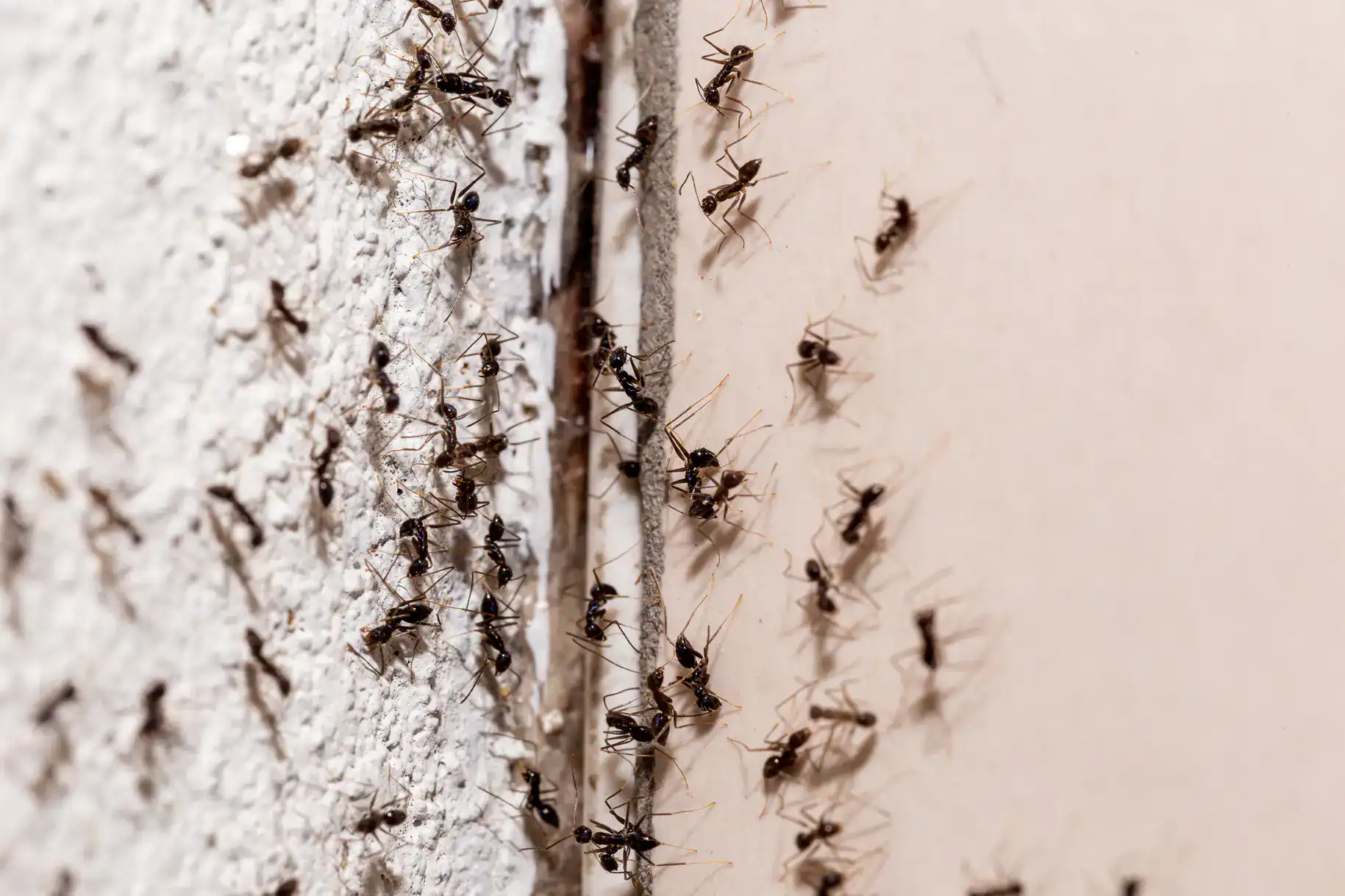
Living in East Harlem means you’re dealing with a pest environment unlike almost anywhere else in the city. Pre-war tenements on Lexington and Third Avenue have decades of moisture damage inside their walls exactly where carpenter ants build. NYCHA towers between 97th and 104th Streets have shared plumbing systems that pharaoh ants travel through freely, unit to unit, floor to floor. When your ant problem is structurally connected to your neighbor’s ant problem, treating one apartment in isolation doesn’t fix anything.
What changes after a real ant control treatment is simple: you stop finding them in your food, on your counters, and along your baseboards. You stop buying cans of spray that work for two days and then stop. You stop wondering whether the problem is coming from your unit or the one next door because a proper treatment addresses the colony, not just the foragers you can see.
East Harlem’s flooding vulnerability also matters here. When heavy rain hits and outdoor nests flood along the FDR Drive corridor, ants push indoors fast. That’s not a coincidence it’s a predictable pattern. Knowing that pattern is part of knowing how to stay ahead of it.
We’ve been treating pest infestations across all five boroughs since the 1980s, and we’ve worked in the same pre-war walk-ups, the same NYCHA developments, and the same mixed-use buildings that make up East Harlem’s housing stock. Our technicians know what they’re looking at when they walk in because they’ve been doing this work in this neighborhood for four decades.
We’re fully licensed, bonded, and insured, and we use only NYS DEC-registered pesticide materials which matters especially in East Harlem, where the NYC Department of Health actively warns residents against unregulated products sold locally. We hold a consistent A+ rating with the Better Business Bureau of New York State, and our phones are answered 24 hours a day, seven days a week. Not a voicemail a real person.
If you’ve already dealt with a slow NYCHA response or a one-visit exterminator who sprayed and disappeared, you already know what the difference looks like. We follow through.
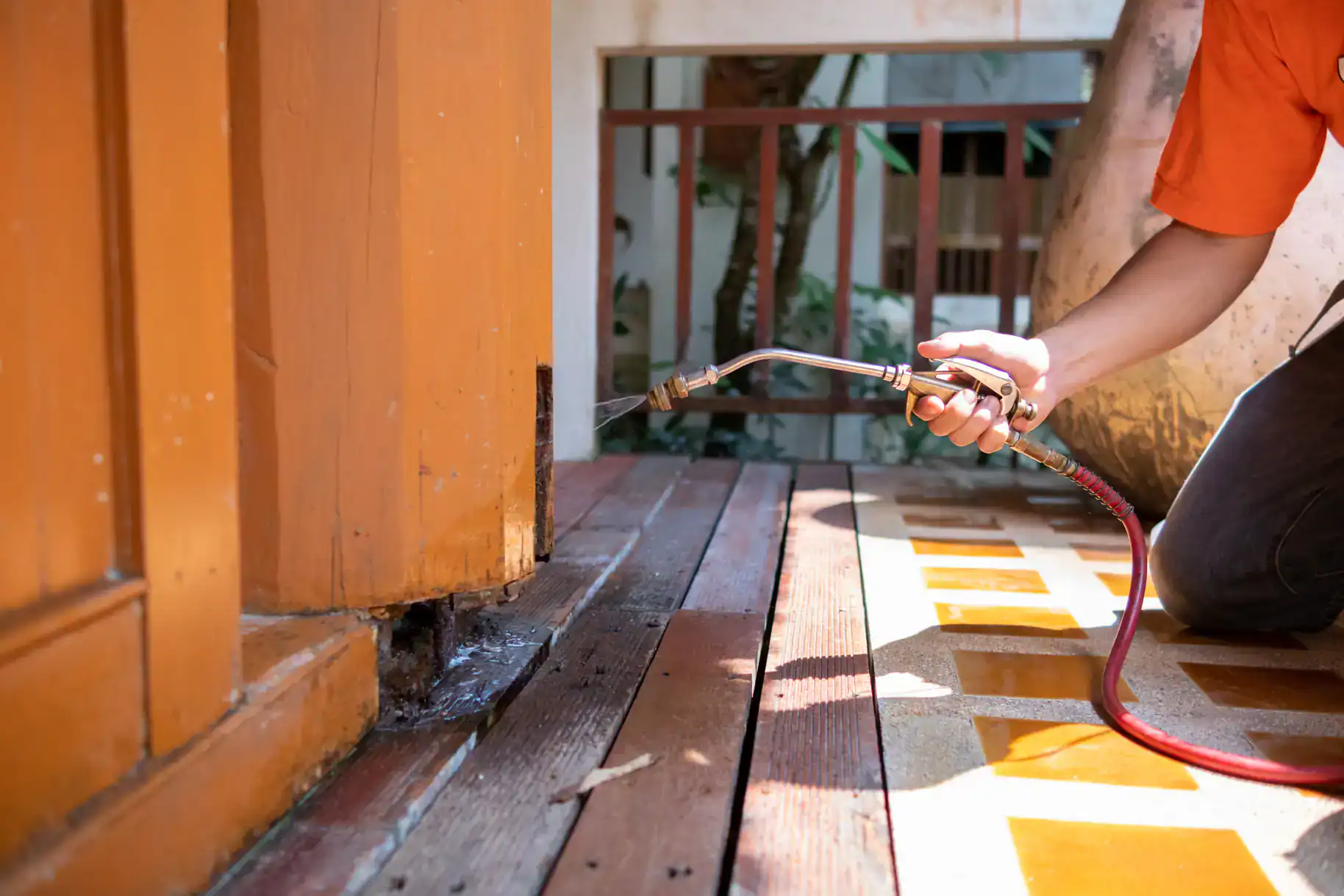
The first visit is a full cleanout. We treat both inside and outside your unit not just the visible trail, but the entry points, the wall voids, the plumbing penetrations, and the areas where colonies nest and travel. The materials we use are specifically designed to be carried back to the nest by foraging ants and shared with the rest of the colony. That’s how we reach a problem that lives inside a wall, not just on a surface.
In East Harlem’s multi-unit buildings, this approach matters more than almost anywhere else. Pharaoh ants one of the most common species in Manhattan high-rises will split into multiple new colonies if disturbed by repellent sprays. That’s called budding, and it’s how a single apartment problem becomes a building-wide problem. We don’t use repellents that scatter them. We use transfer-based treatments that eliminate the source.
After the initial cleanout, we schedule follow-up visits weekly, every other week, or monthly, depending on the severity and your building’s situation. We keep coming back until the infestation is gone, not until the first check clears. If you’re in one of East Harlem’s older buildings where re-entry from adjacent units is a real risk, that follow-through is what actually makes the difference.
Ready to get started?
Every ant control service starts with a free estimate. You know what you’re getting into before anyone shows up with a treatment plan. From there, the initial cleanout covers interior and exterior treatment, targeted application at entry points and nesting areas, and materials that work at the colony level not just the surface. We identify the species first, because carpenter ants in the aging wood of a pre-war Lexington Avenue building require a different approach than pharaoh ants traveling through a NYCHA tower’s plumbing system.
Ongoing maintenance visits are scheduled based on your situation not locked into a rigid annual contract you didn’t ask for. If your building near East River Plaza or along the 116th Street corridor has consistent pressure from outdoor colonies foraging in from adjacent commercial waste, we account for that. If you’re in one of the NYCHA developments between 97th and 125th Streets where deferred maintenance has left entry points unsealed, we work around that reality too.
We also offer a 10% senior discount straightforward, no hoops. East Harlem has a significant population of long-term residents on fixed incomes, and professional pest control shouldn’t be out of reach for someone who’s been in the same apartment for thirty years. If you qualify, just mention it when you call.
The most common reason is that the treatment addressed the ants you could see not the colony behind them. In East Harlem’s multi-unit buildings, ant colonies often span multiple units through shared wall voids and plumbing systems. Treating one apartment with a store-bought spray or a single professional visit can eliminate surface activity temporarily, but if the colony is intact and living inside a wall or under a floor, the foragers just keep coming.
There’s also the budding issue specific to pharaoh ants, which are extremely common in Manhattan high-rises. When pharaoh ants detect a repellent chemical, the colony splits into smaller satellite colonies and spreads further into the building. That’s why the type of treatment matters as much as the timing. A transfer-based approach where foragers carry the material back to the nest reaches the colony where it actually lives. That’s the only way to stop the cycle in a building where your walls are shared with three other units.
Three species show up most often in East Harlem. Pharaoh ants are tiny, yellow-brown, and almost impossible to see clearly they travel through plumbing walls and electrical conduits in high-rise buildings, which makes them especially difficult to treat without the right approach. Carpenter ants are much larger and tend to nest in moisture-damaged wood, which is common in East Harlem’s pre-war tenements along Lexington and Third Avenues. They don’t eat wood the way termites do, but they excavate it to build galleries, and in an older building with existing moisture issues, that can compound structural damage over time.
Pavement ants are the third common type small and dark, they nest under sidewalks and building foundations and forage indoors for food. You’ll often see them along baseboards and near kitchen appliances. Each species requires a different treatment strategy, which is why we identify what you’re dealing with before applying anything.
Technically, yes. New York City’s Local Law 55 the Asthma-Free Housing Act requires building owners to maintain pest-free conditions as part of healthy housing standards. NYCHA is legally and contractually obligated to provide pest control services to residents of its developments. The Washington Houses and Johnson Houses in East Harlem, among others, have been specifically cited in NYCHA monitoring reports for pest conditions that fall well below what residents are entitled to.
The practical reality is different. NYCHA’s pest control programs are chronically underfunded, response times are slow, and when treatment does happen, it’s often inadequate for the scale of the problem. If you’ve already filed a complaint through 311 or your building management and haven’t seen results, you’re not alone and you’re not without options. We fill the gap that public housing management consistently fails to close, and a free estimate from us costs you nothing to find out what a real treatment would involve.
This is one of the most predictable patterns in East Harlem specifically, and it comes down to geography. Community District 11 is documented as highly susceptible to flooding and storm surge, and the FDR Drive runs at grade through the neighborhood between 96th and 125th Streets which means the drainage infrastructure along that entire corridor is at ground level. When heavy rain hits, outdoor ant nests along foundations, sidewalks, and green spaces like Thomas Jefferson Park flood quickly, and thousands of foragers push indoors to find dry ground.
The post-rain surge isn’t random it’s a direct displacement event. The ants aren’t coming in because your apartment suddenly smells better. They’re coming in because their nest is underwater. This is why treating only the interior of your unit often isn’t enough: if the outdoor colony pressure isn’t addressed, the next rainstorm sends a new wave inside. A complete treatment accounts for both the interior infestation and the exterior entry points and nesting areas that are driving it.
This is a legitimate concern, and it’s worth understanding what separates professional treatment from what’s available over the counter or worse, what’s sold informally in some local stores. The NYC Department of Health actively warns East Harlem residents against using unregulated pesticide products, including foggers, aerosol bombs, Chinese Chalk, and similar items, because of the serious respiratory and health risks they pose. These products are illegal for a reason.
We use only pesticide materials registered with the New York State Department of Environmental Conservation. These are state-regulated products applied in targeted quantities by licensed technicians not broadcast sprays that saturate a room. Before any treatment, our technician will walk you through what’s being applied, where, and how long you should wait before re-entering treated areas. If there are specific concerns about children with asthma which is a documented community health issue in East Harlem mention that on the call and we’ll factor it into the treatment plan. Professional-grade means controlled and accountable, not harsh.
The honest answer is that it depends on the size of your unit, the severity of the infestation, and how many follow-up visits the situation requires. That’s exactly why we offer free estimates so you know what you’re looking at before committing to anything. There’s no pressure and no mystery pricing.
What’s worth considering is the full cost of not treating it properly. Store-bought sprays run $8 to $20 a can, and most East Harlem residents dealing with a real infestation have already bought several without solving the problem. A professional treatment that actually eliminates the colony costs more upfront, but it stops the cycle instead of just resetting it. For senior residents and East Harlem has a significant population of long-term older residents who have been in their apartments for decades we offer a 10% discount. It’s not a promotional add-on; it’s a straightforward acknowledgment that people on fixed incomes in this neighborhood deserve access to pest control that actually works. Ask about it when you call.
Useful Links