
Hear from Our Customers
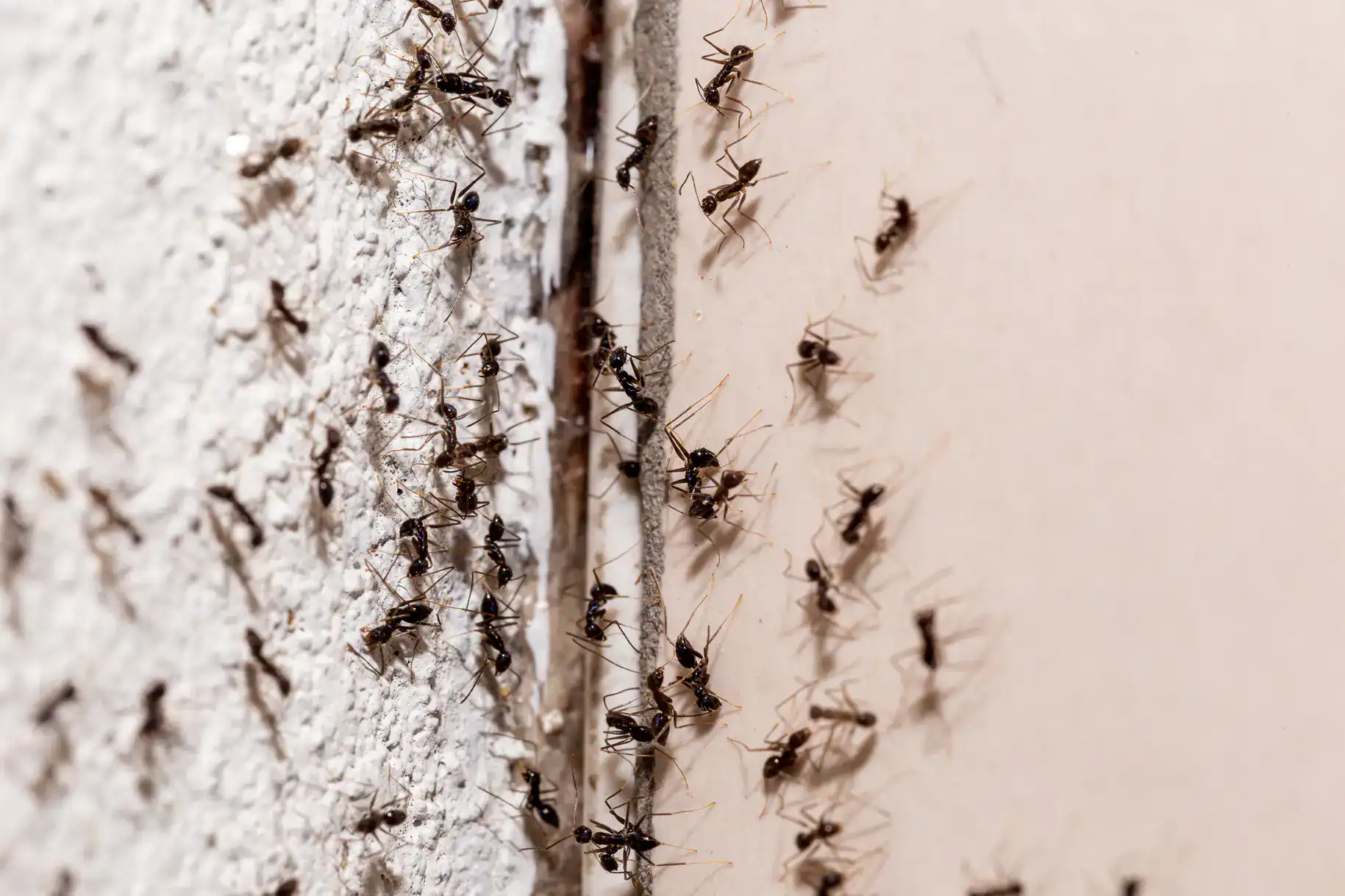
Most people who call us have already tried the sprays. They’ve wiped down counters, laid down traps, and watched the same trail of ants reappear three days later. That’s because store-bought products kill the foragers the small fraction of the colony you can actually see while the queen and the rest of the nest stay completely untouched. Professional ant control works differently, and the difference is permanent.
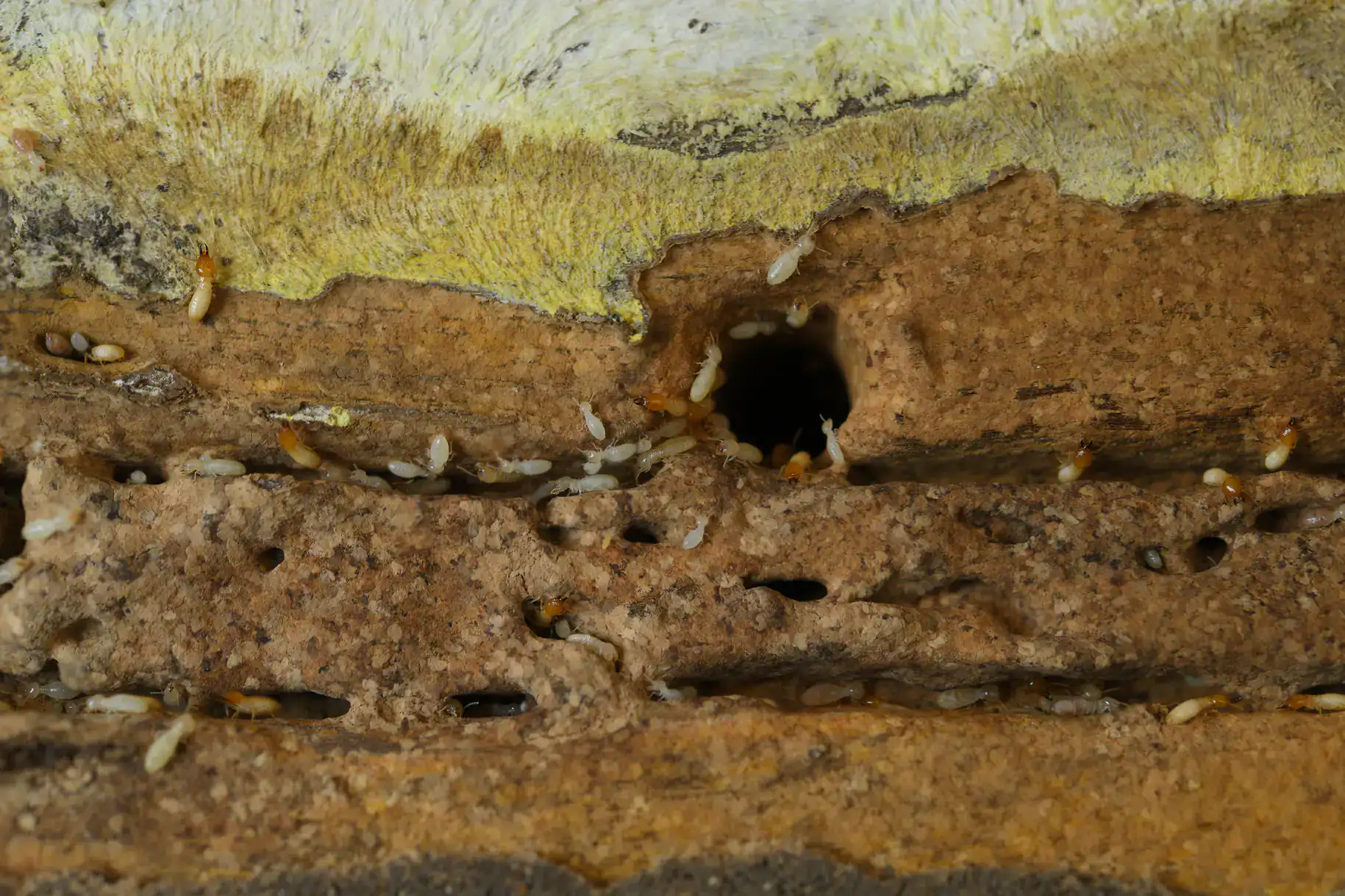
For Forest Hills homeowners, the stakes are higher than most. A significant portion of the homes here especially throughout Forest Hills Gardens and the streets south of Queens Boulevard were built between the 1920s and 1940s. That aged wood, combined with moisture-prone basements and crawl spaces, is exactly what carpenter ants look for. These aren’t ants raiding your pantry. They’re tunneling through the structural wood of a home that may be worth close to a million dollars, and they do it silently until the damage is visible.
Then there’s the geography. Forest Park the 500-acre woodland that borders Forest Hills to the south is one of the largest carpenter ant reservoirs in central Queens. Colonies expand outward from the park’s mature trees and decaying logs, and the homes nearest to Union Turnpike and the park’s western edge feel that pressure the most. Once the infestation is resolved, you’re not just getting rid of an annoyance you’re protecting a property that’s taken decades to build equity in.
We were founded over 40 years ago by Richard Kourbage, and we’re still family-owned and operated today. No franchise model, no corporate call center just a licensed, bonded, and insured pest control company that has spent four decades learning the specific pest pressures of Forest Hills and the surrounding neighborhoods, including the prewar co-ops along Queens Boulevard and the Tudor homes tucked behind Continental Avenue in Forest Hills Gardens.
We hold an A+ rating with the Better Business Bureau of New York State and use only NYS Department of Environmental Conservation-registered materials. That matters in a borough like Queens, where NYC’s Local Law 55 requires residential pest control to follow Integrated Pest Management principles. You’re not hiring a company that shows up with a generic spray and a handshake. You’re hiring one that’s been accountable to this city and its regulations for over 40 years.
It starts with identification. Carpenter ants, pavement ants, and odorous house ants are all common in Forest Hills, but they behave differently, nest differently, and require different treatment approaches. Before anything is applied, one of our technicians identifies the species and locates the likely nest whether that’s in aged structural wood near a moisture source, in the cracks of a foundation on a prewar building, or along a plumbing line running through a multi-unit co-op.
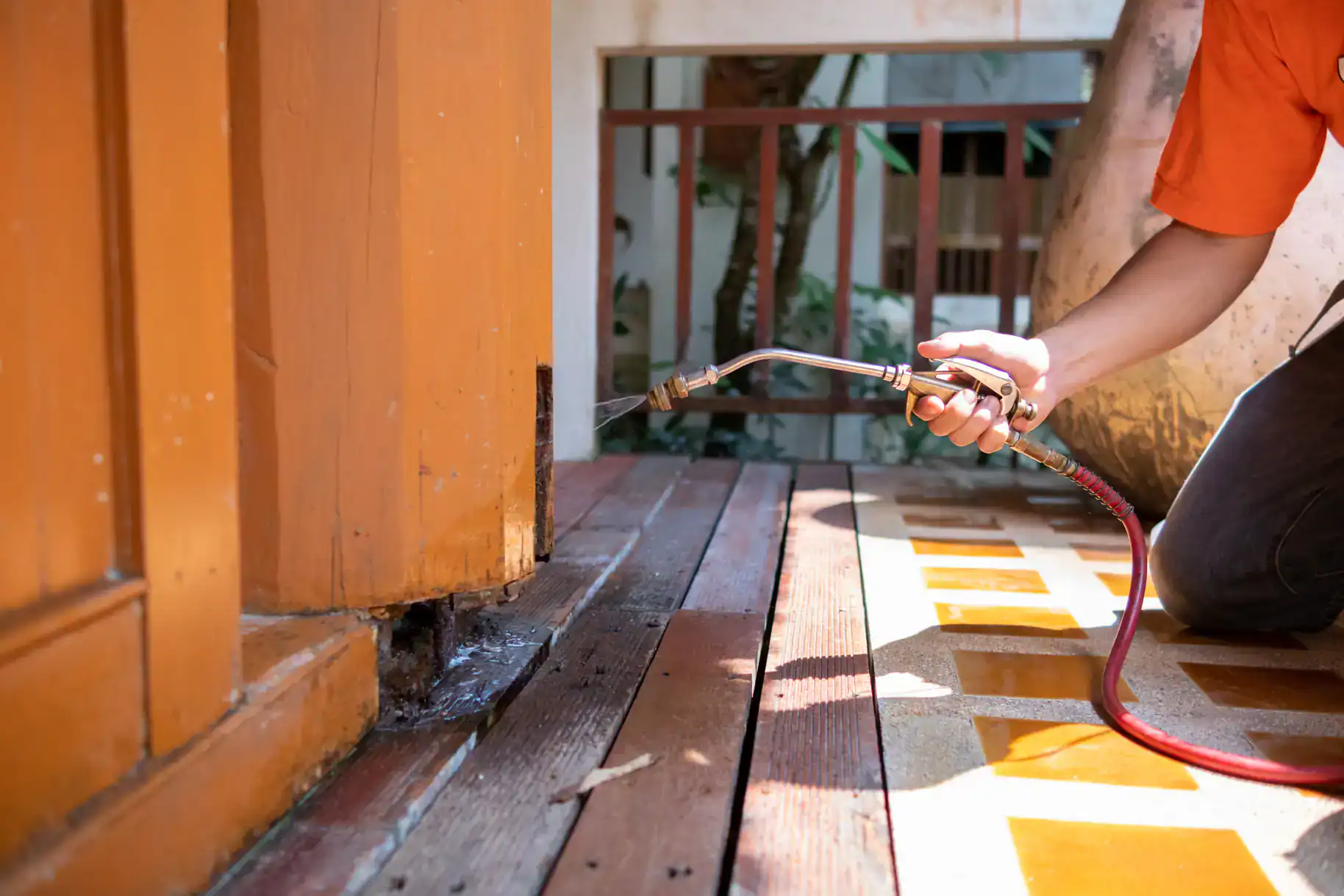
The initial cleanout applies materials both inside and outside the property. The goal is for ants to carry the treatment back into the colony and share it with the nest eliminating the source, not just the visible trail. In Forest Hills, that exterior treatment matters especially during spring and early summer, when carpenter ant swarmers emerge and colonies near Forest Park are actively expanding outward into residential structures.
Because ant colonies can maintain multiple satellite nests, one visit is rarely the full story. We schedule follow-up visits weekly, biweekly, or monthly depending on the severity to reapply exterior materials, monitor activity, and confirm the infestation is fully resolved. You’ll know when it’s done because the ants stop coming back, not because someone told you the job was finished.
Ready to get started?
Ant control in Forest Hills isn’t one-size-fits-all, because the housing stock here isn’t either. A 1935 Tudor in Forest Hills Gardens has completely different vulnerabilities than a prewar co-op on Queens Boulevard or a garden apartment near Austin Street. Our approach accounts for that the entry points, the structural materials, the proximity to mature trees and Forest Park, and the specific ant species most likely to be active in each type of property.
For single-family homeowners, we cover interior entry points, wall voids, and structural wood areas alongside full exterior perimeter treatment including landscaping, foundation lines, and any tree contact points that serve as ant highways into the home. For co-op and rental building residents, we work with building superintendents and property managers to treat common areas, plumbing pathways, and shared infrastructure in full compliance with NYC’s Local Law 55 and the Housing Maintenance Code. Full licensing, bonding, and insurance are standard not optional add-ons.
We also offer a 10% senior discount, which is genuinely relevant in a neighborhood where nearly one in five residents is over the age of 64. Free estimates are available before any work begins, and we answer phones 24 hours a day, 7 days a week because an ant trail at 10 PM on a Sunday doesn’t wait for business hours.
Forest Hills sits directly adjacent to Forest Park a 500-acre woodland that functions as one of the largest natural carpenter ant habitats in central Queens. As colonies in the park grow and expand, satellite nests establish themselves in nearby residential structures. Homes closest to Union Turnpike and the park’s western boundary tend to feel this pressure the most, but the issue extends well into the neighborhood’s interior.
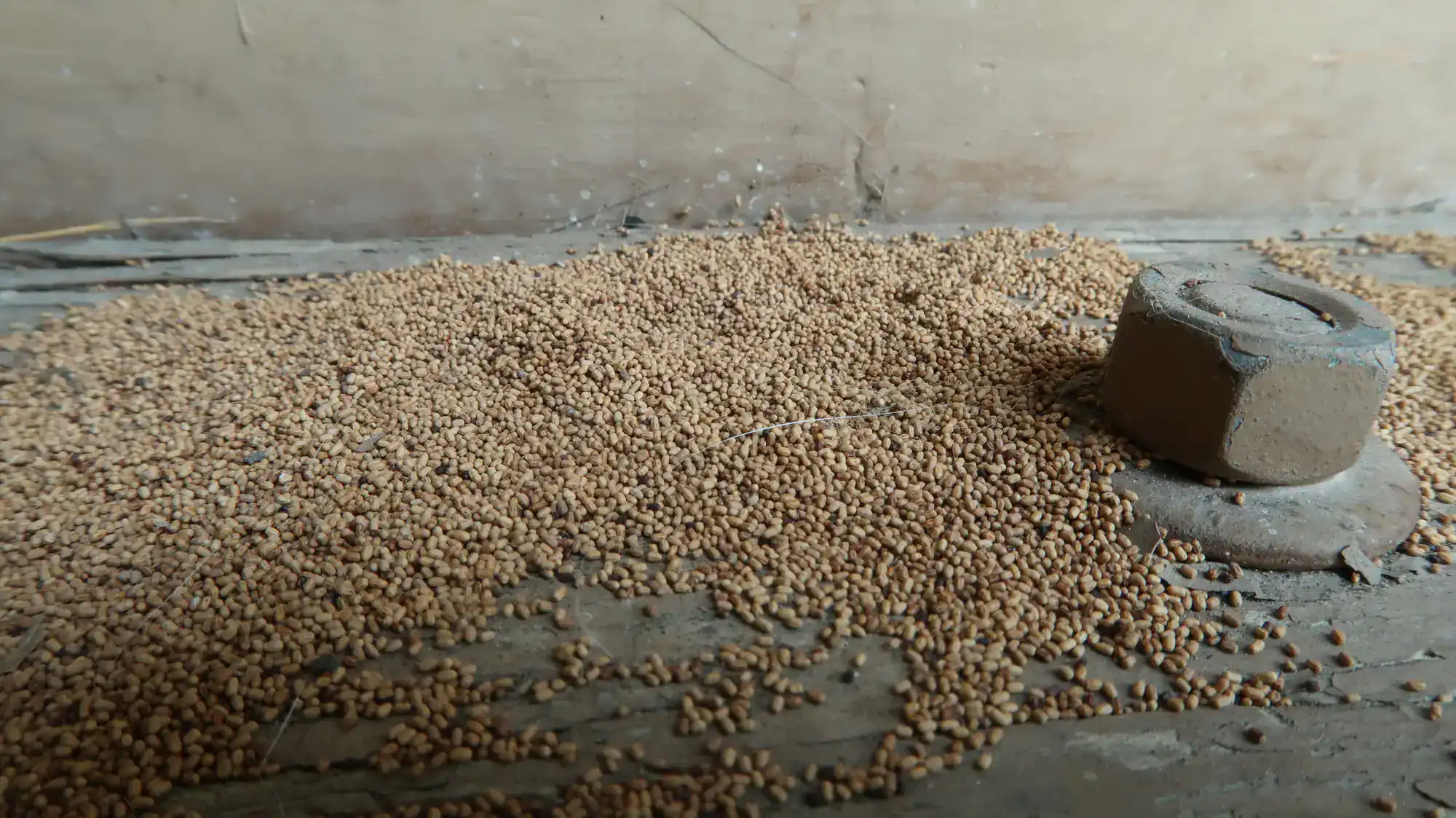
The housing stock makes it worse. Most single-family homes in Forest Hills especially throughout Forest Hills Gardens were built between the 1920s and 1940s. Carpenter ants don’t eat wood, but they tunnel through it to build their nests, and they strongly prefer aged, moisture-prone wood. Basements, crawl spaces, window frames, and areas near plumbing are common entry and nesting points in homes of this age. If you’re seeing small piles of sawdust-like material near baseboards or hearing faint rustling in walls, those are signs the colony is already inside the structure not just passing through.
The two most common ant species Forest Hills residents deal with are carpenter ants and odorous house ants, and they behave very differently. Odorous house ants are small, dark brown, and typically trail in large numbers toward food sources sugar, crumbs, anything left out on a counter. If you crush one, it releases a faint rotten-coconut smell. These are the ants most likely to show up in your kitchen and are more of a nuisance than a structural threat.
Carpenter ants are larger often a quarter inch or more and are usually black or dark reddish-brown. They don’t trail to food the same way. Instead, you might see one or two moving slowly near a wall, a window frame, or a baseboard. The real tell is frass: small piles of fine, sawdust-like material near wooden surfaces. That’s excavated wood from the tunnels they’re building inside your structure. If you’re seeing that in a Forest Hills home that’s 70 or 80 years old, it warrants a professional inspection not another can of spray from the hardware store.
Yes, and it happens more often than most building residents realize. Ants particularly pavement ants and odorous house ants follow plumbing lines, electrical conduits, and shared wall voids to move through multi-unit buildings. An infestation that appears contained to one apartment is often a sign of colony activity in the building’s shared infrastructure. Ground-floor units are most commonly affected first, since pavement ants typically enter through foundation cracks and concrete gaps at the building’s base.
In NYC co-op and rental buildings, the NYC Housing Maintenance Code places responsibility for pest control on building ownership and management not just individual tenants. We work directly with building superintendents and property managers in Forest Hills to treat common areas, entry points, and plumbing pathways in compliance with NYC’s Local Law 55, which requires Integrated Pest Management principles in residential buildings. If you’re a tenant dealing with ants, it’s worth notifying building management in writing and if you’re the super or a board member, it’s worth calling before the problem spreads to additional floors.
Spring is the most active period typically April through June. As temperatures climb, ant colonies that have been dormant or slowed through winter ramp back up. Carpenter ant swarmers, which are winged reproductive ants, emerge in May and June and are often the first visible sign that a colony is established inside a structure. If you’re seeing winged ants on your windowsills or near light fixtures, that’s not a minor problem it means there’s an active colony nearby, likely inside your walls or structural wood.
An unusually warm spring in the Northeast can push ant activity earlier in the season than normal which means Forest Hills homeowners near Forest Park should be watching for signs in March and April, not just May. Fall brings a second wave as colonies forage heavily before winter. And for homes with established carpenter ant colonies inside heated structures, the activity doesn’t fully stop in winter it just slows down. Year-round vigilance matters in Forest Hills, especially in the older homes that make up most of the neighborhood’s southern section.
Rarely, and we’ll tell you that upfront. Ant colonies are complex systems a single nest can contain thousands of workers, and many species maintain multiple satellite colonies spread across different locations inside and outside a structure. Eliminating the foragers you can see does nothing to address the queen or the colony as a whole. One treatment can significantly reduce visible activity, but without follow-up, satellite nests often reestablish within weeks.
Our process includes scheduled follow-up visits weekly, biweekly, or monthly depending on the severity of the infestation specifically to reapply exterior materials, monitor for new activity, and confirm the colony has been fully eliminated. In Forest Hills, where homes may have had undetected ant activity for seasons or longer, and where proximity to Forest Park means ongoing exterior pressure from expanding colonies, that follow-through isn’t optional it’s what separates a real resolution from a temporary fix. The goal isn’t to get the ants to stop being visible. It’s to eliminate the colony entirely.
Yes we offer a 10% senior discount on ant control services. Forest Hills has one of the older-skewing demographics in Queens, with nearly 20% of residents over the age of 64. Many of those residents have lived in the same home for decades in some cases, the same Tudor or colonial that’s been in the family since the 1950s or 1960s. Those are exactly the homes most vulnerable to carpenter ant damage, and they’re often the homes where an infestation has gone undetected the longest.
The discount reflects the kind of business we’ve always been: a family-owned company that’s been part of New York City’s neighborhoods for over 40 years and understands who actually lives in them. If you’re a Forest Hills senior dealing with an ant problem or a family member helping a parent navigate one the free estimate means you’ll know exactly what’s involved before committing to anything. Call anytime; we answer phones 24 hours a day, 7 days a week.
Useful Links