
Hear from Our Customers
You’ve probably already tried the store sprays. Maybe you’ve wiped down the counters, sealed the cabinet under the sink, and still found a fresh trail by morning. That’s not a cleaning problem it’s a colony problem. And in Ozone Park, the colony is almost never where you think it is.
The attached rowhouses and semi-detached homes that define Ozone Park create a specific challenge: ants don’t just enter through your foundation or a gap around a pipe. They travel through shared wall cavities, plumbing chases, and electrical conduits between units. Treating only what you can see inside your own home often just pushes the problem sideways into your neighbor’s kitchen, or back into yours a week later.
Parts of Ozone Park particularly the Centreville area near Cross Bay Boulevard also carry a history of high water table conditions and moisture-prone basements. Some homes in that area were raised during the 1930s sewer project, leaving original first floors that now function as basements with higher-than-normal moisture levels. Moisture draws ants in. Carpenter ants especially. And in older wood-framed rowhouses, that’s not a minor nuisance it’s a structural concern worth taking seriously.
Kingsway Exterminating Company has been treating pest infestations across Brooklyn, Queens, and the five boroughs for over 40 years. We’ve spent those four decades solving problems in the field, in buildings exactly like the ones lining the streets of Ozone Park the pre-war rowhouses along Liberty Avenue, the older brick two-families near Rockaway Boulevard, and the kind of housing stock that comes with decades of wear on its foundation seals and door sweeps.
We’re family-owned, fully licensed, bonded, and insured. We hold an A+ rating with the Better Business Bureau of New York State and use only materials registered with the NYS Department of Environmental Conservation. That matters in a neighborhood where unlicensed operators advertise on local Facebook groups and building bulletin boards hiring someone without proper certification is a legal and safety risk you don’t need to take.
Based in Brooklyn and serving Ozone Park and Queens directly, we know the specific challenges that come with this neighborhood’s housing stock. We’ve been treating this type of construction for a long time. It shows in the results.
It starts with a free estimate. You call any time, including evenings and weekends, because we answer 24 hours a day and a technician will assess your situation before any work begins. No mystery pricing, no obligation. You’ll know exactly what the treatment involves and what it costs before anyone shows up at your door.
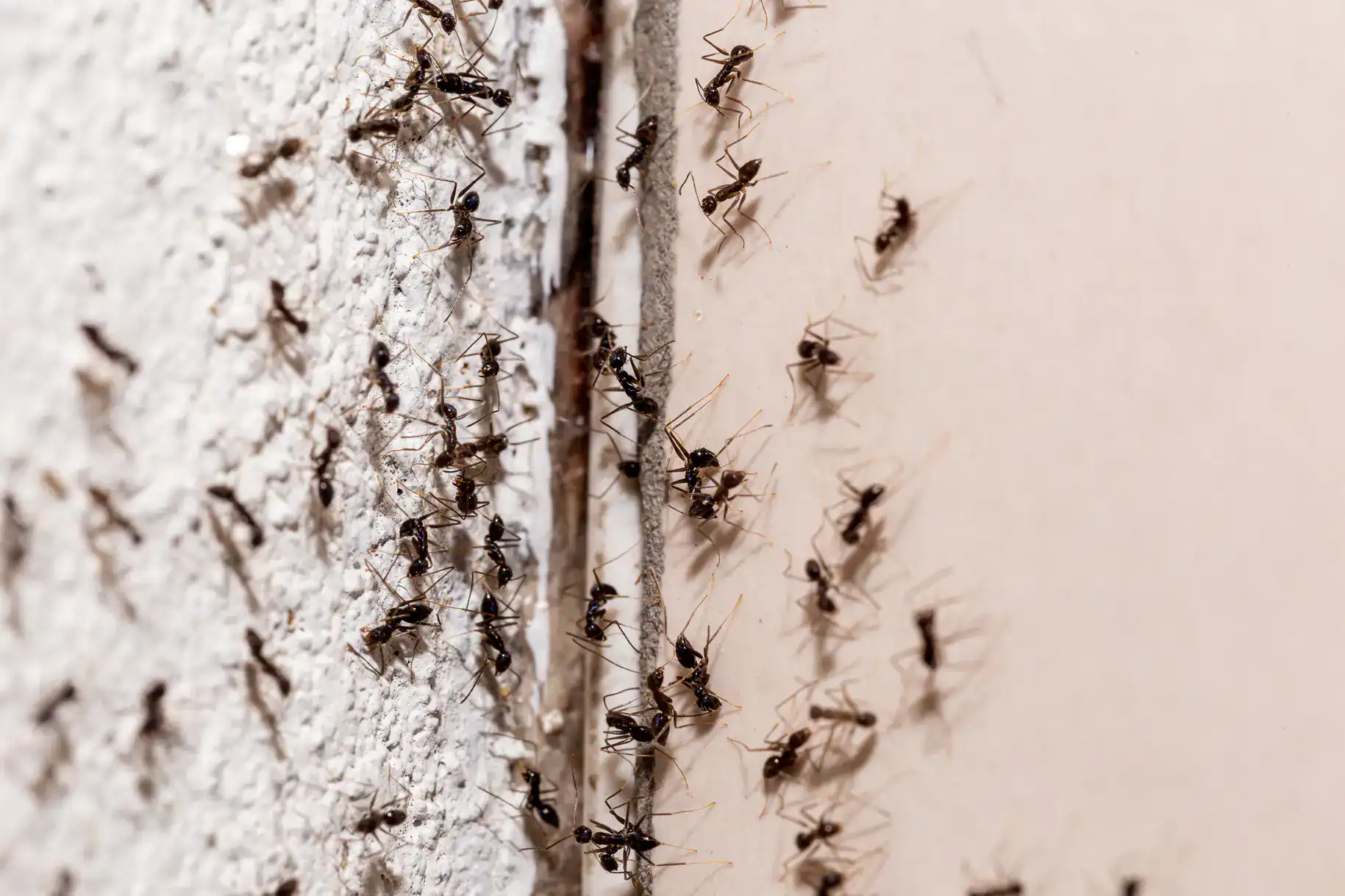
When the technician arrives, the inspection covers both the interior and the exterior of your property. In Ozone Park’s rowhouse environment, the exterior perimeter matters just as much as what’s happening inside. Entry points around the foundation, gaps near utility lines, cracks in sidewalk concrete these are the access points that pavement ants and carpenter ants exploit in older homes. The initial cleanout applies treatment inside and outside, using materials specifically chosen because ants carry them back to the colony and share them with the nest. That transfer effect is what makes professional treatment different from a spray can.
One visit is rarely the end of it and we’re upfront about that. Ant colonies can have multiple satellite nests, especially in attached homes where wall voids connect between units. After the initial cleanout, follow-up visits are scheduled on a timeline that fits your situation weekly, every other week, or monthly until the infestation is fully resolved. Spring and post-rain periods in Ozone Park tend to spike activity fast, so staying ahead of it matters.
Ready to get started?
Ant control in an Ozone Park rowhouse isn’t the same job as ant control in a detached suburban house. The shared walls, the connected plumbing, the older construction all of it changes how treatment needs to be approached. Our service accounts for that from the start.
Every job begins with a thorough inspection of both the interior and the exterior of your property. Treatment is applied inside and out, targeting not just visible ant activity but the perimeter and entry points where colonies establish themselves. The materials we use are NYS DEC-registered, applied in controlled quantities by licensed technicians. You’ll be advised on re-entry timing and any household-specific precautions relevant if you have young kids, elderly family members, or pets at home.
Scheduled maintenance visits follow the initial cleanout. The frequency depends on your infestation and your property. Ozone Park homeowners near the Aqueduct Racetrack site on the neighborhood’s southeastern border should be aware that the planned redevelopment of that 100-acre property will involve significant ground disturbance construction activity historically drives ground-nesting ant colonies into adjacent residential blocks. Staying on a maintenance schedule through that construction period is worth considering. We also offer a 10% senior discount and a free estimate on every job no pressure, no long-term contracts required.
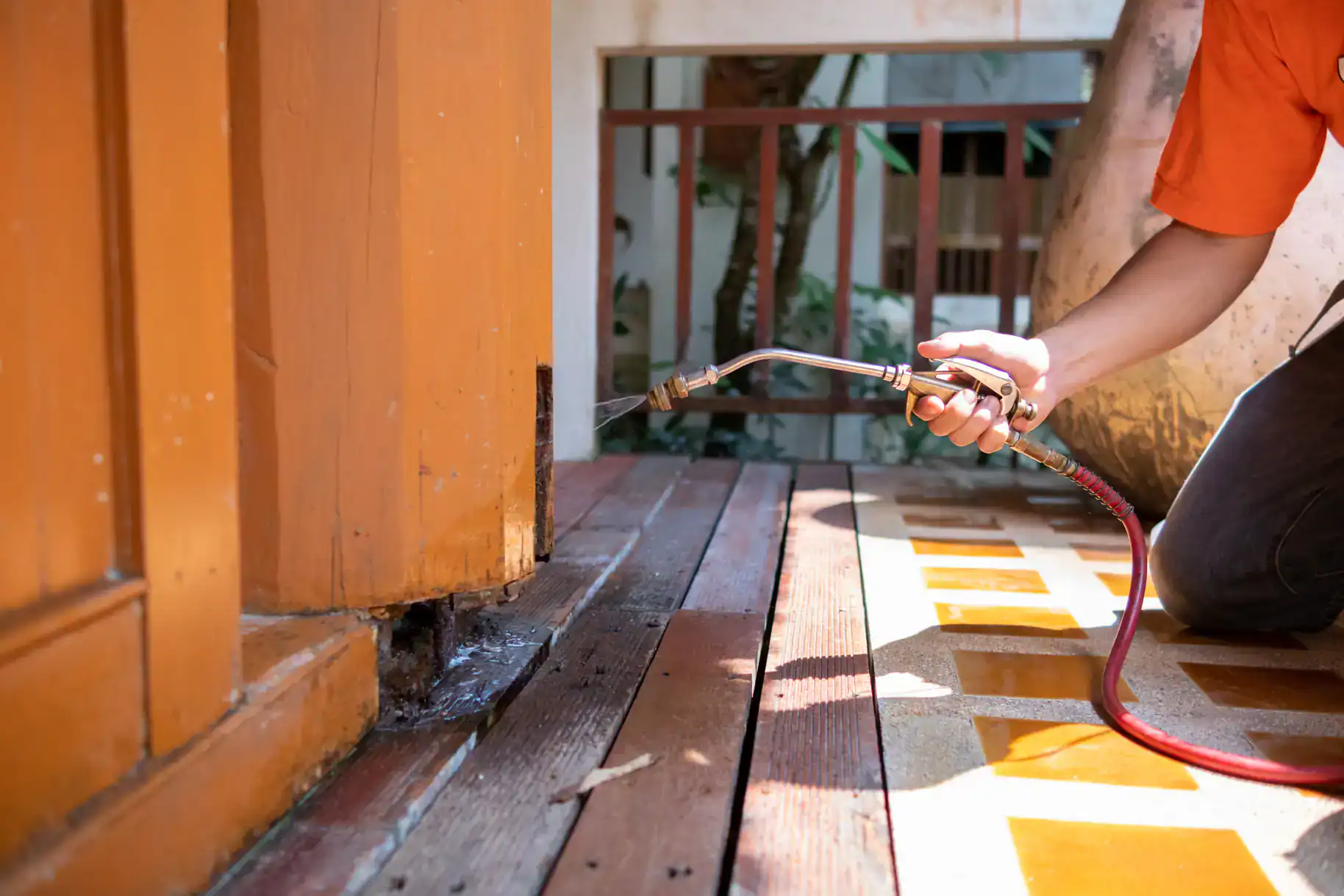
Store-bought sprays are designed to kill the ants you can see the foragers trailing across your counter or along the baseboard. The problem is those ants represent maybe five to ten percent of the colony. The rest are in the nest, and the nest is somewhere you’re not spraying: inside a wall void, under the foundation, in a crack in the concrete outside. Killing foragers doesn’t collapse a colony. It just temporarily reduces the visible activity while the colony keeps reproducing.
In Ozone Park’s older rowhouses, this problem is compounded by shared wall construction. The colony may have satellite nests in the wall cavities between your unit and the one next door meaning even a thorough interior treatment of your own home leaves part of the infestation untouched. Professional treatment uses materials that ants carry back into the nest themselves, reaching the colony at the source. That’s the difference between a spray and a solution.
Yes and it’s one of the most common reasons ant infestations in Ozone Park rowhouses keep coming back after a single treatment. Ants travel through wall voids, plumbing chases, and electrical conduits without ever crossing an exterior wall. A colony that originates in one unit can establish satellite nests in the shared cavities between units, then send foragers into adjacent homes through gaps around pipes, outlets, or baseboards.
This is why treating only the interior of one unit often provides temporary relief at best. The satellite nests in shared spaces remain active, and within a few weeks or after the next rain event foraging resumes. Effective treatment in attached rowhouses requires exterior perimeter application and a follow-up schedule that monitors whether activity has shifted rather than disappeared. Our multi-visit approach is built around exactly this dynamic, which is standard in the pre-war rowhouse environment that defines much of Ozone Park.
Carpenter ants don’t eat wood the way termites do, but they excavate it to build their nests and in older wood-framed rowhouses, that’s a real structural concern. Ozone Park’s housing stock includes homes built in the late 1800s and early 1900s, with wood framing that in some cases is over a century old. Carpenter ants are drawn to moisture-damaged or softened wood, which makes aging rowhouses with worn building envelopes particularly vulnerable.
If you’re seeing large, dark ants especially winged ones near window frames or wall junctions in spring that’s a warning sign worth acting on quickly. Carpenter ant swarms typically appear in spring when colonies are expanding, and in Ozone Park’s older homes, the nesting sites are often inside wall voids where damage accumulates before it’s visible. The longer an active carpenter ant infestation goes untreated, the more extensive the excavation. A licensed inspection that identifies the nest location is the starting point not another can of spray.
When ground-level nests flood or become waterlogged after heavy rain, ants move fast. They push upward and inward, looking for dry ground, which in a dense residential neighborhood means your foundation, your basement, and your kitchen floor. This is a pattern that shows up across Queens, but it’s especially pronounced in the lower-lying sections of Ozone Park, including the Centreville area near Cross Bay Boulevard, where the historically high water table means ground saturation happens more quickly after a significant rainfall.
If you notice ant activity spiking within a day or two of a storm, that’s almost certainly what’s happening. The ants aren’t coming from somewhere new the same colonies that were outside are now being driven in. The practical takeaway is that if you’ve had recurring ant problems after rain events, a perimeter treatment applied before the next wet season is significantly more effective than reacting after the fact. Getting ahead of it is always easier than chasing it.
There’s no universal answer, and any exterminator who quotes you a guaranteed single-visit fix without inspecting your property first is oversimplifying the problem. Ant colonies vary significantly in size, species, and structure. A small pavement ant nest near a foundation crack may respond well after an initial cleanout and one follow-up. A carpenter ant infestation established inside wall voids of an older rowhouse or a multi-colony situation in an attached building will take longer and require more targeted follow-up visits.
The honest answer for most Ozone Park homes is that the initial cleanout handles the bulk of the visible infestation, and follow-up visits scheduled weekly, every other week, or monthly depending on the situation are what confirm the colony has been fully eliminated rather than just suppressed. We build the follow-up schedule around your specific infestation, not a one-size contract. The goal is full resolution, and the schedule reflects that.
Yes we offer a 10% senior discount, and it applies to residents in Ozone Park. Ozone Park has a meaningful senior population, many of whom are long-time homeowners who have been in their homes for decades and are dealing with the pest challenges that come with older housing stock aging foundations, worn door sweeps, and the kind of structural wear that makes pavement ants and carpenter ants a recurring issue rather than a one-time event.
The discount is straightforward no hoops, no fine print. It’s one of several ways we keep professional pest control accessible in a working- and middle-class neighborhood where value matters. The free estimate is available to everyone regardless of age, so you know what you’re looking at before committing to anything. If you’re a senior homeowner in Ozone Park and you’ve been dealing with a recurring ant problem, call and ask about it directly the person who picks up will be able to walk you through both the discount and the service options that fit your situation.
Useful Links