
Hear from Our Customers
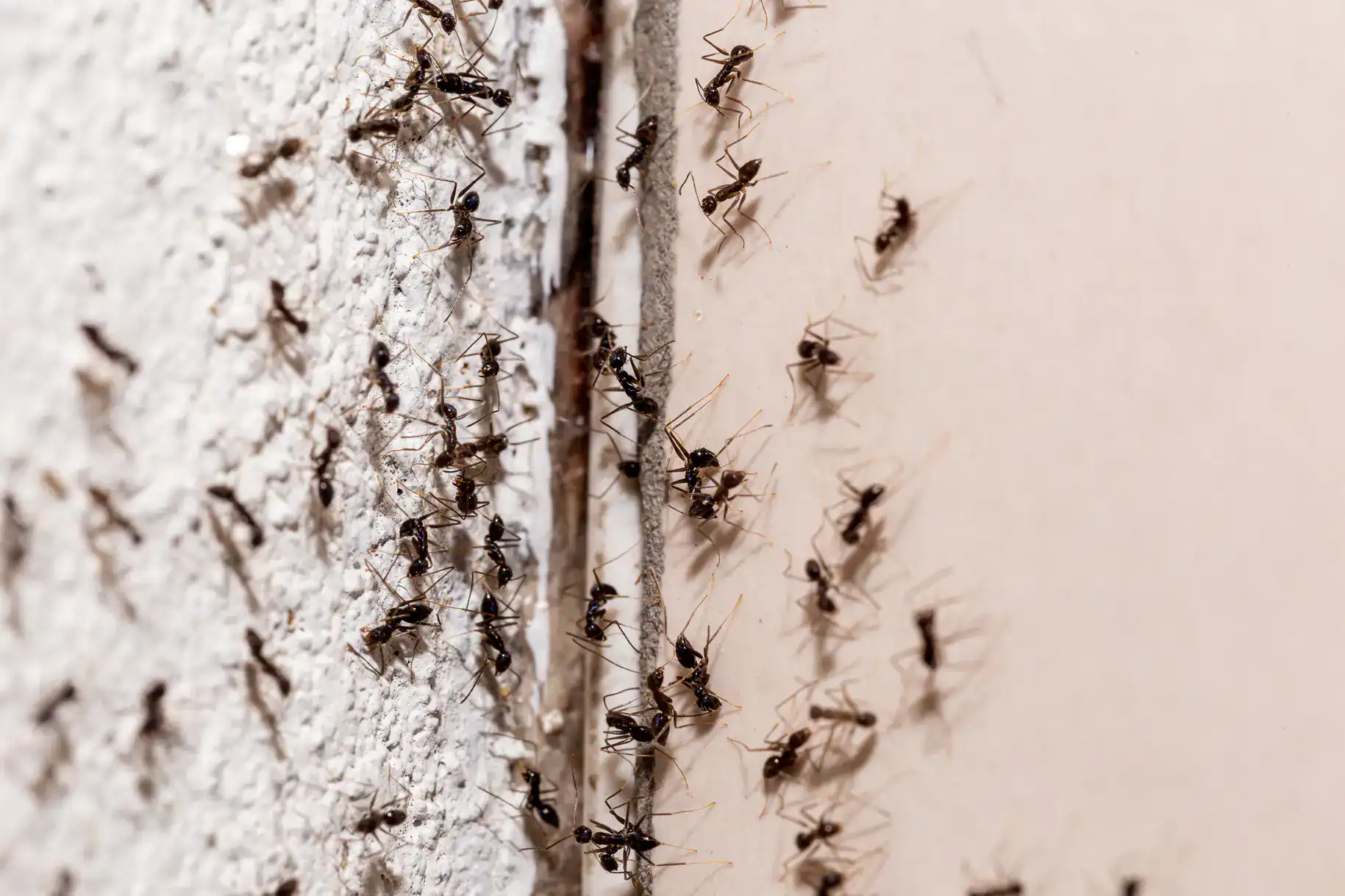
When ant control actually works, you stop finding trails across your counter every morning. You stop buying sprays that help for three days and then don’t. You stop wondering if it’s your unit or the one next door and you start knowing the problem has been handled at the source.
In Stuyvesant Town, that source is almost always outside. The irrigated planting beds, the mulched tree rings, the manicured grounds surrounding all 110 buildings that’s where colonies establish themselves, and that’s where foragers are launching from before they ever reach your kitchen. A treatment that only hits the interior of your apartment isn’t solving the problem. It’s interrupting it temporarily.
What you actually get with proper ant pest control in Stuyvesant Town is an approach that addresses both sides inside your unit and along the exterior perimeter so the ants carry the treatment back to the nest instead of just retreating to it. For buildings that have been here since 1947, with shared plumbing chases and basement corridors running between floors and units, that full-scope approach isn’t optional. It’s the only thing that holds.
We’ve been doing this in New York City for over 40 years. Not a franchise. Not a rotating roster of contractors. A family-owned company founded by Richard Kourbage, with technicians who actually know the building types they’re walking into including the mid-century high-rises throughout Stuyvesant Town and Peter Cooper Village.
We hold an A+ rating with the Better Business Bureau of New York State, carry full licensing, bonding, and insurance, and use only NYS Department of Environmental Conservation-registered materials. That last point matters more than it sounds it’s a legal compliance standard that unlicensed operators can’t meet, and it’s the direct answer to anyone asking whether the treatment is safe for kids or pets in the apartment.
Our phones are answered 24 hours a day, seven days a week. Free estimates are standard. And if you’re a senior resident including the long-term stabilized tenants who’ve been in Stuyvesant Town for decades there’s a 10% discount available.
It starts with a call any time, any day. You describe what you’re seeing: where the ants are showing up, how long it’s been happening, whether you’ve already tried anything. That conversation shapes the estimate, which is free and comes with no pressure to commit.
Once you schedule, a licensed Kingsway technician comes to your apartment and does a proper assessment. In a Stuyvesant Town building, that means looking at more than just your unit. We’re checking entry points along baseboards and plumbing penetrations, identifying likely travel paths through shared building infrastructure, and evaluating the exterior conditions the landscaped beds, the soil near your building entrance, the perimeter that connects your building to the grounds. This is where ant infestations in managed high-rise complexes actually live, and it’s where treatment has to start.
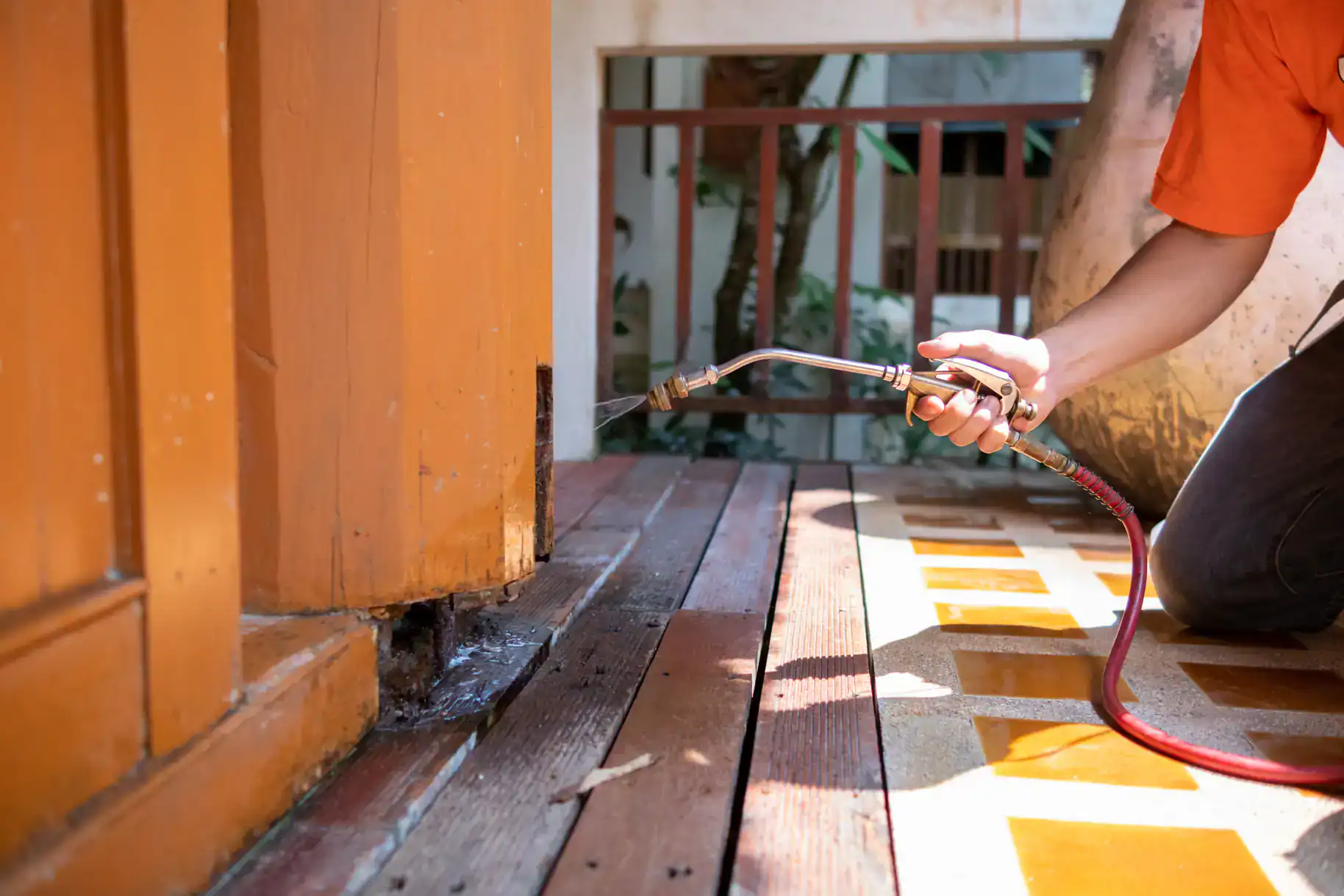
The initial cleanout applies materials both inside your apartment and along the exterior perimeter. The goal is for foraging ants to carry the treatment back into the colony not just for the visible trail to disappear. Because ant colonies can have multiple queens and thousands of workers, one visit rarely finishes the job completely. We schedule follow-up visits weekly, every other week, or monthly depending on your situation to re-apply, monitor, and confirm the infestation is gone and staying that way. That follow-through is built into the process from the beginning, not offered as an add-on after the first visit doesn’t hold.
Ready to get started?
Treating ants in a Stuyvesant Town apartment isn’t the same as treating a detached house in the suburbs. The building stock here is nearly 80 years old, the units share walls, floors, plumbing chases, and basement corridors, and the entire complex sits on 80 acres of landscaped grounds that create continuous outdoor ant habitat right up to every building entrance. The service has to account for all of that and ours does.
Every ant control service we provide in Stuyvesant Town includes interior treatment targeting active trails, entry points, and harborage areas inside your unit, paired with exterior perimeter treatment along the building’s foundation and surrounding landscaped areas. For carpenter ant situations which carry more urgency in older construction because of the structural implications the inspection goes deeper, looking for moisture-damaged wood and satellite nesting sites that a standard treatment won’t reach. If you’re in a unit on the eastern side of the complex near Stuyvesant Cove, the ongoing East Side Coastal Resiliency construction along the waterfront has been disturbing ground and displacing colonies that context shapes where and how we apply treatment.
All materials we use are NYS DEC-registered. All technicians are licensed under New York State’s commercial pesticide applicator requirements a legal standard that matters when you’re letting someone into your home. Maintenance scheduling after the initial cleanout is flexible: weekly, every other week, or monthly. No one-size-fits-all contracts. The plan fits your apartment, your situation, and your timeline.
The short answer is that what you’re trying is only hitting the foragers the ants you can see without touching the colony they’re coming from. Store-bought sprays work on contact, but the colony behind the problem can number in the tens of thousands of individuals, often with multiple queens. Killing the trail doesn’t stop production.
In Stuyvesant Town specifically, the situation is compounded by the environment outside your building. The irrigated planting beds, mulched tree rings, and maintained soil across the complex’s 80 acres create ideal nesting conditions for pavement ants and odorous house ants right at ground level often within feet of building entrances. Even if your apartment is treated thoroughly, if the exterior nesting sites aren’t addressed at the same time, new foragers will be back within days. Effective treatment has to reach the colony, not just the trail.
Yes and the reason comes down to who’s applying what, and how. We use only NYS Department of Environmental Conservation-registered materials, which means every product has passed state-level safety review for use in residential settings. Our technicians are licensed under New York State’s commercial pesticide applicator requirements, which means they’re trained on placement, quantity, and application method not just spraying and leaving.
In practice, that means materials are applied in targeted locations along baseboards, in cracks and crevices, near entry points not broadcast across open surfaces where kids or pets would come into contact with them. For Stuyvesant Town families with young children, the technician can walk you through exactly what was applied, where, and what any brief precautions look like. The goal is a treatment that’s effective against the pest and genuinely low-risk for the people and animals living in the space.
They can, and in buildings like the ones throughout Stuyvesant Town, it happens more than most people expect. The 110 mid-century buildings in the complex were constructed between 1945 and 1947. After nearly 80 years, they share plumbing chases, utility runs, and basement-level service corridors that connect units vertically and horizontally. Odorous house ants the most common kitchen invader in Manhattan apartments are small enough to move through the gaps around pipes and conduits between floors without any difficulty.
This is one of the reasons a treatment that only addresses the interior of one unit often doesn’t hold. If the colony has established satellite nesting sites in the building’s shared infrastructure or in the soil just outside the building, treating your apartment creates a temporary interruption, not a resolution. Our approach addresses the entry points and perimeter of the building alongside the interior of your unit which is what’s needed when the infestation isn’t contained to one apartment.
It depends on the size of the colony, the number of nesting sites involved, and how long the infestation has been established before treatment starts. For a straightforward odorous house ant situation caught early, the initial cleanout plus one or two follow-up visits is often enough to eliminate activity and keep it from returning. For larger or longer-standing infestations particularly in ground-floor units adjacent to the landscaped grounds near the Oval or along the building perimeters the process takes longer because there are more nesting sites to address.
What matters more than a specific timeline is having a plan with follow-through built in. We schedule follow-up visits after the initial cleanout weekly, every other week, or monthly to re-apply materials, monitor activity, and confirm the infestation is resolved rather than just suppressed. Our technician tracks what’s happening between visits so the plan adjusts if needed. You’re not left guessing whether it worked.
Yes, it changes the treatment meaningfully. Odorous house ants the small, dark ants most commonly found trailing across kitchen counters and along baseboards in Manhattan apartments are primarily a nuisance pest. They’re foraging for food and moisture, and treatment focuses on eliminating the colony and cutting off the access points they’re using to enter the unit.
Carpenter ants are a different situation. They’re larger, and instead of eating wood, they excavate it to build galleries for nesting which means an active carpenter ant infestation in an older building like the ones in Stuyvesant Town can indicate moisture-damaged structural wood somewhere in the building. The treatment has to find those nesting sites, not just the foragers. That typically requires a more thorough inspection, including checking areas around plumbing, window frames, and any wood that’s been exposed to moisture over the years. If you’re seeing large black ants not tiny ones that’s worth flagging when you call, because it shapes what the inspection needs to cover.
Yes we offer a 10% senior discount, and it’s a straightforward reduction applied to the service. Stuyvesant Town has a significant population of long-term stabilized tenants who have lived in the complex for many years, some for decades. For residents in that situation particularly those on fixed incomes who are weighing the cost of professional pest control against the ongoing frustration of an infestation that store-bought products haven’t resolved the discount is there and worth asking about when you call.
The free estimate also helps here. Before any commitment, you get a clear picture of what the treatment involves and what it costs. There’s no pressure, no surprise pricing, and no obligation to book. For anyone who’s been burned by a service that charged for a single visit and didn’t follow through, knowing the full scope and cost upfront is a reasonable starting point. Call any time our phones are answered 24 hours a day, seven days a week.
Useful Links